ATLANTA (AP) — A teenager accused of killing four people nearly two years ago at Apalachee High School in Georgia is due in court Friday for a plea and sentencing hearing.
Colt Gray, 16, previously pleaded not guilty to murder and other charges in the Sept. 4, 2024, shooting that killed two students and two teachers, and left several others wounded, at the high school about 45 miles (73 kilometers) northeast of Atlanta.
Barrow County Superior Court Judge Nicholas Primm has set a “Non-Negotiated Plea and Sentencing Hearing” to begin Friday. Gray's trial had been scheduled to start in mid-October in Columbia County, about 100 miles (160 kilometers) from where the shooting happened, after the judge agreed to a defense request for a change of venue.
A jury in March convicted Gray's father, Colin Gray, on charges including second-degree murder and involuntary manslaughter, and he is scheduled to be sentenced next week. Prosecutors said the elder Gray gave his son the assault-style rifle used to open fire at the school.
Teachers Richard “Ricky” Aspinwall, 39, and Cristina Irimie, 53, and students Mason Schermerhorn and Christian Angulo, both 14, died in the shooting. Another teacher and eight more students were wounded, seven of them hit by gunfire.
A non-negotiated plea means that the state and the defense have not reached an agreement on a sentence. Unlike a negotiated plea deal, in which a defendant often pleads guilty in exchange for an agreed-upon sentence and possibly reduced charges, sentencing is left entirely to the judge. The judge decides the sentence after hearing each side’s summary of the case, evidence and sentencing recommendation.
Prosecutors have indicated in court filings that they intend to call teenage victims and witnesses to testify and to show surveillance video and crime scene photos during Friday's hearing. They have also noted that they may introduce a slew of records, including 911 calls and Colt Gray's school, medical and social media records.
Gray's defense attorney wrote in a court filing that he plans to call a psychologist, someone who works at the juvenile detention center where he has been held and his grandmother to testify.
Gray, who was 14 at the time of the shooting, was charged as an adult with 55 total counts, including murder in the four deaths and 25 counts of aggravated assault.
Investigators testified that the teenager carried the rifle onto the school bus with the barrel wrapped in a poster board. They said he left his second-period class and emerged from a bathroom with the rifle, shooting people in a classroom and hallway.
Investigators have said Colt Gray carefully plotted the shooting at the high school of 1,900 students. A Georgia Bureau of Investigation agent testified that the teen left a notebook in his classroom with step-by-step instructions and a diagram to prepare for the assault, including an estimate that he could kill as many as 26 people and wound as many as 13 others.
Sheriff’s deputies interviewed Colt and Colin Gray in May 2023 about an online threat linked to the son. Colt Gray denied making the threat. He skipped eighth grade, enrolled as a freshman at Apalachee after the academic year had begun and then had a spotty attendance record.
Investigators found a shrine in Colt Gray's bedroom to Nikolas Cruz, the shooter in the 2018 massacre at Florida’s Marjory Stoneman Douglas High School, prosecutors said.
An investigator testified during Colin Gray's trial that he had been aware that his son's mental health had deteriorated and sought help from a counseling service weeks before the shooting, citing anger, anxiety and volatility. But the father never followed through on getting help for his son, the investigator said.
His mother, Marcee Gray, who was separated from Colin Gray, told investigators she had urged him weeks before the shooting to secure his guns and restrict their son’s access to them. Instead, over time, Colin Gray bought the boy ammunition, a gun sight and other shooting accessories, records show.
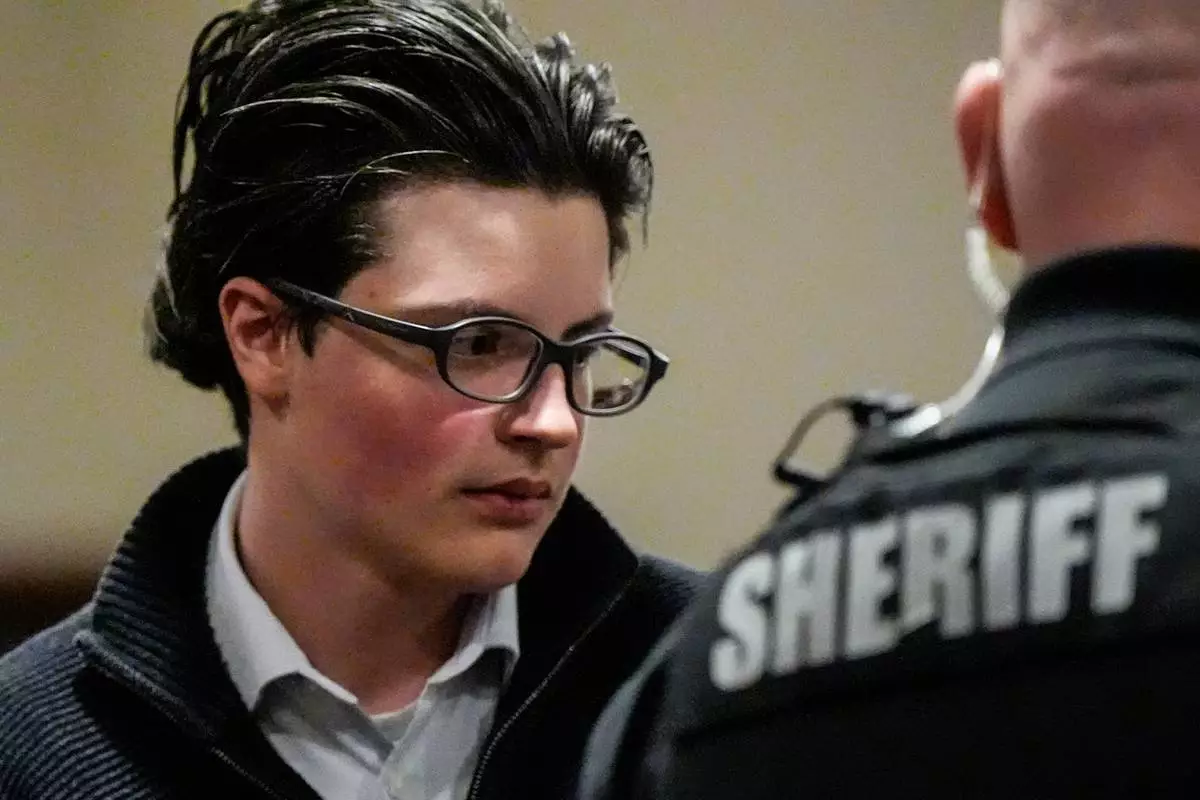
FILE - School shooting suspect Colt Gray exits the Barrow County Courthouse, Dec. 9, 2025, in Winder, Ga. (AP Photo/Mike Stewart, Pool, file)
WASHINGTON (AP) — Democrats are poised to lock in the party's 2028 presidential nominating schedule on Friday, likely cementing a dramatic break from decades of tradition by keeping Iowa off the top of the calendar and elevating more racially diverse states.
Either South Carolina or Nevada is expected to go first, and each state has aggressively campaigned for the coveted spot.
The decision by the Democratic National Committee’s Rules and Bylaws Committee will need to be approved by the full organization, which is scheduled to meet in August.
The overhaul reflects Democrats’ effort to give greater influence to states that better mirror the party’s diverse coalition, particularly Black and Latino voters, after years of a calendar led by Iowa and New Hampshire, two states with overwhelmingly white electorates.
“I think that it is good that we don't take the order for granted, and just copy and paste it every cycle,” said New York Rep. Alexandria Ocasio-Cortez, a progressive considered a potential 2028 candidate.
The decision will also shape the opening stage of what is expected to be a crowded Democratic presidential primary. Without an incumbent or clear frontrunner, the states that vote first could once again play an outsized role in determining which candidates gain momentum, attract donors and emerge as viable contenders.
Republicans still need to do their calendar. They're expected to stick with their traditional early-state lineup led off by Iowa and New Hampshire.
President Joe Biden successfully pushed to move South Carolin a to the front of Democrats' 2024 calendar after the state revived his struggling 2020 presidential campaign. South Carolina has long been the first Southern contest and has served as a key test of candidates’ support among Black voters.
But with Democrats now preparing for a wide-open presidential primary, the fight over the calendar has become more contentious.
In May, Democratic leaders in a handful of southern states lobbied for South Carolina to reprise its role as the party’s first-in-the-nation contest holder, arguing in a letter to the DNC that the state best represents the initial playing field for presidential candidates to build the coalitions needed to win and serves as “a moral and political compass for our party and our nation.”
Nevada has mounted an equally aggressive campaign, arguing that it better reflects the modern Democratic coalition by combining racial diversity, a strong union presence and battleground-state status.
Nevada has one of the nation’s largest Hispanic populations, a sizable Black electorate and is home to the influential Culinary Workers Union, giving candidates an early test with key Democratic constituencies.
“If you want to have a robust indicator of what an American electorate will be like, that will put us in the strongest position to put forth a primary candidate, I think it's pretty clear that Nevada should be first,” Nevada Rep. Susie Lee said this week.
Black leaders have pushed back, arguing that moving South Carolina aside after just one cycle would diminish the power of Black voters in the Democratic Party. Roughly one-quarter of South Carolina’s population is Black, according to the U.S. Census.
“If South Carolina gets quietly bumped after one cycle of convenient praise, that sends a message louder than any speech at a Democratic dinner: the gratitude was performance, not policy," Rev. Al Sharpton said in a statement.
The DNC has opted to select four early states — one from each region of the country — while also considering whether to add a fifth.
For the Midwest slot, Illinois, Iowa and Michigan submitted bids. Michigan is viewed as a leading contender for the regional position but did not seek the first overall spot.
The calendar decision is one of the first major milestones in what's expected to be a tumultuous two-year sprint to the Democratic nomination.
There has not been a truly open Democratic presidential primary — without an incumbent president or a dominant frontrunner — in almost two decades.
Potential White House hopefuls have already begun laying the groundwork in South Carolina. Many have partnered with the state Democratic Party on listening tours, appeared alongside influential Rep. Jim Clyburn at his annual fish fry, spoken at party fundraisers and held meet-and-greet events with activists.
Michigan has also become an increasingly attractive destination for prospective candidates. Former Transportation Secretary Pete Buttigieg moved to the state several years ago and has steadily built political relationships there, making an early Michigan primary a potentially significant boost to his prospects and those of other candidates focused on battleground states.
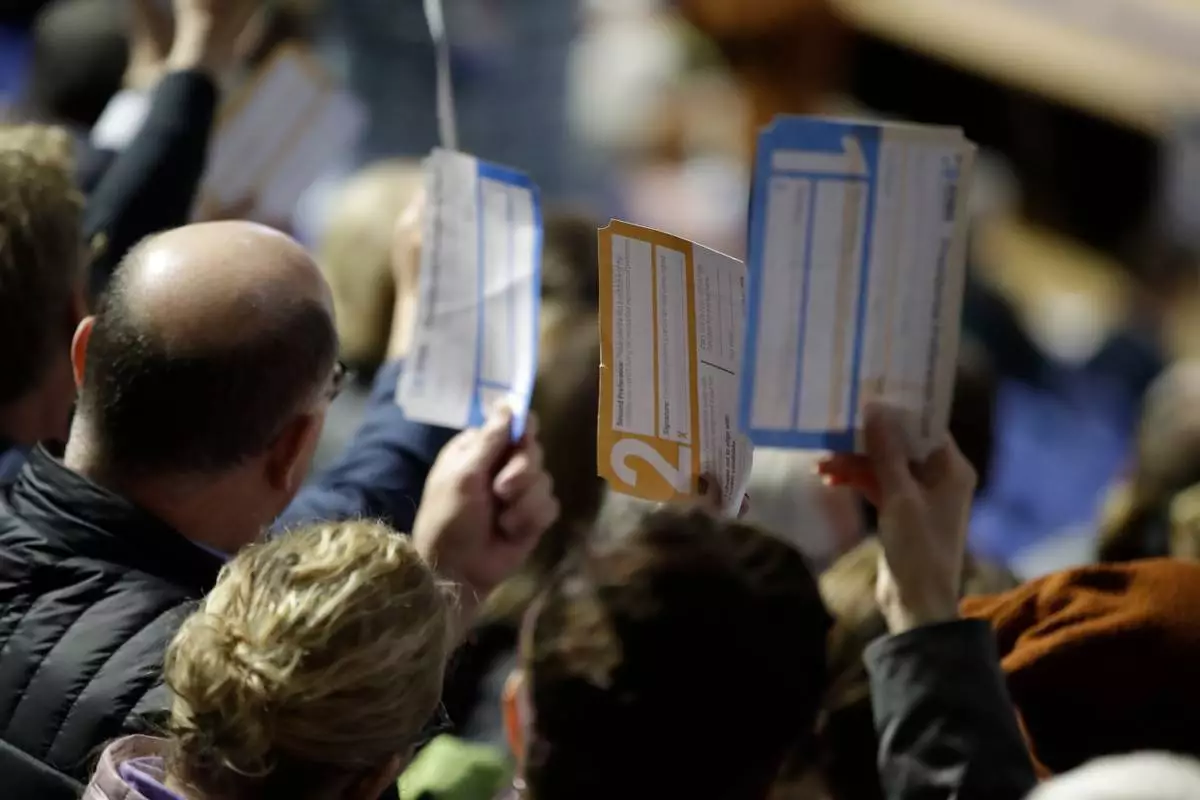
FILE - Precinct 68 Iowa Caucus voters seated in the Biden section hold up their first votes of the caucus as they are counted at the Knapp Center on the Drake University campus in Des Moines, Iowa, Feb. 3, 2020. (AP Photo/Gene J. Puskar, File)
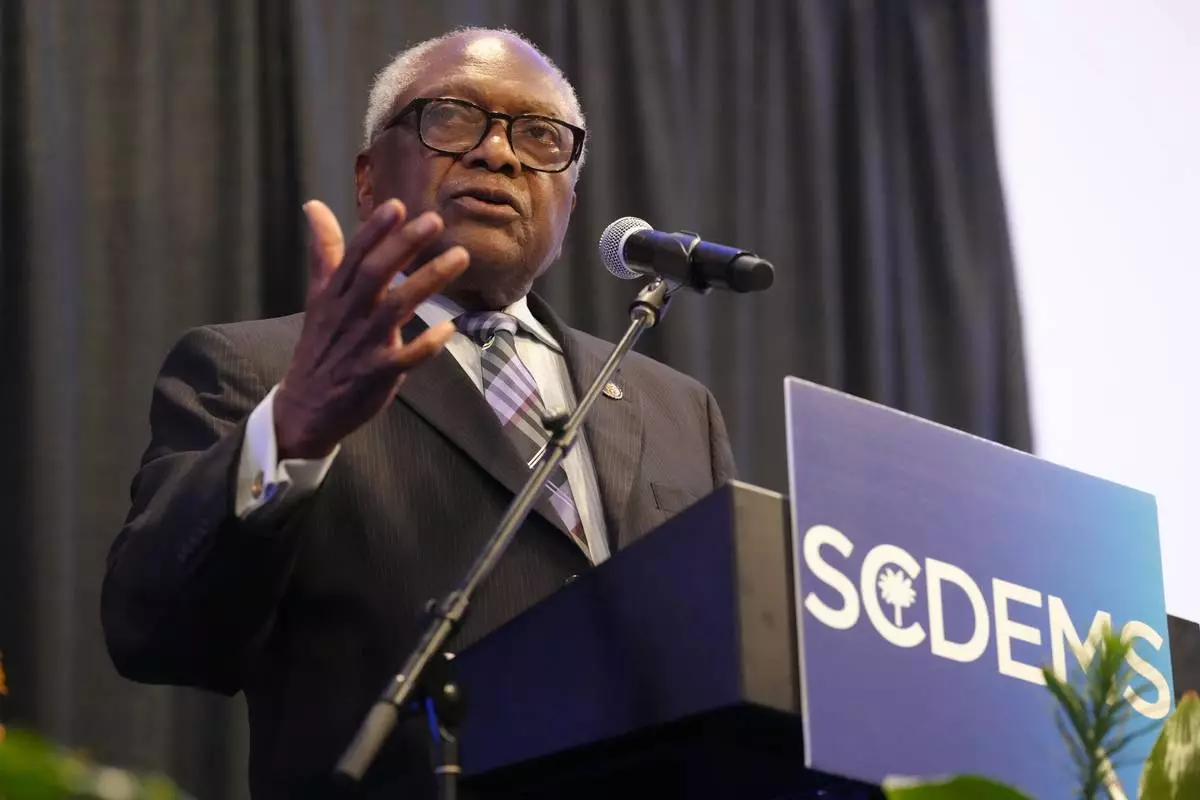
FILE - U.S. Rep. Jim Clyburn, D-S.C., speaks to attendees at the South Carolina Democratic Party's Blue Palmetto Dinner on May 29, 2026, in Columbia S.C. (AP Photo/Meg Kinnard, File)

FILE - Democratic National Committee chair Ken Martin speaks during an interview with The Associated Press at DNC headquarters, Jan. 12, 2026, in Washington. (AP Photo/Allison Robbert, File)