RICHMOND, Va. (AP) — Virginia, the world’s largest data center hub, has released a long-delayed study that examined the state’s eastern region groundwater supply and the resource-hungry industry’s possible impact on it, finding declines are likely in a critical aquifer due to population growth and industrial use and urging stricter regulations.
Produced by environmental scientists, the report — which the state for more than six months had refused to release — said regulators should have more authority to reject industrial water withdrawal permits, force entities to examine alternative sources of water and clamp down on users who might be using more water than they should be.
The report noted limits around publicly available information on data center water use but did not lay blame with the industry for the concerns raised about the aquifer.
The groundwater supply in Virginia’s populous eastern coastal plain region “is constrained, and current projections indicate declining availability in the near future,” said the report, which Democratic Gov. Abigail Spanberger’s office provided to The Associated Press Thursday.
Data centers use water, sometimes in large amounts, to cool their servers. Worries about data centers' impact on the quality and supply of both ground and surface water — and about tech companies’ failures to be as transparent as the public would like — have dogged projects around the country. The issues have become politically explosive heading into the midterm elections.
Perhaps nowhere are those topics more resonant than in Virginia, home to hundreds of data centers with more under development and where the sustainability of groundwater, the supply stored naturally under the earth's surface, in the coastal eastern region has been a long-running concern.
A wide range of interest groups had begun to publicly admonish the governor's administration for withholding the report; those reviewing it Friday said its findings were sobering.
“We’re standing on the ledge,” said Jay Ford, the Chesapeake Bay Foundation’s Virginia policy manager.
Virginia enacted its first groundwater law in 1973, but legislators acknowledged it was “too permissive” and tightened it in 1992, the report said. The law remains in effect, but the report warns it should be strengthened again.
State Sen. Richard Stuart, a conservative Republican who represents Virginia’s coastal Northern Neck region and has made conservation a cornerstone of his legislative work, said he's been making noise about the issue for at least 15 years. Increasingly, local governments in his district are being told by regulators that they will have to shift to new surface water sources because of the strain on groundwater.
He said the water crunch is happening at the same time as many new data centers are coming online across his district. He wanted more specifics, so he passed a bill requiring the study.
The report found that groundwater withdrawals in the region fell sharply roughly 15 years ago after a paper mill closed, which, along with regulatory efforts, helped water levels rise in the area’s biggest aquifer. Recently, those trends stalled, and levels throughout the aquifer are projected to resume declining, it said.
There likely isn’t enough groundwater to sustainably add any big, new industrial user, according to the study.
The report suggests the Legislature strengthen regulators' permitting authority; require applicants who want to tap large volumes of groundwater first examine surface water or water reuse; require better planning for local water use; and beef up funding for water management staffing and equipment.
Lawmakers should also weigh in on how they want regulators to prioritize drinking water for the public with current law, which directs them to consider protecting current uses.
Stuart said Friday that while he was still processing the more than 100-page report, its summary findings were worrisome, though they will help lawmakers make tough decisions moving forward.
“Folks worry about the lack of the ability for growth. A lot of them are talking about industrial and commercial. I’m worried about our citizens having drinking water, and I’m worried about our seafood industry because they need clean water,” he said.
The report said most existing and planned data center capacity is located in public water supply service areas that mostly draw from surface water. But it went on to note that no comprehensive public data exists about groundwater-sourced water withdrawals from the facilities.
While it’s also not clear exactly how many data centers are under development in the state’s eastern region, 371 are in operation across the state and another 438 are planned, according to Cleanview, a company that tracks data centers and other power infrastructure development.
The report’s authors performed an analysis to evaluate what hypothetical water withdrawals from a data center would look like and whether they could be permitted.
“Under current conditions, it appears unlikely that a data center with evaporative cooling technology (or any comparable water user) would find a reliable, sufficient groundwater supply anywhere” in the region, the report said.
Groundwater management and quality as more data centers come online has also been a concern in states including Texas, Oklahoma, Nebraska, Georgia and South Carolina.
The state’s delay in issuing the report had raised transparency concerns and questions about its contents, partly because of its connection to data centers.
A wide range of advocacy organizations and a committee that advises state regulators on eastern Virginia groundwater issues had begun to raise concerns in June and July about why the report due in January had not yet been made public. Stuart said he had not been able to obtain a copy of it.
The AP sought the report under an open records request, and the Department of Environmental Quality withheld it. After AP requested comment for a story about the refusal to release the report, the governor’s office provided a copy late Thursday night.
Jack Bledsoe, a spokesperson for Spanberger, who took office in January, attributed delays in the report's release to a backlog of outstanding items from the previous governor's administration.
“This report represents the most comprehensive analysis of groundwater resources conducted in Virginia history. Governor Spanberger is committed to working with the General Assembly to carefully evaluate its findings, strengthen the Commonwealth’s groundwater management policies, and protect Virginia’s water supply for future generations,” Bledsoe said.
Associated Press reporters Michael Phillis in Washington and Marc Levy in Harrisburg, Pennsylvania, contributed to this report.

FILE - Cars drive past data centers on July 16, 2023, in Ashburn, Va. (AP Photo/Ted Shaffrey, File)

FILE - Virginia Gov. Abigail Spanberger delivers the Democratic response to President Donald Trump's State of the Union address, Feb. 24, 2026, in Williamsburg, Va. (AP Photo/Steve Helber, Pool, File)
ARCACHON, France (AP) — Massive forest fires forced the evacuation of some 200,000 people in southwestern France and central Spain on Friday, with residents fleeing towns near Madrid and Bordeaux as the flames raged out of control.
Firefighters and authorities in both European countries were caught off guard by the virulence of the fires, which were fueled by high temperatures and the long-term effects of climate change. Firefighters in Spain admitted the fires were so fast and violent that they could not be tackled head on. Some people even fled by boat when flames swept through the touristic area on France’s Atlantic coast.
Some 141,000 fled homes in the Gironde and Landes departments in France, the French interior ministry said. In central Spain, 60,000 were forced from their homes, the Spanish interior ministry said.
Dozens of French firefighters were injured, authorities said, but no deaths were reported in either country despite the scenes of panic as townsfolk fled by car and police went door to door to tell people to leave as large plumes of smoke rose from the neighboring woodlands.
France’s Interior minister Laurent Nunez said that the large wildfire that ravaged large swaths of land in southwestern France in now heading toward the city of Bordeaux.
Speaking to French TV channel Tf1, Nunez said the wildfire that earlier in the day forced the evacuation of the Cap Ferret peninsula has swept across 140 square kilometers, with 110,000 people fleeing their homes in the Gironde region.
“We learned in the middle of the afternoon that, following the wind shift, it had become a large, self-sustaining fire that is extremely difficult to bring under control,” Nunez said. “It is now moving east, toward the Bordeaux metropolitan area. We are going to reorganize our response so we can fight it from the ground and prevent it from advancing toward Bordeaux.”
Meanwhile, French President Emmanuel Macron has asked the Prime Minister Sebastien Lecornu to activate the government’s crisis response unit, and has instructed the armed forces to mobilize in order to provide the maximum possible reinforcement to the civilian emergency services.
Asked whether Bordeaux is under threat, Nunez said: “For the time being, no. We will, of course, do everything we can to protect it using ground resources, including requisitioned military assets and our firefighters.”
The most devastating French blaze started on Wednesday near Cap Ferret peninsula on France’s Atlantic coast, located 60 kilometers (37 miles) from Bordeaux. Local authorities in the Gironde department said 53 homes and a campsite were destroyed, adding that 42 firefighters were injured. Around 1,500 people who fled the peninsula arrived by sea in the city of Arcachon, some aboard small water taxis and others on larger boats.
“It’s quite impressive and even frightening," said Laurent Moretti, a resident in the town of Arès. “An evacuation on this scale has never happened before. All we really hope is that the firefighters can quickly get it under control.”
A separate wildfire broke out in Landes, causing 31,000 evacuations. Authorities believe the cause of both of fires in France were accidental.
More than 20,000 people had already been evacuated from towns and vacation resorts on Thursday, but that number exploded on Friday.
Both France and Spain asked fellow European Union members for help.
Macron said France will receive EU reinforcements including two Croatian Canadair firefighting aircraft, two Portuguese Air Tractor aircraft, and two heavy-lift Black Hawk helicopters from the Czech Republic and Slovakia. Spanish Interior Minister Fernando Grande-Marlaska said that Italy and Greece are each sending two Canadair water-dumping airplanes, while a thousand Spanish soldiers helped firefighting efforts.
In Spain, the government declared a national emergency for wildfires for the first time as the blazes in Madrid and the nearby province of Ávila prompted the evacuation of some 60,000 people from towns west of the capital.
The fires are being fanned by a heat wave with temperatures expected to top 39 degrees Celsius (102 Fahrenheit) in parts of Spain.
Two major fires near Madrid merged into one single blaze that had quickly charred 30 square kilometers (11.5 square miles) by Friday afternoon. Regional President Isabel Díaz-Ayuso called it the worst in Madrid's history.
Francisco Martín, the central government representative for the region of Madrid, said that another 20,000 people had been ordered to shelter at home in towns west of the capital. Martín said more evacuations could be coming and that the priority now was to protect the town of San Lorenzo, the home of the Escorial, Philip II's 16th-century royal palace and monastery.
Meanwhile, a blaze in Ávila, less than two hours northwest of Madrid, had consumed 90 square kilometers (34 square miles). Spain's Civil Guard arrested one man and is investigating another for allegedly having used heavy machinery in an area where it was prohibited for fire risk. Police believe a spark ignited the fire on Thursday.
“All around the town was smoke and fire, I was scared. Everything was fire and smoke, people were nervous,” 33-year-old Joaquin Espinosa told The Associated Press before he and his neighbors were evacuated from the village of Chapinería.
In one week, Spain has had the worst fires on record for both the regions of Castilla La Mancha and Madrid.
Firefighters were still trying to extinguish Spain’s second-largest ever fire in the Guadalajara province of Castilla La Mancha after it had destroyed some 320 square kilometers (120 square miles) over the last week. Thirteen people were also killed in a fire in southern Spain earlier this month, the deadliest fire in recent memory for Spain.
Spanish Minister for the Ecological Transition Sara Aagesen said that Spain has seen 1,140 square kilometers (440 square miles) already burned this year, more than five times the burned terrain it had through the first half of 2025.
“I want to send a message of support to the thousands of families who face a difficult night ahead,” Spanish Prime Minister Pedro Sánchez, who will visit the fire-ravaged area on Saturday, wrote on X.
Spain has experienced record temperatures in recent summers and forest fires of increasing violence.
Wildfire analyst Raúl Quílez said that besides the impact of climate change, Spain’s rural areas have become more exposed to fires with the abandonment of farmlands that traditionally provided buffer zones around villages. Now, he said, trees and undergrowth often reach right to homes, putting them in harm’s way.
"That makes a perfect cocktail for this type of fires,” Quílez told the AP by phone from Valencia, where he works as an analyst for regional firefighters.
Alicia León in Chapinería, Spain, contributed to this story. Petrequin reported from Paris. Wilson reported from Barcelona, Spain.
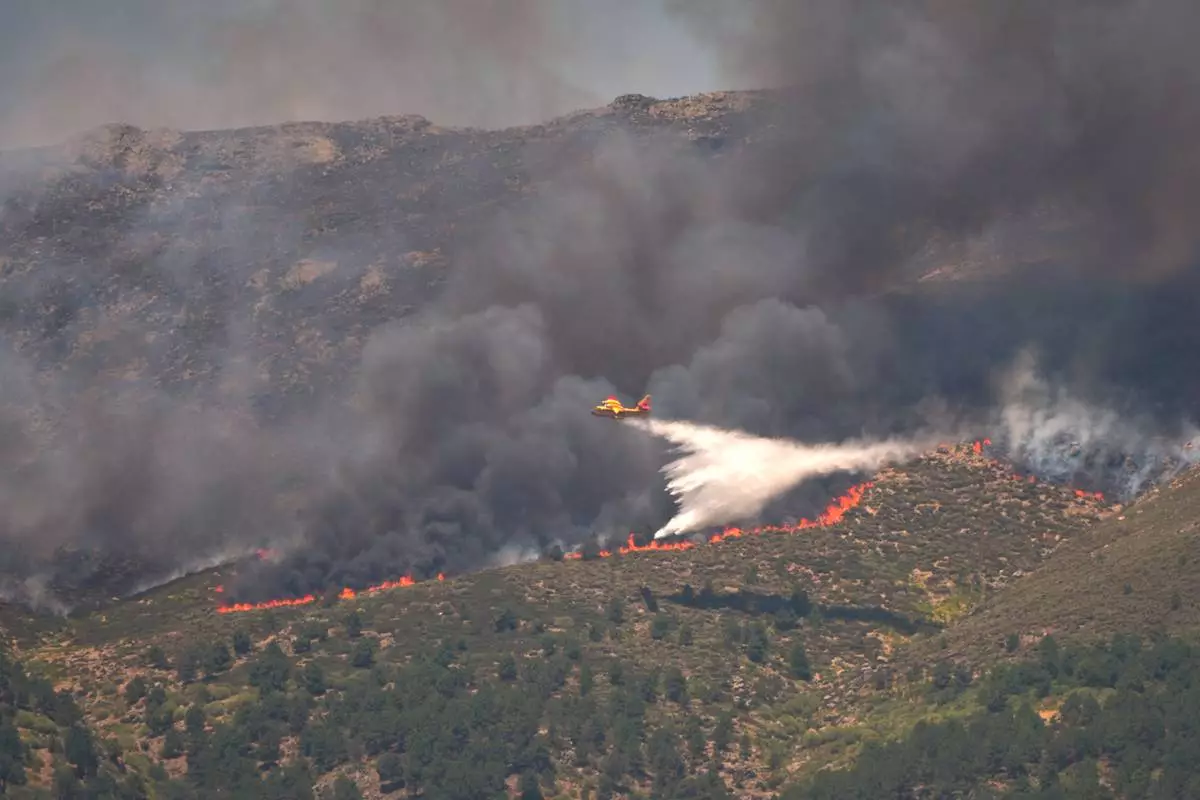
A seaplane drops water onto the fire as a wildfire advances near La Adrada, Ávila province, Spain, Friday, July 24, 2026. (AP Photo/Manu Fernandez)
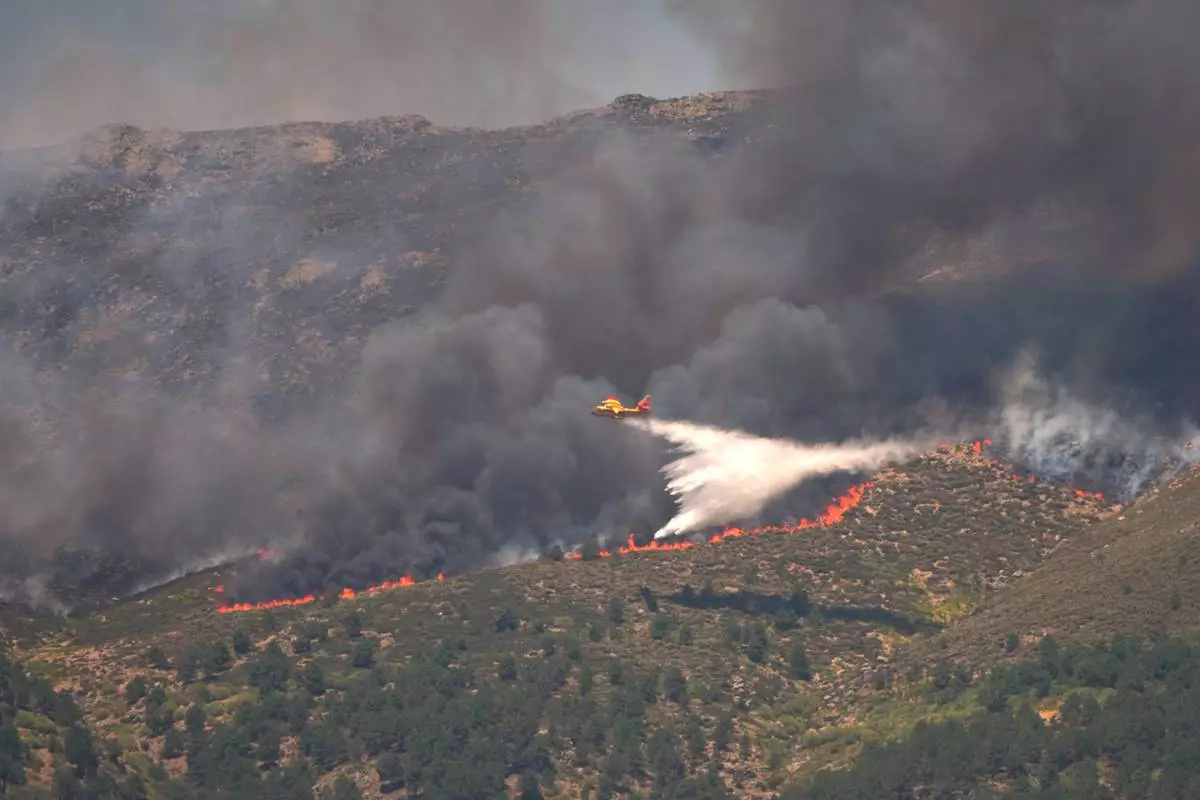
A seaplane drops water onto the fire as a wildfire advances near La Adrada, Ávila province, Spain, Friday, July 24, 2026. (AP Photo/Manu Fernandez)
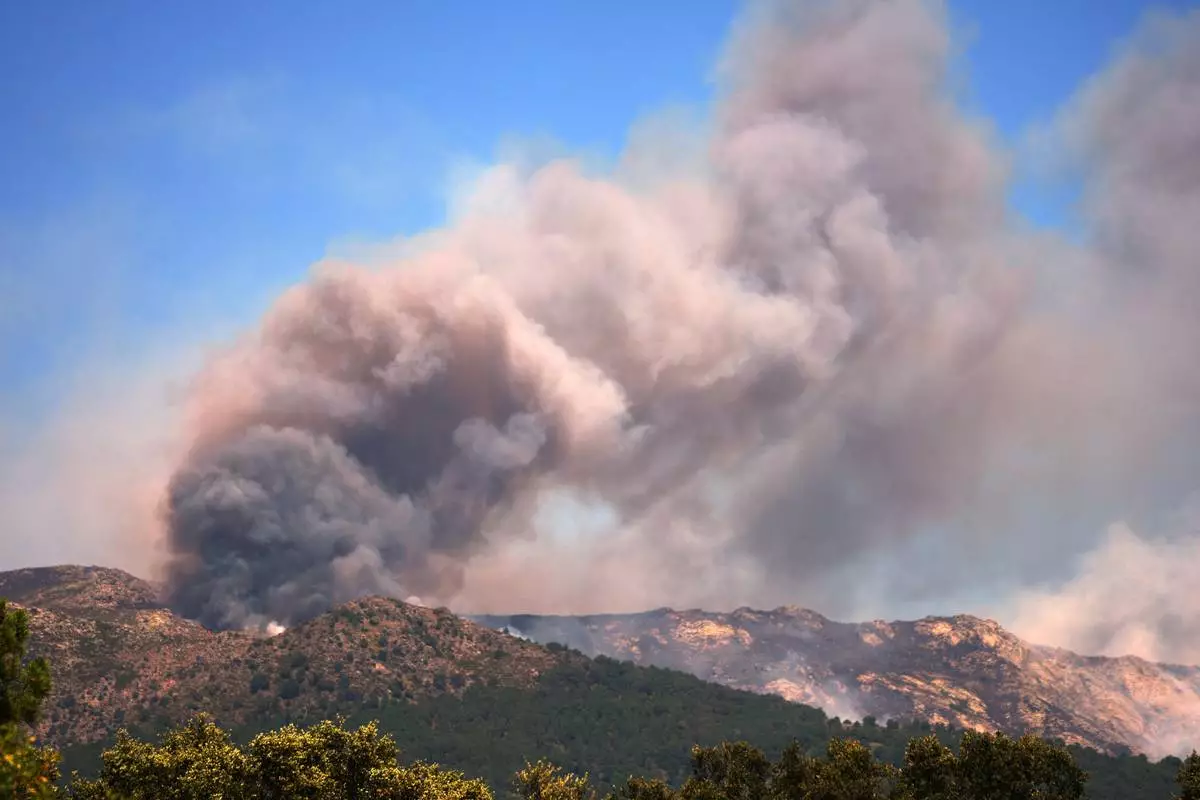
Smoke and flames rise as a wildfire advances near La Adrada, Ávila province, Spain, Friday, July 24, 2026. (AP Photo/Manu Fernandez)
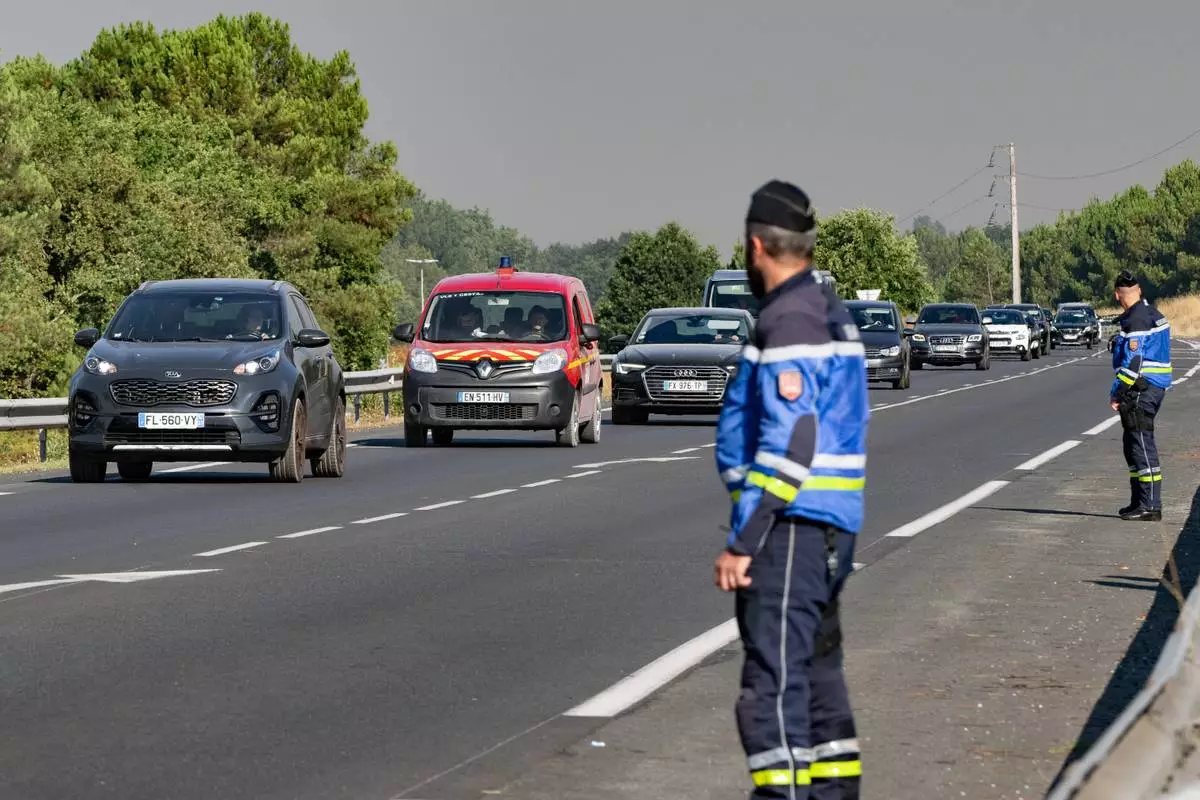
People leave the Ares region during wildfires, western France, Friday July 24, 2026. (AP Photo/Caroline Blumberg)
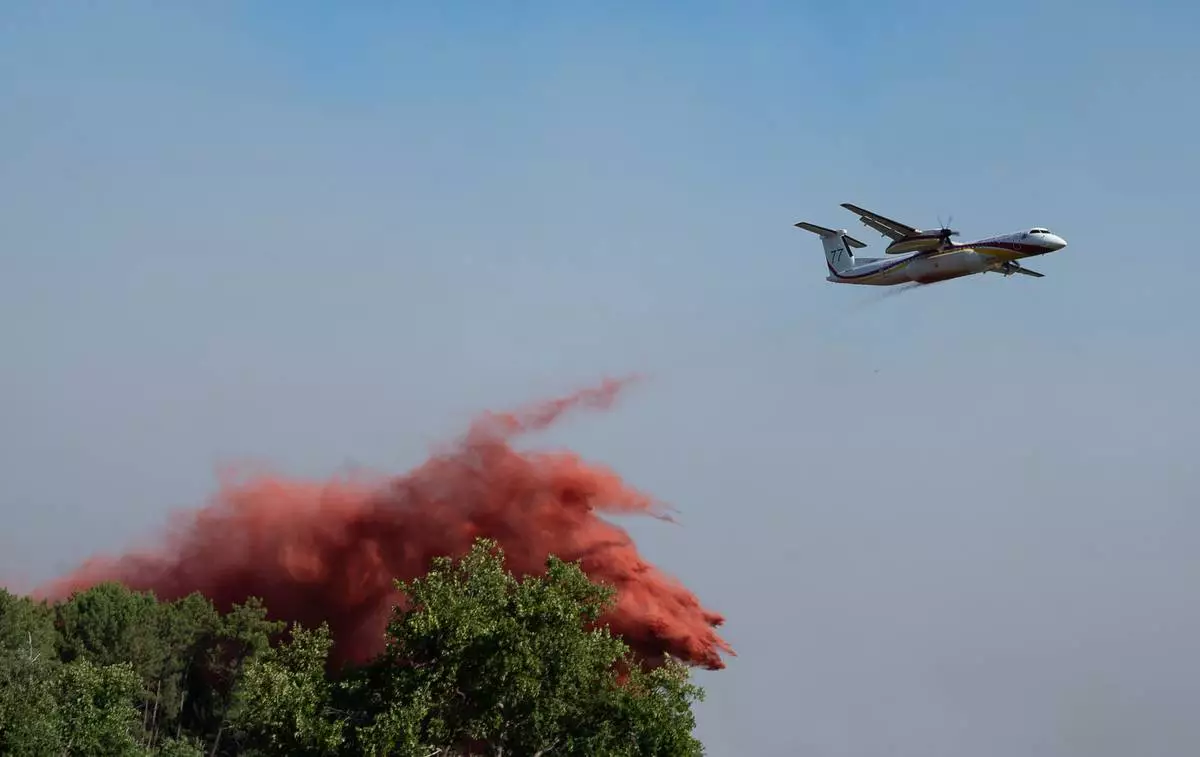
A water bomber drops water while fighting wildfires In Ares, western France, Friday July 24, 2026. (AP Photo/Caroline Blumberg)
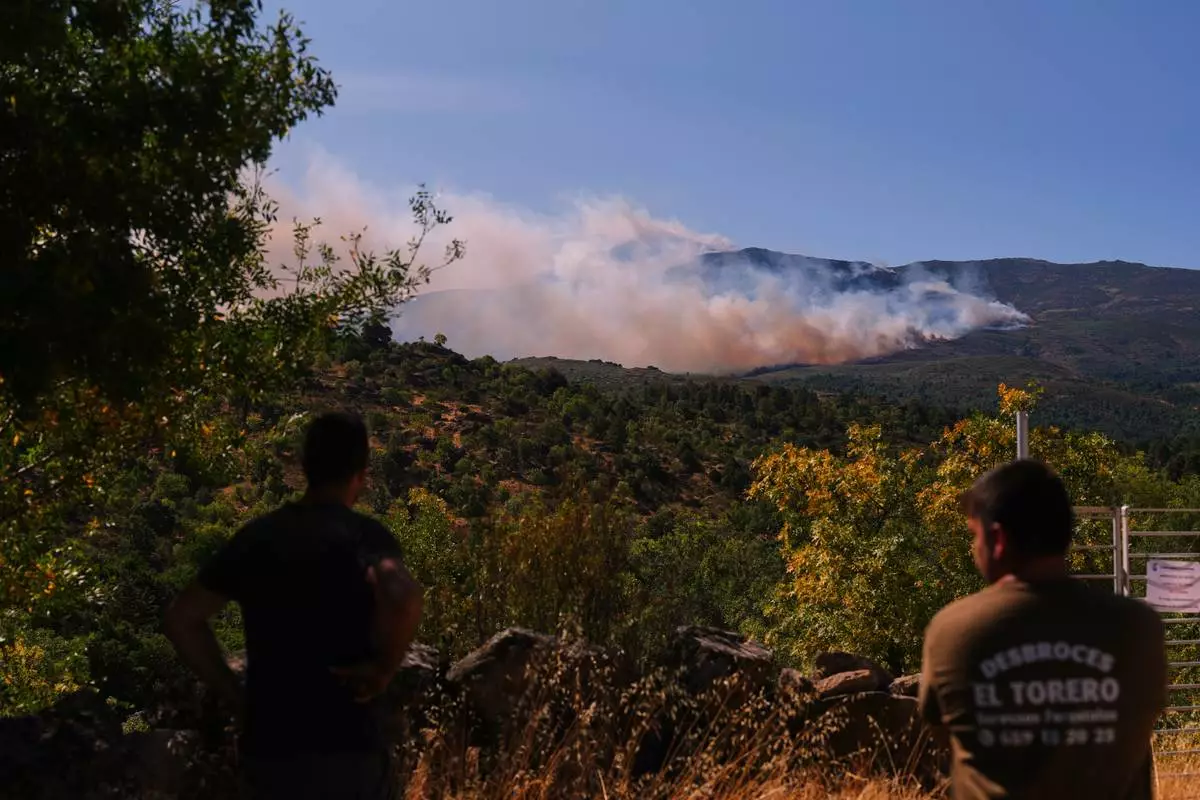
Smoke and flames rise as a wildfire advances near Burgohondo, Ávila province, Spain, Friday, July 24, 2026. (AP Photo/Manu Fernandez)
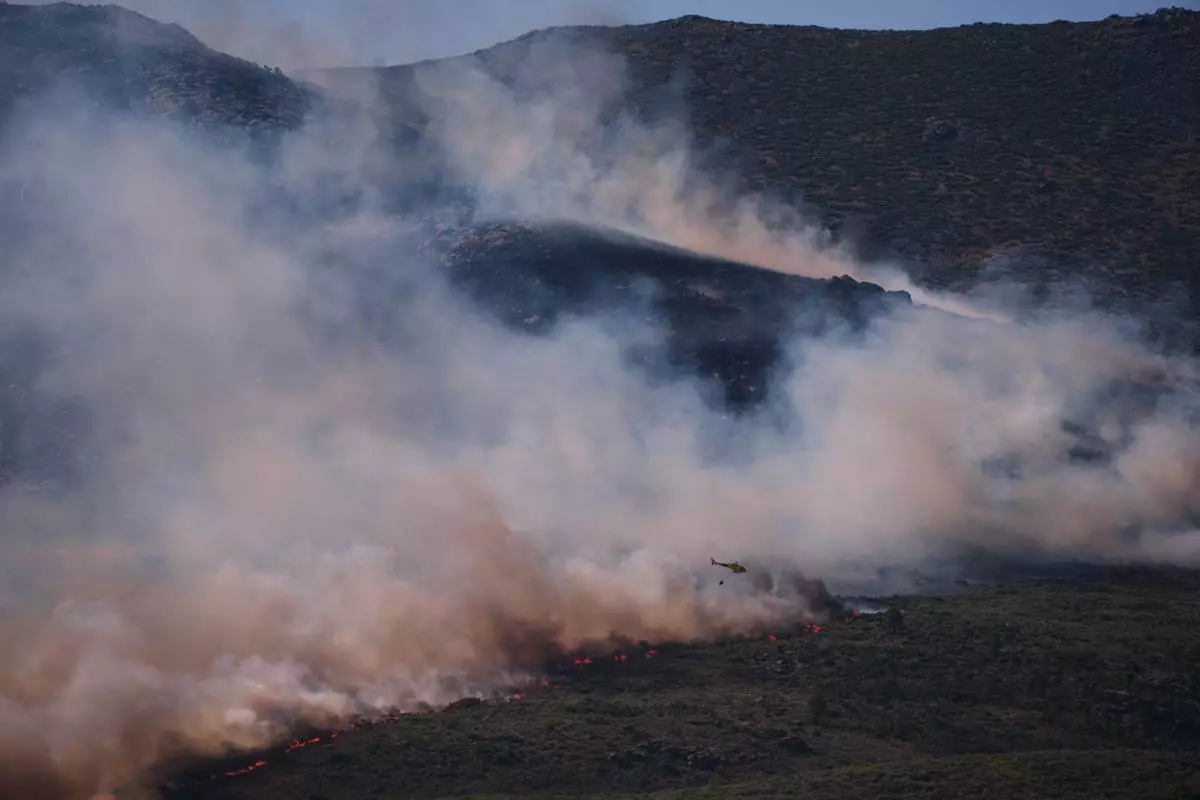
A firefighting helicopter drops water on the flames as a wildfire advances near Burgohondo, Ávila province, Spain, Friday, July 24, 2026. (AP Photo/Manu Fernandez)
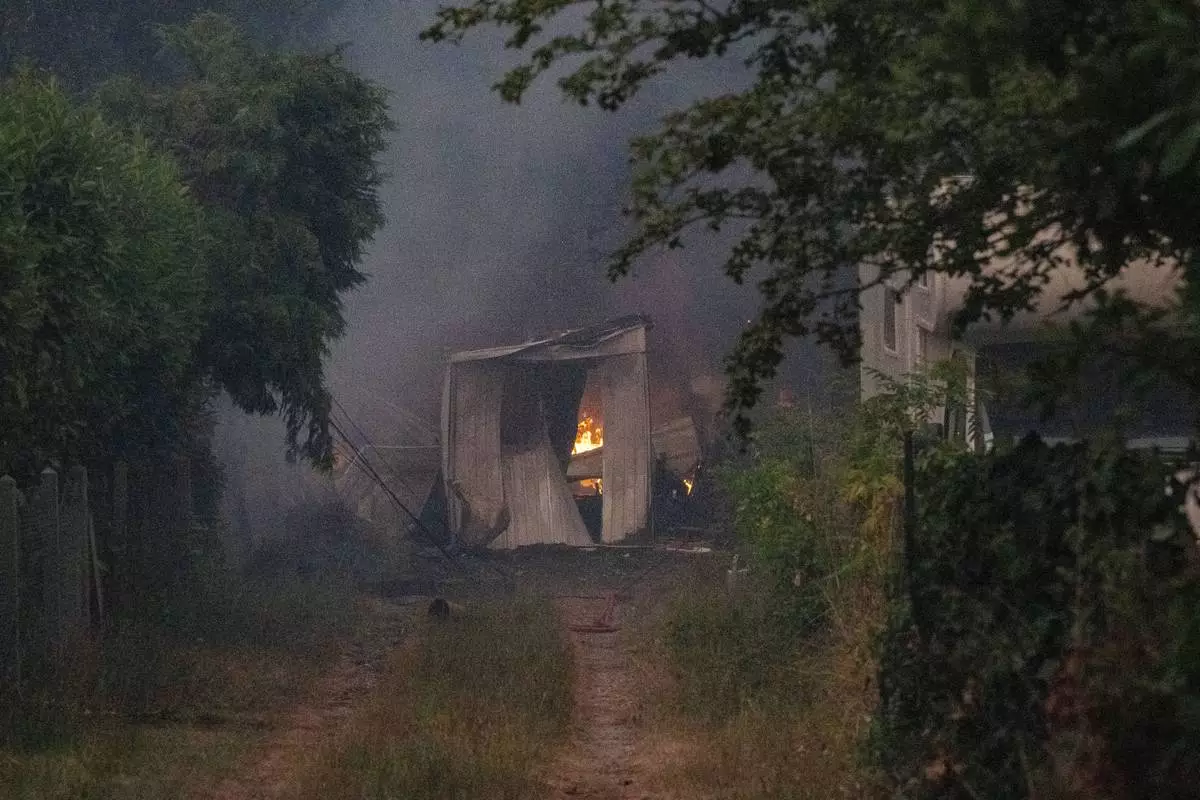
A burning barn is seen next to a farm house during wildfires near Le Porge, western France, Thursday, July 23, 2026. (AP Photo/Caroline Blumberg)
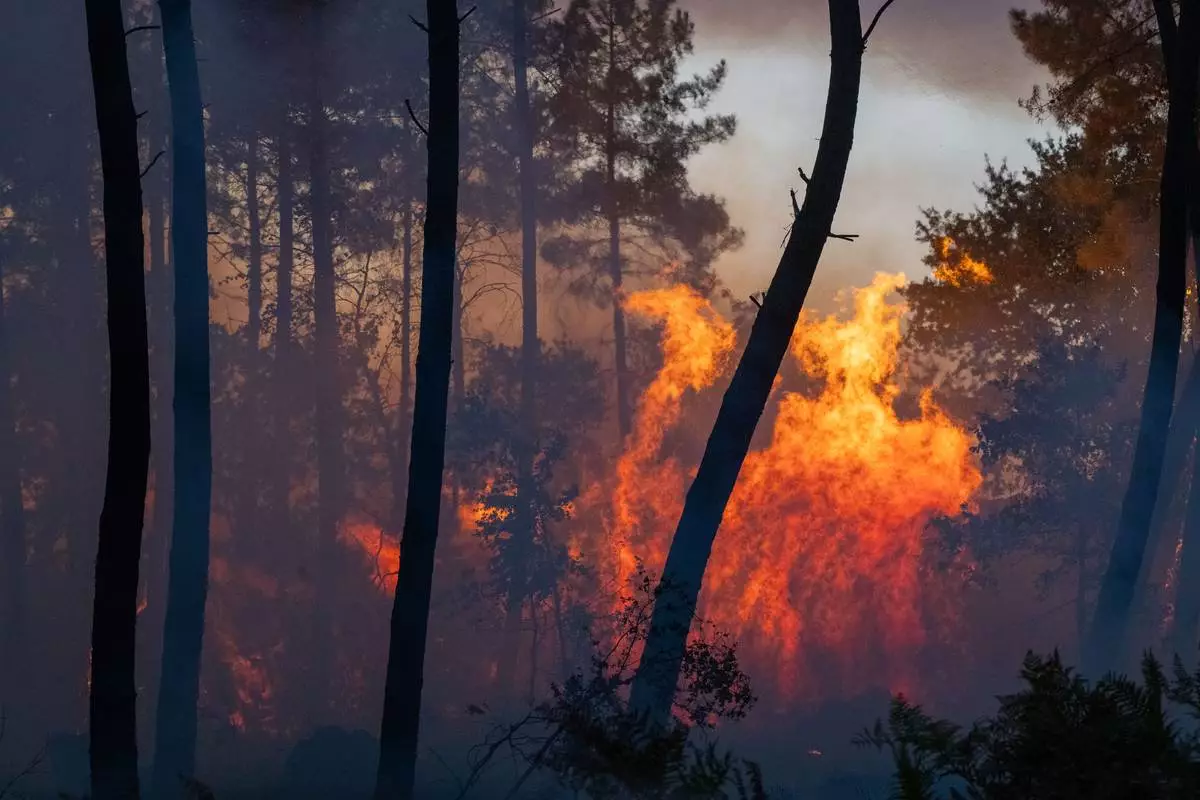
Wildfires advance near Le Proge region, western France, Thursday, July 23, 2026. (AP Photo/Caroline Blumberg)
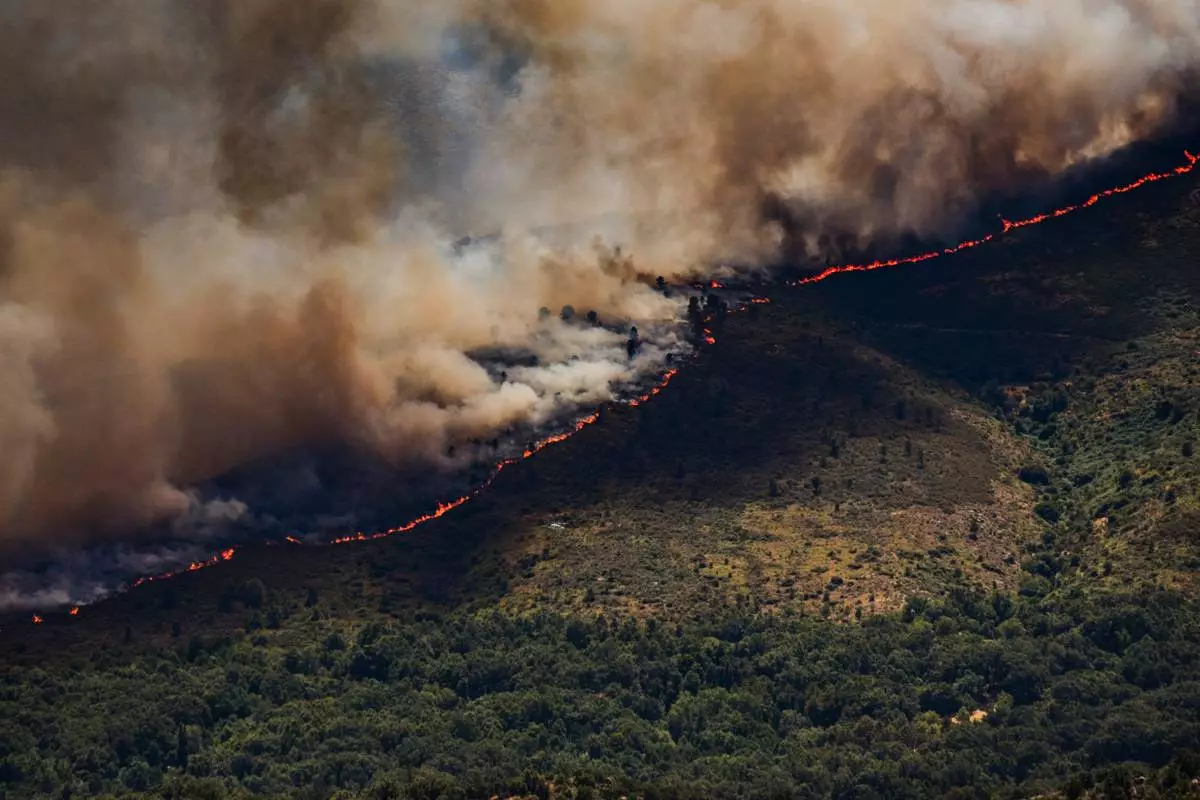
A wall of flames advances as a wildfire burns near Burgohondo, in Ávila province, Spain, Thursday, July 23, 2026. (Mateo Lanzuela/Europa Press via AP)
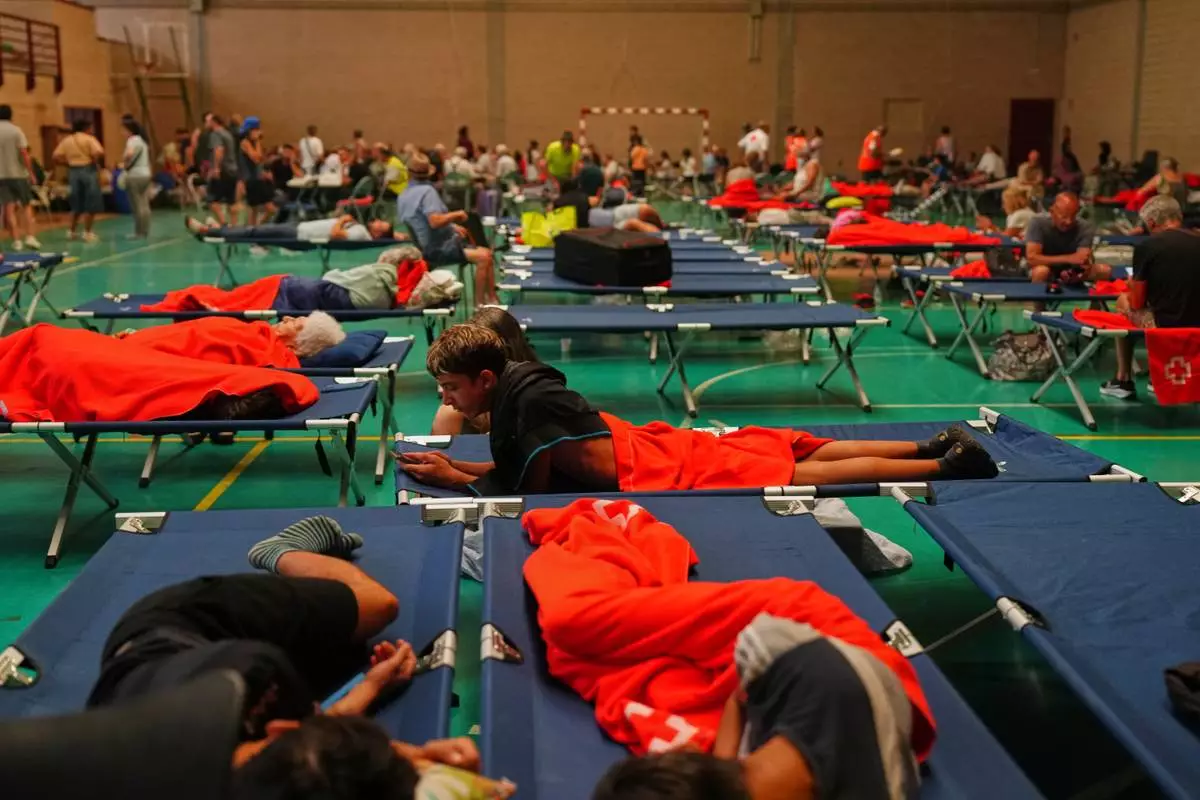
Residents spend the night at a sports center after being evacuated from their homes because of the threat of a wildfire in Cebreros, Ávila province, Spain, Friday, July 24, 2026. (AP Photo/Manu Fernandez)
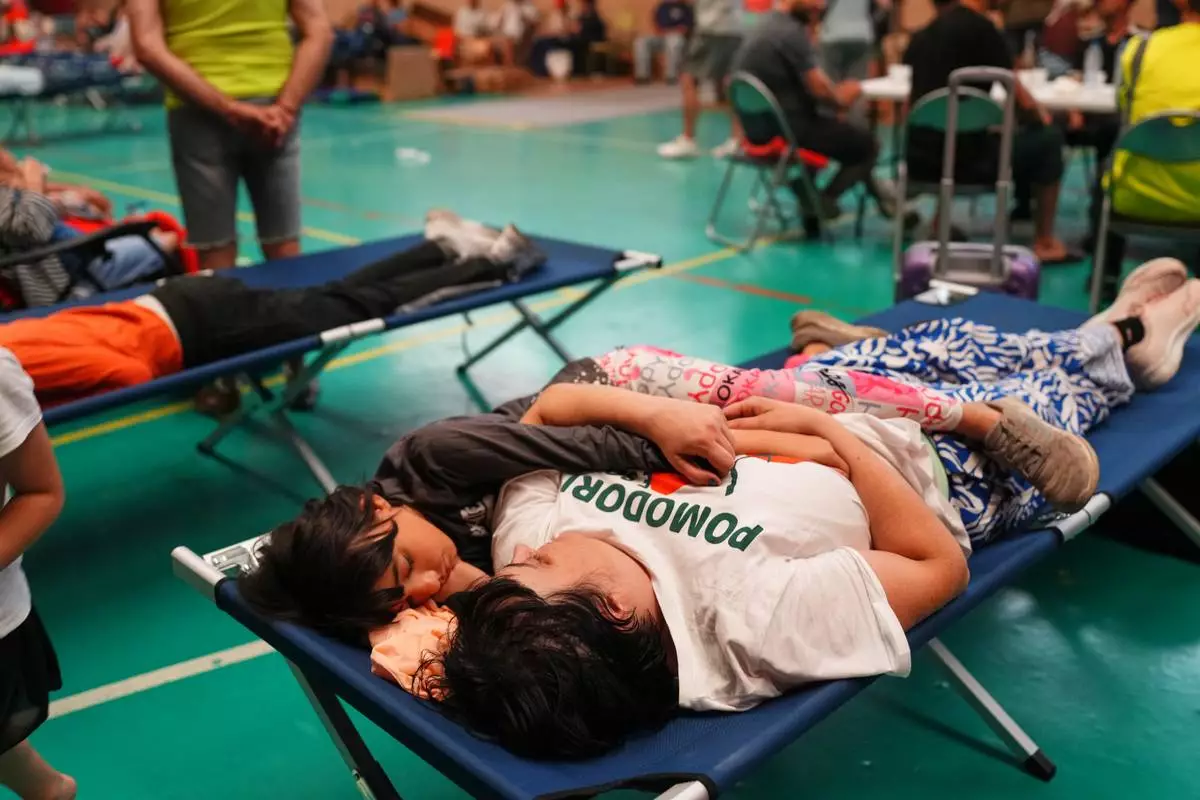
Residents spend the night at a sports center after being evacuated from their homes because of the threat of a wildfire in Cebreros, Ávila province, Spain, Friday, July 24, 2026. (AP Photo/Manu Fernandez)
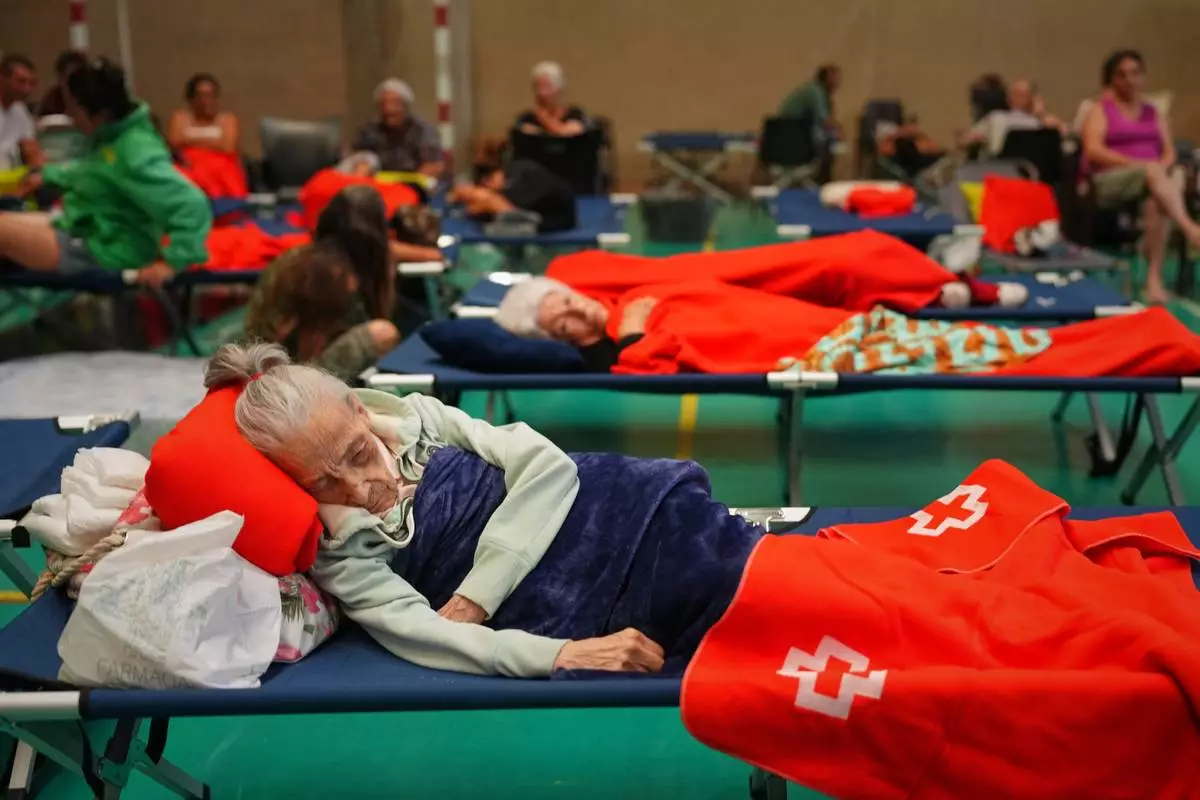
Residents spend the night at a sports center after being evacuated from their homes because of the threat of a wildfire in Cebreros, Ávila province, Spain, Friday, July 24, 2026. (AP Photo/Manu Fernandez)