SAO PAULO (AP) — Brazil’s Ministry of Indigenous Peoples said Friday it has signed a memorandum of understanding with Peru’s Ministry of Culture to strengthen cooperation in protecting Indigenous territories, particularly those of isolated peoples along the border between the two countries.
The agreement, which the Brazilian government said is expected to be published in the coming weeks, has been under negotiation since 2024. It will establish a framework for sharing information and coordinating protection efforts, the ministry said.
The announcement comes after a group of Ashaninka Indigenous leaders began meetings with federal officials in Brasilia, Brazil's capital, seeking urgent protection for their territory.
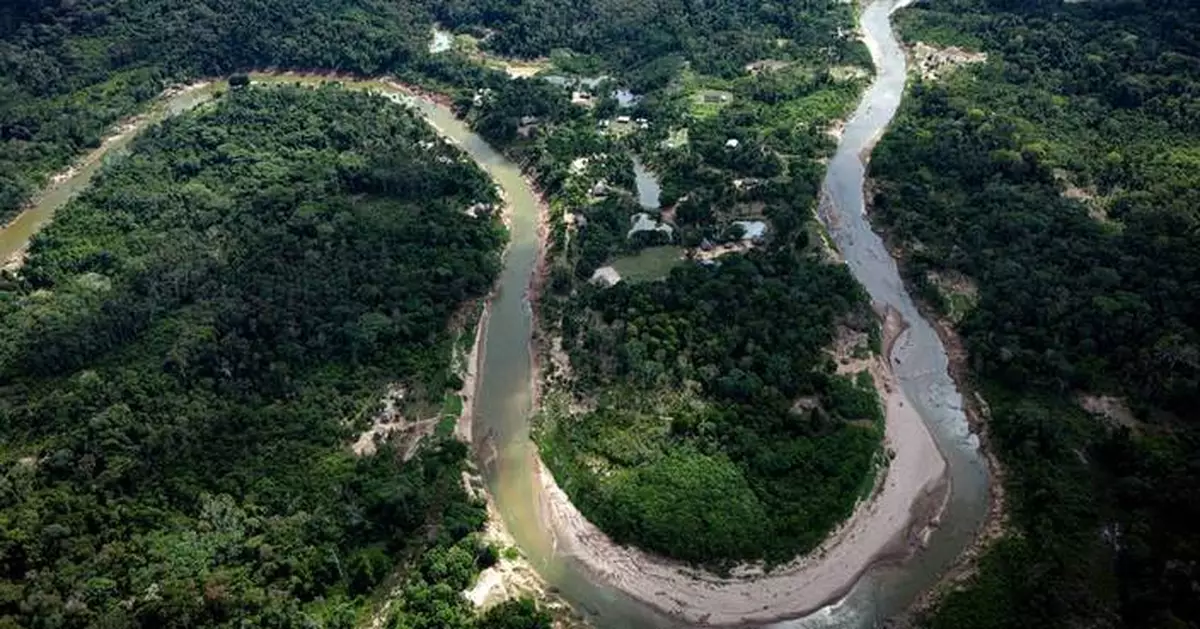
Earlier this month, five armed men carrying machine guns invaded their land, threatened families and searched for their main leaders. The Ashaninka territory spans the Brazil-Peru border in the western Amazon.
The ministry said that safeguarding Indigenous territories and the communities living there requires a “coordinated response to shared threats, such as invasions, illegal activities and pressure on traditional lands.”
Peru’s Ministry of Culture could not immediately be reached for comment.
Gangs and drug traffickers are increasingly encroaching on Ashaninka land and using the rivers in the Amazon and adjacent land for drug routes. The recent invasion is part of a broad transformation of the Amazon border as criminal routes expand, through what experts call the Solimoes River route.
Indigenous territories are key to this route. Experts say protecting Indigenous land is one of the most effective ways to curb deforestation in the Amazon, the world’s largest rainforest and a key regulator of global climate. But the very forests these communities help protect leave them vulnerable: Dense tree cover in remote, hard-to-reach areas offers attractive hiding sites for drug traffickers.
The ministry also said the federal police opened an investigation into the attacks on Ashaninka territory. On Monday, they launched an operation in the region alongside state authorities.
“The operation aims to prevent and combat incursions into Indigenous territories, criminal organizations, drug trafficking, environmental crimes and other cross-border offenses,” it said.
In a separate statement, the Brazilian Army said it had reinforced its presence along the border by deploying about 30 troops to the area. Various Indigenous groups have previously criticized these deployments for being temporary while the threats remain permanent.
The Army said it continues to patrol the region and that preliminary information from Indigenous leaders and government agencies suggests the armed men were Peruvians who entered the Indigenous territory from across the border.
—-
The Associated Press’ climate and environmental coverage receives financial support from multiple private foundations. AP is solely responsible for all content. Find AP’s standards for working with philanthropies, a list of supporters and funded coverage areas at AP.org.
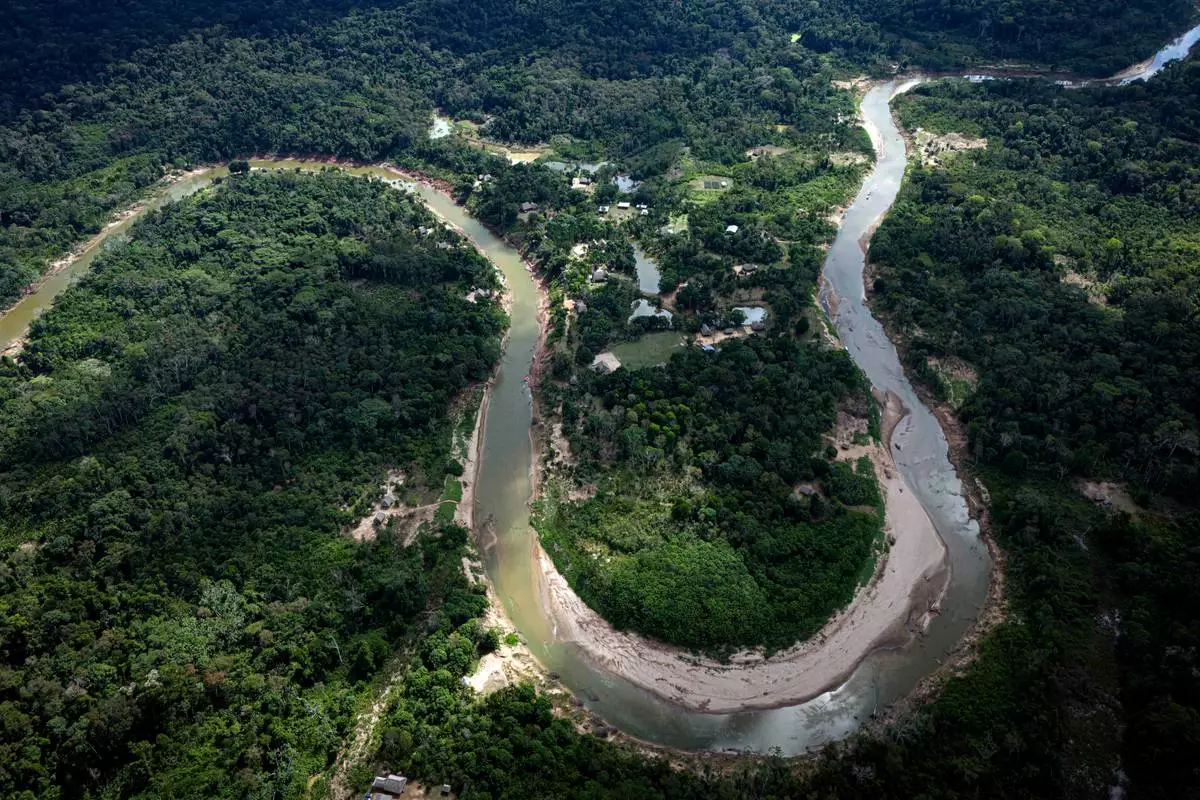
FILE - Ashaninka's territory sits along the winding Amonia River in Acre state, Brazil, June 22, 2024. (AP Photo/Jorge Saenz, File)
The United States has gradually expanded the scope of its attacks against Iran over the course of two weeks of punishing airstrikes that increasingly resemble the war’s opening salvos.
After a brief ceasefire in June following the signing of an interim deal to end the conflict, a battle for control over the Strait of Hormuz erupted, shattering the truce and pushing the countries back to the precipice of an all-out war across the Middle East.
The U.S. started off with intense waves of strikes on Iran’s navy and coastal defenses earlier this month, aiming to blunt Tehran's ability to attack ships in the strait vital to world energy supplies. In recent days, the U.S. has expanded its targets, hitting bridges and infrastructure in the south and striking deeper into the center of Iran and the outskirts of its capital, Tehran.
Despite its growing intensity and scope, the renewed U.S. aerial campaign is not as fierce in either way as the one at the start of the war, which began on Feb. 28. In just the first 100 hours of the war, the U.S. and Israel hit hundreds of military targets and killed top leaders of Iran, including Ayatollah Ali Khamenei.
The Iranian Health Ministry says 3,434 people have been killed since the war began, including 55 during the recent escalation. The latest U.S. strikes temporarily disrupted transportation and communications within Iran, and damaged water infrastructure used by thousands of people.
The U.S. military has said its recent barrages were aimed at degrading Iran’s ability to threaten vessels in the strait. But Iran hasn't backed down.
It has intensified strikes on ships in the strait and on Gulf countries housing U.S. bases, killing at least four American soldiers and damaging critical infrastructure. Israel has so far not been targeted in this latest round of fighting, and it has not joined the U.S. in launching attacks.
Here is a look at what the U.S. has been striking and what it may have achieved:
Not long after the countries had reached an interim ceasefire deal, Iran began striking ships in the Strait of Hormuz, triggering tit-for-tat attacks with the U.S. By July 12, the U.S. military intensified its bombing campaign, and a day later, President Donald Trump reimposed a U.S. blockade on Iranian ports.
In two days of bombardment, the U.S. military said it struck dozens of targets, including air-defense systems, coastal radar sites, missile and drone factories and launchers, and small boats. It used precision munitions, naval vessels and, for the first time, one-way attack sea drones.
The strikes focused on coastal provinces along the strait and Persian Gulf: Khuzestan, Bushehr and Hormozgan. The city and port of Bandar Abbas, which is on the strait and home to critical naval and trade infrastructure, bore the initial brunt. Strikes also hit key islands in the Gulf -- Qeshm, Abu Musa and Kish. Further east, naval and military bases in Sistan and Baluchistan province on the Gulf of Oman have been hit.
A flurry of strikes over two days damaged at least six bridges and a tunnel around Bandar Abbas, images on state TV showed. The goal appeared to be to sever the links of the Revolutionary Guard bases there with the rest of the country. Another strike hit a railway junction west of the port city.
Residents captured images of traffic jams on some roads following the strikes.
Over the past two weeks, other strikes in Bandar Abbas hit the offices of the radio and communications regulatory authority, which manages Iran’s radio-frequency spectrum. For three days, the U.S. hit a maritime communications tower in one of the city's ports, totally destroying it on July 17. Another communications tower was hit about 120 kilometers (75 miles) down the coast.
Strikes also disrupted communications temporarily between the mainland and the islands of Kharg and Qeshm, though by the 10th day of the campaign, Iranian authorities said they had restored connections. A fishmeal production factory was hit in Qeshm.
At the northern end of the Persian Gulf, power outages were reported in parts of Khuzestan province after strikes there.
Other infrastructure has also been hit, including an agricultural water pumping station in Khuzestan, killing one person, according to local officials. A reported strike on July 18 hit a water desalination plant in Jask, on a peninsula just outside the Strait of Hormuz, destroying the pumping stations and affecting water supply to 10,000 residents nearby, according to Iranian officials. That attack followed an Iranian strike on U.S. bases in Jordan, where at least three soldiers were killed and others were injured.
A U.S. strike on a border crossing with Iraq, where hundreds of pilgrims had gathered, killed two people, according to state media.
The American military has said it is hitting “logistics infrastructure.” Last week, Trump warned that for every Iranian attack on the strait, a power plant or bridge will be hit.
Iranian media have been quick to report that roads and tunnels hit by the Americans were under repair, or that alternative routes were established to connect the south with the rest of the country.
By the third day of the reignited conflict, U.S. strikes moved to hit deeper inside Iran. Targets included Revolutionary Guard and military bases believed responsible for attacks on American bases in the Gulf, as well as reported missile production units, military installations and airports used by the Guard.
U.S. forces hit a military barracks in the city of Iranshahr in the far southeast of the country, killing seven soldiers and wounding a dozen others, according to Iranian officials. The Iranian military had recently claimed it conducted drone attacks against American bases in the region, including one in Jordan on July 15, according to a report by the Institute for the Study of War and the Critical Threats Project.
At least two strikes hit a Revolutionary Guard Aerospace Force installation in Khuzestan province, also believed to have been involved in attacks on U.S. bases.
So far, the Tehran area has only been hit twice, in contrast to the first round of the war, when the capital was pounded by hundreds of strikes, mainly by Israel. A July 19 strike hit the Khojir military complex near Tehran, one of Iran’s main missile factories. A missile site outside the capital was later hit.
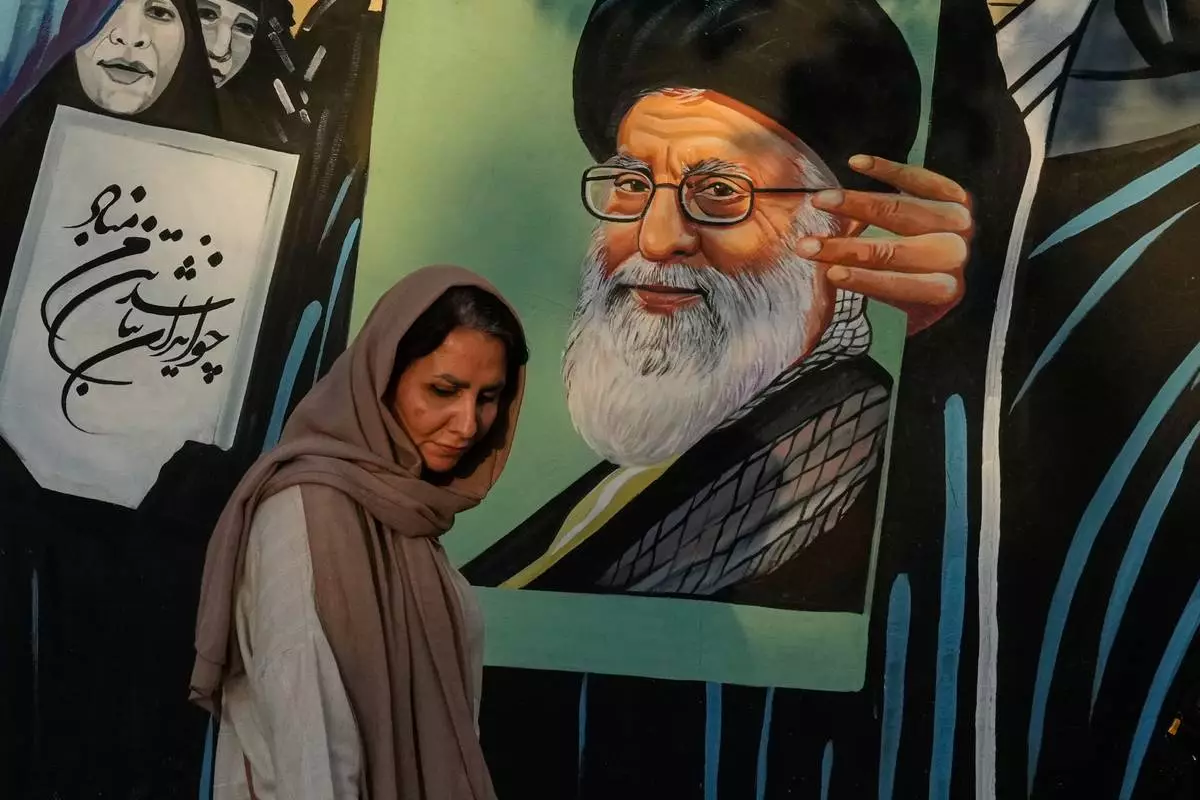
A woman walks past a mural depicting a portrait of the late Iranian Supreme Leader Ayatollah Ali Khamenei, who was killed in the U.S. and Israel strike on Feb. 28, in downtown Tehran, Iran, Saturday, July 18, 2026. (AP Photo/Vahid Salemi)
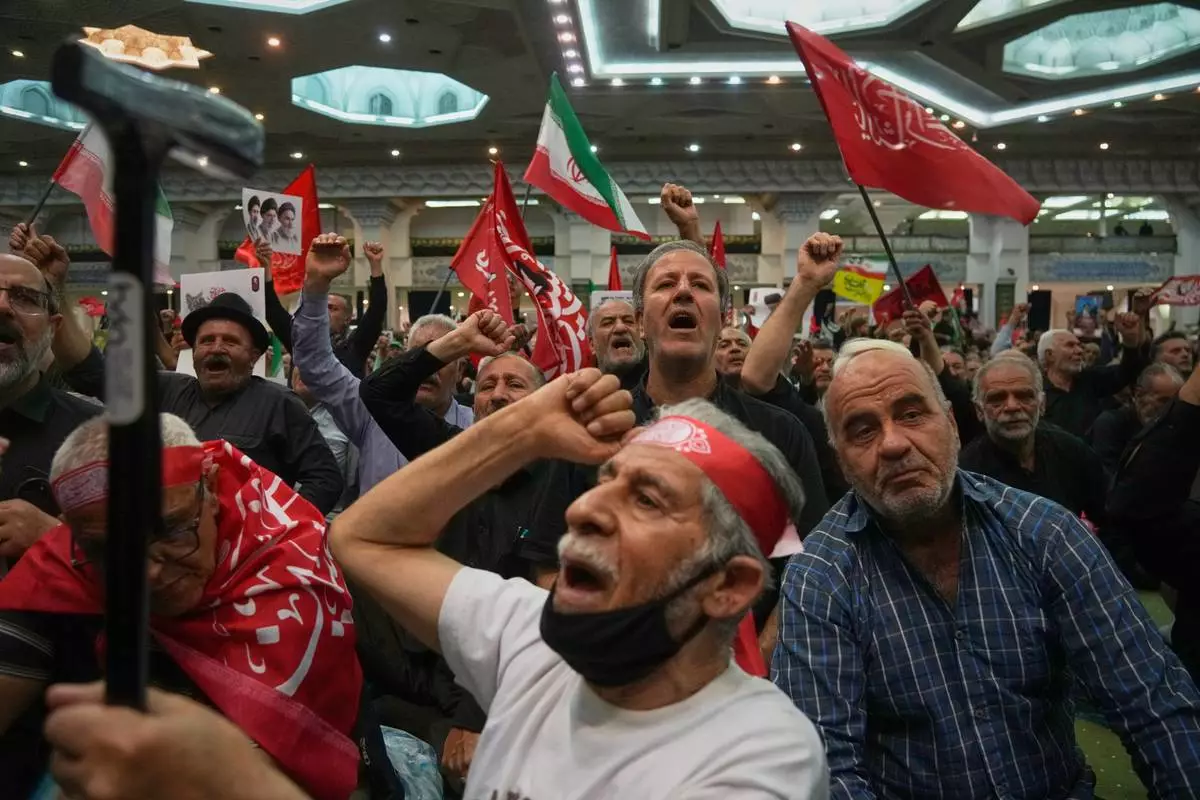
Mourners chant as they raise their fists during a gathering commemorating the late Supreme Leader Ali Khamenei at the Imam Khomeini Mosalla Grand Mosque in Tehran, Iran, Tuesday, July 14, 2026. (AP Photo/Vahid Salemi)
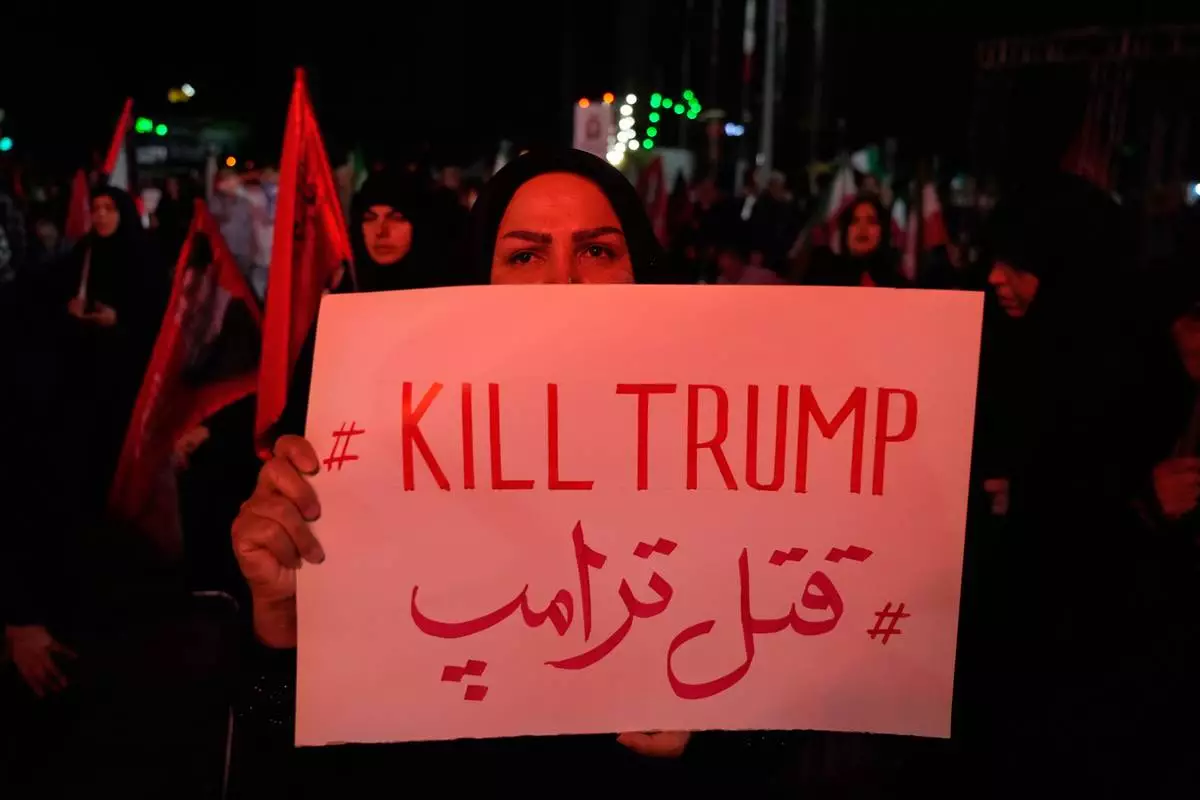
A pro-government demonstrator holds an anti-Trump placard in a gathering commemorating the late Iranian Supreme Leader Ayatollah Ali Khamenei at a square in Tehran, Saturday, July 11, 2026. (AP Photo/Vahid Salemi)
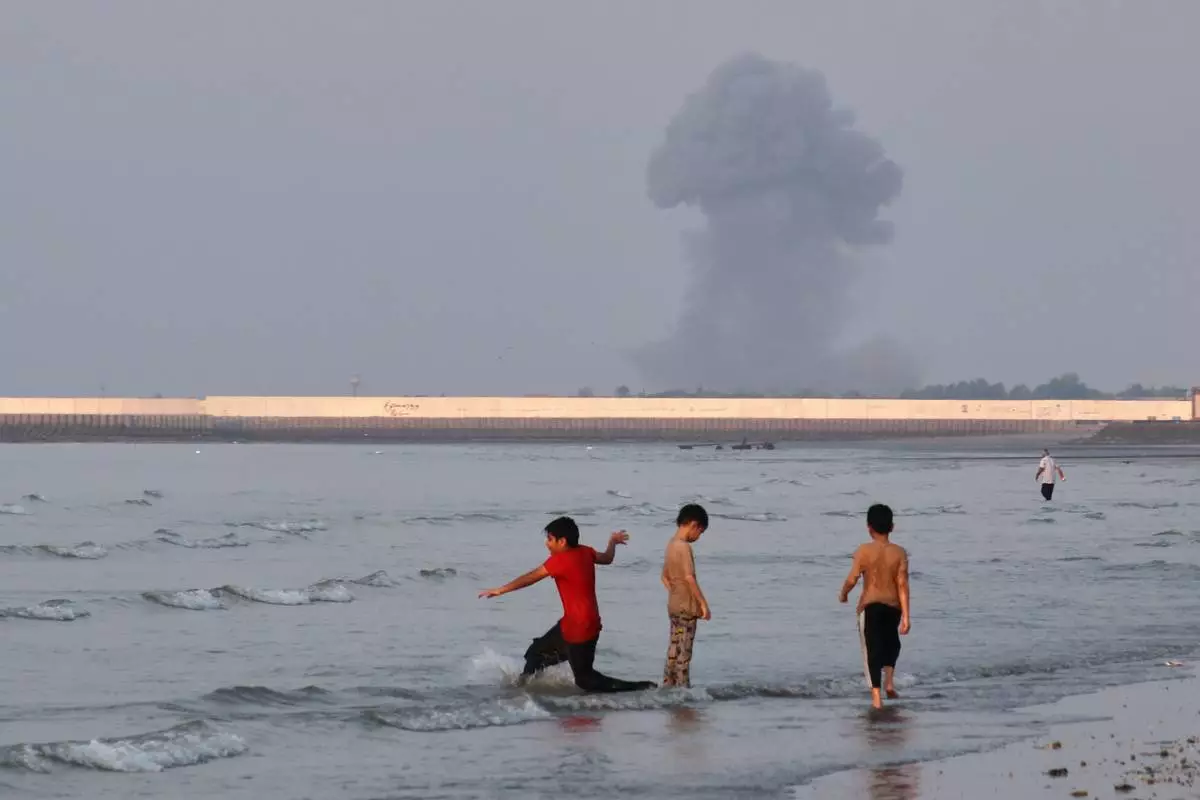
Three boys play in the shallow waters of the Strait of Hormuz, as a plume of smoke rises from an explosion in the background, off Bandar Abbas, Iran, Monday, July 13, 2026. (Razieh Poudat/ISNA via AP)