BEND, Ore. (AP) — Firefighters battling two of the largest blazes burning in Oregon were bracing for windy and dry conditions forecast to arrive in some areas of the state Friday and into Saturday.
Crews have been able to build some containment lines around the Akawa Butte Fire, which is burning near Sisters, a town about 22 miles (35 kilometers) northwest of Bend. Started by lightning on July 16, the fire has scorched 42 square miles (109 square kilometers) and destroyed two homes.
Click to Gallery
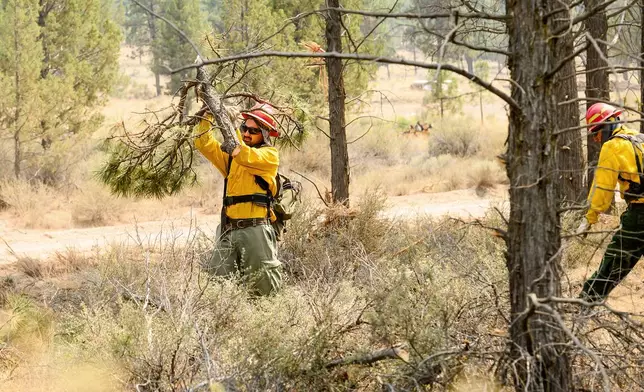
Firefighters clear vegetation as the Akawa Butte fire approaches on Friday, July 24, 2026, near Sisters, Ore. (AP Photo/Noah Berger)
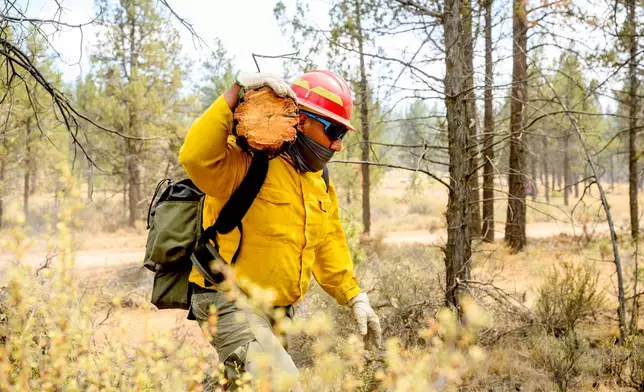
A firefighter clears vegetation as the Akawa Butte fire approaches on Friday, July 24, 2026, near Sisters, Ore. (AP Photo/Noah Berger)
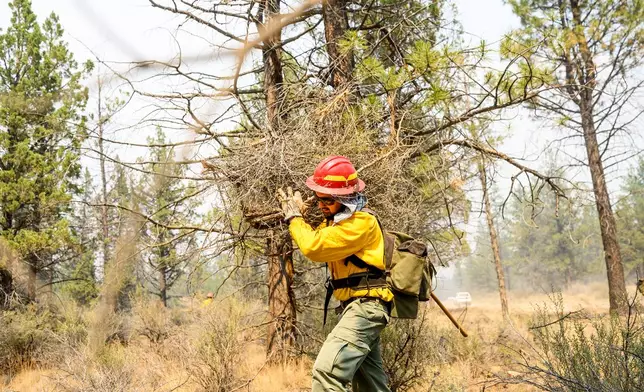
A firefighter clears vegetation as the Akawa Butte fire approaches on Friday, July 24, 2026, near Sisters, Ore. (AP Photo/Noah Berger)
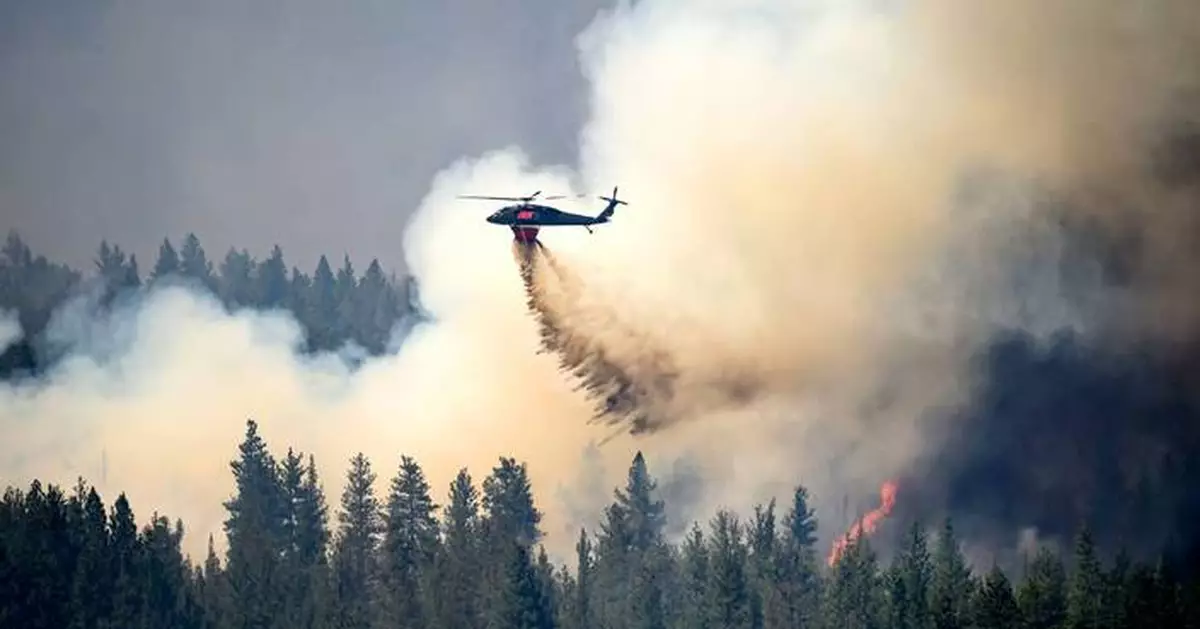
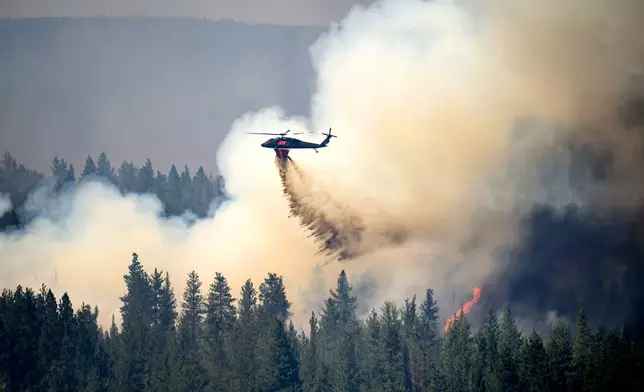
A helicopter drops water on the Akawa Butte fire on Friday, July 24, 2026, near Sisters, Ore. (AP Photo/Noah Berger)
It has been designated as the nation’s top priority wildfire because of its proximity to people. The designation will allow officials to tap into resources from other states and other countries, Oregon Gov. Tina Kotek said Friday.
Strong winds and low humidity were expected later Friday and Saturday and could lead to increased fire activity, officials warned. They urged residents to be prepared to evacuate if necessary.
The National Weather Service issued a red-flag warning in central Oregon through Saturday, which means conditions such as low humidity, warm temperatures and strong winds can create an extreme wildfire risk.
The most critical period for Sisters, a town of 3,800 people about 3 miles (5 kilometers) south of the fire, will be the next 24 to 48 hours, said Sisters Mayor Jennifer Letz. She said about half of the town's population has been told to be ready to leave if needed.
“If we can get through this weekend, we will probably be in a good position moving forward. But right now, we do have the north half of the city under orders to be prepared, to have a plan, to get their things together," she said.
There are more than 1,000 firefighters battling the blaze and more are expected to join them to help strengthen and expand containment lines. The blaze has shown extreme fire behavior, including 200-foot (61-meter) flame heights and a pyrocumulus cloud that generated its own lightning, Kotek said.
“This is all-hands-on-deck here in Oregon,” she said.
It’s not Oregon’s only significant wildfire, making this an especially challenging period for emergency responders, she said.
There are dozens more fires burning across the state, choking the air in Oregon and sending smoke across the country. Kotek said every available firefighter and firefighting resource is being used in the field.
The biggest blaze is the Rowe Creek Complex which has destroyed 300 square miles (777 square kilometers) since being sparked by lightning on July 15. It was nearly 30% contained on Friday.
Firefighters have made progress on the northern portion of the blaze, where they have built containment lines, but strong winds fueled the fire and it expanded on its southern end after spot fires jumped containment lines, said Thadd Niebel, an operations chief with the U.S. Forest Service.
Crews were being reassigned to the southern portion of the blaze to strengthen containment lines and protect homes and other buildings ahead of winds forecast to reach 20 mph (32 kph), Niebel said.
Rodriguez reported from San Francisco.
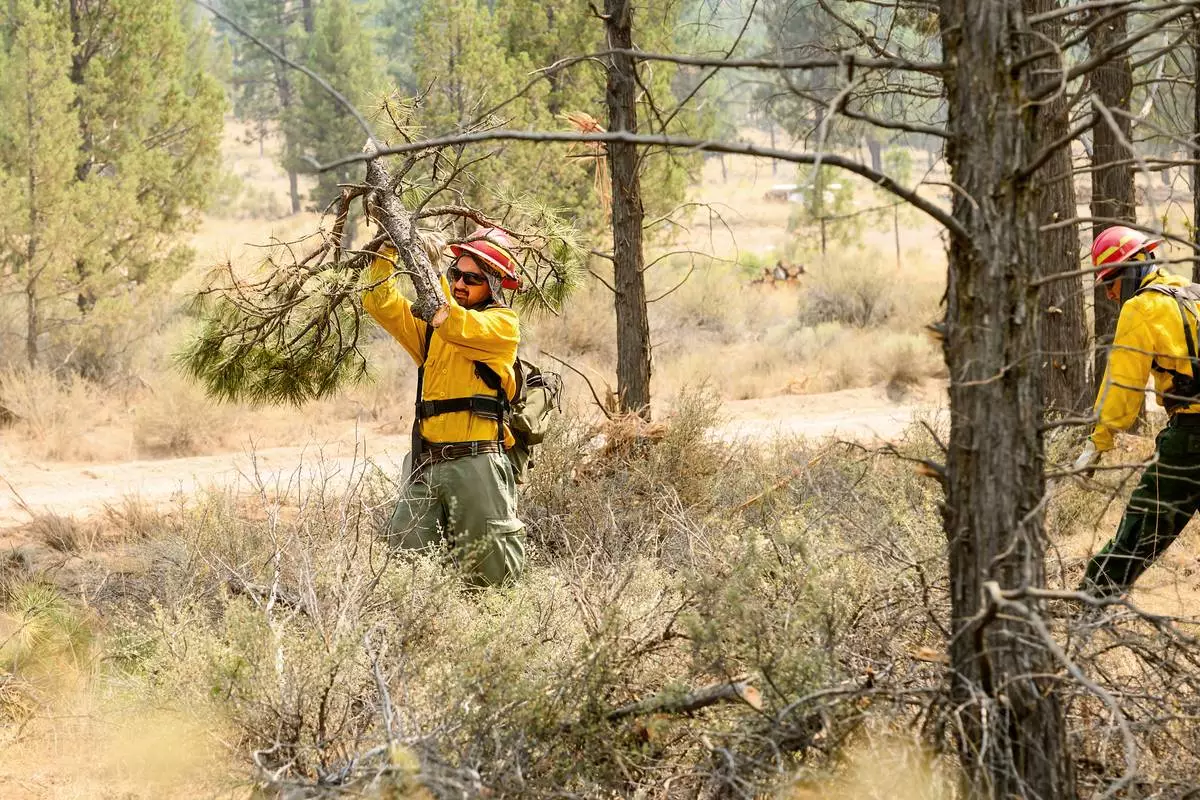
Firefighters clear vegetation as the Akawa Butte fire approaches on Friday, July 24, 2026, near Sisters, Ore. (AP Photo/Noah Berger)
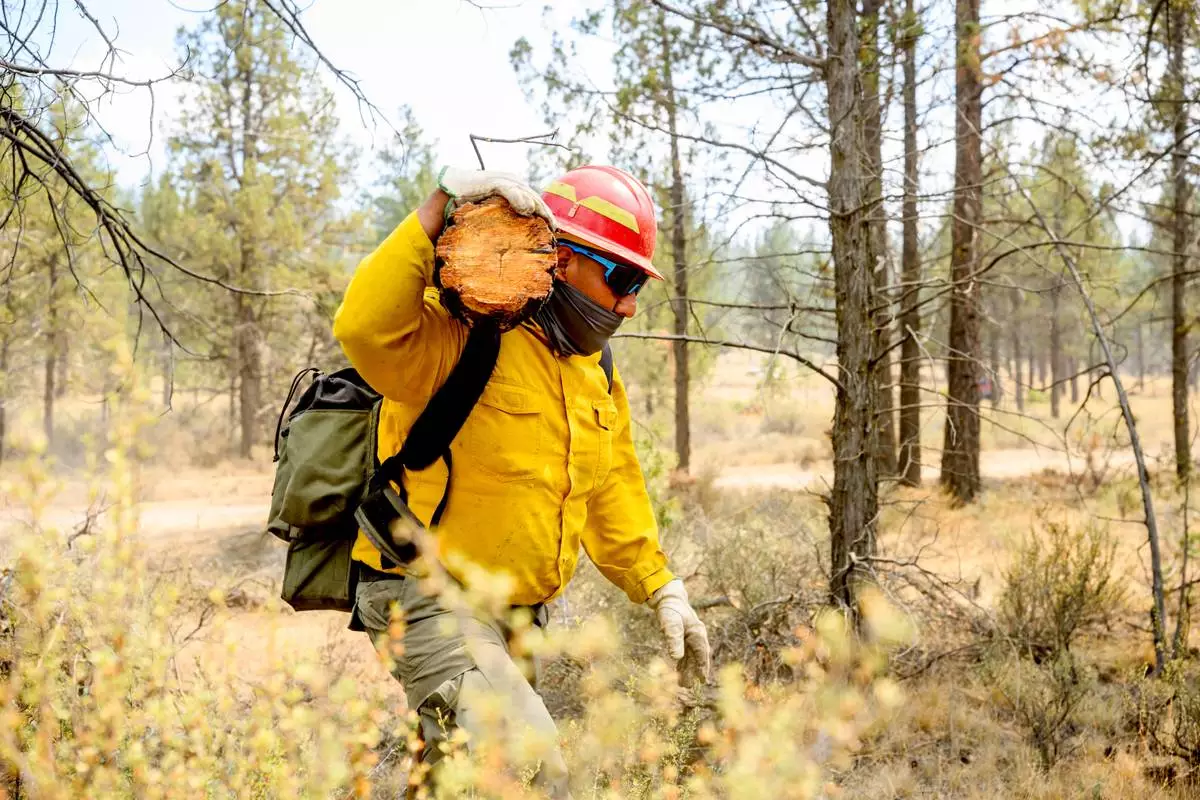
A firefighter clears vegetation as the Akawa Butte fire approaches on Friday, July 24, 2026, near Sisters, Ore. (AP Photo/Noah Berger)
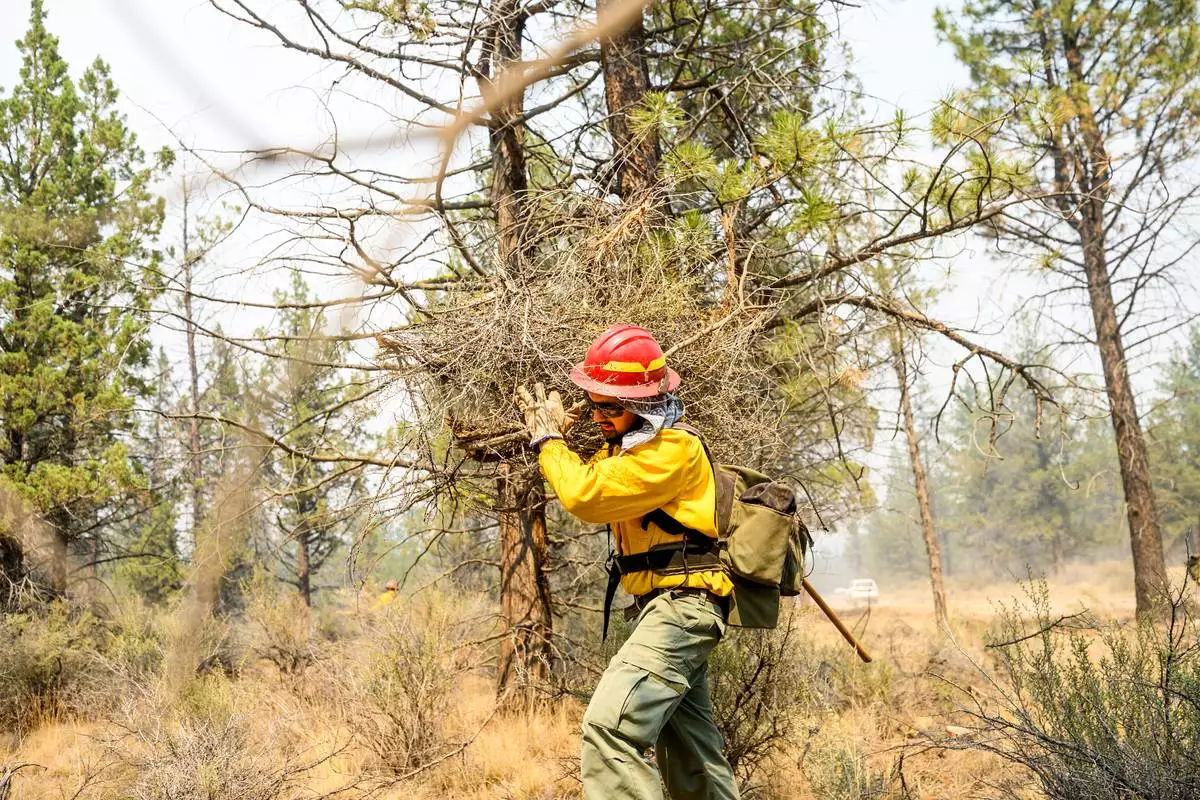
A firefighter clears vegetation as the Akawa Butte fire approaches on Friday, July 24, 2026, near Sisters, Ore. (AP Photo/Noah Berger)
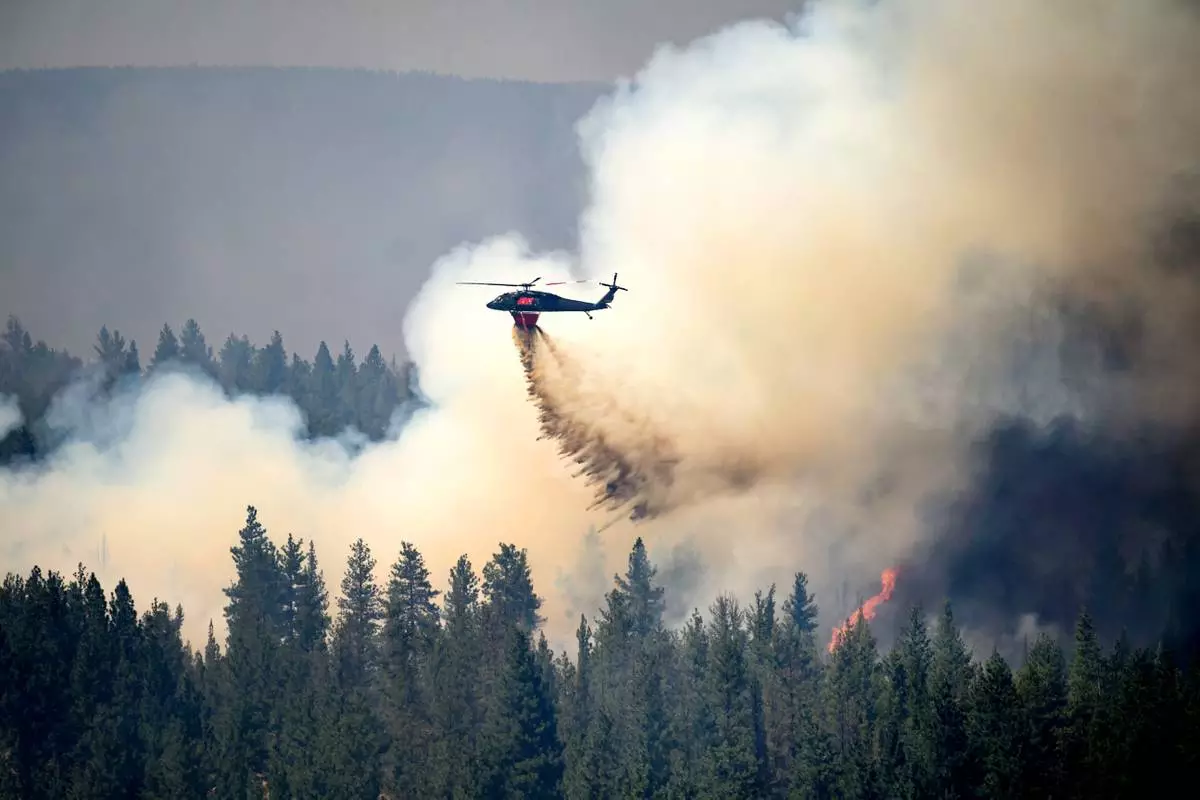
A helicopter drops water on the Akawa Butte fire on Friday, July 24, 2026, near Sisters, Ore. (AP Photo/Noah Berger)
RALEIGH, N.C. (AP) — In 2022, Democrat Wiley Nickel ran as a moderate and narrowly won North Carolina's 13th Congressional District by about 9,000 votes. Two years later, the current congressman, Republican Brad Knott, ran as a conservative and coasted into the U.S. House by more than 70,000 votes.
Voters didn't change their minds. Politicians changed their voters.
The Republican-controlled legislature redrew the state's congressional map to transform what was one of the last remaining swing districts in the South to a safe GOP seat. Lawmakers split the rectangular 13th District into an hourglass shape that carved out Democratic voters in Raleigh and replaced them with a swath of rural counties reaching up to the Virginia border.
Swing seats, meaning districts that a presidential candidate won by 5 percentage points or fewer in the previous election, are disappearing from the national map. For decades after World War II, the number of competitive seats in the House slowly eroded as the United States grew more polarized, voters were less likely to split their ticket between parties and people moved closer to like-minded neighbors, creating Democratic strongholds in urban areas and Republican ones across rural America.
That decline accelerated over the past year after Republican President Donald Trump sparked a partisan redistricting battle. The number of swing districts fell from 45 to 37. There were 96 House seats that fit the modern definition of a swing seat in 1964, according to one count from the 1970s, when the shrinking number of such districts was first noted.
That means the overwhelming majority of House seats are effectively won in primaries, with the support of only a fraction of voters who usually are at the extreme ideological end of their party.
Nickel saw the impact firsthand during his lone term in Washington.
“The biggest divide I found in Congress wasn’t Democrat versus Republican, it was safe seats versus competitive seats,” Nickel said. “When your focus is on running a campaign where you talk to every single voter, you look at things differently and your focus is on solving problems.”
Unite America, an organization pushing alternatives to party primaries, calculated that 87% of the representatives elected to the House in 2024 were chosen by 7% of the country’s voters.
“Voters don’t have any way of holding Congress responsible, except for a narrow window of swing districts,” Nick Troiano, the group's executive director, said in an interview, adding that he expects things to get worse in November. “The least competitive election of our lifetimes will lead to the least accountable and least representative Congress of our lifetimes.”
Republicans are hoping the smaller number of competitive seats puts a low ceiling on what Democrats can win on Nov. 3.
“Both sides are fighting over a narrow House battlefield,” said Mike Marinella, a spokesman for the National Republican Congressional Campaign. “It's a knife fight in a dark alley.”
The alley may be widening this year, but it still is an alley.
Democrats have expanded their political targets, given the unpopular war with Iran and voters angry about high prices. Both parties are spending on campaigns in Republican areas that normally would not be competitive.
Even in what is shaping up as a difficult political environment, however, Republicans are protected by the limited number of seats in play.
“Even if there's the kind of swing we got in 2006, there's not going to be 40 seats changing hands. There's going to be 20 seats changing hands,” said Ian Shapiro, a Yale political scientist.
There is a long-standing debate among academics as to how much of the decline can be blamed on partisan-motivated redistricting, known as gerrymandering, and how much on Americans' increasing proclivity to live among like-minded people who vote the same way. Multiple studieshave found that without partisan gerrymandering, the House would have about double the number of competitive seats it has now.
One thing most agree on is that the diminishment of competitive seats leads to greater polarization because legislators are only beholden to primary voters.
“It produces more alienation because Congress doesn’t do anything besides investigations and positioning,” Shapiro said.
Nickel decided not to run for reelection after studying election returns going back to 2016 and finding that no Democratic incumbent had held on in a seat where Trump took 55% or more of the vote. Trump received 58% of the vote in the new district.
Nickel, who had introduced a bill to require all states to use a nonpartisan redistricting system, said at first he would run for U.S. Senate because statewide seats cannot be gerrymandered. But when former Gov. Roy Cooper announced he was running for the Democratic nomination, Nickel switched to run for district attorney of Wake County, the deeply Democratic county that was largely cut out of the 13th District.
Nickel won the Democratic primary and will take office in January. No Republican ran.
That highlights how North Carolina, and the country, have effectively become segregated by political party.
“If you just draw big blocks around a state, you're going to get noncompetitive districts because we are so polarized,” said Joshua Huder, a political scientist at Georgetown University.
Only 15% of North Carolina's voting precincts could be classified as politically competitive, according to Michael Bitzer, a political scientist at Catawba College in North Carolina.
“For the average North Carolinian, depending on where they live, if they drive an hour in any direction they will be in a very different North Carolina than they live in,” he said.
That certainly is the case traversing from the old 13th District to the new one. From the office towers, cafes and gourmet restaurants of central Raleigh that were part of the competitive 13th District, it is about a 90-minute drive north through the subdivisions and soybean and tobacco farms that are the heart of the new, conservative one.
Here, few are talking about the congressional race. While plenty express dissatisfaction with the direction of the country, they see no reason to vote for anyone other than a Republican.
“It's just what I've always been,” said Linda Long, 62, a Republican in the town of Roxboro who works at the local Walmart.
George Scott, a retired architectural engineer in Franklinton, viscerally dislikes Trump but also is a lifelong Republican and expects to keep voting that way.
“It's just one person,” Scott, 75, said of the president.
This is what Paul Barringer is up against.
The Democratic nominee against Knott hopes for an upset in a year when even Republican members in safe seats like the 13th District are running scared. Neither Knott's office nor his campaign responded to a request for an interview.
On a recent evening, Barringer drove his 2011 Toyota Land Cruiser, with his two dogs in back, to the home of Mary Blank, who heads the chapter of the liberal group Indivisible in Johnston County, a fast-growing, conservative-leaning area just outside Raleigh.
Barringer, a former healthcare lawyer who returned from Maryland to the tree farm in the district where he grew up to care for his ailing mother, said he was previously a Republican but switched parties to run, hoping he could attract voters of all stripes.
“I think people are disgruntled about things that are happening,” Barringer said. “They want people who will find ways to work together.”
On the house's back porch, he was greeted rapturously by a self-admitted political minority of liberals in the conservative area. At one point, Barringer reminisced about the grueling task of curing tobacco and asked everyone who had undergone that rural North Carolina rite of passage to raise a hand. No one did.
“We're all transplants!” one woman called out.
There was palpable excitement, especially after Barringer noted that national Democrats had put the seat on a list of ones to watch for a possible upset. Blank, a retired 73-year-old social studies teacher from New Jersey, said that gave her hope, but she was realistic about the local dynamic.
“I've been saying all along I don't think Paul can win,” Blank said.
Linwood Parker agrees. “They're blowing smoke,” Parker, the 78-year-old mayor of Four Oaks, a town 26 miles south of Blank's house, said of Democrats' hopes they could win the district.
Parker is a lifelong Republican who knows well that gerrymandering is a decades-old tradition in North Carolina. Democrats used to do it ruthlessly to maintain their control of the legislature and the congressional delegation until they lost power in the 2010 wave. Now Republicans are the ones who bend the maps to benefit their party.
Parker approves even though he said he is no fan of gerrymandering, or the polarization that has eaten away at bipartisan trust in society.
“Redistricting is just one of the levers that when Republicans, when they are in control, have to touch,” Parker said. “Otherwise it's like saying, when we play this baseball game, we're going to have three outs, we'll give you two.”
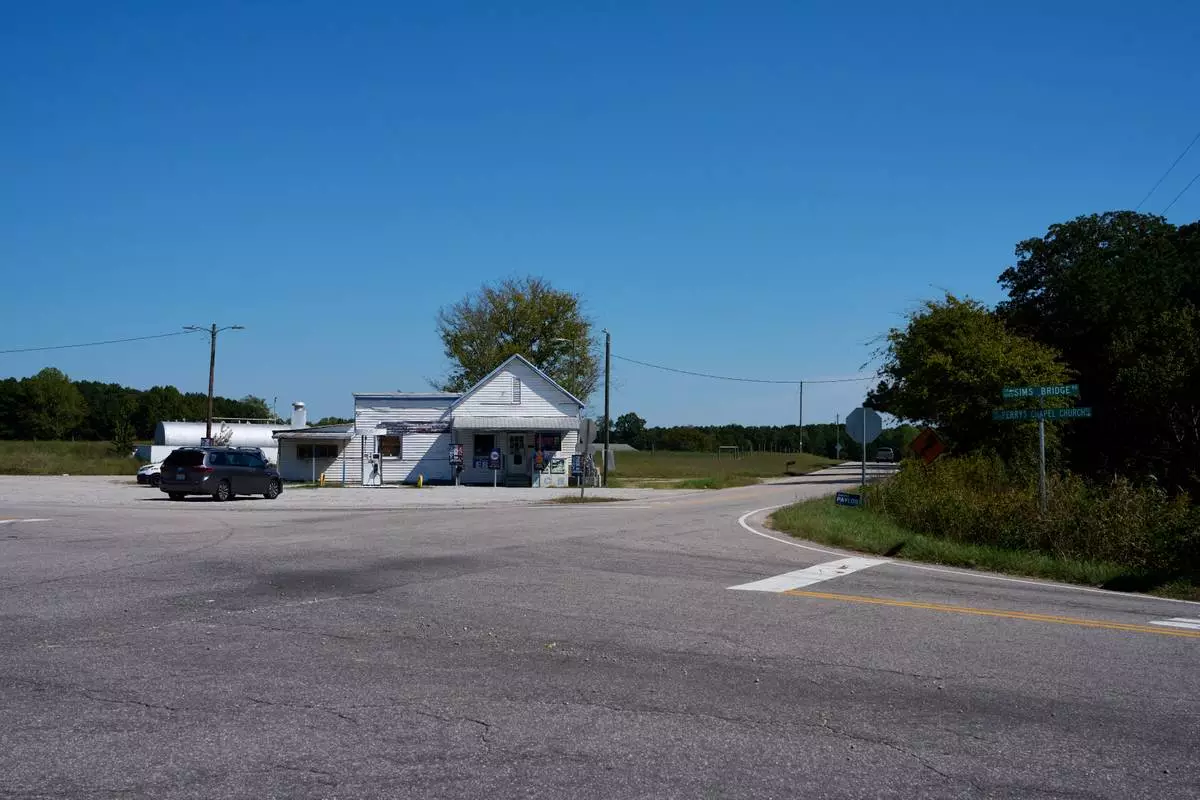
A rural crossroads in Franklin County with a couple of political signs is seen, Oct. 8, 2026, in Louisburg, N.C. (AP Photo/Matt Ramey)
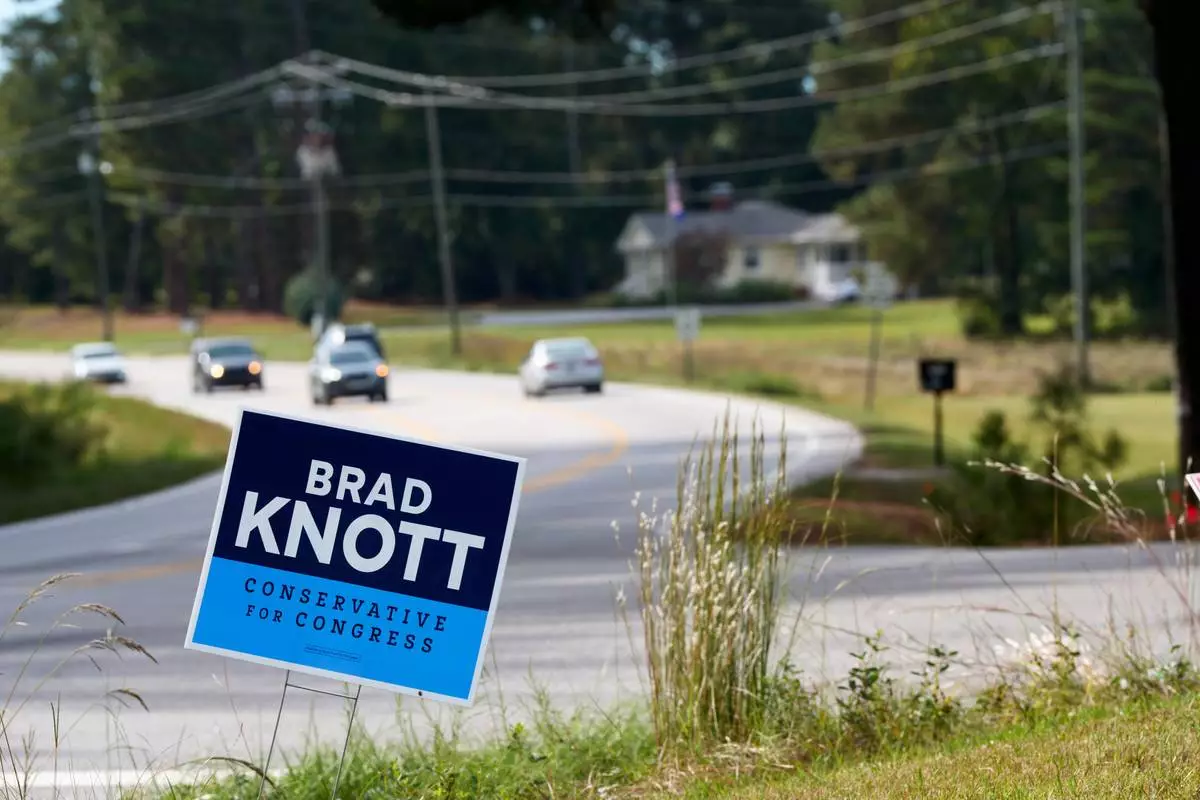
A lone sign for Brad Knott, the Republican nominee running for North Carolina's 13th Congressional District, sits on a street corner, Oct. 8, 2026, in Clayton, N.C. (AP Photo/Matt Ramey)

Former Rep. Wiley Nickel, D-N.C., poses for a portrait in downtown Raleigh on Oct. 8, 2026, in Raleigh, N.C. (AP Photo/Matt Ramey)
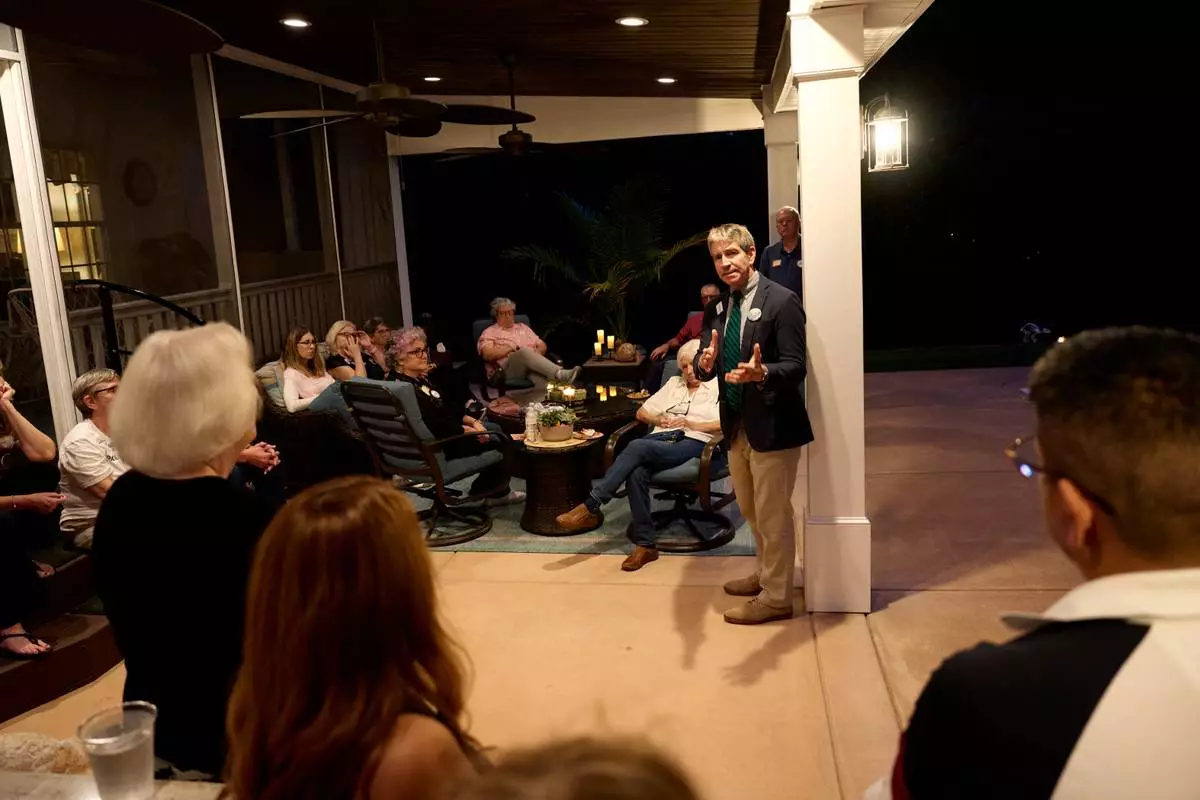
Paul Barringer, the Democratic nominee running for North Carolina's 13th Congressional District, speaks with voters at a campaign event, Oct. 8, 2026, in Garner, N.C. (AP Photo/Matt Ramey)
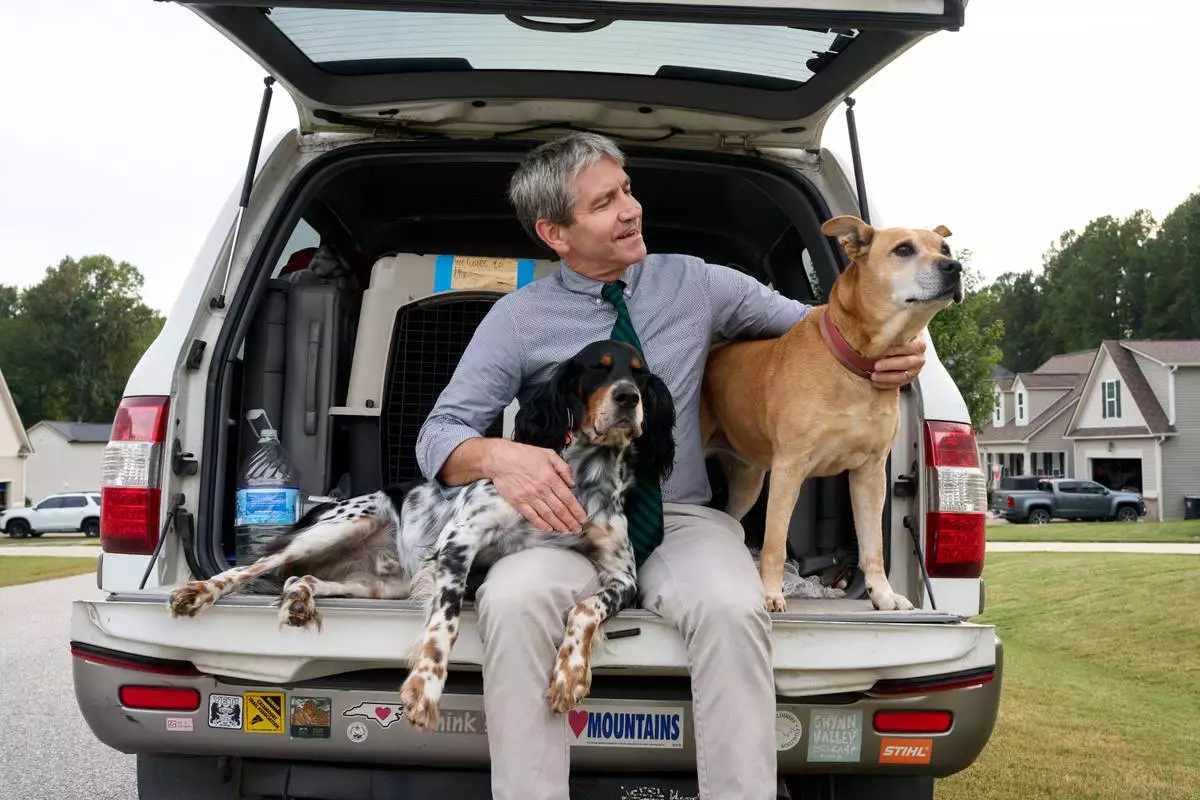
Paul Barringer, the Democratic nominee running for North Carolina's 13th Congressional District, poses for a photo with his dogs, Billie and Penny, on Oct. 8, 2026, in Garner, N.C. (AP Photo/Matt Ramey)