The total foreign trade value of the Yangtze River Delta region in east China reached 9.62 trillion yuan (about 1.42 trillion U.S. dollars) in the first half of this year, up 18 percent year on year, official data showed.
The figure, accounting for 37.8 percent of the country's total import and export value, represents a record high for the same period in history.
Foreign trade in the region has continued to grow for 16 consecutive months, demonstrating the region's strong economic resilience and development vitality.
The delta encompasses the provinces of Jiangsu, Zhejiang and Anhui, as well as Shanghai Municipality, and occupies four percent of the country's total land area.
In the first half of the year, Shanghai's export value surpassed one trillion yuan for the first time. Driven by the booming artificial intelligence industry, robot exports rose by 1.2 times, and cross-border e-commerce imports and exports exceeded 100 billion yuan.
During the same period, Jiangsu's exports of machinery and electronic products performed well, accounting for over 70 percent of the province's total exports.
Foreign-invested enterprises also showed strong momentum in Jiangsu, contributing 13.1 percentage points to the province's overall foreign trade growth.
Zhejiang's foreign trade is increasingly incorporating new and green technologies. Private enterprises are playing a leading role, contributing over 90 percent to the province's total import and export volume in the Jan-June period.
"Little giant" enterprises, which focus on niche technologies and specialized manufacturing, and single-product champion enterprises in Zhejiang also achieved double-digit growth in both import and export.
Anhui's high-tech and high-value-added products also stood out, with automobile exports increasing by 1.1 times, ranking first in the country in both volume and value.
In the first six months, Anhui's imports and exports with the European Union grew by over 40 percent, while exports to Latin America and Africa also recorded double-digit growth.

China's Yangtze River Delta posts 18 pct foreign trade growth in H1
Typhoon Noul, the 12th typhoon of the year, is expected to make landfall along the coast of south China's Guangdong Province between Saturday evening and Sunday morning, seriously affecting daily life and production activities.
Typhoon Noul was upgraded from tropical storm to severe tropical storm on Friday afternoon. After making landfall between Zhuhai and Raoping in Guangdong, the typhoon will turn northward and gradually weaken, according to the National Meteorological Center, which issued an orange alert, the second-highest in its four-tier system, for Noul on Friday.
As the winds are expected to continue to intensify, the Nan'ao Bridge in Shantou, a coastal city in Guangdong, will be closed starting 16:00 Saturday to ensure traffic safety, and the reopening time will be announced separately depending on the weather conditions in the bridge area.
"Typhoon Noul has three main characteristics: First, its movement speed is relatively fast. While typhoons in the South China Sea typically move at 10 to 15 kilometers per hour, Typhoon Noul is moving at 20 to 25 kilometers per hour, and it will make landfall along the central and eastern coast of Guangdong in less than 24 hours. Second, its intensity is expected to be strong. Currently, Noul's structure is gradually improving, the sea surface temperature in the South China Sea is high, and upper-level outflow is good, so its intensity will continue to increase. It is expected to reach the upper limit of typhoon strength or strong typhoon strength, and make landfall along the coast from Shenzhen City to Huilai County between tonight and next morning. After landfall, it will continue northward, penetrating inland. The third characteristic is its wide range of precipitation. Heavy to torrential rain, and locally extremely heavy rain, is expected in eastern Guangdong, the central and eastern Pearl River Delta, and northern Guangdong. Residents in these areas should be especially vigilant for flash floods and other geological disasters caused by the rainfall," said Han Pucheng, deputy chief forecaster of Guangdong Meteorological Observatory.
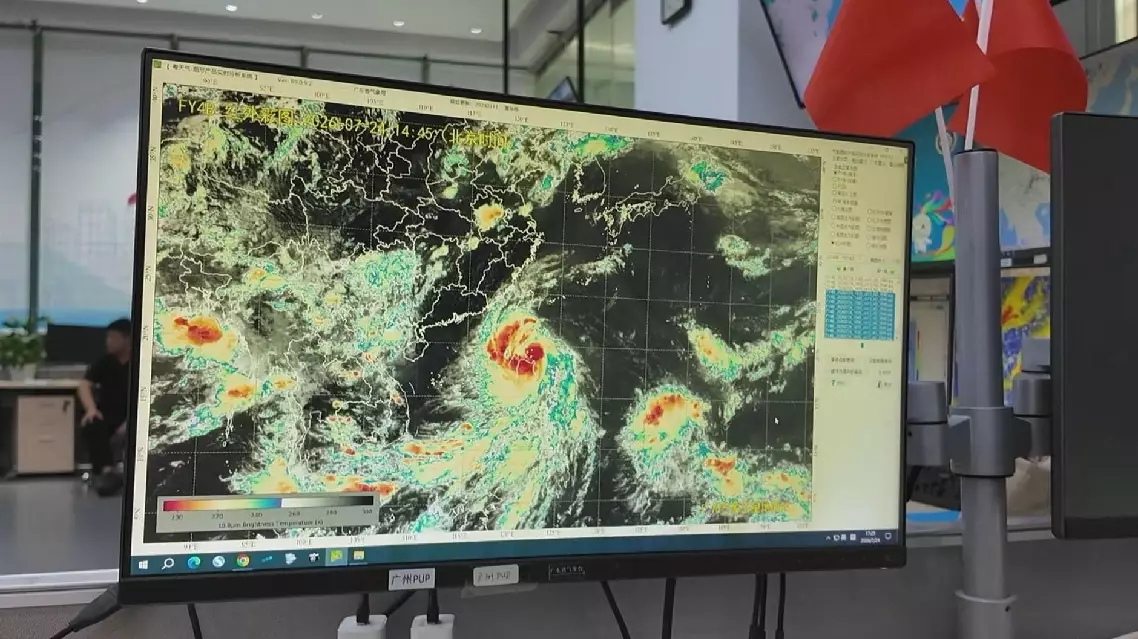
Approaching Typhoon Noul to hit Guangdong, disrupting transport, daily life