Skip to Content Facebook Feature Image

How to run for reelection in a messy Congress? It's not easy

News

How to run for reelection in a messy Congress? It's not easy
News

News

How to run for reelection in a messy Congress? It's not easy

2026-07-25 20:15 Last Updated At:20:20

WASHINGTON (AP) — House leaders sent lawmakers home for summer campaigning after one of the rockiest sessions in recent memory as voters decide which party to put in power in Congress for the remainder of President Donald Trump's term.

For those seeking to stay in office, particularly the newest members, it can be a tough sell.

“I only know a dysfunctional Congress,” said Rep. Suhas Subramanyam, a freshman from Virginia.

The Democrat said it's best to campaign on his own record delivering for constituents, rather than on the performance of Congress, as his party tries to wrest control from the Republicans.

“It's virtually impossible to sell the performance of Congress to the American people because Congress is such an easy punching bag,” he said. “And this particular Congress has been ceding too much of its authority to the executive branch.”

He said, “I tell people to sell yourself and what you've tried to do.”

Yet Republican Rep. Brandon Gill, a freshman from Texas who has emerged as one of the party's rising figures, particularly on Trump's hard-line immigration enforcement agenda, argued there's plenty to show to voters back home.

“We've gotten a lot done,” he said

“Cutting taxes across the board, over $100 billion for border security, repealing half the Green New Deal, the biggest mandatory spending reform in history — pretty historic stuff,” he said.

“Everybody always wants Congress to move faster than it does, but we’ve been extremely productive.”

Control of Congress is often an afterthought in presidential election years when the White House is at stake. But in the midterms, when lawmakers face voters as they will this fall, the races largely become a referendum on the party in power.

Republicans have history against running against them, as the president's party often encounters losses during the midterm elections — a “thumping,” as George W. Bush put it, a “shellacking” as Barack Obama said — and a pendulum nation swings.

House Speaker Mike Johnson, who is about to embark on a cross-country trek to raise millions of dollars for his party and visit lawmakers' home districts, remains bullish that Republicans will not only keep their House majority control — but grow their numbers.

“This week we continued to deliver for the people, and we're going to continue that straight through the end of this year,” Johnson said after a flurry of legislating before sending lawmakers home for summer.

Republicans in a single day adopted a budget resolution seeking $95 billion for the Iran war and other priorities; advanced a $1 trillion Pentagon bill renaming it the Department of War; and approved legislation to clamp down on stock trading in Congress, all over Democratic objections.

“We're going to run through the tape,” Johnson said.

Democratic Leader Hakeem Jeffries, who is in line to become House speaker if his party wins control, will launch “100 Days of Action” on Sunday as he works to take the majority and impose a check on Trump's White House.

“It's not going to be easy, right?” Jeffries told reporters. “No one's going to give it to us. We have to take it in a way that is consistent with the values of the American people.”

With its 435 seats being contested, control of the House often narrows to the tiniest slice of the country.

Fewer than 20 seats are considered genuine toss-ups, according to analysts. The rest are considered safer seats, drawn with map lines designed to favor one party over the other — including new maps still being drawn to eliminate Black majority districts largely in the Deep South after a landmark Supreme Court decision gutting the Voting Rights Act.

Millions of dollars are being spent that will make the difference between a return of the GOP majority eyeing more budget cuts or a new Democratic agenda that is expected to launch vast oversight and investigations into the Trump administration.

Even as he openly pines for a normal Congress, Johnson believes the country needs a steady hand at the wheel as he partners with the White House on Trump’s priorities — and fend off Democratic investigations and the threat of impeachment.

“We are increasingly confident that we will hold and grow this majority in the House — and we must,” he said.

Democrats under Jeffries make the case that Trump and the Republicans in charge have done nothing for Americans struggling with high costs of living. Instead, they say Trump waged war against Iran that sent gas prices soaring, slapped tariffs on goods that are spiking prices, deported longtime immigrants and slashed health care and food aid as part of Trump's big tax cuts bill last summer.

“They're flailing all over the place,” Jeffries said.

Jeffries vowed that Democrats “will hold the crooks accountable” on a number of issues, including the Trump family's business dealings.

Johnson raises the specter of a mid-20th-century-style communist threat if Democrats win control with a new generation of far-left progressive candidates, some backed by the Democratic Socialists of America.

“We have been saying that this is an election that’s shaping up as a contest between common sense and crazy,” he said. Now, he said, it's “common sense versus communism.”

Jeffries brushes past such warnings as unserious. “House Democrats aren't a cult,” he said, a criticism his party often lobs at Trump's backers in Congress. “We're a coalition of people, public servants, who are committed to getting things done.”

One of the newest lawmakers, Rep. James Gallagher, R-Calif., said he's just trying to focus on the issues important to constituents back home.

“We're in a time where there's a lot of division, unfortunately,” he said. “And I think one key is like, Hey, trying to bring people together to solve problems for Americans, right?”

Senate Majority Leader John Thune, R-S.D., tells reporters the Senate has a busy two weeks of work ahead before August recess, at the Capitol in Washington, Thursday, July 23, 2026. (AP Photo/J. Scott Applewhite)

Senate Majority Leader John Thune, R-S.D., tells reporters the Senate has a busy two weeks of work ahead before August recess, at the Capitol in Washington, Thursday, July 23, 2026. (AP Photo/J. Scott Applewhite)

Rep. Darrell Issa, R-Calif., rushes up the steps at the Capitol for final votes before the House of Representatives leaves for a five-week recess, in Washington, Thursday, July 23, 2026. (AP Photo/J. Scott Applewhite)

Rep. Darrell Issa, R-Calif., rushes up the steps at the Capitol for final votes before the House of Representatives leaves for a five-week recess, in Washington, Thursday, July 23, 2026. (AP Photo/J. Scott Applewhite)
SEOUL, South Korea (AP) — The Okefenokee Swamp in Georgia, an ornate 13th-century Buddhist temple in Thailand and tidal flats in western South Korea were among several sites added to the World Heritage List on Saturday at a U.N. committee meeting in South Korea.

The UNESCO meetings in Busan, which continue through next Wednesday, are reviewing dozens of other nominations, including the D-Day landing beaches in France, Mount Olympus in Greece and the ancient Japanese capitals of Asuka-Fujiwara.

The Okefenokee Swamp is regarded as one of the world’s largest freshwater ecosystems, encompassing a vast network of wetlands that supports exceptional biodiversity and serves as the source of two major rivers. Its largely undisturbed peat beds preserve a 5,000-year record of environmental change, making the swamp both a globally significant natural habitat and a valuable source of information on long-term environmental change, according to a UNESCO description.

While the World Heritage designation places the Okefenokee National Wildlife Refuge alongside iconic U.S. landmarks such as the Grand Canyon, some locals have opposed the listing, fearing it would increase U.N. involvement in managing the site.

“We accept this inscription not as a finish line, but as a commitment to keep the Okefenokee wild, resilient, and thriving for generations to come,” said Kim Bednarek, executive director of the nonprofit Okefenokee Swamp Park that’s worked with the U.S. government on the refuge’s nomination package.

Wat Phra Mahathat Woramahawihan, a 13th-century Buddhist temple in southern Thailand known for its 78-meter (255-foot) stupa and distinctive architecture, was also inscribed on the World Heritage List, becoming Thailand’s ninth site.

UNESCO has described the temple as an outstanding example of Theravada Buddhist architecture that remains a living place of worship, preserving religious traditions that draw large gatherings of devotees. The temple was first proposed to UNESCO in 2012, and has gone through more than a decade of preparation to meet the nomination requirements.

While the World Heritage listing is expected to dramatically increase visitors to the temple, Kanop Ketchart, mayor of Nakhon Si Thammarat City, said officials are prepared to address potential infrastructure and capacity challenges.

“We have prepared our infrastructure, buffer zoning and evacuation plan to fit all the requirements of UNESCO,” he said in an interview with The Associated Press this month. “More importantly, the people are getting used to all this process for almost 10 years. So they are very much looking forward to (it).”

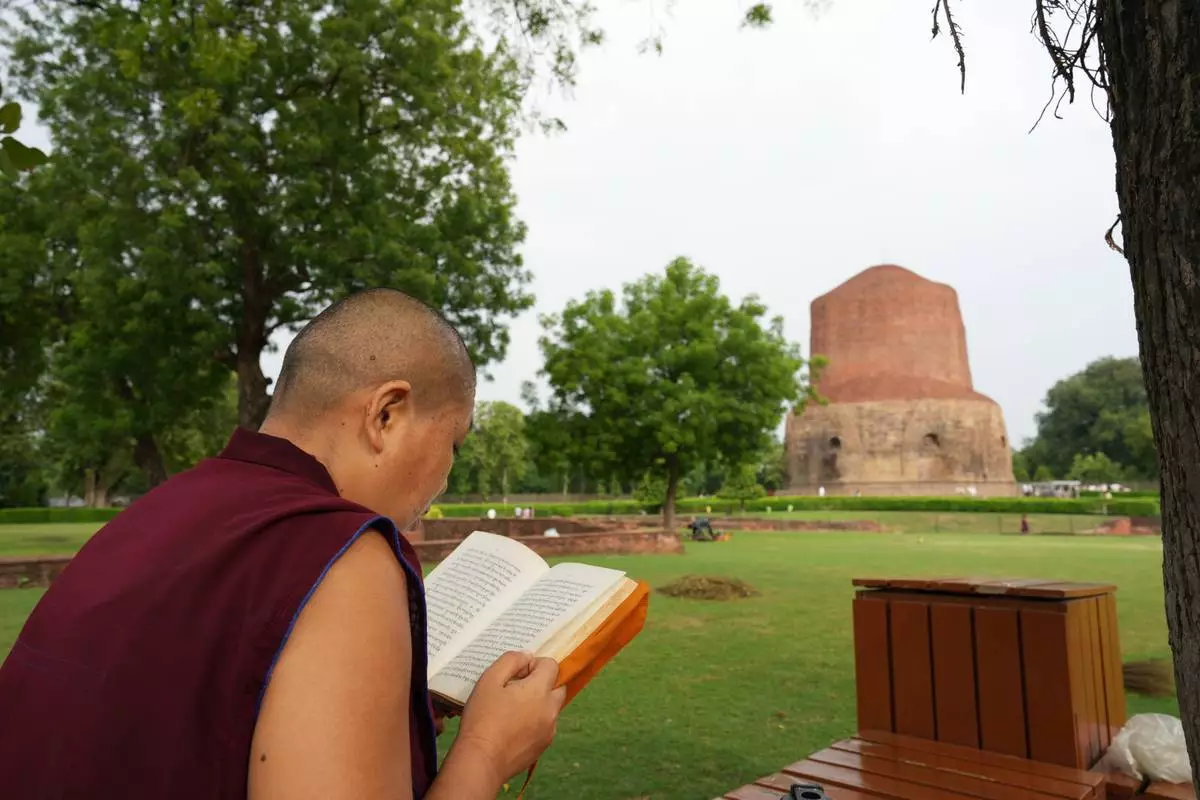
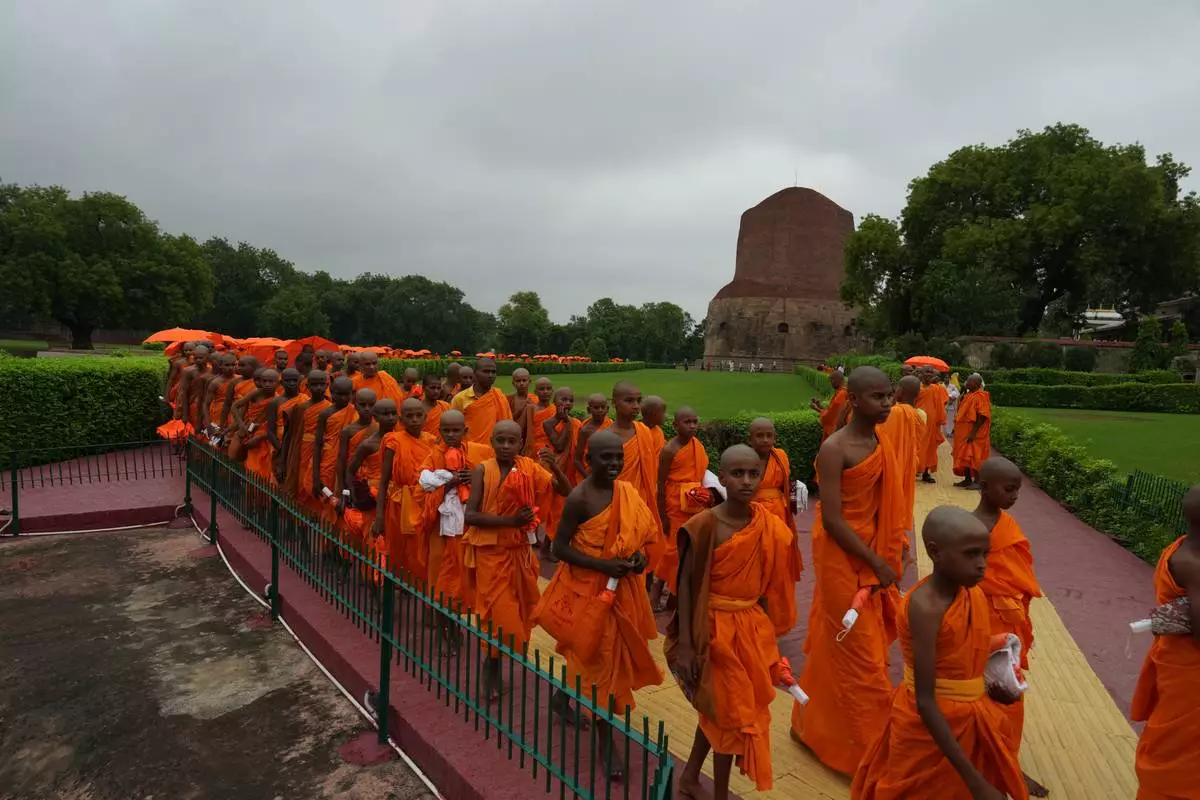
Sarnath, an ancient Buddhist site in the northern Indian city of Varanasi, was another Asian religious location newly added to the World Heritage List. Recognized as the sacred location where the Buddha delivered his first sermon, the site’s architectural and archaeological properties remain deeply significant despite periods of decline and revival, UNESCO said.

The committee also decided to expand the World Heritage listing of the South Korean “getbol” tidal flats with four additional coastal wetlands in Seosan, Goheung, Muan and Yeosu in the country’s west. UNESCO had previously inscribed four other South Korean tidal flats in 2021 for their biodiversity and crucial role as a stopover for migratory birds.

South Korea’s Foreign Ministry said the expanded designation of the tidal flats “reaffirms the importance of international cooperation for the conservation of the Yellow Sea ecosystem and the East Asian-Australasian Flyway,” a major migratory bird route that stretches from the Arctic through Asia to Australia and New Zealand.

Another new addition to the World Heritage List was centuries-old handicraft porcelain industry sites in the eastern Chinese city of Jingdezhen. The sites trace the evolution of handcrafted porcelain production in China from the 10th to the 19th centuries, showcasing innovations that helped make Jingdezhen a leading center for fine porcelain, with its blue-and-white porcelain becoming a global symbol of Chinese craftsmanship, according to UNESCO.

The Indian Ocean island nation of Comoros secured its first World Heritage listing after the committee inscribed six historic towns dating to the 11th century that later emerged as the principal urban centers of the country’s sultanates. UNESCO says the towns reflect centuries of cultural exchange through Indian Ocean trade networks while preserving distinctive urban traditions shaped by African, Arab and Islamic influences.

A Buddhist devout reads in front of Dhamek Stupa in the ancient Buddhist site of Sarnath, India, Saturday, July 18, 2026. (AP Photo/Rajesh Kumar Singh)

A Buddhist devout reads in front of Dhamek Stupa in the ancient Buddhist site of Sarnath, India, Saturday, July 18, 2026. (AP Photo/Rajesh Kumar Singh)

Novice monks walk in a procession near Dhamek Stupa in Sarnath, India, Sunday, July 19, 2026. (AP Photo/Rajesh Kumar Singh)

Novice monks walk in a procession near Dhamek Stupa in Sarnath, India, Sunday, July 19, 2026. (AP Photo/Rajesh Kumar Singh)

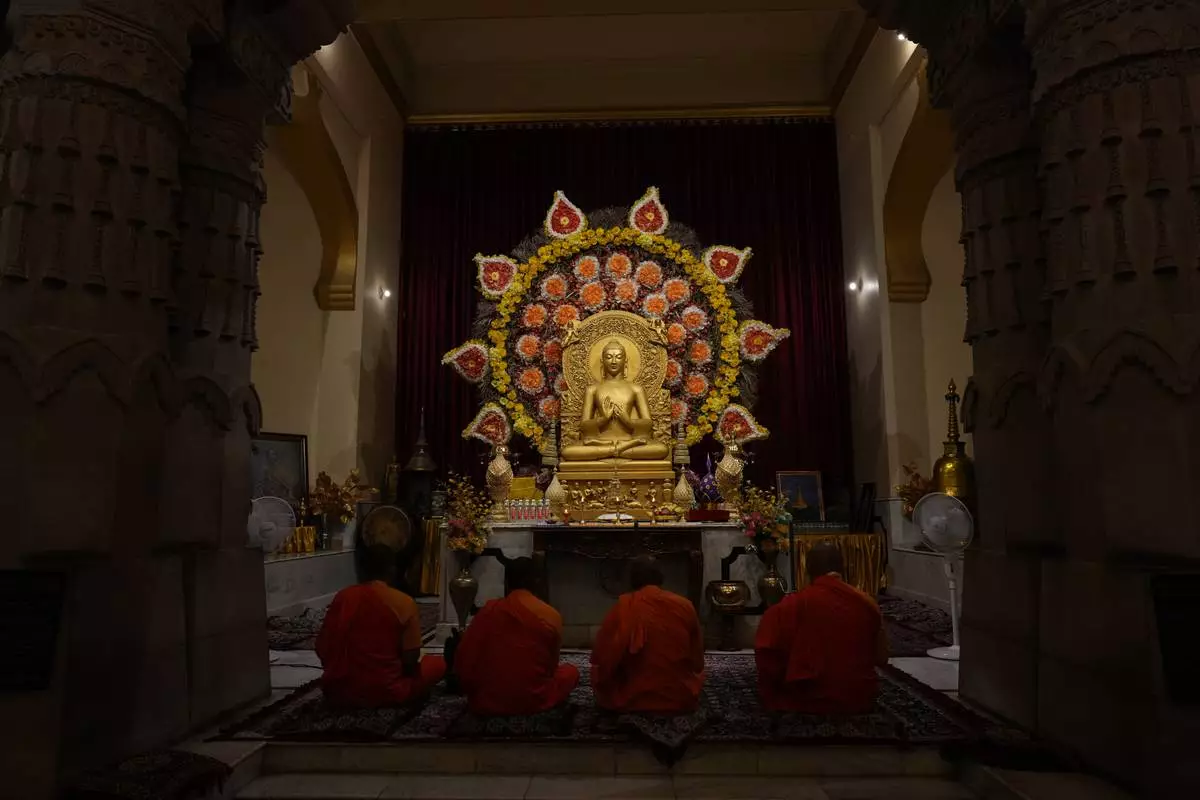
Buddhist monks pray inside a monastery in Sarnath, India, Saturday, July 18, 2026. (AP Photo/Rajesh Kumar Singh)

Buddhist monks pray inside a monastery in Sarnath, India, Saturday, July 18, 2026. (AP Photo/Rajesh Kumar Singh)

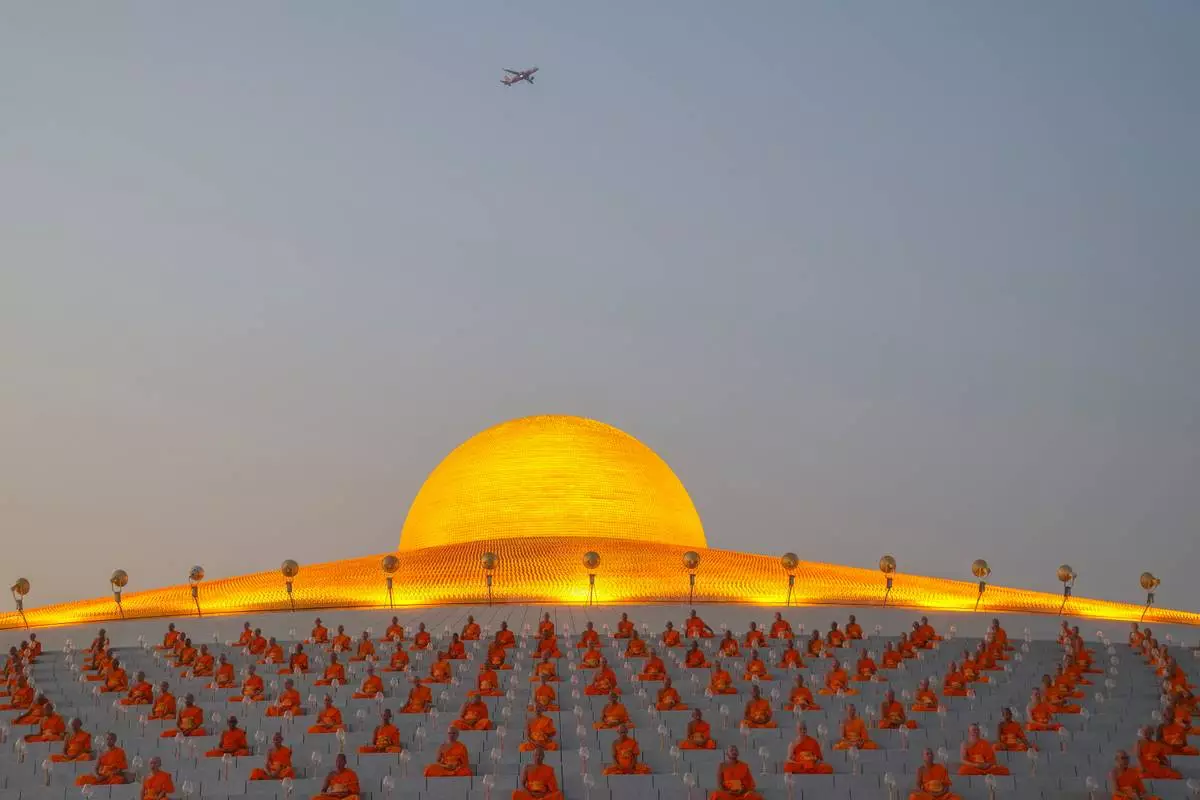
FILE - Thai Buddhist monks pray as they gather at Wat Dhammakaya temple to participate in Makha Bucha Day ceremonies in Pathum Thani, Thailand, Tuesday, Feb. 12, 2025. (AP Photo/Sakchai Lalit, File)

FILE - Thai Buddhist monks pray as they gather at Wat Dhammakaya temple to participate in Makha Bucha Day ceremonies in Pathum Thani, Thailand, Tuesday, Feb. 12, 2025. (AP Photo/Sakchai Lalit, File)

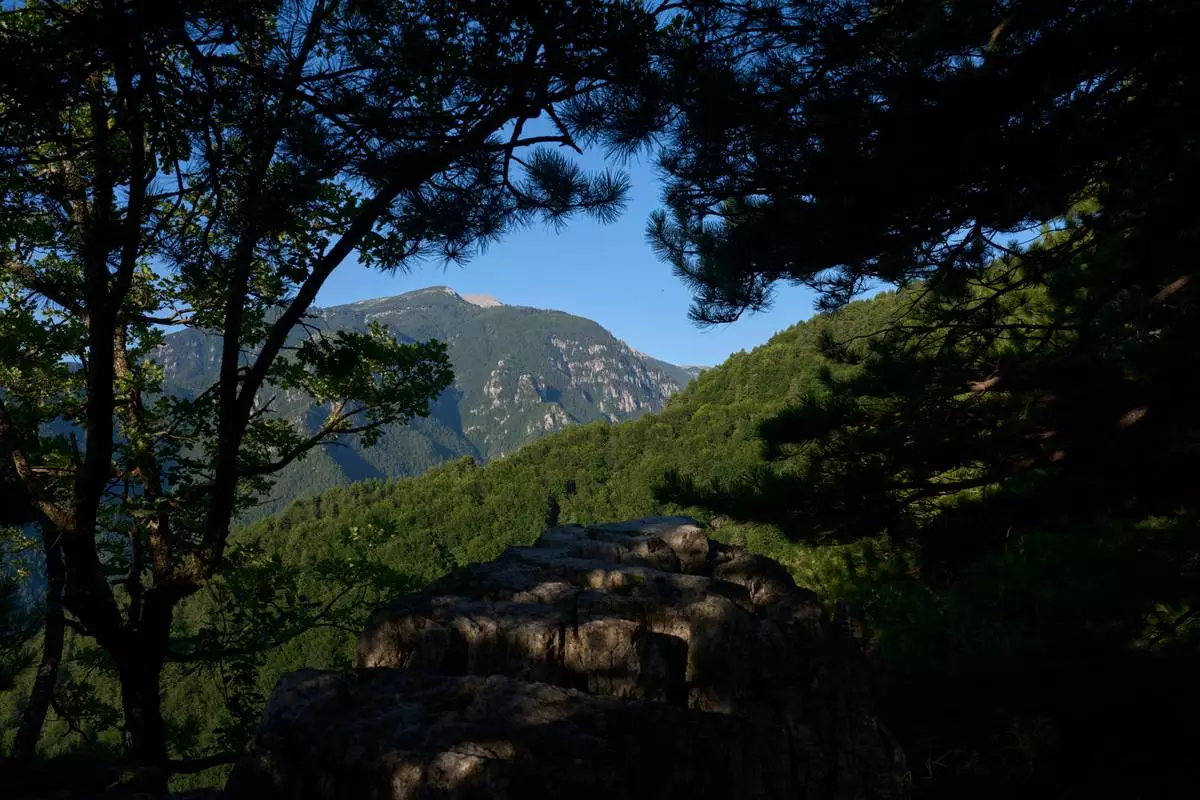
Mount Olympus is seen from the lower slopes of the mountain near Litochoro in northern Greece, Wednesday, July 15, 2026. (AP Photo/Petros Giannakouris)

Mount Olympus is seen from the lower slopes of the mountain near Litochoro in northern Greece, Wednesday, July 15, 2026. (AP Photo/Petros Giannakouris)

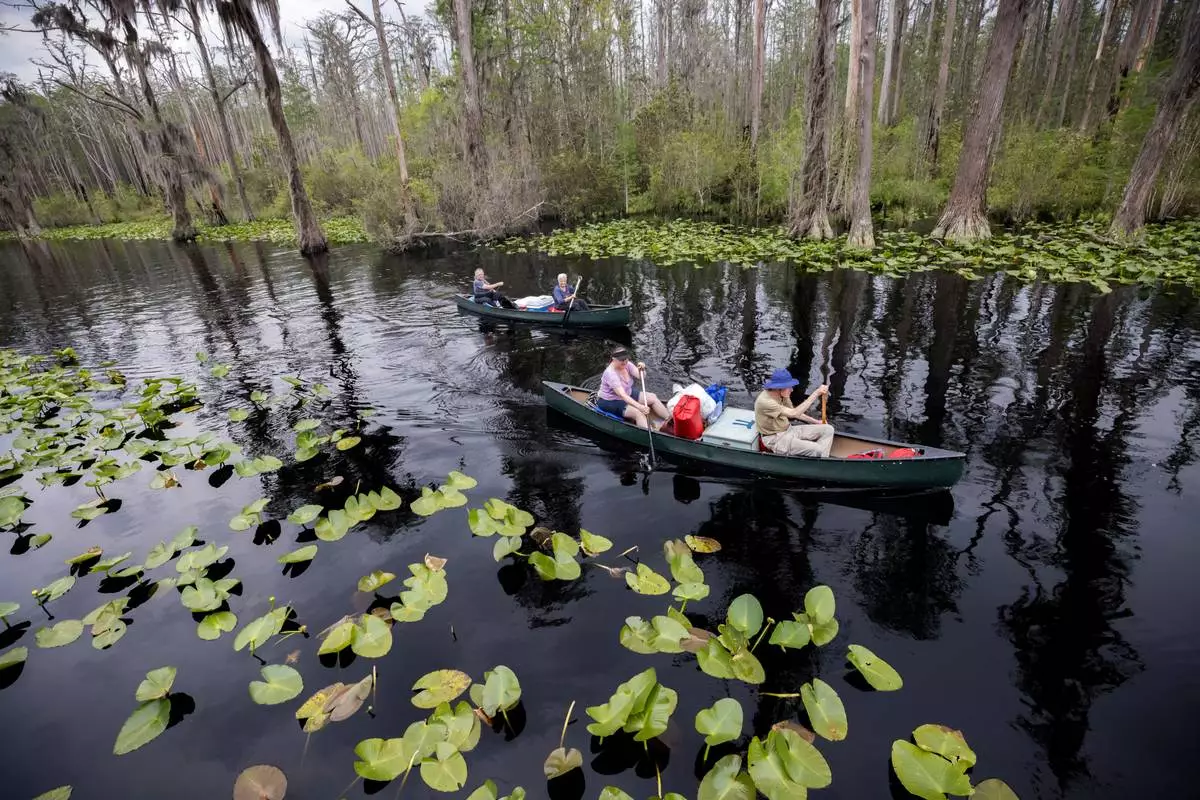
FILE - Visitors return to Stephen C. Foster State Park after an overnight camping trip on the Red Trail in the Okefenokee National Wildlife Refuge in Fargo, Ga., April 6, 2022. (AP Photo/Stephen B. Morton, File)

FILE - Visitors return to Stephen C. Foster State Park after an overnight camping trip on the Red Trail in the Okefenokee National Wildlife Refuge in Fargo, Ga., April 6, 2022. (AP Photo/Stephen B. Morton, File)

Recommended Articles