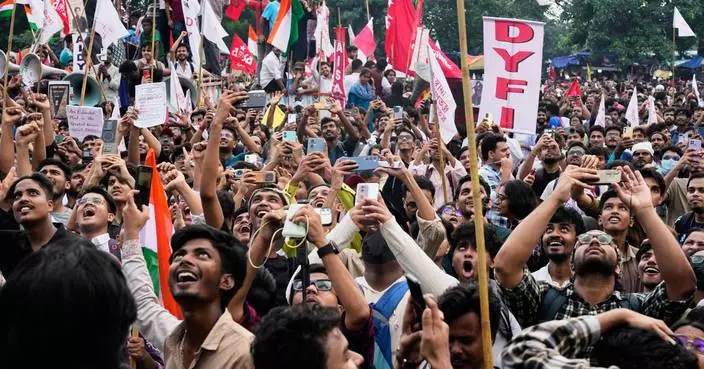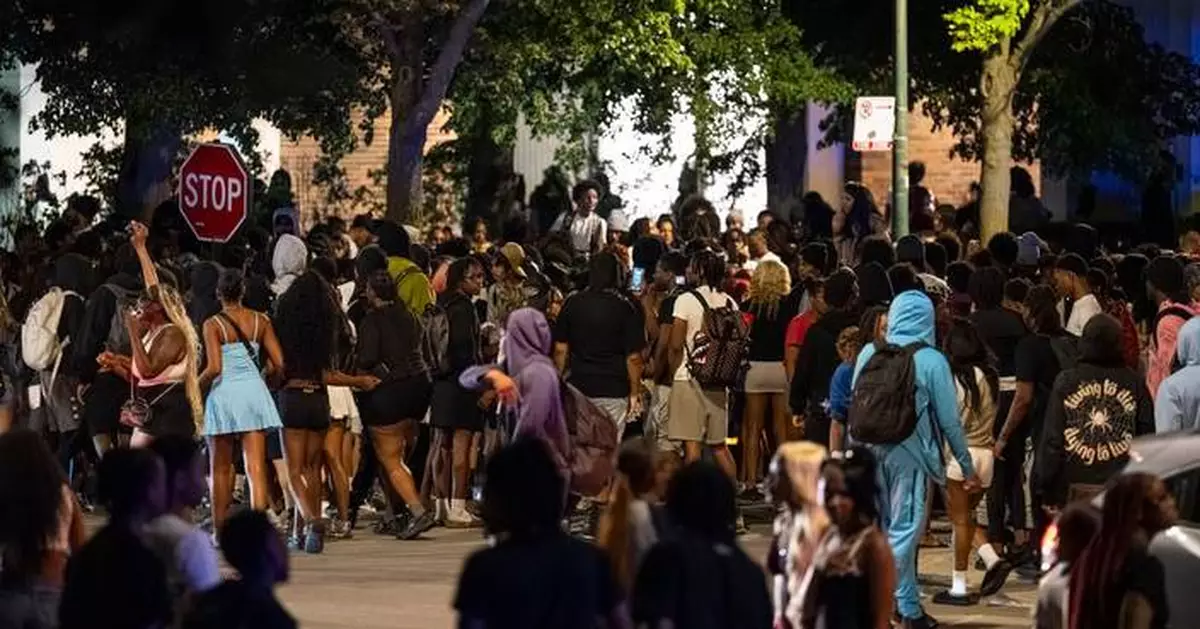
When Damarion Spann, 18, saw an Instagram flier calling for a massive gathering on a beach near downtown Chicago, he immediately wanted to go. Thousands of others joined him that night on the sand, blasting music and dancing.
The cultural trend of so-called teen takeovers has popped up across the U.S. in recent years, influencing local policing and national politics. The events, often hyped online and captured in videos on social media, have led to shootings, theft and vandalism. City officials and police are concerned about an increase over the summer, and are under pressure to prevent similar gatherings or to punish those who participate.
Click to Gallery
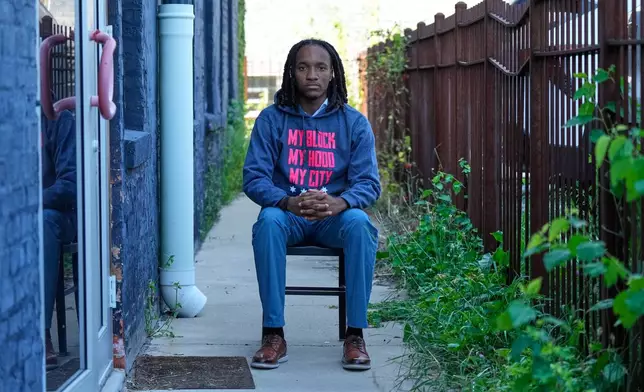
Damarion Spann poses for a portrait in Chicago, Monday, July 13, 2026. (AP Photo/Nam Y. Huh)
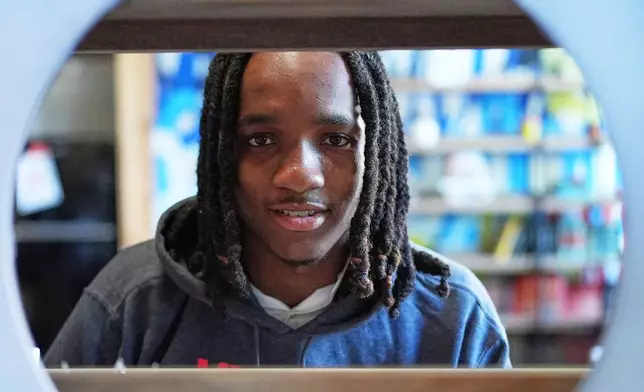
Damarion Spann poses for a portrait in Chicago, Monday, July 13, 2026. (AP Photo/Nam Y. Huh)
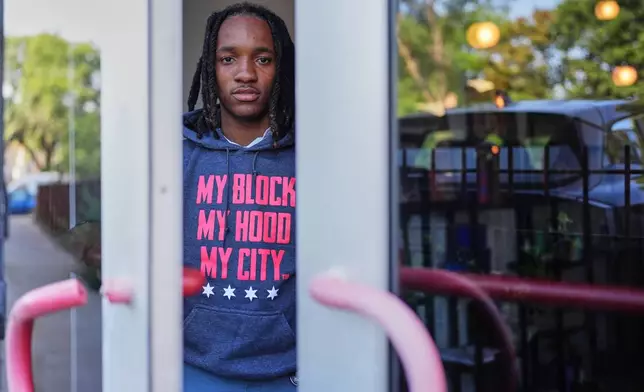
Damarion Spann poses for a portrait in Chicago, Monday, July 13, 2026. (AP Photo/Nam Y. Huh)
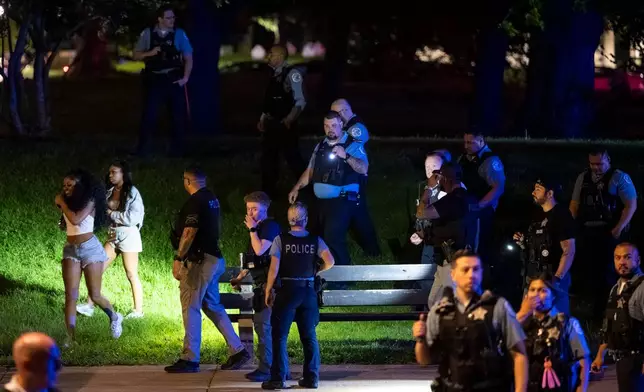
Chicago police officers attempt to disperse hundreds of young people near the Griffin Museum of Science and Industry in the Hyde Park neighborhood, Monday, May 25, 2026. (Tyler Pasciak LaRiviere/Chicago Sun-Times via AP, File)
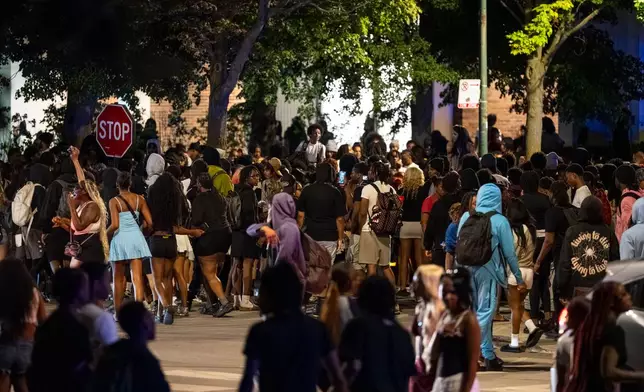
Hundreds of young people gather near the Griffin Museum of Science and Industry in the Hyde Park neighborhood as Chicago police officers attempt to disperse them, Monday, May 25, 2026. (Tyler Pasciak LaRiviere/Chicago Sun-Times via AP, File)
Over the July 4 holiday weekend, several thousand young people converged in two spots in Raleigh, North Carolina, police said. Nine people, including an adult who was not part of the gatherings, were shot and wounded.
There were also takeovers in Pensacola, Florida, where a 19-year-old was shot and killed; and Newport Beach, California, where more than 400 were arrested after the police chief said teens launched “explosive mortars and other projectiles” at officers ordering them to disperse.
But Spann and other teens say that the events are largely misunderstood. They point to formal curfews or limits on group size at malls and movie theaters that have made it harder for teens to gather, exacerbating a feeling of disconnection they trace back to remote learning during the coronavirus pandemic.
Communities and police across the country are trying to identify organizers, fine parents of those involved and impose curfews.
In Detroit, officials say they “thwarted" 19 gatherings so far this year by monitoring time and location changes as young people coordinated across social media, said Teferi Brent, director of the Mayor’s Office of Neighborhood and Community Safety.
“We have eyes on all the behaviors and activities of those who have expressed interest in trying to take over and we have done a good job of being way ahead of the curve and being able to prevent a lot of these things,” Brent said.
Alderperson Jessie Fuentes, who chairs the Chicago City Council’s subcommittee on Youth Employment, said her office has tried to find solutions that don't rely exclusively on police and instead coordinate with parents and community members to prevent conflict or crimes.
Blue Island, a south Chicago suburb, has taken another tact: to fine parents or guardians and use the funds to cover clean up after events. That might include debris left behind or other damages like cars dented from scores of teens clambering over them while fleeing police.
Other places have taken harsher approaches, as in Florida, where state officials said prosecutors can apply racketeering laws, typically targeting criminal gangs or organized crime, if takeovers appear to be facilitated by “an organized network.”
But some have pushed back on the idea that the threat of harsh legal punishment could prevent the gatherings in the first place.
“What we know about adolescent brain development is that the stakes are not going to be what prevents a young person from engaging in risky behavior,” said Melissa Milchman, the executive director for the nonpartisan organization the Coalition for Juvenile Justice. Milchman added that mass arrests often ensnare those who are going for innocent fun without preventing others from breaking the law.
For Spann, the recent media attention on the events has largely failed to capture the appeal to young people.
“You feel like a young person who has freedom, who’s not being held to something,” said Spann, who is Black. At the event he went to, he was able to catch up with people he hadn't seen since 8th grade.
He said that the events are a direct result of a cascade of school closures across Black neighborhoods over the past couple decades in Chicago. To deter people from gathering even at basketball courts, where there were sometimes fights, officials have removed the nets. Spann said that his mom, who grew up in the same neighborhood, frequently talks about how much easier it used to be to hang out outside without a fear of gun violence.
When Spann goes to malls in more affluent areas with his mostly Black group of friends, shoppers often stare and security guards question them. To avoid scrutiny, Spann and his friends sometimes sneak into outdoor shopping centers or areas downtown in smaller groups at staggered times.
By contrast, in the same spaces, Spann said, “If I’m with my white friends, I feel like I belong."
Despite the physical dangers that come with takeovers and the threat of getting a ticket or even arrested, the allure is strong, according to Jeffrey Bernstein, a psychologist and author.
“The kids still do it because they feel like it’s their second family,” which he said “really takes over as their primary sense of connection.”
“They’re getting things from their peers that they can’t get from their parents.”
Some cities have tried to meet that need head-on, instead of cracking down with law enforcement.
In St. Louis, officers have started to bring some teens to community centers instead of jails so their parents can pick them up, and in Baltimore, officials have tried leaning on public schools to provide alternative programming. In Chicago, Spann received a $11,000 grant from the city and partnering nonprofits to host an event for his peers at the end of the summer, in an effort to give his community more places to gather.
In April, Daveion Page, a 16-year-old in Detroit, was bored. He turned to his phone, creating a post on social media promoting a teen takeover. Hundreds of teens soon flocked to a site downtown and fights broke out by the end of the night. At another takeover in May, a 14-year-old was shot and wounded.
After the Detroit event in April, Page told reporters that he didn't intend for the takeover he organized to result in violence.
“I just wanted to get out of the house, have fun, enjoy time with my family and my homeboys and my homegirls, too," said Page, who was flanked by Detroit Mayor Mary Sheffield and other city officials at a news conference.
He told city officials that young people might respond if there were more safe places to gather.
Before the takeovers, there were already plans to use $1.5 million from the city’s budget for summer programming and to support violence prevention programs. In response to the takeovers, the city has launched an office of youth affairs, met and listened to students at schools, and created a youth advisory board comprised of teens and young adults.
“We have brought them to the table and made them a part of our structure in regards to identifying what the needs and concerns are of the young people in the city,” Brent said.
In Detroit, a late-night basketball league has formed as an alternative hangout spot for teens and young adults. Jerseys and sneakers are provided by the city.
“This league just helps me find something to do,” Cameron Chandler, 21, said while playing basketball at the recreation center.
He's never participated in a takeover, but recently after practice, he stumbled on one near his home.
“There were a lot of cops and some people got arrested,” Chandler said. “You just have to think, ‘that could easily be me.’”
Riddle reported from Los Angeles. Williams reported from Detroit.
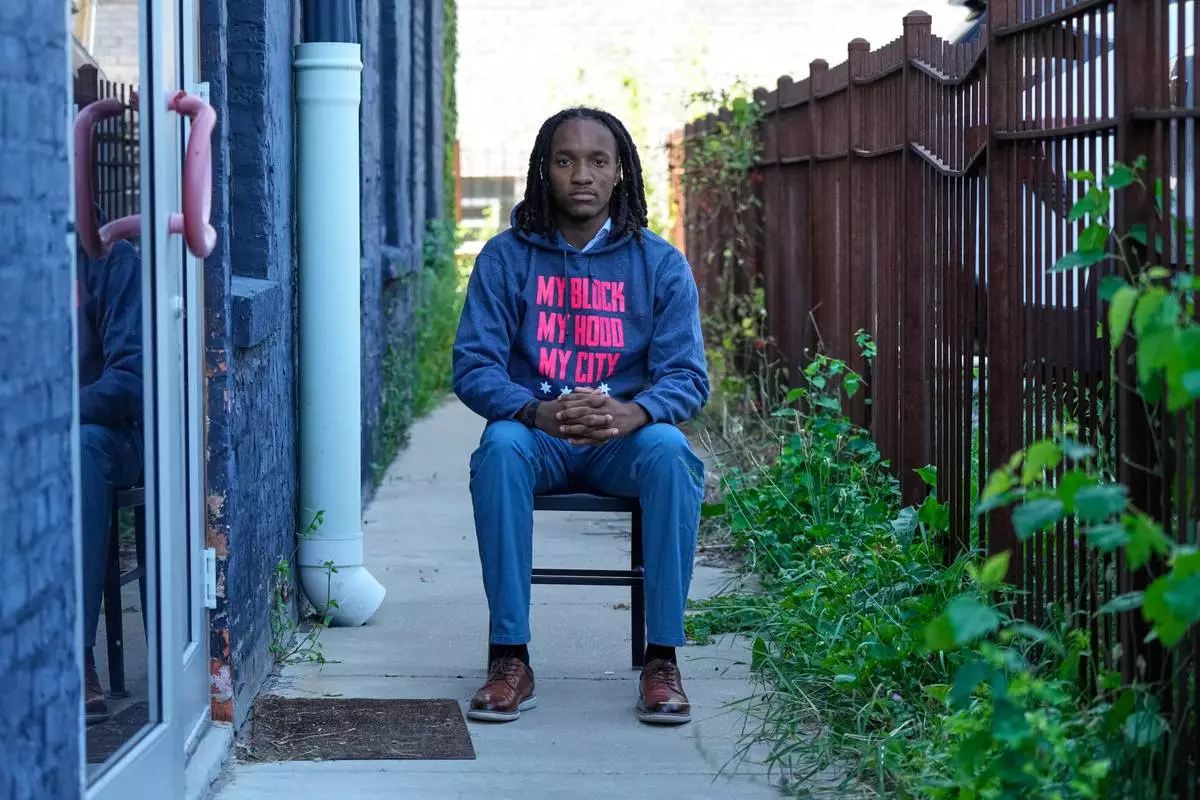
Damarion Spann poses for a portrait in Chicago, Monday, July 13, 2026. (AP Photo/Nam Y. Huh)
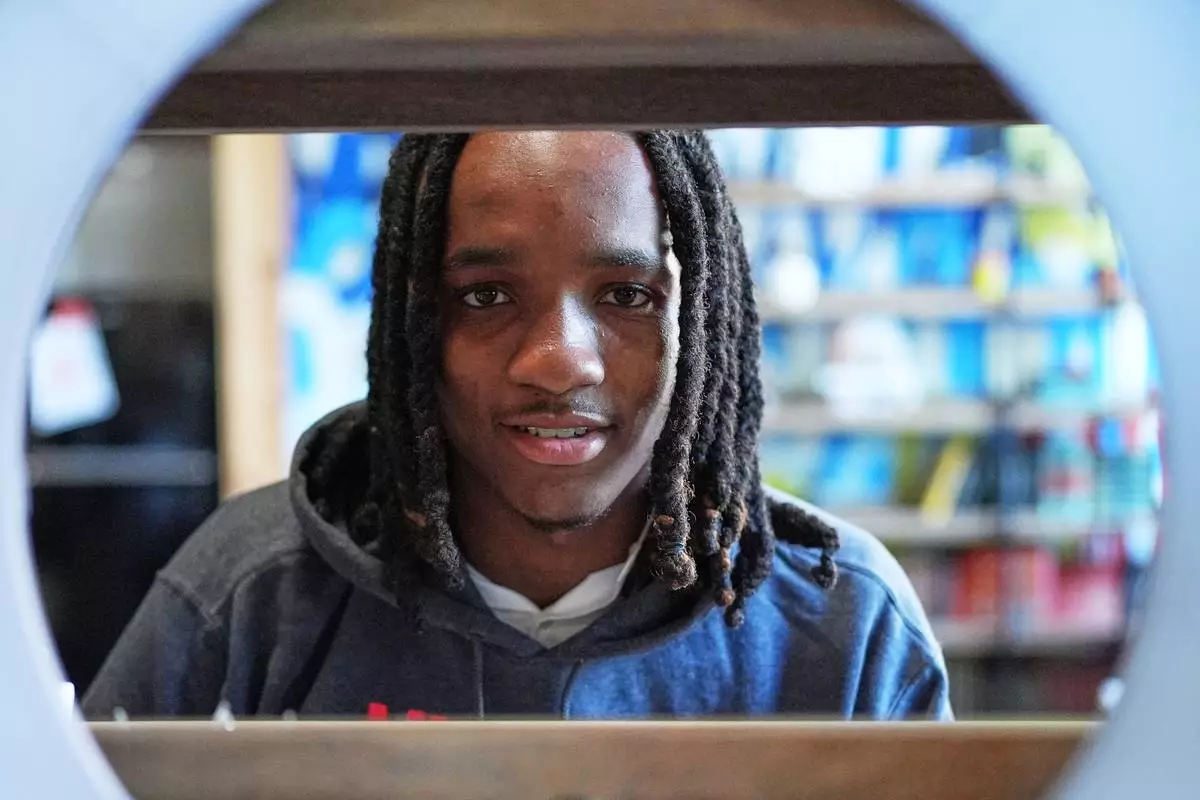
Damarion Spann poses for a portrait in Chicago, Monday, July 13, 2026. (AP Photo/Nam Y. Huh)
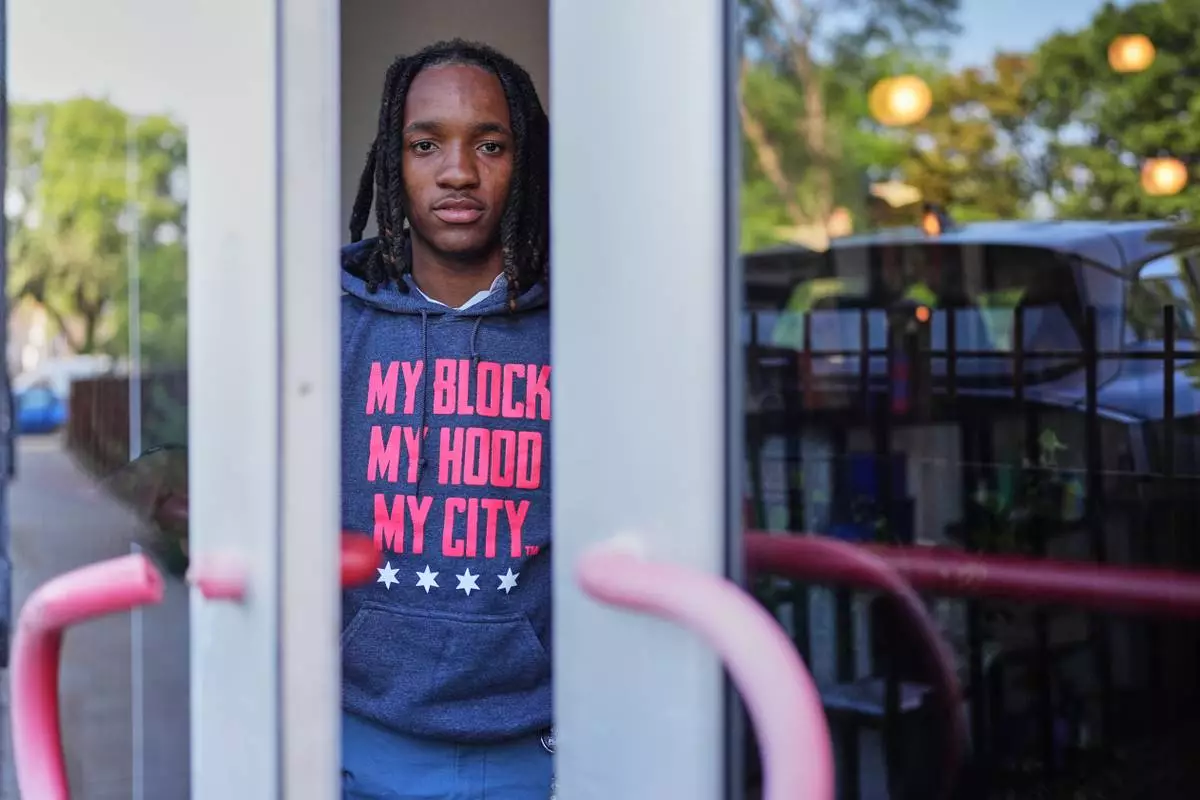
Damarion Spann poses for a portrait in Chicago, Monday, July 13, 2026. (AP Photo/Nam Y. Huh)
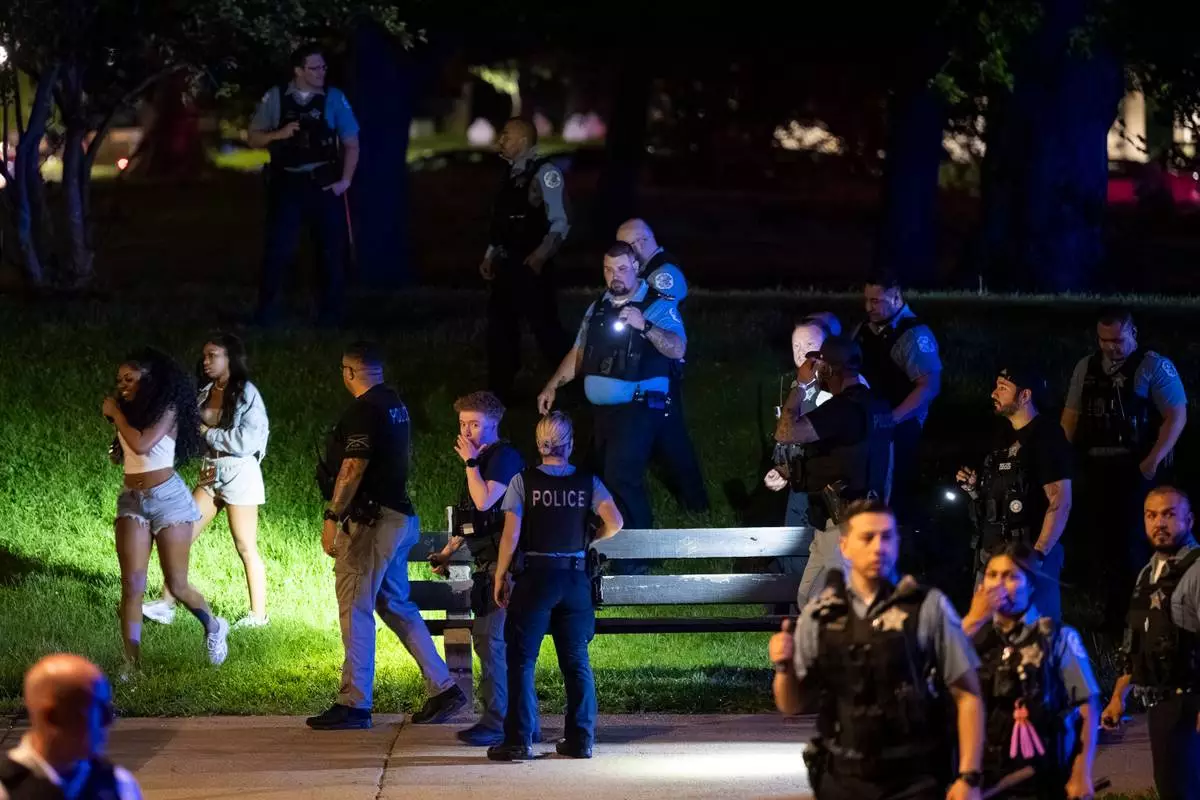
Chicago police officers attempt to disperse hundreds of young people near the Griffin Museum of Science and Industry in the Hyde Park neighborhood, Monday, May 25, 2026. (Tyler Pasciak LaRiviere/Chicago Sun-Times via AP, File)
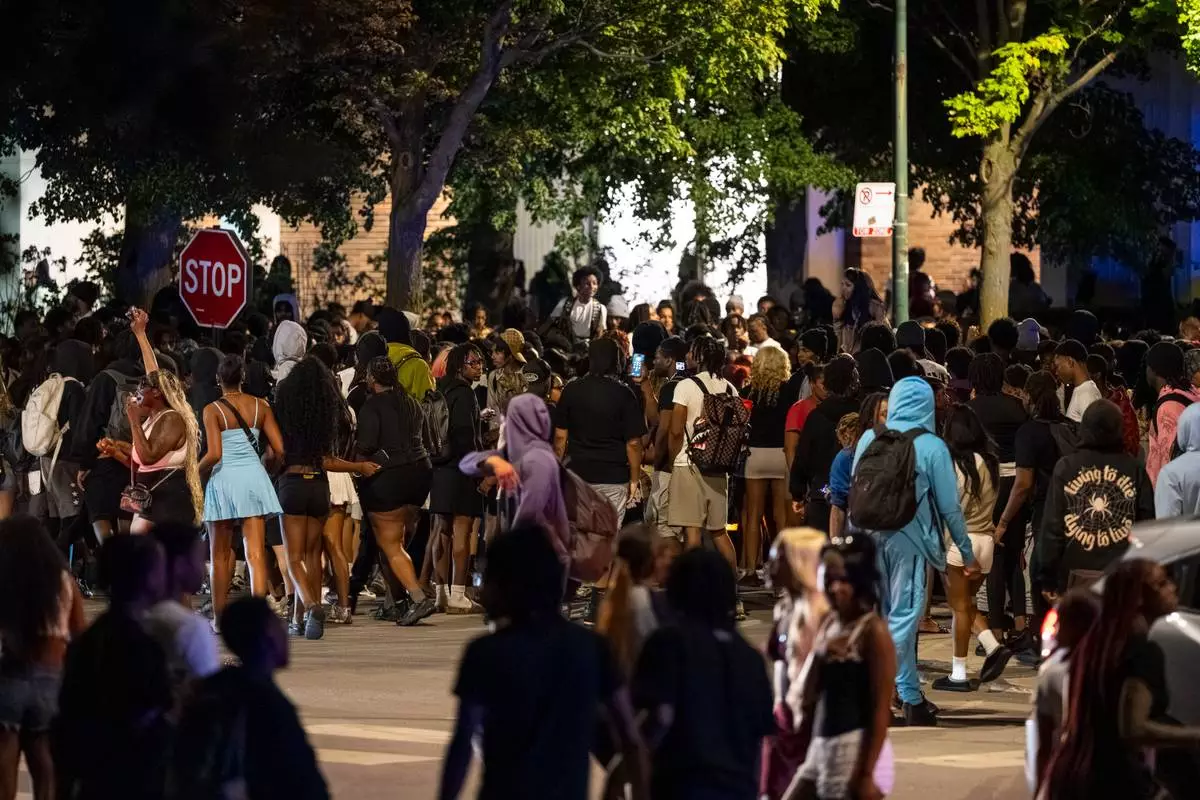
Hundreds of young people gather near the Griffin Museum of Science and Industry in the Hyde Park neighborhood as Chicago police officers attempt to disperse them, Monday, May 25, 2026. (Tyler Pasciak LaRiviere/Chicago Sun-Times via AP, File)