Hong Kong Customs detects drug trafficking case involving an incoming passenger at airport
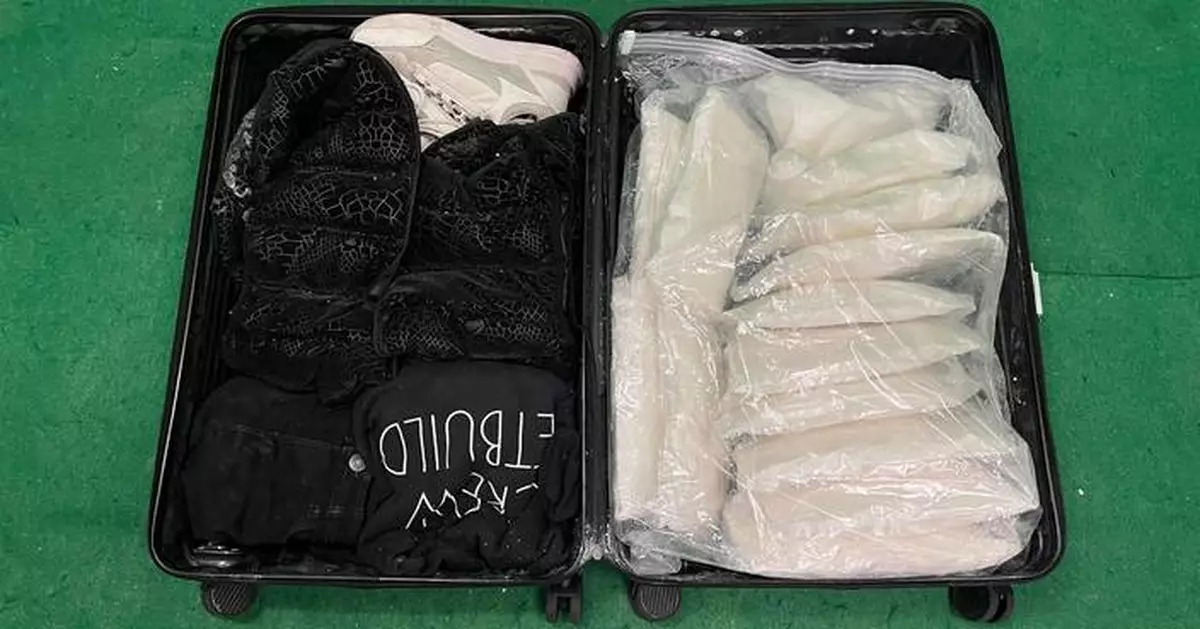
Hong Kong Customs today (July 25) detected a drug trafficking case involving an incoming air passenger at Hong Kong International Airport and seized about 14 kilograms of suspected ketamine with an estimated market value of about $5.5 million.
A 22-year-old British man arrived in Hong Kong from London, the United Kingdom, today. During customs clearance, Customs officers found the batch of suspected ketamine inside his check-in suitcase. The man was subsequently arrested.
An investigation is ongoing.
Customs will continue to step up enforcement against drug trafficking activities through intelligence analysis. The department also reminds members of the public to stay alert and not to participate in drug trafficking activities for monetary return. They must not accept hiring or delegation from another party to carry controlled items into and out of Hong Kong. They are also reminded not to carry unknown items for other people.
Customs will continue to apply a risk assessment approach and focus on selecting passengers from high-risk regions for clearance to combat transnational drug trafficking activities.
Under the Dangerous Drugs Ordinance, trafficking in a dangerous drug is a serious offence. The maximum penalty upon conviction is a fine of $5 million and life imprisonment.
Members of the public may report any suspected drug trafficking activities to Customs' 24-hour hotline 182 8080 or its dedicated crime-reporting email account (crimereport@customs.gov.hk) or online form (eform.cefs.gov.hk/form/ced002).
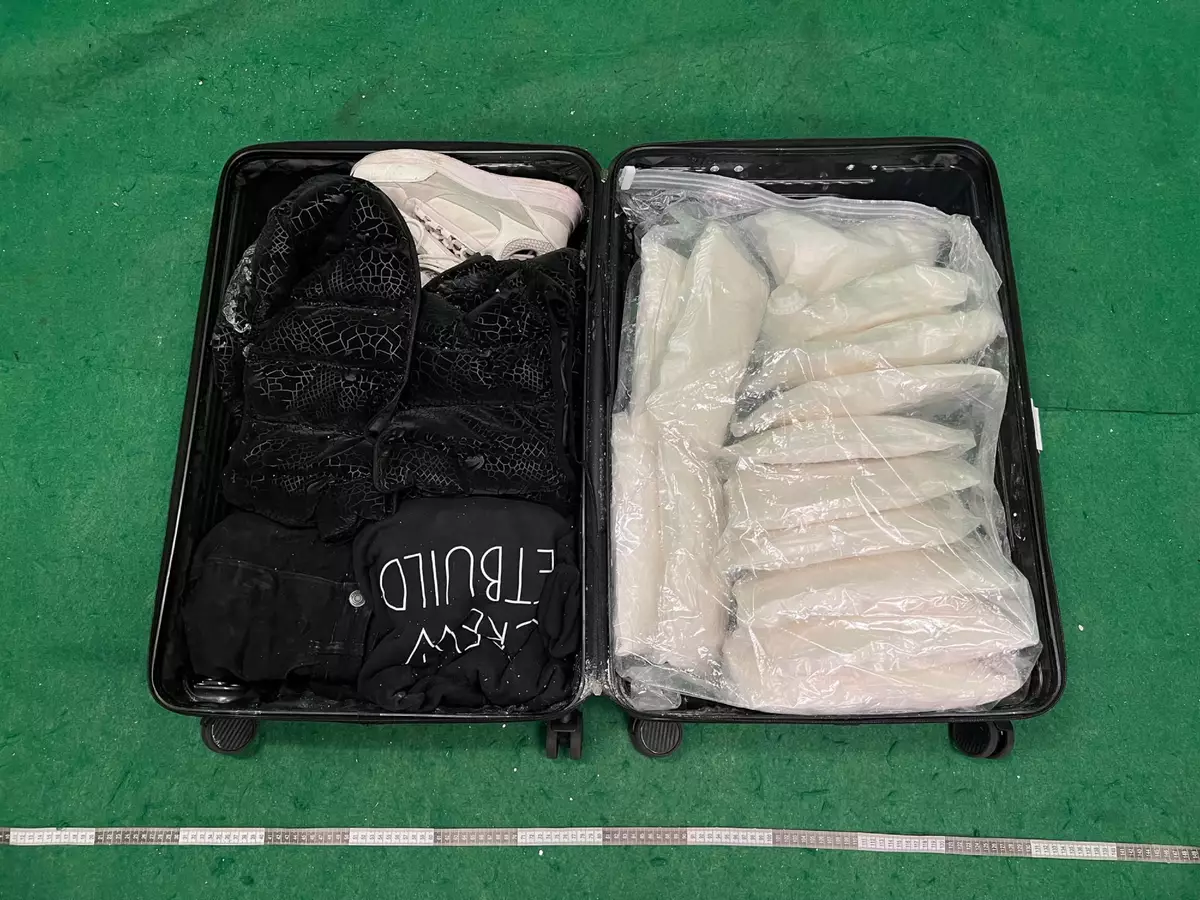
Hong Kong Customs detects drug trafficking case involving an incoming passenger at airport Source: HKSAR Government Press Releases
Two-week implementation of allowing dogs to enter food premises running smooth and stable in general
The new policy of allowing dogs to enter food premises has been implemented for two weeks since July 9, marking the halfway point of the one-month adaptation period. A spokesman for the Government said today (July 25) that public acceptance of the new policy has been increasing progressively and the overall operation has been smooth and stable. The number of permitted food premises has also grown steadily, rising from 940 at the start of implementation on July 9 to over 970 at present. This indicates that the vast majority of permitted food premises have chosen to continue participating, reflecting an overall stable situation.
The spokesman pointed out that the first phase of the new measure sets a quota of 1 000 food premises, and establishing a waiting list mechanism is an important part of the Government's policy design. As early as June 26, the Food and Environmental Hygiene Department (FEHD) has already placed unsuccessful applicant food premises on a waiting list according to their ballot order. If an approved food premises withdraws its permission, its quota is swiftly reallocated to applicants on the waiting list in that order. The preset waiting list mechanism is operating quickly and in an orderly manner, catering to the choices of different operators. Upon completion of the replacement procedures, the information of the newly added food premises will be promptly uploaded to the FEHD's dedicated webpage.
The spokesman added that restaurants make various commercial decisions every day, and the turnover of permitted food premises is a normal market adjustment and a continuous process of refinement, enabling resources to be allocated more effectively and matching supply and demand more accurately. The aim of the policy is to provide choices - giving options to food premises, as well as offering different choices to members of the public with different preferences and needs.
It is worth noting that despite some food premises have withdrawn, even more waitlisted applicants are eager to take up the released quotas. Since the implementation of the new policy, the Government is pleased to see active co-operation from both the public and the trade.
As the adaptation period reaches its midpoint, the FEHD's 90-member dedicated team continues to provide support to permitted food premises while carrying out publicity and educational work. Dedicated officers have been proactively inspecting food premises across various districts over recent days to observe the implementation status and make every effort to assist the trade in complying with relevant requirements.
The spokesman stressed that during the remaining half-month of the adaptation period, the Government will continue to adopt an "advice before enforcement" approach in handling non-compliance cases. However, this does not mean a relaxation of regulatory oversight. Should serious non-compliance cases or situations affecting environmental hygiene or food safety be detected, the FEHD will definitely take decisive enforcement action to ensure public safety and fairness of the policy.
The Government appeals to persons-in-charge and frontline staff of permitted food premises to continue earnestly fulfilling licensing conditions and legal requirements, while stepping up supervision and reminders for customers bringing dogs. At the same time, members of the public bringing dogs should properly control their dogs and respect other customers, working together to maintain a comfortable and harmonious dining environment and promote pet inclusivity.
Source: AI-found images