MILWAUKEE (AP) — Milwaukee Brewers pitcher Jacob Misiorowski set a franchise record by striking out the first seven Colorado Rockies on Sunday.
Misiorowski also broke his own record for the most 100-mph pitches in a single game since pitch tracking began in 2008. The two-time All-Star reached 100 mph on 66 of his 83 pitches and hit a top velocity of 104.7.
He had thrown 58 pitches of at least 100 mph during a 15-strikeout performance against the Philadelphia Phillies on June 12.
Misiorowski struck out 12 of Colorado's first 13 batters. The two-time All-Star retired the first 14 batters before Cole Carrigg homered with two outs in the fifth.
The Brewers record for consecutive strikeouts to start a game had been set last year by Quinn Priester, who had six in a row to begin a 5-2 victory over the Los Angeles Angels on Sept. 18.
The major league record for consecutive strikeouts to start a game is owned by Pablo López, who fanned the first nine Atlanta batters he faced in the Miami Marlins’ 7-4 triumph over the Braves on July 11, 2021.
Misiorowski was three shy of the Brewers and MLB record for consecutive strikeouts at any point within a single game. Corbin Burnes struck out 10 straight batters in the Brewers’ 10-0 shutout of the Chicago Cubs on Aug. 11, 2021. The New York Mets’ Tom Seaver struck out 10 straight San Diego Padres on April 22, 1970, and Philadelphia’s Aaron Nola had 10 consecutive strikeouts against the Mets on June 25, 2021.
Misiorowski capped the first inning by getting Hunter Goodman to swing and miss at a 104.3-mph fastball after also striking out Jake McCarthy and Mickey Moniak. TJ Rumfield, Kyle Karros and Carrigg struck out in the second. Willi Castro also struck out to lead off the third before Troy Johnston ended the streak by flying out to center fielder Luis Lara.
Misiorowski then struck out the next five batters he faced. Edouard Julien went down swinging to end the third before McCarthy, Moniak and Goodman all struck out again in the fourth. Rumfield's second strikeout led off the fifth, then Karros lined to fifth before Carrigg homered on a 2-2 pitch.
Carrigg’s 361-foot, opposite-field shot to left came on a 101.9-mph fastball. According to MLB.com, it was 12th-fastest pitch to result in a homer since the start of pitch tracking. No Rockies player had ever homered on a pitch that fast during the pitch tracking era.
Misiorowski followed up Carrigg's homer by hitting Castro with a pitch before retiring Johnston on a grounder to end a 30-pitch inning.
The Brewers removed Misiorowski at that point as the NL Central leaders continue to be careful with his workload as August approaches.
Misiorowski already has pitched 120 innings this season. He worked 141 1/3 innings last year, including his regular-season totals in the majors and minors plus his 12 postseason innings during Milwaukee’s run to the NL Championship Series. He was coming off a four-inning appearance in an 8-3 victory over the New York Mets on Monday.
His ERA for the season actually rose slightly to 1.58 as he increased his strikeout total to 185 on Sunday. Misiorowski leads the majors in both categories.
AP MLB: https://apnews.com/hub/MLB

Milwaukee Brewers' Jacob Misiorowski winds up to deliver during the first inning of a baseball game against the Colorado Rockies, Sunday, July 26, 2026, in Milwaukee. (AP Photo/Aaron Gash)

Milwaukee Brewers' Jacob Misiorowski pitches during the first inning of a baseball game against the Colorado Rockies, Sunday, July 26, 2026, in Milwaukee. (AP Photo/Aaron Gash)

Milwaukee Brewers' Jacob Misiorowski pitches during the first inning of a baseball game against the Colorado Rockies, Sunday, July 26, 2026, in Milwaukee. (AP Photo/Aaron Gash)
CAIRO (AP) — The United States paused its attacks on Iran for a second straight day Sunday and Tehran said it had done so too, as efforts continued to bring the countries back to negotiations on an interim ceasefire deal largely undermined by recent exchanges of fire.
It was not clear why the U.S. has paused after targeting Iranian coastal areas and infrastructure in a nearly two-week escalation sparked by Iran’s firing at ships trying to transit the Strait of Hormuz. The Pentagon did not respond to questions Sunday.
U.S. President Donald Trump is “giving talks some space. He’s giving it a little bit of room," Mike Waltz, the U.S. ambassador to the United Nations, told Fox News. "We’ve had both Oman and Iran, and a number of our other negotiators, engaged at every level, from the most senior levels all the way down to the technical level over the past few weeks, and particularly in the past few days."
Waltz dismissed the idea that the U.S. stockpile of interceptors crucial in defending against Iranian attacks is running low, but experts have questioned how long both the U.S. and Iran can afford to keep up attacks.
Since the U.S. has halted attacks for the past two nights, Iran has as well, its army spokesperson told Iran’s state TV on Sunday. Tehran in recent days has counterattacked against countries in the region hosting U.S. military forces, killing at least three service members at a base in Jordan and one in Iraq.
The 60-day period that began when the interim deal was signed by both countries in mid-June is now well into its second half, and major issues that were meant to be negotiated -– notably Iran’s nuclear program at the heart of tensions -– remain set aside as mediators try to keep both sides talking.
A regional official involved in mediation efforts said diplomacy was underway and that a pause in U.S. and Iranian strikes was a “positive signal that helps their efforts to de-escalate.”
The official said both countries want to return to the interim ceasefire deal and that a compromise being negotiated centers on having Iran run vessel transit through the Strait of Hormuz with fewer restrictions on ships. The official was not authorized to discuss the matter and spoke on condition of anonymity.
Concerns continued about shipping on the strait and now on another crucial waterway in the region, the Bab al-Mandeb strait to the Red Sea. Iranian-backed Houthi rebels in Yemen last week threatened a blockade of Saudi shipping there.
Global energy supplies and the economy remain in the balance as gasoline prices have risen again.
Commercial shipping traffic on the Strait of Hormuz was at a three-week low, a maritime body overseen by the U.S. Navy said Sunday, adding that no new attacks had been confirmed in the past 72 hours. It said traffic remained steady through the Bab el-Mandeb.
Iran on Sunday said it continued to speak with Oman about managing the safe passage of ships on the Strait of Hormuz, which passes between the countries. Iran’s Foreign Ministry spokesperson, Esmail Baghaei, said talks had made progress and continued.
Baghaei also said the strait's status remained unchanged. Tehran has asserted that the interim deal with the U.S. allows it to manage shipping on the waterway for now, and it has objected to U.S. efforts to support a route through the strait that passes close to Oman instead. The strait was considered an international waterway before the war.
The U.S. military on Saturday said its recently reimposed naval blockade against Iran continued, with a dozen commercial ships redirected, two disabled and two boarded. U.S. forces “remain highly vigilant, focused, lethal, and ready,” it added.
Meanwhile, Israeli Prime Minister Benjamin Netanyahu plans to travel to the United States and meet with Trump in Washington on Tuesday, his office has said. They last met in Washington in February, weeks before they launched the war on Iran that killed senior leaders including Supreme Leader Ayatollah Ali Khamenei.
The Iranian-backed Hezbollah fired at Israel two days after the war began, and Israel responded with airstrikes and ground forces in southern Lebanon. Since then, the U.S. has supported landmark direct talks between Lebanon and Israel to try to calm that front and find a way to disarm Hezbollah.
Netanyahu on Sunday told Fox News he “fully” backs Trump's efforts to weaken Iran and press it to end its nuclear program, adding: “If he can do so without returning to intense military fighting, that’s fine. Why not?”
The prime minister indicated he would not present new information to “our good friend” Trump and instead would listen to “what he has in mind, because I think in many ways, it’s his decision.”
But Netanyahu warned that if Iran again attacks Israel, directly or with armed proxies, “it will make a terrible mistake.”
Anna reported from Lowville, New York. Associated Press writers Darlene Superville and Ben Finley in Washington contributed.
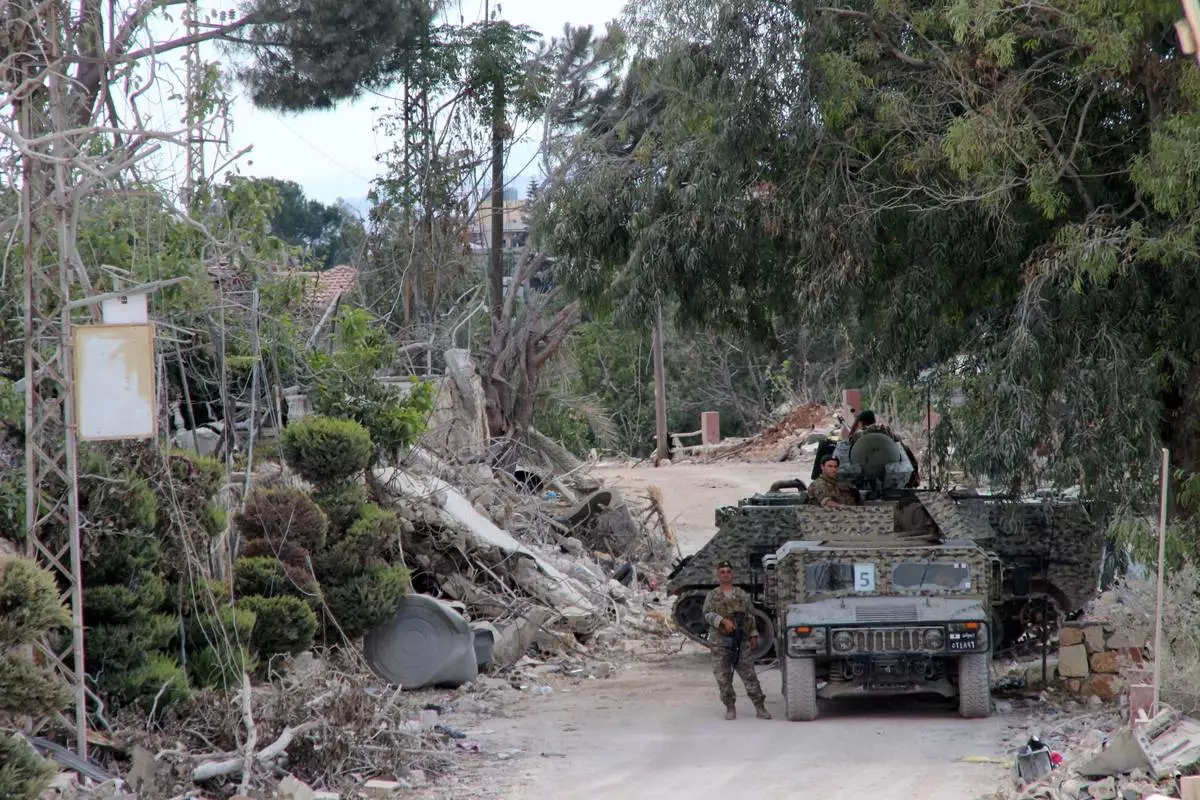
Lebanese soldiers deploy in the village of Zawtar al-Gharbiyeh, southern Lebanon, Sunday, July 26, 2026. (AP Photo/Ahmad Mantash)
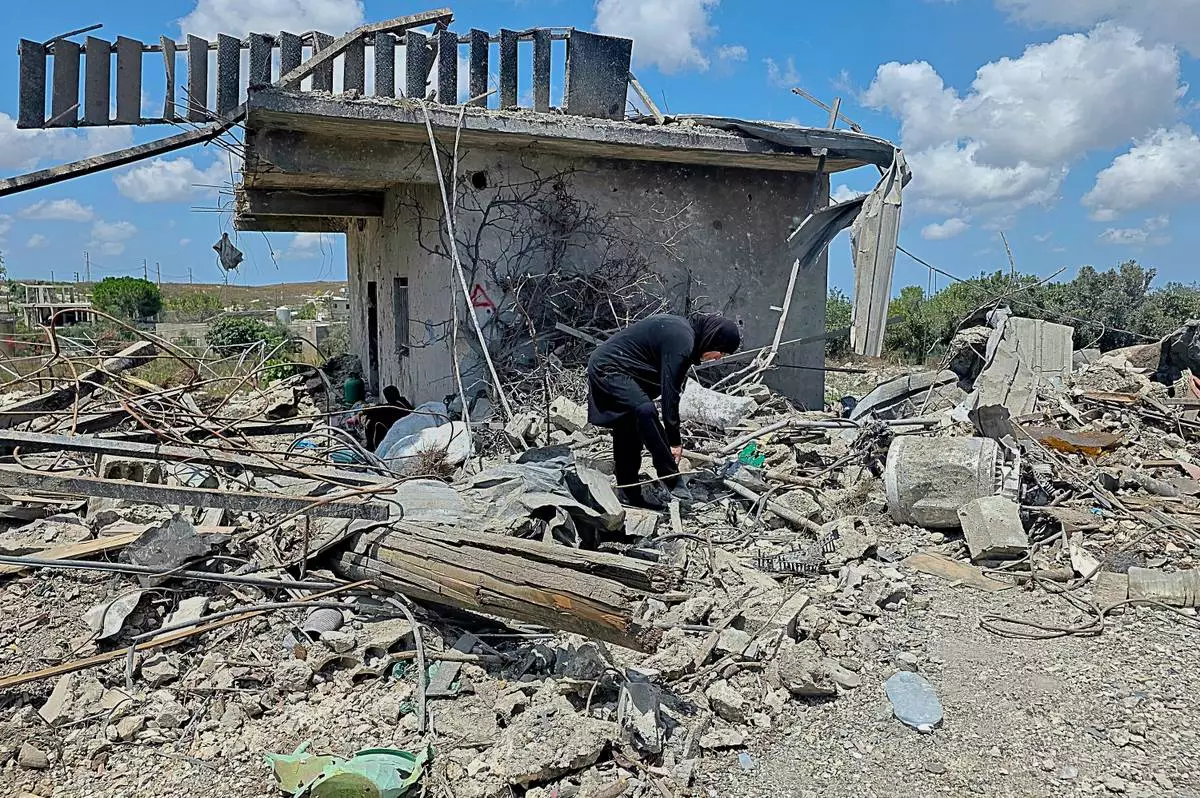
A Lebanese woman clears debris of her destroyed house in the village of Zawtar al-Gharbiyeh, southern Lebanon, Sunday, July 26, 2026. (AP Photo/Ahmad Mantash)

People walk through the village of Zawtar al-Gharbiyeh after the Lebanese army deployed to the village in southern Lebanon, Sunday, July 26, 2026. (AP Photo/Ahmad Mantash)
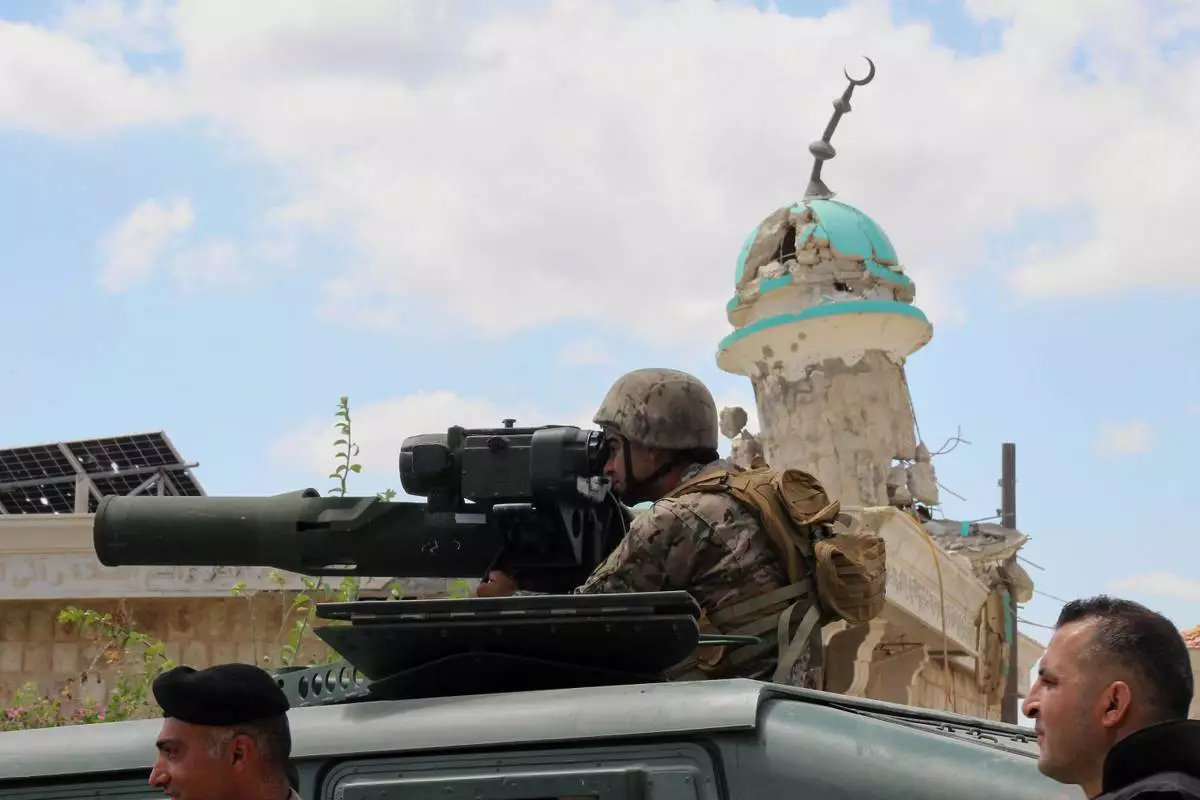
A Lebanese soldier looks through the binoculars of an anti-tank launcher in front of a destroyed mosque after deploying in the village of Zawtar al-Gharbiyeh, southern Lebanon, Sunday, July 26, 2026. (AP Photo/Ahmad Mantash)

Two men wade in the waters of the Strait of Hormuz with vessels anchored in the background, off Bandar Abbas, Iran, Sunday, July 12, 2026. (Razieh Poudat/ISNA via AP)