The International Mangrove Center (IMC) -- the world's first intergovernmental organization dedicated to mangrove conservation and cooperation -- was inaugurated on Sunday in the southern Chinese city of Shenzhen, marking its transition from a global initiative to a fully operational entity.
The inauguration took place on the International Day for the Conservation of the Mangrove Ecosystem.
China proposed establishing the organization in 2022 at the 14th Meeting of the Conference of the Contracting Parties to the Ramsar Convention on Wetlands (COP14). Four years later, following extensive preparations, the center held its first council meeting in Shenzhen alongside the inauguration ceremony.
Bringing together eight member states and 13 signatory countries across Asia, Africa and the Americas -- regions containing most of the world's mangrove forest -- the IMC will promote global cooperation through joint research and training programs to strengthen mangrove conservation.
"We will roll out demonstration projects among member states in areas such as restoration, ecological monitoring, and blue carbon trading. These are designed to provide exhibitable and replicable models for mangrove-rich countries and enhance their technical capacity in conservation and restoration," said Bao Daming, secretary-general of the International Mangrove Center.
The launch and operationalization of the IMC underscore China's commitment to advancing intergovernmental cooperation on global mangrove conservation, a move that has drawn praise from many countries.
"China has the best model for mangrove conservation and restoration. I think this demonstrates the strong commitment of the Chinese government in terms of mangrove conservation and restoration," said Yoeung Visal, office director at the Department of Freshwater Wetlands Conservation under the General Directorate of Natural Protected Areas of Cambodia’s Ministry of Environment.
Mangroves are among the world's most important coastal wetland ecosystems. Often described as "coastal guardians", they are an irreplaceable part of the global environment, playing vital roles in purifying seawater, reducing the impact of storm surges, preserving biodiversity and sequestering carbon.
China has long attached great importance to mangrove conservation, with its Wetland Protection Law providing a strong legal foundation for these efforts. Meanwhile, the country's protected-area system has placed mangroves under strict protection through ecological conservation redlines and designated nature reserves.
"Going forward, we will provide systematic support for the full operationalization of the IMC. By working closely with governments, international organizations, non-governmental organizations, research institutions, and other stakeholders, we aim to contribute to global biodiversity conservation, climate action, and the fulfillment of the Sustainable Development Goals," said Xie Chunhua, deputy director of the wetland management department at China's National Forestry and Grassland Administration.
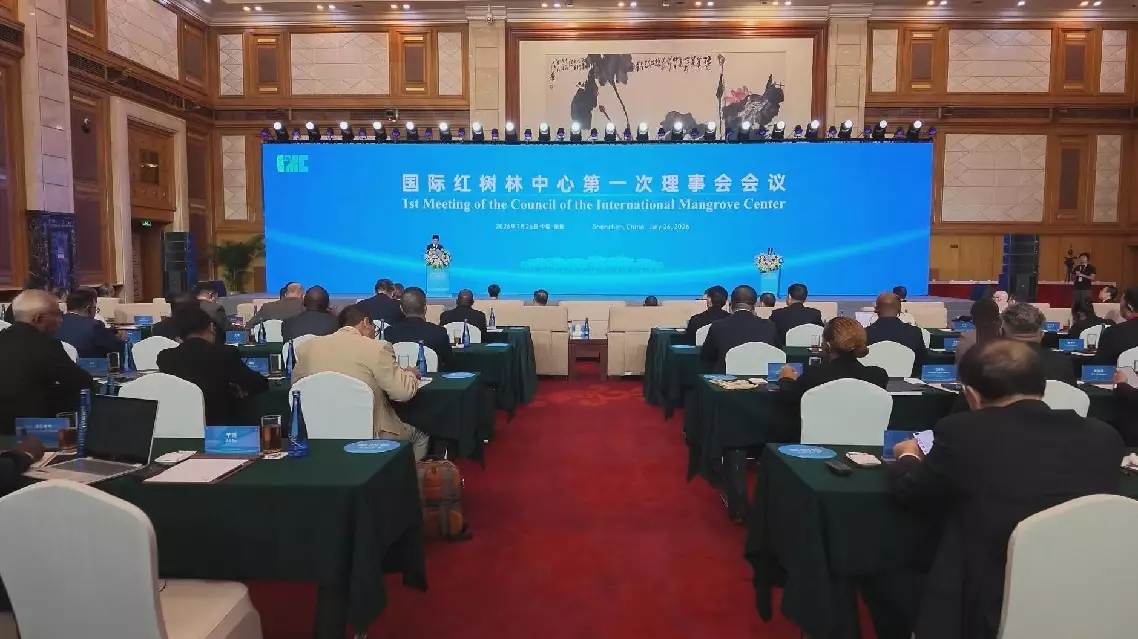
Int'l Mangrove Center officially begins operations in Shenzhen