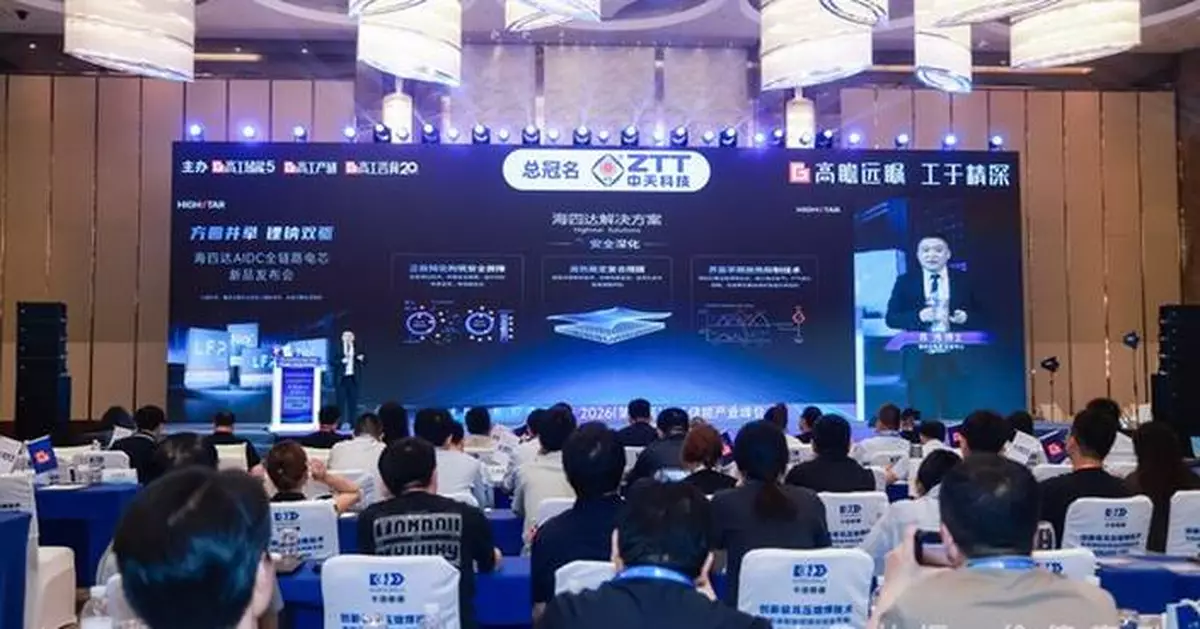
NANTONG, China, July 27, 2026 /PRNewswire/ -- Highstar unveiled its full-chain battery cell solution for artificial intelligence data centers (AIDCs) at the 2026 GGII Energy Storage Industry Summit. The portfolio spans three critical power layers: grey-space UPS and high-voltage direct current (HVDC) systems, white-space battery backup units (BBUs), and grid-side energy storage.
Targeted cells for grey-space and white-space challenges
As AI workloads increase rack density and load volatility, data centers require faster response, dependable backup, controlled temperature rise and stronger lifecycle performance. Highstar's solution centers on two products for the layers closest to computing loads.
For grey space, the 85Ah high-rate lithium iron phosphate cell is designed for UPS and HVDC systems that must deliver high power rapidly and sustain reliable backup under frequent pulse conditions. High-rate discharge, thermal control, safety and durability support compact system design while helping operators balance availability with lifecycle cost. In addition, the 50Ah sodium-ion battery cells are better suited for operation across a wide temperature range of -40°C to 80°C.
For white-space BBUs, Highstar offers a portfolio of tabless cylindrical cells spanning 18650 and 21700 formats, with both LFP and high-nickel NMC chemistries. Designed for BBU applications, these cells deliver high instantaneous power, low internal resistance, reduced temperature rise and enhanced safety, while accommodating different rack-space, power and cost requirements.
Completing the chain with grid-side storage
The grid-side system uses 314Ah lithium-ion cells and 160Ah sodium-ion cells, balancing long-duration energy storage, cycle life, and rapid power support. Together, the three layers create a coordinated portfolio extending from rack-level protection and system-level backup to upstream energy storage.
The portfolio combines lithium-ion and sodium-ion chemistries with prismatic and cylindrical platforms. Highstar's technology integrates cathode, anode, electrolyte and separator development with structural approaches including tabless current collection, precision pressure relief and directional venting.
From individual cells to application collaboration
The full-chain architecture is designed to reduce selection and integration complexity for power equipment suppliers, system integrators and data center operators. It also provides a common foundation for joint validation and application-specific development across AIDC power architectures.
During the summit, Highstar also participated in the launch of the "2026 Global AIDC Power Supply Industry Development Blue Book" and was honored as a "Top Benchmark in AIDC Energy Storage," earning authoritative recognition from the industry.
** This press release is distributed by PR Newswire through automated distribution system, for which the client assumes full responsibility. **
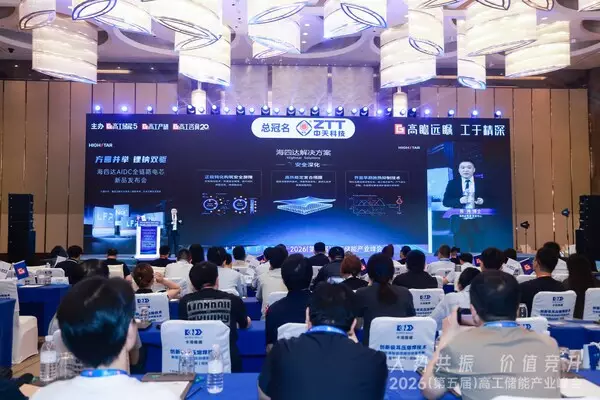
Highstar Launches Full-Chain Battery Cell Portfolio for AI Data Centers
MANILA, Philippines, July 27, 2026 /PRNewswire/ -- Ookla's comprehensive controlled network test reveals that traditional mobile operator networks deliver a measurably superior voice experience compared to Over-the-Top (OTT) applications like WhatsApp, particularly in critical areas such as audio fidelity, weak signal resilience, and call reliability.
The study, which evaluated the networks of the Philippines' three major mobile operators—Smart Communications, Globe Telecom, and DITO Telecommunity, demonstrates that carrier-managed VoLTE infrastructure remains the gold standard for consistent, high-quality communication, outperforming OTT voice services.
Operator Voice Deliver Consistent HD Audio, OTT Apps Only Offer Fair Quality
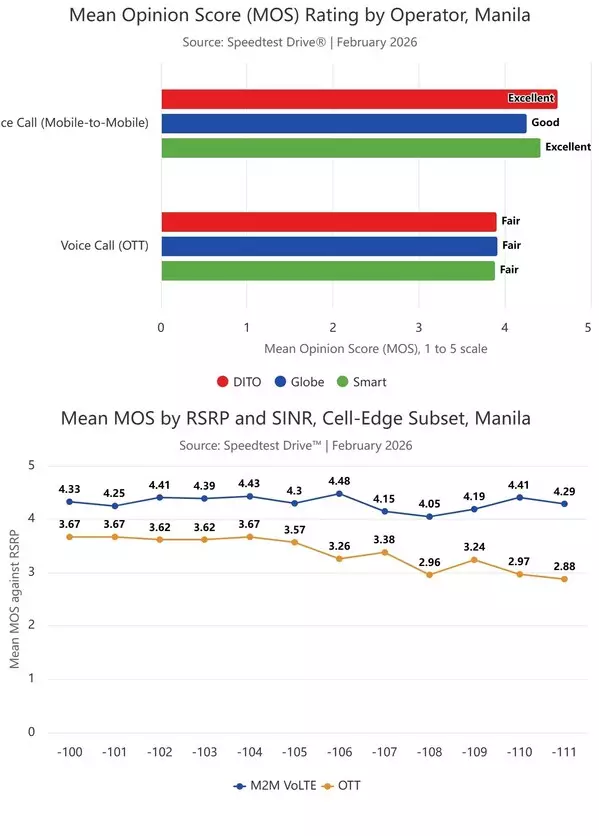
The research found a distinct quality gap in audio performance. While operator voice calls consistently delivered HD-grade audio quality—rated "Good"(scoring > 4.0) to "Excellent" (scoring > 4.3) across all three networks, OTT voice calls were rated only as "Fair" (scoring < 4.0). Smart and DITO achieved higher MOS scores than Globe by deploying the advanced EVS codec, which offers superior audio fidelity over Globe's AMR-WB.
Conversely, this gap exists because OTT apps treat voice as generic data packets, vulnerable to the internet's "best-effort" delivery. Even with operator network optimizations, OTT voice lacks the stringent Quality of Connection (QoC) guarantees. Under network stress—such as congestion, weak coverage, high packet loss, or significant jitter—OTT audio degrades noticeably. In contrast, VoLTE leverages exclusive high-priority cellular bearers to safeguard voice quality.
Operator Voice Sustains HD Quality in Weak Coverage While OTT Calls Degrade
The performance gap widens significantly at the cell edge, where signal strength is low. Under moderate-to-low RF coverage conditions (RSRP ≤ -100 dBm), operator-managed VoLTE calls maintained HD-grade clarity.
Conversely, OTT calls degraded further, slipping from "Fair" into the "Poor" (scoring < 3.6) and "Bad" (scoring < 3) ranges. This is a critical finding for consumers in areas with obstructed signals or far from cell sites, proving that dedicated voice bearers protect call quality where best-effort data (used by OTT) cannot.
VoLTE Delivers More Reliable Call Connections Than OTT
Reliability is another key differentiator. The study shows that VoLTE has significantly lower block rates (call setup failure rates) than OTT services. For instance, Globe recorded the lowest VoLTE block rate at 0.47%, versus its OTT rate of 1.64%. This trend was consistent across operators, highlighting that the dedicated signaling protocols of VoLTE (like optimized SIP and SRVCC) provide a more robust connection experience than OTT's best-effort data model.
The Path Forward: Building a Solid VoLTE Foundation for AI-Driven Voice
As Philippine NTC mandates the 3G sunset by December 2026, the industry must prioritize comprehensive VoLTE coverage and user migration. Looking ahead, the convergence of voice and AI stands as the industry's definitive future trend. However, a high- performance VoLTE network is the vital prerequisite for this shift. Operators should continuously refine their VoLTE infrastructure, laying a solid foundation to seamlessly integrate voice with AI and unlock the next generation of intelligent calling experiences.
** This press release is distributed by PR Newswire through automated distribution system, for which the client assumes full responsibility. **
Ookla Study in Manila: Carrier VoLTE Networks Prove to Outperform OTT Apps in Voice Quality and Reliability