MILFORD, Mich. (AP) — President Donald Trump plans to tout his handling of the economy during a visit to suburban Detroit on Monday, defending sweeping tariffs in a swing state where their effects have hurt many businesses as midterm election season heats up.
Trump is visiting a General Motors facility in Milford, home to tracks and proving grounds for new models and vehicles. Early voting is underway for Michigan's Aug. 4 primary, which features fierce nomination fights in both major political parties.
Republican Mike Rogers is unopposed in the Senate primary, but the GOP gubernatorial contest pits Trump-backed Rep. John James against Perry Johnson, a businessman turned politician who has launched unsuccessful campaigns before, including for president in 2024.
Johnson is now trying to style himself in the president's mold — despite missing out on his endorsement. He's even holding a "Trump Tailgate” outside the president's GM event.
Meanwhile, the Democratic Senate primary between Rep. Haley Stevens and progressive Abdul El-Sayed has drawn national attention for the right to face Rogers, who was narrowly defeated by Democrat Sen. Elissa Slotkin in 2024.
Michigan was one of the 2024 battlegrounds Trump flipped after it backed Democrat Joe Biden in 2020. But the state has also seen parts of its economy affected by the president's tariffs, including on imported cars and auto parts.
A new round of steep import levies is taking effect on dozens of U.S. trading partners. But Trump has singled out Canada with tariffs as high as 50% on a wide array of its products, including cars.
The president is visiting Oakland County, which encompasses much of Detroit's northern suburbs. Once a Republican stronghold, it has increasingly leaned Democratic, backing Biden against Trump in 2020 and Vice President Kamala Harris against Trump four years later.
The White House says Trump will talk up having generated manufacturing jobs and foreign investment in the U.S. while making the case that his policies and leadership have boosted the auto industry.
“The President pledged to put Michigan workers back to work, and he’s doing it,” White House spokesperson Liz Huston said in a statement.
Michigan's economy relies heavily on Canada, however, meaning the new tariffs — coupled with inflation still running high and gas prices rising again as the already unpopular war in Iran escalates — have created additional economic concerns statewide.
Those come at a time when voters across the country were already increasingly dissatisfied with Trump's handling of the economy.
Jason Roe, a former executive director of the Michigan Republican Party who tried unsuccessfully to distance it from Trump's “Make America Great Again” movement in 2021, said that more than coinciding with his new round of tariffs, Trump's visit is a function of Michigan's relatively late primary and is meant to ensure that James secures the nomination.
But Roe also predicted that it was a risk for the president to tie himself too closely to top Republicans ahead of the general election, calling it “kryptonite to November voters.”
Trump, who won the White House on a promise to lower the cost of living, also has seen his approval ratings sag, meaning kitchen table issues could be a liability for Republicans trying to hold control of Congress after Election Day on Nov. 3.
“We’re happy to have the president here, campaigning with Republicans. We think it highlights the fact that the only thing they care about is Donald Trump and refuse to stand up to him," said Curtis Hertel, chairman of the Michigan Democratic Party. "It’s good for us every time the president is here because he’s incredibly unpopular.”
The Supreme Court struck down many of Trump’s sweeping tariffs, but his administration has tried to find ways around that, including by arguing that he can impose them on Canada because that country is discriminating against American exports of products including automobiles.
But Trump’s latest round of tariffs came after he voiced frustration with Canada for having retaliated and imposed its own levies on U.S. imports in response to Trump’s initial tariffs last year. Trump launched the first round after alleging Canada should do more to stop fentanyl smuggling.
It is Trump's third trip to Michigan in his second term.
In January, he visited a Ford plant in Dearborn and addressed the Detroit Economic Club, offering a defense of tariffs even as auto industry leaders blamed them for increasing the cost of doing business. The outcry is part of the reason Trump extended rebates to domestic car companies on some tariffs on imported auto parts.
The president marked his second term's first 100 days with a rally in Warren, where he mostly mentioned grievances left over from the 2024 campaign, even scoffing at what Biden might look like in a bathing suit.
His latest visit coincides with tensions between his administration and Canada that have marred the opening of a new bridge linking Detroit and Windsor, Ontario.
Canada on Friday held its own event hailing the opening of the $4.7 billion Gordie Howe International Bridge instead of a planned celebration with officials in the U.S. after Trump announced the new Canadian tariffs.
An earlier, joint ceremony had been set for June but was scrapped after Trump suggested the U.S. wanted a “better” deal on the bridge it co-owns with Canada.
That eventually led to an agreement on splitting tolls that was supposed to allow for the rescheduled joint U.S.-Canada celebration — until the new tariffs derailed that, too.
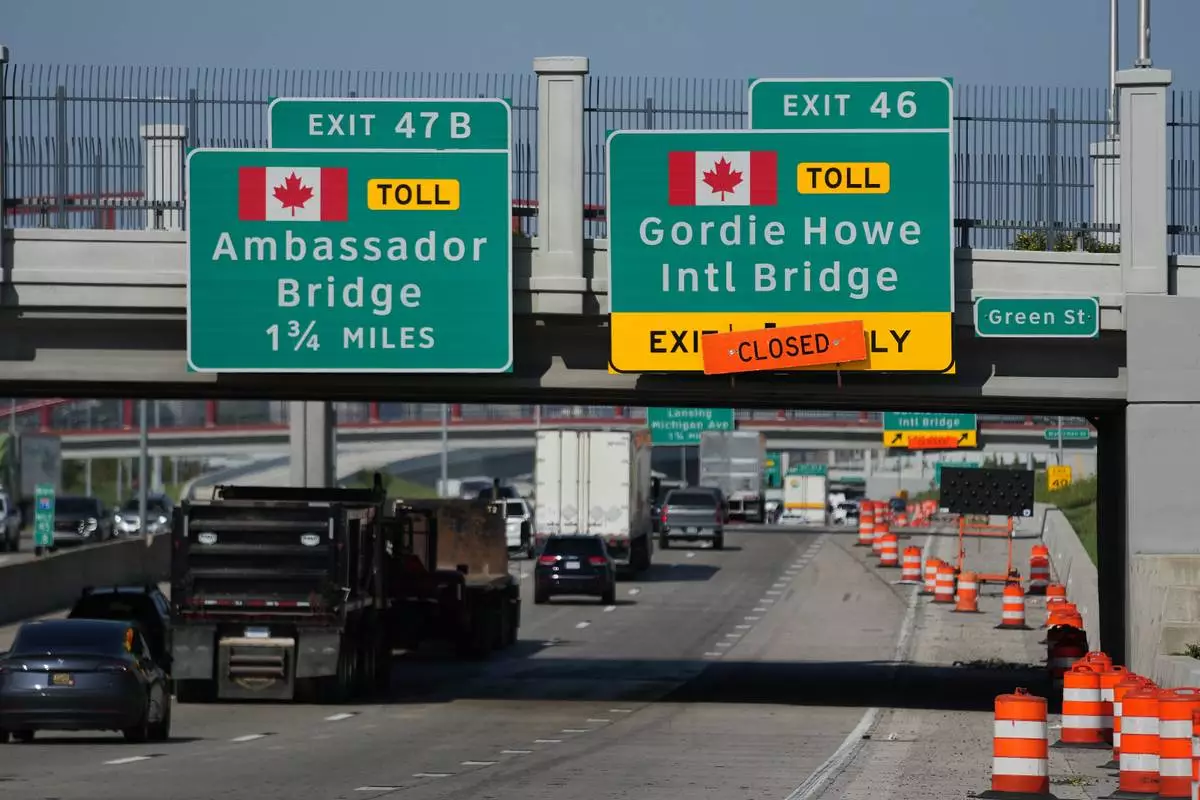
Exits from Interstate 75 are displayed for the Gordie Howe International Bridge and Ambassador Bridge connecting Windsor, Ontario, with Detroit, Tuesday, July 14, 2026, (AP Photo/Paul Sancya)
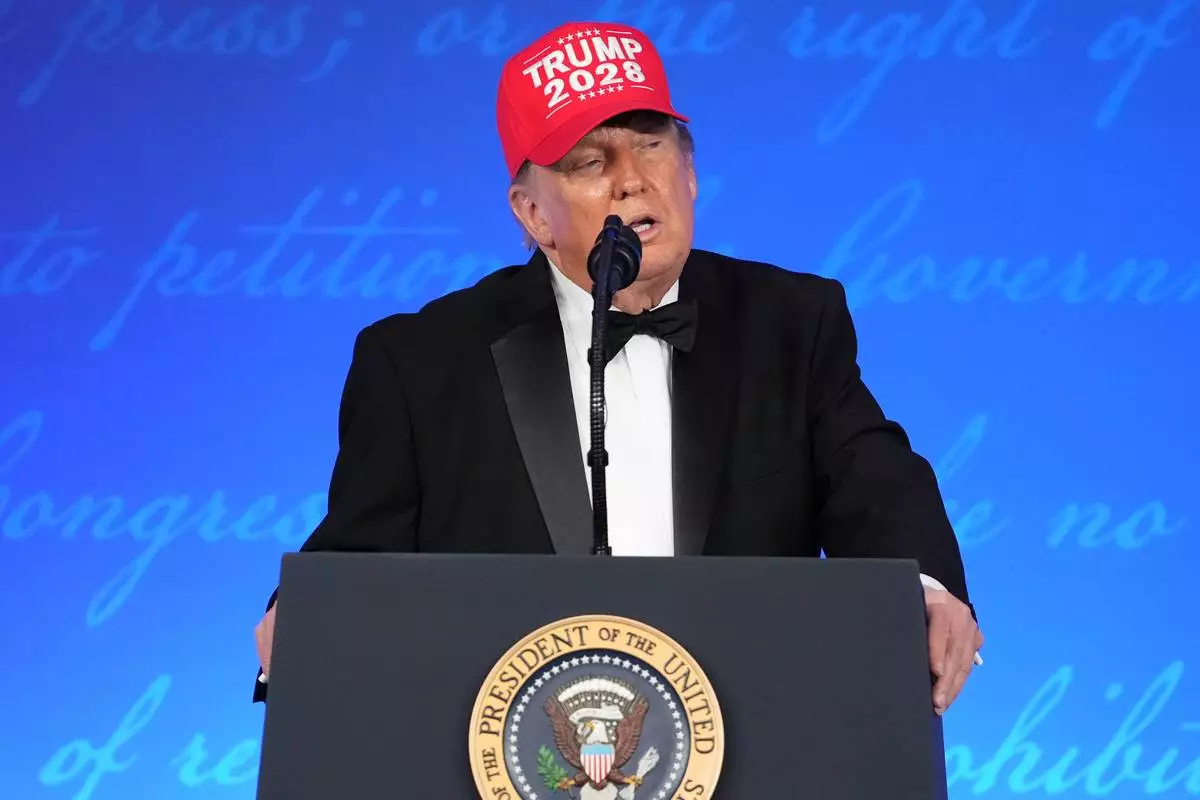
President Donald Trump speaks at the White House Correspondents' Association dinner at the Waldorf Astoria Washington DC, Friday, July 24, 2026, in Washington. (AP Photo/Mark Schiefelbein)
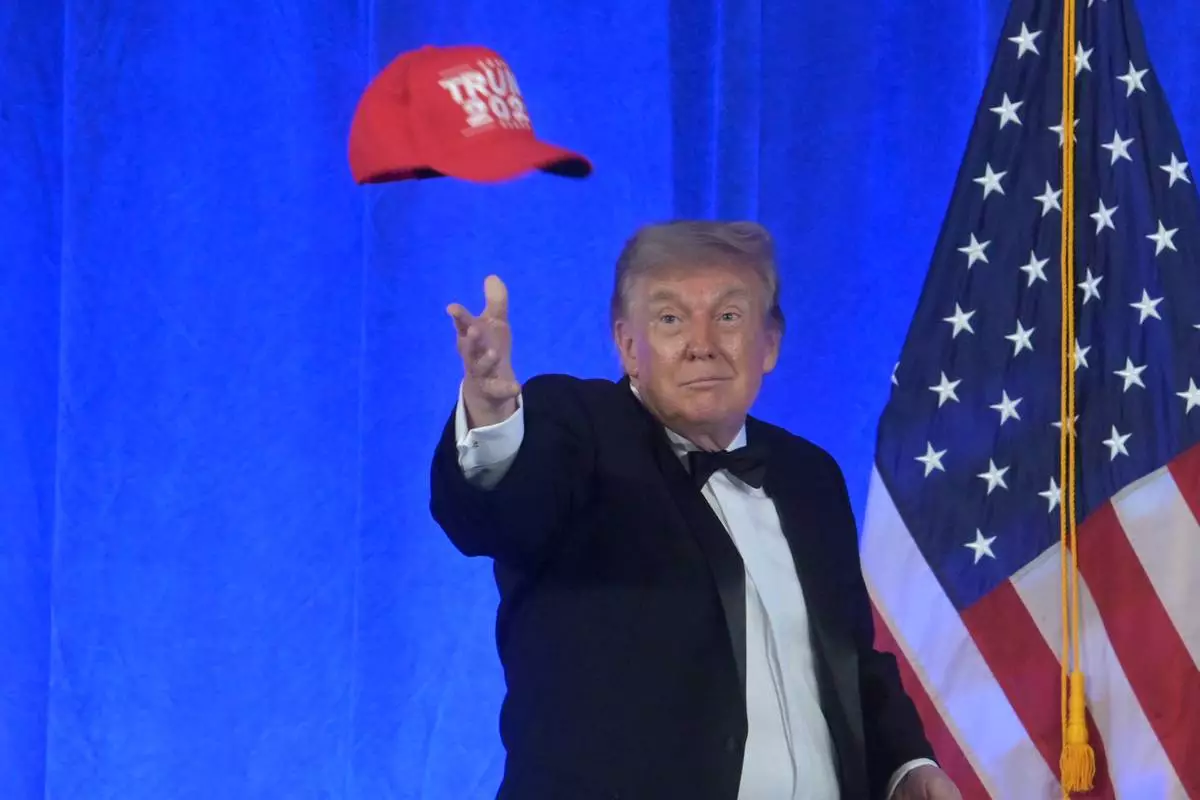
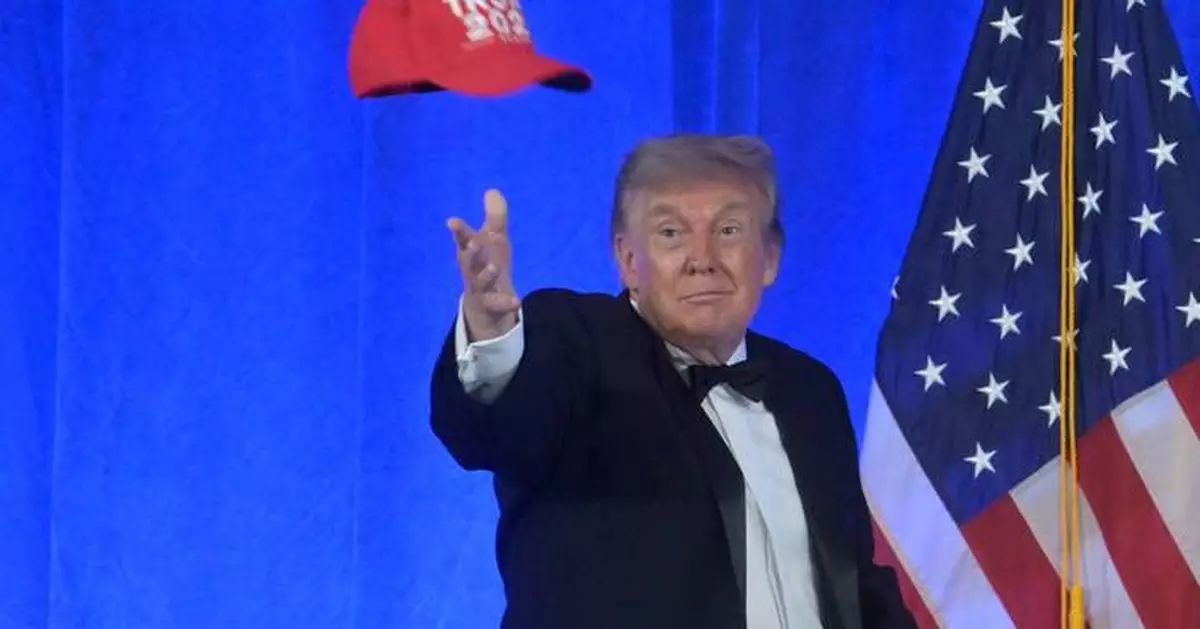
President Donald Trump tosses a "Trump 2028" hat at the White House Correspondents' Association dinner at the Waldorf Astoria Washington DC, Friday, July 24, 2026, in Washington. (AP Photo/Rod Lamkey, Jr.)
CAIRO (AP) — Mediators have achieved progress in efforts to get the United States and Iran back to negotiations and avert an all-out war in the Middle East, two regional officials said Monday, with a pause in attacks coming after a period of rapidly escalating tensions.
The comments came after neither the U.S. nor Iran reported carrying out any attacks for three straight days — a respite after about two weeks of sustained bombardments that had led to increasing fears of a return to all-out war.
The two regional officials, who spoke on condition of anonymity to discuss the sensitive regional talks, said mediators led by Qatar and Pakistan were working to bridge the gap between Washington and Tehran to return to an interim ceasefire deal that had been largely undermined by recent exchanges of fire.
The U.S. has paused attacks after targeting Iranian coastal areas and infrastructure in a nearly two-week escalation sparked by Iran’s firing at ships trying to transit the Strait of Hormuz, a crucial waterway for global oil shipments. The Pentagon did not respond to questions.
U.S. President Donald Trump is “giving talks some space. He’s giving it a little bit of room,” Mike Waltz, the U.S. ambassador to the United Nations, told Fox News.
Waltz dismissed the idea that the U.S. stockpile of interceptors crucial in defending against Iranian attacks is running low, but experts have questioned how long both the U.S. and Iran can afford to keep up attacks.
Since the U.S. has halted attacks for the past two nights, Iran has as well, its army spokesperson told Iran’s state TV on Sunday. Tehran in recent days has counterattacked against countries in the region hosting U.S. military forces, killing at least three service members at a base in Jordan and one in Iraq.
One of the regional officials who spoke to AP Monday described the progress made in mediation efforts as “significant.” He said mediators were working with Iran and Oman on a mechanism for managing vessels’ transit through the Strait of Hormuz, the flashpoint for the latest strikes and counterstrikes.
Iran’s Foreign Ministry spokesperson, Esmail Baghaei, said during a news conference in Tehran Monday that mediators were conveying messages but there were no direct negotiations.
“Mediators may convey messages to us from the American side regarding ongoing developments in the region. But at present, we have no negotiations with the American side,” Baghaei said.
He said Iran and Oman, which lies on the other side of the Strait of Hormuz, had already held talks on Friday and Saturday on how to manage ship traffic through the waterway.
“The objective is for Iran and Oman, as the two coastal states, to develop mechanisms to ensure safe navigation through the Strait of Hormuz while respecting the sovereign rights and sovereignty of both coastal states, as well as Iran’s security and national interests” Baghaei said. However, he stressed that the waterway remains closed.
Tehran has asserted that the interim deal with the U.S. allows it to manage shipping on the waterway for now, and it has objected to U.S. efforts to support a route that passes close to Oman instead. The strait was considered an international waterway before the war.
The U.S. military on Saturday said its recently reimposed naval blockade against Iran continued, with a dozen commercial ships redirected, two disabled and two boarded. U.S. forces “remain highly vigilant, focused, lethal, and ready,” it added.
The 60-day period established by the interim deal in mid-June is now well into its second half, and major issues that were meant to be negotiated — notably Iran’s nuclear program at the heart of tensions — remain set aside as mediators try to keep both sides talking.
Concerns continue about shipping through another crucial waterway in the region, the Bab al-Mandeb strait to the Red Sea. Iranian-backed Houthi rebels in Yemen last week threatened a blockade of Saudi shipping there, and fired on at least one Saudi tanker, setting it alight.
Global energy supplies and the economy remain in the balance as gasoline prices have risen again.
Commercial shipping traffic in the Strait of Hormuz was at a three-week low, a maritime body overseen by the U.S. Navy said Sunday, adding that no new attacks had been confirmed in the past 72 hours. It said traffic remained steady through the Bab el-Mandeb.
Meanwhile, Israeli Prime Minister Benjamin Netanyahu plans to travel to the United States and meet with Trump in Washington on Tuesday, his office has said. They last met in Washington in February, weeks before they launched the war on Iran that killed senior leaders including Supreme Leader Ayatollah Ali Khamenei.
The Iranian-backed Hezbollah fired at Israel two days after the war began, and Israel responded with airstrikes and ground forces in southern Lebanon. Since then, the U.S. has supported landmark direct talks between Lebanon and Israel to try to calm that front and find a way to disarm Hezbollah.
Separately, Baghaei slammed Ukrainian President Volodymyr Zelenskyy after he said over the weekend that Ukraine had struck “vessels used in military cargo shipments involving Iran” in the Caspian Sea.
On Sunday, Iranian Foreign Minister Abbas Araghchi said Ukraine’s strike on an Iranian vessel had killed a sailor.
In a statement on X, Araghchi denounced the attack as a “blatant U.N. Charter violation done at Israel’s behest to drag Europe into its war.” He said he made it clear in calls with European Union foreign policy chief Kaja Kallas and Russian Foreign Minister Sergey Lavrov that the attack “can’t go unanswered.”
Iran is an ally of Russia in its war against Ukraine, helping Moscow build up its drone expertise.
Speaking during the news conference in Tehran Monday, Baghaei said that “all parties that consider themselves in some way supporters of the Ukrainian regime must be held accountable.”
He said Zelenskyy’s “behavior is reminiscent of the anarchists who, on the eve of World War I, carried out theatrical and highly dangerous actions whose repercussions engulfed all of Europe.”
Becatoros reported from Athens, Greece. Associated Press reporters Cara Anna in Lowville, New York; Darlene Superville and Ben Finley in Washington; and Jill Lawless and Emma Burrows in London contributed.
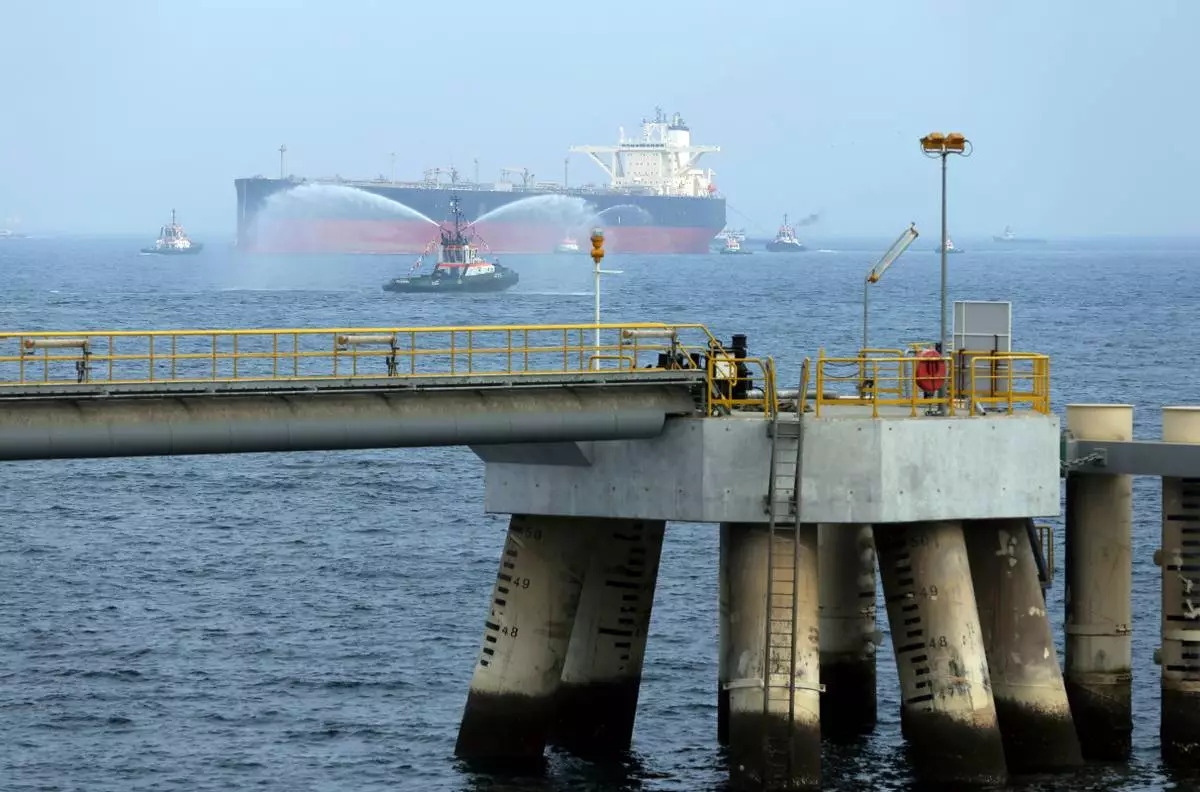
FILE - An oil tanker approaches the new Jetty during the launch of the new oil facility in Fujairah, United Arab Emirates, Sept. 21, 2016. (AP Photo/Kamran Jebreili, File)
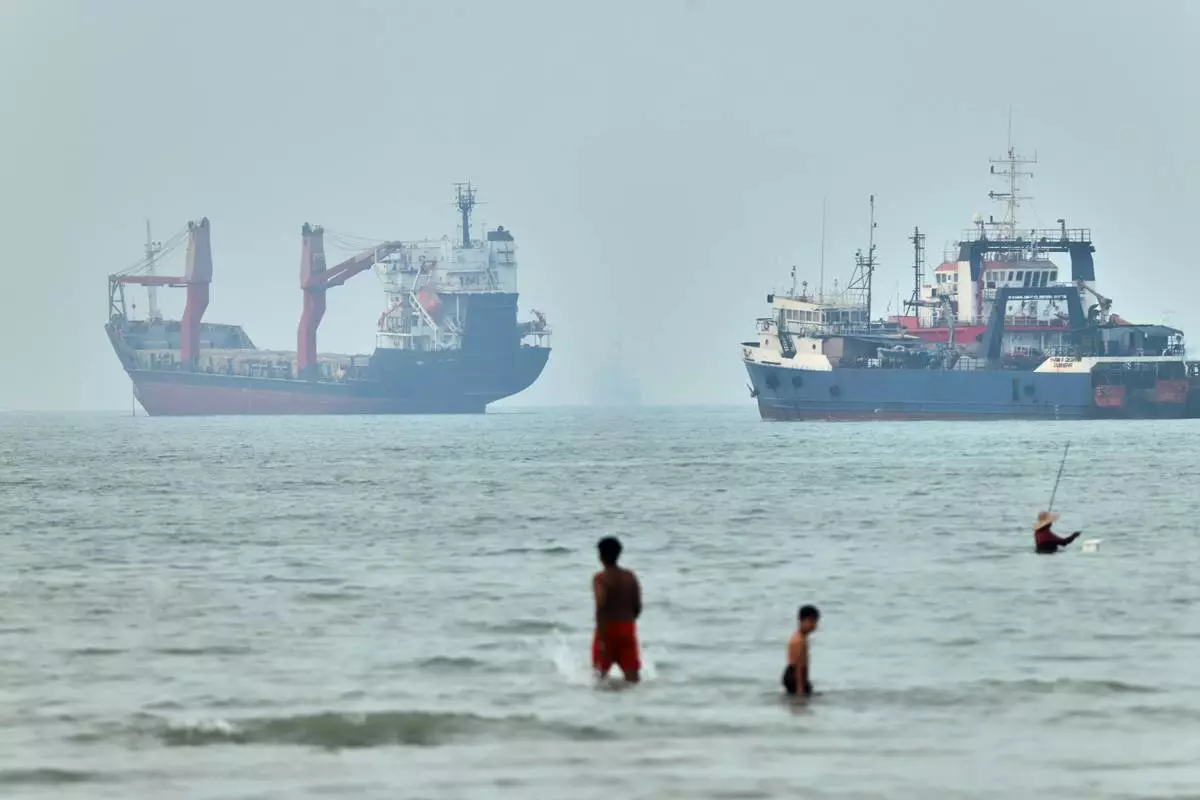
FILE - Children wade in the water with cargo ships at anchor in the background and a fisherman nearby, in the Strait of Hormuz off Bandar Abbas, Iran, Tuesday, June 30, 2026. (Amirhosein Khorgooi/ISNA via AP,File)