NEW YORK (AP) — New York City Mayor Zohran Mamdani's plan to open a slate of government-owned grocery stores stirred up critics who roasted the idea as the democratic socialist's first step toward creating communist bread lines in the city.
The mayor offered a different vision for the city-owned shops on Monday, announcing that they would instead provide a 30% discount on produce, meat and a host of other kitchen staples as a way to offset the rising food prices in one of America's most expensive cities.
Click to Gallery
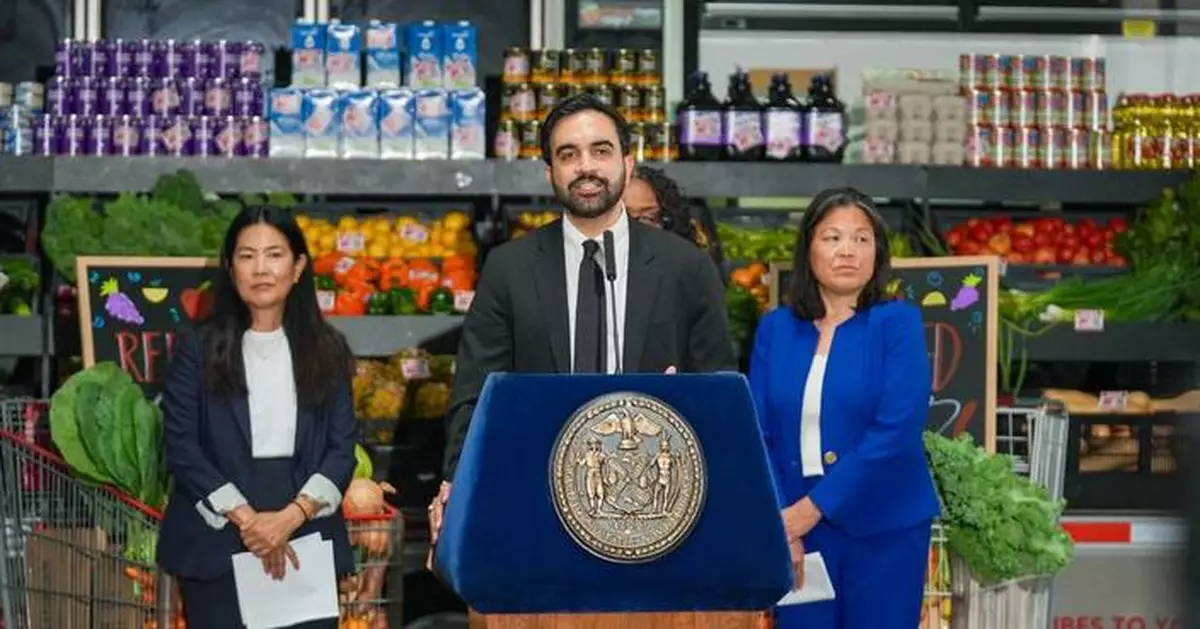
New York City Mayor Zohran Mamdani speaks at an announcement event of a city-wide, discounted grocery plan for city-run municipal grocery stores, in the Brooklyn borough of New York, Monday, July 27, 2026. (AP Photo/Ryan Murphy)
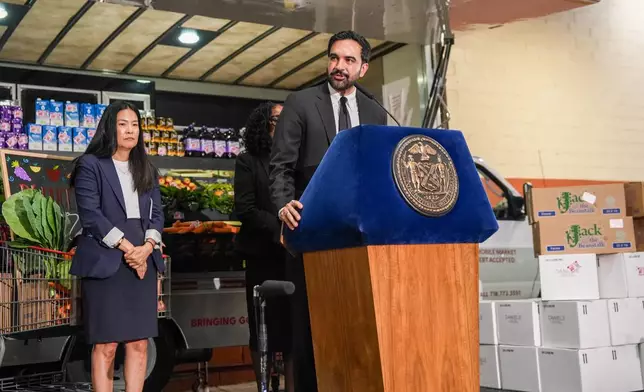
New York City Mayor Zohran Mamdani speaks at an announcement event of a city-wide, discounted grocery plan for city-run municipal grocery stores, in the Brooklyn borough of New York, Monday, July 27, 2026. (AP Photo/Ryan Murphy)
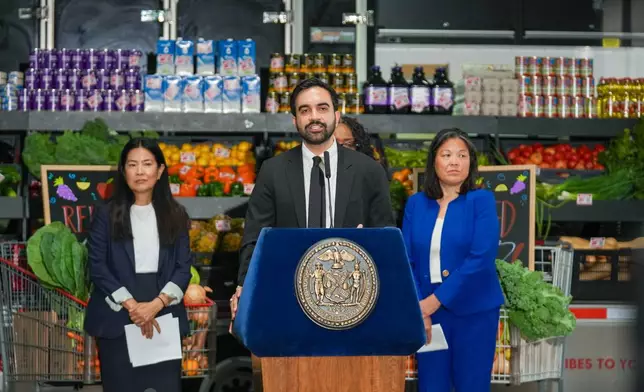
New York City Mayor Zohran Mamdani speaks at an announcement event of a city-wide, discounted grocery plan for city-run municipal grocery stores, in the Brooklyn borough of New York, Monday, July 27, 2026. (AP Photo/Ryan Murphy)
New York City Mayor Zohran Mamdani speaks at an announcement event of a city-wide, discounted grocery plan for city-run municipal grocery stores, in the Brooklyn borough of New York, Monday, July 27, 2026. (AP Photo/Ryan Murphy)
The five stores are expected to be placed in each of the city's five boroughs, with the first set to open toward the end of 2027 in the Bronx. He plans to have all five operational by the end of his four-year term.
“Thirty percent off adds up to real money for New Yorkers,” Mamdani, a Democrat, said at a news conference at a warehouse in Brooklyn while standing in front of a display of fruits and vegetables. “In the wealthiest city, in the wealthiest country in the history of the world, no New Yorker should have to worry about being able to afford to feed their family.”
The city has started the process of picking private operators to handle day-to-day operations of the shops. The administration will provide storefronts while covering rental costs and property taxes, officials said.
Mamdani campaigned on the proposal as a plank in a wider affordability platform centered on shifting the power of government toward policies to help the city's struggling working class. At one point last year, he framed the idea as a modest experiment and said if it doesn't work, “C’est la vie, then the idea was wrong.”
Still, the plan has rankled some smaller grocers and owners of the city's ubiquitous bodega corner stores, who worry they won't be able to compete with discounted food prices at the city-run shops.
At his news conference, Mamdani said the city-owned stores would not sell hot food or other items like beer or cigarettes, as a way to avoid sapping away profitable business from private stores.
“We are not looking to compete with bodegas or grocery stores when it comes to their ability to survive. What we're looking to do is to provide affordability that is guaranteed to New Yorkers,” he said.
The mayor's office has said it selected sites for its grocery stores in Manhattan and the Bronx, but it was not immediately clear where shops would be located in Brooklyn, Queens or Staten Island.

New York City Mayor Zohran Mamdani speaks at an announcement event of a city-wide, discounted grocery plan for city-run municipal grocery stores, in the Brooklyn borough of New York, Monday, July 27, 2026. (AP Photo/Ryan Murphy)
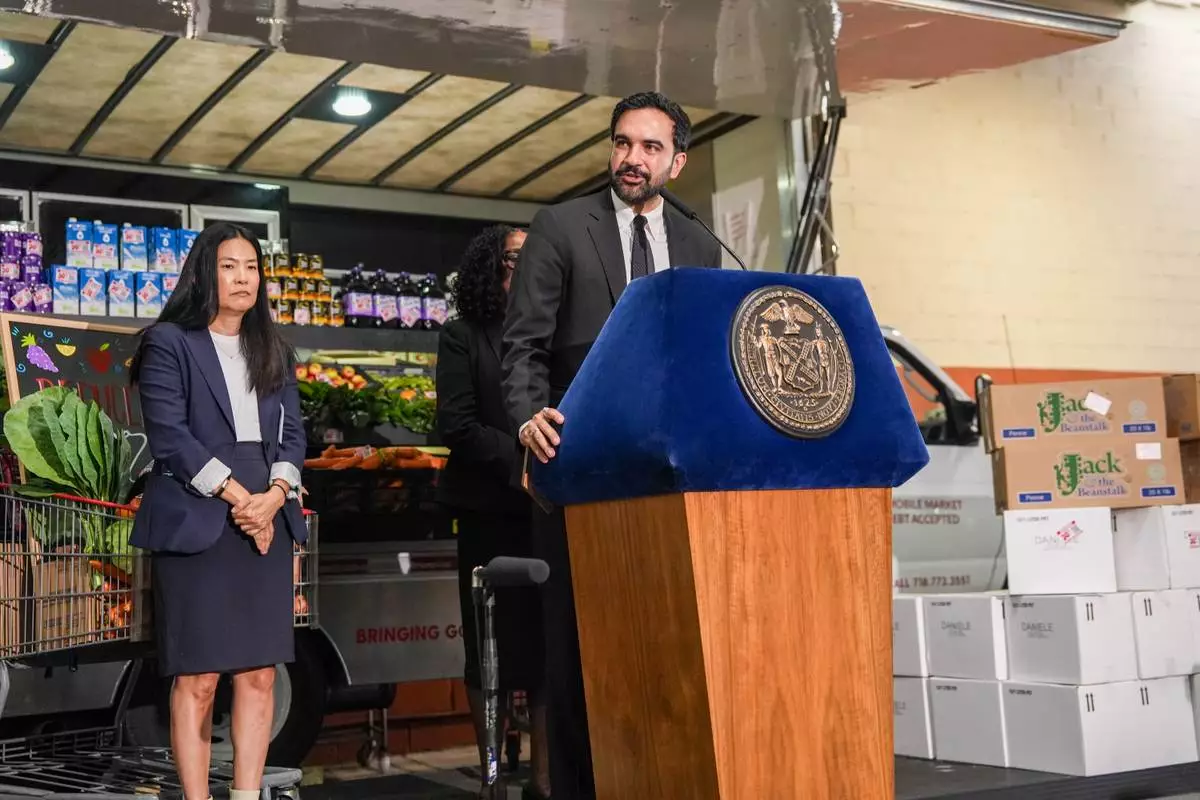
New York City Mayor Zohran Mamdani speaks at an announcement event of a city-wide, discounted grocery plan for city-run municipal grocery stores, in the Brooklyn borough of New York, Monday, July 27, 2026. (AP Photo/Ryan Murphy)

New York City Mayor Zohran Mamdani speaks at an announcement event of a city-wide, discounted grocery plan for city-run municipal grocery stores, in the Brooklyn borough of New York, Monday, July 27, 2026. (AP Photo/Ryan Murphy)
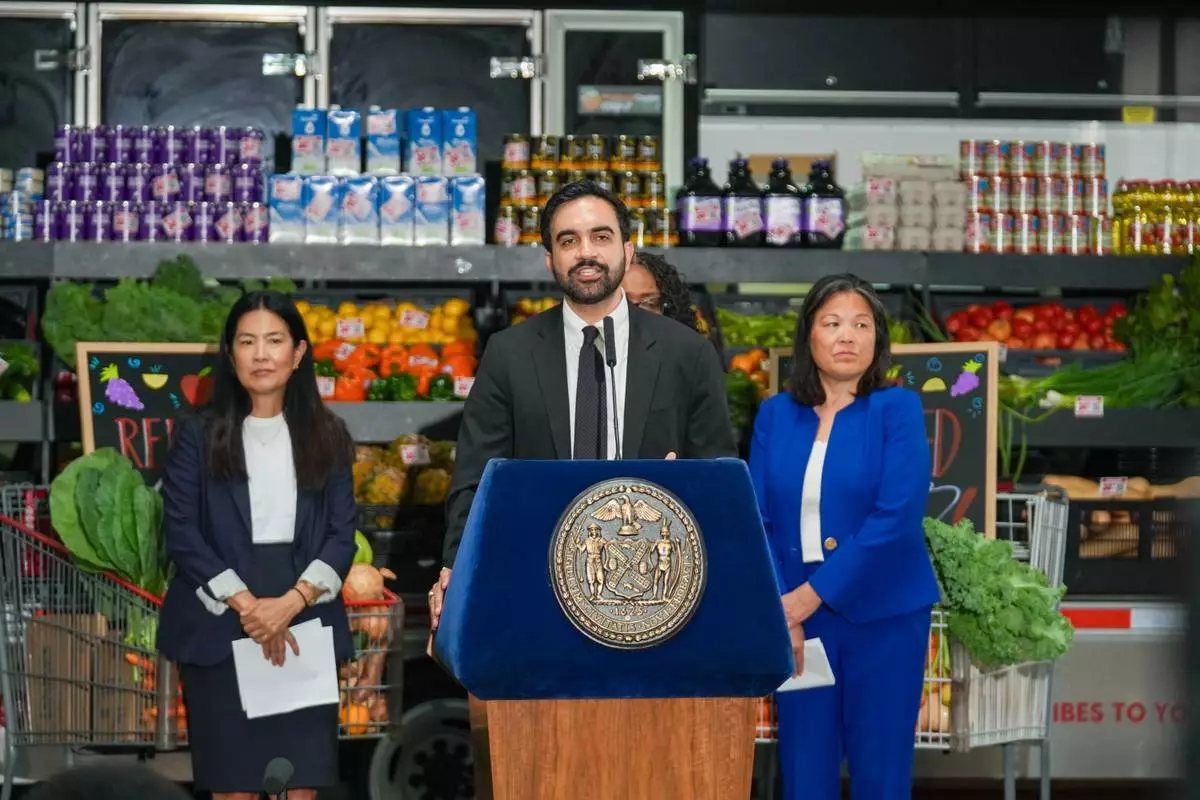
New York City Mayor Zohran Mamdani speaks at an announcement event of a city-wide, discounted grocery plan for city-run municipal grocery stores, in the Brooklyn borough of New York, Monday, July 27, 2026. (AP Photo/Ryan Murphy)
WASHINGTON (AP) — President Donald Trump on Monday demanded that Senate Majority Leader John Thune cancel the chamber’s upcoming August break until senators pass a strict proof-of-citizenship voting bill, even as Republicans lack the votes to advance it.
Trump has repeatedly urged Thune to scrap the legislative filibuster, which effectively sets a 60-vote threshold for most legislation in the 100-member Senate, or find another workaround to pass the voting bill, known as the SAVE America Act. But Republicans hold only a 53-47 majority, and Thune has consistently said they don’t have the votes to pass the bill or change the rules to get around the filibuster.
“John Thune should not allow the United States Senate to ‘leave town’ until it passes The Save America Act or, far better still, TERMINATES THE FILIBUSTER,” Trump wrote on social media.
He later insisted to reporters Monday that he has a good relationship with the Senate majority leader but said Thune has “got to get his job done.”
It's the latest escalation in a monthslong pressure campaign by Trump and others in the GOP base to pass the SAVE Act ahead of the midterms. A small but vocal group of Republican senators has also increasingly pressed Thune to find a way forward.
House Republicans have also attempted to create another path for the legislation through the budget reconciliation process, which would allow grant money associated with voting rules to pass the Senate with a simple majority.
The House last week approved a budget framework that included $10 billion for voting-related changes aligned with the SAVE America Act. But Thune has said Republicans don’t currently have the votes for that approach, either.
The fight threatens to complicate the Senate's final legislative sprint before the August break, when Thune had hoped to focus on a long list of priorities that includes government funding, cryptocurrency legislation and sanctions on Russia. The August break, scheduled to start on Aug. 7, is a pivotal stretch for senators to return home and campaign ahead of the midterm elections.
Several Republican senators are facing competitive races, including Maine Sen. Susan Collins, Ohio Sen. Jon Husted and Alaska Sen. Dan Sullivan. Republicans currently hold a 53-47 Senate majority. Republicans are confronting broader political headwinds as well, including an unpopular war in Iran, surging gas prices and costs that remain high for voters.
Thune has enjoyed broad support from his GOP conference all year as he’s pushed back on Trump’s demands. He previously kept the SAVE Act on the Senate floor for weeks in an effort to build additional support, but was unable to secure the votes needed to advance it.
Utah Sen. Mike Lee, who has led the push for the bill in the Senate, escalated his pressure late last week, warning that how Republicans handle the SAVE America Act “could impact not only the November midterm elections, but also the Senate GOP leadership elections.”
“Leaders must lead. And if they don’t, they’re not leaders,” Lee wrote on social media Friday.
Frustrated by the pressure when he doesn’t have a route to pass the bill, Thune has urged Trump, Lee and others to help him find the votes. Trump on Friday said he'd “certainly be willing” to help call senators.
Asked last week if Trump is frustrated with Thune, White House press secretary Karoline Leavitt said that "his patience is running out.” But Trump told reporters on Air Force Once Monday while traveling to an event in Michigan, that he hasn’t “even thought” about potential replacements for Thune.
The late-summer dispute echoes a similar fight before last year’s August recess, when Trump pressed Thune to keep senators in Washington to clear a backlog of his nominees. The Senate ultimately left town without a deal after negotiations with Democrats collapsed.
The SAVE America Act, which stands for Safeguard American Voter Eligibility, would require Americans to prove they are citizens when they register to vote, mostly through a valid U.S. passport or birth certificate. It would also require a valid photo identification before voters can cast ballots, which some states already demand.
Voting experts have said the bill could disenfranchise some 20 million American voters who don’t have birth certificates or other documents readily available.
Trump has made it his legislative priority in 2026, saying it would “guarantee the midterms" and falsely claimed that election cheating is “rampant.” He previously declined to sign any other legislation until it was passed.
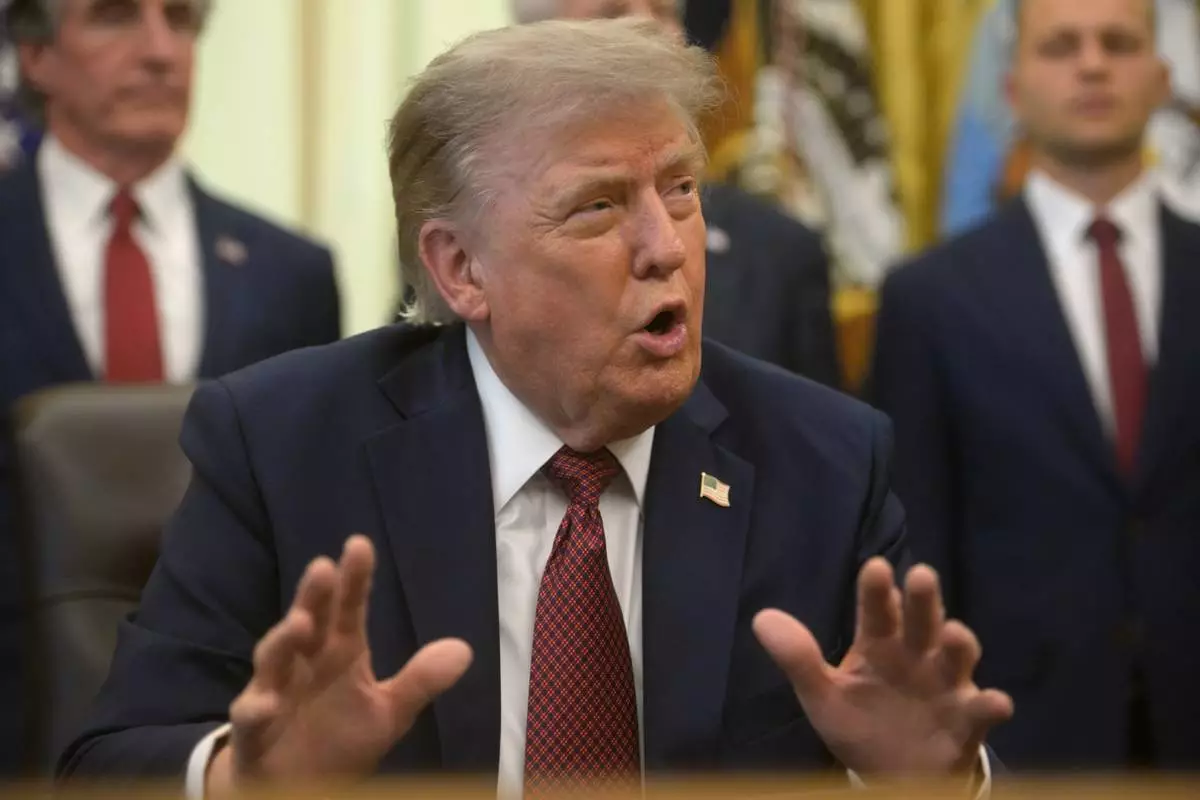
President Donald Trump speaks in the Oval Office of the White House, Friday, July 24, 2026, in Washington. (AP Photo/Rod Lamkey, Jr.)
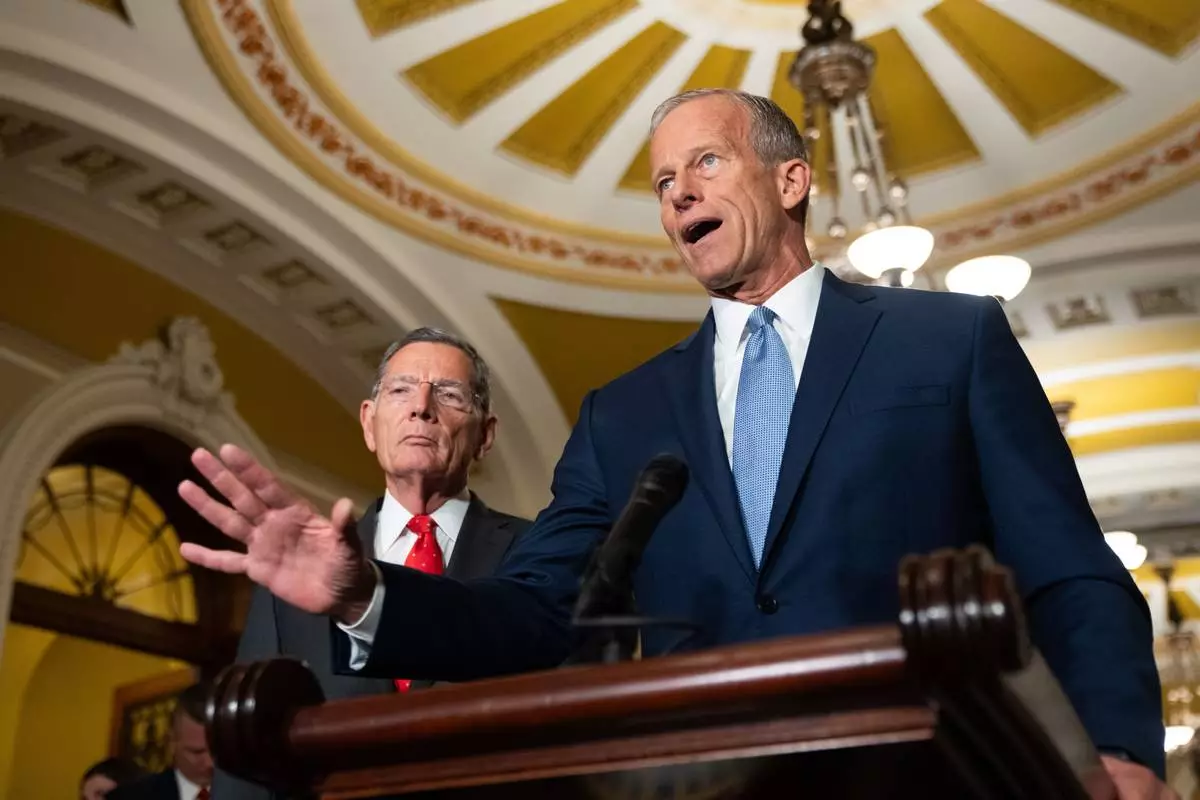
Senate Majority Leader John Thune, R-S.D., speaks to reporters following a weekly policy luncheon at the Capitol in Washington, Tuesday, July 21, 2026. (AP Photo/Allison Robbert)