GENEVA (AP) — Tuesday marks the 75th anniversary of the 1951 Refugee Convention, which was born after the ravages of World War II to help people fleeing war, violence and persecution. Proponents say the treaty has saved millions of lives.
Respect for it, though, has come under strain: Some countries have denied entry to asylum seekers. Under U.S. President Donald Trump, the United States has led a policy of sending asylum seekers to third countries — upending years of U.S. policy.
More than 41 million refugees remain forcibly displaced: Nearly 70% are hosted by low- and middle-income countries. The ranks could grow: The International Committee of the Red Cross counts more than 130 armed conflicts around the globe.
The convention took key steps toward defining what a refugee is, laying out their rights, and establishing standards of treatment. Nearly 150 countries are parties to the convention.
“It codified a simple but powerful principle that people forced to flee persecution, conflict or violence must be able to find safety and protection,” said Elizabeth Tan, U.N. High Commissioner for Refugees' director of international protection and solutions.
Its core principle is “non-refoulement,” prohibiting the return of people to a place where they would face persecution, torture or other serious harm. It all rests on the idea that no society is immune to war, persecution or sudden upheaval.
Here’s what six refugees say about their experiences and the importance of the convention.
Sayed Alom, a humanitarian aid worker and one of the 700,000 Rohingya who fled Myanmar into neighboring Bangladesh in 2017, has been languishing in refugee camps there ever since.
Myanmar's military forces “raped our mothers and sisters, burned down our homes, threw our children into the river and set them on fire,” he recalled in an interview in refugee camps outside Cox’s Bazar, Bangladesh. “We were persecuted until we could no longer live there.”
Alom, who expected to return home quickly, says the limbo situation has become “imaginably worse,” with kidnapping for ransom, as well as threats from nature, including extreme heat, flooding and landslides destroying the camps.
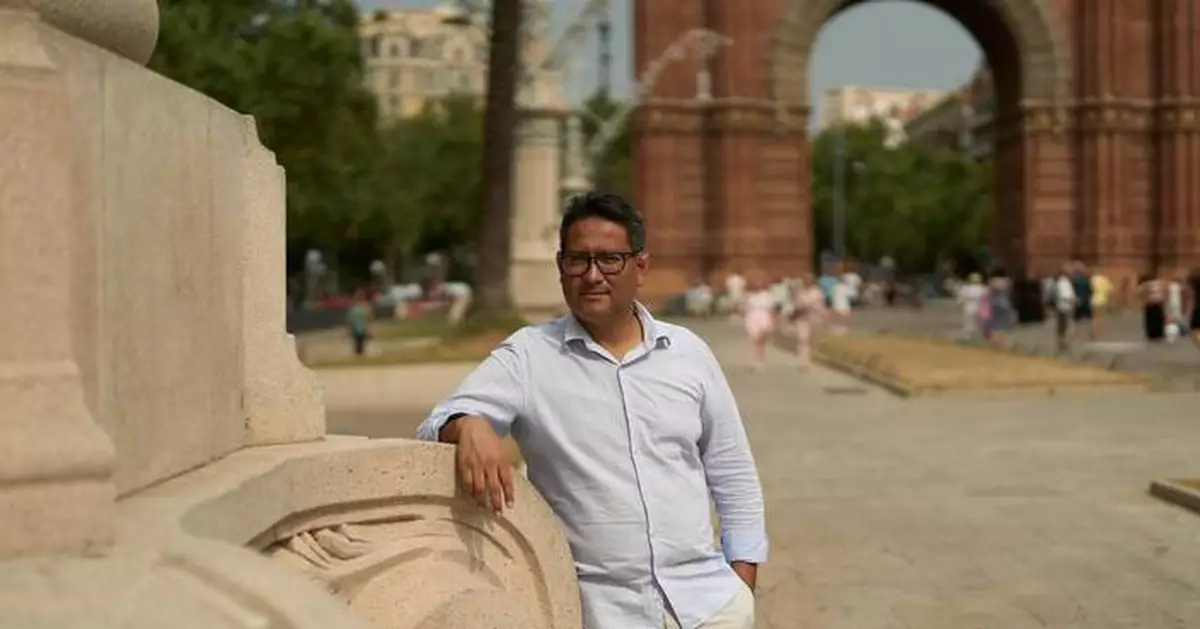
Human rights lawyer Juan Carlos Arce considers himself among millions of people whose lives have been saved by the convention: He fled Nicaragua by foot in 2018 after a bloody government crackdown against protesters killed hundreds.
The Nicaraguan Center for Human Rights, for which Arce worked, had documented the violence and was deemed a “terrorist organization” by President Daniel Ortega’s government. He fled to Costa Rica where he was granted asylum.
In Costa Rica, rights defenders and Nicaraguan opposition leaders were attacked and even assassinated, so he moved to Barcelona, Spain, last year under a resettlement program organized by UNHCR and the U.N.’s International Organization for Migration.
“Feeling safe and protected, that is priceless,” he said under Barcelona’s Arc de Triomf, as tourists and residents walked by.
More than seven decades after fleeing her village, 88-year-old Hussniyah Ahmad Ghozlan still remembers the journey that brought her family to Lebanon.
Ghozlan was a child when they fled during the 1948 war after their village — Yajur, southeast of Haifa, Israel — was depopulated.
“We got by because we worked, raised our children and built our lives,” she said in an alley near her home in Shatila camp for Palestinian refugees in Beirut.
Asked whether she knew of the 1951 Refugee Convention, Ghozlan laughed and said she had not, explaining that she never learned to read or write.
Hershel Greenblat was born during World War II, in 1941, inside a cave in Ukraine as his Jewish family hid from the Nazis.
After the war, his family sneaked into Austria, where they lived in U.S. Army camps for displaced persons. After initially considering moving to Israel, they opted for the U.S. after receiving approval in 1949 to immigrate there.
He recalled how his father woke him in the middle of the night as the Army transport ship approached the Statue of Liberty. The kids received welcome boxes packed by American middle-schoolers.
In Atlanta, where his family has lived for decades, Greenblat said refugees today often get a different welcome. He said he wasn't previously familiar with the convention — but said refugees deserve protections and opportunities for work and education.
“Refugees in the ’50s worked their butts off to get what they wanted, what they needed,” said Greenblat, now 85.
Wenyen Gabriel said his parents worked hard too. He was born in the Sudanese capital, Khartoum, in 1997 after his parents fled civil war in southern Sudan. They later moved to Egypt as refugees, before being resettled in New Hampshire.
Little Wenyen was 2 at the time. Big Wenyen — he's 2.08 meters (nearly 6 feet, 10 inches) tall — earned a basketball scholarship at the University of Kentucky and played in the NBA. In 2024, he played for the young country of South Sudan at the Olympic Games in Paris.
While he at times felt “a little bit different from the people in the community” in New Hampshire, there were other refugee families around.
“We had to struggle and figure out how to become something inside of the United States,” he said at the headquarters of the refugee agency UNHCR, for which he became its newest goodwill ambassador on Monday. “It’s not easy to make something of yourself in a foreign country.”
Swimmers Yusra and Sarah Mardini fled war-torn Syria in 2015, joining the wave of refugees from their home country that year, in a saga that has been turned into a highly-regarded movie.
They went first to Lebanon, then Turkey, where they paid smugglers to take them by sea to Greece: They jumped out of an overloaded boat to keep it from sinking. After an arduous trek across southeast Europe, they received refuge in Germany. She was named a UNHCR goodwill ambassador in 2017.
Now that Syria's war is over, Mardini is hopeful: Some 1.3 million Syrians have returned. But after such an ordeal, change doesn't just happen overnight. “You can’t just snap your fingers,” she said.
“I do believe that my country and its people are very strong and that I’m going to contribute in the best way possible.”
Brito reported from Barcelona, Spain. Associated Press journalists Ali Sharafeddine in Beirut; and R.J. Rico and Emilie Megnien in Atlanta contributed to this report. Freelance journalists Habi Zullah and Ro Yassin Abdumonab contributed from Cox’s Bazar, Bangladesh.
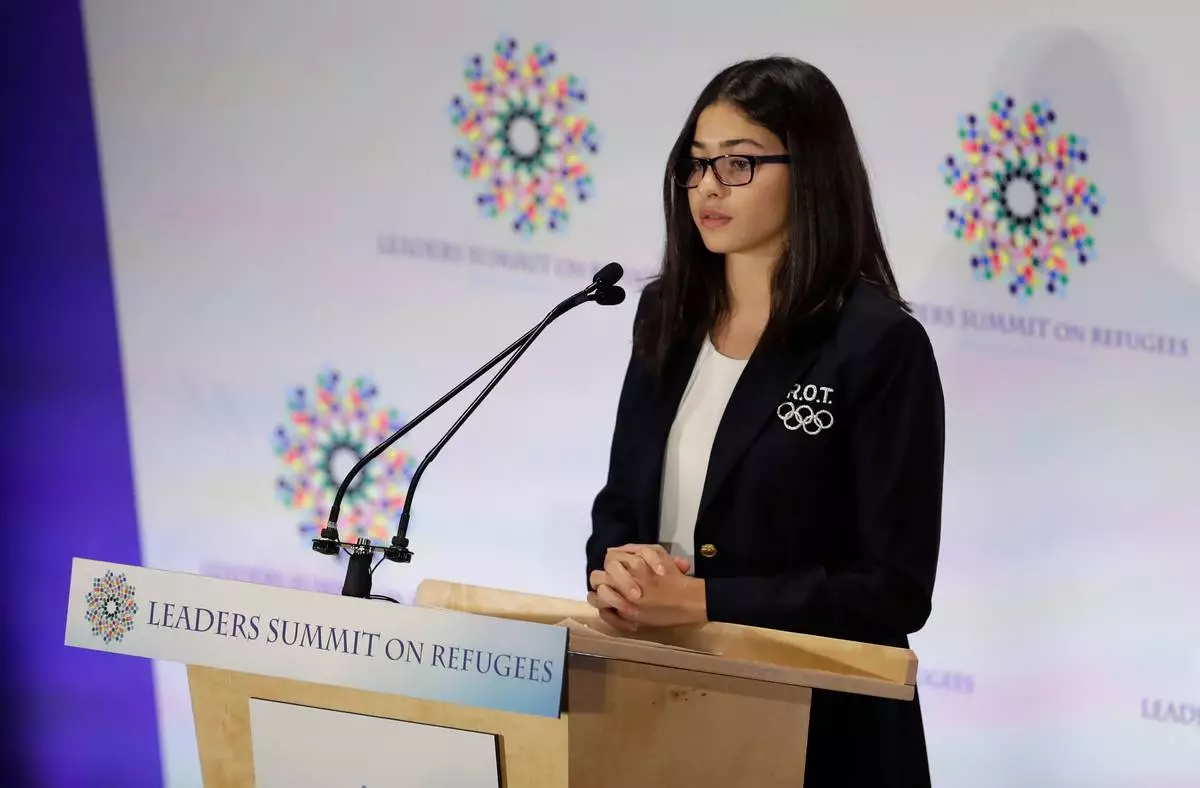
FILE - Yusra Mardini, a swimming for the Refugee Olympic Team, speaks during the Leaders Summit on Refugees during the 71st session of the United Nations General Assembly at UN headquarters, Tuesday, Sept. 20, 2016. (AP Photo/Carolyn Kaster, File)
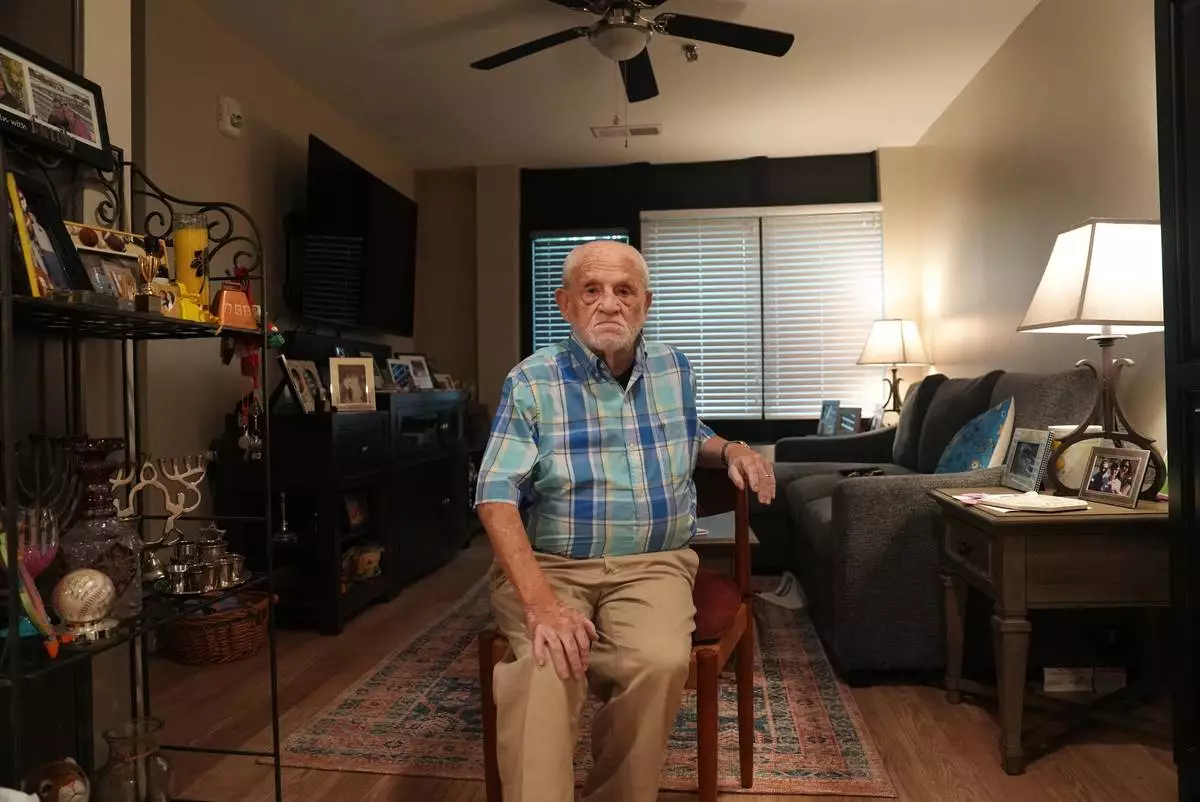
Hershel Greenblat, a World War II refugee born in Ukraine poses for a photo in Atlanta, Thursday, July 23, 2026. (AP Photo/Emilie Mednien)
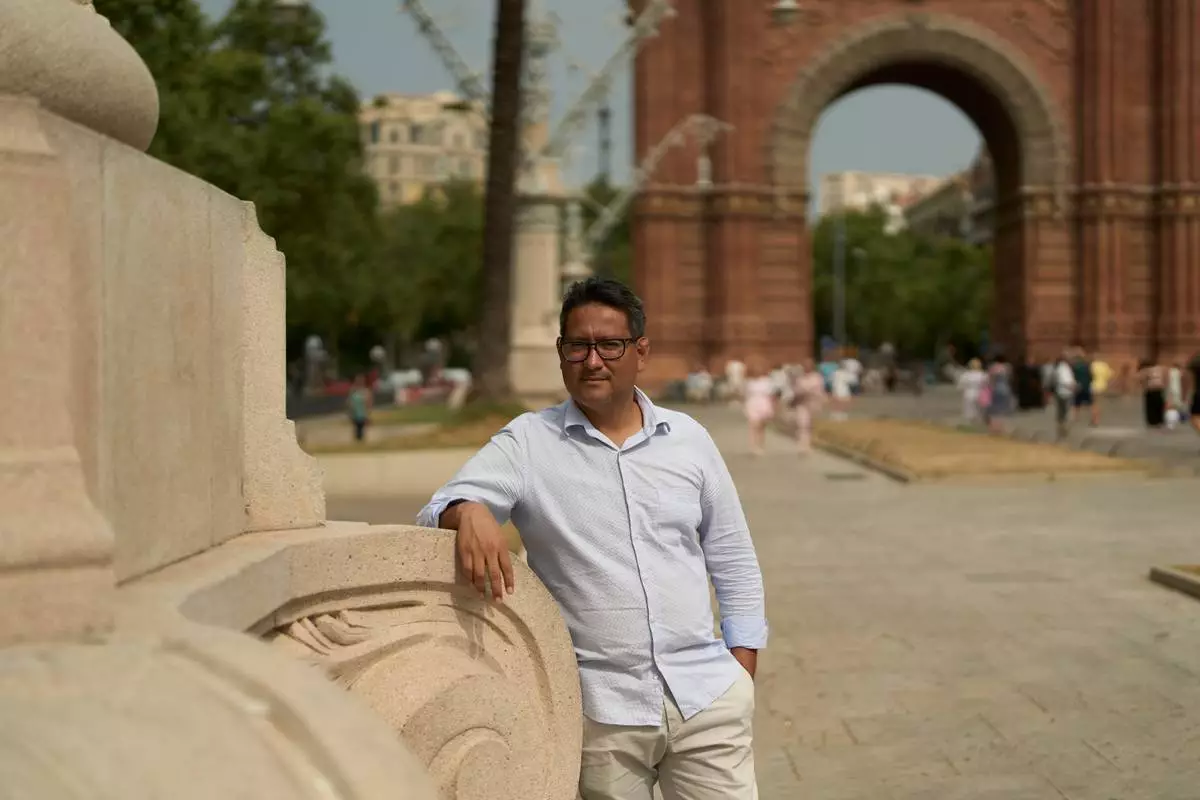
Juan Carlos Arce, human rights defender and refugee from Nicaragua, poses for a photo in Barcelona, Spain, Friday, July 24, 2026. (AP Photo/Renata Brito)
SEATTLE (AP) — There were at least three suspects involved in a shootout at a crowded food festival near Seattle’s Space Needle over the weekend, police said Monday. One of them was among those killed in the violence.
In a document filed in juvenile court in Seattle, where a 15-year-old arrested in the case waived his initial appearance Monday, police said they believe there were at least three shooters: the 15-year-old, an acquaintance who died at the scene and “at least one other unknown suspect.” Authorities had earlier said they believed there were two.
Nicole Powell, the Seattle Police Department's assistant chief of investigations, said at a news conference Monday afternoon that investigators believe the shooting may have been gang-related, with two groups firing at each other. The deceased shooter was 19.
A judge ordered the 15-year-old held in juvenile detention for investigation of firearms violations and first-degree assault. The King County prosecutor's office said it expected to receive the case from Seattle police on Wednesday for a charging decision.
The gunfire erupted around 6 p.m. Sunday in the waning hours of the Bite of Seattle, leaving the 19-year-old shooter and two others dead. At least four others, including a toddler, were injured. The annual three-day festival draws hundreds of food and retail vendors and performers to Seattle Center, a sprawling park in the shadow of the Space Needle. Many attendees rushed into campus buildings or ran from the park at the sound of the shots.
News that there were at least three suspects followed a series of confusing statements from city officials concerning the shooting.
On Sunday, the police department waited five hours to share with the public that one shooter had been arrested and that they believed another to be on the loose. Earlier, Mayor Katie Wilson had announced two people were in custody, a statement she retracted.
At a news conference before the court hearing Monday, Police Chief Shon Barnes said investigators weren’t sure if the second shooter was among the dead. Neither he nor the mayor made any reference to additional shooters. Barnes had been out of town Sunday, attending a conference of Black law enforcement executives in Dallas.
The officials defended their handling of the case, saying they were trying to ensure they provided accurate information about chaotic events.
The King County Medical Examiner's Office on Monday identified the dead as Carlos Israel Sanchez Villalba, 44; Ashley Whitehead, 56; and Junior Cee Niko Semo, 19.
Villalba was a husband and father of three known for his kindness and willingness to help others, according to a GoFundMe campaign launched Monday to help his family with funeral expenses. He died from a gunshot wound to his torso, while Whitehead died from a gunshot to her pelvis and Semo died from multiple gunshot wounds, according to the medical examiner’s office.
During a vigil Monday night at the center, Ashley Whitehead's cousin described her as a beautiful person who loved her daughters.
“She loved having laughter and love. She was a free spirit,” Michelle Whitehead told reporters.
Standing among dozens of others, she clutched a sign that said “Whitehead Strong" as the group held a moment of silence and raised up flashlights on their phones to honor those that had been killed. Candles and flowers were arranged around them.
The four wounded included a 2-year-old boy, two men, ages 23 and 27, and a woman, 39, all of whom were discharged, a hospital spokesperson said.
One of the victims was walking a bicycle when struck, the court document said. The toddler was with his mother.
Vendors were allowed to return to the campus Monday morning to collect their equipment. Skewered squid on grills, roasted ducks in ovens and plates full of food were among the items left behind as people fled.
Near the spot of the shooting, a stain of what appeared to be blood was still visible.
Dozens of officers were providing security at the event and responded in seconds, with at least one observing a suspect firing, authorities said. Police searched an IMAX theater on the grounds where they initially believed a second shooter had fled.
Adam Lombardo, who had a Burmese food stand at the festival, described the panic of fleeing people as a “stampede.” As he gathered his equipment Monday, he described how police escorted food vendors back to the crime scene to turn off their ovens and stoves.
“They just came to enjoy a food festival with people, with friends, with new friends, and they lost their lives in just what sounds like meaningless bloodshed," he said.
Moises Perez, 30, was cooking in his apartment next to the Seattle Center when he spotted people running and yelling outside his window. When he opened his door, he heard gunshots and started ushering more than a dozen people, mostly women and children, inside.
“I was like, ‘OK, we need to help these people,’” said Perez, a construction worker who had attended the food festival that morning. He said losing his brother to gun violence in Mexico years ago made him determined to help the people trying to get to safety.
He and his roommate, William Large, 25, made sure the door was locked and started directing people to the bathroom and hallway, and told them they could stay as long as they needed.
“They were definitely in shock. I know that a lot of people were crying, people were screaming, people were just in complete fear," said Large, who works in social services.
About 30 minutes later, Perez walked out to see what had happened. He found a woman shot in the leg being helped by emergency officials.
The festival started in 1982 and draws 350,000 attendees, according to its website.
Associated Press journalists Manuel Valdes and Lindsey Wasson in Seattle; Annika Wolters in Bangkok; and Christopher Weber in Los Angeles contributed to this report.
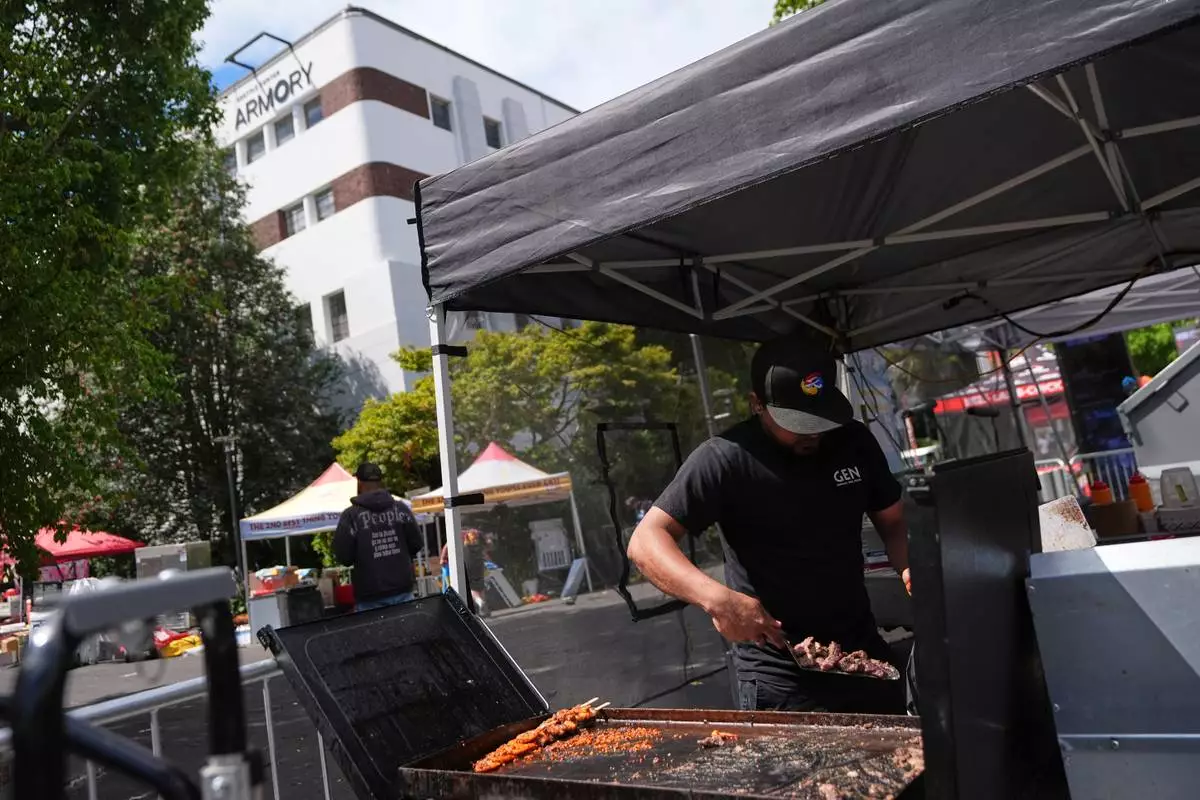
A vendor throws away food while cleaning up the day after a shooting at Seattle Center during the Bite of Seattle food festival, Monday, July 27, 2026, in Seattle. (AP Photo/Lindsey Wasson)
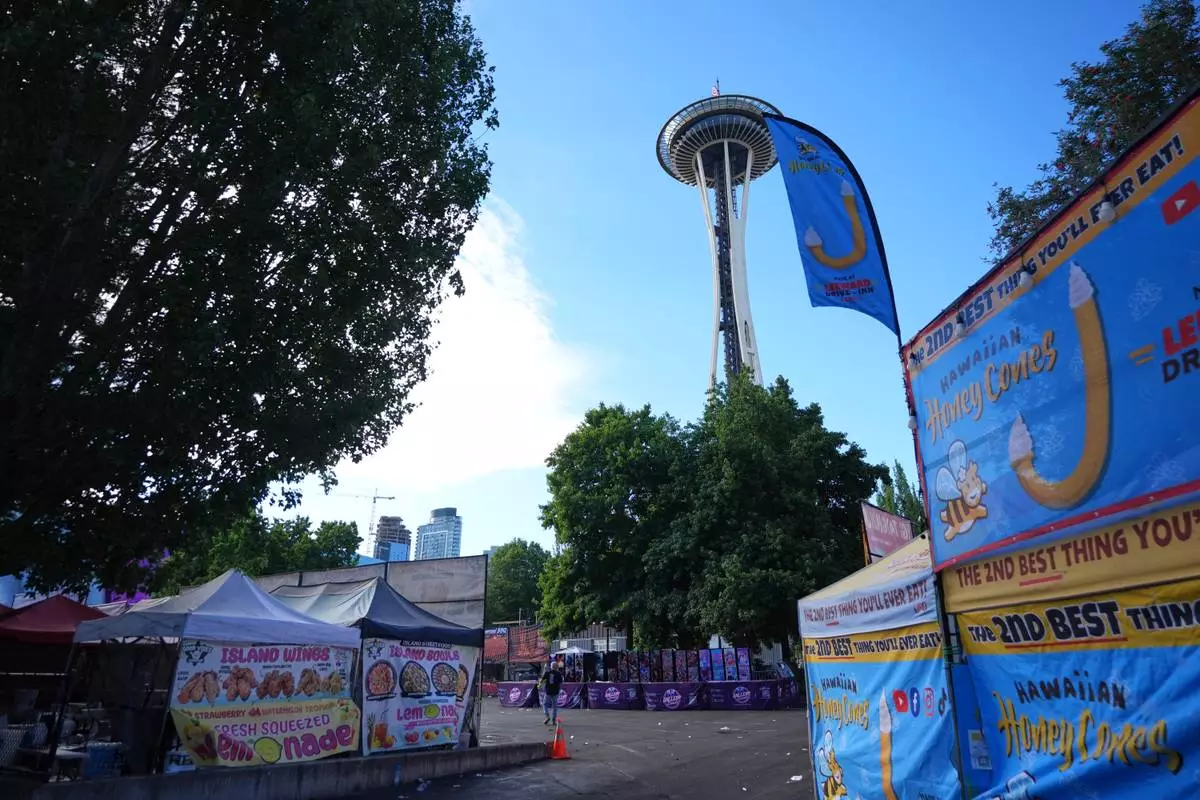
The U.S. flag flies at half staff at the Space Needle as cleanup continues the day after a shooting at Seattle Center during the Bite of Seattle food festival, Monday, July 27, 2026. (AP Photo/Lindsey Wasson)
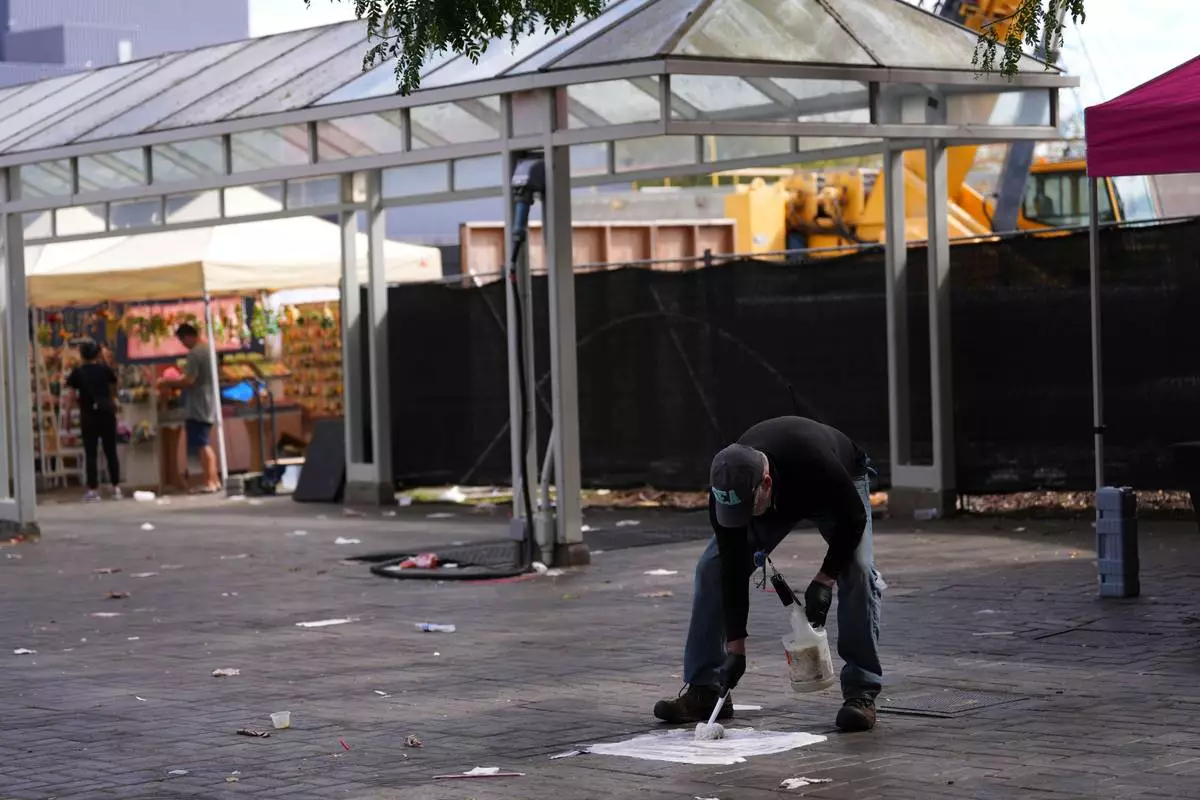
A worker cleans blood off the pavement the day after a shooting at Seattle Center during the Bite of Seattle food festival, Monday, July 27, 2026. (AP Photo/Lindsey Wasson)
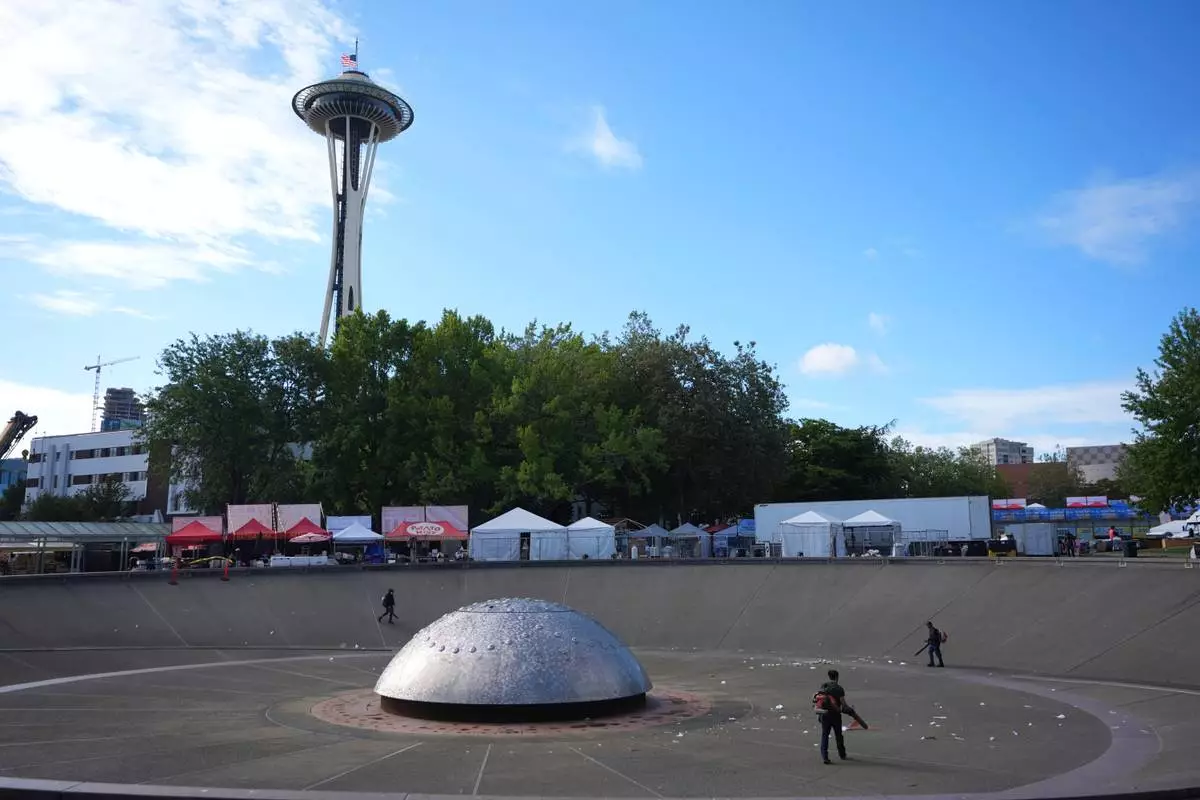
The U.S. flag flies at half staff as cleanup continues at the Space Needle the day after a shooting at Seattle Center during the Bite of Seattle food festival, Monday, July 27, 2026. (AP Photo/Lindsey Wasson)
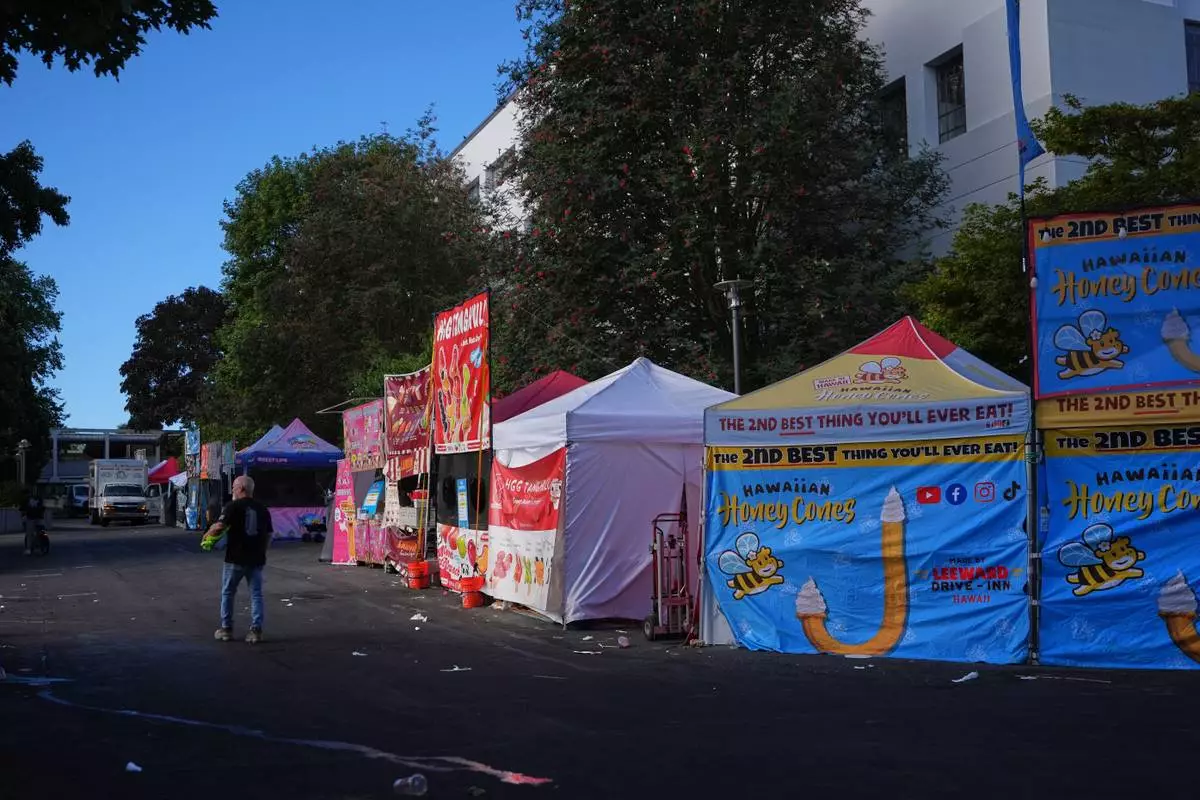
A man walks near the scene, a day after a shooting at Seattle Center during the Bite of Seattle food festival, Monday, July 27, 2026. (AP Photo/Lindsey Wasson)
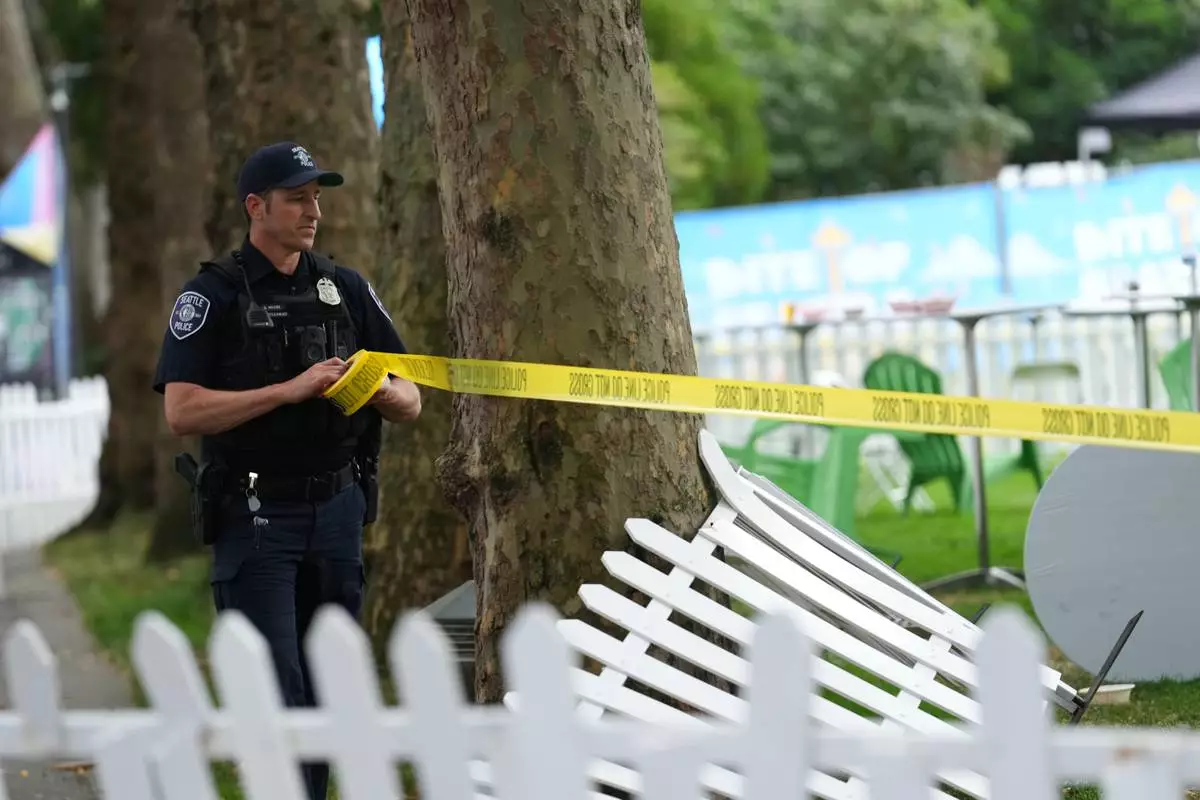
A Seattle Police officer sets up police line tape at the site of a shooting at Seattle Center during the Bite of Seattle food festival Sunday, July 26, 2026, in Seattle. (AP Photo/Lindsey Wasson)
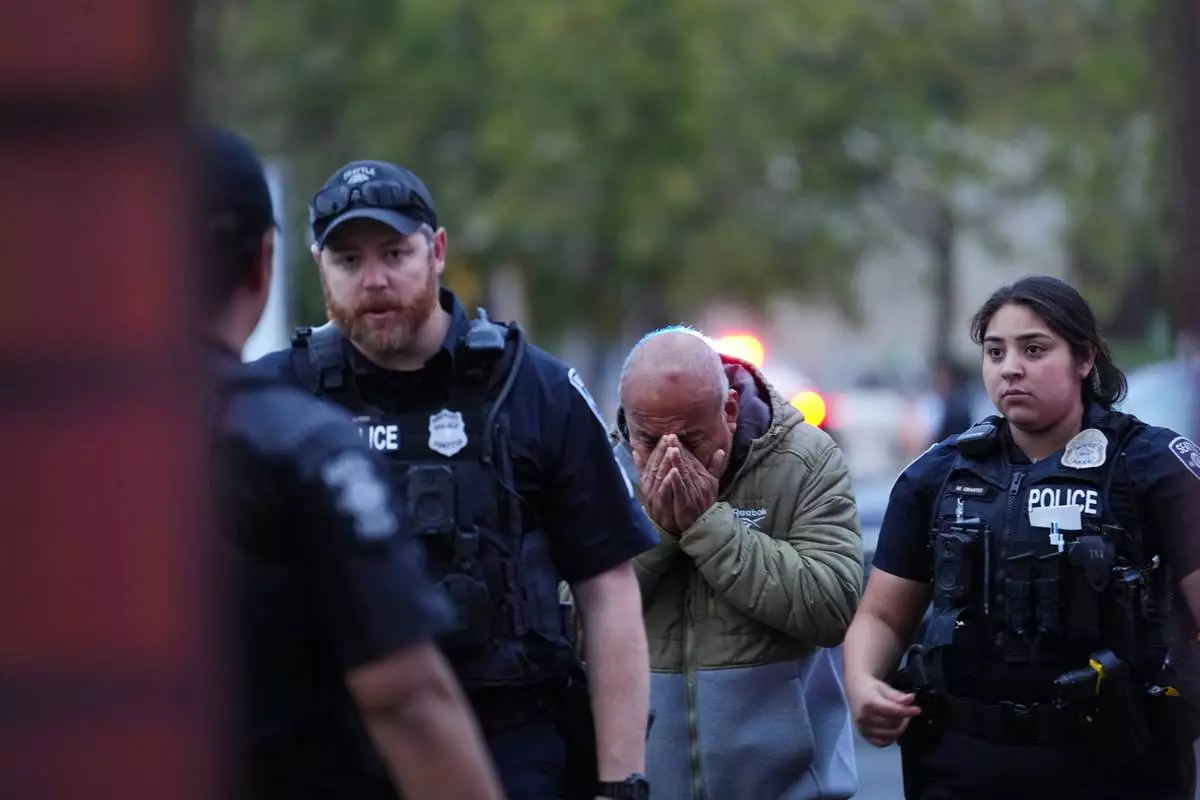
An unidentified man is led into the scene by police after they responded to a shooting at Seattle Center during the Bite of Seattle food festival Sunday, July 26, 2026, in Seattle, Wash. (AP Photo/Lindsey Wasson)
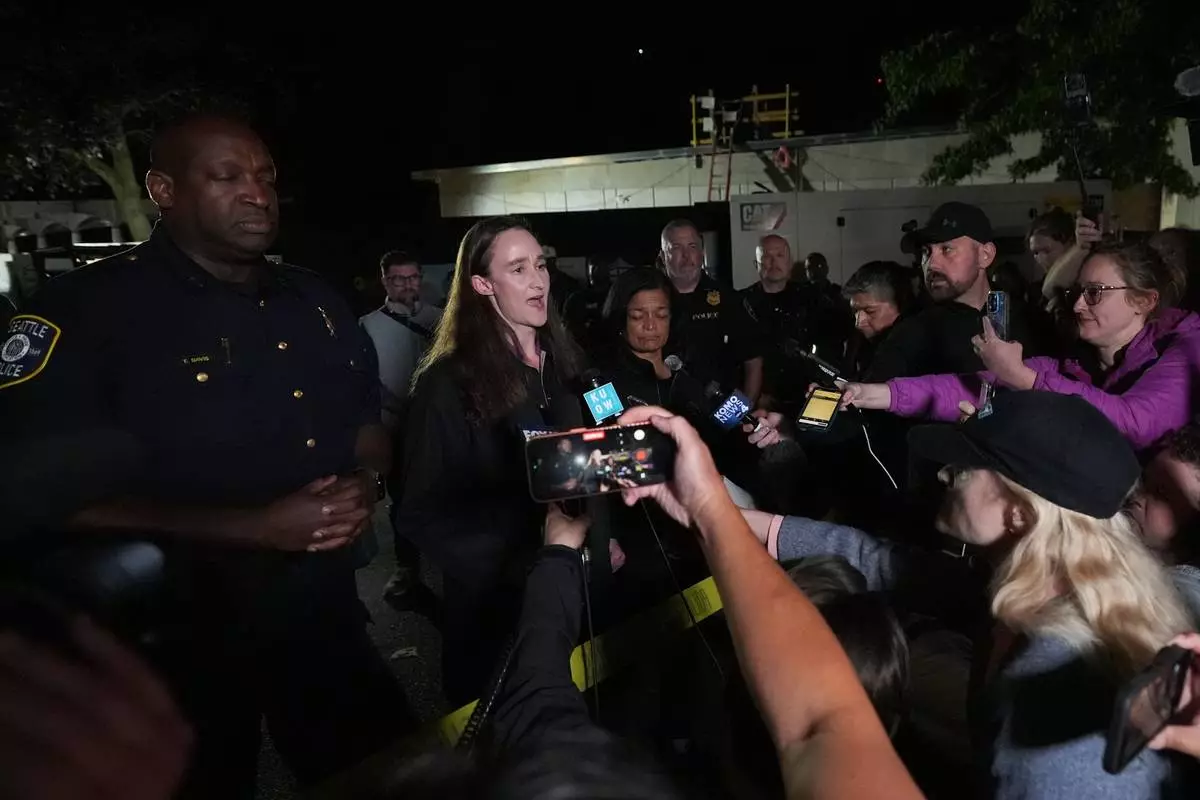
Seattle Mayor Katie Wilson, center, speaks at a news conference after a shooting at the Bite of Seattle food festival Sunday, July 26, 2026, in Seattle, Wash. (AP Photo/Lindsey Wasson)
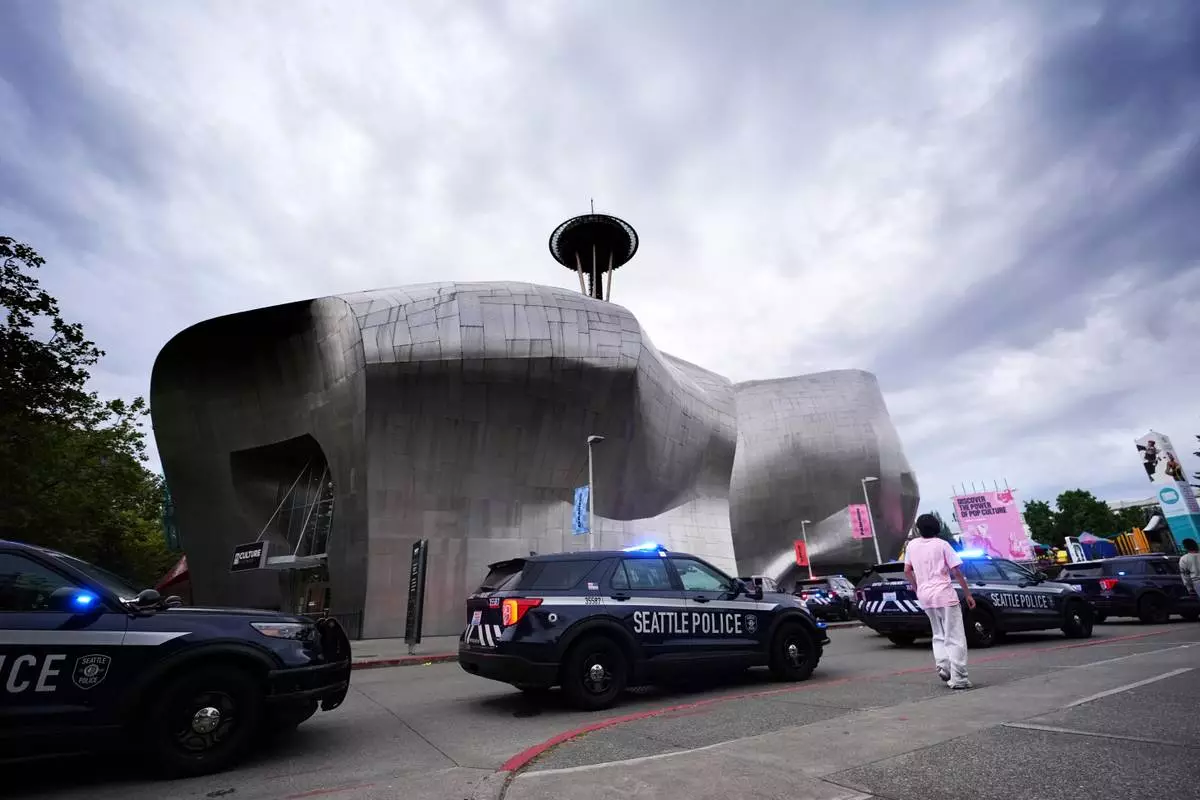
Police respond to a shooting at Seattle Center during the Bite of Seattle food festival Sunday, July 26, 2026, in Seattle, Wash. (AP Photo/Lindsey Wasson)
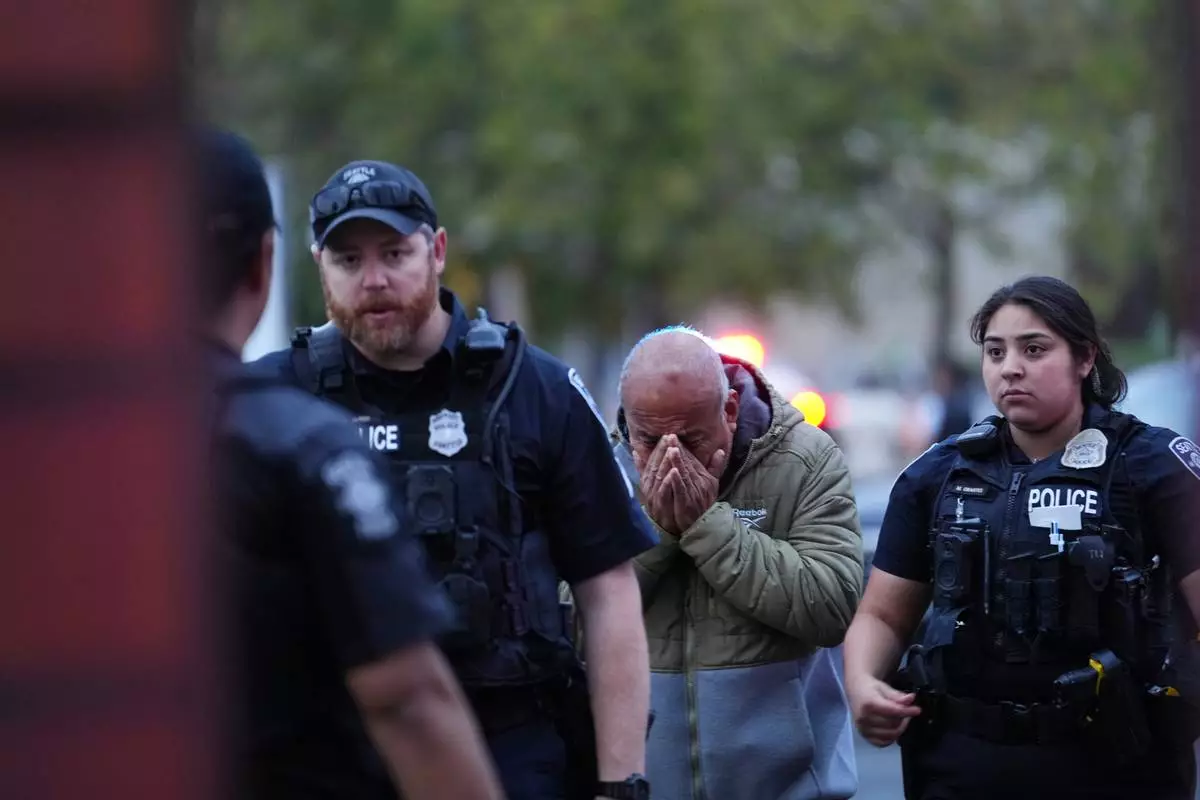
An unidentified man is led into the scene by police after they responded to a shooting at Seattle Center during the Bite of Seattle food festival Sunday, July 26, 2026, in Seattle, Wash. (AP Photo/Lindsey Wasson)
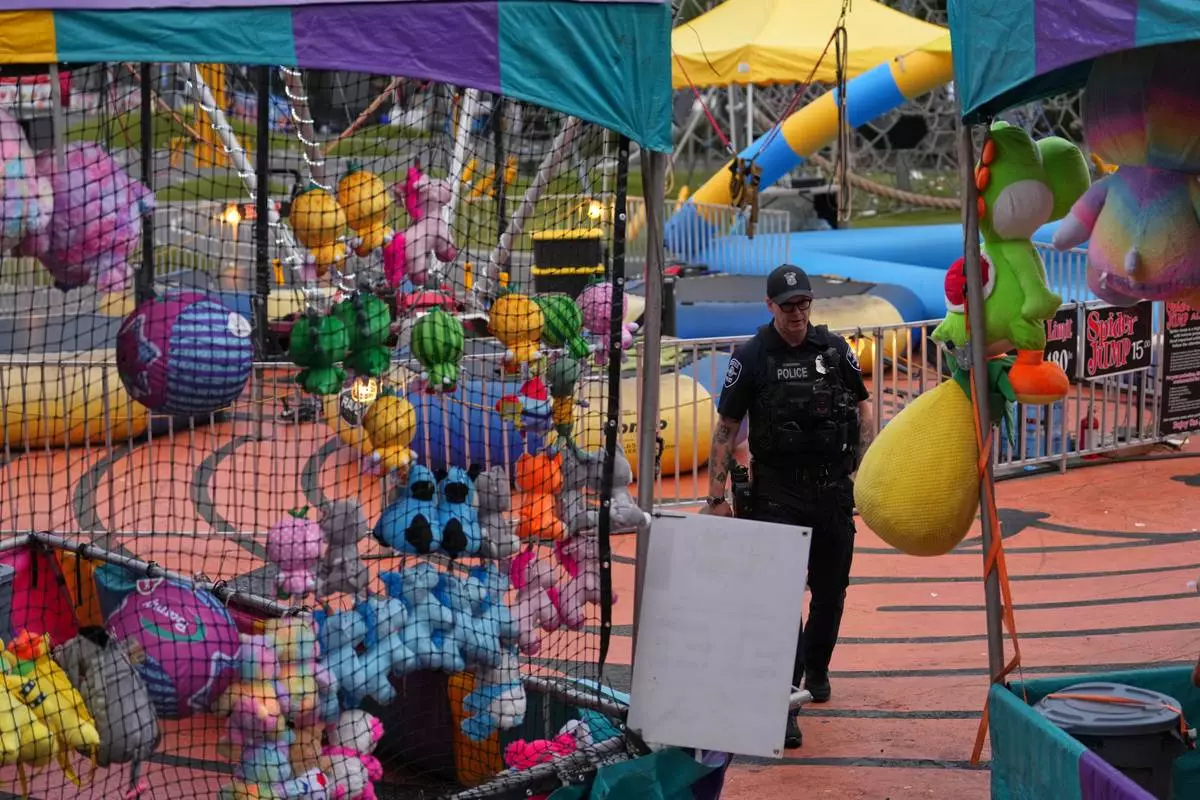
A Seattle Police officer walks through tents with colorful toys at the scene of a shooting at Seattle Center during the Bite of Seattle food festival Sunday, July 26, 2026, in Seattle. (AP Photo/Lindsey Wasson)
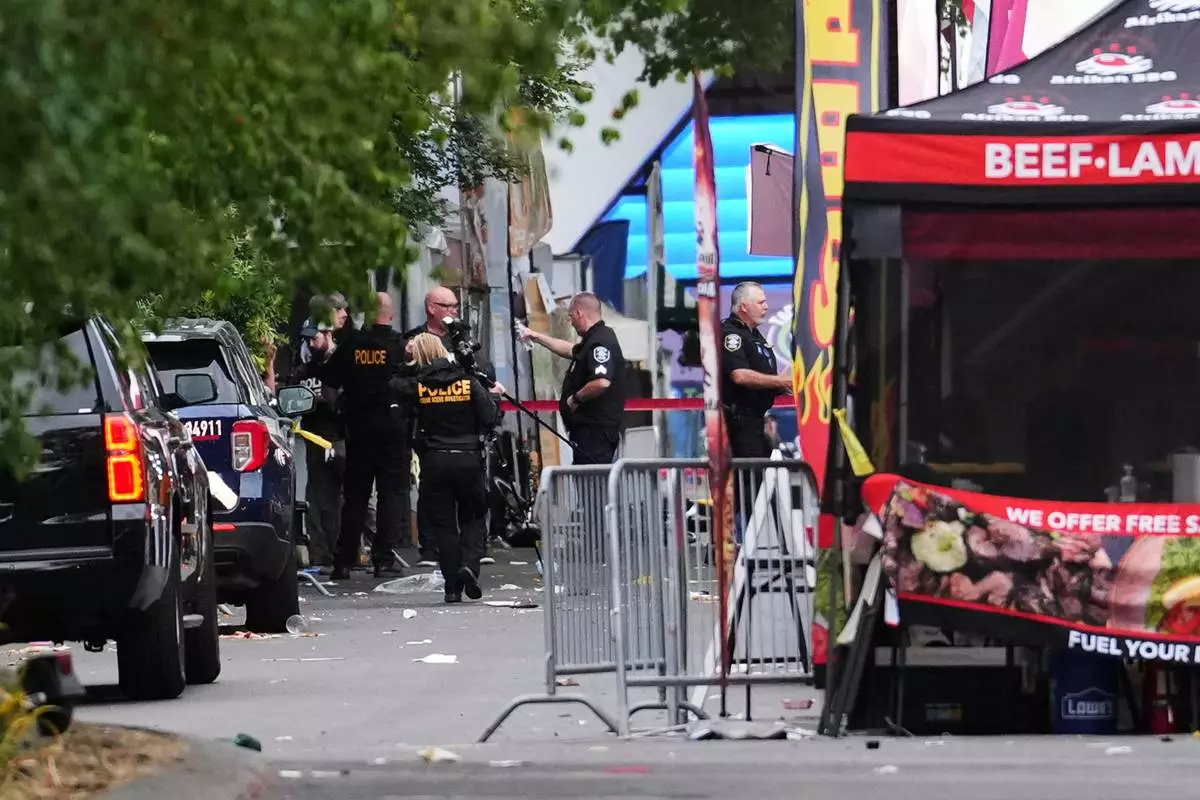
A crime scene photographer arrives as law enforcement examines the scene following a shooting at Seattle Center during the Bite of Seattle food festival Sunday, July 26, 2026, in Seattle. (AP Photo/Lindsey Wasson)