Skip to Content Facebook Feature Image

Iraq's new prime minister visits Turkey for talks on pipeline and security

News

Iraq's new prime minister visits Turkey for talks on pipeline and security
News

News

Iraq's new prime minister visits Turkey for talks on pipeline and security

2026-07-28 20:30 Last Updated At:20:40

ANKARA, Turkey (AP) — Iraq’s new prime minister, Ali al-Zaidi, arrived in Turkey on Tuesday for talks that were expected to include the construction of a pipeline to Turkey aimed at reducing the exposure of Iraq's oil exports to tensions in the Gulf region.

Al-Zaidi’s meetings with President Recep Tayyip Erdogan and other officials will also focus on security, trade, energy, transportation and water management, Turkish officials said. The Iraqi prime minister's office said they will discuss “joint infrastructure projects in a way that serves the interests of the two neighboring countries.”

Al-Zaidi, who emerged as a consensus candidate in Iraq after months of deadlock over the premiership following last year’s parliamentary elections, is visiting Ankara on the heel of trips to Washington and Tehran.

Following al-Zaidi’s talks with U.S. President Donald Trump earlier this month, U.S. companies signed roughly $60 billion in agreements and partnerships with the Iraqi government, including deals intended to create alternative routes for shipping oil out of the Persian Gulf.

One project under consideration is a pipeline that would connect southern Iraq’s Basra to western Iraq’s Haditha and from there to the Ceyhan port in Turkey and the port of Baniyas on Syria’s coast.

The visit comes as Turkey is engaged in talks to end a decades-long conflict with the militant Kurdistan Workers’ Party, or PKK, whose fighters are largely based in northern Iraq. Last year, the PKK announced it was laying down arms and disbanding as part of the efforts.

Turkey is scheduled to enact legislation to help advance the peace effort, which is expected to include a limited amnesty that could allow some militants’ return to Turkey.

The PKK has waged an armed insurgency since 1984, which has claimed tens of thousands of lives. It’s designated a terrorist organization by Turkey, the United States and the European Union.

Al-Zaidi is expected to travel to Saudi Arabia on Thursday, at a time of heightened tensions after the kingdom alleged that Iran-backed Iraqi militias launched drone attacks against it.

Al-Zaidi has pledged to disarm non-state armed groups in Iraq by the end of September, a deadline that is likely challenging to meet, particularly since some of the most powerful militias have said they will not lay down their weapons.

On Monday, al-Zaidi ordered security agencies to investigate the alleged drone attacks on Saudi Arabia, the Iraqi military said in a statement, adding that Iraq is committed to “preventing Iraqi territory from being used as a route or launching point for any attack targeting brotherly or friendly countries.”

The militias have denied any role in the attack. The Islamic Resistance in Iraq, an umbrella group of Iran-backed armed groups, in a statement called the Saudi accusations “fabrications” and an “attempt to justify their inability to respond to the painful Yemeni strikes that have targeted the heart of their infrastructure," implying that the attacks were carried out by Yemen’s Iran-backed Houthi rebels.

The militias added that “any foolish Saudi action will be met with a harsh response that will leave them biting their fingers in regret.”
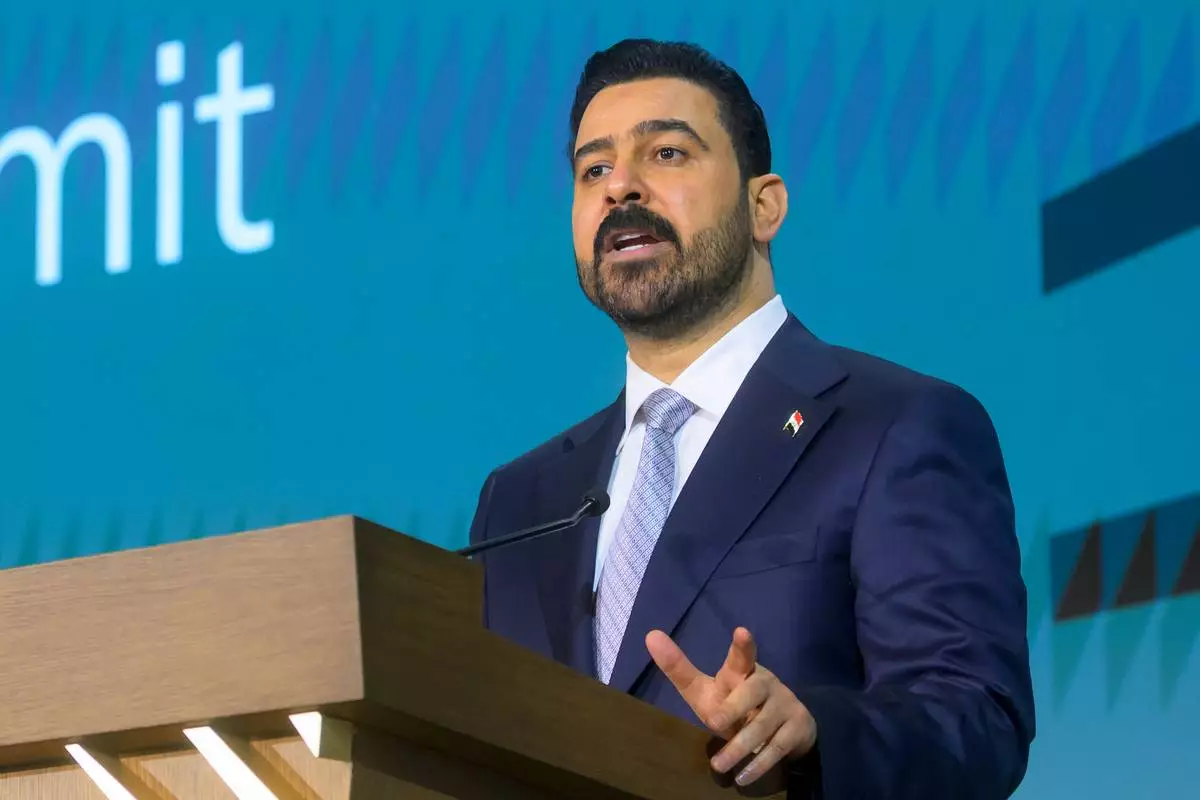
FILE - Iraqi Prime Minister Ali al-Zaidi speaks at the U.S. Iraq Business Summit at the U.S. Chamber of Commerce, Friday, July 17, 2026, in Washington. (AP Photo/Rod Lamkey, Jr., file)

FILE - Iraqi Prime Minister Ali al-Zaidi speaks at the U.S. Iraq Business Summit at the U.S. Chamber of Commerce, Friday, July 17, 2026, in Washington. (AP Photo/Rod Lamkey, Jr., file)
WASHINGTON (AP) — Americans’ confidence in the economy fell this month as gas prices resumed their climb after the U.S. and Iran stepped up their fighting.

The Conference Board said Tuesday that its consumer confidence index fell to 90.8 in July from 92.2 in June. That's essentially the same tepid range its been in since the beginning of the year. In late 2024 and early 2025 the readings were well above 100.

Consumer attitudes had improved modestly in June as gas prices came down to around $3.70 a gallon from more than $4.50 a gallon in late April and early May. But as fighting in the Middle East escalated, the average price for a gallon of gas in the U.S. started to rise again. On Tuesday it was $4.10, according to the auto club AAA.

After being attacked by the U.S. and Israel in late February, Iran shut down the Strait of Hormuz, through which about one-fifth of the world’s oil travels, causing a spike in gas prices. That accelerated inflation, causing Americans’ inflation-adjusted incomes to decline.

Americans remain soured on the economy after five years of elevated inflation, potentially posing a risk to President Donald Trump and Republicans in the midterm elections, which are now less than 100 days away.

Trump continues to blame inflation on his predecessor, Democrat Joe Biden. Yet inflation has risen since Trump’s inauguration last year, to 3.5% from 3% in January 2025. It jumped even further after the Iran war began Feb. 28, when it was just 2.4%.

Write-in responses to the survey, which were collected from July 1 to July 22, remained pessimistic. The Board said references to gas prices were down slightly but remained elevated. Respondents' mention of food and grocery prices increased.

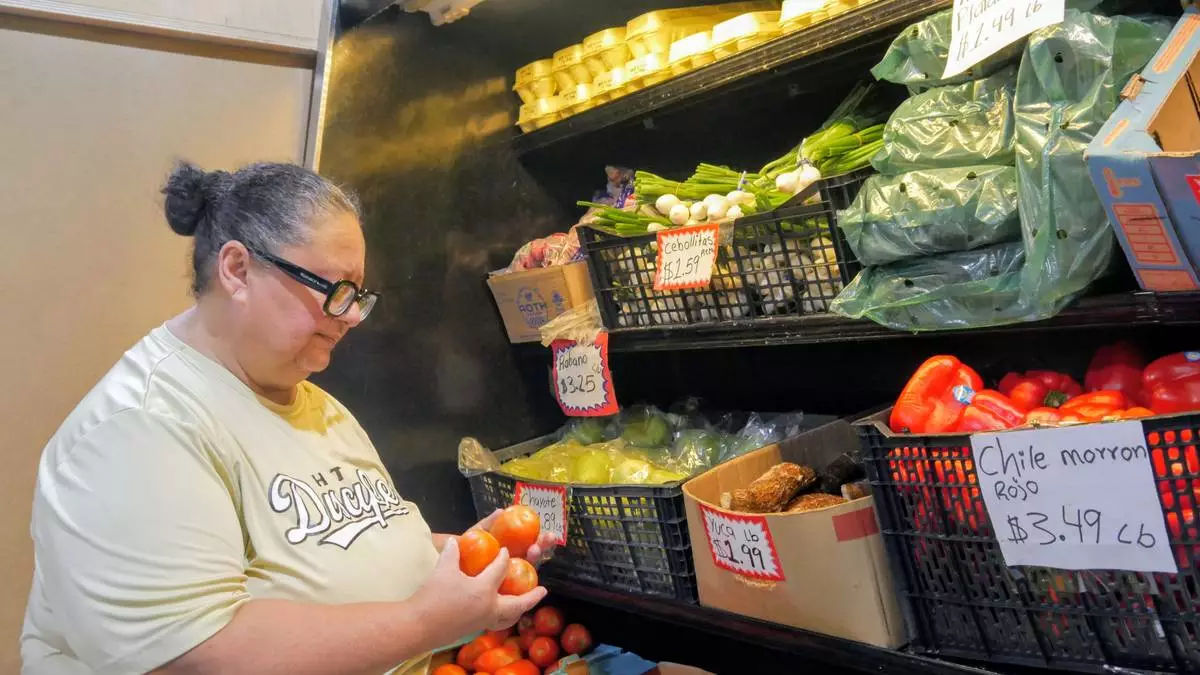
Government data shows that buying food to bring home has gotten 33% more expensive since the beginning of 2019. To navigate those higher prices, Americans have turned to couponing, comparison shopping and cutting back on favorite foods as they absorb the biggest jump in grocery prices in a half-century.

Beef epitomizes out-of-control grocery prices for many Americans. The price of a pound of ground beef reached $6.82 in June — 79% more than at the beginning of 2019, according to Bureau of Labor Statistics data.

References to jobs and unemployment picked up slightly this month and views of the current job market fell. Expectations of how the labor market will be six months going forward improved slightly, but remained in negative territory.

U.S. employers slowed hiring last month and added only 57,000 jobs, less than half the previous month’s total. The unemployment rate declined to a low 4.2% from 4.3% in May, though the drop mostly occurred because many people out of work gave up looking and were no longer counted as unemployed.

The number of consumers who mentioned war and geopolitics decreased this month, but the Board suspects that recent escalation in fighting between Iran and the U.S. could cause those mentions to rise in the next survey.

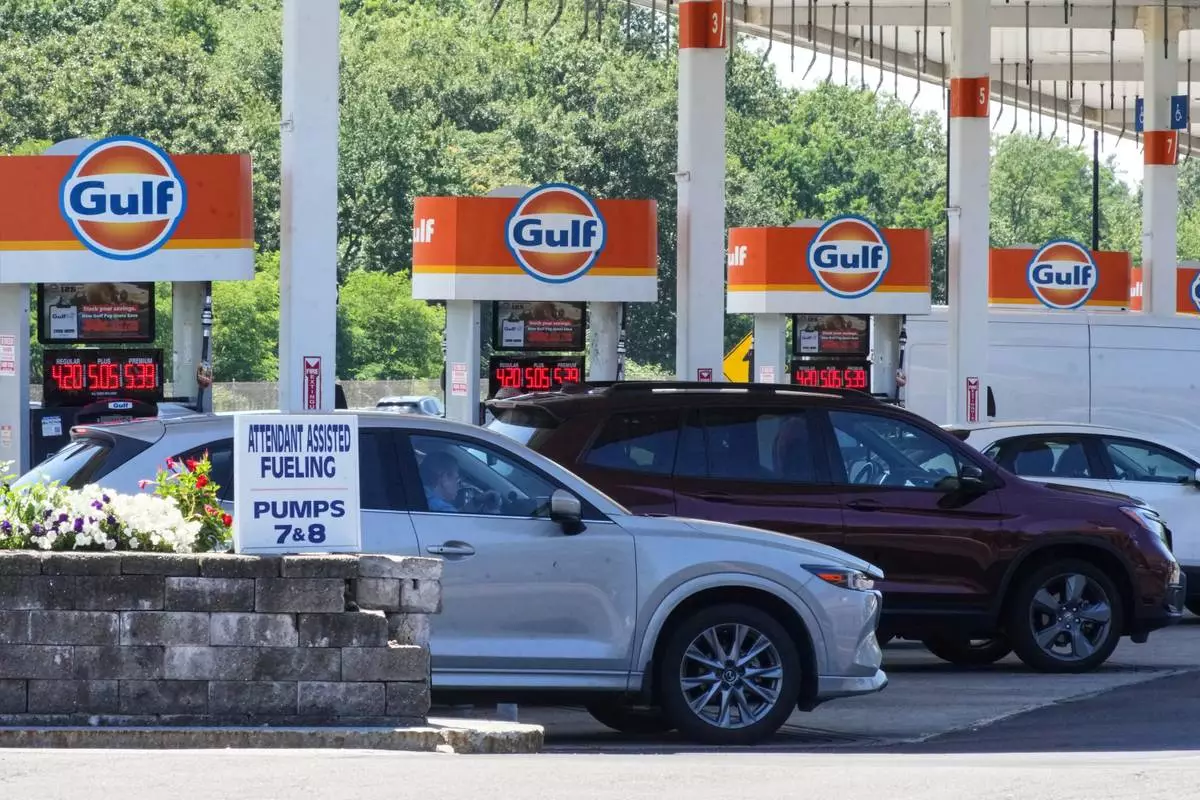
FILE - Cars line up at the pumps of a Gulf Oil station on the Massachusetts Turnpike near Boston, Sunday, July 19, 2026. (AP Photo/Gene J. Puskar, File)

FILE - Cars line up at the pumps of a Gulf Oil station on the Massachusetts Turnpike near Boston, Sunday, July 19, 2026. (AP Photo/Gene J. Puskar, File)

Ada Torres holds tomatoes while shopping for produce, Thursday, July 2, 2026, in Cleveland, Texas, about 45 miles northeast of Houston. (Sandy Guatibonza/La Esquina TX via AP)

Ada Torres holds tomatoes while shopping for produce, Thursday, July 2, 2026, in Cleveland, Texas, about 45 miles northeast of Houston. (Sandy Guatibonza/La Esquina TX via AP)

Recommended Articles