Johnson & Johnson has agreed to pay $5.5 billion to tie up remaining lawsuits that claim its talc products caused ovarian cancer.
The drugmaker, which has been fighting talc-related lawsuits for more than a decade, said that the settlement is conditioned on at least 95% of remaining claimants participating.
A U.S. bankruptcy court judge denied a $9 billion settlement proposed by company subsidiary Red River Talc last year that would have been one of the biggest mass tort settlements in history.
Johnson & Johnson decided not to appeal that ruling and instead fight on in court.
A federal judge last week ordered plaintiffs in the case against Johnson & Johnson to show why the remaining pending talc claims should not be dismissed after their witnesses could not provide a direct link between the company's product and cancer.
“The Court’s order placed plaintiffs in an untenable position of having to present specific causation evidence to maintain their claims that does not exist," Erik Haas, worldwide vice president of litigation, Johnson & Johnson, said in a prepared statement Monday.
As part of the settlement proposed this week, Johnson & Johnson will make an initial payment of no more than $3 billion next year. It has no additional payments due until 2028.
“While we are confident the company would have ultimately prevailed with further litigation, as it has in the vast majority of cases tried to date, this resolution allows the company to put this matter behind it and remain focused on its mission to develop medicines and devices that save lives,” Haas said.
Johnson & Johnson said that it previously settled about 95% of filed lawsuits for mesothelioma, a cancer in the tissue surrounding organs like the lungs and heart, all state consumer protection claims, and all talc-supplier disputes.
Shares of the New Brunswick, New Jersey-based company rose more than 2% before the market open on Tuesday.

FILE - The Johnson & Johnson headquarters is in New Brunswick, New Jersey, on Thursday, Feb. 8, 2024. (AP Photo/Ted Shaffrey, File)
A judge on Tuesday sentenced a teenager who killed two students and two teachers in a shooting at Apalachee High School in Georgia to serve life in prison without the possibility of parole.
Colt Gray, 16, had pleaded guilty Friday to 55 counts, including murder, in the Sept. 4, 2024, shooting that also left several others wounded at the school about 45 miles (73 kilometers) northeast of Atlanta.
Barrow County Superior Court Judge Nicholas Primm handed down the sentence after hearing from family members of those killed and victims, as well as the lead investigator, a forensic psychologist who had evaluated Gray, a youth detention center counselor and Gray’s grandmother.
Gray, who was 14 at the time, was charged as an adult.
Teachers Richard “Ricky” Aspinwall, 39, and Cristina Irimie, 53, and students Mason Schermerhorn and Christian Angulo, both 14, died in the shooting. Another teacher and eight more students were wounded, seven of them hit by gunfire.
Gray’s father, Colin Gray was convicted in March on charges including second-degree murder and involuntary manslaughter. He is scheduled to be sentenced later this week. Prosecutors said he gave his son the assault-style rifle used to open fire at the school.
THIS IS A BREAKING NEWS UPDATE. AP’s earlier story follows below.
A prosecutor said that a teenager who killed two students and two teachers at Apalachee High School in Georgia carefully plotted the killing specifically to become famous, while a defense attorney argued that the terrible actions were those of a vulnerable and neglected child.
Colt Gray, 16, pleaded guilty last week to 55 counts, including murder, in the Sept. 4, 2024, shooting that also left several others wounded at the school about 45 miles (73 kilometers) northeast of Atlanta.
The minimum penalty for murder in Georgia is life with the possibility of parole. That leaves Barrow County Superior Court Judge Nicholas Primm trying to decide whether Gray should ever be eligible for parole.
District Attorney Brad Smith told the judge that Gray “cannot be in society.”
“We’ve seen no evidence he has any ability to develop a conscience or any ability ever to fully value human life,” Smith said.
Defense attorney W. Charlton Allen told the judge his client is “not irretrievably broken.” Giving him the possibility of parole would give him “an opportunity of hope," Allen said, adding that without hope, “that takes away the ability for him to change.”
Teachers Richard “Ricky” Aspinwall, 39, and Cristina Irimie, 53, and students Mason Schermerhorn and Christian Angulo, both 14, died in the shooting. Another teacher and eight more students were wounded, seven of them hit by gunfire.
Victims of the shooting and family members of those killed conveyed their anger and grief to Primm on Friday, almost all of them asking him to impose a sentence of life without the possibility of parole.
Shayna Aspinwall, the wife of math teacher and football coach Richard Aspinwall, described “a life sentence of grief and trauma for those left behind.”
Investigators testified during the sentencing hearing that Gray idolized other mass shooters, talking about them online with other members of the “true crime community,” a group of young people online who are fascinated with such attacks. Gray had chatted online about gaining notoriety through a school shooting and his admiration for previous mass shooters.
Prosecutors played recordings of phone conversations Gray had with his mother, Marcee Gray, from a youth detention center in the months after the shooting. During those calls, he directed his mother to look up what people were saying about him online. When she described “fan art” drawings depicting him or comments people made about him, he asked her how much engagement those posts were getting and seemed excited when they were getting a lot.
Gray had the “mental wherewithal” to mimic details of other mass killings on the day of the shooting, Smith said. He took steps to place those “Easter eggs,” anticipating that they would be mentioned in court one day and would perpetuate his fame, the prosecutor said.
“The shooting was not the culmination of the plan. The shooting was just one of the steps of the plan. The plan was ultimate and lifelong fame inside of the TCC,” Smith said, referencing the “true crime community.”
“Colt got less stability than he needed, which made him even more vulnerable,” Allen argued, arguing that his client got wrapped up in an online community where he found the acceptance he craved but wasn’t getting at home.
Gray’s maternal grandmother, Debbie Polhamus, testified that the teen had a troubled childhood and that his parents failed him. Her grandson had grown “highly agitated and aggressive” in the weeks before the shooting, she said, adding that she had urged his parents to get him some help but they didn’t follow through.
“I tried to help Colt because nobody else was helping him,” she said.
Polhamus said she visits her grandson once a week at a youth detention center and that he has improved enormously with treatment and medication. She said her grandson has been doing a lot of reading and wants to study to get his GED.
“I’d like to see him have a chance at some point to prove himself,” Polhamus said.
Gray was put in foster care while in detention because his father was in prison and there were concerns about his mother's contact with him. Candice Broce, director of the state Division of Family & Children Services and commissioner of the Georgia Department of Human Services, managed his case.
Broce testified that Gray appeared to show improvement. After Marcee Gray was barred from speaking with her son by a July 2025 no-contact order and he started taking medication, staff at the youth detention center told Broce it “changed him essentially into a different child,” she said.

Ashley Gilland, an investigator with the Barrow County District Attorney's office, looks over the assault rifle used in the Apalachee High School shooting by suspect Colt Gray during Gray's sentencing at Barrow County Superior Court, Monday, July 27, 2026, in Winder, Ga. (Jason Getz/Atlanta Journal-Constitution via AP)
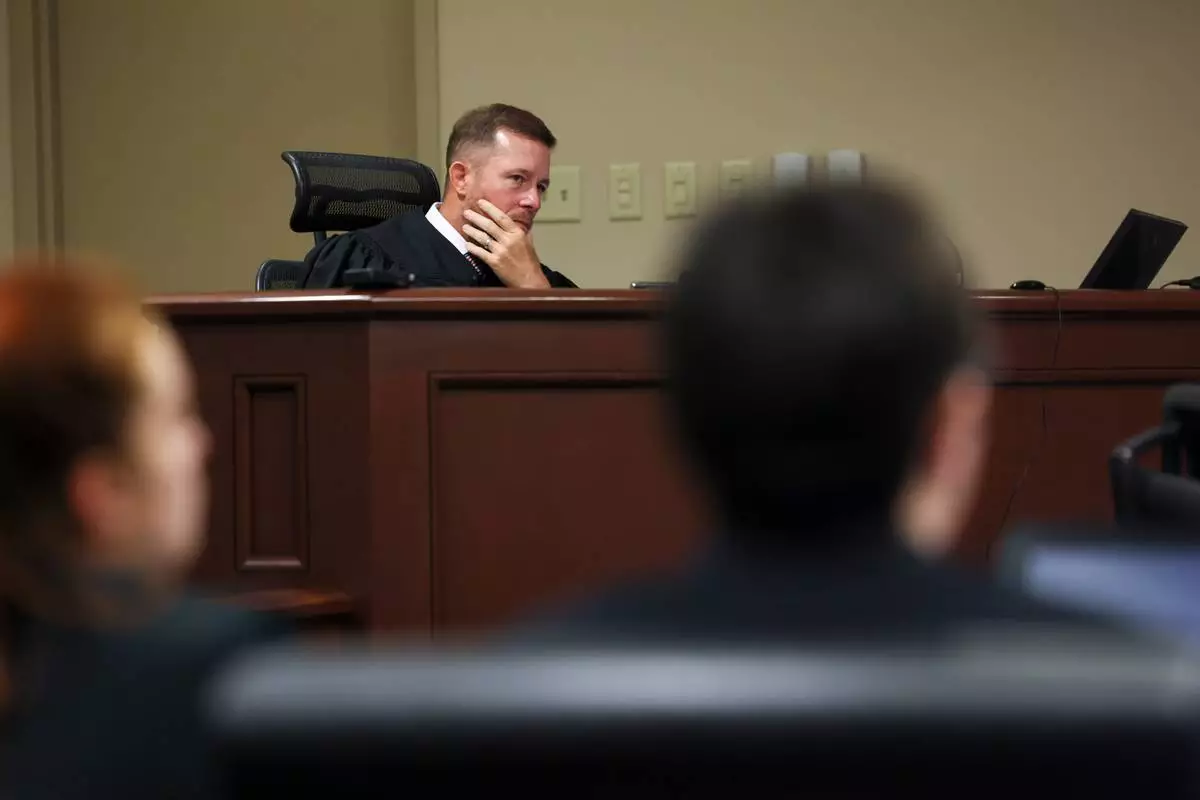
Judge Nicholas Primm reacts during the sentencing for Colt Gray, right, the 16-year-old Apalachee High School shooting suspect, at Barrow County Superior Court, Monday, July 27, 2026, in Winder, Ga. (Jason Getz/Atlanta Journal-Constitution via AP)
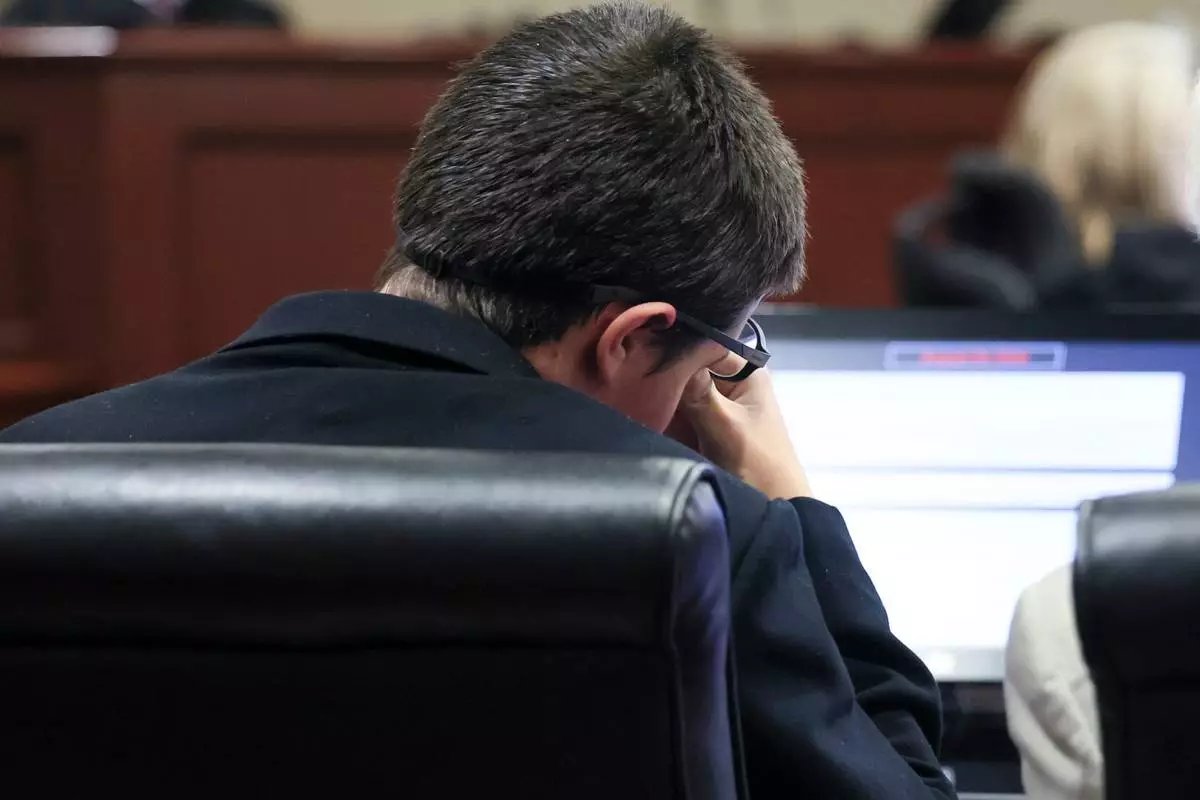
Colt Gray, the 16-year-old Apalachee High School shooting suspect, reacts during his sentencing at Barrow County Superior Court, Monday, July 27, 2026, in Winder, Ga. (Jason Getz/Atlanta Journal-Constitution via AP)
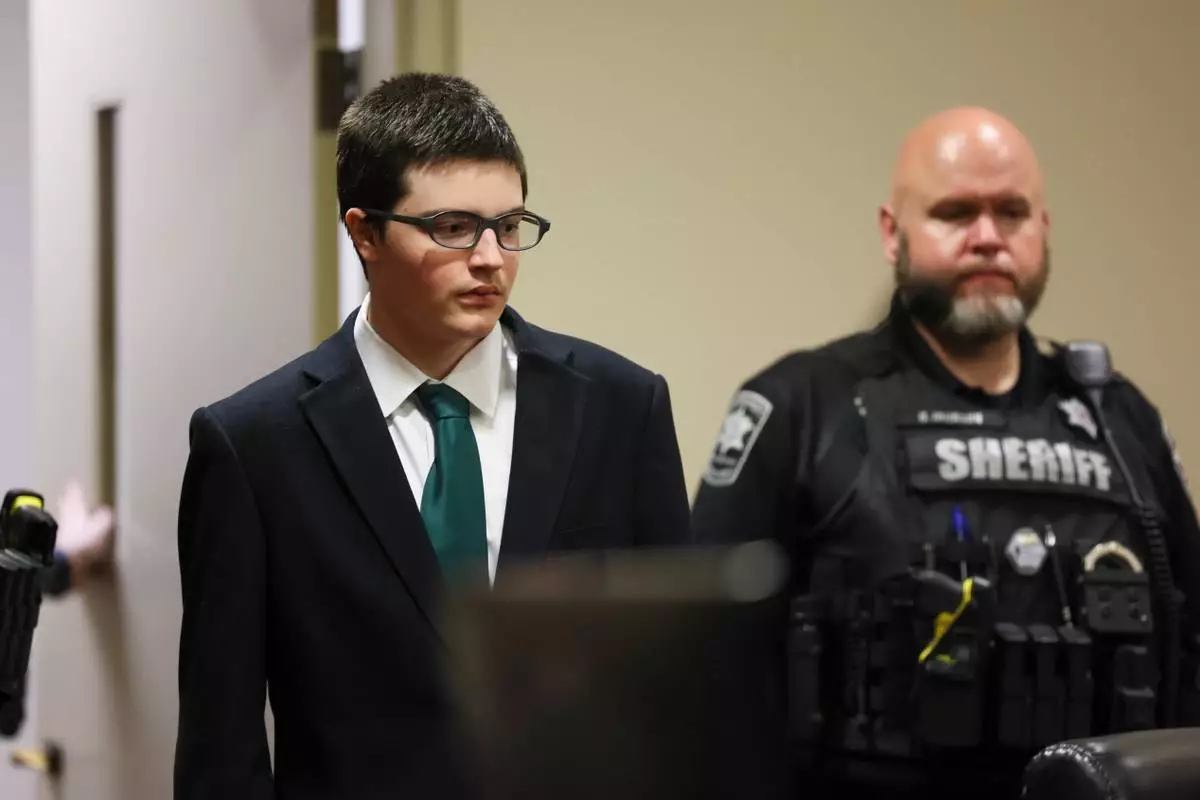
Colt Gray, the 16-year-old Apalachee High School shooting suspect, is led in by deputies for his sentencing at Barrow County Superior Court, Monday, July 27, 2026, in Winder, Ga. (Jason Getz/Atlanta Journal-Constitution via AP, Pool)
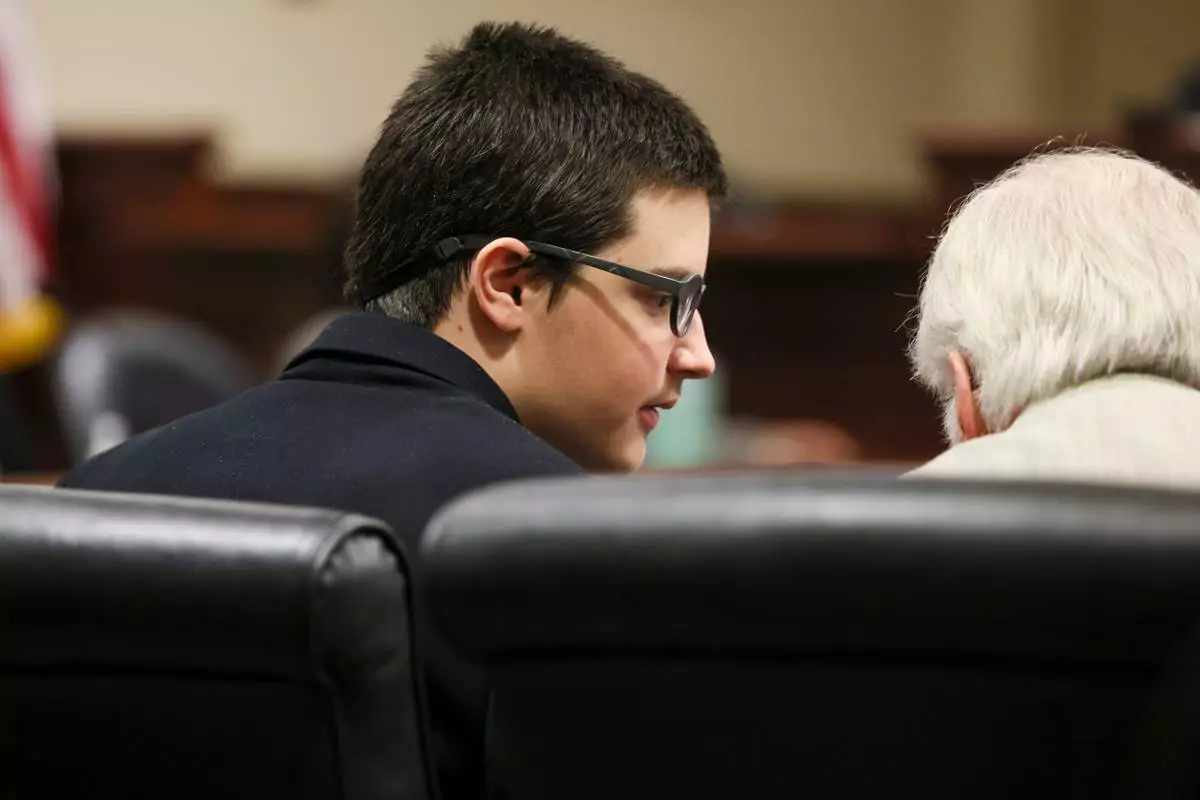
Colt Gray, the 16-year-old Apalachee High School shooting suspect, talks with his defense attorney Charlton Allen during his sentencing at Barrow County Superior Court, Monday, July 27, 2026, in Winder, Ga. (Jason Getz/Atlanta Journal-Constitution via AP, Pool)