Skip to Content Facebook Feature Image

Korean AI Startup AiBiz Cuts Semiconductor Defects with GPU-Free AI, Powered by AMD EPYC CPUs

Business

Korean AI Startup AiBiz Cuts Semiconductor Defects with GPU-Free AI, Powered by AMD EPYC CPUs
Business

Business

Korean AI Startup AiBiz Cuts Semiconductor Defects with GPU-Free AI, Powered by AMD EPYC CPUs

2026-07-29 02:17 Last Updated At:02:30

SAN FRANCISCO--(BUSINESS WIRE)--Jul 28, 2026--

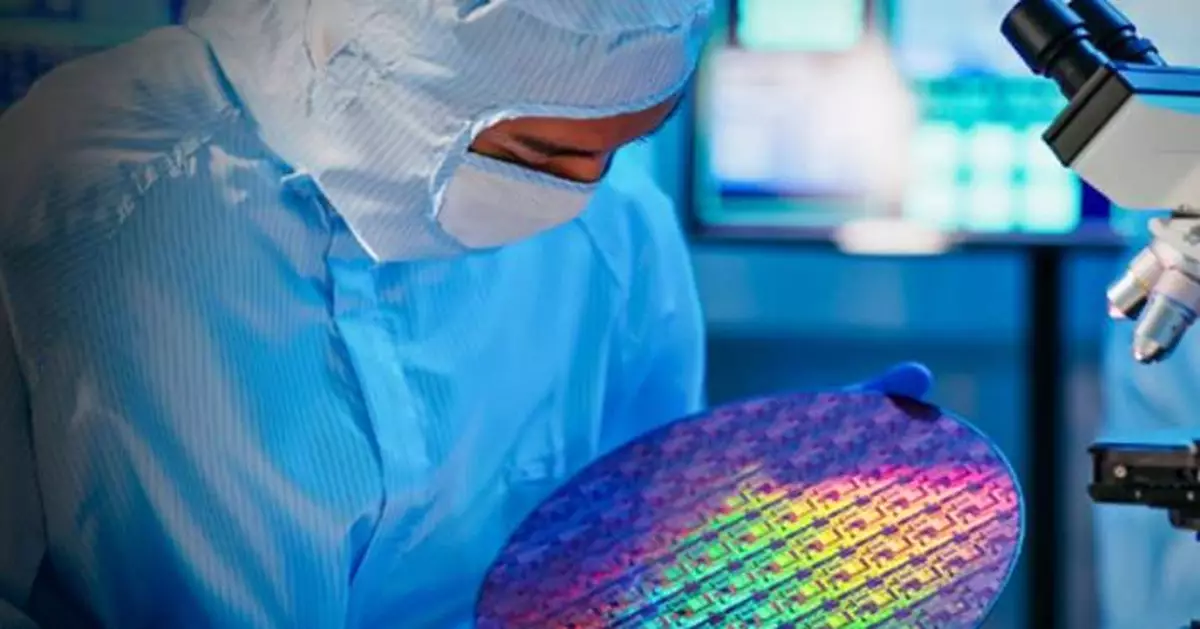
AiBiz, a six-year-old South Korean industrial-AI startup, is deploying AI to catch wafer defects before they cause failures — and it is doing so without the GPUs the industry has long assumed such work requires. AMD EPYC™ Server CPUs provided the performance the company needed to achieve this in a lightweight form without GPU acceleration.

This press release features multimedia. View the full release here: https://www.businesswire.com/news/home/20260720913517/en/

“We are a six-year-old startup,” says Seung-Jae Ha, CEO of AiBiz. “Our product is called DutchBoy. This name comes from a fable about a young lad living in the Netherlands who blocks a hole in a dam with his finger, preventing a bigger disaster. The AiBiz software performs a similar feat for semiconductor wafers.”

The problem AiBiz set out to solve is early defect detection. “We can find small issues at the beginning of the fabrication process to increase the yield of the foundries,” says Hyun Jin Choi, CTO of AiBiz. “A foundry consists of a lot of different manufacturing processes. The quality check is usually done at the very end of production, so the defects are detected at a very late stage. But by using sensor data, we can identify problems as they occur, so they can be tackled earlier.”

The scale of data is immense. “The server that we work with is installed within the Samsung Electronics plant inside the etching equipment itself,” says Choi. “We collect real-time sensor readings from 20 pieces of equipment, at a sampling rate of 100 milliseconds from 300 sensors in each, so we end up with a vast amount of data.”

DutchBoy works through a Docker container-based system. “We connect 20 of our products to one server,” says Choi. “We use a Time Series Anomaly Detection AI analysis model and a graph neural network (GNN). High-energy electromagnetic fields within the foundry chambers create plasma to etch the wafers. Inside the chambers, there are sensors detecting the temperature and pressure. Unlike other AI workloads, our GNN analyzes sensor correlations and enables consolidation.”

That consolidation is what lets AiBiz avoid GPUs. “Very large parameter quantities necessitate the use of GPUs,” says Choi. “GPUs typically generate more heat and require additional cooling, which can create challenges inside a fab. There are also latency issues between the GPU and CPU. But because we’re able to consolidate parameters, we can maintain our model at a very small size. This allows us to avoid using a GPU and instead use CPUs.” A typical current LLM might have up to 120 billion parameters, but AiBiz’s models use fewer than 100,000.

AiBiz explored AMD EPYC Server CPUs after finding its existing processors couldn’t deliver the performance required. “We were using Intel before, but we kept experiencing bottleneck problems,” says Choi. “We realized that the way to deal with this bottleneck issue was multithreading. We were looking for a processor with strong multithreading, which led us to AMD.”

On the AMD side, the collaboration was led by Varun Selvaraj, Senior Manager, Business Development at AMD, who worked directly with AiBiz’s CEO and CTO to build the compute foundation for DutchBoy. Selvaraj advised AiBiz on selecting the right AMD EPYC™ processors for real-time inference — matching core count, clock frequency, cache, and memory bandwidth to the demands of the workload — and identified the qualified server platforms and configurations to run them. He arranged early hardware access for the AiBiz team and convened a series of technical sessions between AiBiz’s leadership and leading server manufacturers, aligning the CPU roadmap and the broader software ecosystem behind the deployment.

“Our goal was to match the right EPYC CPU — the right cores, frequency, cache, and memory bandwidth — to AiBiz’s lightweight models, so the intelligence runs efficiently right where the sensor data lives,” says Selvaraj. “AiBiz has proven that AI does not require a GPU, and that it does not have to compromise on performance.”

AMD provided AiBiz with initial test servers, and hardware partner HPE also provided crucial assistance. “HPE helped us identify which EPYC product would be the best,” says Choi. “Our product can go not only inside the Korean plant but could also expand to other geographies like China and America, where Samsung has factories. HPE’s global support was one of the reasons why we wanted to work with the company.”

The results were immediate. “We conducted comparisons on five domain datasets with our previous Intel CPUs,” says Choi. “We saw a 30% AI inference performance increase with AMD EPYC Server CPUs. After optimization, we were able to completely solve the bottleneck issue.”

Those gains translate into real predictions on the factory floor. “DutchBoy was able to provide better predictions,” adds Choi. “There is a phenomenon called arcing, where you see lightning happening inside the chamber. This affects the wafer and will lead to a defect. In those arcing instances, we saw a data spike. When this occurs, we provide real-time information to the engineers so that they can prevent the wafer defect from happening.”

The savings are substantial. “Memory wafers are very expensive,” says Choi. “Each wafer costs about 20 million won ($13,500). Before our technology, companies would sample one from every 20 wafers. A defect could mean rejecting the entire set. If DutchBoy finds a problem before it happens, they can save 20 wafers. This can lead to 380 million won ($255,000) of savings. Because the sampling used to be done once every day, the savings would be multiplied by 365 days meaning 150 billion won ($100 million) saved per year.”

And that is before yield. “That is just one part of the process,” adds Choi. “DutchBoy allows a yield improvement of 3% to 5%, and in a fab, that will equal trillions of won (billions of dollars) savings.”

For AiBiz, the CPU-only approach is the whole point. “Our lightweight AI process is possible only when inference is done on the CPU,” says Ha. “If the system is a CPU plus GPU system, then it will be more expensive, consume more power, and produce more heat. The combination of DutchBoy and AMD is what allows a lightweight AI system to be created.”

The company is now planning a broad expansion. “We are currently using AMD EPYC 9355 and 9554 Server CPUs at Samsung and Xian (China) Plants,” says Choi. “We’re also going to use the same processors for Outsourced Semiconductor Assembly and Test (OSAT) facilities and LG Innotek.” Beyond that, AiBiz aims to expand within the foundries industry — to Hynix, Intel, and Micron, using Samsung as a reference — and to grow globally alongside its customers. “We are looking forward to having AMD EPYC Server CPUs as a part of our global expansion,” says Choi.

Choi has a message for other startups still assuming AI means GPUs. “The biggest challenge with AI for our customers is always the price of the hardware, but because we don’t have to rely on GPUs anymore, we can take away a lot of the cost,” he says. “Most startups started out thinking that AI is GPU. But now we are convinced that AI does not equal GPU, and it does not compromise performance. Other companies should test AMD EPYC Server CPUs and rid themselves of that stereotype.”

Performance and cost-savings figures in this article are provided by AiBiz and are attributed to AiBiz throughout. AMD EPYC and the AMD logo are trademarks of Advanced Micro Devices, Inc.

1 Business Development Sr Manager– Enterprise AI & T2 Cloud.
AMD Server Group
Building 1, 2nd floor
2485 Augustine Dr, Santa Clara, CA 95054, USA
Office Cell +(1) 408-275-5759
Email: Varun.Selvaraj@AMD.com

2 Chief Executive Officer & Co-Founder, AIBIZ
5th Floor, Pre-Childcare Room, Chungnam Startup Maru Nabi, 48, Buldang 14-ro, Seobuk-gu, Cheonan-si, Chungcheongnam-do, 31169, Republic of Korea, https://www.ai-biz.net/en/index.php
Cell: +82-10-9729-3508, Email: sjha@ai-biz.net,
Bachelor's Degree from Seoul National University,
M.B.A, Ph.D. in IT Engineering from Soongsil University,
Vice President of the AI Association
30-Year Veteran in Manufacturing Innovation at Harim Group
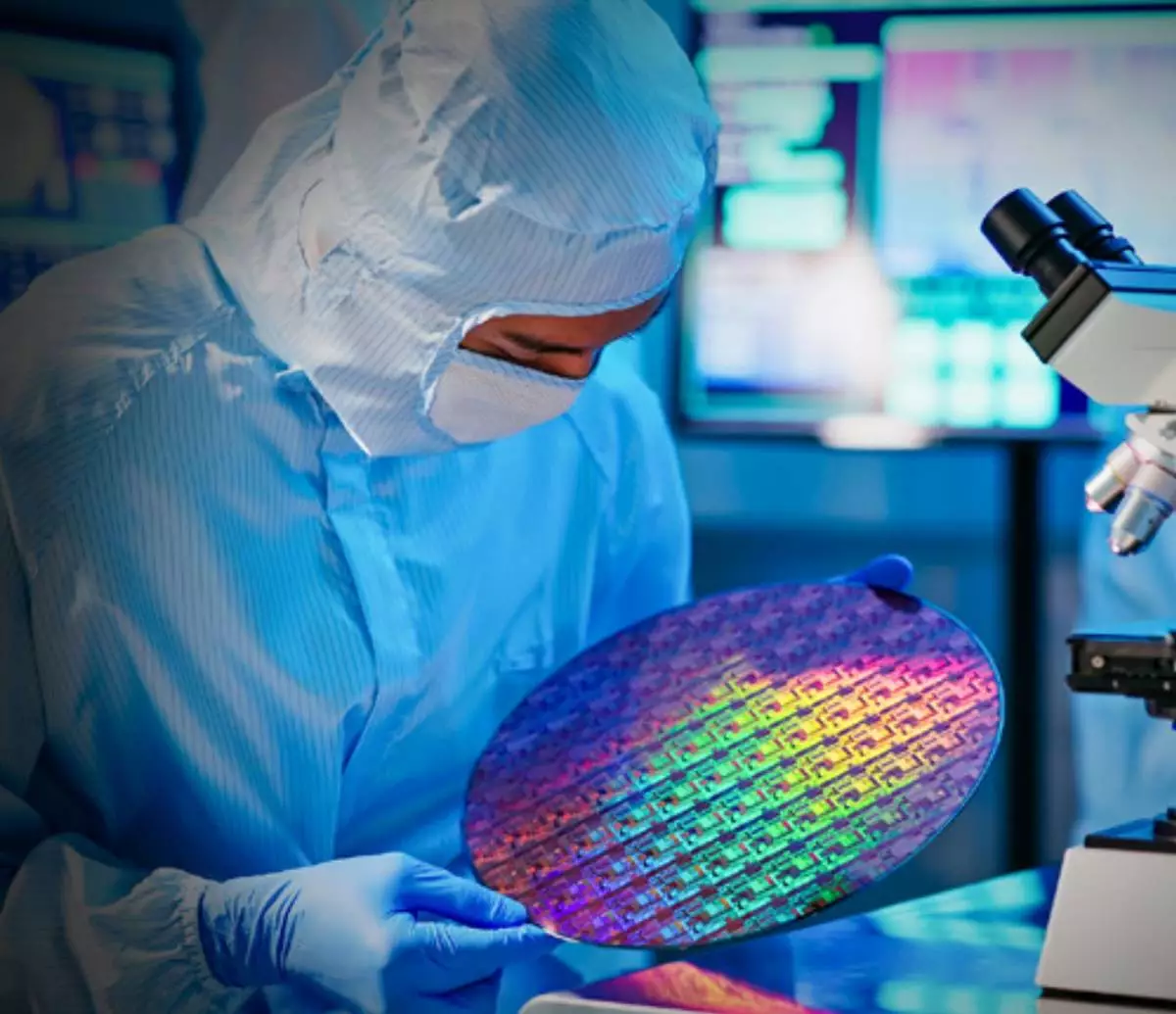
Korean AI Startup AiBiz Cuts Semiconductor Defects with GPU-Free AI, Powered by AMD EPYC CPUs


Korean AI Startup AiBiz Cuts Semiconductor Defects with GPU-Free AI, Powered by AMD EPYC CPUs

NEW YORK (AP) — Most of Wall Street rose Tuesday, even as stocks of computer chipmakers continued to tumble worldwide. Oil prices, meanwhile, eased further from the two-month high they hit last week.

The S&P 500 added 0.2%, but the modest move masked big swings underneath the surface. The Dow Jones Industrial Average jumped 537 points, or 1%, while the Nasdaq composite slipped 0.2% after briefly dropping 9.3% below its record set last month.

The majority of the U.S. market rose after more companies delivered stronger profits for the spring than analysts expected. Coca-Cola climbed 5% after its revenue rose 7% despite what CEO Henrique Braun called “a dynamic consumer landscape.”

Sherwin-Williams rallied 8.3%, and Illinois Tool Works rose 3.6% after both likewise reported stronger earnings for the latest quarter than analysts expected. Stock prices generally follow the trend of corporate profits over the long term, and expectations are high for this most recent round of reports with the U.S. stock market still near its all-time high.

Such expectations are weighing particularly heavily on stocks of chipmakers and other companies that have been huge winners from the boom in artificial-intelligence technology.

Micron Technology’s stock came into the day having more than tripled for the year following gangbuster growth, for example. During the three months through May 28, its revenue more than quadrupled from a year earlier.

But worries are rising about whether such growth is sustainable. Big spenders on computer memory could pull back on investments if AI does not produce as much profit or productivity as promised. Lower-cost AI models from China could also mean less demand for memory and computing power than earlier expected.

Micron dropped 8.9% and was the heaviest weight on the S&P 500. Others also helping to keep the market in check were Advanced Micro Devices, down 8.1%, and Applied Materials, down 7.8%.

All told, the S&P 500 rose 15.60 points to 7,428.78. The Dow Jones Industrial Average jumped 537.24 to 52,747.32, and the Nasdaq composite fell 55.17 to 24,876.91.

The losses for chip stocks were even worse earlier in the day in other markets worldwide.

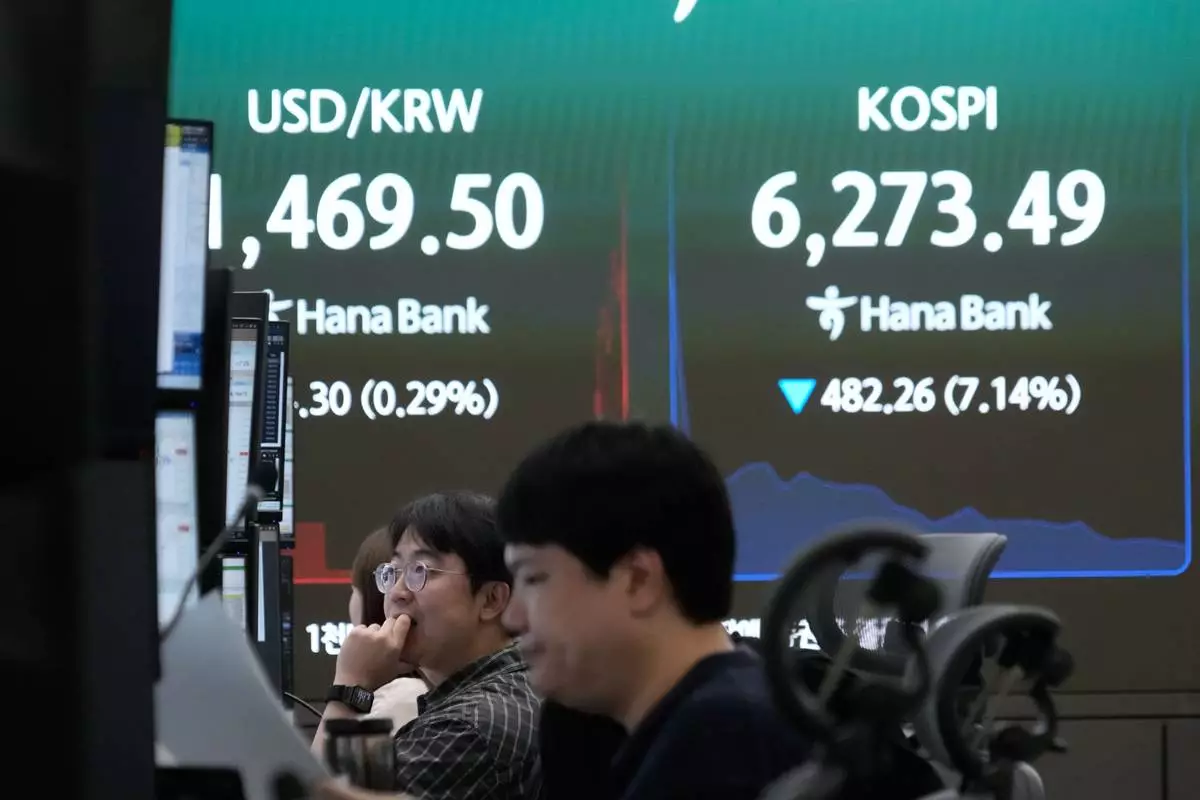
Sharp drops for SK Hynix and Samsung Electronics dragged South Korea’s Kospi index down 10.8%. The market’s losses were so big that trading was temporarily halted at times in Seoul.

“We believe the market was likely spooked by the progress of China’s chipmaking equipment capabilities, and was worried that this progress would threaten the competitive position of global chipmaking and chip equipment leaders,” said equity analyst Jing Jie Yu of Morningstar.

“That said, we believe the sell-off today is largely a knee-jerk reaction and overdone,” he said. The dominant position of global chipmaking leaders is unlikely to be threatened meaningfully, he said.

Several huge spenders on AI chips and data centers are scheduled to report their latest quarterly results this week, which could offer updates on how much they’re planning to invest. Meta Platforms and Microsoft are reporting on Wednesday, while Amazon is due on Thursday.

Because AI superstar stocks have grown so big, their movements carry more weight on the S&P 500 and other indexes than many other companies. But the broad U.S. market could hold up despite their swings if other, less-loved areas are able to keep rising. It’s a rotation that some strategists have suggested could be healthy for the overall stock market.

In the oil market, the price for a barrel of Brent crude to be delivered in October fell 4.4% to settle at $82.08.

It’s been falling since late last week, when the price for a barrel to be delivered in September briefly shot as high as $102.

Pushing up on prices have been worries that worsening fighting in the Middle East could slow the global flow of oil. On the other side, though, are hopes that the United States and Iran could still negotiate something to allow oil tankers to use the Strait of Hormuz to move crude.

Lower oil prices helped to ease Treasury yields in the bond market. The yield on the 10-year Treasury fell to 4.60% from 4.65% late Monday.

A weaker-than-expected reading on confidence among U.S. consumers also weighed on yields. Fewer consumers are saying they feel good about current business conditions, according to the latest survey released by the Conference Board Tuesday.

The drop in oil prices helped push traders to trim their bets that the Federal Reserve could announce a hike to interest rates following its latest meeting on Wednesday. They’re forecasting a 31.5% probability, down from more than 36% a day before, according to data from CME Group.

Higher rates could keep a lid on inflation, but they would also slow the economy by making it more expensive for U.S. households and businesses to borrow. Long-term mortgage rates have already hit their highest level in nearly a year, chilling the housing industry.

AP Business Writers Chan Ho-him, Elaine Kurtenbach and Matt Ott contributed.

FILE - A Wall Street sign is seen outside of the New York Stock Exchange in New York, Monday, March 30, 2026. (AP Photo/Seth Wenig, File)

FILE - A Wall Street sign is seen outside of the New York Stock Exchange in New York, Monday, March 30, 2026. (AP Photo/Seth Wenig, File)

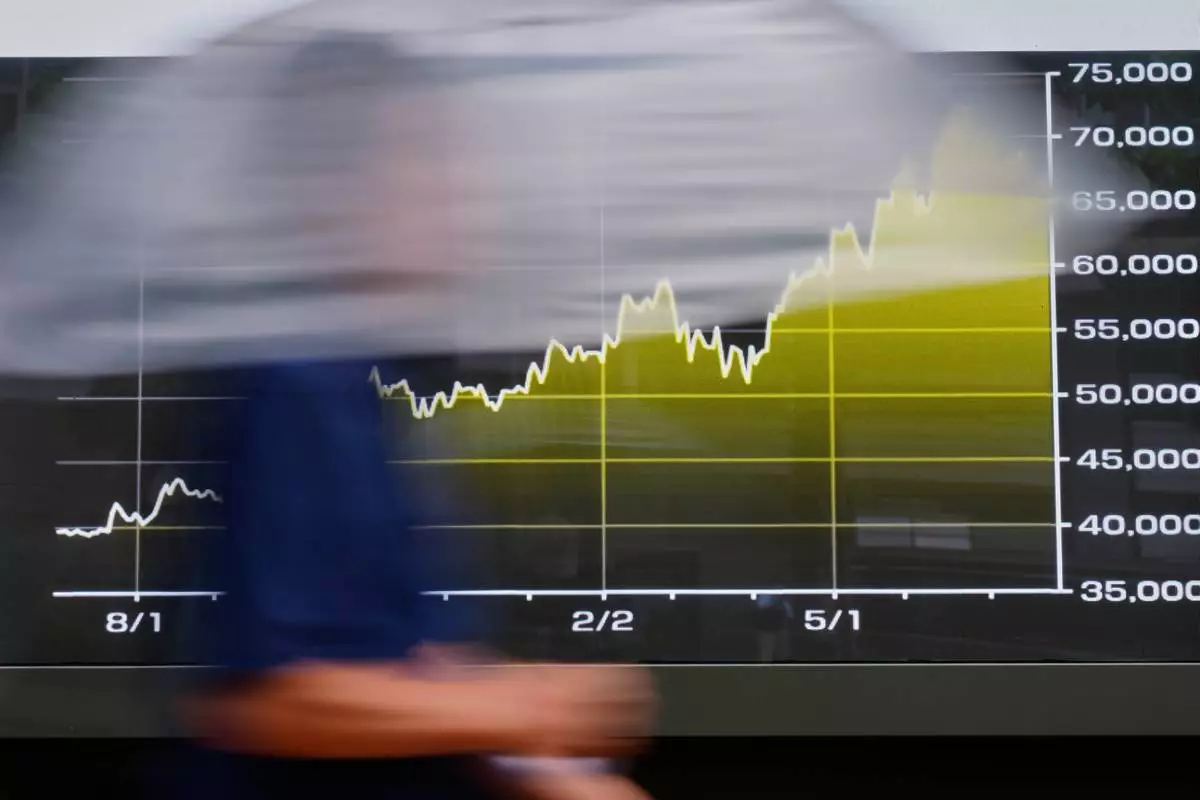
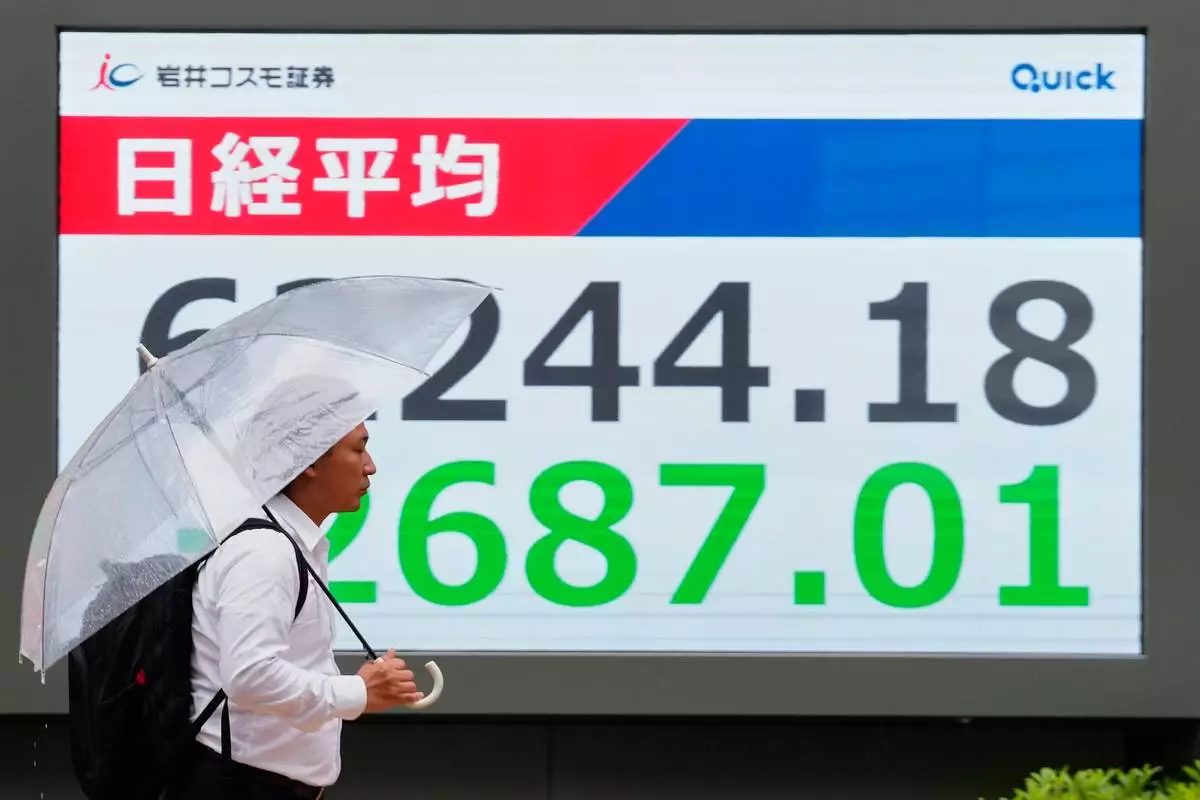
A person walks in front of an electronic stock board showing Japan's Nikkei index at a securities firm Tuesday, July 28, 2026, in Tokyo. (AP Photo/Eugene Hoshiko)

A person walks in front of an electronic stock board showing Japan's Nikkei index at a securities firm Tuesday, July 28, 2026, in Tokyo. (AP Photo/Eugene Hoshiko)

A person walks in front of an electronic stock board showing Japan's Nikkei index at a securities firm Tuesday, July 28, 2026, in Tokyo. (AP Photo/Eugene Hoshiko)

A person walks in front of an electronic stock board showing Japan's Nikkei index at a securities firm Tuesday, July 28, 2026, in Tokyo. (AP Photo/Eugene Hoshiko)

A person walks in front of an electronic stock board showing Japan's Nikkei index at a securities firm Tuesday, July 28, 2026, in Tokyo. (AP Photo/Eugene Hoshiko)

A person walks in front of an electronic stock board showing Japan's Nikkei index at a securities firm Tuesday, July 28, 2026, in Tokyo. (AP Photo/Eugene Hoshiko)

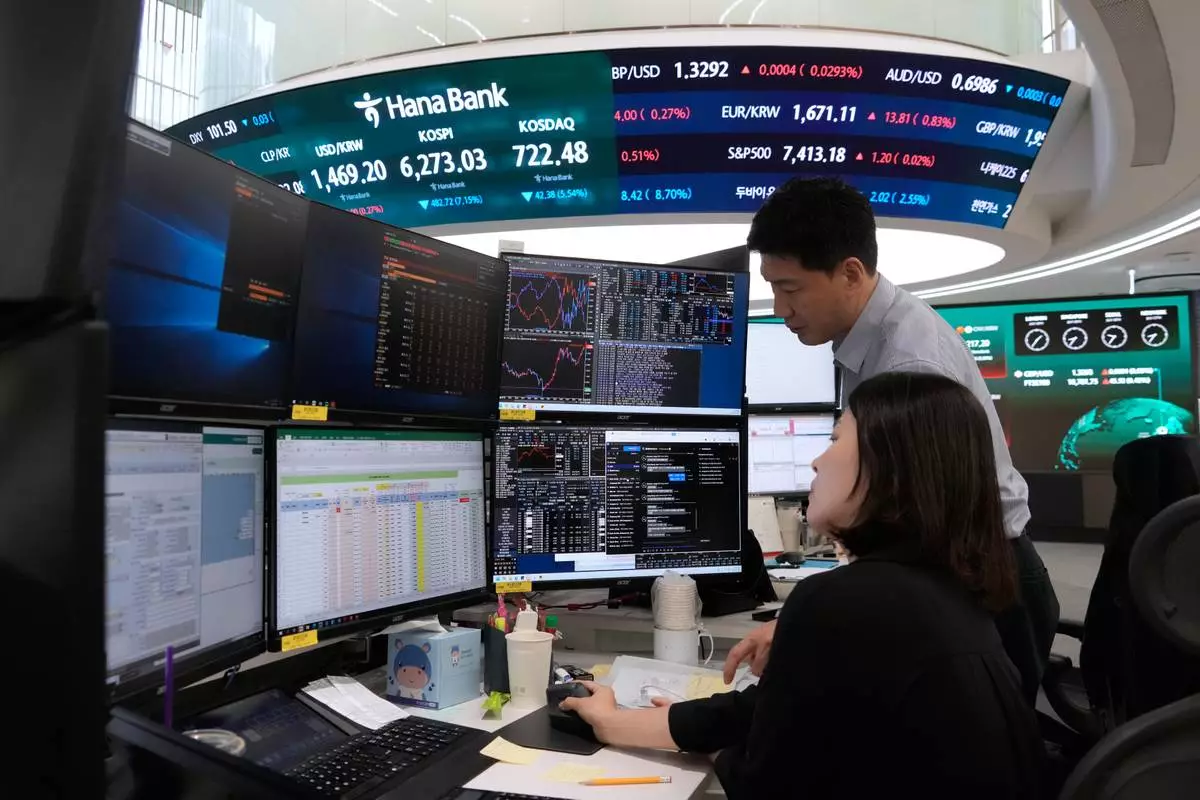
A screen shows the Korea Composite Stock Price Index (KOSPI) at the foreign exchange dealing room of the Hana Bank headquarters in Seoul, South Korea, Tuesday, July 28, 2026. (AP Photo/Ahn Young-joon)

A screen shows the Korea Composite Stock Price Index (KOSPI) at the foreign exchange dealing room of the Hana Bank headquarters in Seoul, South Korea, Tuesday, July 28, 2026. (AP Photo/Ahn Young-joon)

Currency traders work at the foreign exchange dealing room of the Hana Bank headquarters in Seoul, South Korea, Tuesday, July 28, 2026. (AP Photo/Ahn Young-joon)

Currency traders work at the foreign exchange dealing room of the Hana Bank headquarters in Seoul, South Korea, Tuesday, July 28, 2026. (AP Photo/Ahn Young-joon)

The screens show the Korea Composite Stock Price Index (KOSPI), the foreign exchange rate between U.S. dollar and South Korean won and the Korean Securities Dealers Automated Quotations (KOSDAQ) at a dealing room of Hana Bank in Seoul, South Korea, Monday, July 27, 2026. (AP Photo/Lee Jin-man)

The screens show the Korea Composite Stock Price Index (KOSPI), the foreign exchange rate between U.S. dollar and South Korean won and the Korean Securities Dealers Automated Quotations (KOSDAQ) at a dealing room of Hana Bank in Seoul, South Korea, Monday, July 27, 2026. (AP Photo/Lee Jin-man)

A dealer walks past near the screens showing the foreign exchange rates at a dealing room of Hana Bank in Seoul, South Korea, Monday, July 27, 2026. (AP Photo/Lee Jin-man)

A dealer walks past near the screens showing the foreign exchange rates at a dealing room of Hana Bank in Seoul, South Korea, Monday, July 27, 2026. (AP Photo/Lee Jin-man)

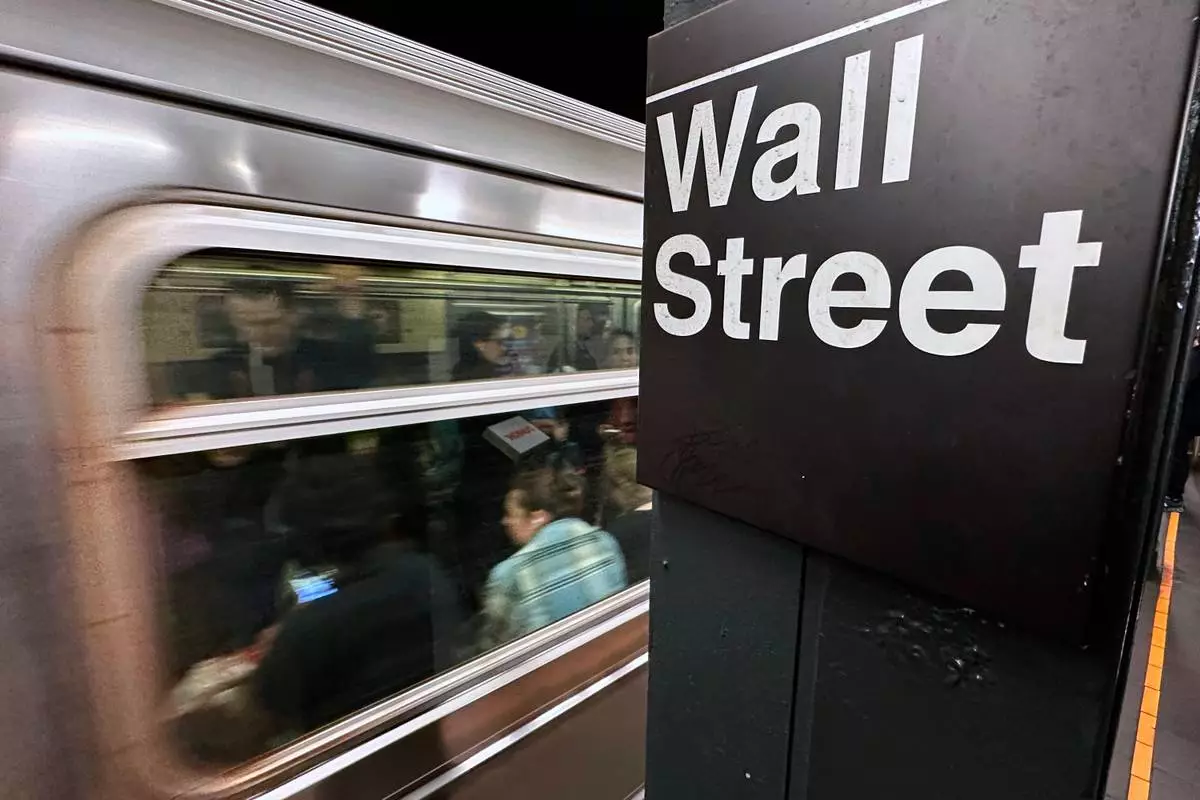
FILE - A train arrives at a Wall Street subway station in New York's Financial District on Nov. 5, 2024. (AP Photo/Peter Morgan, File)

FILE - A train arrives at a Wall Street subway station in New York's Financial District on Nov. 5, 2024. (AP Photo/Peter Morgan, File)

Currency traders watch monitors near a screen showing the Korea Composite Stock Price Index (KOSPI) and the foreign exchange rate between U.S. dollar and South Korean won at the foreign exchange dealing room of the Hana Bank headquarters in Seoul, South Korea, Tuesday, July 28, 2026. (AP Photo/Ahn Young-joon)

Currency traders watch monitors near a screen showing the Korea Composite Stock Price Index (KOSPI) and the foreign exchange rate between U.S. dollar and South Korean won at the foreign exchange dealing room of the Hana Bank headquarters in Seoul, South Korea, Tuesday, July 28, 2026. (AP Photo/Ahn Young-joon)

Recommended Articles