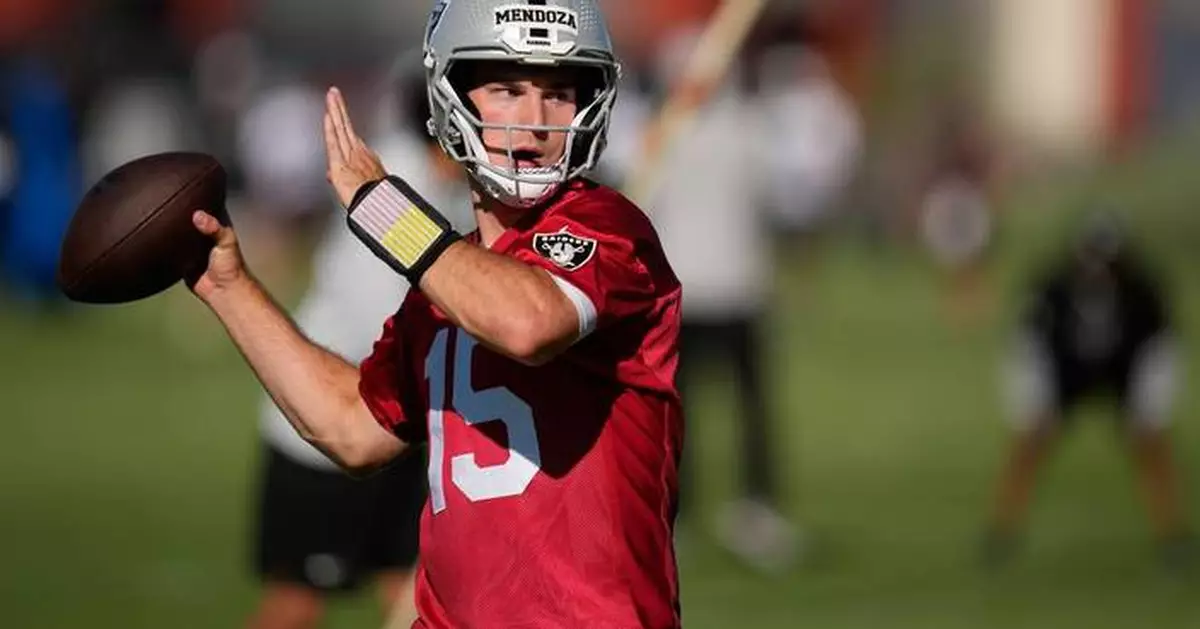
HENDERSON, Nev. (AP) — As Klint Kubiak oversees his first training camp as a head coach, he is faced with the daunting task of figuring out how to juggle going with Kirk Cousins as the Raiders' starting quarterback — for now — while getting the most out of overall No. 1 draft pick Fernando Mendoza.
Kubiak made clear Tuesday that when Las Vegas takes the field early Wednesday for its first training camp practice that Cousins will run the first-team offense.
But there also will be plenty of focus on Mendoza, the Heisman Trophy winner who led Indiana to the national championship last season and whom so many fans have placed their hope that he is the long-awaited franchise quarterback. Mendoza operated the third-team offense in offseason practices behind Cousins and Aidan O'Connell, so the Raiders initially eased him into the lineup.
Now it comes down to performance.
“It’s important for me to be fair to the players and to put the best player out there,” Kubiak said. "When we go out to practice tomorrow, Kirk Cousins is the starting quarterback. He’s the guy, and he’s going to get a ton of reps. He deserves them because he has played really good football, but I want Fernando and I want Aidan to push him.”
Kubiak and his coaches enter camp with a plan for how to navigate the quarterbacks' competition early, but they are ready to make adjustments depending on how it plays out.
“We have a starting point on where those reps want to be for the guys," Kubiak said. "We’re really thoughtful about how many reps each guy’s getting up against what defense. There’s going to be times where it moves and certain guys are with the twos, certain guys are with the threes. We’ll get the second guy with the ones. We have an early-on plan, but it’s always a moving target.”
Kubiak had said he expected star pass rusher Maxx Crosby, who underwent knee surgery in January, to be ready to go once camp begins.
That is indeed the case.
“He’s ready to practice,” Kubiak said. "As practice unfolds and we’re watching our players, it’s always a moving target. But as of right now, tomorrow is a pretty short workday, hour and 30 minutes. So, we’re expecting (Crosby) to be ready to take all those reps.”
Crosby's surgery was to repair a torn meniscus in his left knee that caused him to miss the final two games last season.
He was traded to Baltimore in March only to have the Ravens nix the deal four days later over a failed physical, someone with knowledge of the situation told The Associated Press at the time.
Crosby said in June he had moved on and was focused on playing for the Raiders.
The Raiders traded up a spot into the first selection of the fourth round of this year's draft to take cornerback Jermod McCoy.
He was thought to be a first-round talent before a torn ACL forced McCoy to miss all of last season at Tennessee.
Now McCoy will begin to show whether the Raiders' risk was a good one.
“The plan is to get him reps early and see how he responds in his recovery," Kubiak said. "It is a moving target with him. He’s a guy that’s worked extremely hard and has been dedicated to the program that we’ve put in front of him. Jermod hasn’t played football in a year, and we’re aware of that, but he’s ready to go practice tomorrow. We’re also going to be really smart with him and develop him the right way.”
Kubiak was hired in February after serving as offensive coordinator of Seattle's Super Bowl champions, and the 39-year-old hired some veteran assistants who can help his transition to running his own team.
He specifically mentioned Mike McCoy, Joe DeCamillis and Rick Dennison as coaches he could rely on.
“Those are guys that I lean on every day,” Kubiak said.
All the players, Kubiak said, are set to practice when camp opens.
He also said the conditioning tests were encouraging.
“Guys did a great job there, but playing football is a whole lot different than running 60 yards,” Kubiak said. “So we’ll find out who the most self-motivated people were.”
AP NFL: https://apnews.com/hub/NFL
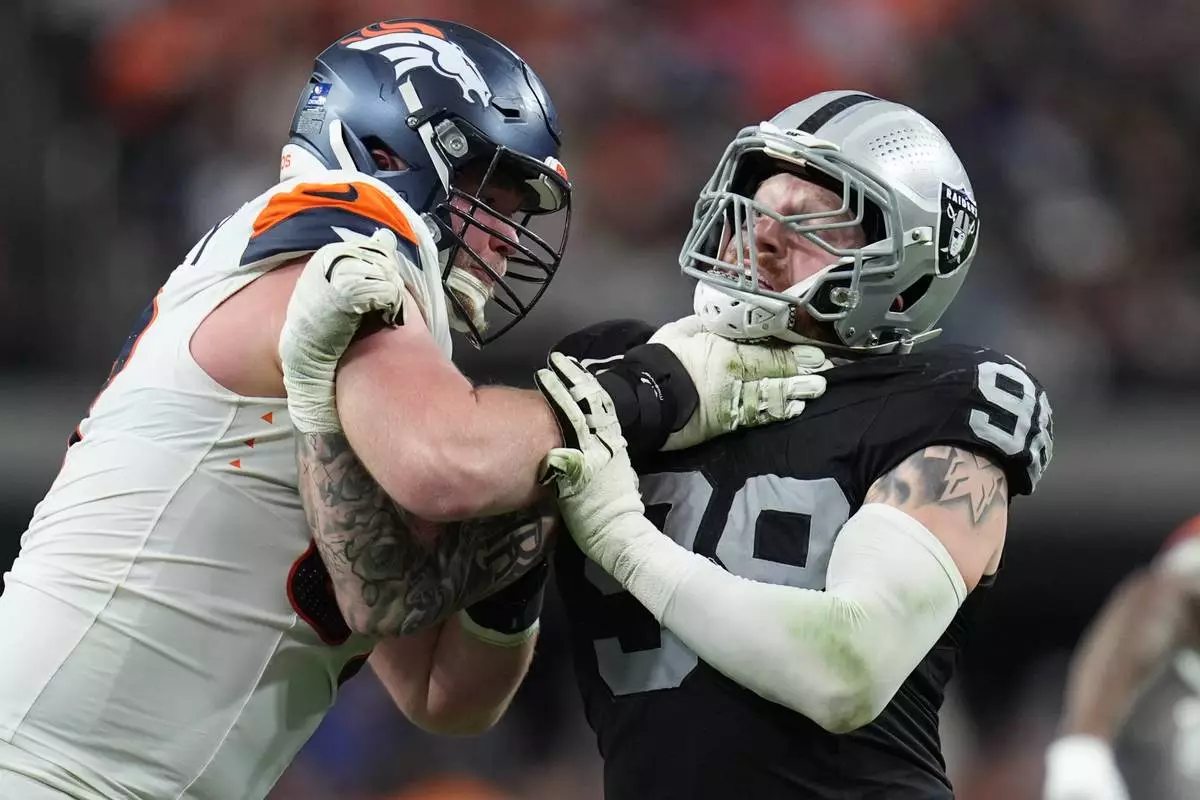
FILE - Denver Broncos offensive tackle Garett Bolles, left, blocks Las Vegas Raiders defensive end Maxx Crosby during the second half of an NFL football game in Las Vegas, Dec. 7, 2025. (AP Photo/Gregory Bull, File)
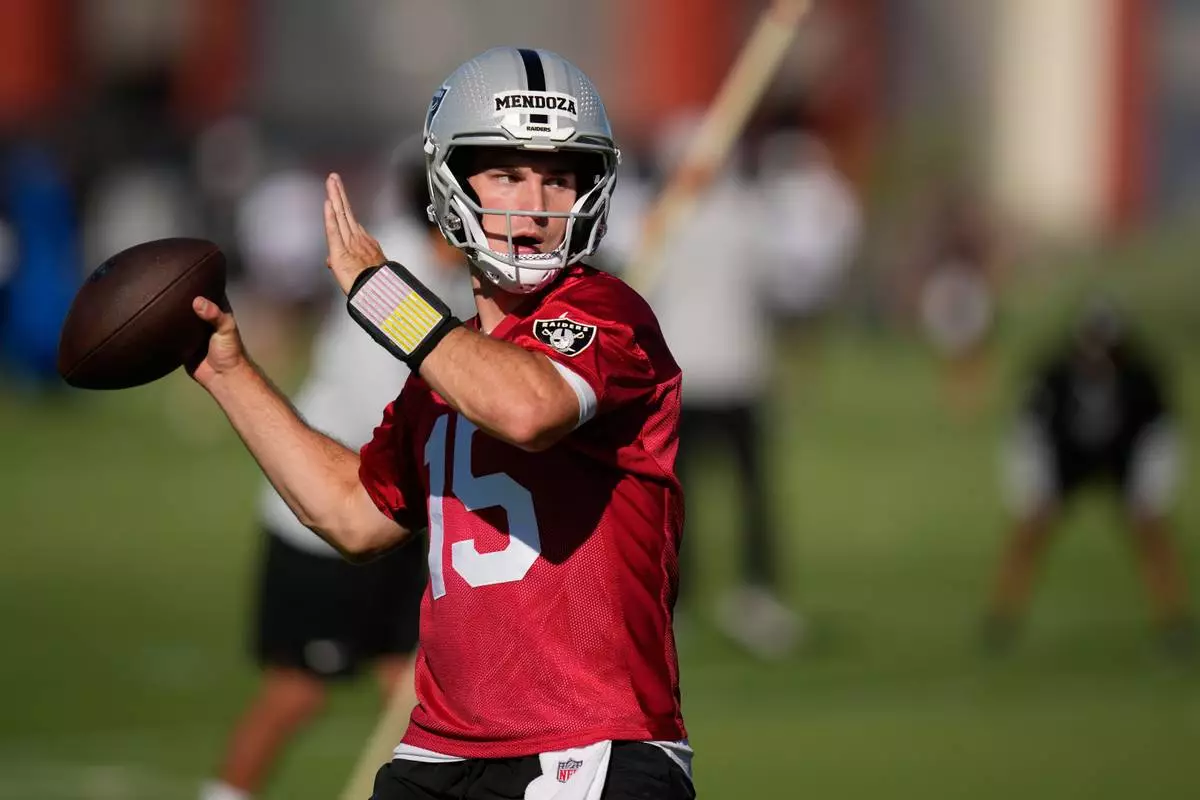
FILE - Las Vegas Raiders quarterback Fernando Mendoza throws during the NFL football team's practice Wednesday, June 10, 2026, in Henderson, Nev. (AP Photo/John Locher)
WASHINGTON (AP) — The U.S. military said Tuesday that it knocked down an Iranian missile barrage and worked with Saudi Arabia's forces to strike sites in Iraq that Tehran-backed militias have used to launch attacks in recent days, shattering a brief pause in fighting.
All Iranian missiles launched against American forces in the Middle East were intercepted, U.S. Central Command said, adding that they “remain vigilant and at a high state of readiness.” In announcing the strikes in Iraq, the U.S. warned that further attacks on American troops or Saudi Arabia’s energy infrastructure risked additional action.
The United States and Iran had experienced a period of calm, during which neither announced attacks for days following weeks of escalation over the strategic Strait of Hormuz, the Persian Gulf waterway and narrow chokepoint through which 20% of the world’s traded oil normally flows.
There was no immediate comment from Tehran on the U.S. military statement or the strikes.
The fighting flared at the end of a month packed with multiple pressure points on President Donald Trump. In recent weeks, four U.S. troops died during the fighting, while the Pentagon asked an increasingly skeptical Congress for money to cover the conflict’s ballooning costs.
High gasoline prices tied to the choked-off Strait of Hormuz are contributing to fears that Republicans are vulnerable in November’s midterm elections. The U.S. House narrowly passed a resolution to halt military action in Iran last week, sending another warning to Trump that reflects the war’s unpopularity with many Americans.
Trump has repeatedly retreated from threats to knock out bridges, power plants and other infrastructure but he told Fox News Channel earlier Tuesday that Iran knows he’ll “finish the job” if its leaders don’t make a deal to end the war.
Iran launched its ballistic missile attack before American and Saudi forces carried out strikes in Iraq, according to a U.S. official, who stressed that the two attacks were not connected. The official spoke on condition of anonymity to detail sensitive military operations.
“U.S. and Saudi fighter aircraft struck multiple terrorist logistics and weapons sites across eastern Iraq in a strong response to over 30 IRGC-directed aerial drone attacks in the last 72 hours,” U.S. Central Command said, using an acronym for Iran’s paramilitary Revolutionary Guard.
It said the Revolutionary Guard “and its terrorist proxies must cease these attacks to avoid further U.S. military response.”
The Saudi Defense Ministry acknowledged the strikes in a post on social media, warning that “the Kingdom emphasizes that it does not seek escalation but will respond to any aggression it faces.”
Saudi Arabia said Tuesday that it shot down drones fired by Iran-backed militias in Iraq for a second day, while Iran-backed Houthi rebels in Yemen claimed to have forced a Saudi oil tanker to turn around as part of their self-styled blockade of the kingdom.
The kingdom's Defense Ministry said air defenses intercepted and destroyed several drones that had tried to target petroleum facilities in the nation's eastern region. It said the attacks were “once again launched from Iraqi territory and carried out by Iran-affiliated terrorist militias.”
Iraqi Prime Minister Ali al-Zaidi ordered security agencies to investigate after the Saudis alleged a similar attack on Monday. The Iraqi military said the country is committed to “preventing Iraqi territory from being used as a route or launching point for any attack targeting brotherly or friendly countries.”
The Iraqi militias have denied any role in the drone attacks. The Islamic Resistance in Iraq, an umbrella group of Iran-backed armed groups, called the Saudi claims “fabrications" and implied that Monday's attacks were carried out by the Houthis, who had themselves claimed to have attacked Saudi oil facilities.
The Houthis claimed to have fired missiles at the Saudi oil tanker NCC Ghazal, forcing it to turn back. Last week, they announced a blockade of Saudi shipping, putting another key Middle Eastern waterway — through the Bab el-Mandeb strait leading to the Red Sea — at risk.
The United Kingdom Maritime Trade Operations Center said a tanker reported hearing explosions while traveling in the southern Red Sea. It did not name the tanker but said the crew and vessel were safe.
The rebels fired on at least one Saudi tanker in the Red Sea last week.
Iran and the U.S. had paused their fighting over the weekend, though tensions remained high even as officials said mediators achieved progress in getting the two sides back to negotiations.
Iran said earlier Tuesday that U.S. strikes during an earlier period of escalation destroyed an airport and a marine control tower, and caused damage to 12 bridges and two tunnels, among other infrastructure.
Iran had effectively closed the strait when the war began by firing at freighters and tankers off its coast or threatening them. Following the signing of an interim ceasefire deal in June, a battle for control over the strait erupted.
Iran demanded that ships use a route near its coastline and said it can potentially charge fees. Ships were increasingly navigating a southern route along the coast of Oman under a U.S. overwatch operation when Iran attacked some vessels.
The new strikes came on the same day Israeli Prime Minister Benjamin Netanyahu visited Trump at the White House for the first time since the two launched the war against Iran on Feb. 28. Israel has been notably absent from the recent fighting with the Islamic Republic.
Netanyahu said it was an “excellent” meeting, and Trump called it “very good,” noting that “many important subjects were discussed.”
Meanwhile, the U.S. ability to intercept Iran’s incoming strikes has become an increasingly salient issue as lawmakers, members of the military and experts raise concerns over the nation’s diminishing stockpiles of missile interceptors.
Sean Parnell, the Pentagon’s chief spokesperson, pushed back on those concerns, saying the military “has everything it needs to execute at the time and place of the president’s choosing.”
Associated Press writers Darlene Superville in Washington and Christopher Weber in Los Angeles contributed to this report.
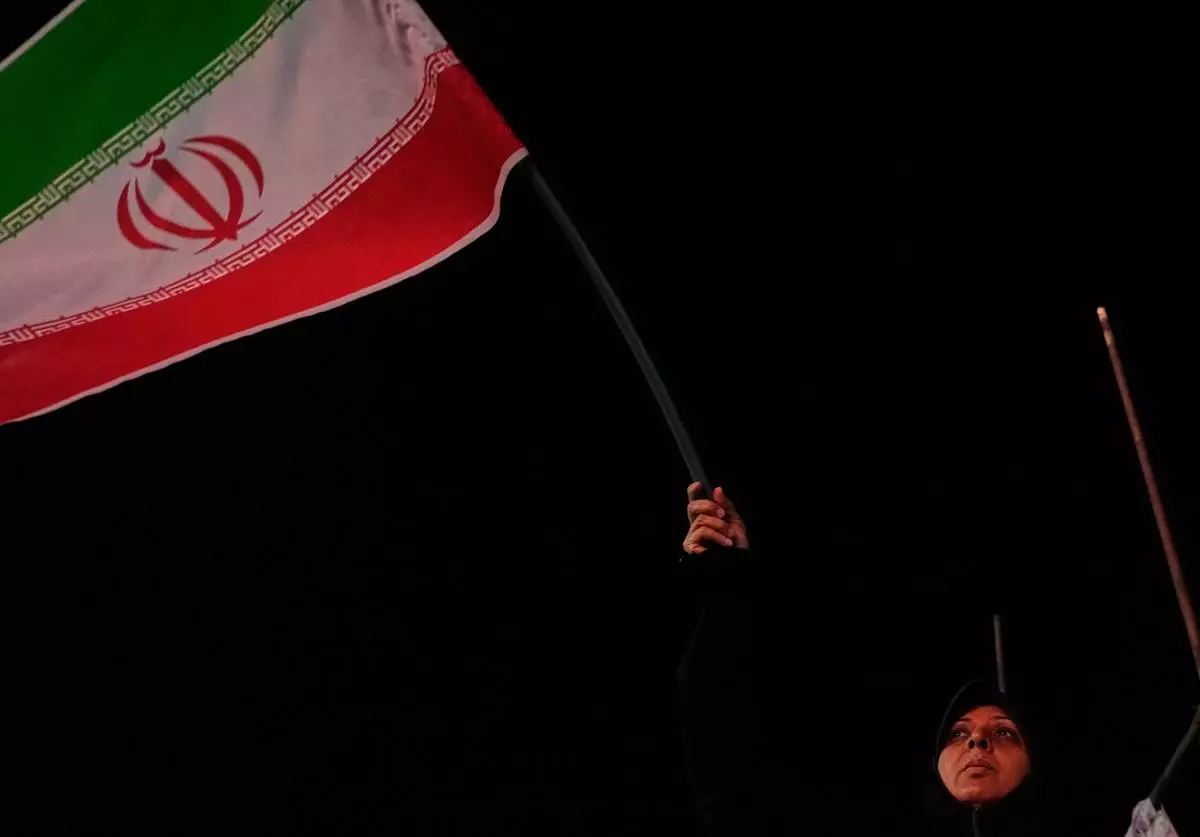
An Iranian pro-government demonstrator waves her country's flag in a gathering at a square in Tehran, Iran, Tuesday, July 28, 2026. (AP Photo/Vahid Salemi)
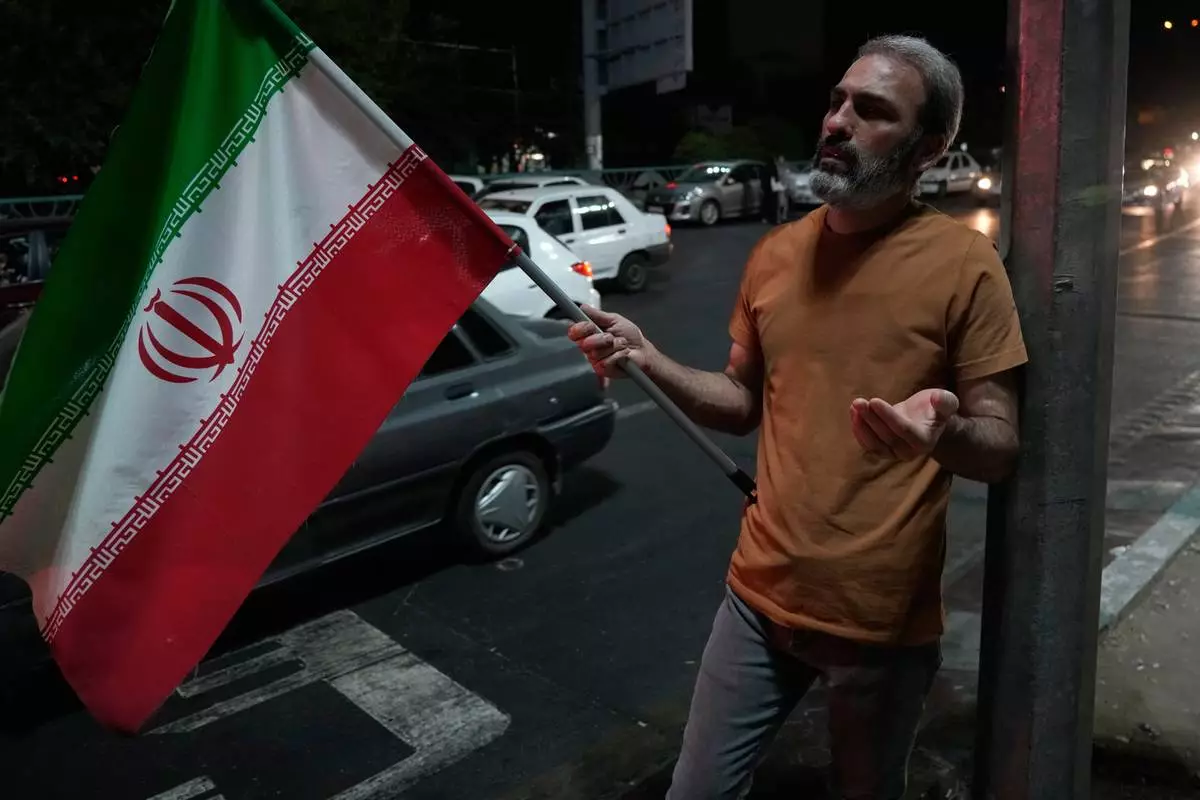
A demonstrator prays as he holds an Iranian flag in a pro-government gathering at a square in Tehran, Iran, Tuesday, July 28, 2026. (AP Photo/Vahid Salemi)
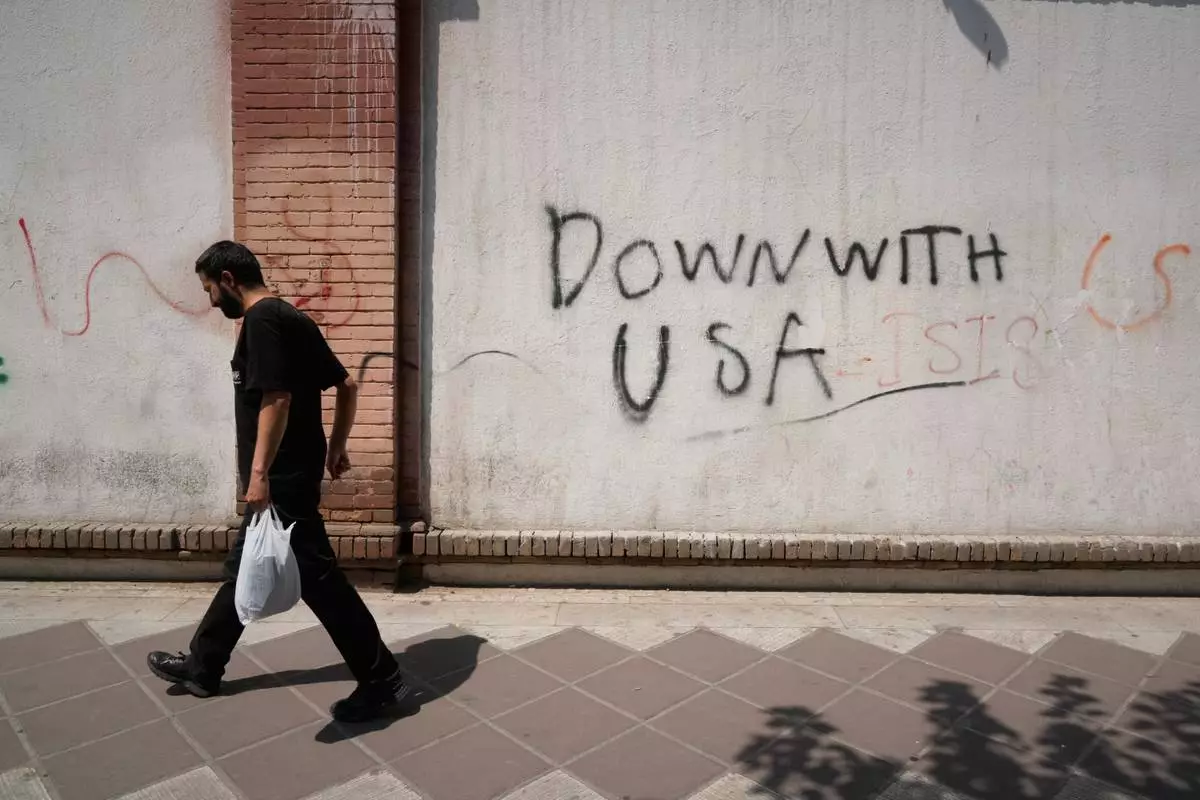
A man walks past anti-U.S. graffiti on the wall of the British Embassy in Tehran, Iran, Monday, July 27, 2026. (AP Photo/Vahid Salemi)
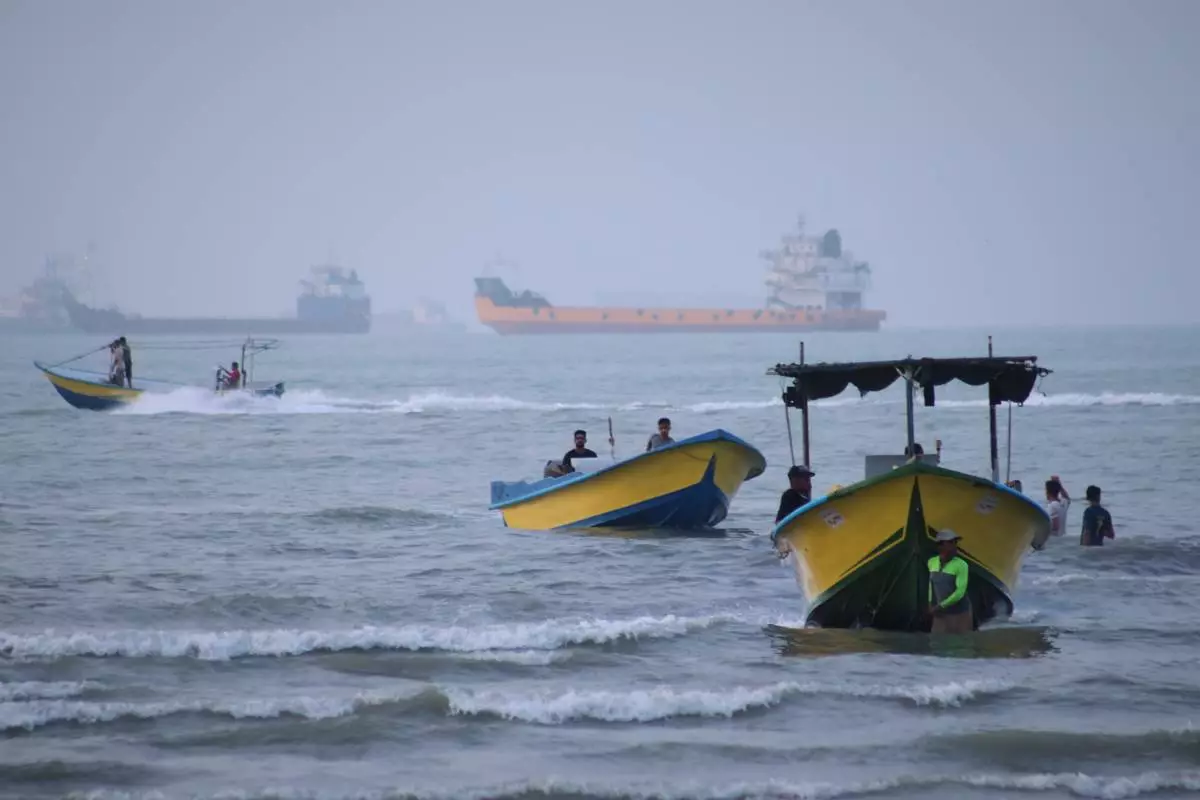
Small boats line the shore as cargo ships and other commercial vessels appear anchored in the Strait of Hormuz off Bandar Abbas, Iran, Monday, July 27, 2026. (Razieh Poudat/ISNA via AP)
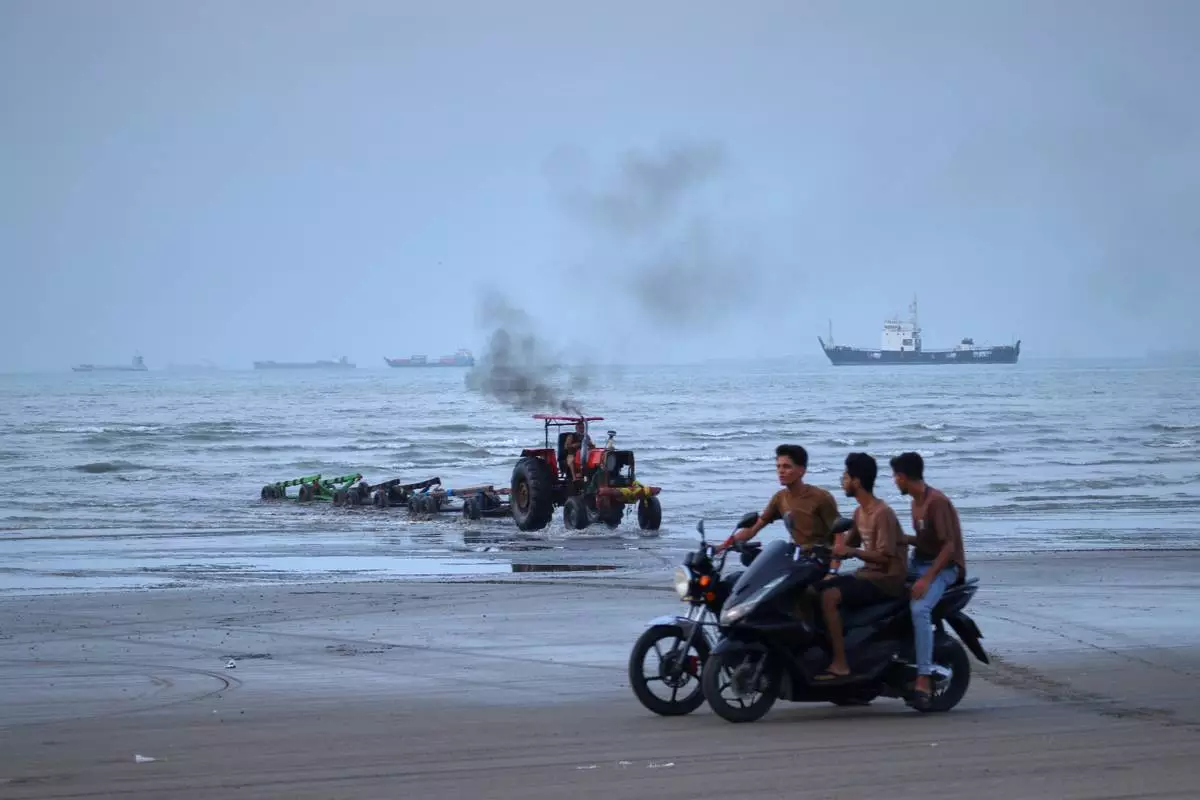
Young men ride motorcycles along the shore as a tractor pulls equipment from the water and commercial vessels appear anchored in the Strait of Hormuz off Bandar Abbas, Iran, Monday, July 27, 2026. (Razieh Poudat/ISNA via AP)