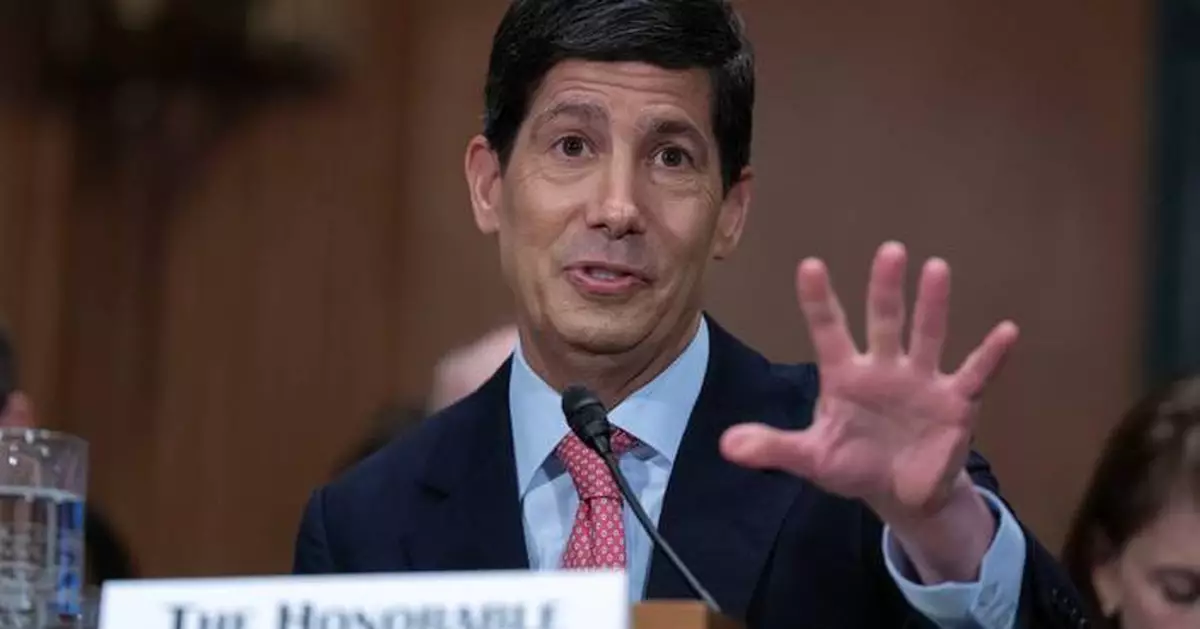
WASHINGTON (AP) — Federal Reserve policymakers are losing patience with inflation, but they may not be ready to turn their frustration into action -- not this week anyway.
Meeting in Washington Tuesday and Wednesday, the Fed is expected to keep its benchmark interest rate unchanged. Members of the central bank’s rate-setting committee may not be so reluctant to act when they gather again next Sept. 15-16.
Inflation has been stuck above the Fed's 2% target for more than five years. New Fed Chair Kevin Warsh told Congress earlier this month that he had “no tolerance’’ for elevated inflation. Warsh is presiding over his second policy meeting this week.
Fed watchers Joseph Egelhof and Guneet Dhingra at BNP Paribas Securities say it’s possible Warsh’s central bank will “release the kraken’’ with a “shock rate hike’’ this week; more likely, they wrote in a commentary, policymakers will hold off, reluctant to risk disrupting financial markets that aren’t expecting a rate increase yet.
Policymakers may also want to see more economic data: On Thursday, the Commerce Department delivers the first look at April-June economic growth and issues the Fed’s preferred inflation measure – the personal consumption expenditures (PCE) price index – for June.
Overall, only 29% of Wall Street traders predict that the Fed will raise rates this week. But 76% foresee a rate hike in September. A month ago, only 59% of traders expected a September rate increase, according to the CME FedWatch tool.
“Policymakers’ patience with high and persistent inflation is broadly exhausted, meaning there is a significant risk’’ of a rate hike in September, Egelhof and Dhingra wrote.
Casting uncertainty over the Fed’s decision-making is the Iran war. The price of oil briefly blasted past $100 a barrel last week on intensifying fighting. It’s since settled down on hopes the United States and Iran can find some way to reduce tensions.
After the U.S. and Israel attacks on Feb. 28, Iran shut down the Strait of Hormuz – through which a fifth of the world’s oil and natural gas pass. That caused the greatest disruption in oil supplies in history and sent energy prices surging. They’ve since bobbed up and down depending on the ever-changing state of the conflict and negotiations to de-escalate it.
Now Iranian-backed Houthi rebels from Yemen are attacking shipping in the Red Sea, attempting to stop tankers carrying Saudi Arabian oil from passing through the Bab el-Mandeb Strait.
The uncertainty puts the Fed’s inflation fighters in a bind.
“Sure, it is possible that the latest rise in prices is a transient blip that will reverse in a heartbeat. Then again, it seems equally that the war with Iran will get worse, that the Strait of Hormuz and Bab al-Mandab will remain blockaded for months or longer, and that energy prices will continue to trend up,’’ Carl Weinberg, chief economist at High Frequency Economics, wrote in a commentary.
“Should the (Fed) set monetary conditions on a hope that oil prices will reverse course and stay low ... or should a central bank eschew wishful thinking and do its job of minimizing the probabilities that inflation will exceed target?’’
Inflation has exceeded the Fed’s 2% target since early 2021 when the U.S. economy overheated as it roared back from COVID-19 lockdowns. Inflation peaked at just over 9% in mid-2022 and began to drop in the face of 11 rate hikes by the Fed in 2022 and 2023. But progress has more or less stalled.
Besides the Iran war, other factors adding to inflation pressure are President Donald Trump’s tariffs on foreign goods and a surge of investment in data centers to power artificial intelligence, which is driving up the cost of computer chips and equipment and electricity.
So-called core inflation – which excludes volatile food and energy prices – cooled in June, partly because apartment rents aren’t rising as fast as they had been. And a temporary drop in gasoline prices last month also helped contain overall inflation.
But several Fed policymakers have been arguing that the Fed will have to raise rates to return inflation to the 2% target.
“Sternly staring at inflation until it melts before our withering gaze is not an option,’’ Christopher Waller, an influential member of the Fed’s governing board, said in a speech this month.
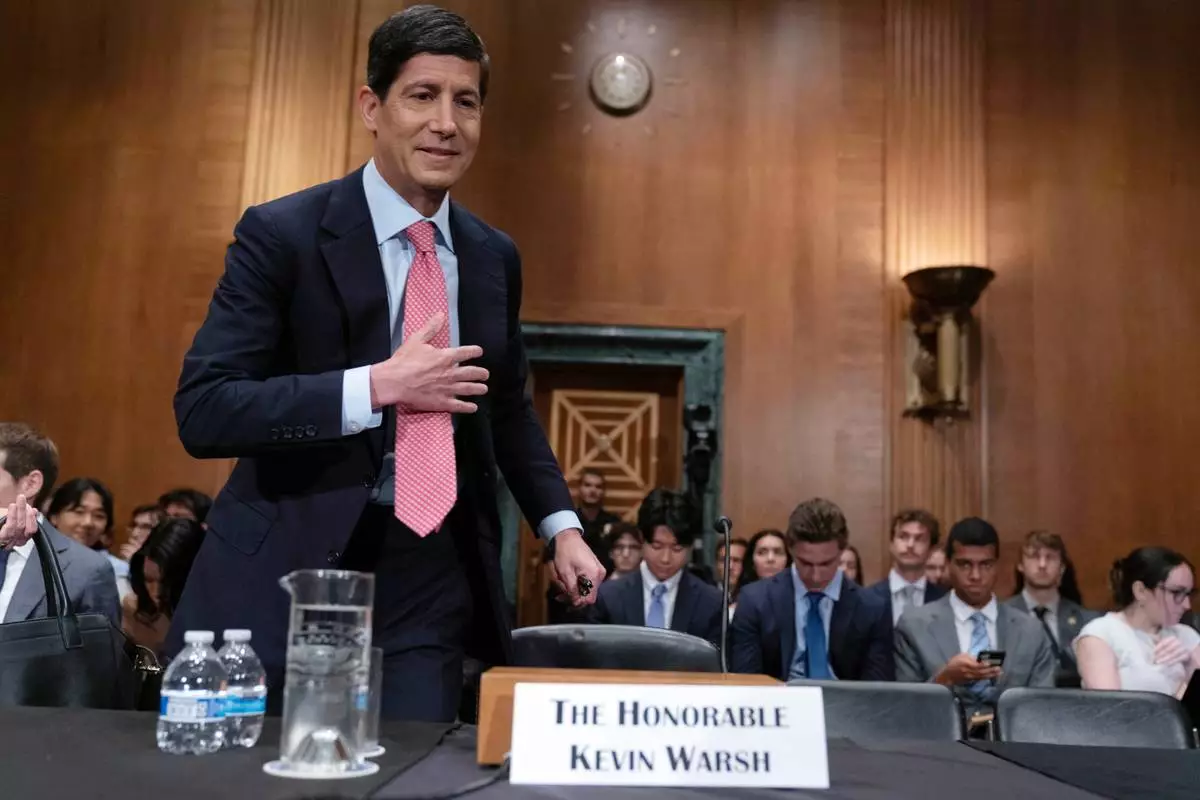
Federal Reserve Chairman Kevin Warsh arrives to testiy before the Senate Banking, Housing and Urban Affairs Committee to deliver the semiannual monetary policy report to Congress, on Capitol Hill, Wednesday, July 15, 2026, in Washington. (AP Photo/Jose Luis Magana)
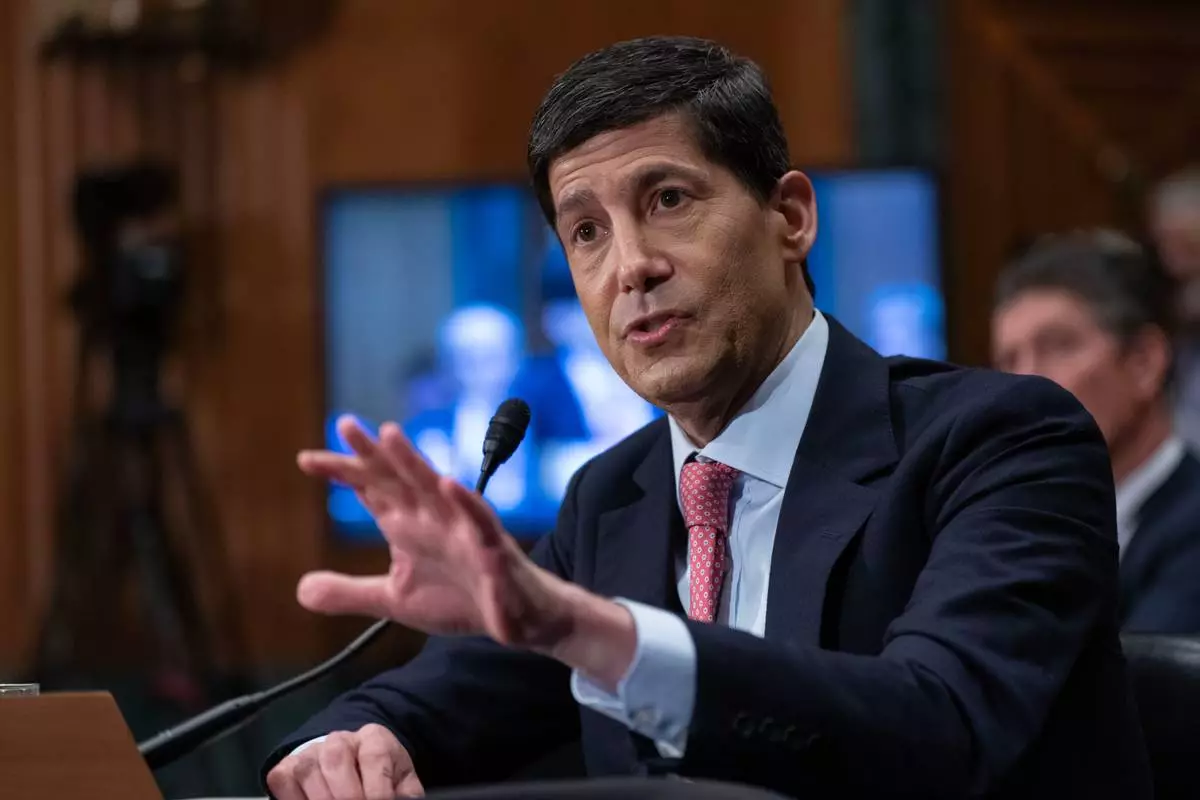
Federal Reserve Chairman Kevin Warsh testifies before the Senate Banking, Housing and Urban Affairs Committee to deliver the semiannual monetary policy report to congress, on Capitol Hill, Wednesday, July 15, 2026, in Washington. (AP Photo/Jose Luis Magana)
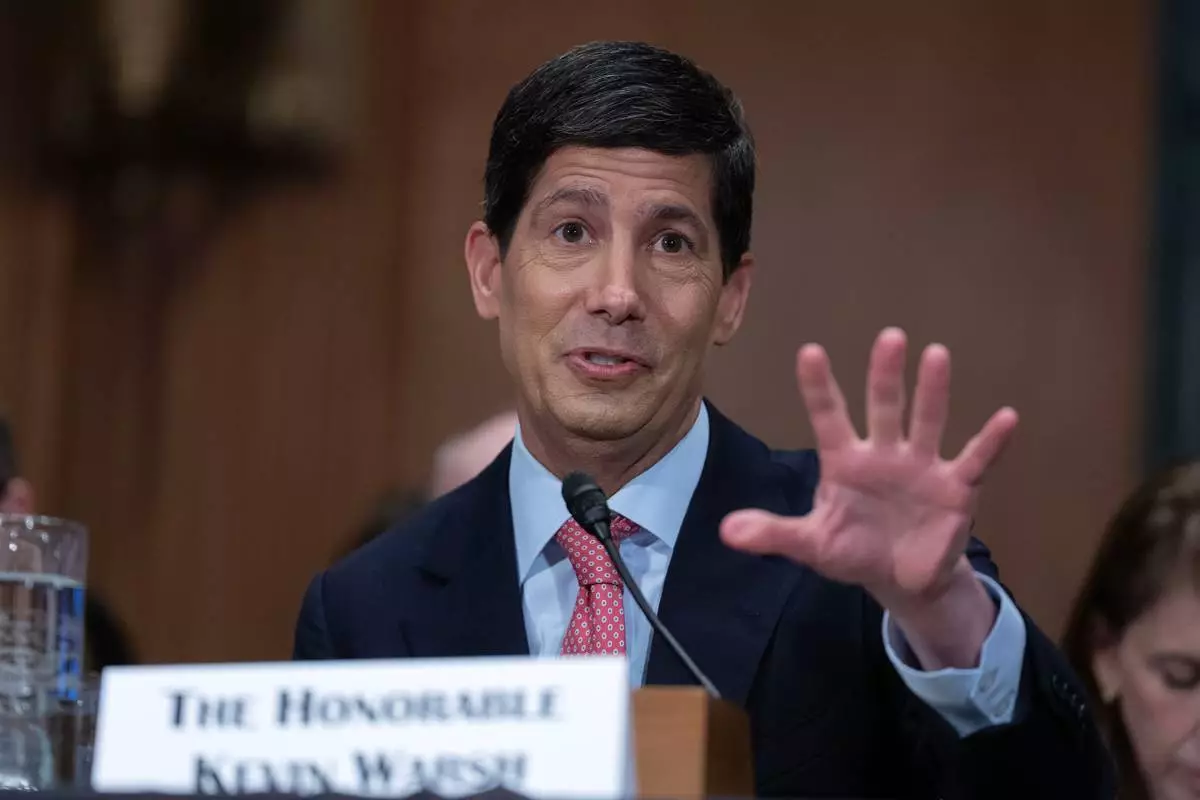
Federal Reserve Chairman Kevin Warsh testifies before the Senate Banking, Housing and Urban Affairs Committee to deliver the semiannual monetary policy report to congress, on Capitol Hill, Wednesday, July 15, 2026, in Washington. (AP Photo/Jose Luis Magana)df