Japanese Prime Minister Sanae Takaichi said Wednesday that the government had confirmed 13 people died after a powerful earthquake struck the southwestern prefecture of Kumamoto the previous day.
Takaichi told reporters at the Prime Minister's Office that, as of 08:30 local time, the death toll from the earthquake stood at 13, including deaths still under investigation to determine whether they were related to the 7.1-magnitude tremor.
Takaichi said Tuesday's earthquake, which struck Kumamoto Prefecture at 16:27 on Tuesday, had caused extensive damage, including casualties, collapsed buildings, fires and damaged roads.
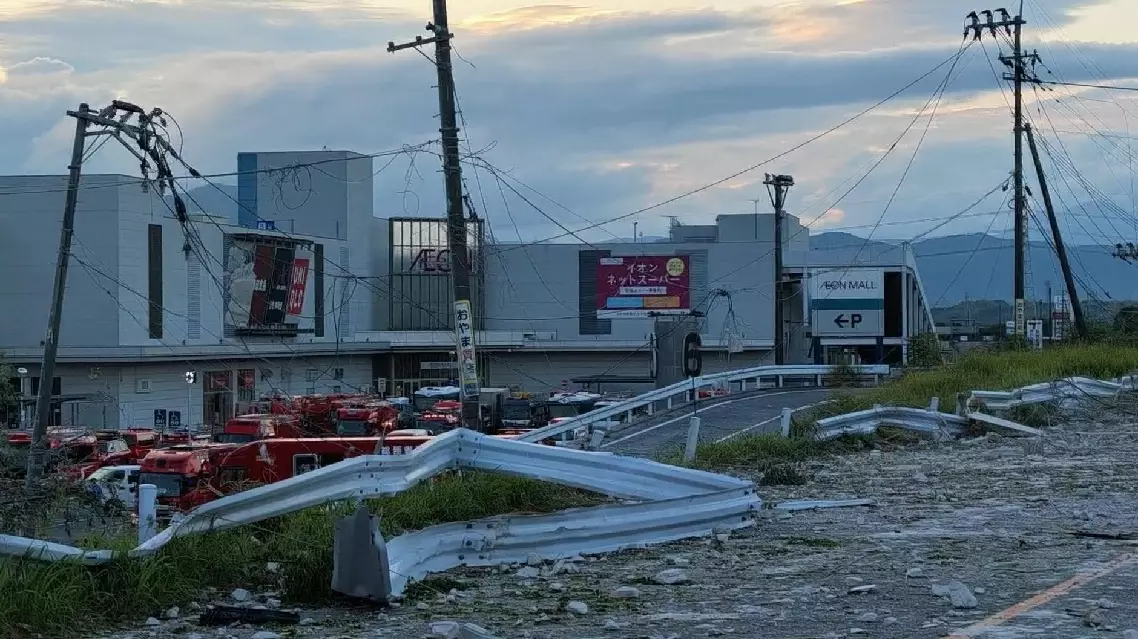
Two women were killed and one person was left in cardiac arrest following an explosion at AEON Mall Kumamoto, a major shopping complex in Kashima Town in the region, in the wake of the powerful earthquake, local media reported early Wednesday.
According to the Kumamoto prefectural government, eight people had been rescued from inside the mall by 04:00 Wednesday, public broadcaster NHK reported. Five people sustained non-life-threatening injuries.
Citing officials, Kyodo News Agency reported that a gas leak was the suspected cause of the blast.
Power outages affected approximately 36,290 households across Kumamoto Prefecture as of around 05:00 on Wednesday, according to Kyushu Electric Power Company.
The Ministry of Land, Infrastructure, Transport and Tourism reported that roughly 140,000 households were without water supply. The ministry has requested water tanker deployments from the Japan Water Works Association.
Gas services were also disrupted, with Kyushu Gas Company suspending supply to about 9,000 households in Yatsushiro City, and Saibu Gas Company suspending delivery to approximately 500 households in parts of Kumamoto City's Minami and Higashi wards.
The Kyushu Railway Company suspended all conventional rail and shinkansen services following the quake on Tuesday. Thirteen people were injured at stations or aboard trains. As of 22:00 on Tuesday, four shinkansen and six conventional trains remained stranded on the tracks, with passengers waiting to be evacuated. Kumamoto Airport reopened its runway that evening, though all domestic flights for the day were canceled.
The Japan Meteorological Agency has recorded more than 100 aftershocks in Kumamoto Prefecture since the main quake. The relentlessly repeated tremors have driven many residents outdoors for safety.
At an outdoor parking lot serving as a temporary refuge, displaced residents said that power outages and fears of stronger quakes made staying indoors too risky.
"When the earthquake hit, I happened to be at a hardware and home furnishing store. A lot of merchandise had toppled over, and I was truly startled," said a local.
"This earthquake was really intense, way stronger than the ones I've felt in the past. We've lost electricity at home, and a lot of stuff inside has been shaken over," said another local.
"My house has fallen down -- it's not leveled to the ground, but it's in shambles inside and out. Every 20 or 30 minutes, there's a pretty strong aftershock, so there's no way we can stay inside. That's why everyone's just sleeping in their cars for the night," a third local said.
Kumamoto earthquake kills at least 13: prime minister