CINCINNATI--(BUSINESS WIRE)--Jul 29, 2026--
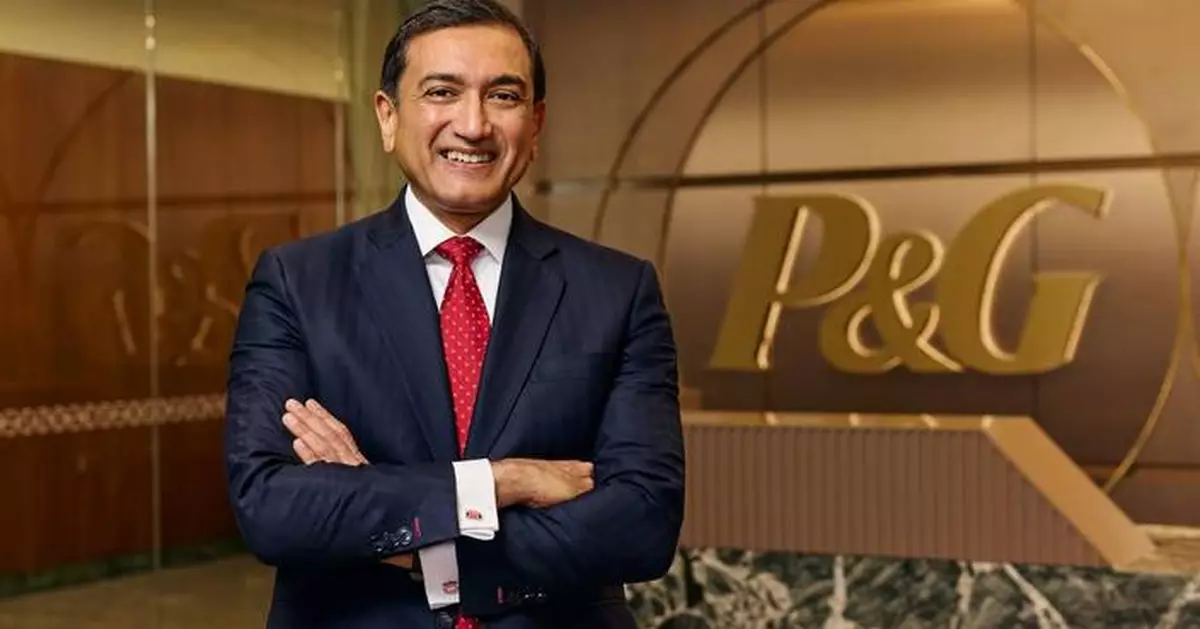
The Procter & Gamble Company (NYSE:PG) today announced that Shailesh Jejurikar has been appointed Chairman of the Board, effective August 1, 2026. Jejurikar assumes the position in addition to his role as President and Chief Executive Officer. Jon Moeller, Executive Chairman, will retire from the Board effective July 31, 2026, and from P&G effective August 14, 2026.
This press release features multimedia. View the full release here: https://www.businesswire.com/news/home/20260729911506/en/
“I want to thank Jon for his many years of tireless and steady leadership at P&G, having served in key roles including Executive Chairman, Chief Executive Officer, Chief Operating Officer, and Chief Financial Officer throughout his 38 years of dedicated service to the company,” said Mr. Jejurikar. “Jon’s strategic vision has been instrumental in shaping the company P&G is today, and we have benefited from his unwavering courage and his profound care for this institution and its people.”
Mr. Jejurikar joined P&G in 1989. He has been a member of P&G’s global leadership team since 2014, holding various senior leadership roles across categories, sectors and regions. He has helped build several of P&G’s core businesses, including global Fabric Care and Home Care, in regions such as North America, Europe, Asia and Latin America. He has also helped lead the development of the Company’s renewed strategies and operational results across the Supply Chain, Information Technology and Global Business Services.
About Procter & Gamble
P&G serves consumers around the world with one of the strongest portfolios of trusted, quality, leadership brands, including Always®, Ambi Pur®, Ariel®, Bounty®, Charmin®, Crest®, Dawn®, Downy®, Fairy®, Febreze®, Gain®, Gillette®, Head & Shoulders®, Lenor®, Olay®, Oral-B®, Pampers®, Pantene®, SK-II®, Tide®, Vicks®, and Whisper®. The P&G community includes operations in approximately 70 countries worldwide. Please visit https://www.pg.com for the latest news and information about P&G and its brands. For other P&G news, visit us at https://www.pg.com/news.
Forward-Looking Statements
Certain statements in this release, other than purely historical information, including estimates, projections, statements relating to our business plans, objectives and expected operating results, and the assumptions upon which those statements are based, are "forward-looking statements" within the meaning of the Private Securities Litigation Reform Act of 1995, Section 27A of the Securities Act of 1933 and Section 21E of the Securities Exchange Act of 1934. These forward-looking statements generally are identified by the words "believe," "project," "expect," "anticipate," "estimate," "intend," "strategy," "future," "opportunity," "plan," "may," "should," "will," "would," "will be," "will continue," "will likely result" and similar expressions. Forward-looking statements are based on current expectations and assumptions, which are subject to risks and uncertainties that may cause results to differ materially from those expressed or implied in the forward-looking statements. We undertake no obligation to update or revise publicly any forward-looking statements, whether because of new information, future events or otherwise, except to the extent required by law.
Risks and uncertainties to which our forward-looking statements are subject include, without limitation: (1) the ability to successfully manage global financial risks, including foreign currency fluctuations, changes in global interest rates and rate differentials, currency exchange, pricing controls or tariffs; (2) the ability to successfully manage local, regional or global economic volatility, including reduced market growth rates, and to generate sufficient income and cash flow to allow the Company to effect the expected share repurchases and dividend payments; (3) the ability to successfully manage uncertainties related to changing political and geopolitical conditions and potential implications such as exchange rate fluctuations, market contraction, boycotts, variability and unpredictability in trade relations, sanctions, tariffs or other trade controls; (4) the ability to manage disruptions in credit markets or to our banking partners or changes to our credit rating; (5) the ability to maintain key manufacturing and supply arrangements (including execution of supply chain optimizations and sole supplier and sole manufacturing plant arrangements) and to manage disruption of business due to various factors, including ones outside of our control, such as natural disasters, conflicts or acts of war (such as the conflict in the Middle East), terrorism or disease outbreaks; (6) the ability to successfully manage cost fluctuations and pressures, including prices of commodities and raw materials and costs of labor, transportation, energy, pension and healthcare; (7) the ability to compete with our local and global competitors in new and existing sales channels, including by successfully responding to competitive factors such as prices, promotional incentives and trade terms for products; (8) the ability to manage and maintain key customer relationships; (9) the ability to protect our reputation and brand equity by successfully managing real or perceived issues, including concerns about safety, quality, ingredients, efficacy, packaging content, supply chain practices, social or environmental practices or similar matters that may arise; (10) the ability to successfully manage the financial, legal, reputational and operational risk associated with third-party relationships, such as our suppliers, contract manufacturers, distributors, contractors and external business partners; (11) the ability to rely on and maintain key company and third-party information and operational technology systems, networks and services and maintain the security and functionality of such systems, networks and services and the data contained therein; (12) the ability to successfully manage the demand, supply and operational challenges, as well as governmental responses or mandates, associated with a disease outbreak, including epidemics, pandemics or similar widespread public health concerns; (13) the ability to stay on the leading edge of innovation, obtain necessary intellectual property protections and successfully respond to changing consumer habits, evolving digital marketing and selling platform requirements and technological advances attained by, and patents granted to, competitors; (14) the ability to successfully manage our ongoing acquisition, divestiture and joint venture activities, in each case to achieve the Company’s overall business strategy and financial objectives, without impacting the delivery of base business objectives; (15) the ability to successfully achieve productivity improvements and cost savings and manage ongoing organizational changes while successfully identifying, developing and retaining key employees, including in key growth markets where the availability of skilled or experienced employees may be limited; (16) the ability to successfully manage current and expanding regulatory and legal requirements and matters (including, without limitation, those laws, regulations, policies and related interpretations involving product liability, product and packaging composition, manufacturing processes, intellectual property, labor and employment, antitrust, privacy, cybersecurity, data protection and data transfers, artificial intelligence, tax, the environment, due diligence, risk oversight, accounting and financial reporting) and to resolve new and pending matters within current estimates; (17) the ability to manage changes in applicable tax laws and regulations; and (18) the ability to continue delivering progress towards our environmental sustainability ambitions. For additional information concerning factors that could cause actual results and events to differ materially from those projected herein, please refer to our most recent 10-K, 10-Q and 8-K reports.
Category: PG-IR

Shailesh G. Jejurika, President and Chief Executive Officer