Skip to Content Facebook Feature Image

Lebanese banker faces possible arrest at home after dining with Netanyahu

News

Lebanese banker faces possible arrest at home after dining with Netanyahu
News

News

Lebanese banker faces possible arrest at home after dining with Netanyahu

2026-07-30 05:16 Last Updated At:05:20

BEIRUT (AP) — A Lebanese judge issued an order Wednesday that could lead to the arrest of prominent banker Antoun Sehnaoui if he returns to Lebanon over allegations of collaboration with Israel and violating laws prohibiting contact with Israelis, state media reported.

The order came days after Sehnaoui dined in Washington with Israeli Prime Minister Benjamin Netanyahu.

Judge Ahmad Rami al-Hajj of the Court of Cassation issued a 30-day notice directing security forces to locate and question Sehnaoui. The banker is in the United States, but the order could result in his detention upon his return to Lebanon.

Twenty Lebanese lawyers had filed a complaint earlier Wednesday with the public prosecutor's office in Beirut over Sehnaoui's meeting with Netanyahu.

Lebanon and Israel have been holding U.S.-backed direct talks for the first time in decades over the past three months, seeking an end to the latest fighting between Israel and the Iranian-backed Hezbollah militant group in southern Lebanon.

Lebanon’s laws prevent its citizens from having contact with Israelis — the countries remain in a state of war since Israel was established in 1948 — and violators could face prison terms.

The conflict reignited in March, two days after Israel and the U.S. attacked Iran, when Hezbollah fired at Israel and Israel responded with airstrikes and ground forces. More than 4,000 people in Lebanon have been killed, and Israel still occupies dozens of villages and towns. The countries recently reached a framework agreement.

Axios reporter Barak Ravid posted a photo on X of Sehnaoui sitting at a restaurant table with Netanyahu and his wife, Sara. Ravid wrote that Sehnaoui and former U.S. envoy Morgan Ortagus hosted a dinner Monday in memory of the late Sen. Lindsey Graham that was attended by Netanyahu and U.S. officials.

A Sehnaoui-linked website, This is Beirut, also reported details of what it called the “special dinner.”

Sehnaoui’s lawyer in Beirut did not immediately respond to a request for comment.

State-run National News Agency reported late Wednesday that al-Hajj's decision came after the Technical Information Office determined the photo was authentic and had not been altered, manipulated digitally or generated using artificial intelligence.

Four judicial officials said that after 30 days, the order issued by al-Hajj will be closed and transferred to the country's Military Court for it to issue an arrest warrant for Sehnaoui. The officials spoke on condition of anonymity in line with regulations.

The complaint by the 20 lawyers said Sehnaoui committed “the crimes of contacting and dealing with the Israeli enemy, violating the Israel boycott law, the crime of treason and state security crimes.”

Two of the Lebanese lawyers who filed the complaint told The Associated Press that the Sehnaoui-Netanyahu meeting came as Israel’s military is still carrying out attacks on Lebanon.

One of the lawyers, Hassan Bazzi, said Sehnaoui violated the law and offended national sentiments. Bazzi said the lawyers hope the prosecutor’s office performs its duties “effectively and swiftly.”

A Lebanese foreign ministry official refused to comment when contacted by the AP.

Sehnaoui, who has been mostly based in the U.S. in recent years, has several businesses in Lebanon and abroad in sectors including banking, media and the film industry.

Like other senior bankers, Sehnaoui was harshly criticized following Lebanon's historic economic meltdown in 2019, when most people lost access to their money. The economic crisis was described by the World Bank as among the worst in the world since the 1850s.

Sehnaoui's meeting with the Israeli leader occurred as some in Lebanon have called for abolishing a 1955 law that bans dealing with Israel or having contacts with Israelis and punishes offenders with up to 10 years in jail.
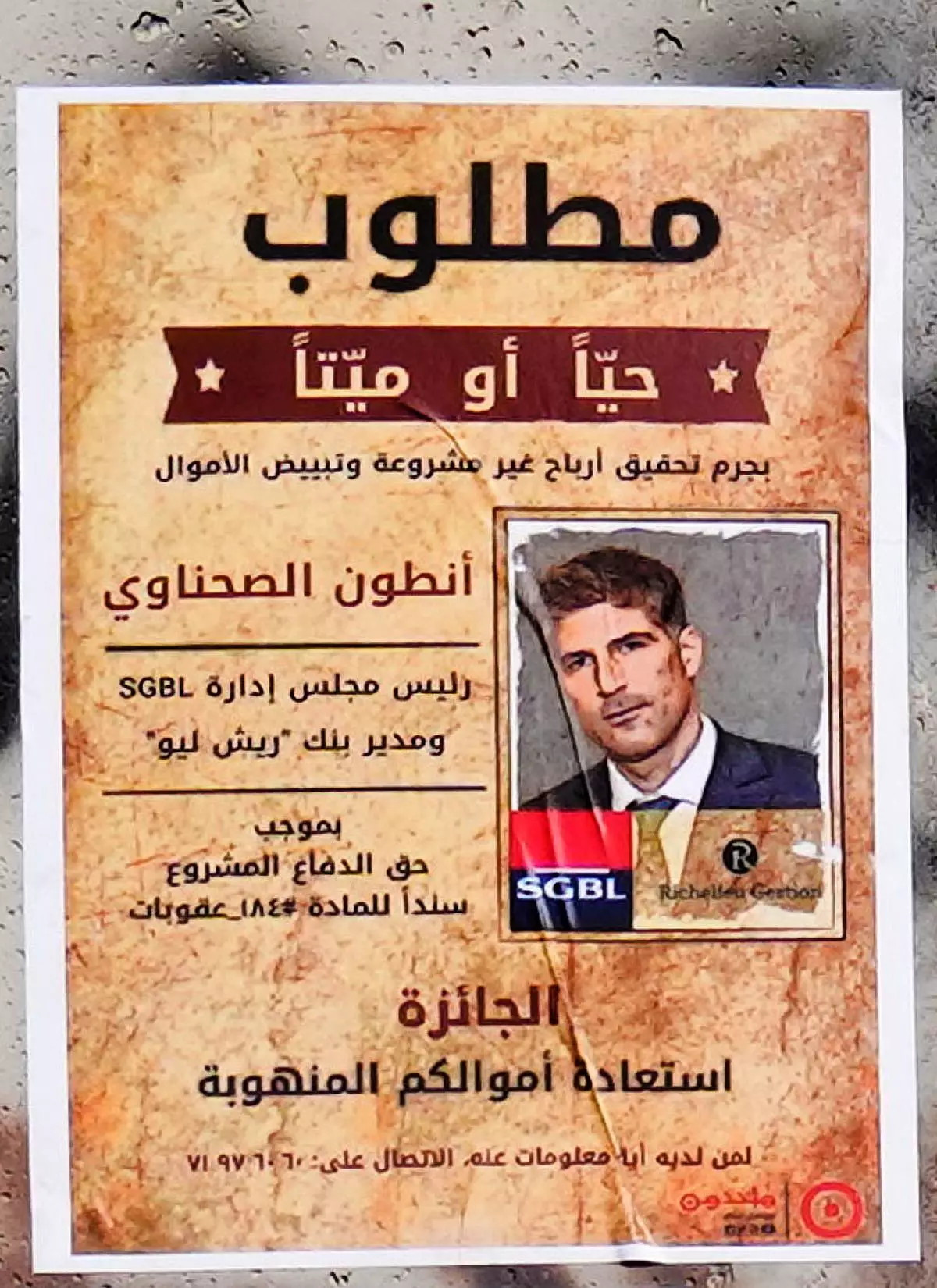
An Arabic mock "wanted" poster of a Lebanese Chairman bank Antoun Sehnaoui, plastered by depositors protesters outside the Lebanese Central Bank, in Beirut, Lebanon, Friday, Jan. 19, 2024. More than a dozen Lebanese lawyers on Wednesday, July 29, 2026, filed a complaint at the prosecutors' office in Beirut on Wednesday against a prominent local banker, saying he violated the country's laws by meeting with Israeli Prime Minister Benjamin Netanyahu in Washington this week. (AP Photo/Hussein Malla)
An Arabic mock "wanted" poster of a Lebanese Chairman bank Antoun Sehnaoui, plastered by depositors protesters outside the Lebanese Central Bank, in Beirut, Lebanon, Friday, Jan. 19, 2024. More than a dozen Lebanese lawyers on Wednesday, July 29, 2026, filed a complaint at the prosecutors' office in Beirut on Wednesday against a prominent local banker, saying he violated the country's laws by meeting with Israeli Prime Minister Benjamin Netanyahu in Washington this week. (AP Photo/Hussein Malla)

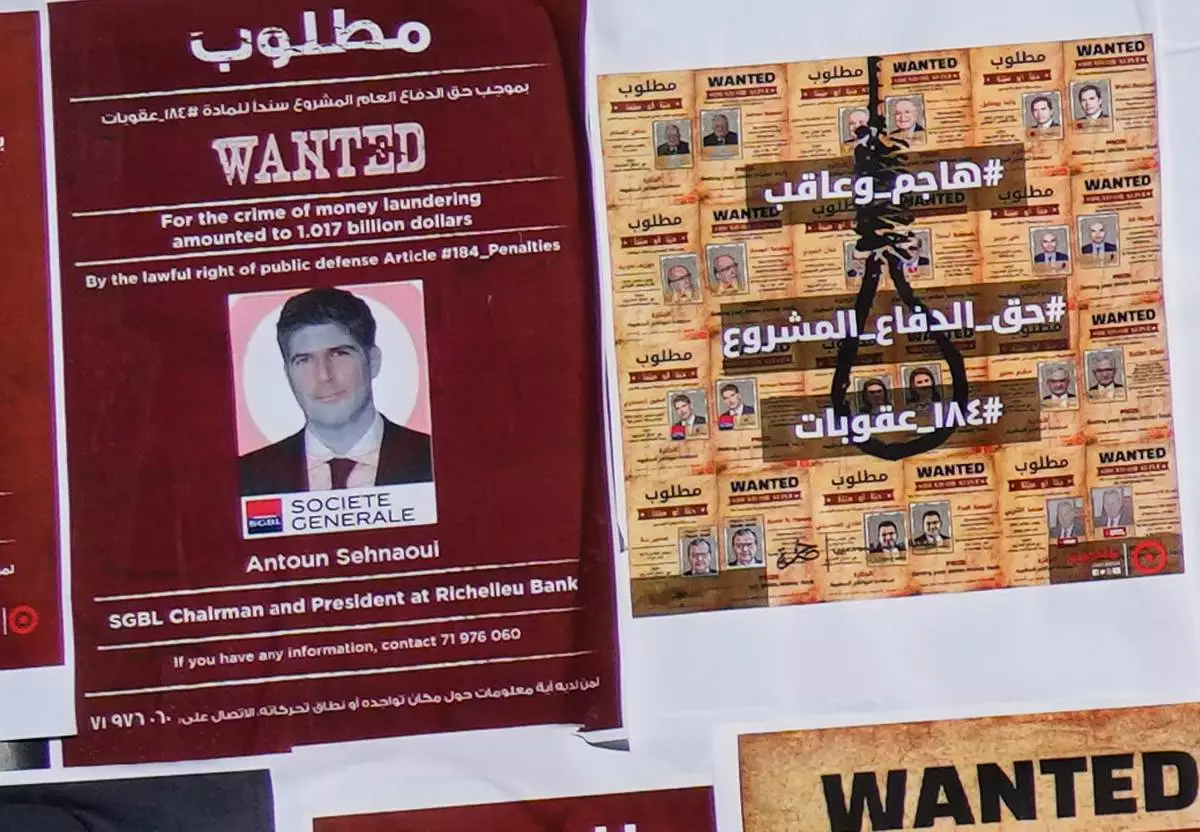
A mock "wanted" poster of Lebanese bank owner Antoun Sehnaoui, left, plastered by depositors protesters outside the Lebanese Central Bank, in Beirut, Lebanon, Friday, Jan. 19, 2024. More than a dozen Lebanese lawyers on Wednesday, July 29, 2026, filed a complaint at the prosecutors' office in Beirut on Wednesday against a prominent local banker, saying he violated the country's laws by meeting with Israeli Prime Minister Benjamin Netanyahu in Washington this week. (AP Photo/Hussein Malla)
A mock "wanted" poster of Lebanese bank owner Antoun Sehnaoui, left, plastered by depositors protesters outside the Lebanese Central Bank, in Beirut, Lebanon, Friday, Jan. 19, 2024. More than a dozen Lebanese lawyers on Wednesday, July 29, 2026, filed a complaint at the prosecutors' office in Beirut on Wednesday against a prominent local banker, saying he violated the country's laws by meeting with Israeli Prime Minister Benjamin Netanyahu in Washington this week. (AP Photo/Hussein Malla)
HAVANA (AP) — In an effort to fend off a mounting humanitarian crisis, Cuba on Wednesday eased up on longtime restrictions on private vendors and imports, opening up a sector firmly controlled by the Communist-led government.

The reforms would allow for the import and resale of some goods and medicines from other countries, loosen restrictions on oil extraction for foreign companies and implement other changes at a time when the country is plagued by medical and energy shortages.

While private enterprise has slowly opened in recent years, many sales on the country's informal market have long existed in a gray area — not technically legal but widely used by Cubans struggling to survive the day-to-day hardships.

The measures, which were approved by the parliament last month and went into effect on Wednesday, are expected to bring about a significant shift on the island, where the economy and industry have been strictly controlled by the government since the 1960s.

The reforms come as Cuba has been pushed to the brink by an oil blockade imposed by the United States in January. The move by the Trump administration, meant to put pressure on the government, worsened already crippling blackouts, cut workers off from public transport, crippled infrastructure and deepened shortages in medicine and food.

Last month, Cuban President Miguel Díaz-Canel said the reforms were necessary because the country “simply cannot continue on its current course.”

In total, the government said it was removing 46 of the 125 prohibitions it had on private industry, and relaxed 35 other regulations.

Still, many bans remain in place — tobacco production, long a staple of the Caribbean island, would remain in state hands. So would internet access, newspaper publishing and radio broadcasting.

The easing of restrictions appeared to target specific areas hardest hit by the ongoing crisis.

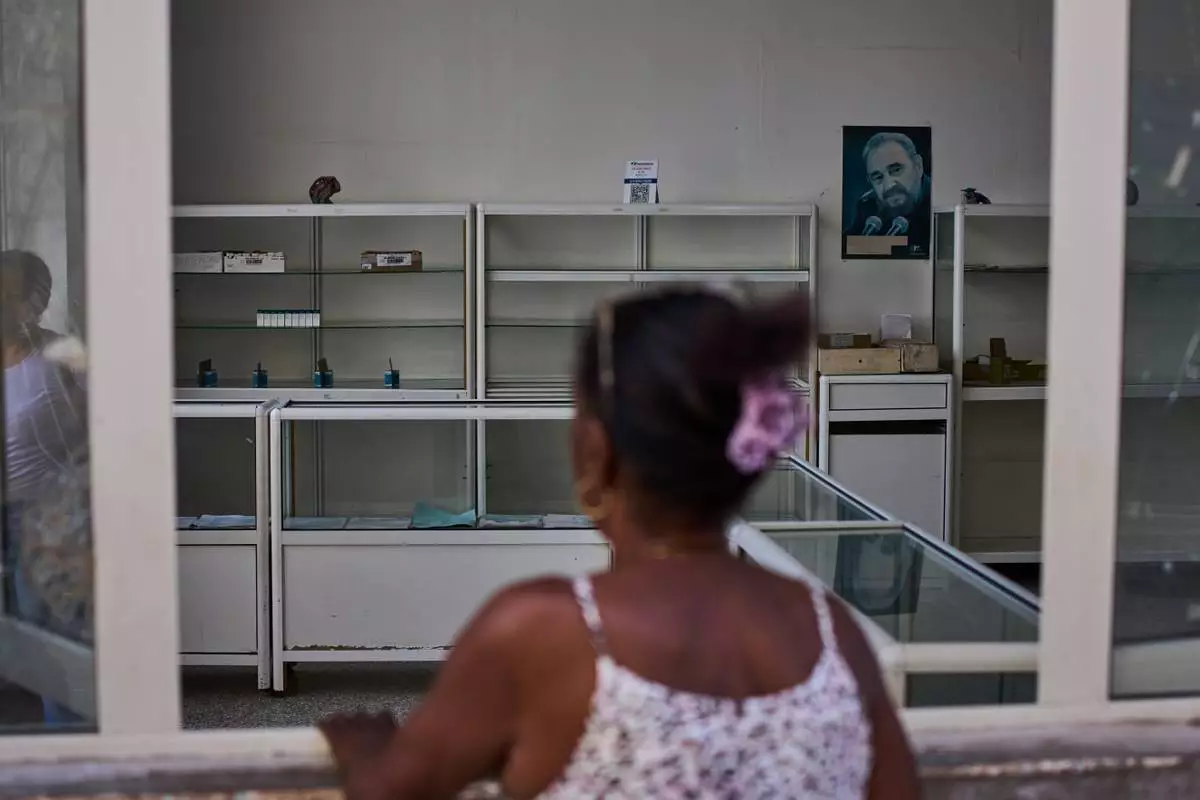
Medicines, largely purchased through massive groups on apps like Telegram and WhatsApp on the informal market, would now also be sold by private pharmacies. Shelves in state-owned pharmacies selling subsidized medicine are often empty.

Many welcomed the loosening of the restrictions.

Francisco Carbajal, a 71-year-old retiree who suffers from seizures, said it gives him hope things would improve.

“What I really want is that there are medications available, because I have diabetic neuropathy and carbamazepine hasn’t arrived at my pharmacy in a long time,” he said as he sat on a street in Havana, the capital. “Without it, I’m helpless, because I get epileptic seizures.”

The government also gave the green light for private care facilities for elderly Cubans — many young Cubans who would have traditionally cared for their aging relatives have migrated abroad.

The new measures would also make it easier to import electric vehicles, which are rapidly becoming a crucial alternative to get around the island where the public transport system has largely collapsed due to gasoline shortages.

Restrictions will also ease on Cuba's decaying oil sector, making it easier for foreign investors and private businesses.

Cuba’s government had already made moves to loosen restrictions on private industry over the last few decades.

Cubans were allowed to seek self-employment and in a massive shift in 2021 — after the tourism-driven economy was roiled by the coronavirus pandemic and a migratory flight from the island began to pick up — authorities allowed the creation of small businesses.

These latest reforms “truly allow and facilitate the participation of non-state economic actors in the country’s economy,” said Lázara Mercedes López Acea, president of the National Institute of Non-State Economic Actors, who presented the new regulations.

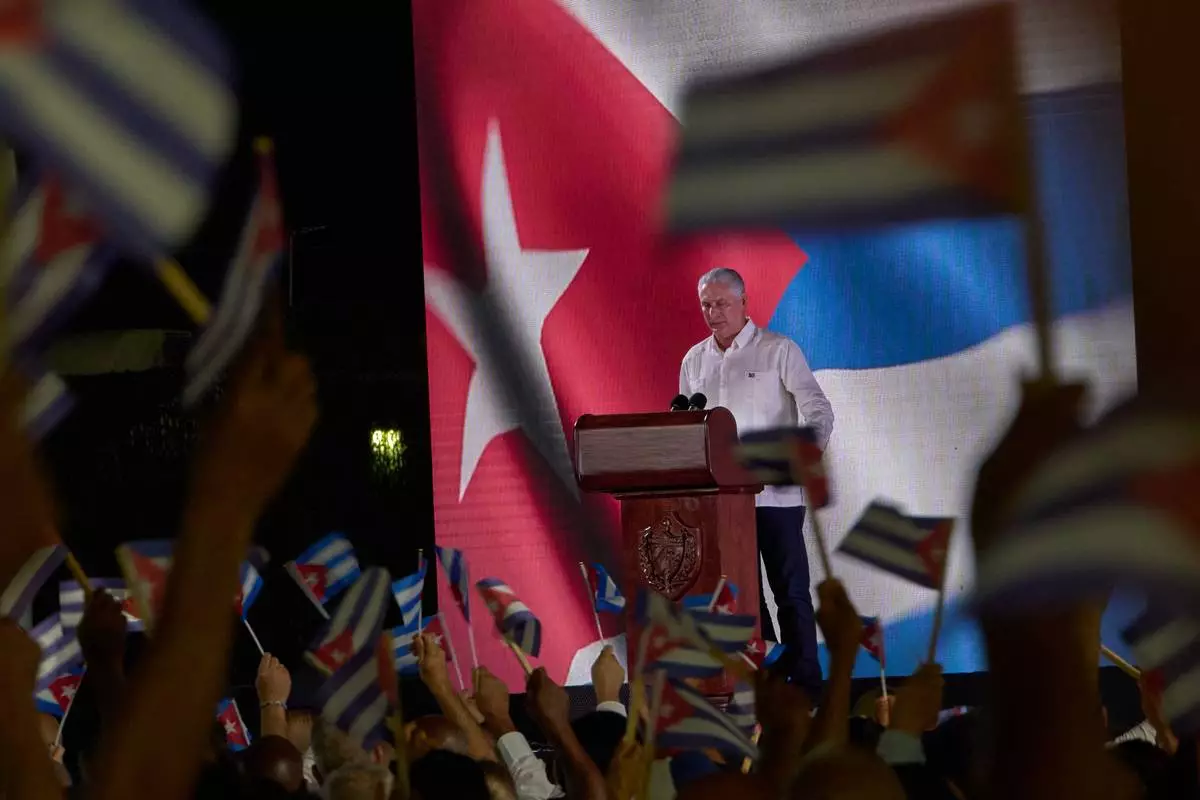
Cuban President Miguel Diaz-Canel, speaks to attendees during an event marking the 73th anniversary of the start of the Cuban Revolution in Pinar del Rio, Cuba, Sunday, July 26, 2026. (AP Photo/Ramon Espinosa)

Cuban President Miguel Diaz-Canel, speaks to attendees during an event marking the 73th anniversary of the start of the Cuban Revolution in Pinar del Rio, Cuba, Sunday, July 26, 2026. (AP Photo/Ramon Espinosa)

An image of Fidel Castro hangs on the wall of a state-run pharmacy where a woman asks for medication in Havana, Cuba, Wednesday, July 29, 2026. (AP Photo/Ramon Espinosa)

An image of Fidel Castro hangs on the wall of a state-run pharmacy where a woman asks for medication in Havana, Cuba, Wednesday, July 29, 2026. (AP Photo/Ramon Espinosa)

Recommended Articles