WASHINGTON (AP) — Senate negotiators worked Wednesday to resolve thorny differences with leaders of the Southeastern and Big Ten Conferences over revisions to a bill designed to regulate college sports that sponsors want a vote on before the chamber goes on summer break next week.
“Those conversations are ongoing,” said one of the bill's sponsors, Sen. Ted Cruz, R-Texas.
Cruz and co-sponsor Sen. Maria Cantwell, D-Wash., are pushing to bring the Protect College Sports Act to a vote before Aug. 7, the last day the Senate meets before going on break. Senators return for the second half of September, before breaking for all of October -- leaving little time remaining before the November midterms.
A pair of documents outlining concessions the lawmakers have made in the negotiations were headlined by a $20 million-plus “retention pool” that schools could use to keep players from leaving. It would amount to a doubling of the revenue-sharing “salary cap," which is currently set at $21.3 million for this school year.
The conferences are seeking answers on whether the increase in revenue share would impact rules governing third-party payments to players, the likes of which are largely blamed for spiraling roster costs.
There's also the question of whether such an increase would comport with the House settlement — the $2.8 billion lawsuit settlement that dictates rules around revenue sharing. Jeffrey Kessler, the plaintiffs' attorney, has said he would need to see the language before weighing in on whether it impacts the settlement.
Absent from the documents was any mention of rewrites regarding antitrust protection or preemption of state laws. Those have been core requests surrounding legislation from virtually all the conferences and NCAA since Congress began this process.
Earlier this month, the SEC and Big Ten put out a paper outlining 10 “Common Sense Improvements” for the PCSA. The first two— and three of the 10 — entries on their list dealt with those two issues.
Other topics have been addressed in the negotiations, including adding flexibility to requirements over how many Olympic and women's sports programs some schools should have and relaxing language over conference expansion to allow leagues to grow to up to 19 teams.
There has also been language designed to prohibit private equity investors from paying schools to form a super league, though the conferences could seek more refining to that language.
Pells reported from Denver.
AP college sports: https://apnews.com/hub/college-sports
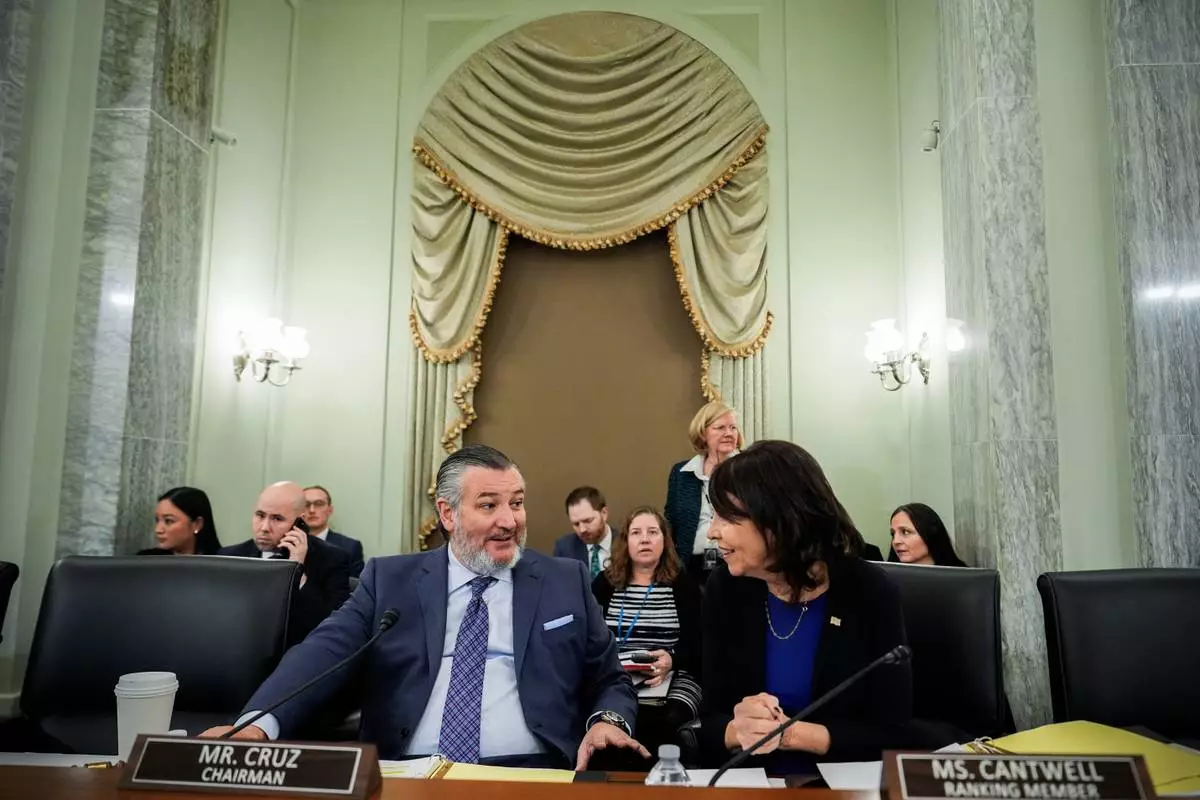
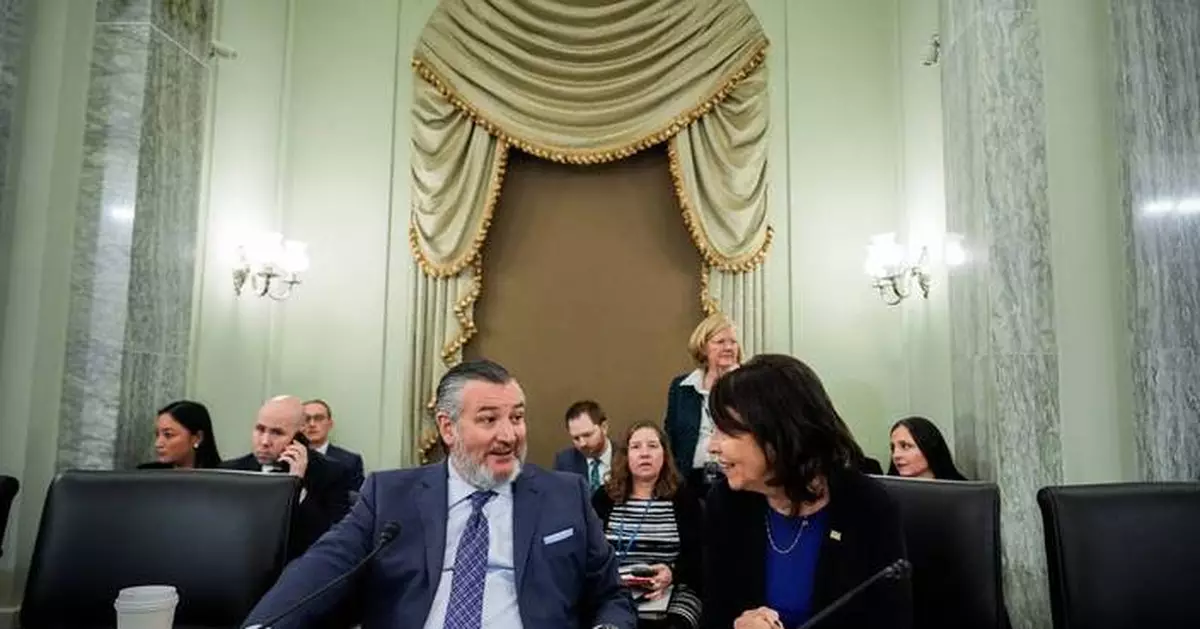
FILE - Sen. Ted Cruz, R-Texas, left, chairman of the Senate Commerce, Science and Transportation Committee, speaks with Sen. Maria Cantwell, D-Wash., right, before a hearing Wednesday, Nov. 19, 2025, on Capitol Hill in Washington. (AP Photo/Julia Demaree Nikhinson,File)
NEW YORK (AP) — A man was sentenced Wednesday to six months and a week behind bars for ramming his car into the Chabad Lubavitch world headquarters, the Jewish institution in New York where his lawyer said he'd been trying to win acceptance as he struggled with psychological issues.
Dan Sohail, 36, was sentenced in Brooklyn federal court by a judge who declined a recommendation by prosecutors that he force Sohail to remain behind bars for another eight months. The sentence clears the way for the New Jersey man, who has already spent six months in detention, to be released in about a week.
Prosecutors had sought a stiffer sentence as a wider warning to those who might attack Jewish interests amid a dramatic rise in hate crimes against the Jewish population.
Judge Eric N. Vitaliano said he was "somewhat saddened" to see that the Justice Department wanted him to be influenced at sentencing by a mistaken initial impression among the wider public that the Jan. 28 attack was a hate crime.
No one was injured when Sohail drove his car into the Chabad Headquarters' side entrance five times, knocking the door off its hinges and destroying his car's front bumper. Before he drove toward the building, he waived passersby away, a fact the judge mentioned at sentencing as he ordered him to pay $20,000 restitution.
The complex at 770 Eastern Parkway in Brooklyn includes a synagogue and offices, and was bustling with people at the time, authorities there said.
Prosecutors in their arguments prior to sentencing noted that “a staggering” 80 of 146 hate crime incidents across New York City since the start of the year were based on crimes against Jews and Jewish institutions.
Vitaliano said the government's argument for a stiff sentence to send a deterrent message to the general public was in part based on the fact that the attack was initially cast as an “I-hate-the-Jews crime, or, worse, an act-of-terrorism crime.”
But he noted that federal prosecutors ultimately charged the Carteret, New Jersey, man with intentionally damaging religious property and Sohail pleaded guilty in mid-May.
The judge cited a psychiatric report he reviewed and said Sohail's mental health challenges “played an important role” in his decision-making.
“This is a sad tale,” Vitaliano said.
Defense attorney Mia Eisner-Grynberg told the judge in court papers prior to the sentencing that Sohail was battling depression and post-traumatic stress disorder after a traumatizing childhood when he carried out the attack even as he “desperately sought belonging and understanding through his exploration of Judaism.”
She said Sohail attended the Chabad he eventually attacked and “found the rabbinical students there warm and welcoming.”
Eisner Grynberg said Sohail “danced with them” and followed their instructions to visit Israel, but he became erratic and extremely anxious after he returned to the United States and was “begging” members of the Chabad to assist him.
Driving the car into the building, she said, was “an irrational cry for help.”
Sohail did not speak at sentencing, but he thanked the judge at the end of the proceeding.
The crash occurred on the 75th anniversary of Rabbi Menachem Mendel Schneerson becoming the leader of the Lubavitch movement and prompted immediate concern in the city. Schneerson died in 1994, but remains a revered figure globally. There has been a near-constant police presence around the Chabad Lubavitch world headquarters for years.
The site was at the epicenter of the Crown Heights riots in 1991, when Black residents of the neighborhood attacked Jews after a child was killed by a car traveling in Schneerson’s motorcade. In 2014, a disturbed man entered the synagogue and stabbed a rabbinical student, wounding him, before being shot dead by police.
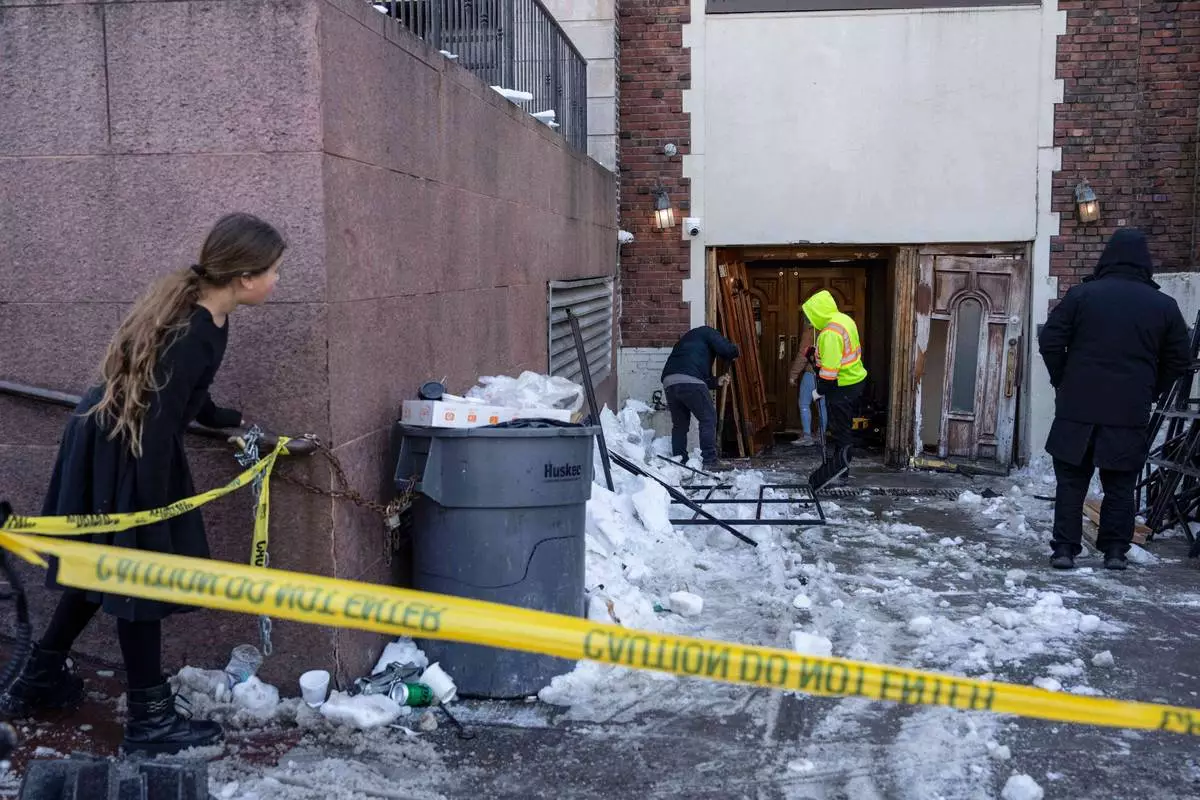
FILE - People clean up after a car slammed into the entrance of the Chabad Lubavitch world headquarters, Jan. 29, 2026, in New York. (AP Photo/Yuki Iwamura, File)