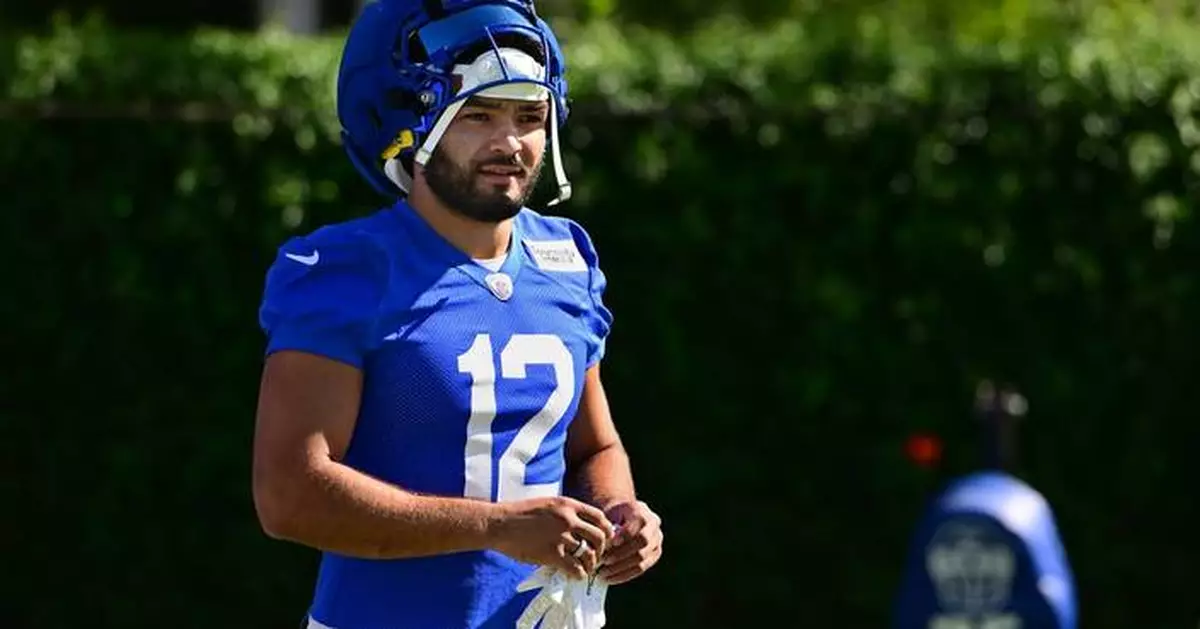
Skip to Content Facebook Feature Image

WR Puka Nacua never considered a contract holdout while he rebuilds his reputation with the Rams

Sport

WR Puka Nacua never considered a contract holdout while he rebuilds his reputation with the Rams
Sport

Sport

WR Puka Nacua never considered a contract holdout while he rebuilds his reputation with the Rams

2026-07-30 08:15 Last Updated At:08:20

LOS ANGELES (AP) — Puka Nacua says he never considered holding out of training camp as he enters the final year of his rookie contract with the Los Angeles Rams.

The All-Pro receiver loves — and needs — the day-to-day grind of football too much to step away from it, even for financial purposes.

Nacua also realizes his standing with the Rams isn't quite as rock-solid as it was a year ago, and the best way to repair it after a winter of missteps is with a good summer.

“I think the game of football is a safe place for me, and I enjoy that,” Nacua said Wednesday after showing off his connection with Matthew Stafford repeatedly during the Rams' fourth practice at Loyola Marymount.

Nacua says he has taken responsibility for the distractions he created last winter for the Rams, who advanced to the NFC championship game while he led the league in receptions.

After Nacua issued a public apology last December for unwittingly performing a gesture that plays upon antisemitic tropes while appearing on an internet livestream, he was subsequently sued in March by a woman who claims he made an antisemitic statement and bit her on the shoulder while partying on New Year's Eve.

Nacua could face a league suspension in the upcoming season, but he says his conversations with the Rams and the NFL have been nothing compared to the tough talks with his family.

“There have been things that happened this offseason that haven’t been the truest reflection of the person I feel like I am, and how my mother raised me,” Nacua said. “There’s definitely been conversations with her to apologize, but also for her to say that she supports me. Also, my brothers are, I think, my biggest critics as well, so there were some intense conversations, but also loving conversations in order to see improvement.”

Nacua's public mistakes occurred at an inopportune time for somebody in line to become one of the NFL's highest-paid position players after three prolific seasons with the Rams. His upcoming payday will be the first contract for Nacua, whose four-year rookie deal was worth just over $4 million as a fifth-round pick in 2023.

But that's only one reason Nacua rejected any notion of a holdout.

“Coming out here and seeing that jersey, No. 12, hung up in my locker is something that I don’t take for granted,” Nacua said. “Being around this group of guys, I think of all the guys that have reached out in this offseason to be there by my side, and then when we’re here in the meeting rooms, the level of connection I feel like I have with the guys out there, it never crossed my mind that I don’t want to be out there with those guys.”

Nacua says the Rams and his camp “haven’t had too many conversations” about the current state of negotiations for a new deal. Coach Sean McVay refused to make a connection between Nacua's future behavior and the ultimate contract talks.

“I don’t think you want to dangle a carrot that way,” McVay said. “I think he’s inspired to do right because his heart is right, and then I think the contract will take care of itself because he’s an incredible player, and he’s continuing to mature as a man. I love him. I love his heart, and I love the growth that he’s had, and we’re with him every step of the way.”

The Rams have been publicly vague about their urgency to get a deal done with Nacua or their four additional starters from the 2023 draft class — pass rusher Byron Young, nose tackle Kobie Turner, left guard Steve Avila and right tackle Warren McClendon — who have all showed up to camp instead of holding out.

“We'll see what the future holds, but I would love to be able to keep all of them,” McVay said. “I've been really impressed with how they've handled it, and I love this team and I'm grateful that those guys have taken this approach.”

AP NFL: https://apnews.com/NFL
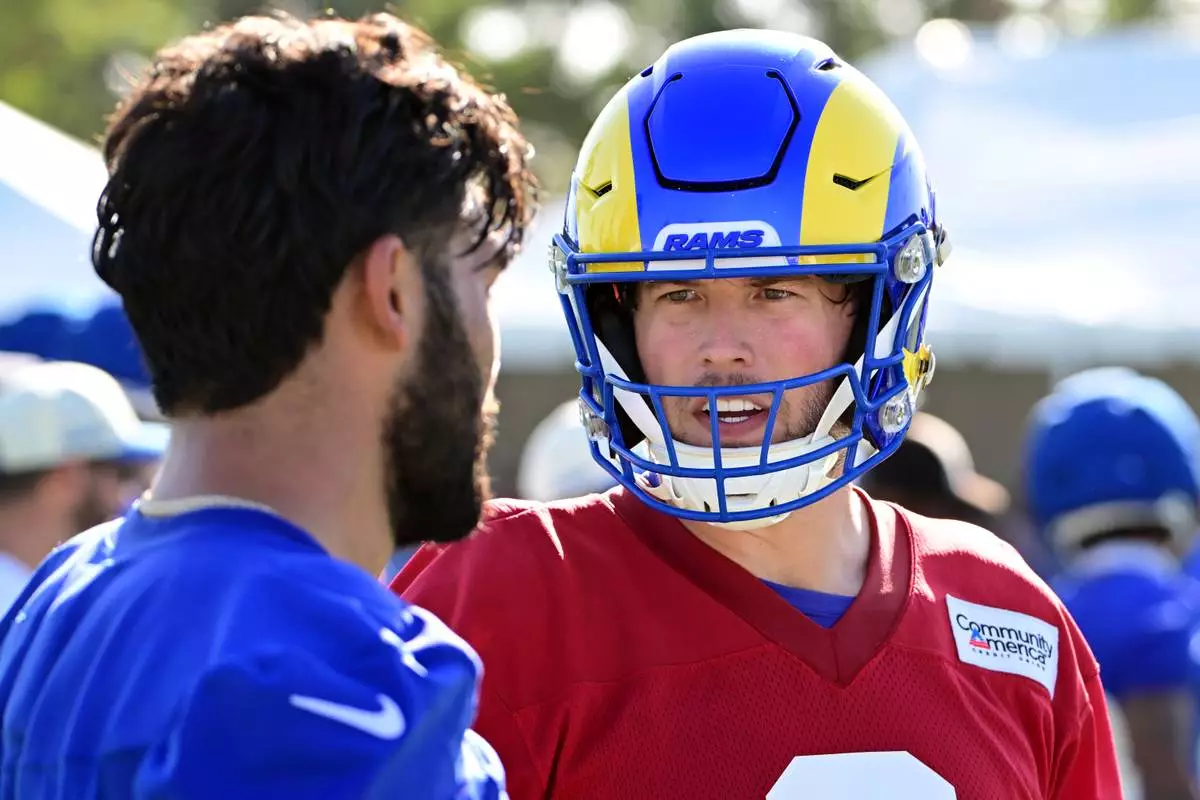
Rams quarterback Matthew Stafford, right, talks with wide receiver Puca Nacua, left, during an NFL football training camp Monday, July 27, 2026, in Los Angeles. (AP Photo/Wally Skalij)
Rams quarterback Matthew Stafford, right, talks with wide receiver Puca Nacua, left, during an NFL football training camp Monday, July 27, 2026, in Los Angeles. (AP Photo/Wally Skalij)
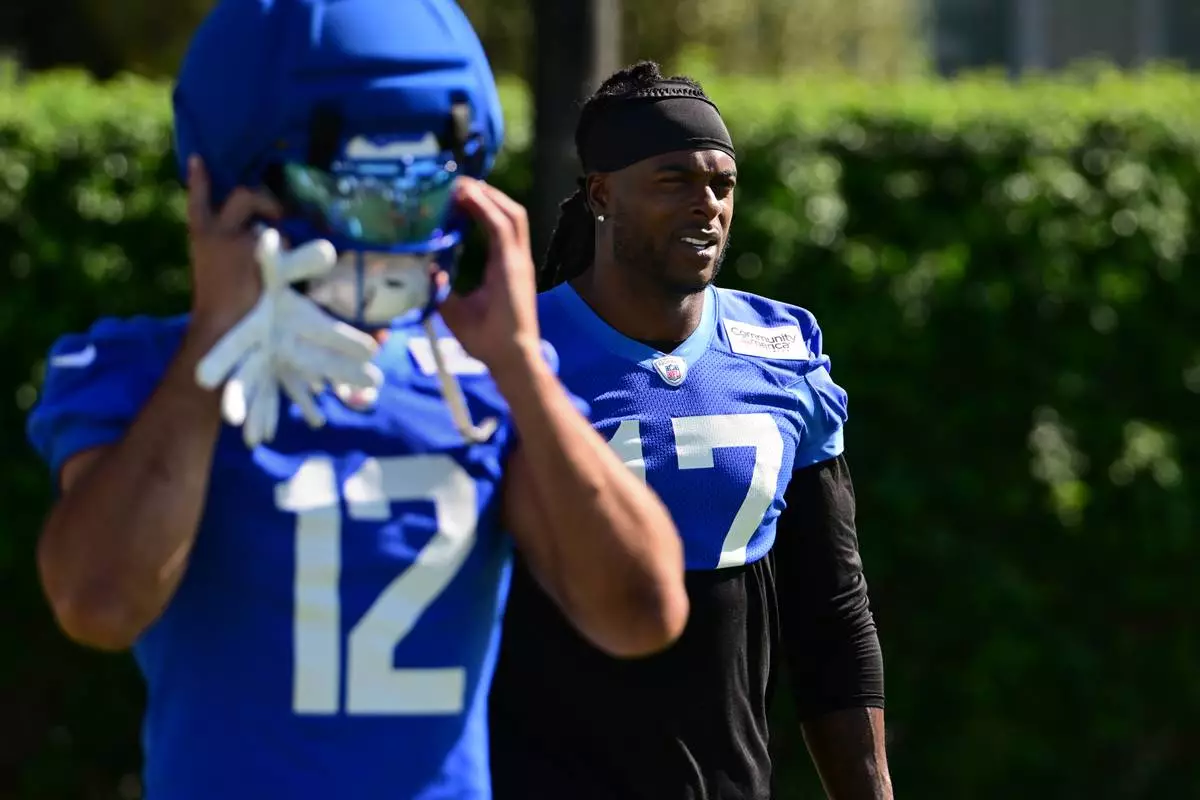
Los Angeles Rams wide receivers Puca Nacua, left, and Davante Adams, right, take the field during an NFL football training camp Monday, July 27, 2026, in Los Angeles. (AP Photo/Wally Skalij)

Los Angeles Rams wide receivers Puca Nacua, left, and Davante Adams, right, take the field during an NFL football training camp Monday, July 27, 2026, in Los Angeles. (AP Photo/Wally Skalij)
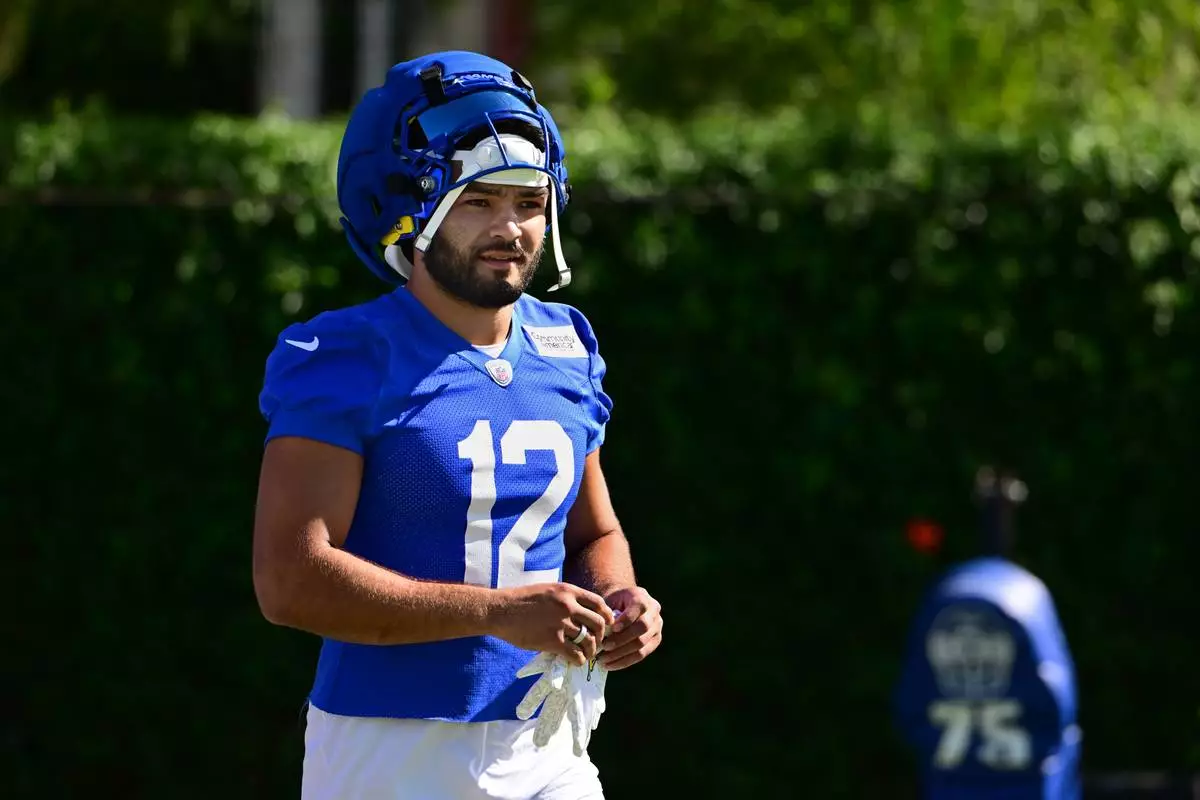
Los Angeles Rams wide receiver Puca Nacua takes the field during an NFL football training camp Monday, July 27, 2026, in Los Angeles. (AP Photo/Wally Skalij)
Los Angeles Rams wide receiver Puca Nacua takes the field during an NFL football training camp Monday, July 27, 2026, in Los Angeles. (AP Photo/Wally Skalij)
HAVANA (AP) — In an effort to fend off a mounting humanitarian crisis, Cuba on Wednesday eased up on longtime restrictions on private vendors and imports, opening up a sector firmly controlled by the Communist-led government.

The reforms would allow for the import and resale of some goods and medicines from other countries, loosen restrictions on oil extraction for foreign companies and implement other changes at a time when the country is plagued by medical and energy shortages.

While private enterprise has slowly opened in recent years, many sales on the country's informal market have long existed in a gray area — not technically legal but widely used by Cubans struggling to survive the day-to-day hardships.

The measures, which were approved by the parliament last month and went into effect on Wednesday, are expected to bring about a significant shift on the island, where the economy and industry have been strictly controlled by the government since the 1960s.

The reforms come as Cuba has been pushed to the brink by an oil blockade imposed by the United States in January. The move by the Trump administration, meant to put pressure on the government, worsened already crippling blackouts, cut workers off from public transport, crippled infrastructure and deepened shortages in medicine and food.

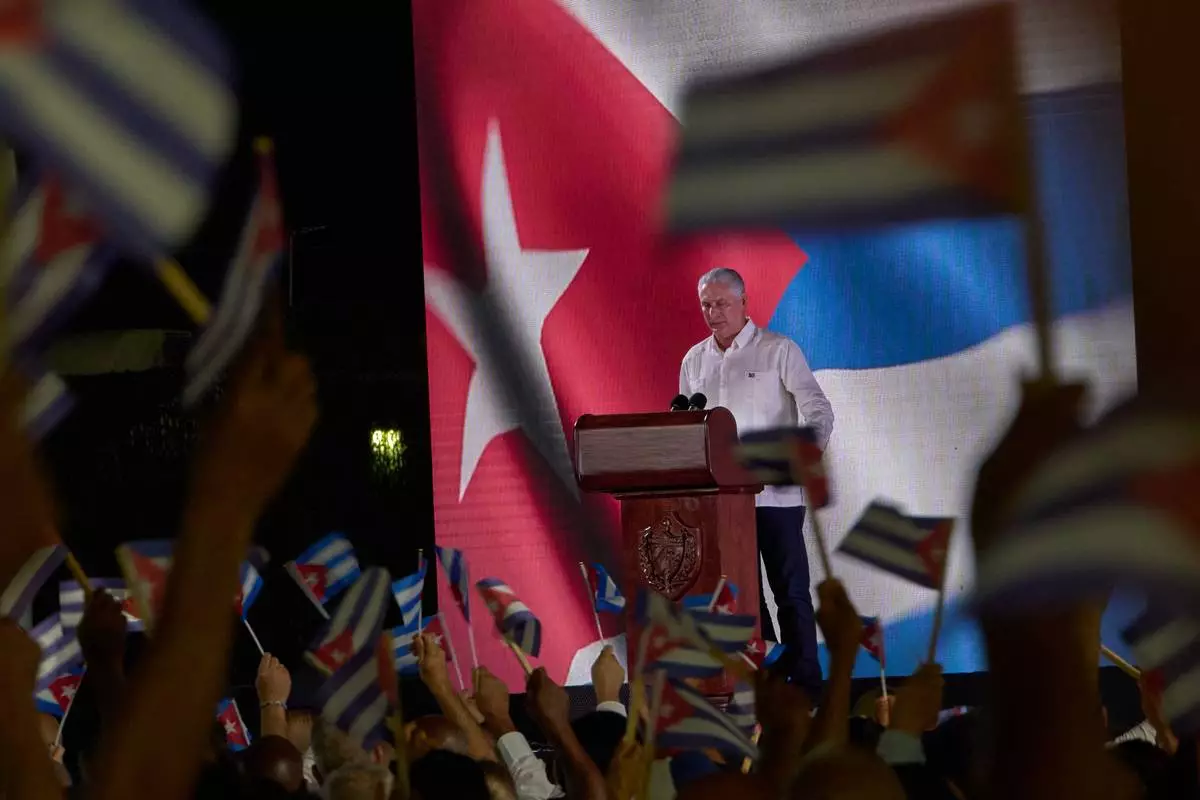
Last month, Cuban President Miguel Díaz-Canel said the reforms were necessary because the country “simply cannot continue on its current course.”

In total, the government said it was removing 46 of the 125 prohibitions it had on private industry, and relaxed 35 other regulations.

Still, many bans remain in place — tobacco production, long a staple of the Caribbean island, would remain in state hands. So would internet access, newspaper publishing and radio broadcasting.

The easing of restrictions appeared to target specific areas hardest hit by the ongoing crisis.

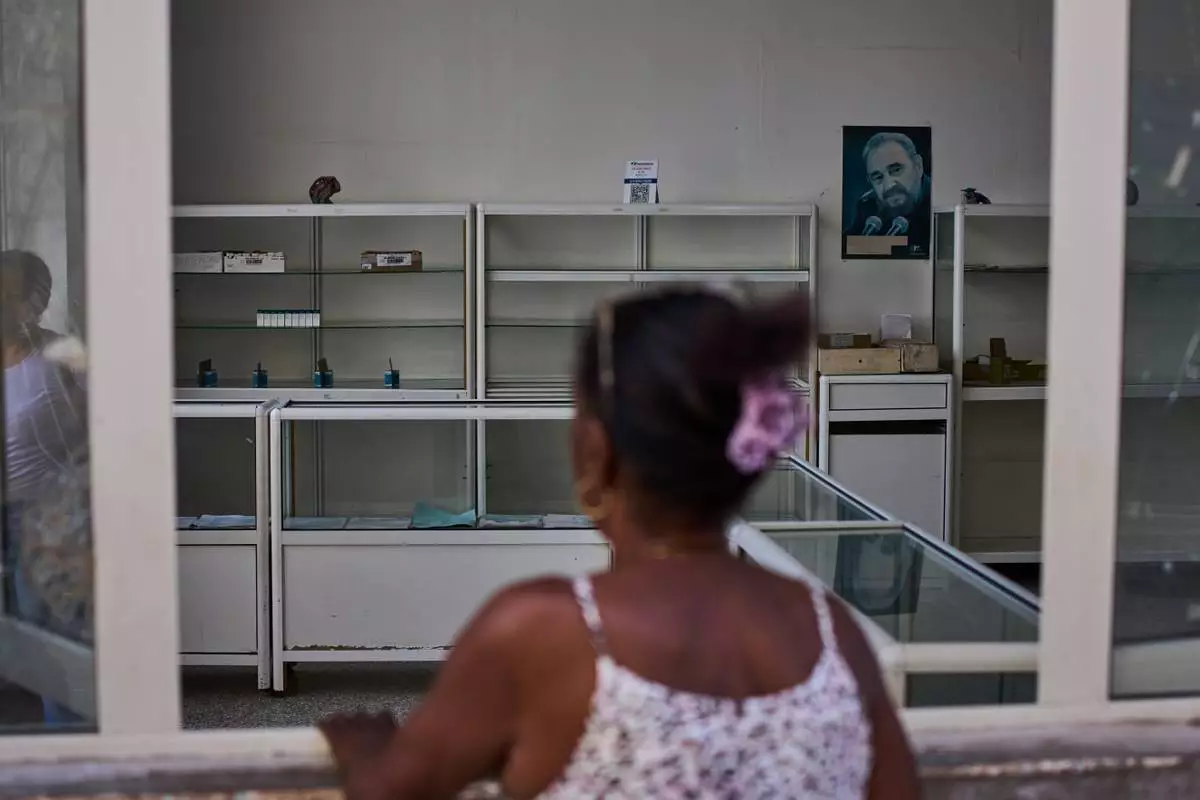
Medicines, largely purchased through massive groups on apps like Telegram and WhatsApp on the informal market, would now also be sold by private pharmacies. Shelves in state-owned pharmacies selling subsidized medicine are often empty.

Many welcomed the loosening of the restrictions.

Francisco Carbajal, a 71-year-old retiree who suffers from seizures, said it gives him hope things would improve.

“What I really want is that there are medications available, because I have diabetic neuropathy and carbamazepine hasn’t arrived at my pharmacy in a long time,” he said as he sat on a street in Havana, the capital. “Without it, I’m helpless, because I get epileptic seizures.”

The government also gave the green light for private care facilities for elderly Cubans — many young Cubans who would have traditionally cared for their aging relatives have migrated abroad.

The new measures would also make it easier to import electric vehicles, which are rapidly becoming a crucial alternative to get around the island where the public transport system has largely collapsed due to gasoline shortages.

Restrictions will also ease on Cuba's decaying oil sector, making it easier for foreign investors and private businesses.

Cuba’s government had already made moves to loosen restrictions on private industry over the last few decades.

Cubans were allowed to seek self-employment and in a massive shift in 2021 — after the tourism-driven economy was roiled by the coronavirus pandemic and a migratory flight from the island began to pick up — authorities allowed the creation of small businesses.

These latest reforms “truly allow and facilitate the participation of non-state economic actors in the country’s economy,” said Lázara Mercedes López Acea, president of the National Institute of Non-State Economic Actors, who presented the new regulations.

Cuban President Miguel Diaz-Canel, speaks to attendees during an event marking the 73th anniversary of the start of the Cuban Revolution in Pinar del Rio, Cuba, Sunday, July 26, 2026. (AP Photo/Ramon Espinosa)

Cuban President Miguel Diaz-Canel, speaks to attendees during an event marking the 73th anniversary of the start of the Cuban Revolution in Pinar del Rio, Cuba, Sunday, July 26, 2026. (AP Photo/Ramon Espinosa)

An image of Fidel Castro hangs on the wall of a state-run pharmacy where a woman asks for medication in Havana, Cuba, Wednesday, July 29, 2026. (AP Photo/Ramon Espinosa)

An image of Fidel Castro hangs on the wall of a state-run pharmacy where a woman asks for medication in Havana, Cuba, Wednesday, July 29, 2026. (AP Photo/Ramon Espinosa)

Recommended Articles