VPS provider deploys self-built liquid cooling solution to increase rack density and energy efficiency amid surging compute demand
SINGAPORE, July 30, 2026 /PRNewswire/ -- Ready Server, a Singapore-based VPS Hosting and server solutions provider, has completed its first pilot of full-immersion liquid cooling at its data centre facility in Singapore, marking a key step in its roadmap toward delivering AI-ready infrastructure services.
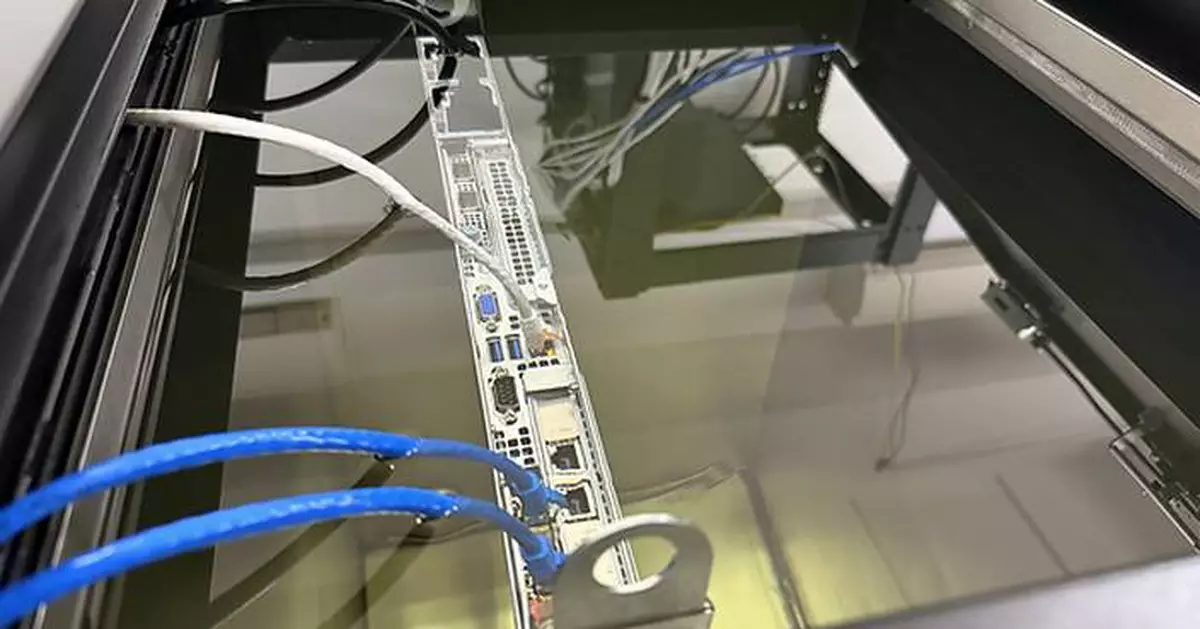
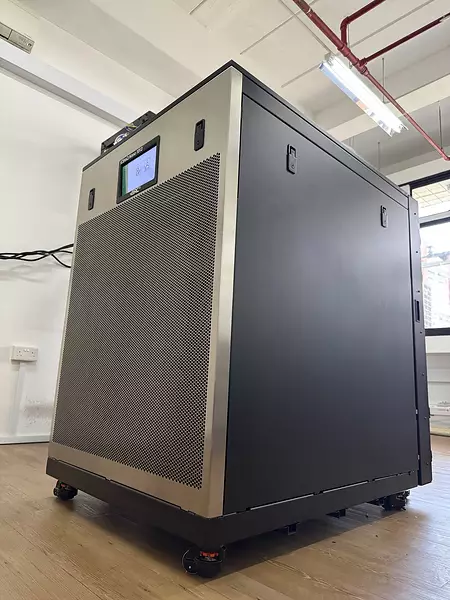
The pilot involves immersing complete server hardware — production-grade AMD-based servers with memory and storage components — into a tank of non-conductive immersion cooling fluid, using immersion cooling hardware from US-based liquid cooling specialist GRC. The immersion cooling fluid transfers heat away from server components far more efficiently than air, enabling higher rack densities and potentially reducing cooling energy consumption.
Meeting the demands of the AI era
Global demand for high-performance compute, accelerated by AI workloads, is pushing data centre operators worldwide to rethink how densely and efficiently servers can be deployed. As computing systems become more powerful and valuable, operators are seeking more efficient cooling technologies to maximise performance while making better use of existing space and power resources.
Rather than purchasing fully packaged immersion-cooled systems, Ready Server opted for a self-deployed solution — designing a customised setup tailored to its existing facility. This approach reduces capital costs while building in-house engineering capability in liquid-cooled operations.
"Everything comes with a risk, so we have to take some that will enable us to compete and deliver the performance needed in the future," said Alan Woo, Director of Ready Server, who personally oversaw the import and installation of both the cooling tank and immersion cooling fluid.
A pragmatic, phased approach
Ready Server's pilot methodology reflects careful risk management. Servers selected for immersion are units that have already operated in racks for approximately two years — nearing the end of their manufacturer warranty — since immersion and hardware modifications can affect warranty coverage. Components are prepared prior to immersion: cooling fans are removed, thermal paste is replaced with a thin metal foil suited to liquid-cooled operation, and certain paper labels or adhesive stickers are removed, as prolonged exposure to the fluid can cause them to deteriorate.
Compared with alternative liquid cooling methods the company has previously trialled, including spray-based coolant jets, the full-immersion approach offers simpler maintenance and continuous 24/7 operation, and reduces the risk of coolant leaks associated with direct-to-chip liquid cooling.
Building toward AI-ready services
The pilot delivers benefits beyond electricity savings: it equips Ready Server with the operational experience needed to design future rack architectures for compute-intensive workloads.
"This journey into liquid cooling has taught us valuable lessons in designing our future racks and how we can deliver more compute-heavy services to customers," said Woo. "By investing in the technology and also the capabilities to run it, we are more ready to offer new services that the market is asking for."
Ready Server plans to apply learnings from the pilot as it expands its portfolio of high-density hosting and AI-ready data centre services in Singapore.
About Ready Server
Ready Server is a leading Singapore-based VPS hosting provider in the Asia-Pacific region. Delivering high-performance, enterprise-grade infrastructure, and a robust network of data centers spanning Singapore, Hong Kong, and Tokyo, the company offers elite, low-latency connectivity and unmetered bandwidth designed for demanding digital workloads. With flexible per-hour billing, empowering developers and enterprises to scale instantly across major Asian hubs with superior reliability, connectivity and ease. https://www.readyserver.sg/
** This press release is distributed by PR Newswire through automated distribution system, for which the client assumes full responsibility. **

Ready Server Pilots Full-Immersion Cooling to Prepare Singapore Facility for AI-Ready Compute Services
Ready Server Pilots Full-Immersion Cooling to Prepare Singapore Facility for AI-Ready Compute Services
Six in ten Australians act on products they see on social media, forcing brands to rethink discovery, trust and conversion
MELBOURNE, Australia, July 30, 2026 /PRNewswire/ -- The Australian shopping journey has been rewritten. Social media is now driving purchase decisions at scale, fundamentally reshaping how consumers discover, evaluate and buy products and forcing brands to rethink how they go to market.
New research from Pattern reveals that six in ten Australians now take action after seeing a product on social media, signalling a major shift in how retail demand is created. The research shows that 60% of Australians search for products on Google after seeing them on social media. Half of shoppers also report clicking through to a brand or retailer's website and 41% go directly to Amazon. This highlights a fundamental change, where social media is no longer just influencing demand, it's actively generating it at scale.
"Australia's social commerce market is projected to grow 20% annually to reach approximately AUD$12 billion by 2030," said Merline McGregor, Managing Director at Pattern Australia. "This highlights the scale of the opportunity and the urgency for brands to adapt or lose relevance and market share."
Influencers drive influence, but not evenly across generations
The role of social media influencers continues to grow in Australia, but their impact is highly concentrated among younger audiences. Overall, 38% of consumers say they are more likely to purchase a product if it's recommended by an influencer they follow. Among 18–24-year-olds, this rises to 62% and 61% for those aged 25–34. However, influence declines significantly with age, dropping to 20% among 55 to 64-year-olds and just 8% for those 65 and over.
"This is not just a shift in media consumption, but a shift in how trust is built. For younger consumers, influencers and social platforms are increasingly shaping what gets noticed, what is trusted and what gets bought. Brands need to adapt to this new reality. That means moving beyond one-off influencer campaigns and thinking much more seriously about how to build always-on, creator-led content strategies that drive a return," said McGregor.
Trust gap remains a barrier to full conversion
Despite its growing influence, a trust gap in social commerce remains a key barrier to full conversion for many shoppers. A significant number of Australians choose to save products discovered on social media for further research (26%), while others seek recommendations from friends or family (25%) before making a purchase.
This caution is further reinforced by the fact that 42% of consumers still prefer to complete transactions through familiar retailer channels, where established customer service and returns processes are present.
"Social media is now the engine of demand, but trust still dictates where transactions are completed. Consumers are often taking additional steps to validate what they see, whether that's researching further, seeking recommendations, or ultimately choosing to transact through more familiar retail environments. That tells us social media is driving intent, but trust is still determining where conversion happens," observed McGregor. "Brands need to bridge that gap by delivering consistent, credible experiences across every channel the consumer moves through."
The shopping journey starts on social media and converts across channels
Although social media is increasingly the starting point for product discovery, purchase behaviour remains distributed across a range of channels. When a product captures attention, more than a third of consumers are most likely to complete their purchase on a brand or retailer's website. Amazon follows closely at 28%, while 19% prefer to buy in-store.
The findings point to a fragmented path to purchase, where social platforms generate demand, but conversion is shared across retail channels.
"Brands should stop thinking about social media as separate from commerce," said McGregor. "Consumers are moving fluidly from social content to marketplaces to retailer websites to stores. Brands that convert shoppers are the ones that can create demand on social media and carry it through to wherever the customer chooses to buy."
Brands must create connections where their customers are
With social media embedded in everyday shopping behaviour, brands that continue to rely on outdated discovery models are finding it harder to connect with shoppers.
"The way consumers discover products has changed, and many brands are still playing catch-up. With 96% of Australians on social media, these platforms are where demand is created and won. Pattern was recently named TikTok Shop Strategic Partner of the Year for 2025, reflecting the growing importance of social-led commerce. We help brands turn discovery into purchase and build social experiences that convert," concluded McGregor.
For more information, please download Pattern's '2026 Marketplace Consumer Report'
About Pattern Inc
Pattern accelerates brands on global ecommerce marketplaces leveraging proprietary technology and AI. Utilising more than 77 trillion data points, sophisticated machine learning and AI models, Pattern optimises and automates all levers of ecommerce growth for global brands, including advertising, content management, logistics and fulfillment, pricing, forecasting and customer service. Hundreds of global brands depend on Pattern's ecommerce acceleration platform every day to drive profitable revenue growth across 60+ global marketplaces—including Amazon, TikTok Shop, Walmart.com, Target.com, eBay, Tmall, JD, and Mercado Libre. For more information, visit https://au.pattern.com/
** This press release is distributed by PR Newswire through automated distribution system, for which the client assumes full responsibility. **

Social Media Has Hijacked the Australian Shopping Journey and Brands Risk Falling Behind, Research Finds