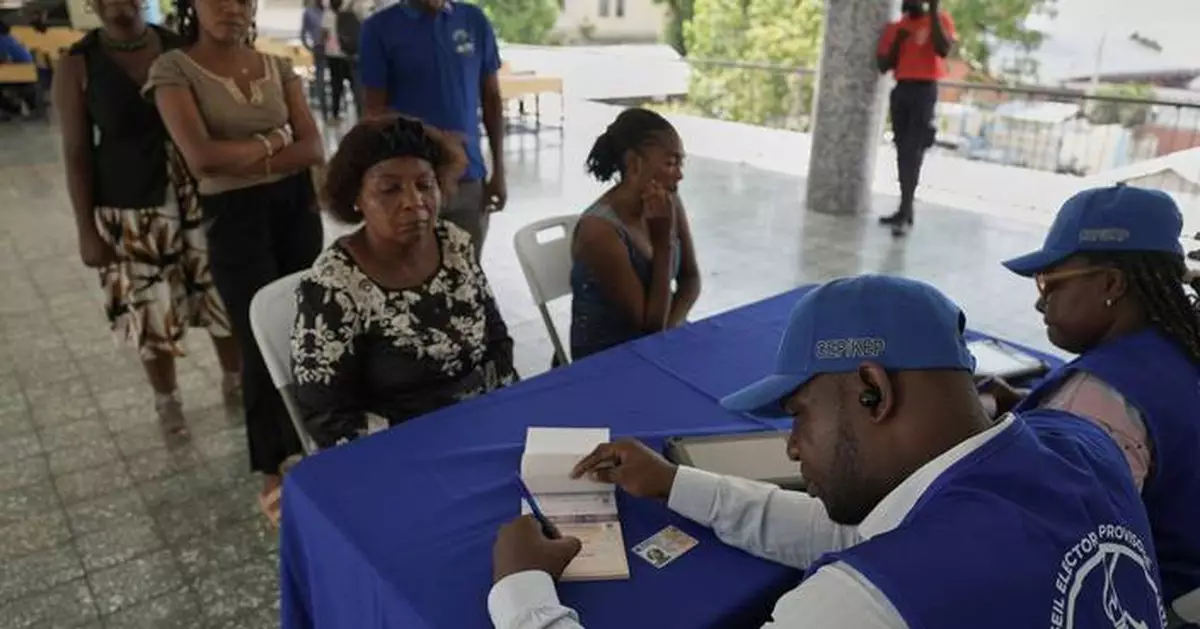
PORT-AU-PRINCE, Haiti (AP) — Voter registration began Thursday in Haiti’s capital and beyond, marking a critical milestone in the push for general elections even as concerns over widespread gang violence persist.
The government opened 10 registration centers across Port-au-Prince in neighborhoods considered generally safe as dozens of hopeful Haitians trickled through.
“This may be the first time that I’m going to vote,” said 34-year-old construction worker Vadley Bernadel.
Haiti hasn’t held general elections in more than a decade, and the country hasn’t had a president since President Jovenel Moïse was killed at his private residence in July 2021.
Gang violence has only surged since then, but Haiti’s unelected prime minister is under pressure to hold elections, with Dec. 13 marking the first round.
“Haiti needs someone with a vision, someone who can lead the country in a better direction,” said Bernadel, who decried his country’s multiple crises.
Gang violence has displaced more than 1.4 million people, with armed men controlling an estimated 70% of Port-au-Prince and the main roads that lead to the country’s Central and Artibonite provinces, which also are under fire.
More than 50% of Haiti’s electorate live in those three regions, and it’s unclear whether all those seeking to vote will be able to register, let alone vote, given the violence.
“The country can hold elections in three months if it chooses to. The question is, what kind of elections?” said Diego Da Rin, an analyst with the International Crisis Group.
If the government insists on holding elections on Dec. 13, “a large part of the electorate will be left out," he warned.
Da Rin noted that police and a U.N.-backed mission have seized back areas near the National Palace in Port-au-Prince and made other inroads, but powerful gangs still control vast amounts of territory.
“There has been no significant progress,” he said. “The government will not be able to organize elections in territories controlled by gangs.”
Jacques Desrosiers, president of Haiti’s Provisional Electoral Council, said he plans to open more voter registration centers in upcoming weeks, including 20 in Pétion-Ville, considered one of the safest areas.
As for the possibility of opening centers in other communities, he said that lies in the hands of the Haitian government.
Lawyer Francky Cavetan said he does not plan to vote because it’s too risky, but he did visit one registration center out of curiosity.
“Elections are not going to happen because the government and electoral council are lying to the population,” he asserted. “They are making people believe that elections will bring security, but they have to have security before elections.”
More than 5,900 people were killed last year across Haiti, and more than 1,600 others from January to March of this year, according to the United Nations. In addition, 5,500 gender-based violent incidents were reported in the first half of the year, with 70% of cases involving rape, many of them gang rapes, Farhan Haq, deputy spokesman for the U.N. Secretary-General, recently said.
Cavetan questioned how candidates would even campaign. He was also upset because he believes a large number of Haitians are not aware that they will also be asked to participate in a referendum the same day as the elections as the government pushes to change the country’s Constitution.
“They’re not even explaining to people what they’re planning to change in the Constitution,” Cavetan said.
Da Rin echoed that sentiment, noting that the public still doesn’t know what changes the government is seeking.
His biggest concern surrounding the elections is safety, though.
“The challenge for the authorities right now is to organize elections without having defeated the gangs and to minimize their influence on the elections as much as possible,” he said.
Da Rin noted that longtime links between gangs and certain powerful elites in Haiti are still active.
Gangs have long been used to intimidate voters or convince them to select certain candidates, as well as to destroy ballot boxes when some members of Haiti’s elite believed that their candidates might not win, Da Rin said.
“Gangs have been a very important tool for elites to help their candidates win elections,” he said.
At a registration center in the community of Laboule, only three people had signed up an hour after doors opened.
Victor Valensky, a 38-year-old driver of a colorful bus known as a tap-tap, was one of them.
He said he was angry at his country’s situation but also feared gang violence.
“I want to take part in the elections, but I have to make sure I’m safe,” he said. “If I die now, my wife probably won’t be able to support my two kids by herself. … I’m going to be very careful before I step out on election day.”
Coto reported from San Juan, Puerto Rico.
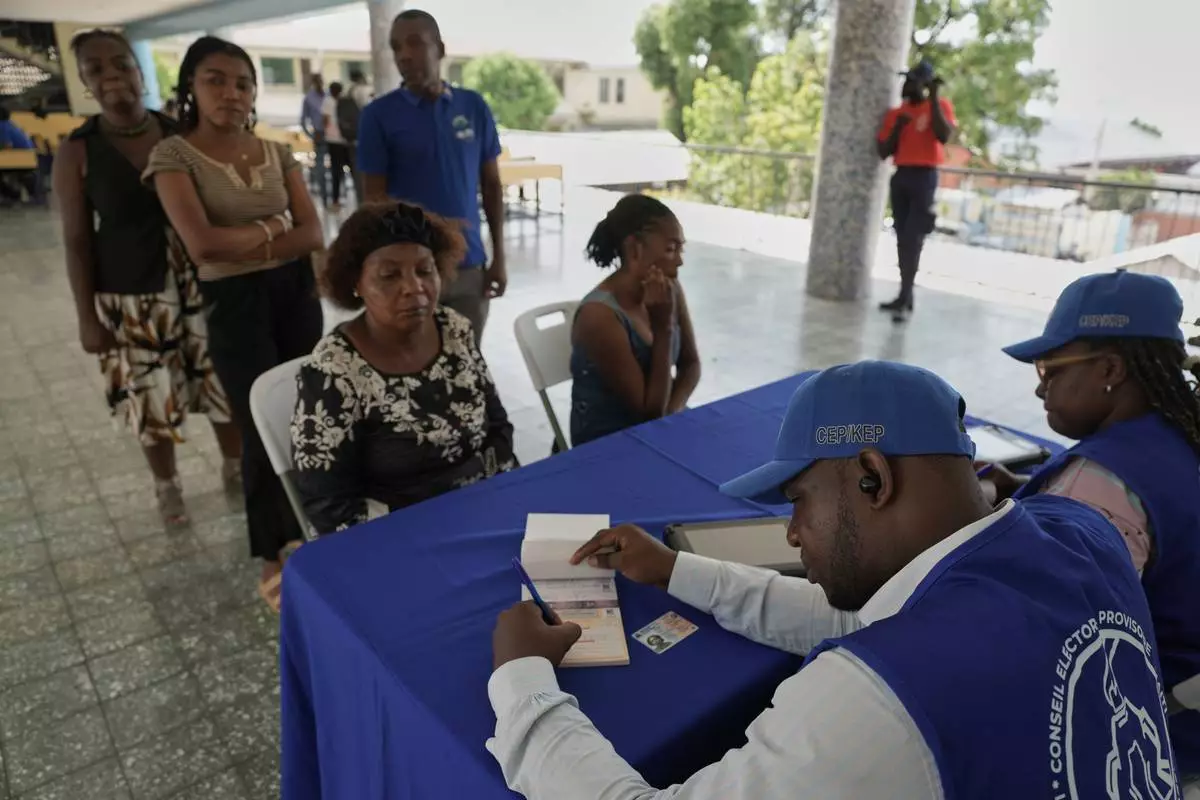
Haitians register to vote in the upcoming general election in Port-au-Prince, Haiti, Thursday, July 30, 2026. (AP Photo/Odelyn Joseph)
DALLAS (AP) — One of Scouting America's biggest gatherings has eliminated dedicated spaces for gay youth, women and scouts of color as the organization faces pressure from the Pentagon to pull back diversity efforts.
The changes at the National Jamboree, which ends Friday, reflect shifts made by Scouting America since the organization became a target of Defense Secretary Pete Hegseth over what he calls “woke” policies. Some scouts who had planned to attend the event in West Virginia said they backed out because Scouting America scrapped the inclusion initiatives it previously celebrated.
Hegseth threatened to end the Pentagon's century-old partnership with Scouting America if it did not make changes including refocusing away from diversity initiatives. The organization, previously known as Boy Scouts of America, rebranded in 2024 to emphasize inclusion and the growing number of girls in the scouting ranks.
“Scouting fundamentally is a safe place for young people to have fun,” said Samuel J. Aronson, an assistant scoutmaster who has organized inclusive events at previous national events. “In the absence of these spaces, we’re denying all that, both the safety and the fun, to thousands of young people.”
This year, about 15,000 scouts, leaders and volunteers from across the country are attending the 10-day event in the mountains of West Virginia. In addition to activities including mountain biking and kayaking, the gathering hosts leadership programs and educational sessions.
A Scouting America spokesperson said the organization remains “fully committed to welcoming and serving all youth,” but did not address questions about the changes to the jamboree.
The Pentagon made a deal with Scouting America in February but the two sides have given conflicting accounts of that agreement. This month, a gay rights activist obtained the memo outlining the agreement from the Defense Department after filing a lawsuit, arguing that clarity was of public importance.
The six-page document spells out ways the Pentagon will monitor compliance, including that officials from each organization would have “periodic touchpoints and meet” as needed. It was obtained by James Dale, who was expelled from the Boy Scouts in the early 1990s for being gay and later sued over discrimination. He equated the Pentagon's tactics to the actions of a bully.
“They basically have their thumb on the organization, threatening them under constant pressure,” Dale said.
The scouts and the military have long held close ties; The military provides logistical support for the jamboree and some scout troops meet on or near bases.
Asked about the implementation and monitoring of the deal, a Pentagon spokesperson referred to previous comments by Hegseth.
In February, Hegseth posted a video that said his department would “vigorously review” changes made by Scouting America and would cease the military’s longtime support of the organization if it failed to comply by late August.
John Andrew Segebarth, a 21-year-old college student and Eagle Scout, has been disheartened by the agreement. He joined the scout ranks in first grade and said he had been looking forward to staffing the space for LGBTQ+ and Allied Scouts at this year’s jamboree.
Segebarth, who is gay and was elected by peers as a national officer for scouts in 2024, said the removal of inclusive spaces is a sharp reversal for Scouting America. National scouting events in recent years included community spaces for girls, scouts of color, LGBTQ+ scouts and persons with disabilities, according to Aronson.
“Scouting’s kind of walking back on its values that they told me they believed in,” said Segebarth who, along with Aronson, decided not to attend the jamboree this year.
It was at a community tent that Layla Grace found the first place where she could talk openly about being a transgender female. Now a 21-year-old assistant scoutmaster, Grace had also planned to staff the space for LGBTQ+ and Allied Scouts in West Virginia this year.
When the spaces were canceled, Grace said she almost didn't go to the jamboree but decided she wanted to be there to help those in need. She wound up volunteering at an area dedicated to addressing issues that include mental health, food security and education.
And she's trying to fill the gap left by the removal of inclusive areas.
“I am wearing so many rainbows on me, my right hand has my nails painted in the lesbian flag and my left hand has my nails painted in the transgender flag,” she said. “I am being as loud as I can to do my best to hopefully make up for the lack of community spaces.”
Associated Press reporter Ben Finley contributed to this report from Washington.
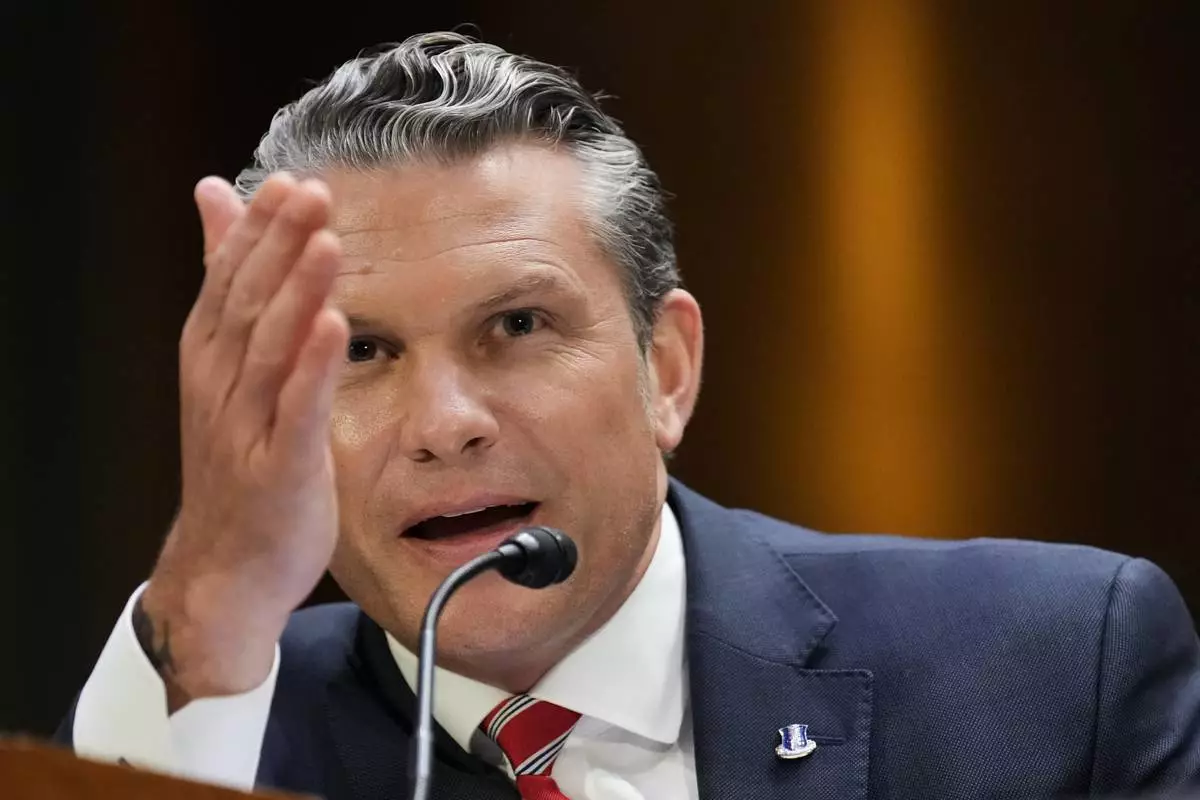
Defense Secretary Pete Hegseth testifies at a Senate Appropriations Committee hearing, Tuesday, July 21, 2026, on Capitol Hill in Washington. (AP Photo/Jacquelyn Martin)
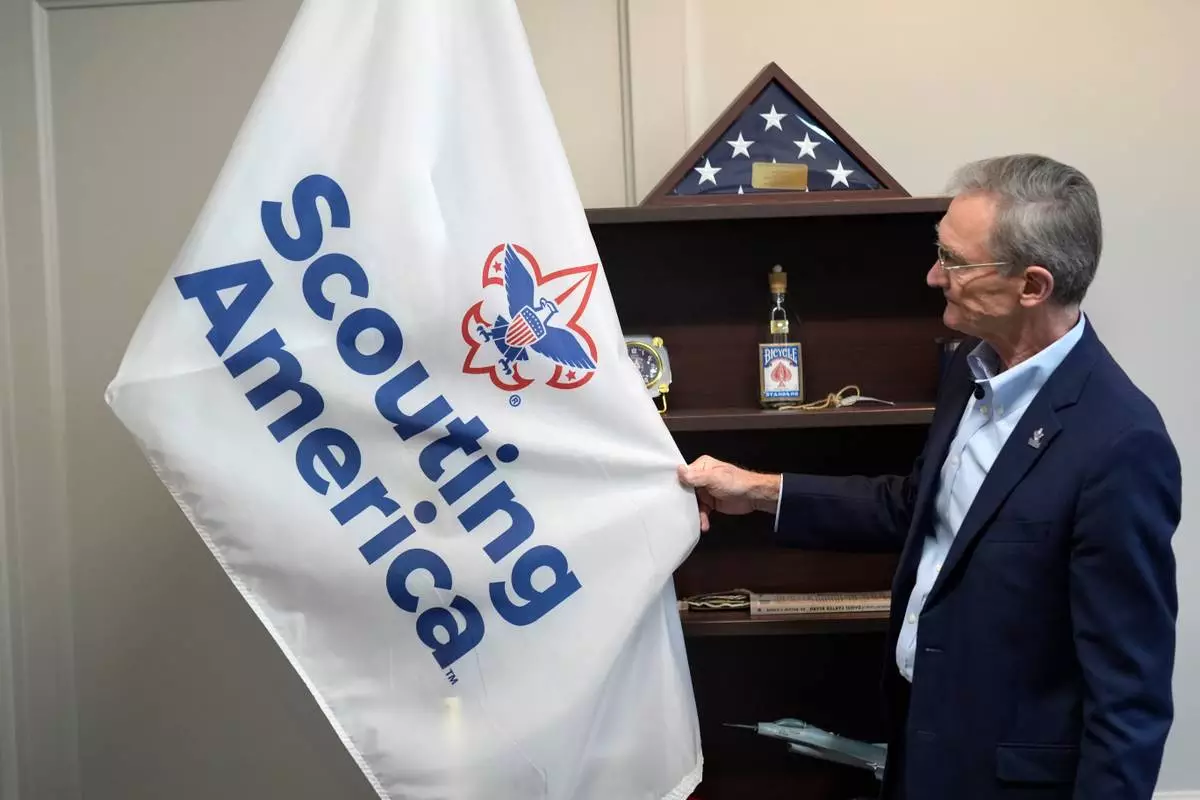
FILE - Roger Krone, chief executive officer of Scouting America, describes the design of the organization's flag in Irving, Texas, Feb. 5, 2025. (AP Photo/LM Otero, File)