PERTH, Australia (AP) — An Australian jury convicted the British social media celebrity and rapper Yung Filly on Friday of assaulting a fan following a music performance two years ago, but did not find him guilty of allegations that he raped and choked her.
The 30-year-old entertainer, whose real name is Andres Felipe Valencia Barrientos, wept after the verdicts were delivered in the District Court of Western Australia state in Perth.
He had pleaded not guilty to six charges of rape, three charges of assault occasioning bodily harm and one count of choking in a Perth hotel room in September 2024.
The accuser cannot legally be named. She was 20 at the time.
Three days after the jury began deliberating, they found him guilty of only two of the assault charges which relate to him biting the woman. He testified during his eight-day trial that they were “love bites” and denied his victim had complained that he was hurting her.
He was found not guilty on some charges, but he could potentially face a retrial on three charges of rape on which the jury could not reach a verdict.
Despite the convictions, the Colombian-born entertainer remained free on bail until the case returns to court on Aug. 21 to discuss next steps.
Barrientos had been touring Australia and had already performed in Sydney and Melbourne before he encountered his victim in Perth. He was arrested several days later in the east coast city of Brisbane, where the tour was to end.
Prosecutors alleged the woman initially agreed to have sex but withdrew her consent because she feared for her safety.
Photos of the woman with bruising as well as bite marks on her face and neck were shown to the court.
Barrientos has been free on bail since he was charged and was allowed to return to Britain for several months.

British YouTuber and rapper known as Yung Filly, whose real name is Andres Felipe Valencia Barrientos, leaves Western Australian District Court in Perth, Australia, Monday, July 27, 2026. (Aaron Bunch/AAP Image via AP)
KUMAMOTO, Japan (AP) — The death toll from a powerful earthquake in southwestern Japan rose to 34, the Kumamoto prefectural government said Friday, as rescuers raced in last-ditch efforts to find survivors after the quake triggered a mall explosion, toppled a factory chimney, and flattened homes across the region.
The disaster left thousands of households without electricity and tens of thousands without tap water. Thousands of residents remained in shelters or their vehicles, leaving medical workers concerned about heat-related illnesses as the region endured punishing summer temperatures. The magnitude 7.1 earthquake hit Japan’s southern main island of Kyushu on Tuesday. As search operations entered a fourth day, it wasn't known how many people remained missing and the scale of the damage to homes across the region was still unclear.
Officials said 34 quake-related deaths had been confirmed, with one more death still under investigation. Dozens of people were injured.
More than 79,000 homes were without water and over 2,700 without electricity as of Friday afternoon. Authorities said more than 9,000 people were staying in shelters, where power sources were being added to provide air conditioning.
Fuel has also become scarce as power outages disabled gas stations and quake damage disrupted deliveries from other regions. Many have resorted to sleeping in their cars, but with the fuel shortage, they struggle to keep the air conditioning running in sweltering temperatures.
Temperatures Friday were due to rise to 36 C (97 F) in Kumamoto city, according to the Japan Meteorological Agency, after stifling 35 C (95 F) heat on Thursday.
Japanese officials say Friday afternoon is a crucial point for rescue efforts as some experts say survival chances decline after the first three days.
Searchers continued to work in the Kumamoto area, including at the site of the collapsed Aeon Mall shopping center in the town of Kashima, where some of the most serious damage was recorded. The complex was bustling with thousands of people when the quake happened.
The company said about 3,000 shoppers were evacuated to a parking lot before an explosion happened in another part of the mall, where some staff remained working. The mall’s second floor collapsed, trapping people.
At the site, seven people were confirmed dead and 11 had been rescued, Japanese Chief Cabinet Sec Minoru Kihara told reporters in Tokyo on Friday. Authorities didn't say how many were still missing.
Meanwhile, a search operation had ended at a Nippon Paper Industries factory in the Yatsushiro area where a chimney collapsed in the quake, Kihara said. Searchers rescued 11 people there, while nine others were confirmed dead.
Smaller-scale searches continued Friday at the sites of collapsed houses in badly hit towns in southern Kumamoto. Authorities haven't supplied a firm figure for how many people are missing.
Shinkansen bullet trains resumed between Kumamoto and Fukuoka to the north but with reduced services, according to Kyushu Railway Co., while those connecting cities down south to Kagoshima were still suspended.
Local trains in quake-hit areas, mainly in southern Kumamoto, were still suspended due to quake damage.
In the town of Hikawa, one of the most badly damaged parts of Kumamoto, officials said more than 800 of the town’s 4,500 homes were destroyed or damaged. Many residents slept inside their vehicles in parks, at the town hall parking lot or outside their homes.
Some were without water or electricity, while others were scared to sleep indoors. Among them was Ayako Sudo, a woman in her 70s who was sleeping in her car with her husband.
“Since it’s a wooden house, the shaking is really intense," Sudo said. “Even when the earthquakes are small, it shakes, and it brings up this feeling of fear. So I think I’d really prefer somewhere that feels safe.”
Sudo slept in her car for two weeks before, after a powerful quake that shook Kumamoto in 2016.
“It’s exhausting," she said. "We’ve been sleep-deprived in the car.”
Associated Press senior producer Mayuko Ono in Tokyo contributed to this report.
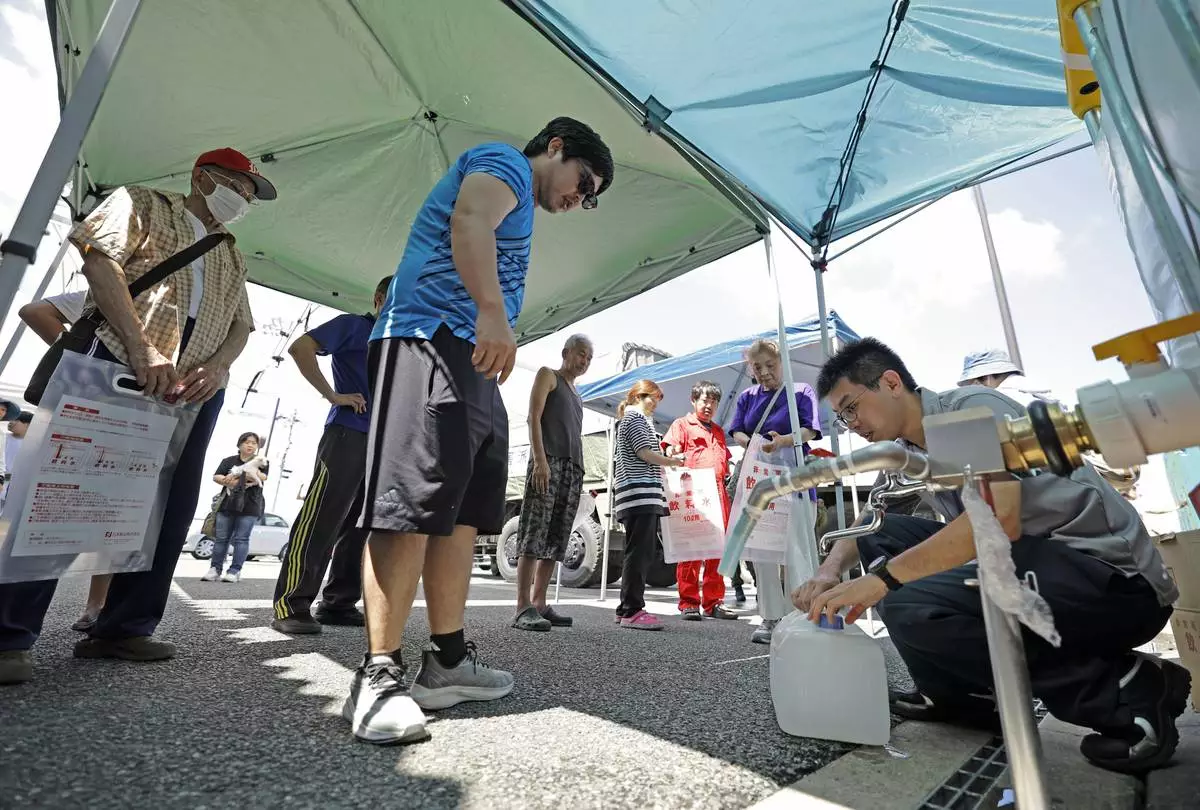
Residents receive water supplies at Hikawa town hall as an earthquake disrupted water service in Hikawa, Kumamoto Prefecture, southern Japan, Friday, July 31, 2026. (Atsuhiro Maeda/Kyodo News via AP)
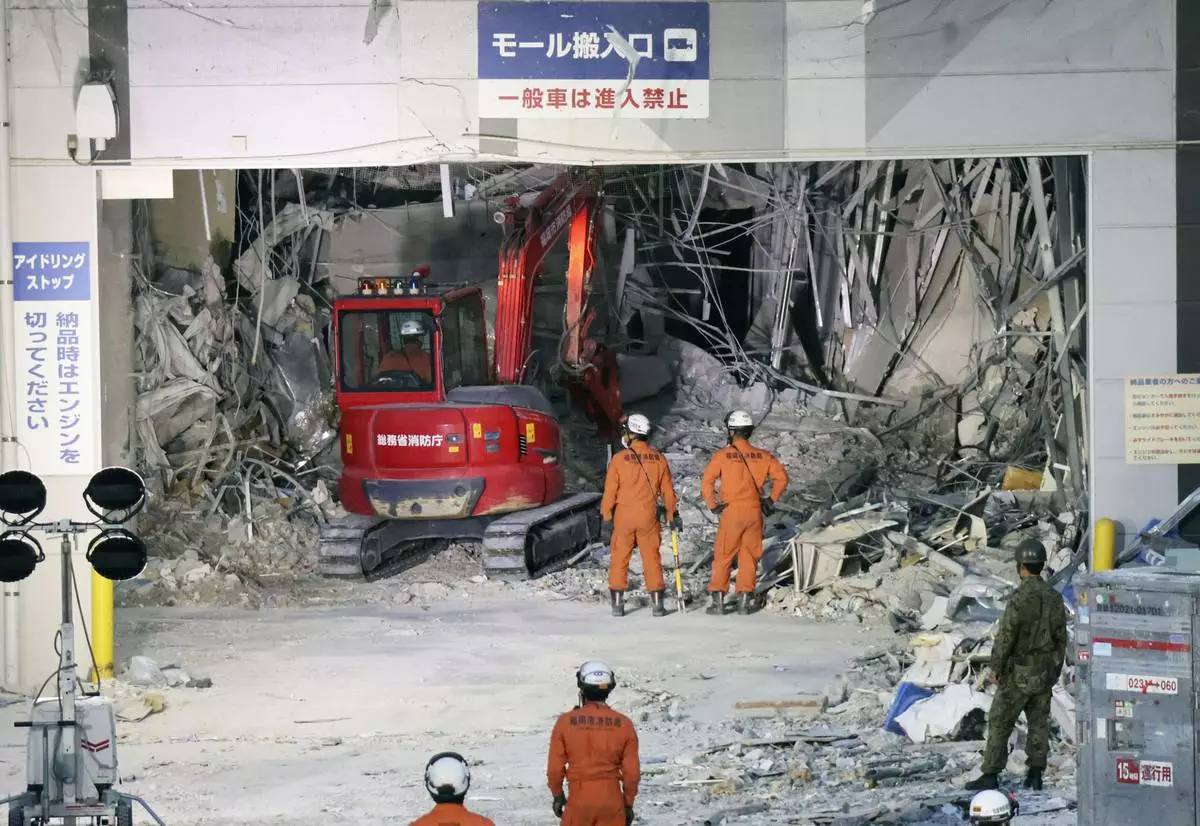
Heavy machinery removes debris at AEON Mall, which was damaged by an explosion following an earthquake, in Kashima, Kumamoto Prefecture, southern Japan, Friday, July 31, 2026. (Kyodo News via AP)
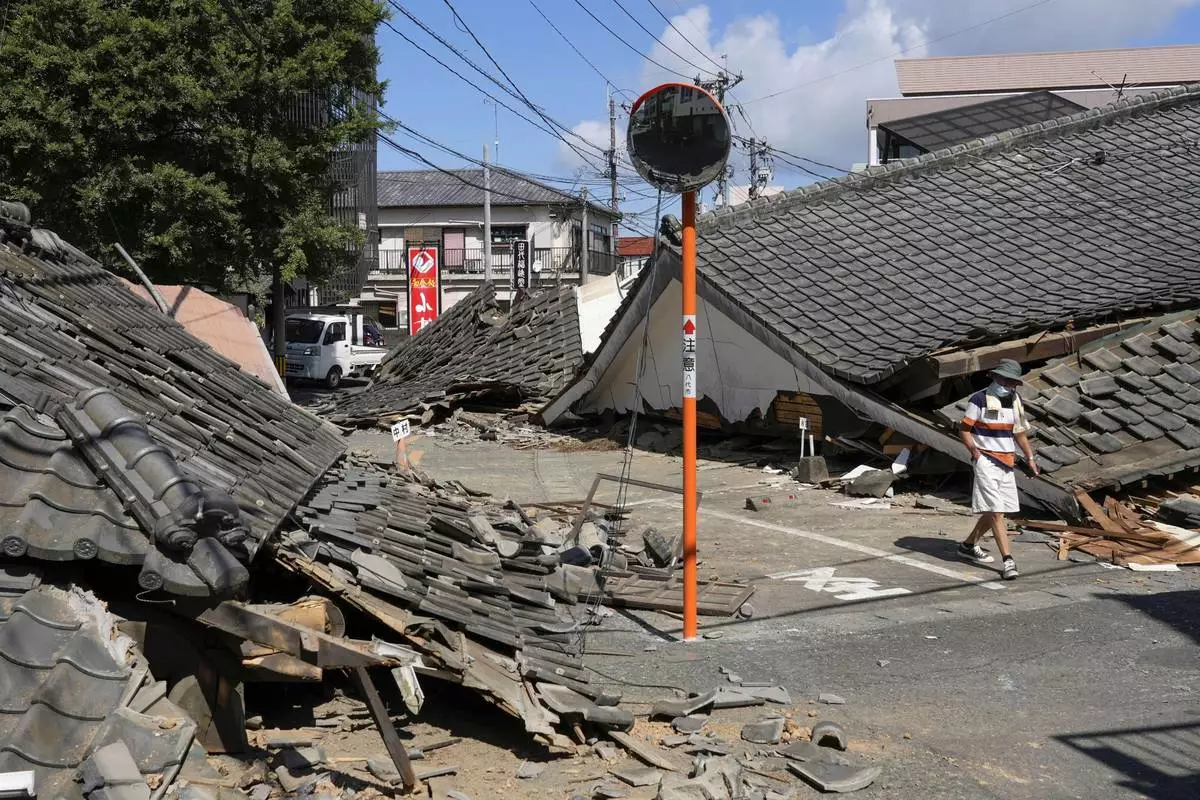
A person walks past the houses collapsed in an earthquake in Yatsushiro, Kumamoto Prefecture, southern Japan, Friday, July 31, 2026. (Koji Harada/Kyodo News via AP)
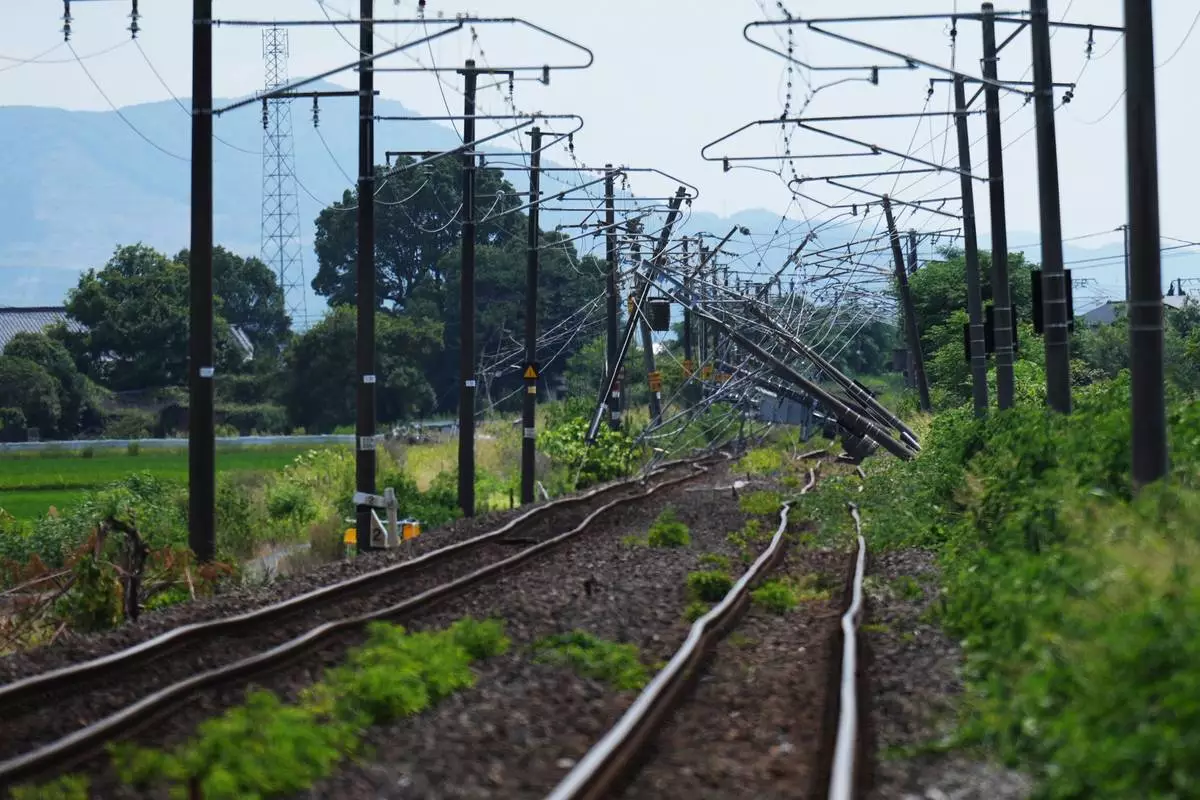
Electric poles are seen fallen over rail tracks in Hikawa, southern Japan, Thursday, July 30, 2026, two days after an earthquake hit the area. (AP Photo/Hiro Komae)
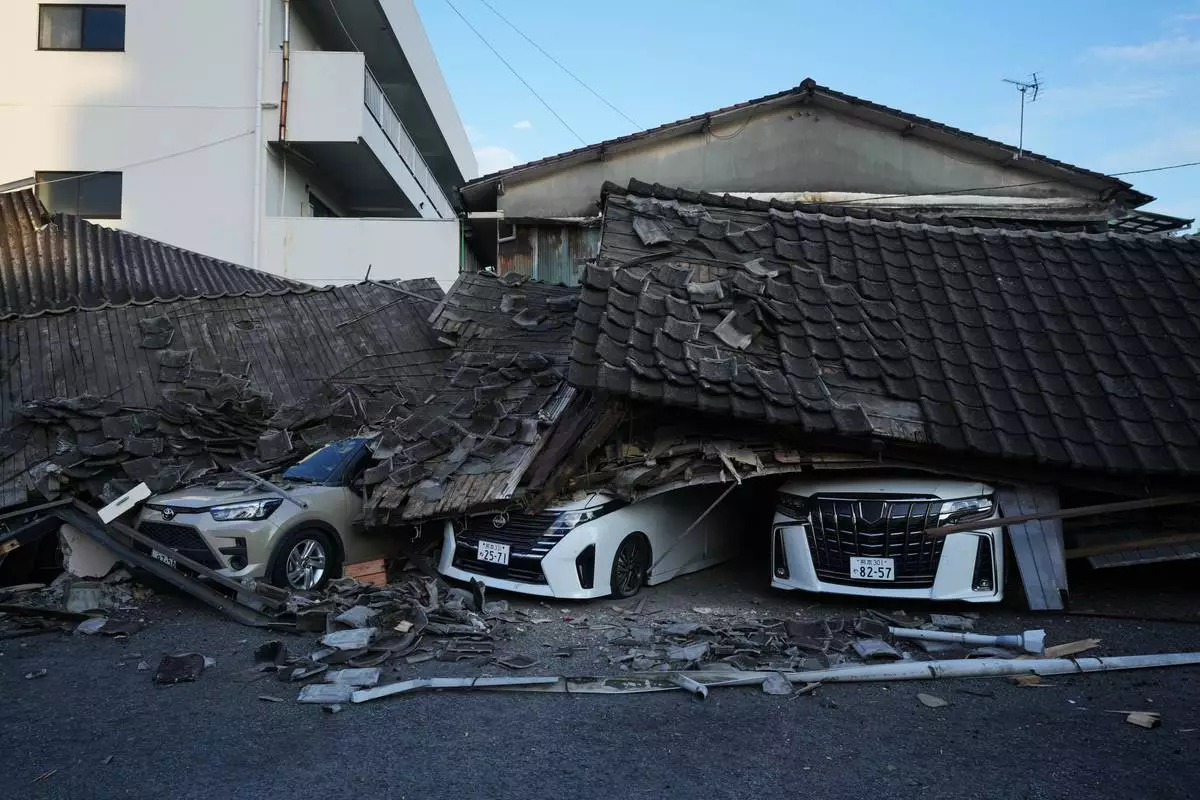
Vehicles are crushed under collapsed buildings in Yatsushiro, southwestern Japan, Wednesday, July 29, 2026, the day after an earthquake hit the area. (AP Photo/Hiro Komae)
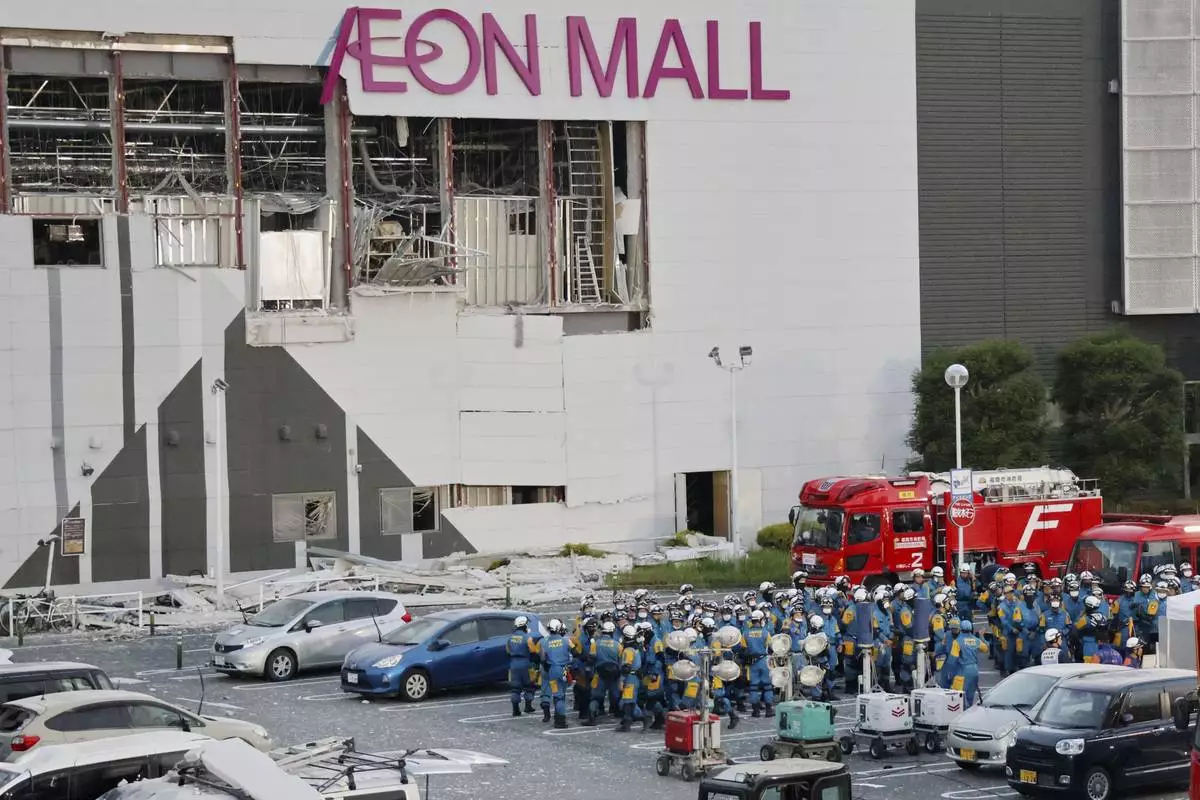
Police units gather in the parking lot before beginning operations at Aeon Mall Kumamoto in Kashima, Kumamoto Prefecture, Friday, July 31, 2026. (Kyodo News via AP)