China's exports of artificial intelligence-related products have maintained a rapid growth this year, as various regions work to bring more advanced AI capabilities into tools and services aimed at industry use and everyday life.
South China's Guangdong Province, supported by a well-developed consumer electronics supply chain, has fostered a diverse range of smart terminal products that have reached global markets. Currently, Chinese smartwatches and smart toys are sold in over 170 countries and regions worldwide.
In Shanghai, where the intelligent sensing industry is a major strength, lidars and 3D printers are in hot demand, helping accelerate the upgrade of intelligent driving worldwide.
Southwest China's Sichuan Province, home to a cluster of core computing component companies, is focusing on integrated circuit research, development and manufacturing, providing key hardware for global digital infrastructure.
In the first half of this year, China's exports of laser ranging radar used for intelligent driving increased by 58.3 percent, while exports of 3D printers surged by 109.3 percent.
Meanwhile, exports of intelligent bionic robots built around AI technologies exceeded 10,000 units, and intelligent handling robots and welding robots continued to expand into the global manufacturing market, with export growth rates both exceeding 60 percent.

China's AI products exports maintain rapid growth as volumes expand
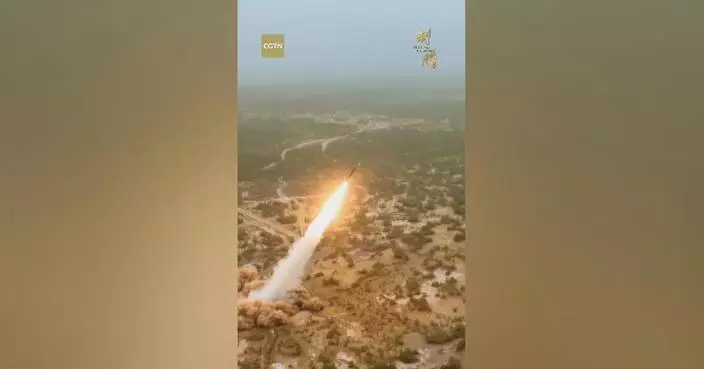
The U.S. Department of Defense plans to spend more than 10 billion dollars to purchase air defense and interceptor missiles, and several billion dollars more to purchase various other types of missiles, according to a Bloomberg report on Friday.
According to the report, documents drafted by the U.S. Department of Defense and submitted to the defense committees of both the Senate and the House of Representatives indicate that these funds will be used to procure 5.75 billion dollars’ worth of THAAD interceptor missiles and 5.57 billion dollars’ worth of Patriot missile segment enhancements. The procurement list also includes 1.9 billion dollars’ worth of Standard Missile-6 (SM-6) and 1.3 billion dollars' worth of Tomahawk cruise missiles, as well as 692 million dollars for the procurement of precision-strike missiles, which was used for the first time in the war with Iran.
The report said that as U.S. forces struck Iran and intercepted its drone and missile attacks against U.S. bases in the Middle East, concerns are rising about the weapons stockpiles. U.S. lawmakers, defense officials, and analysts have stated that the current US weapons stockpiles are at dangerously low levels.
CBS News, citing U.S. military and intelligence officials, reported earlier this month that the rapid depletion of U.S. air defense interceptors and precision-guided weapons during the U.S.-Iran conflict had raised concerns within the U.S. government.

Pentagon plans to spend over 10 bln dollars on missile purchase