Skip to Content Facebook Feature Image

Hamas says it’s reached an agreement to disarm, a significant move that will face major challenges

News

Hamas says it’s reached an agreement to disarm, a significant move that will face major challenges
News

News

Hamas says it’s reached an agreement to disarm, a significant move that will face major challenges

2026-07-31 19:48 Last Updated At:19:50

CAIRO (AP) — Hamas said Friday that it reached an agreement to disarm, a significant move that could help end the war in Gaza — but one that will face many hurdles and could take a long time to achieve, if at all.

The group agreed to a road map as long as Israel also makes concessions, including ending hostilities and withdrawing its troops from the Palestinian territory, a Hamas official and a regional official told The Associated Press. Senior Hamas official Bassem Naim confirmed in a post on X that the group agreed to the deal.

Israel has not commented on the deal, which U.S. President Donald Trump announced hours earlier. It comes nine months after a U.S.-brokered ceasefire to end the fighting between Israel and the group was signed.

That 20-point ceasefire plan calls on the militant group to surrender its weapons and destroy its vast network of tunnels. It also envisions Israeli forces withdrawing from Gaza, the arrival of a new technocratic Palestinian government, the deployment of a security force known as the International Stabilization Force and the rebuilding of the battered Palestinian enclave.

But negotiations between Israel and Hamas over the implementation of the next phase of the ceasefire deal had largely deadlocked — and disarmament was a major sticking point.

Disarming would represent a sea change for Hamas, whose founding charter calls for armed resistance against Israel, and which sees its arsenal, including rockets, anti-tank missiles and explosives, as lying at the heart of its identity.

“The agreement will be carried out in carefully structured phases,” Trump said on social media. “As disarmament is completed, Israeli forces will withdraw, and the International Stabilization Force will work with a new Palestinian police force to take responsibility for Gaza being safe for its residents and its neighbors.”

A copy of the agreement obtained and verified by The Associated Press said that all police weapons will be transferred to the U.S.-backed Palestinian technocratic committee, known as the National Committee for the Administration of Gaza, upon its arrival in the enclave. It’s not clear when that would happen since it is contingent on other steps.

A process to decommission and store heavy weapons, military production sites and tunnels will begin after the arrival of the Palestinian committee and the deployment of the ISF. The process will be linked to an Israeli withdrawal, in phases, from the areas under its control in Gaza, according to the agreement.

In a statement Thursday, an Israeli official said that there will be no Israeli withdrawal from the areas it holds in Gaza — which account for about 60% of the territory — before the militant group is disarmed and the strip demilitarized. The statement was made on condition of anonymity in line with government protocol.

A person with knowledge of the situation said that Israel is fully involved, but it's not a signatory to the deal, which is between Hamas and several countries helping to negotiate and guarantee the ceasefire. The person spoke on condition of anonymity in order to discuss the agreement. The deal's guarantors are the U.S., Turkey, Egypt and Qatar.

On Thursday, U.S. and Board of Peace officials, describing the deal to reporters on condition of anonymity under guidelines set by the White House, gave an extremely optimistic assessment of the agreement that laid out a scenario very similar to the one outlined by Trump and his top aides when the Board of Peace was first formed. The board, which was established by Trump, oversees the ceasefire in Gaza.

While Gaza's police force is expected to hand over its arms, that doesn't include the vast majority of Hamas militants, and heavy weaponry is not included in that part of the agreement, according to the officials.

Instead, the surrender of heavy weapons and the decommissioning of Hamas tunnels and other infrastructure are to come later in a process that could take between 200 and 350 days, a Board of Peace official said. That timeline did not appear in the agreement obtained by AP.

The Hamas official and the regional official involved in the process said that Hamas and other groups agreed to “collect and store” arms inside Gaza under the supervision of the Palestinian technocratic committee and that weapons won’t be handed to Israel or non-Palestinian parties. The officials, who spoke on condition of anonymity because they were not authorized to brief the media, said this would be a gradual process linked to an Israeli withdrawal.

A U.S. official said Israel, which has been deeply skeptical about Hamas’ willingness to give up its guns or relinquish control of Gaza, had been consulted at every step of the negotiation.

However, the official said Israel was not being asked to do anything more than what it had initially committed to when it agreed to Trump’s 20-point plan, which essentially involves withdrawing its forces from Gaza and committing to ending airstrikes on the territory.

A member of the Palestinian technocratic committee told the AP on Friday that it was eager to enter Gaza but was concerned Israel will pose challenges for them. The person spoke on condition of anonymity because they were not allowed to speak to the media. The person said they didn’t expect to enter Gaza for at least two months.

The committee welcomed the progress Friday, but said the work to restore public institutions and services and rebuild the territory would be immense.

The war in Gaza began after a Hamas-led attack on southern Israel on Oct. 7, 2023, killed around 1,200 people and saw 251 taken hostage. Israel’s retaliatory offensive in Gaza has killed more than 73,000 Palestinians, including those killed since the ceasefire, Gaza’s Health Ministry said. The ministry, which is part of the Hamas-led government and is staffed by medical professionals, does not distinguish between civilians and militants in its toll but says women and children make up around half of all deaths.

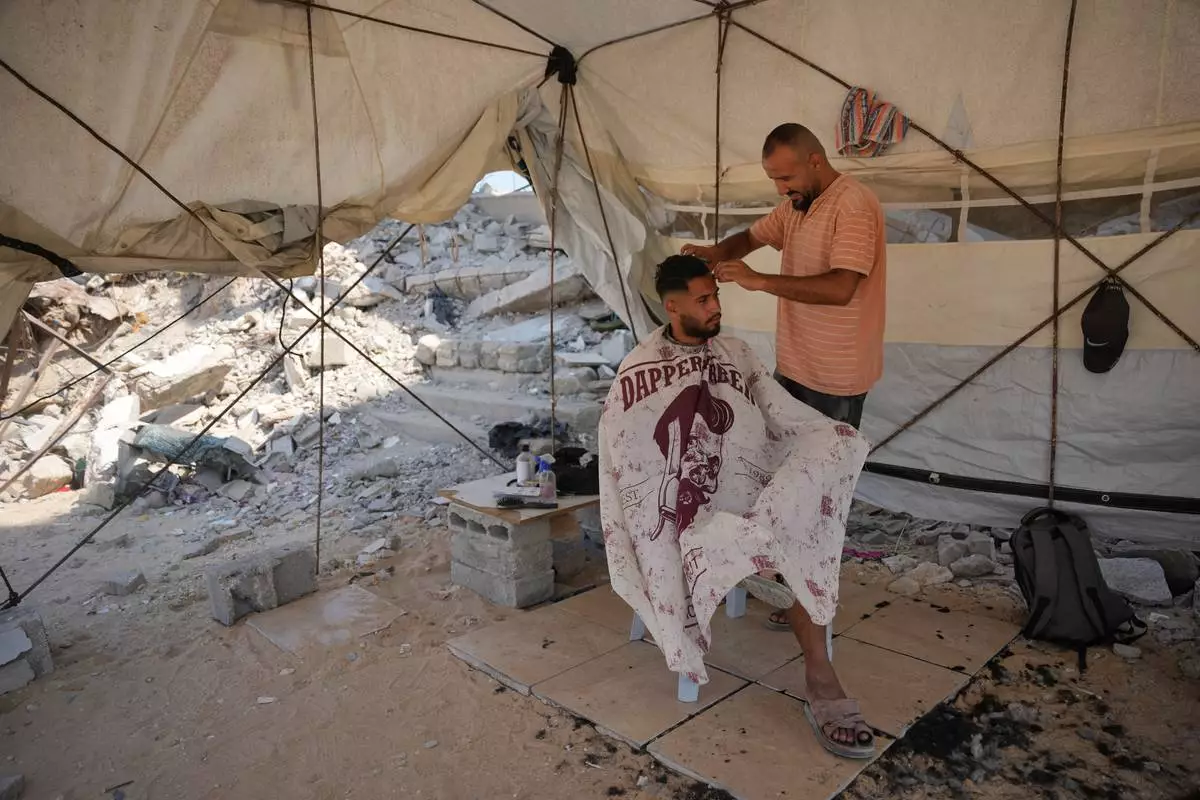
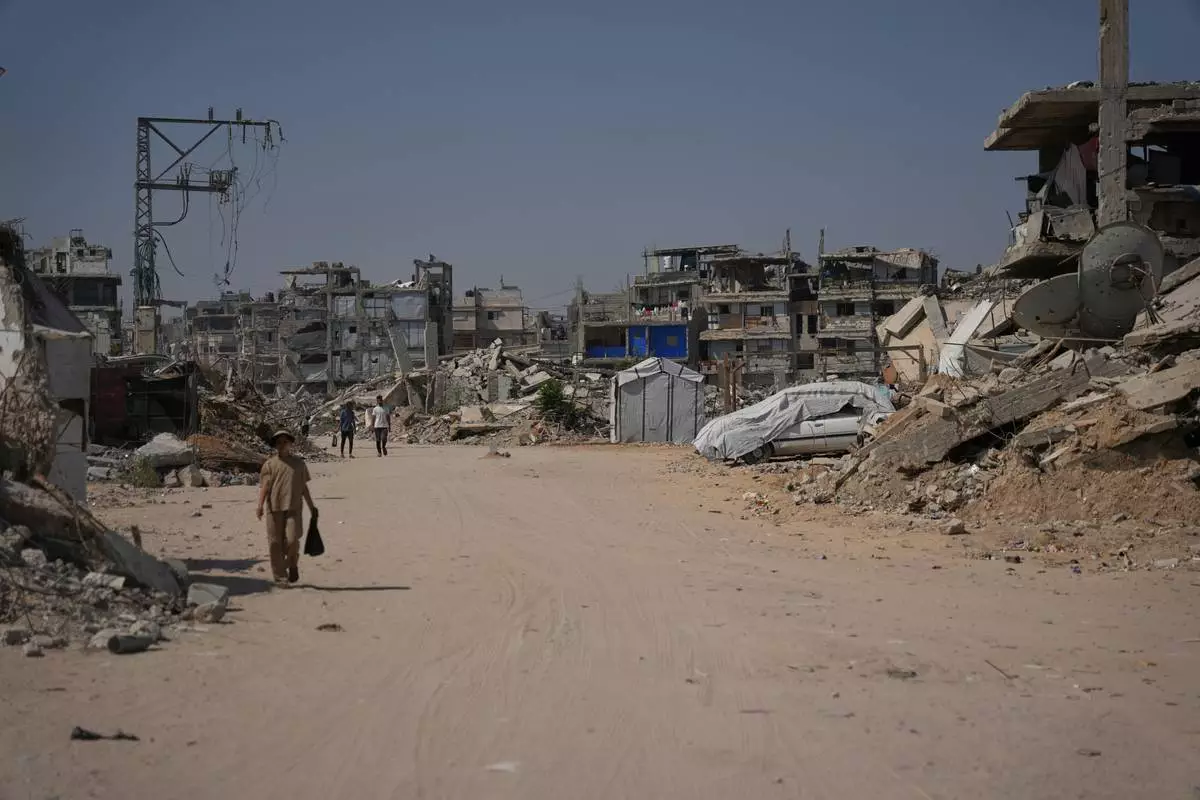
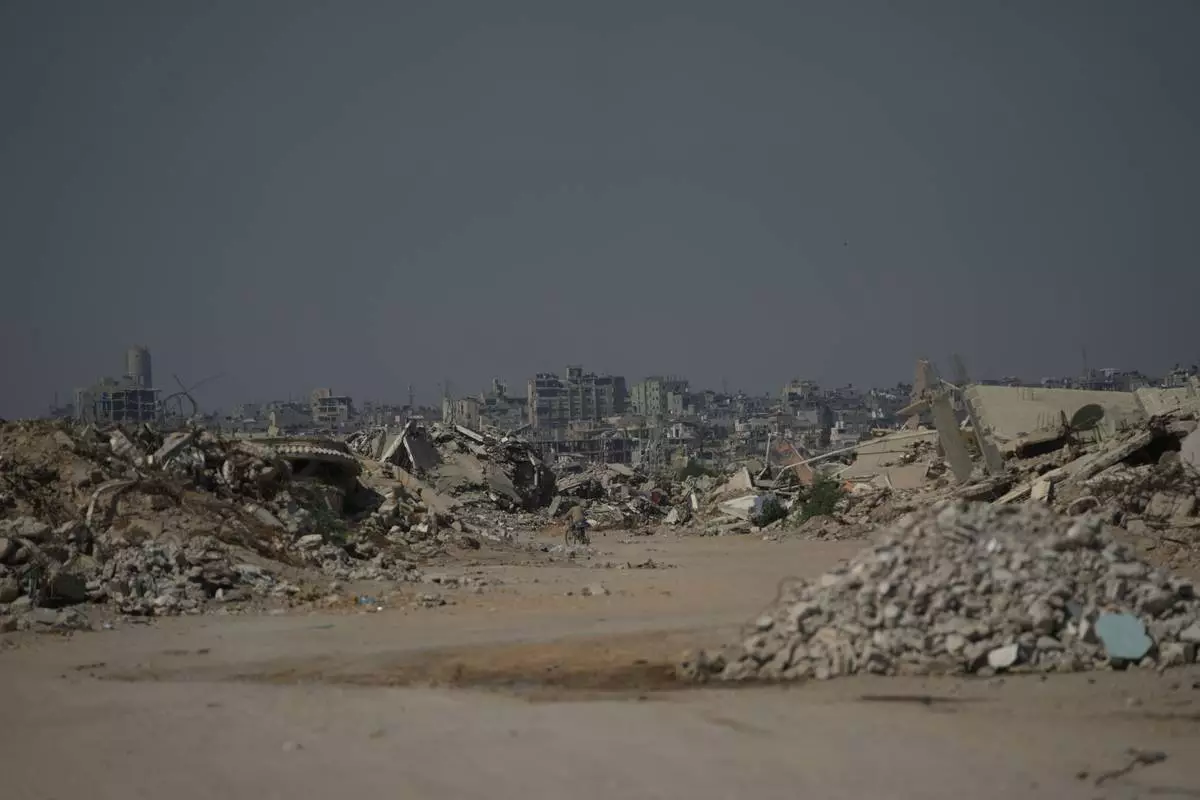
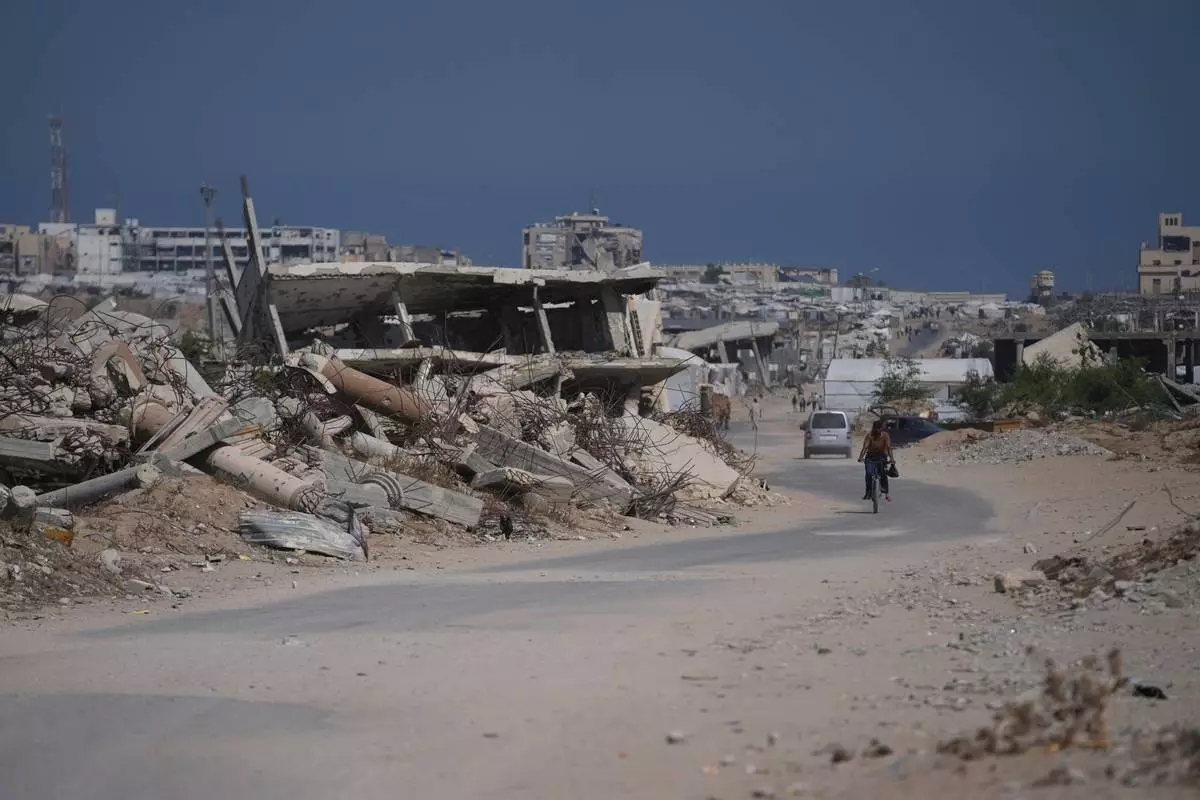
With Israel in control of much of Gaza, Palestinians are confined to squalid tent camps and heavily damaged urban neighborhoods.

Mednick reported from Tel Aviv, Israel, Cooper from Phoenix, and Lee from Washington. Associated Press writers Farnoush Amiri in New York and Edith M. Lederer at the United Nations contributed.

FILE - President Donald Trump arrives on Air Force One at Hagerstown Regional Airport, in Hagerstown, Md., en route to Camp David, Md., June 8, 2025. (AP Photo/Manuel Balce Ceneta, File)

FILE - President Donald Trump arrives on Air Force One at Hagerstown Regional Airport, in Hagerstown, Md., en route to Camp David, Md., June 8, 2025. (AP Photo/Manuel Balce Ceneta, File)

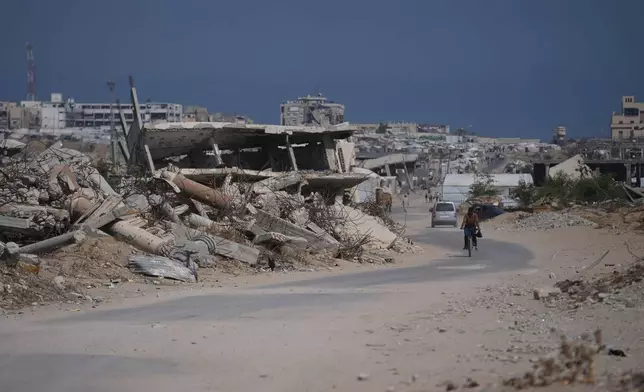
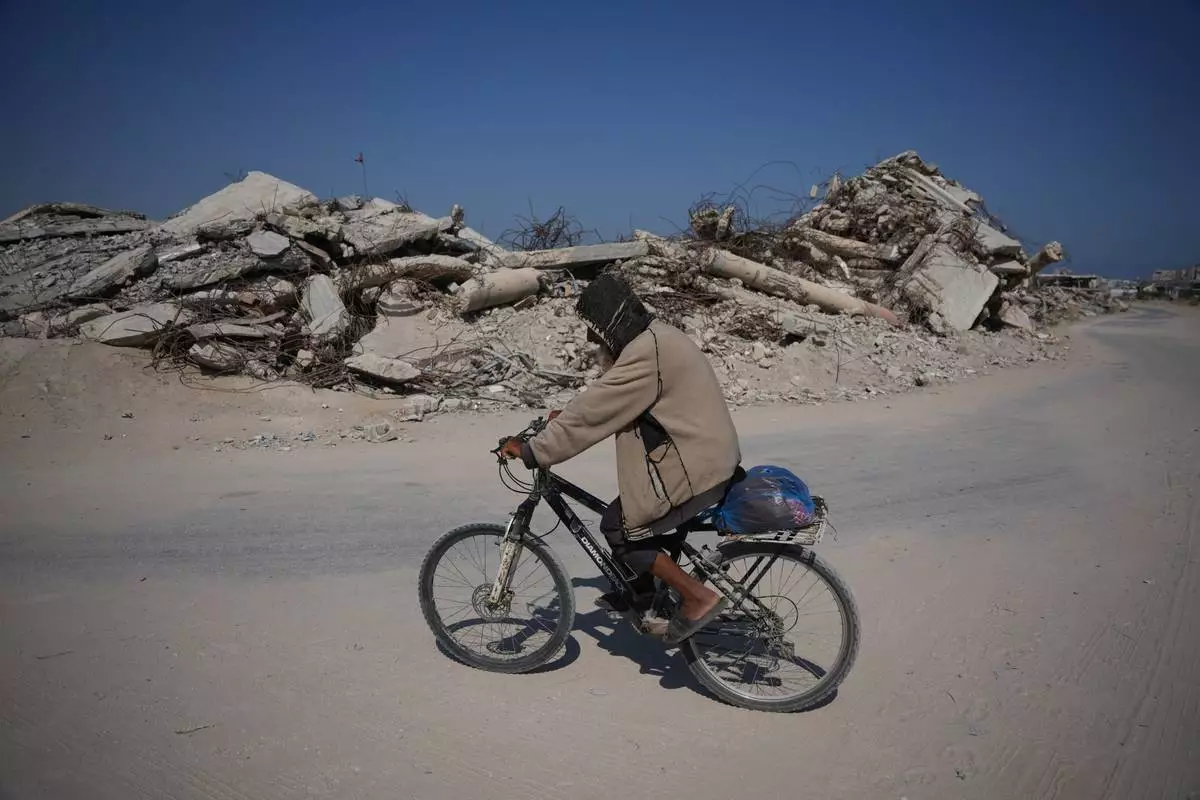
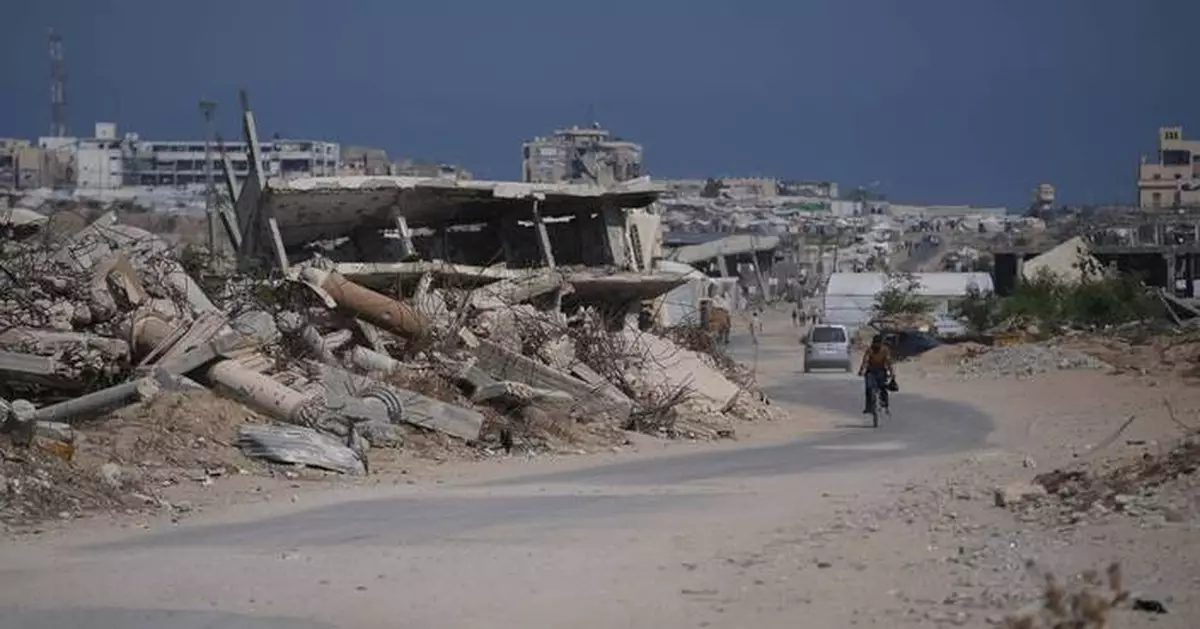
A Palestinian man rides his bicycle by the rubble of buildings that were destroyed during the Israel Hamas war, in Khan Younis, southern Gaza Strip, Friday, July 31, 2026. (AP Photo/Abdel Kareem Hana)
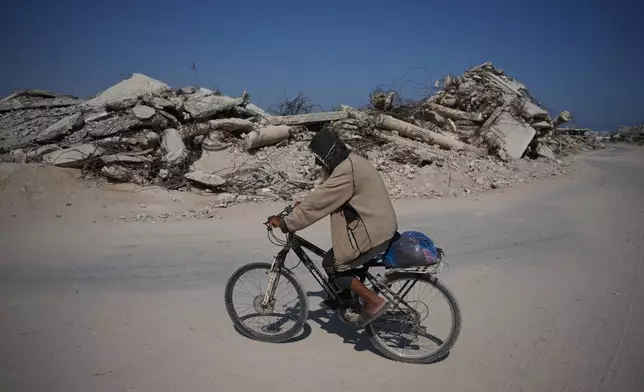
A Palestinian man rides his bicycle by the rubble of buildings that were destroyed during the Israel Hamas war, in Khan Younis, southern Gaza Strip, Friday, July 31, 2026. (AP Photo/Abdel Kareem Hana)

CEUTA, Spain (AP) — Some 60,000 migrants have entered Spain’s Ceuta from Morocco in the past 24 hours, Ceuta's president says. That is equivalent to 70% of the city's regular population.

At least 34 migrants have died in the process.

“The situation that Ceuta is going through is absolutely unsustainable,” said Juan Jesús Vivas on Friday.

The border crisis boiled over Thursday and continued on Friday with security forces clashing with migrants on the Moroccan side of the border.

Spanish Prime Minister Pedro Sánchez condemned the breach of the border on Friday speaking in Ceuta, describing the events as "a violation of Spain's territorial integrity.”

The Spanish leader cast blame on human smugglers, saying they "deceive so many young people, and ultimately lead many of them to their deaths — whether in the ocean or, as in this case, at Spain’s border in the autonomous city of Ceuta.”

Live footage of the border showed hundreds of migrants gathered on a hill overlooking Ceuta being dispersed with tear gas by Moroccan forces, while others continued to swim to the Spanish territory.

At the same time, large groups of migrants walked back from Ceuta toward Morocco to return home.

Rachid Sbihi, who leads a local workers association representing Civil Guard officers, called the situation a “serious humanitarian crisis," saying thousands of migrants, including unaccompanied children, were left sleeping in parks and on sidewalks, while others roamed the streets aimlessly.

“People are still entering. The reinforcements, including Spanish military troops, that have arrived are only helping the injured and other humanitarian efforts,” he said. "It’s chaotic.”

Among the 18 who died, many drowned, Sbihi said, but some were also killed in a stampede to cross the breakwater fence at Tarajal beach, an urban beach near a border checkpoint with Morocco.

Ahmed Karim, a 33-year old Moroccan, said he had crossed into Ceuta because of the lack of jobs in his country.

“Many people want to go to Europe, America, but they don’t have the opportunity,” Karim said.

On Friday morning, the waters near the border fence were littered with buoys, shoes and other belongings left behind.

Moroccan police deployed additional personnel, used water cannons and fired warning shots into the air to prevent migrants from crossing into Ceuta, according to rights groups in Morocco.

“Despite the heavy police presence, people crossed through the waterway, while the land border remained closed,” said Achraf Maimouni, a human rights activist in Fnideq, the Moroccan city bordering Ceuta.

Migrants arrested at the border were taken farther into Morocco, away from Ceuta, “but people are still coming,” he said.

Morocco’s ambassador to Spain expressed hope that those who crossed from Morocco into the Spanish exclave would return. Karima Benyaich described the situation in Ceuta as difficult, saying it had unfolded against Morocco’s wishes.

“We have always prioritized legal, orderly and safe migration for all,” she said. Benyaich did not comment on what prompted the migrants to cross into Ceuta.

But authorities in both Ceuta and Madrid, linked it to a recent decision by Spain's Supreme Court that ruled migrants arriving by sea could not be summarily deported, unlike those who cross by land or climb the border fence.

Sánchez said migrant smugglers misinterpreted the ruling, but acknowledged that it may have played a role in sowing chaos.

“It appears that this interpretation of the Supreme Court’s ruling spread like wildfire over the past few hours through the networks of human trafficking organizations, triggering the kind of mass surge we witnessed yesterday," Sánchez said.

Spain is a main point of arrival into Europe for migrants seeking better economic opportunities or an escape from violence in their home countries.

To reach Ceuta, located on the northern African coast, migrants often swim from the Moroccan town of Fnideq, covering about 3 miles (5 kilometers) to reach Spanish territory. Others attempt the crossing from the nearby town of Belyounech, where the distance is shorter.

Sánchez has bucked the anti-migration trend that has gained ground across Europe and in the U.S.. While the Trump administration and other European countries have tightened their borders and stepped up deportations, Spain earlier this year moved to give residency and work permits to hundreds of thousands of migrants already living in the country without permission.

Sánchez, a Socialist, argued that it would be good for the economy and the demographics of an aging Spain. Migrants who entered irregularly after January 1, 2026, were not included.

But his critics have jumped the opportunity granted them by the endless reels of young Moroccans streaming into Ceuta to attack his policy, saying it encouraged more migrants to come to Spain.

“Sánchez allows Spain to be invaded through Ceuta,” Spanish conservative politician Isabel Díaz Ayuso wrote on X.

Sánchez on Friday distanced the migrant legalization push from the events unfolding in Ceuta.

The chaos had ripple effects abroad as well. Premier Giorgia Meloni threatened to suspend Italy’s open-border Schengen agreement with Spain “to defend our borders and ensure the safety of our citizens,” even though Italy doesn’t share a border with Spain and is also a main entry point for tens of thousands of migrants crossing the Mediterranean from North Africa each year.

French Interior Minister Laurent Nunez said France would also strengthen border checks with Spain, writing on X that he had activated the Rapid Intervention Border Force.

“This crisis in Ceuta has nothing to do with the regularization of migrants adopted by the Government of Spain, as is being falsely claimed by some," the Spanish government said in a statement late Thursday after Meloni's announcement. It also summoned Italy’s ambassador in Madrid.

“This crisis stems from an interpretation of a Supreme Court’s decision, according to which people who swim illegally across the border cannot be returned," the Spanish government said. The decision has been exploited by smugglers who take advantage of vulnerable migrants, it added.

Some activists in Morocco expressed doubt that the ruling was behind the surge, arguing most migrants would have been unaware of such legal decisions.

Migrants from Morocco also attempted to cross into Melilla, Spain’s other territory at the tip of North Africa.

There was widespread chaos in Bni Nsar, the Moroccan town bordering the Spanish territory, where migrants clashed with police, throwing rocks and setting police vehicles ablaze, according to local media and rights groups. They reported injuries among security forces and the arrest of dozens of people attempting to cross.

Omar Naji of the local branch of the Moroccan Association of Human Rights told the AP that the crossing attempts into Melilla appeared to be linked to the situation in Ceuta.

Like Ceuta, Melilla is a Spanish autonomous city on the North African coast. Many Moroccans consider both cities to be occupied territory.

Juan Jesús Vivas, the head of Ceuta’s regional government, had warned earlier this week that migrant reception centers were overwhelmed as arrivals by sea had steadily been increasing before the chaos erupted Thursday.

Spain’s Interior Ministry would not confirm the number of migrants who had made it to Ceuta but said it would publish its next migration report on Monday.

Spanish media, citing unnamed government and security sources, estimated between 30,000 and 49,000 migrants had crossed in the past 24 hours. A member of Spain's civil guard who spoke on condition of anonymity because he was not authorized to release figures to the media said that 49,000 people were estimated to crossed. That's more than half of Ceuta's nearly 84,000 population.

Sbihi, of the civil guard workers association, said it was difficult to know exact numbers but believed tens of thousands of migrants had made it through.

Ceuta has been a Spanish possession since 1580. Its mixed population of Christians and Muslims, Spanish and Moroccan residents and day workers, lives in relative harmony.

——

Naishadham reported from Madrid, Brito from Barcelona, Spain. AP journalists Joseph Wilson in Barcelona, Spain, Akram Oubachir in Casablanca, Morocco, and Antonio Sempere in Ceuta, Spain, contributed.

Migrants return to Morocco from the Spanish enclave of Ceuta, Friday, July 31, 2026. (AP Photo/Antonio Sempere)

Migrants return to Morocco from the Spanish enclave of Ceuta, Friday, July 31, 2026. (AP Photo/Antonio Sempere)

Migrants return to Morocco from the Spanish enclave of Ceuta, Friday, July 31, 2026. (AP Photo/Antonio Sempere)

Migrants return to Morocco from the Spanish enclave of Ceuta, Friday, July 31, 2026. (AP Photo/Antonio Sempere)

Unaccompanied minors who crossed into Spain from Morocco spend the night on the streets in the Spanish enclave of Ceuta, Friday, July 31, 2026. (AP Photo/Antonio Sempere)

Unaccompanied minors who crossed into Spain from Morocco spend the night on the streets in the Spanish enclave of Ceuta, Friday, July 31, 2026. (AP Photo/Antonio Sempere)

Migrants spend the night on the streets after crossing from Morocco into the Spanish enclave of Ceuta, Friday, July 31, 2026. (AP Photo/Antonio Sempere)

Migrants spend the night on the streets after crossing from Morocco into the Spanish enclave of Ceuta, Friday, July 31, 2026. (AP Photo/Antonio Sempere)

Migrants spend the night on the streets after crossing from Morocco into the Spanish enclave of Ceuta, Friday, July 31, 2026. (AP Photo/Antonio Sempere)

Migrants spend the night on the streets after crossing from Morocco into the Spanish enclave of Ceuta, Friday, July 31, 2026. (AP Photo/Antonio Sempere)

Migrants try to cross from Morocco into the Spanish enclave of Ceuta, Friday, July 31, 2026. (AP Photo/Antonio Sempere)

Migrants try to cross from Morocco into the Spanish enclave of Ceuta, Friday, July 31, 2026. (AP Photo/Antonio Sempere)

Recommended Articles