MANCHESTER, England (AP) — Britain has a new hub of power: a bland modern office block about 165 miles (260 kilometers) from the prime minister's official London office and residence at 10 Downing St.
The Manchester low-rise is home to “No. 10 North,” the flagship of new Prime Minister Andy Burnham’s pledge to be a different kind of U.K. leader. Burnham was mayor of Greater Manchester before vaulting back into national politics, and one of his first acts was to set up a branch office in the city. It’s both symbol of and engine for his pledge to give local leaders more powers and spread economic growth around the country.
Click to Gallery
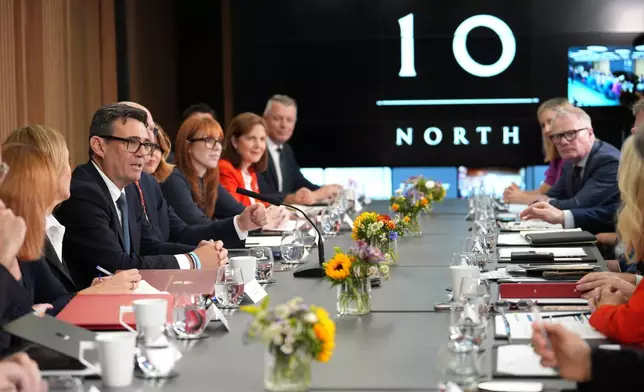
Britain's Prime Minister Andy Burnham, third left, holds a National Economic Council meeting at No 10 North at Heron House in Manchester, England. Friday July 24, 2026. (Christopher Furlong/Pool Photo via AP)
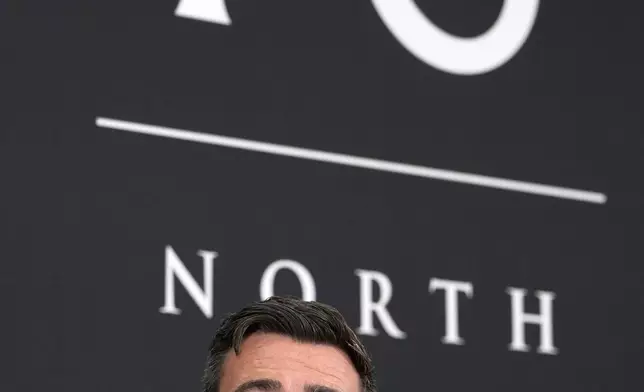
Britain's Prime Minister Andy Burnham holds a National Economic Council meeting at No 10 North at Heron House in Manchester, England. Friday July 24, 2026. (Christopher Furlong/Pool Photo via AP)
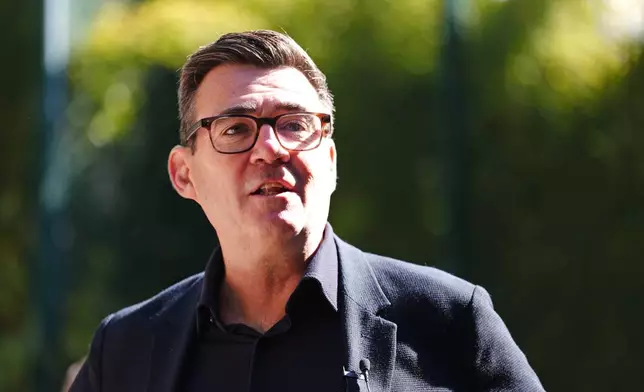
Britain's Prime Minister Andy Burnham during a visit to a family center in Sheffield, England, Friday, July 31, 2026. (Annabel Lee-Ellis/Pool Photo via AP)
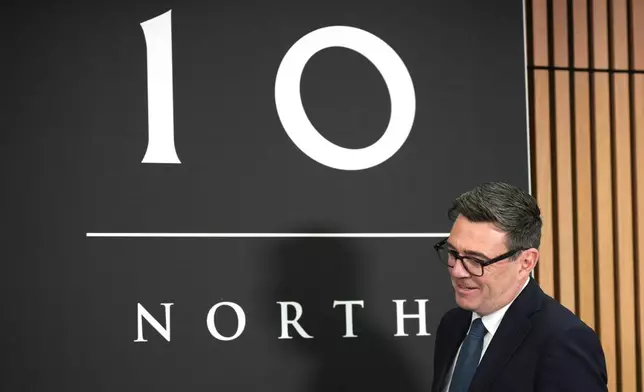
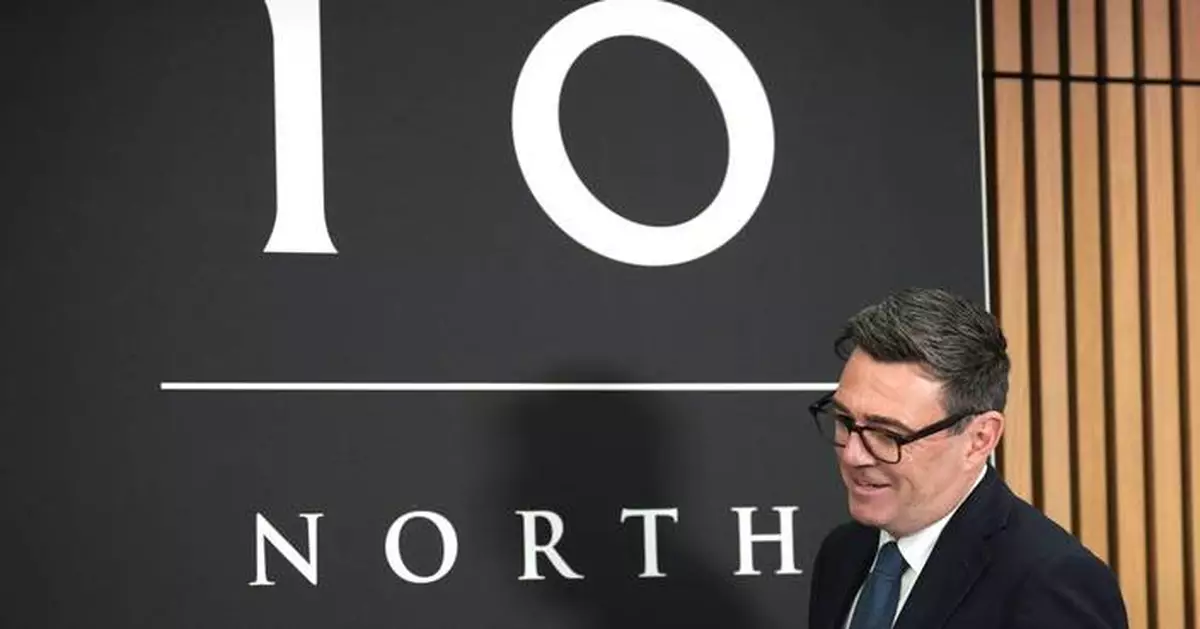
Britain's Prime Minister Andy Burnham arrives to hold a National Economic Council meeting at No 10 North at Heron House in Manchester, England. Friday July 24, 2026. (Christopher Furlong/Pool Photo via AP)
Burnham calls it “a North Pole that balances the South Pole" of Westminster politics in London. Critics have called it a gimmick.
It’s certainly a novelty. While past British leaders have spent weekends in their local constituencies, or at the prime minister’s official Chequers country retreat, none in living memory has had a large-scale office outside London. Burnham plans to work there at least one day a week, alongside a full-time staff of aides, experts and civil servants.
“It’s not another office," Burnham said Friday. "It is a fundamental change to the way the country thinks about growth and investment."
Burnham believes Manchester holds the key to avoiding the fate of Keir Starmer, his predecessor as Labour Party leader and prime minister.
Starmer stepped down in July after two years in office, following missteps, policy U-turns and his failure to get Britain’s sluggish economy growing.
During nine years as Manchester mayor, Burnham was praised standing up to central government on behalf of a proud, battle-scarred northern city that gave birth to the Industrial Revolution, movements for social change and a dynamic music scene. He gained the nickname King of the North for his championing of the city — and his political ambition.
Burnham promoted what has been called “Manchesterism,” a form of business-friendly socialism that involves harnessing private investment for major projects and decentralizing government to give communities more control over housing, transport, training and public services.
The city center boomed during his mayoralty. Skyscrapers sprouted from vacant lots, service industries grew, a thousand coffee shops bloomed and a municipally run network of bright yellow buses and trams crisscrossed the city.
Now Burnham wants to replicate the approach across the country, using No. 10 North as the engine room for redistributing wealth and economic opportunities to areas blighted by shuttered industries, lost jobs and an exodus of young people.
In a first step, Burnham announced Friday that mayors will get to keep a greater share of income and business tax revenue from their areas, calling it the “biggest transfer of power, funding and responsibility from Westminster in a generation.”
Many of the details haven’t been announced, however, including how much new money mayors will be getting.
Rob Ford, professor of political science at the University of Manchester, said Burnham’s bold early moves suggest “he does mean business in terms of changing the overall mechanics of government.”
“We have one of the most centralized countries out of all developed democracies in terms of how much money and decision-making power gets hoovered into the center, how little there is for the provinces to do,” Ford said. “He does seem quite determined to change that, but that’s a huge job.”
Burnham's critics point out that Manchester’s boom hasn't spread to all its outskirts, and the anti-immigration party Reform UK has been a beneficiary of voters’ discontent.
It’s envisioned that No. 10 North will eventually get a brand-new headquarters as part of an inner-city redevelopment project. For now, it shares a building with a chain pub, a civic register office and a branch of the cyberintelligence agency GCHQ.
It’s very different to cramped, stuffy 10 Downing St, a 350-year-old townhouse awkwardly converted into the hub of a government that has grown too big for it.
Supporters say No. 10 North is already a breath of fresh air. Rose Marley, chief executive of Cooperatives UK, an umbrella group for member-owned businesses, felt the difference when she was invited to a meeting there.
“It was so refreshing that it wasn’t us having to travel to London all the time,” she said. “Westminster might start realizing how bad the trains are and how much it costs when they have to come back the other way.”
Marley, who advised Burnham when he was mayor, likens the impact to when the BBC moved production of some programs to Salford in Greater Manchester.
“For the first time ever, the likes of me were asked onto the BBC sofa,” she said. “It meant voices like mine started to appear on the sofa and a diversity of thinking started to be heard.
“The voices that are furthest away from what you’re saying and what you believe, that’s when you need to listen the most," she said. "Westminster really does need to listen to all the parts of the country.”
Most Mancunians are proud of their city, and many support the idea of it getting more control over its own affairs.
“I think it makes sense,” said Sam Turner, a nursing lecturer. “Because the north is very different to the south, there are different house values, there’s different land values, with different salaries.”
But Ford says Burnham will need to show that he is giving power to all parts of the country, not just Manchester.
“You could go to Liverpool down the road, or Leeds, or Sheffield and they’ll say, ‘Well, you know, an office in Manchester isn’t necessarily an office for us,’” Ford said. “So that’s an argument he still has to win.”
Lesley Lebbon, visiting Manchester from Newmarket in eastern England, said No. 10 North is “a start,” but that other regions need attention, too. She’d like to see “more No. 10s, maybe an East and a West No. 10.”
Still, “I like the idea of what No. 10 North represents,” she said. “I think any progress has got to be better than no progress.”
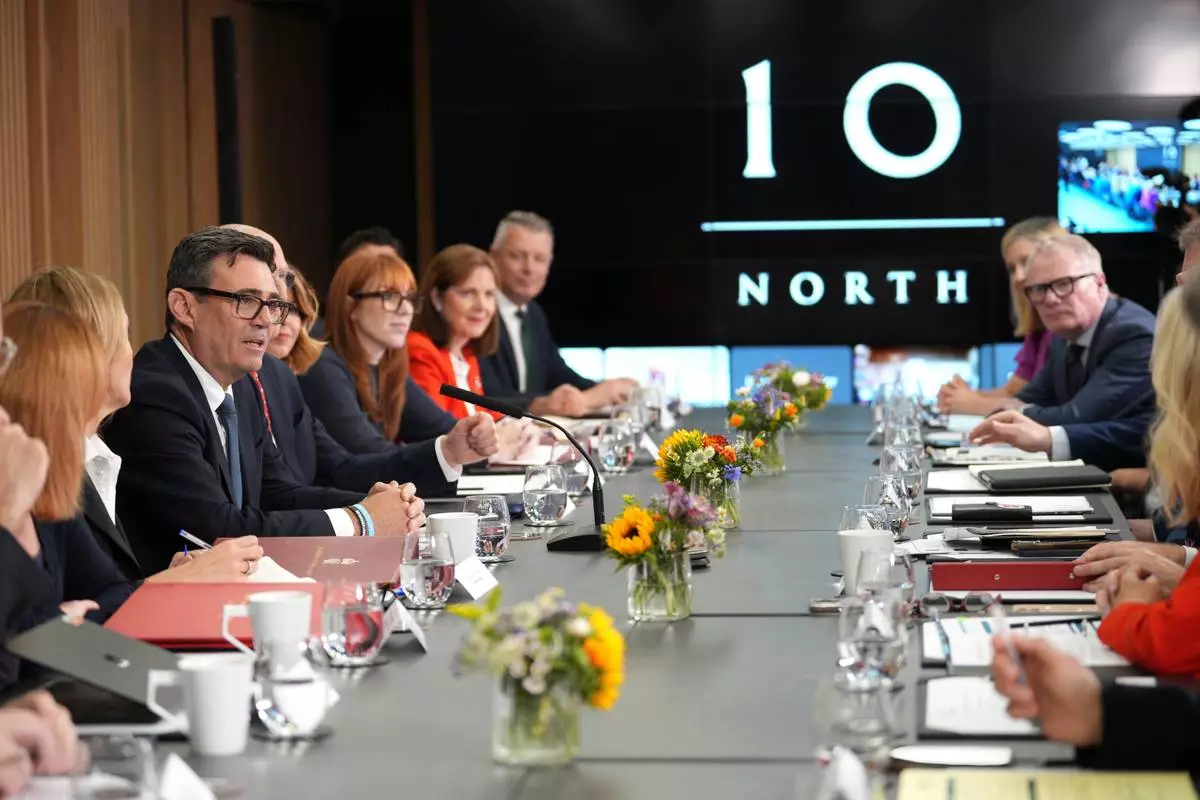
Britain's Prime Minister Andy Burnham, third left, holds a National Economic Council meeting at No 10 North at Heron House in Manchester, England. Friday July 24, 2026. (Christopher Furlong/Pool Photo via AP)
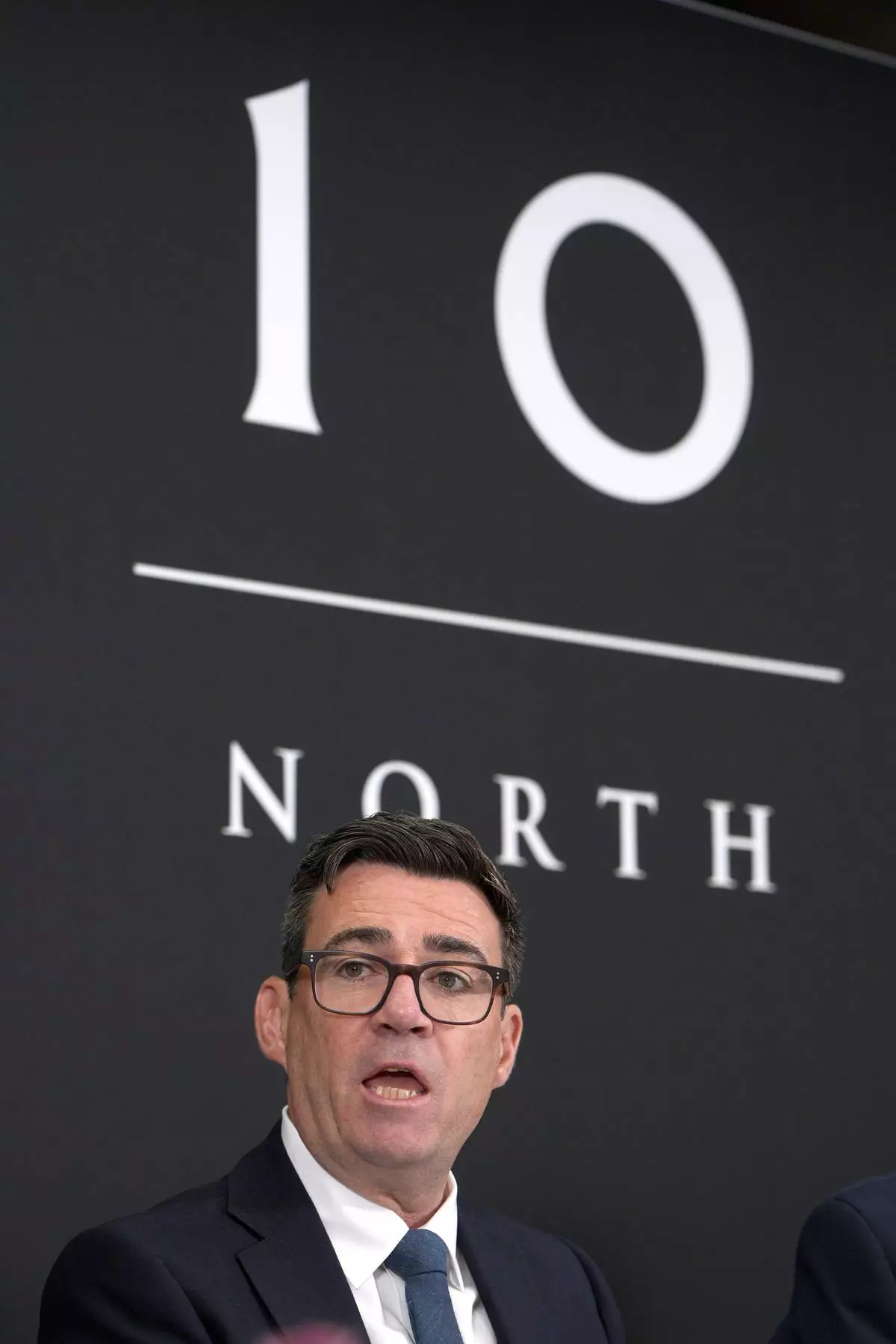
Britain's Prime Minister Andy Burnham holds a National Economic Council meeting at No 10 North at Heron House in Manchester, England. Friday July 24, 2026. (Christopher Furlong/Pool Photo via AP)
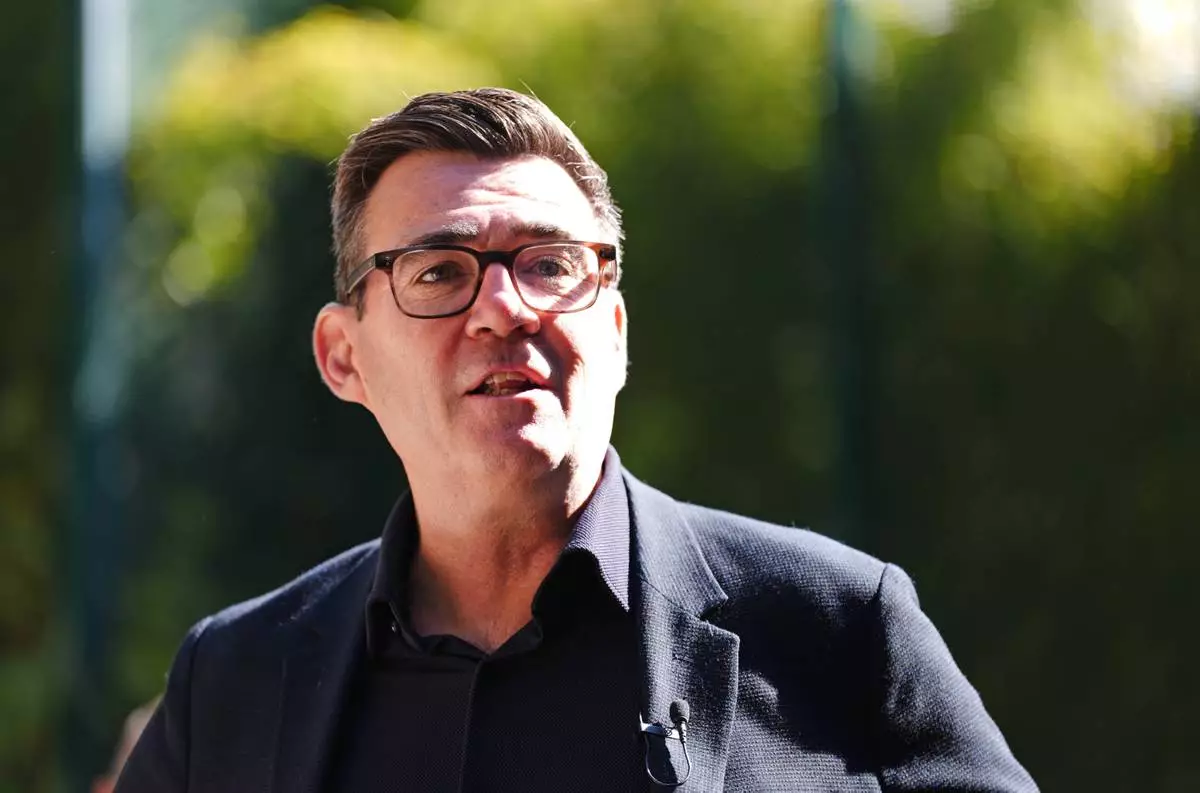
Britain's Prime Minister Andy Burnham during a visit to a family center in Sheffield, England, Friday, July 31, 2026. (Annabel Lee-Ellis/Pool Photo via AP)
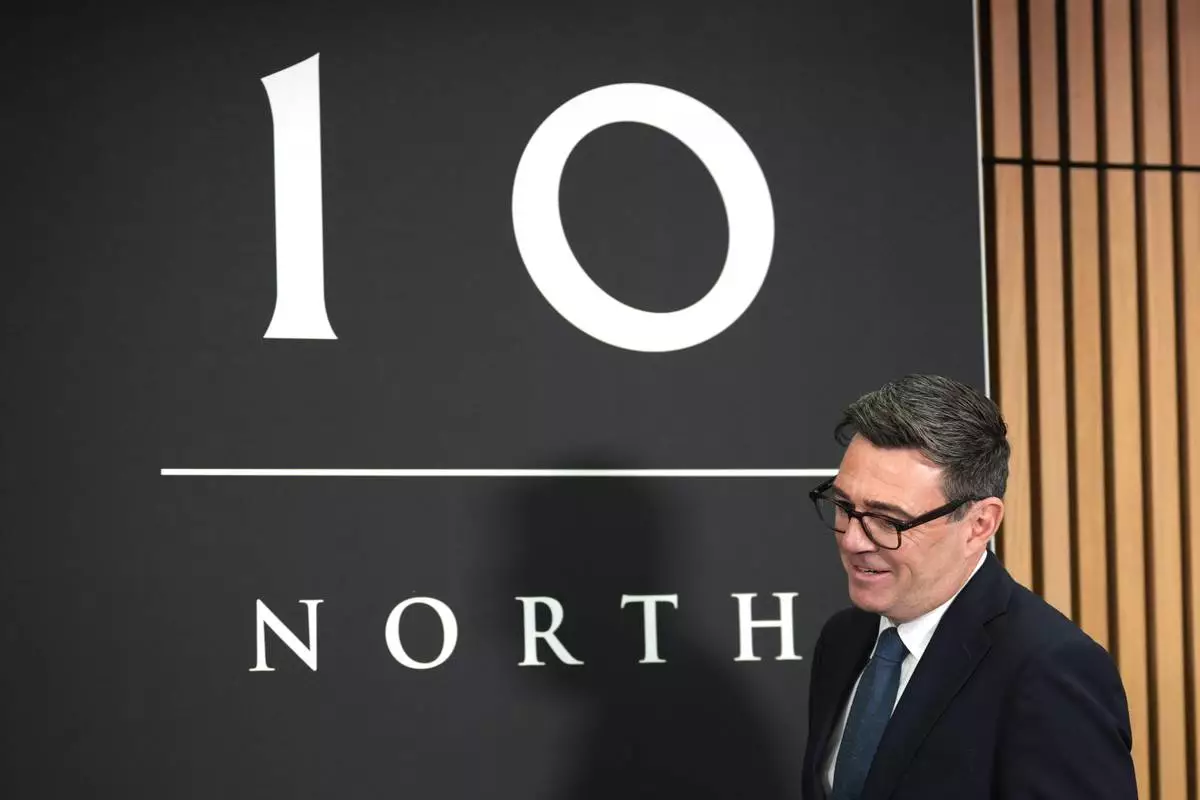
Britain's Prime Minister Andy Burnham arrives to hold a National Economic Council meeting at No 10 North at Heron House in Manchester, England. Friday July 24, 2026. (Christopher Furlong/Pool Photo via AP)