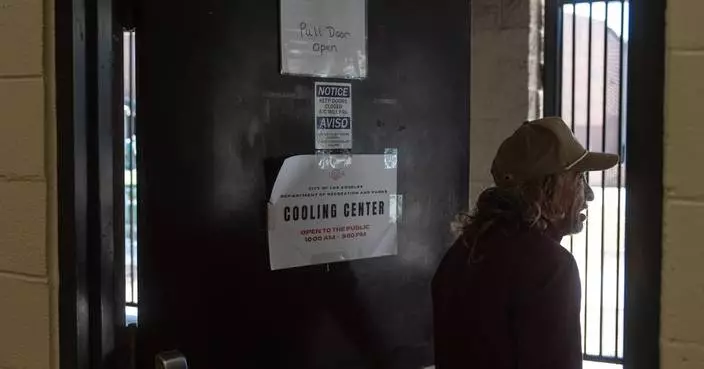
Michigan on Saturday joined Minnesota in reporting cyberattacks on nine of the state's water systems but an official said all systems were operating “safely.”
Earlier this week, authorities said cyberattacks targeted over 30 water systems in Minnesota. The source of the attacks is being investigated, but they came amid warnings that Iranian hackers have been focused on such systems.
The reports in Michigan surfaced after the state received a federal cyber alert Tuesday about attempts to tamper with operational technology at water systems.
Soon after, the state received “a small number of reports from Michigan communities indicating activity consistent with what federal agencies described,” said Dale George, the director of communications at the state's Department of Environment, Great Lakes, and Energy. He later said nine systems were impacted.
“All systems continued to operate safely, issues were addressed by local operators, and there are no known impacts that posed a public health concern,” George said in an statement.
The FBI, which is investigating, has not publicly identified a culprit and a spokesperson declined to say Thursday who the bureau thought might be responsible. The FBI, Cybersecurity and Infrastructure Security Agency and other agencies warned in an advisory last week that Iranian hackers have been targeting water and wastewater systems and the operational controls of other critical infrastructure sectors.
“The FBI is aware of recent public reporting around Water and Wastewater (WWS) sectors," the agency said in a statement Saturday. "The FBI and our interagency partners are fully engaged to protect critical infrastructure and we remain well-equipped to protect against cyber threats of all varieties.”
Digital warfare has become ingrained in military conflict, and local water plants or healthcare facilities often lack the funds and know-how to install the latest software patches or take other security steps. That has made them a favorite target, both because of the relative ease of penetrating them and because of the panic such disruptions can cause.
Iran’s interest in the operations of water systems inside the U.S. dates back years. In 2016, the Justice Department charged a group of Iranian hackers in connection with a cyberattack targeting a small dam near New York City.
Minnesota IT Services said that as of Thursday, there were no active requests from Minnesota communities for residents to modify usage of their drinking water. The state agency said most of the confirmed attacks involved technology that water systems use to remotely monitor and control equipment. It said that being impacted meant investigators confirmed there was malicious activity involving the system’s technology and didn’t mean every impacted community had their water service disrupted.
For a few hours on Monday, the city of Braham asked residents to minimize water use as they tried to determine why the water plant was offline. The city of about 1,700 people, located about 70 miles (113 kilometers) north of Minneapolis, said in a news release that the water plant outage was due to a cyberattack, but it didn’t cause any issue with water quality.
The city said the attackers shut down the operating controls that shut down the well and water treatment plant. That left the city for a time only able to provide residents with the water held in the water tower.
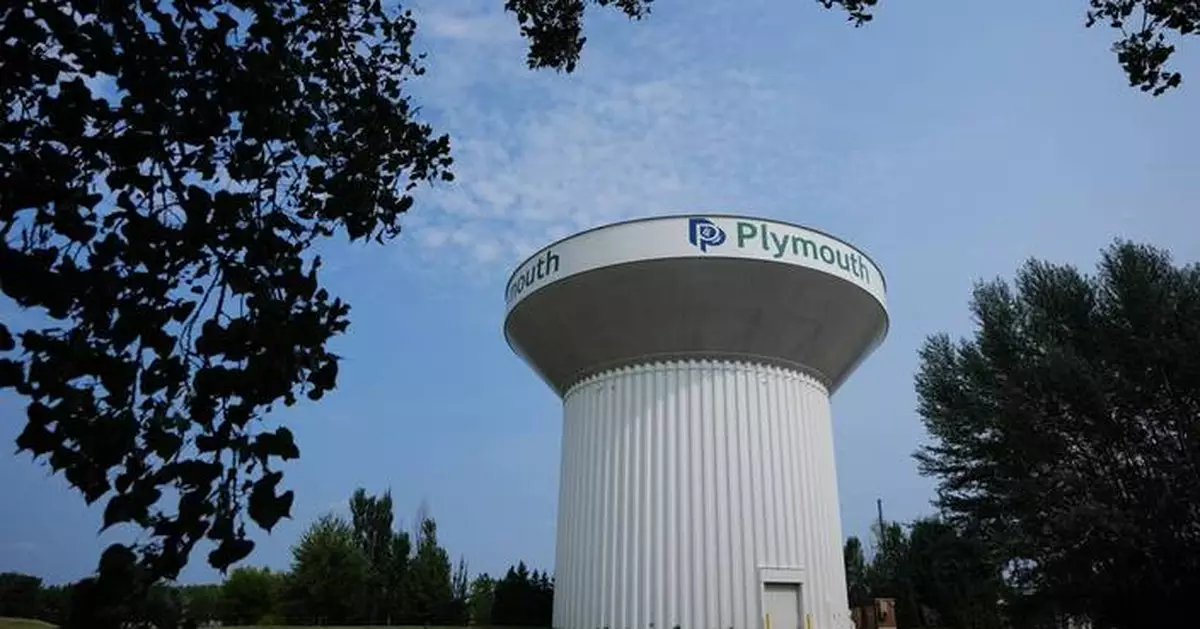
In Plymouth, a city of about 80,000 located outside of Minneapolis, officials said on social media that their water infrastructure communications had been restored by Tuesday afternoon following a cyberattack.
During a Cabinet meeting on Friday at the Camp David presidential retreat in Maryland, President Donald Trump claimed without evidence that recent cyberattacks in Minnesota were the fault of the state, including Democratic Gov. Tim Walz.
Waltz responded on social media, saying Trump "knows exactly who is responsible for this attack, and knows that other states were hit too."

A water tower is seen Thursday, July 30, 2026, in Plymouth, Minn. A cyberattack targeted the operating technology at over 30 water systems in Minnesota, including Plymouth's, earlier this week, state officials said. (AP Photo/Ellen Schmidt)
WASHINGTON (AP) — President Donald Trump on Saturday threatened to push forward with a fund to compensate his allies if two Republican holdouts do not support his nominee for attorney general, injecting fresh uncertainty into a Senate confirmation vote planned for next week and underscoring once more his interest in securing payouts for supporters who feel unjustly persecuted.
Trump asserted in his Truth Social post that he would keep acting Attorney General Todd Blanche in his current role and press ahead on the “Anti-Weaponization Fund” if Sens. John Cornyn of Texas and Thom Tillis of North Carolina refuse to back the former federal prosecutor who was a key member of Trump’s defense team at a time when the Republican battled four indictments.
The administration needs their votes, but both lawmakers have protested Blanche's selection because of a lawsuit settlement that created a $1.8 billion fund to compensate people who feel mistreated by the criminal justice system and provided Trump and family members with immunity from tax audits.
In a sign of apparent progress Friday, Trump pronounced the fund “dead.” As negotiations continued into the night, the chairman of the Senate Judiciary Committee, Sen. Chuck Grassley, rescheduled a committee vote for Blanche that had been postponed earlier in the week.
A spokesperson for the committee said Grassley, R-Iowa, would like to see Blanche confirmed before the August recess and that putting the Tuesday vote on the calendar “gives more time for the White House to secure the votes for the President’s nominee.”
But by Saturday morning, those plans were in jeopardy with a new announcement from Trump that appeared to put the fund back on the table — and dinged the two senators who are leaving Capitol Hill when their terms end in January.
“If Senators Cornyn and Tillis, both upset because I wouldn’t Endorse them (they lost, and quit, respectively!), aren’t going to approve Todd Blanche, one of the most respected professionals, according to everybody, in the Country, to be the United States Attorney General, then I will keep Todd as Acting A.G., and push hard” to restore the fund. The president insisted, as he previously has, that the fund “takes care of those who have been so badly treated” during the administrations of Democratic Presidents Barack Obama and Joe Biden.
Tillis, who is retiring, took note of the president's turnabout by saying in a post on X that despite Trump's comments Friday, he “clearly intends to resurrect the payout pot for punks either by inappropriately establishing another bogus fund or pushing Congress to vote for a bill that the majority of Republicans in the Senate would be against.”
He added: “It’s unfortunate that Todd Blanche, who I consider qualified for the job, will not be confirmed because of this reversal. Hopefully, we can resolve this by Tuesday."
Blanche had said at a hearing two months ago that the anti-weaponization fund would not move forward after Republican senators revolted and held up an immigration funding bill.
But Tillis and Cornyn, who lost reelection this year after Trump endorsed his primary opponent, said they want to ensure that the White House does not reverse course, especially as Trump continues to argue that a fund is needed.
The Department of Justice has provided the senators with language that says Blanche’s May 18 order establishing the “Anti-Weaponization Fund” is “rescinded and shall have no force or effect,” according to a document reviewed by The Associated Press.
Cornyn and Tillis have said they also want clarification on a separate part of the settlement that would grant Trump and members of his family immunity from tax audits. Cornyn said this week that it was his understanding the audits could extend to more than 100 Trump Organization subsidiaries in the future.
“Todd Blanche said it was limited to the parties to the litigation — and it was retrospective, not prospective,” Cornyn said. “And all we’re doing is asking them to put that in writing.”
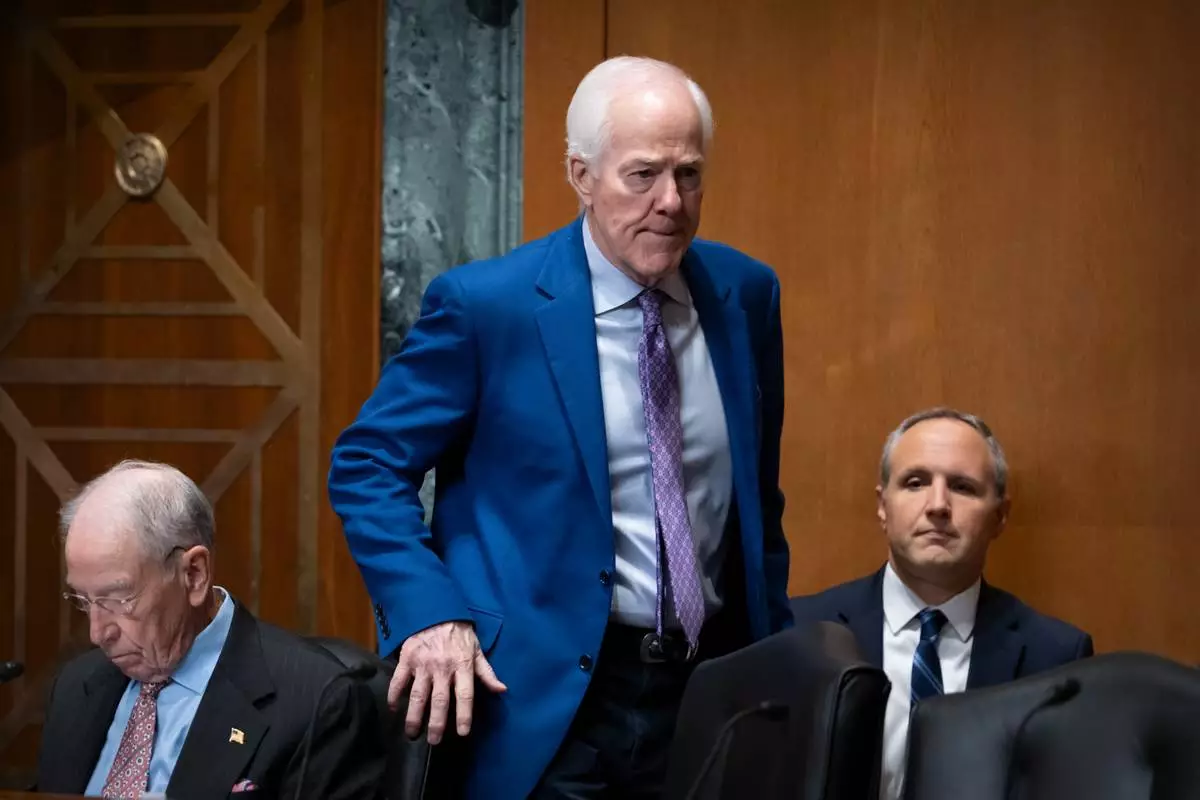
Sen. John Cornyn, R-Texas, arrives for a hearing of the Senate Finance Committee on Capitol Hill, Thursday, July 30, 2026, in Washington. (AP Photo/Mark Schiefelbein)
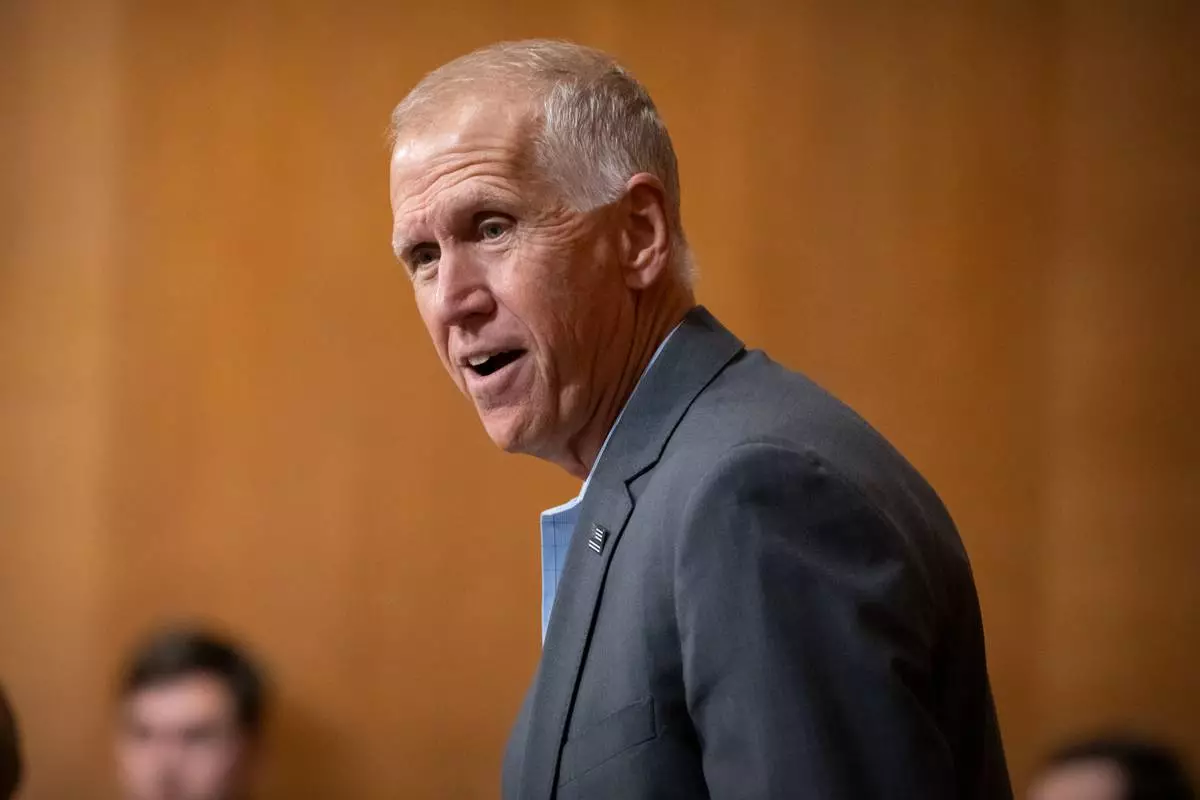
Sen. Thom Tillis, R-N.C., arrives for a hearing of the Senate Finance Committee on Capitol Hill, Thursday, July 30, 2026, in Washington. (AP Photo/Mark Schiefelbein)
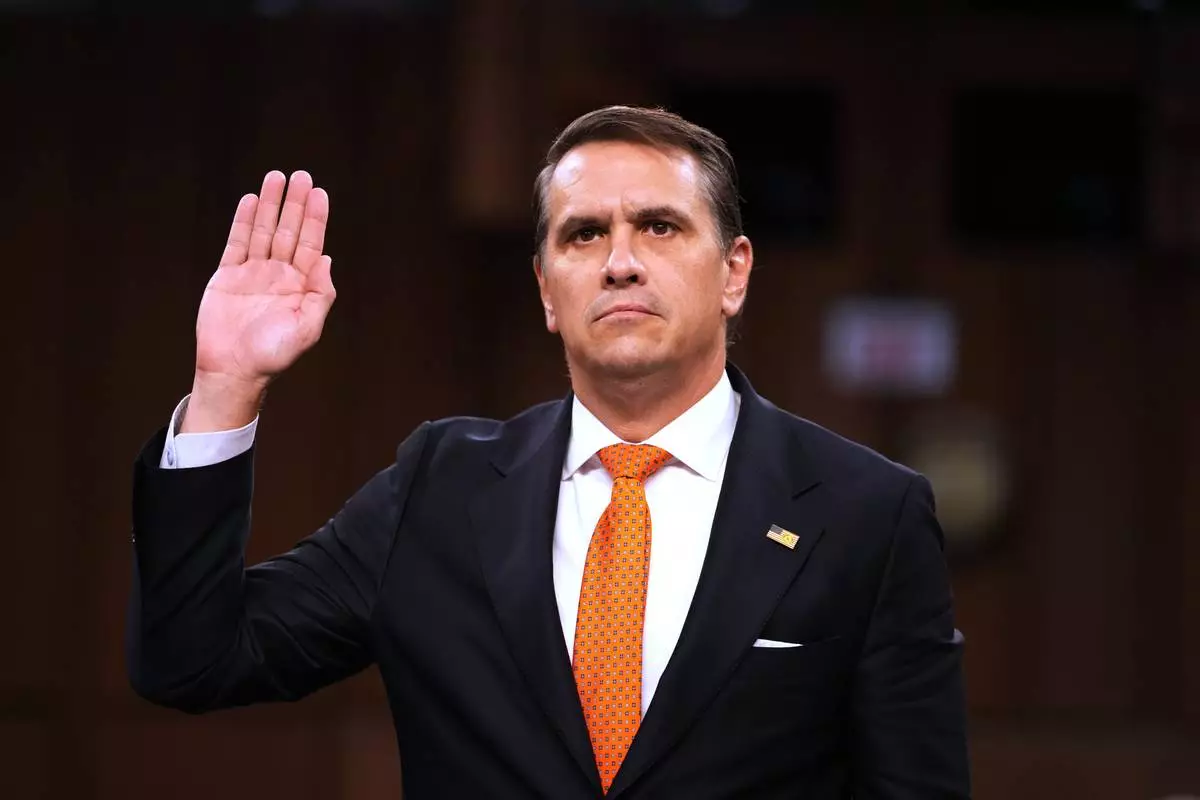
FILE - Acting Attorney General Todd Blanche is sworn in as he appears before the Senate Judiciary Committee on Capitol Hill in Washington, July 15, 2026. (AP Photo/Mark Schiefelbein, File)
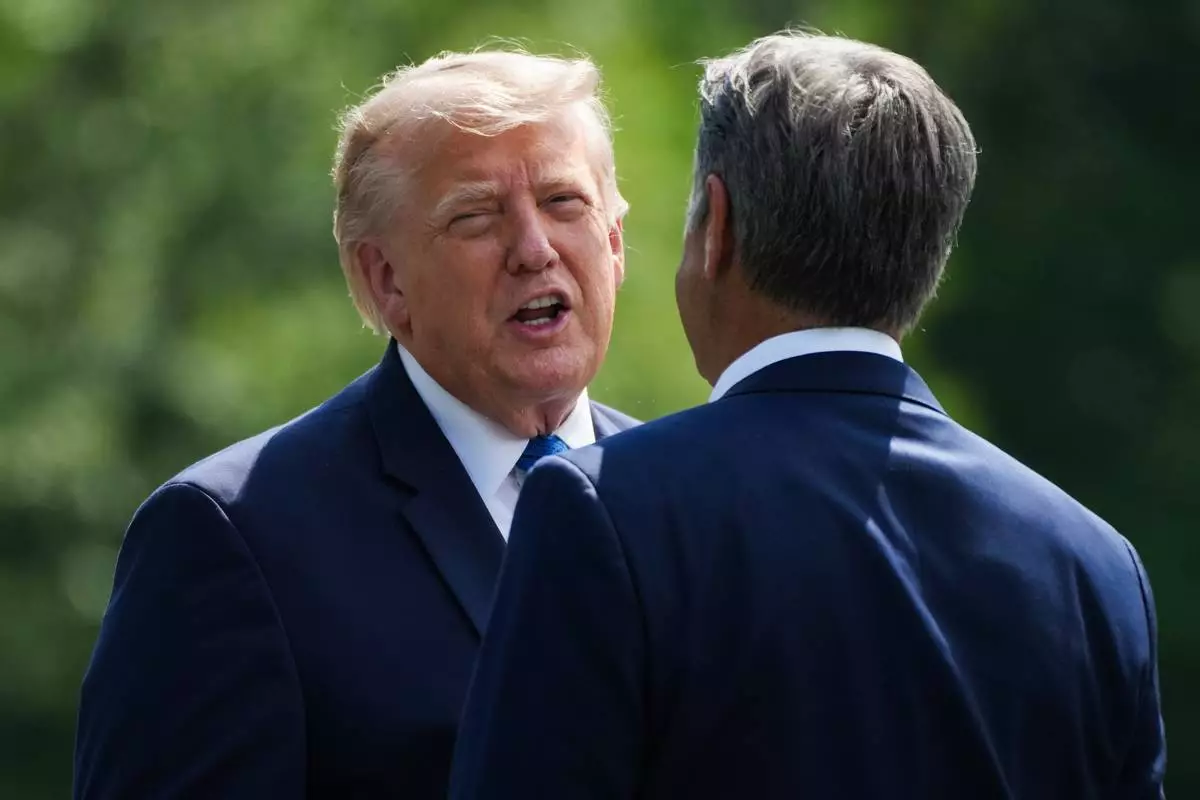
President Donald Trump, left, and CIA Director John Ratcliffe speak as they depart following a cabinet meeting at Camp David, near Thurmont, Md., Friday, July 31, 2026. (Nathan Howard/Pool Photo via AP)