Skip to Content Facebook Feature Image

Ken Martin hunkers down at the Democratic National Committee as a storm gathers around party leader

News

Ken Martin hunkers down at the Democratic National Committee as a storm gathers around party leader
News

News

Ken Martin hunkers down at the Democratic National Committee as a storm gathers around party leader

2026-08-02 19:24 Last Updated At:19:30

NEW YORK (AP) — Ken Martin is in survival mode.

Desperate to save his job as chair of the Democratic National Committee, he is avoiding media appearances, monitoring his critics' social media posts and refusing — at least so far — to make any substantive changes at his troubled organization.

A half dozen state leaders and other committee members, most of whom spoke on the condition of anonymity to discuss internal conversations, described Martin as defensive and extremely distrustful of others, even some people on his own team, as calls for his resignation grow louder among Democratic operatives who lament his leadership decisions, lackluster fundraising and even his tendency to lash out in anger.

But there is no sign that the organization's membership plans to replace Martin before the midterm elections in November, even as some wonder how much longer he can hold on. The drama threatens to undermine the party's momentum in the battle to retake control of Congress from President Donald Trump's Republican Party.

“I sense no movement from the DNC to make a change, and so that decision’s up to Ken. And he’s told me he’s in it, so I trust him on making that decision," said Colorado Democratic Party Chair Shad Murib, a DNC member and strong Martin supporter. “What we’re seeing right now is a whole group of folks who live on Twitter and consultants fighting harder against Ken Martin than they’ve ever fought against Donald Trump.”

Martin did not grant an interview request. In a recent Substack post, Martin defended himself this way: “If the question is whether the Democratic Party will be ready to win — everywhere, at every level, in this election and for the decade ahead — the answer is a resounding yes.”

As one of its most important responsibilities, the DNC is tasked with building out the party's national infrastructure, including fundraising, to support the Democrats' next presidential nominee. Yet few members of the next class of White House prospects are willing to speak out on Martin’s behalf.

Maryland Gov. Wes Moore, who has traveled to key states in recent weeks before a potential presidential bid, praised the DNC for embracing a new primary calendar that promotes more diverse states such as South Carolina and Nevada.

But Moore declined three separate times to answer directly when asked whether he has confidence in Martin heading into 2028.

“My confidence is in the people,” Moore told The Associated Press. “My confidence is in making sure that we have a system in place that actually allows the people’s voices to be heard."

He said he is not looking for "wins on behalf of a political structure or party bosses.”

Others have been explicitly critical of Martin.

Shannon Watts, the former leader of Moms Demand Action and a member of the DNC’s finance committee in 2024, criticized Martin’s lack of communication with donors and key stakeholders. She said she was ready and willing to help Martin after he took over last year, but he never called.

She did, however, get a call from a DNC staffer urging her to delete a social media post that was critical of Martin. Such calls have become common occurrences in recent months.

“Ken needs to step aside. I think Ken knows he needs to step aside," Watts said. “There’s a reason he’s worried he’s going to be fired and it’s because he’s not up to the job.”

Even those close to Martin, including senior members of the DNC leadership, privately complain that Martin is not doing more to maintain ties with committee members, donors and prominent outside officials. He was known for building strong relationships in his previous post as leader of the Association of State Democratic Chairs, which is largely why he was elected national chair.

His allies are baffled as to why he has not done the same in his new job. There are also lingering frustrations over how Martin handled the follow-up report on the 2024 election. He promised to release the document, then withheld it, then eventually made it public while saying it was too flawed to be helpful.

Few expect Martin to be replaced before the fall elections, largely because no clear alternative has emerged as the midterms loom. But members are looking toward the DNC's winter meeting after the November contests — and before the 2028 presidential primary process begins in earnest — as the most likely time to make a leadership change.

Former Maryland Gov. Martin O’Malley has fielded calls to discuss a candidacy to replace Martin, according to a person with knowledge of the conversations who requested anonymity to discuss private discussions. O'Malley, who did not respond to a request for comment, finished a distant third in the DNC chair election last winter.

The growing chorus of criticism has shaken the confidence of Martin's loyalists.

They were especially concerned about an essay this week by Rufus Gifford, the finance chairman for President Joe Biden’s reelection campaign, who warned that the DNC under Martin’s leadership was “spiraling toward irrelevance."

“At this point, I think there is no saving Martin’s chairmanship. He is a good man with good intentions but simply not meeting this critical moment,” Gifford wrote on Substack. “As Democrats, the only solution is to acknowledge the problem and fix it. Now.”

One Martin ally likened the fallout from Gifford's statement to the day after Biden's disastrous debate performance that effectively forced him to abandon his reelection campaign.

Martin got a lifeline this week from New York Rep. Hakeem Jeffries, the House Democratic leader, who said while campaigning in Pennsylvania that Martin “has my full support.”

Jeffries noted that Democrats have won the overwhelming majority of elections since Martin took over the DNC, which also coincides with Trump's return to the White House. Jeffries also played down the party's financial challenges.

Federal filings show that the DNC reported about $16.3 million in the bank with more than $18 million in debt at the end of June, compared with the Republican National Committee reporting more than $128 million in cash and no debt.

The DNC under Martin used the party’s Washington headquarters as collateral to secure a $15 million line of credit last fall. His critics seized on the decision as an example of financial mismanagement, although the building was used as collateral under former party chairs as well.

DNC officials note that the committee has actually raised more money under Martin than it raised in 2018, the last time the party did not have the White House in a midterm year.

“The current DNC has raised the most money of any DNC without the White House in the 198-year history of the Democratic Party," Martin wrote recently on Substack.

While Martin has avoided national media appearances, which are considered a major responsibility for the chair, he has been traveling almost constantly to support party officials and key stakeholders across the country.

He visited six states over the past two weeks alone. This past week, for example, he met with civil rights leaders in Nashville, Tennessee, and mayors from across the country in Atlanta.

Kansas Democratic Party Chair Jeanna Repass said Martin should be praised for his commitment to strengthening state parties at a critical moment. Indeed, instead of hoarding the DNC's cash, Martin is distributing it aggressively to needy state parties, just as he promised while campaigning for the chairmanship.

“This is a ridiculous conversation to be having right now,” Repass said. “If people don’t like Ken, they can have a conversation with him in two years. But right now, we all need to be behind the chair and keep our heads down and do our jobs.”

Associated Press writers Steven Sloan in Oklahoma City, Mike Catalini in Bethlehem, Pa., and Matt Brown in Washington contributed to this report.
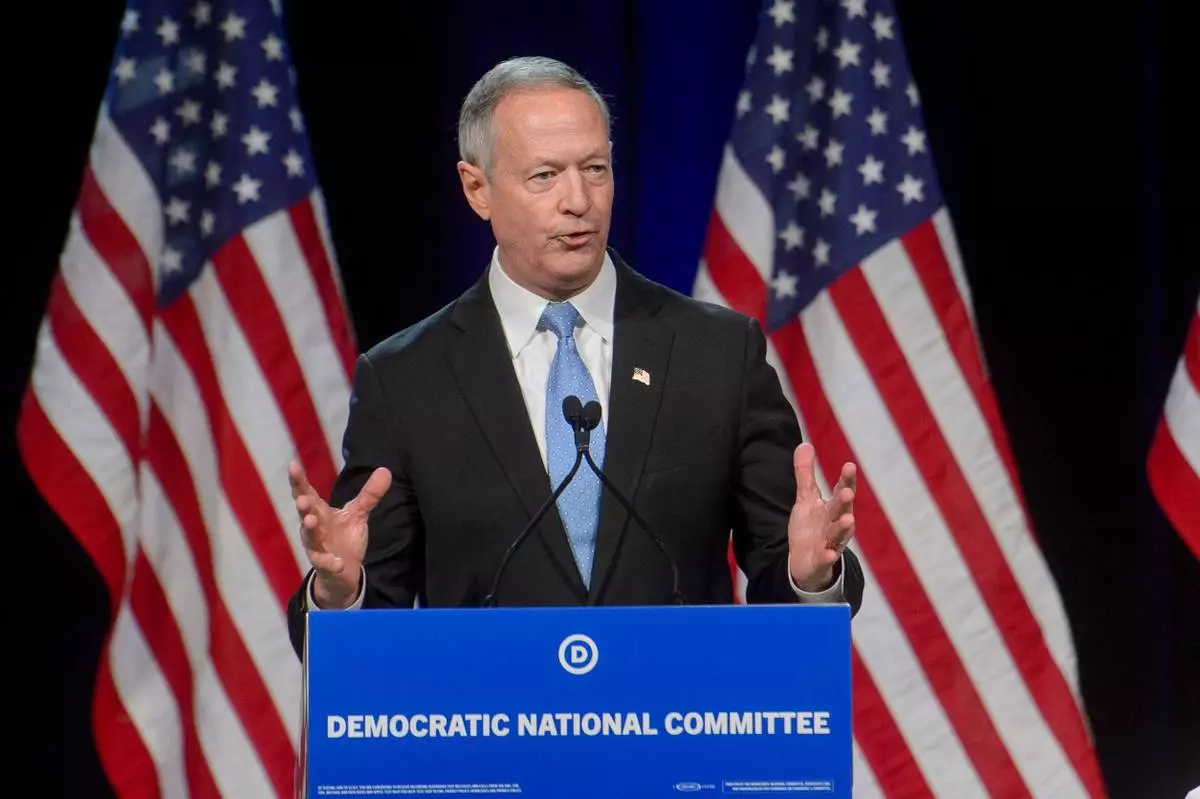
FILE - DNC chair candidate Martin O'Malley speaks at the Democratic National Committee Winter Meeting in National Harbor, Md., Feb. 1, 2025. (AP Photo/Rod Lamkey, Jr., File)
FILE - DNC chair candidate Martin O'Malley speaks at the Democratic National Committee Winter Meeting in National Harbor, Md., Feb. 1, 2025. (AP Photo/Rod Lamkey, Jr., File)

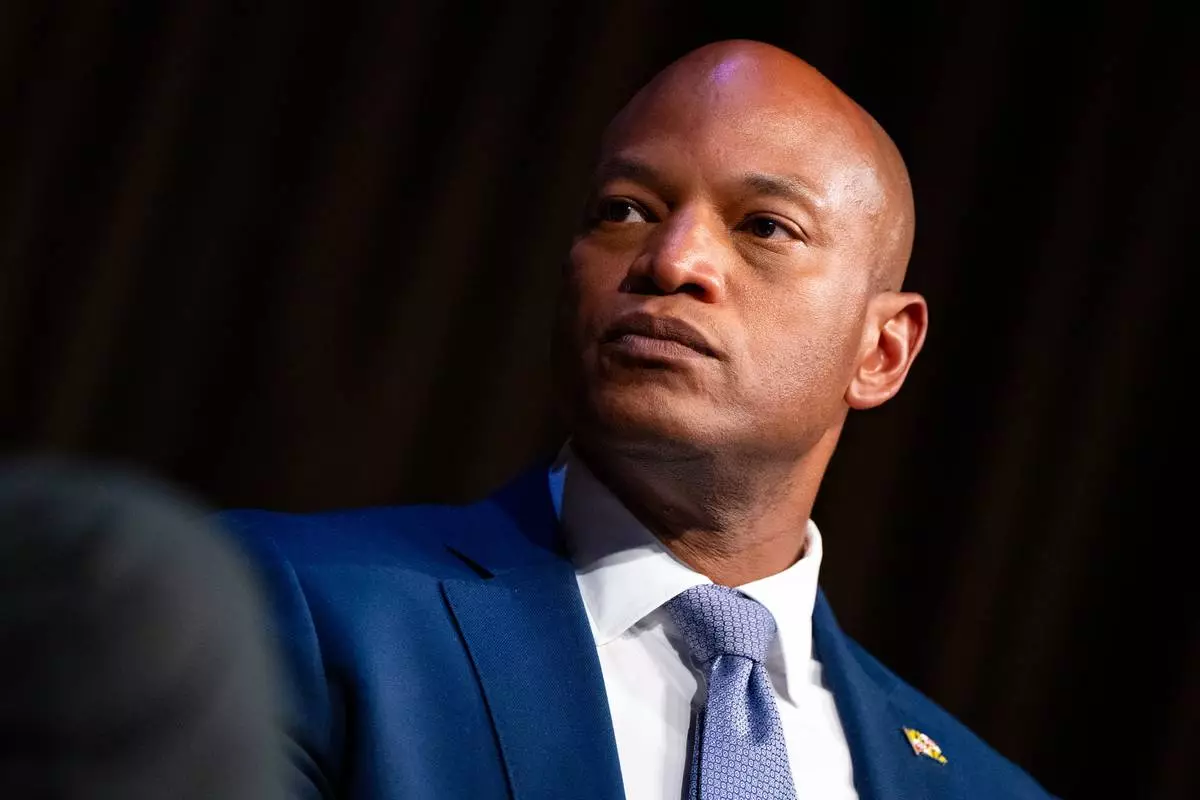
FILE - Maryland Gov. Wes Moore speaks during the National Action Network (NAN) Convention in New York, April 9, 2026. (AP Photo/Angelina Katsanis, File)
FILE - Maryland Gov. Wes Moore speaks during the National Action Network (NAN) Convention in New York, April 9, 2026. (AP Photo/Angelina Katsanis, File)

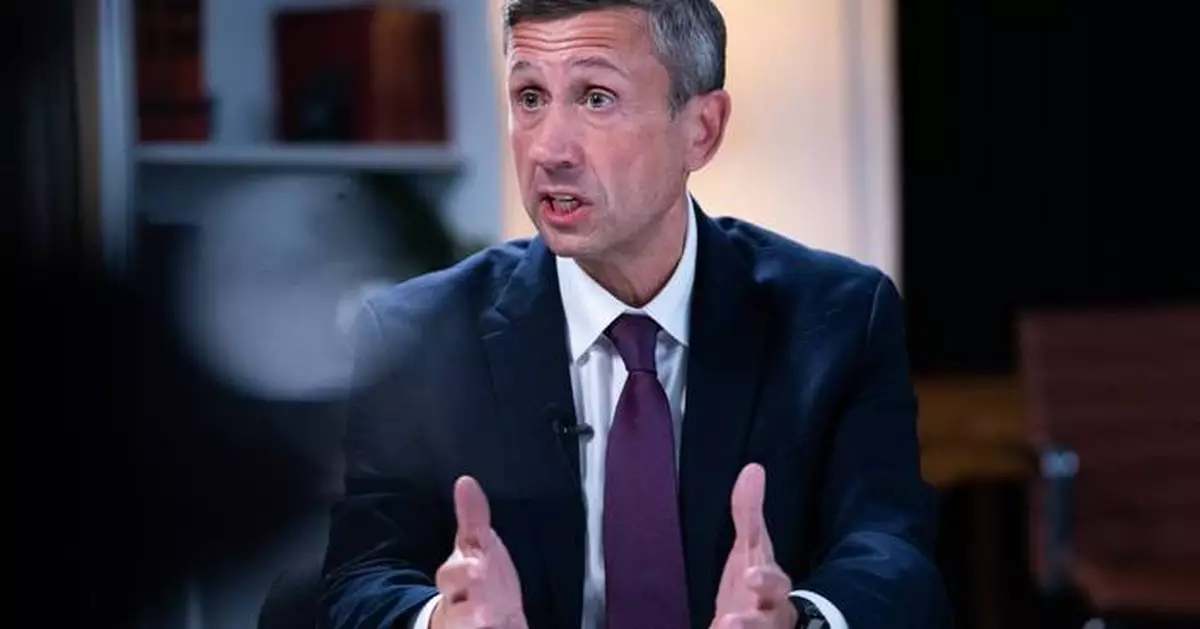
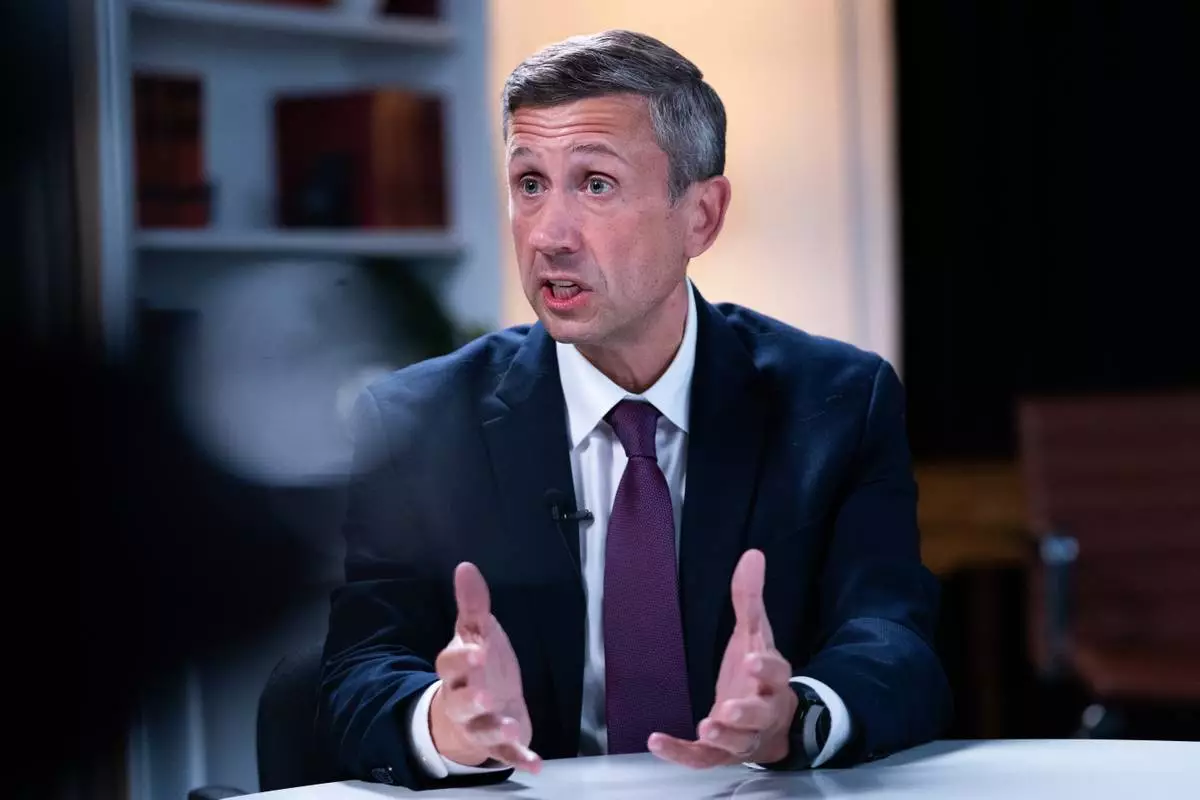
FILE - Democratic National Committee chair Ken Martin speaks during an interview with The Associated Press at DNC headquarters, Jan. 12, 2026, in Washington. (AP Photo/Allison Robbert, File)

FILE - Democratic National Committee chair Ken Martin speaks during an interview with The Associated Press at DNC headquarters, Jan. 12, 2026, in Washington. (AP Photo/Allison Robbert, File)
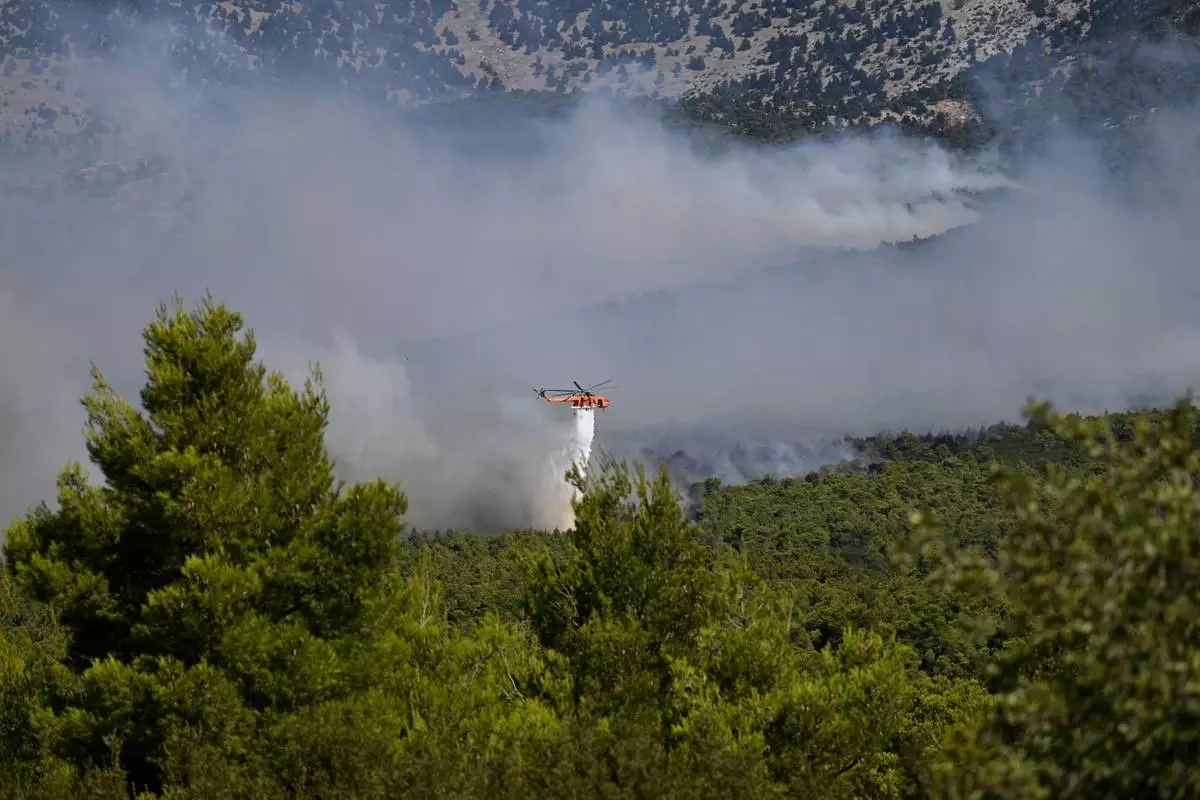
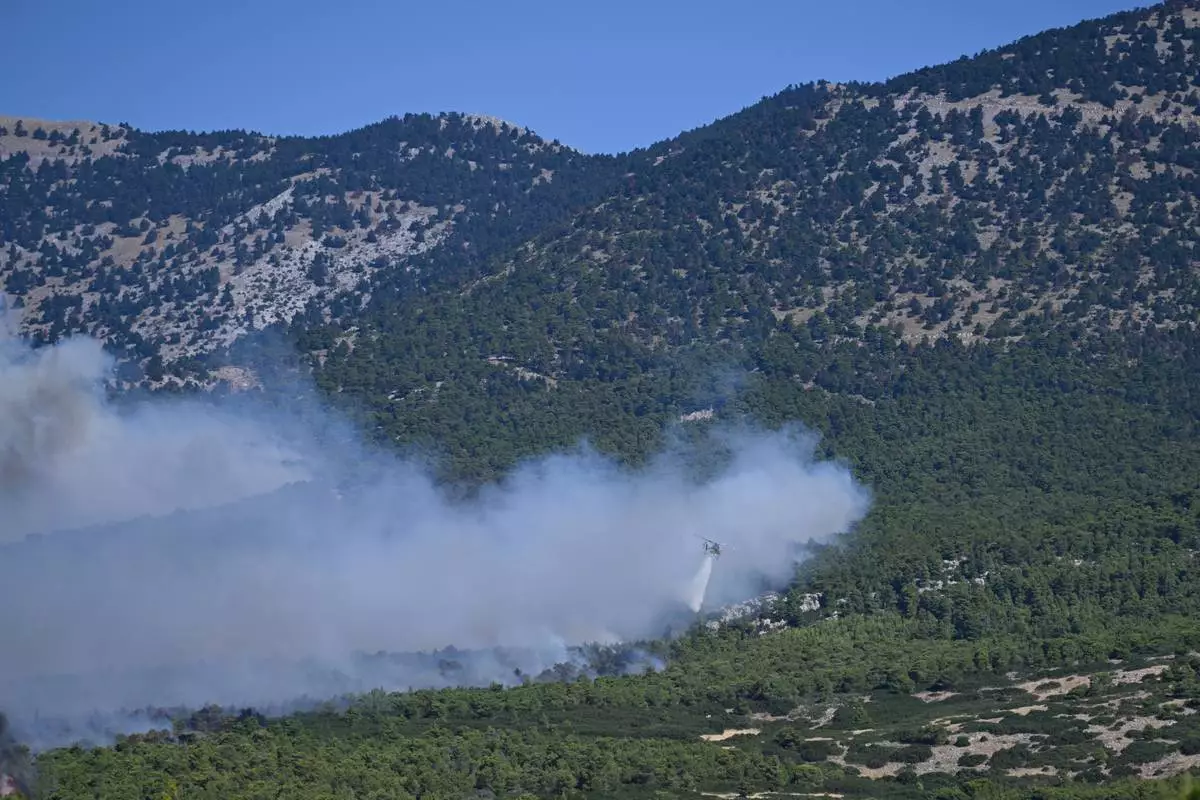
MEGARA, Greece (AP) — Two firefighting helicopters collided Sunday while battling a wind-driven wildfire in the Porto Germeno area, west of Athens. Footage showed one of the aircraft crashing to the ground.

Each helicopter was carrying a two-person crew, the Greek fire department said. A search-and-rescue operation was underway. Authorities did not immediately provide information on the crews’ condition.

The collision underscored the continuing danger at the most volatile front of Europe’s wildfire emergency.

The continent's crisis split into three stark fronts: strong winds drove flames deeper into the Athens region and forced fresh evacuations, France guarded a still-burning scar four times the size of Paris, and Spain’s major fires stopped advancing.

The most immediate danger was in Greece. Flames spread through western Attica, the region around Athens, threatening communities and an industrial district outside Megara as violent gusts prevented firefighting aircraft from collecting water from the sea. The danger carried grim resonance in a region where the 2018 Mati wildfire killed 104 people, Europe’s deadliest blaze this century.

Farther west, containment brought no end to the emergency. France’s largest wildfire remained held within its perimeter after forcing 224,000 people to flee in what may have been the country’s largest civilian evacuation outside wartime.

Hot spots still burned within a 420-square-kilometer (162-square-mile) scar, thousands remained unable to return home, and nearly 3,000 firefighters were deployed against the Gironde megafire and a second, still-uncontained blaze in Provence.

Together, fires in France and Spain have driven roughly a third of a million people from homes and vacation sites, emptied communities at the height of the European summer and stretched emergency services across simultaneous disasters.

The mass evacuations in France and Spain are the latest measure of a wildfire threat growing across Europe.

The continent entered 2026 after its worst fire year on record, with more than 10,000 square kilometers (3,860 square miles) burned in 2025. Over the past four decades, wildfires have been linked to nearly 800 deaths across much of Europe, according to the European Environment Agency.

Europe is the world’s fastest-warming continent. It has warmed more than twice the global average since the 1980s, according to the European Union’s Copernicus Climate Change Service.

Human-caused climate change made the extreme fire-weather conditions behind this year’s French blazes at least twice as likely, scientists at World Weather Attribution found in a rapid analysis conducted while the fires were still burning.

Nearly 500 firefighters and 23 aircraft were deployed, but gale-force winds drove flames through dry forest and crippled the response, preventing some aircraft from reaching the sea to collect water.

Authorities ordered the evacuation of Kandili, Agia Skepi and Toutouli as smoke rose over the mountains. Crews were particularly concerned about Porto Germeno, a seaside community on the Gulf of Corinth. Prime Minister Kyriakos Mitsotakis was briefed on the operation.

The fire began Friday near Agios Vasileios before sweeping toward Porto Germeno and into the forested mountains west of Athens. Firefighters evacuated 254 people by sea Friday and another 12 Saturday — often the last escape route when fire and smoke cut the few roads from coastal communities.

Wildfire meteorologist Theodore Giannaros estimated the blaze had affected 40 to 50 square kilometers (15 to 19 square miles), though authorities had issued no official figure.

Elsewhere in Greece, flames threatened homes on Kefalonia, forcing evacuations from inland communities as aircraft made water drops over the Ionian island. Firefighters battled another blaze near Nea Tenedos in Halkidiki.

Earlier this week, two firefighters died fighting a fire on Crete, while a third was killed in the Peloponnese.

“A pristine forest, a paradise, was surrendered to the hands of the fire,” local farmer Minas Tzortzanis said Saturday. “There are no words to explain what has happened. Destruction. Total destruction.”

In southwestern France, the Gironde megafire remained held within its perimeter Sunday but continued to burn after scorching 420 square kilometers (162 square miles) of forest in 10 days.

“The fire is now fixed, which does not mean that the fire is extinguished,” the Gironde prefecture said, using the French firefighting term for a blaze whose advance has been stopped.

The region remained under France’s highest red forest-fire alert. Dry conditions, soaring temperatures around Bordeaux and afternoon winds threatened to rekindle the flames.

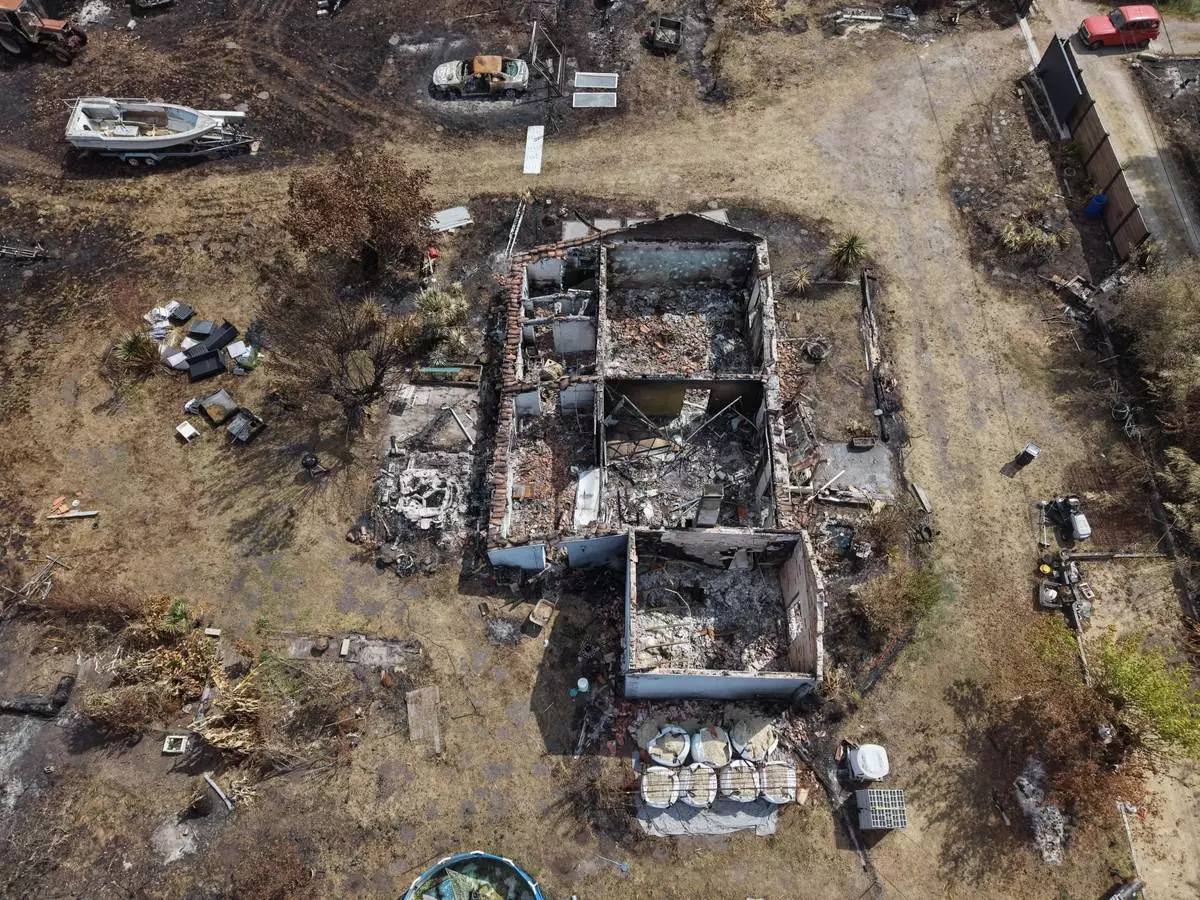
In Le Porge, local officials said about 150 homes were destroyed. Mechanic Matthieu Plessis returned Saturday to the ruins of a house that had been in his family for seven generations.

“There are places I don’t even recognize anymore,” he said. “You don’t even know what was here anymore, or who lived where.”

Firefighters from Ukraine, Lithuania and French Polynesia were expected Sunday and Monday to reinforce the operation.

In southeastern France, nearly 1,500 firefighters battled a separate blaze in the Var department that tore through about 18 square kilometers (7 square miles) in little more than a day.

The Gros Bessillon fire was stabilized Sunday after its perimeter held overnight, but it remained uncontained. Some 2,500 people were evacuated as flames threatened nearby communities.

It was the fourth major fire to strike central Var since July 19. A smaller blaze near Brignoles earlier in the week forced actor George Clooney and his family, along with about 700 other residents, to evacuate before it was brought under control.

Prime Minister Sébastien Lecornu said France’s fires were generally under control but warned that conditions remained volatile. He appointed a national coordinator to oversee reconstruction in fire-ravaged areas.

More than 1,170 square kilometers (452 square miles) have burned across France this year.

Spain’s major fires — part of a season that has killed at least 13 people, produced the country’s largest recorded wildfire and prompted a national emergency — were no longer advancing Sunday.

In Zamora province near the Portuguese border, more than 20 ground and aerial units guarded the perimeter of the Fermoselle fire against flare-ups in the rugged Arribes del Duero landscape. Most evacuees had returned home, according to local media.

Prime Minister Pedro Sánchez has called for a national pact to confront wildfires, warning that climate change is making them increasingly destructive.

Adamson reported from Paris and Garriga from Lacanau, France. Colleen Barry in Milan contributed to this report.

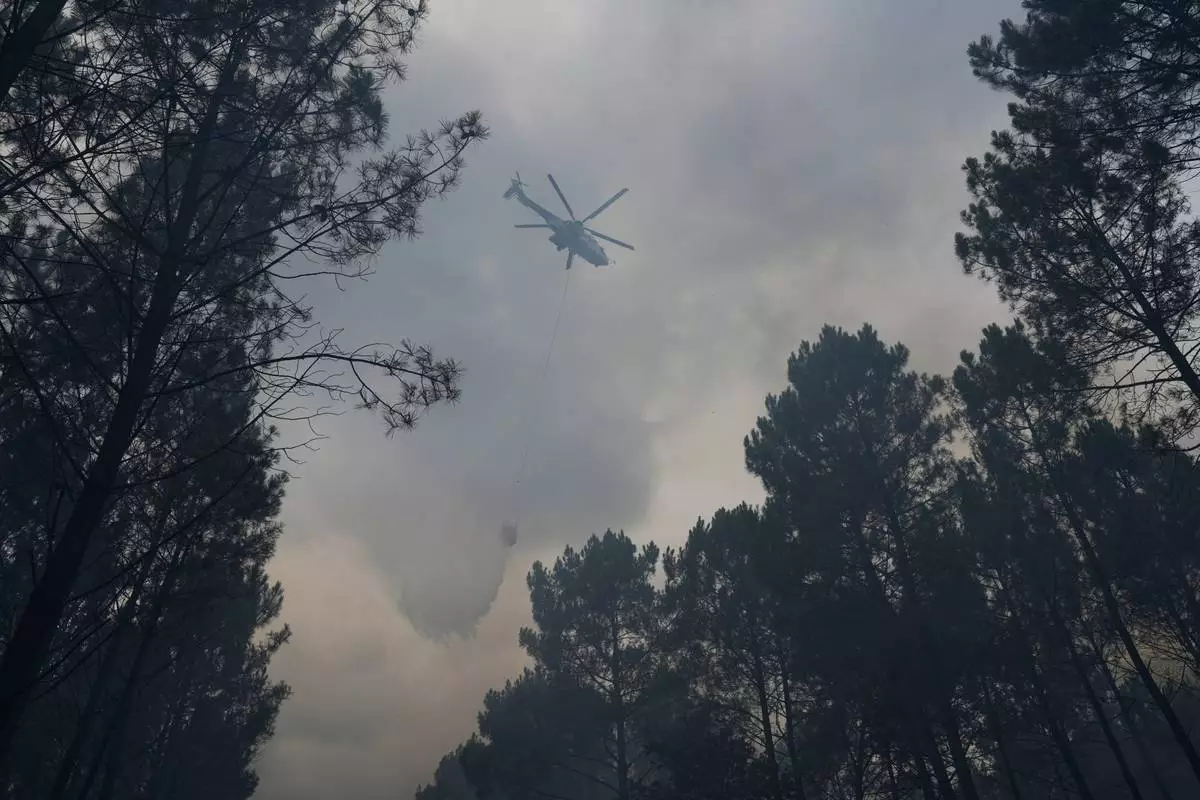
A firefighting helicopter drops water over a smoke-filled forest during a wildfire near Porto Germeno, northwest of Athens, Greece, Sunday, Aug. 2, 2026. (AP Photo/Michael Varaklas)

A firefighting helicopter drops water over a smoke-filled forest during a wildfire near Porto Germeno, northwest of Athens, Greece, Sunday, Aug. 2, 2026. (AP Photo/Michael Varaklas)

A firefighting helicopter drops water over a smoke-filled forest during a wildfire near Porto Germeno, northwest of Athens, Greece, Sunday, Aug. 2, 2026. (AP Photo/Michael Varaklas)

A firefighting helicopter drops water over a smoke-filled forest during a wildfire near Porto Germeno, northwest of Athens, Greece, Sunday, Aug. 2, 2026. (AP Photo/Michael Varaklas)

An Airbus helicopter lets a Bambi Bucket full of water go over a firezone, near Blagon, southwestern France, Friday, July 31, 2026. (AP Photo/Baz Ratner)

An Airbus helicopter lets a Bambi Bucket full of water go over a firezone, near Blagon, southwestern France, Friday, July 31, 2026. (AP Photo/Baz Ratner)

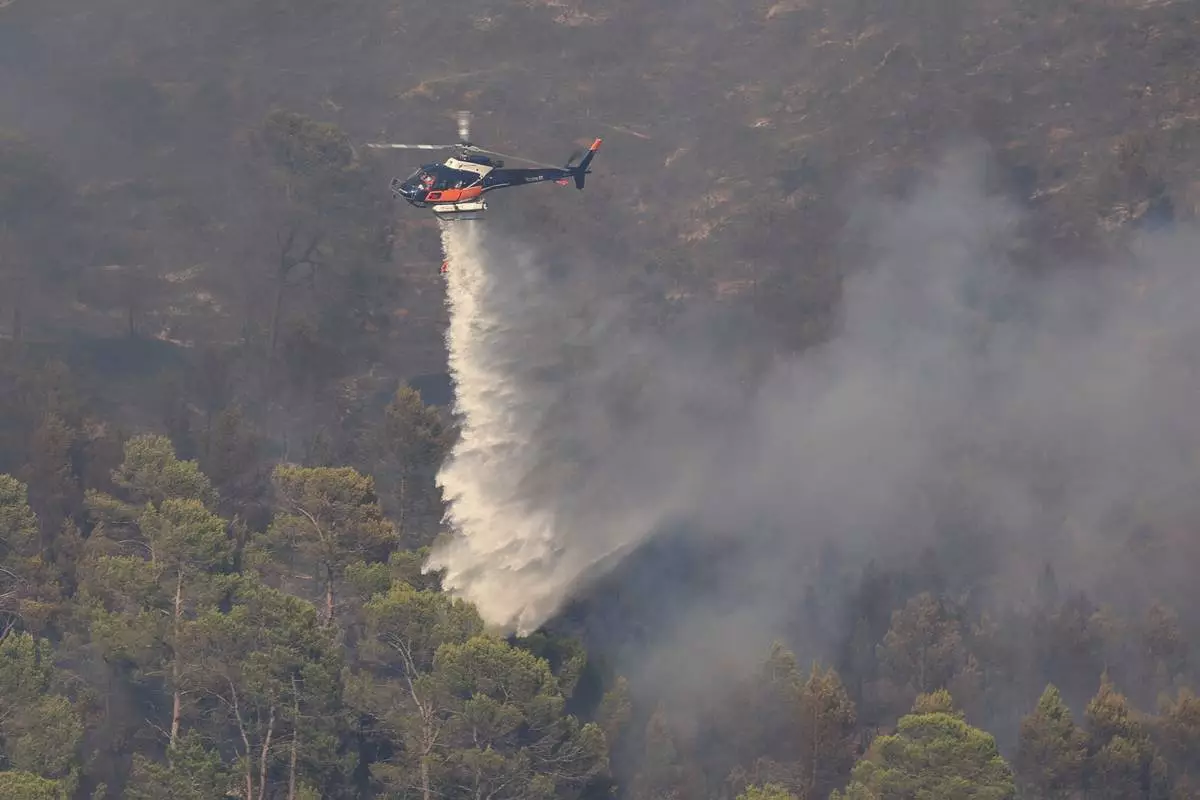
A firefighting helicopter releases water over a wildfire near Correns, southeastern France, Saturday, Aug. 1, 2026. (Clement Mahoudeau/Pool Photo via AP)

A firefighting helicopter releases water over a wildfire near Correns, southeastern France, Saturday, Aug. 1, 2026. (Clement Mahoudeau/Pool Photo via AP)

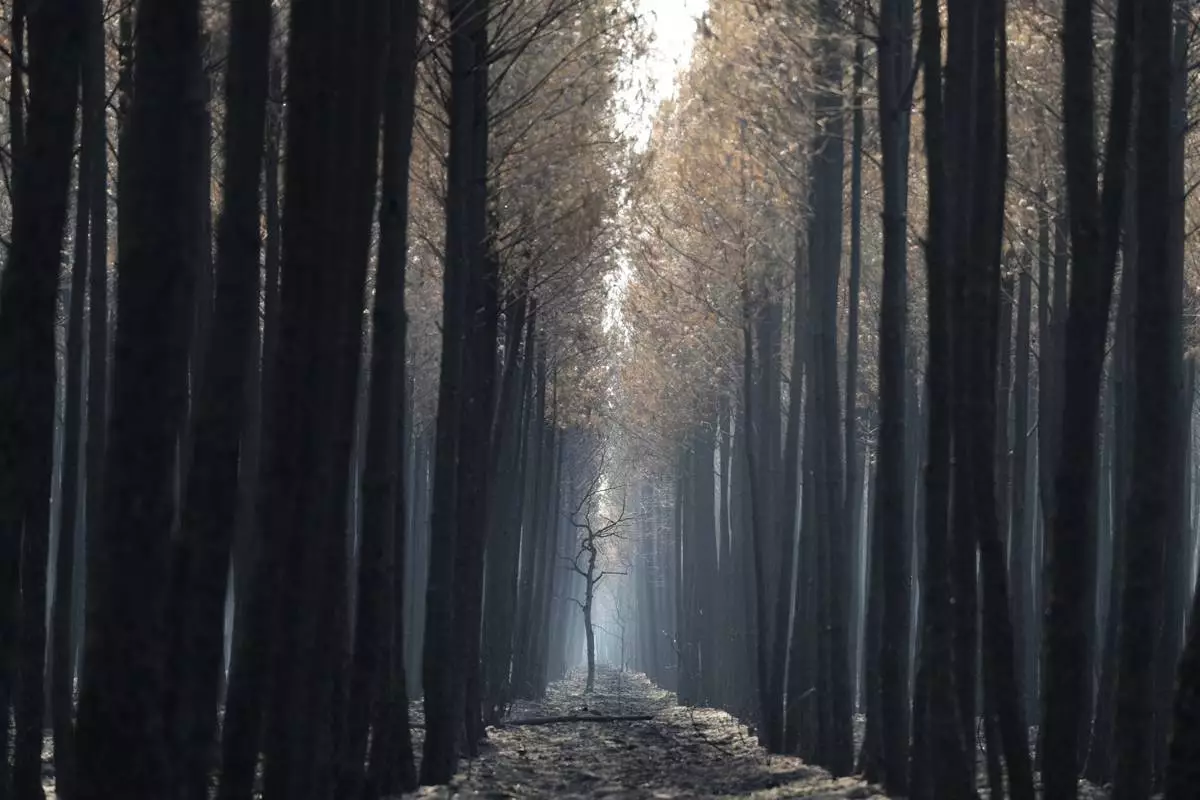
The light flows through a charred forest near Ares, during wildfires in southwestern France, Thursday, July 30, 2026. (AP Photo/Baz Ratner)

The light flows through a charred forest near Ares, during wildfires in southwestern France, Thursday, July 30, 2026. (AP Photo/Baz Ratner)

An aerial view of a homes burned by wildfires in Le Porge, southwestern France, Saturday, Aug. 1, 2026. (AP Photo/Nicolas Garriga)

An aerial view of a homes burned by wildfires in Le Porge, southwestern France, Saturday, Aug. 1, 2026. (AP Photo/Nicolas Garriga)

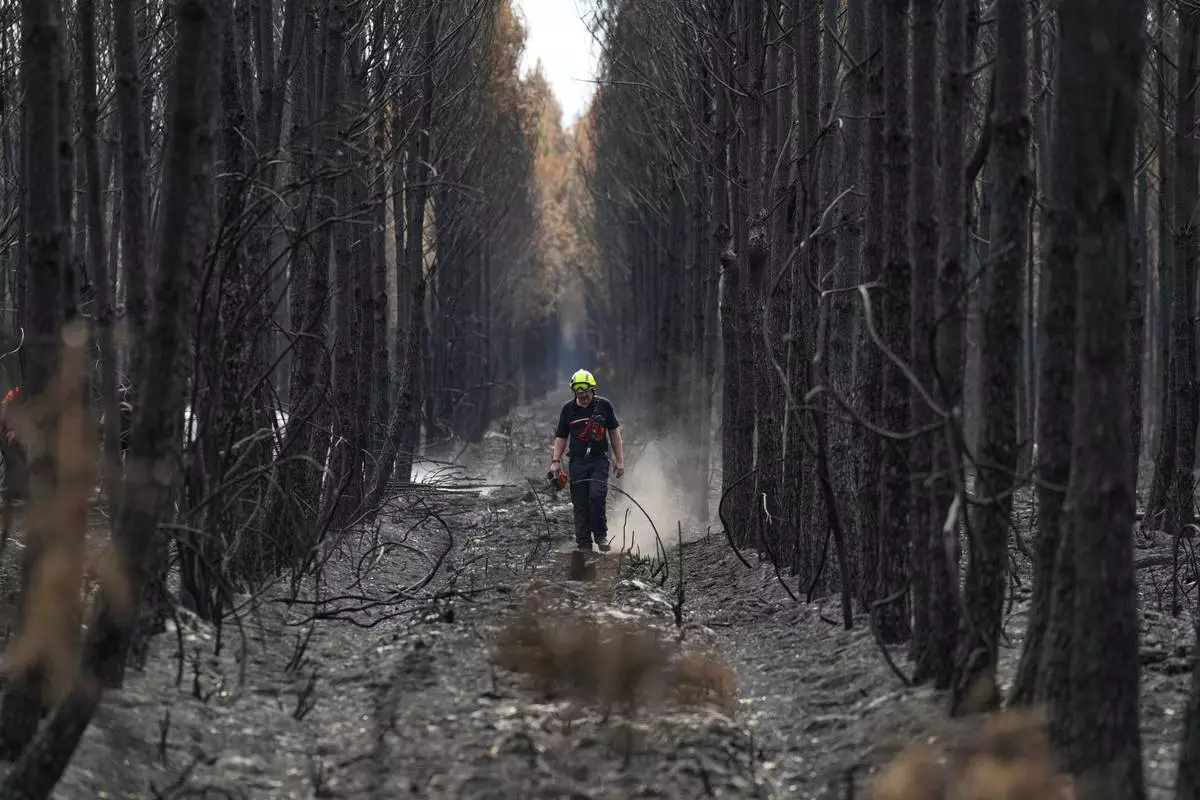
A firefighter walks through a charred forest near Blagon, during wildfires, southwestern France, Friday, July 31, 2026. (AP Photo/Baz Ratner)

A firefighter walks through a charred forest near Blagon, during wildfires, southwestern France, Friday, July 31, 2026. (AP Photo/Baz Ratner)

Recommended Articles