TOKYO (AP) — The U.S. dollar weakened sharply Monday against the Japanese yen after U.S. President Donald Trump and Japan’s finance minister confirmed both sides had intervened in markets.
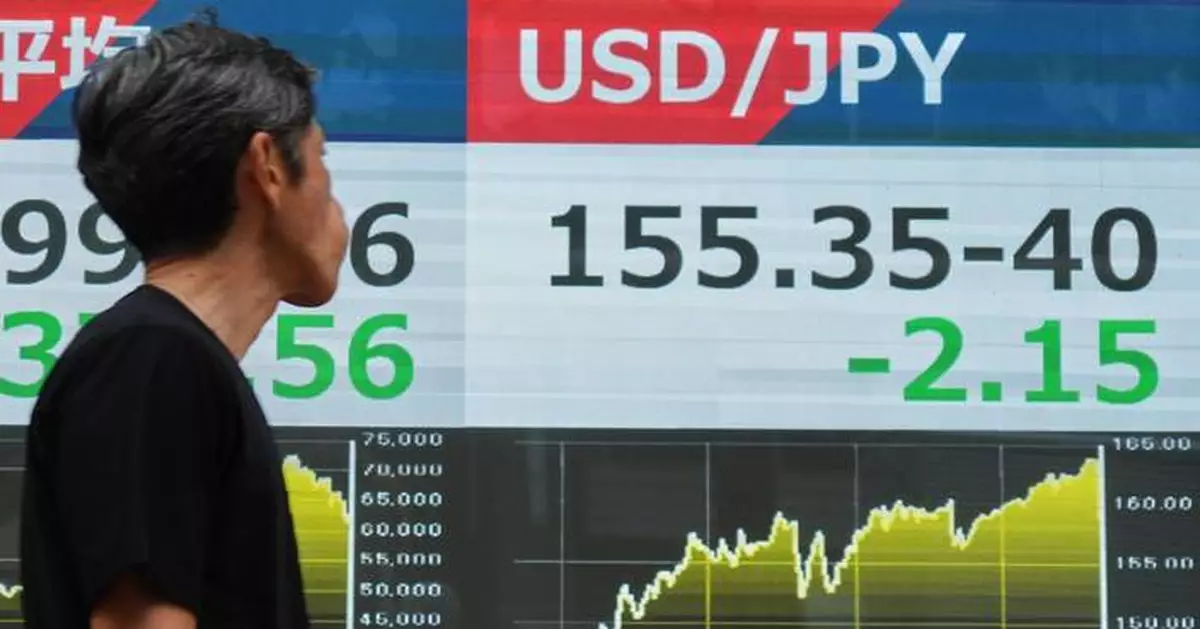
Before late last week, the dollar was trading above 163 yen, touching 40-year highs. After regulators were suspected of stepping in, it fell below 160 yen.
Early Monday, after the official announcement of the intervention, the dollar dropped about 1% to 156.34 yen. That’s a big change for the exchange rate.
The yen's prolonged weakness against the dollar has been a source of frustration for Tokyo. Since Japan imports so much of what it consumes, a weak currency pushes prices higher, increasing inflation.
Efforts earlier this year to raise the value of the yen against the dollar did little to budge the exchange rate.
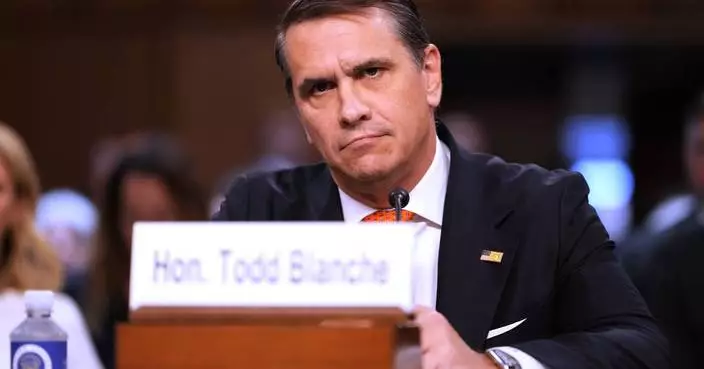
Last week, the U.S. side was suspected of lending a hand. When asked why Washington was helping, Trump said Sunday that “We have a good relationship with Japan. We’re very strong —- very, very strong financially — and they are, you know, they have a weakening yen, and they wanted a little bit of help, and we’re always there for Japan. Japan’s been very good to us, with the exception, of course, of Pearl Harbor.”
Trump said the U.S. got “financial benefit” out of the intervention, calling it a “signal of friendship.” “It’s also good for the world economy.”
In Tokyo, Finance Minister Satsuki Katayama issued a statement confirming the intervention, saying the finance ministry had purchased yen in coordination with the U.S. Treasury Department.
The move followed a joint statement last year and “countered excessive volatility and disorderly movements in the Japanese yen in recent months,” it said.
It added that the ministry would not hesitate to act further if necessary.
Such overt acknowledgement of market intervention is rare, said Neil Newman, managing director and head of strategy at Astris Advisory Japan. He said the last big example was when governments intervened following a massive earthquake and tsunami disaster in northeastern Japan in 2011.
A weaker dollar makes U.S.-made goods more competitive, reducing their costs in yen terms, and might help increase American exports to Japan, Newman said.
“It’s very rare that the Americans will work with the Japanese on this, but there is an alignment of interests here basically between Japan and America,” he said.
Kurtenbach reported from Bangkok. AP journalist Mari Yamaguchi in Tokyo contributed to this report.
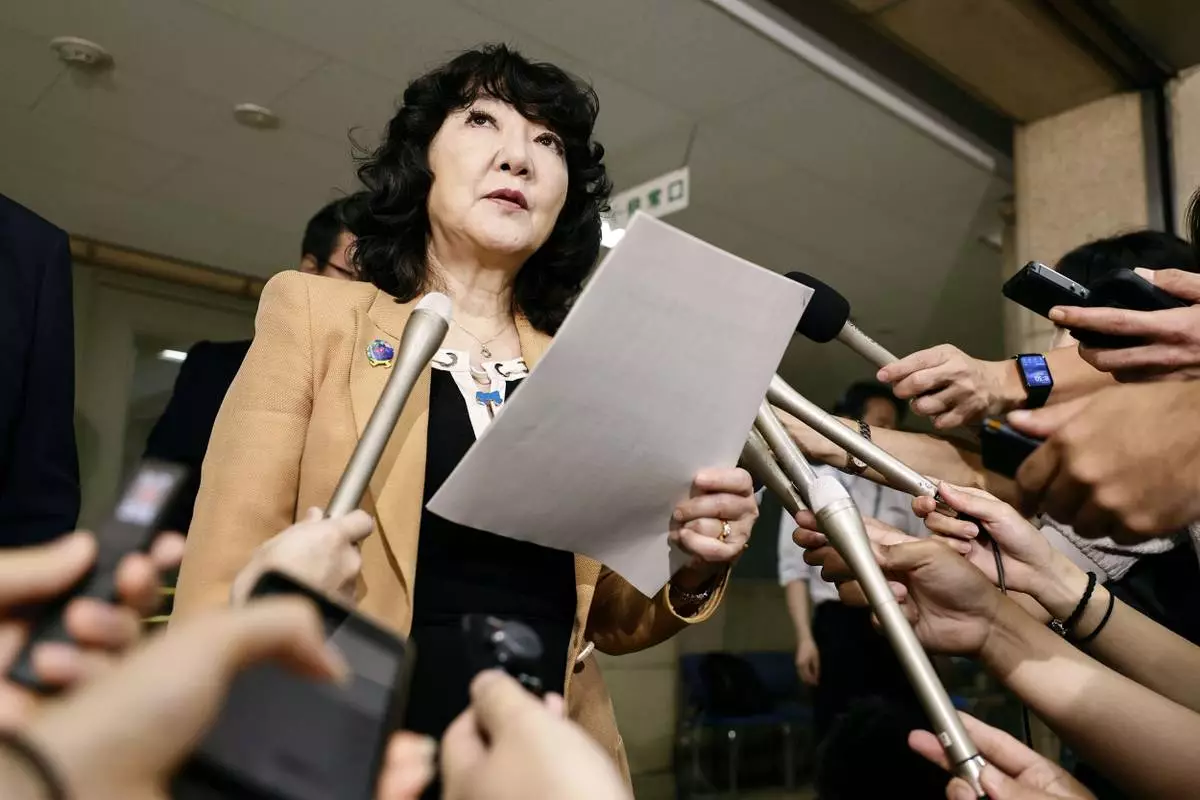
Japan's Finance Minister Satsuki Katayama speaks to reporters at the Finance Ministry in Tokyo Monday, Aug. 3, 2026. (Juntaro Yokoyama/Kyodo News via AP)

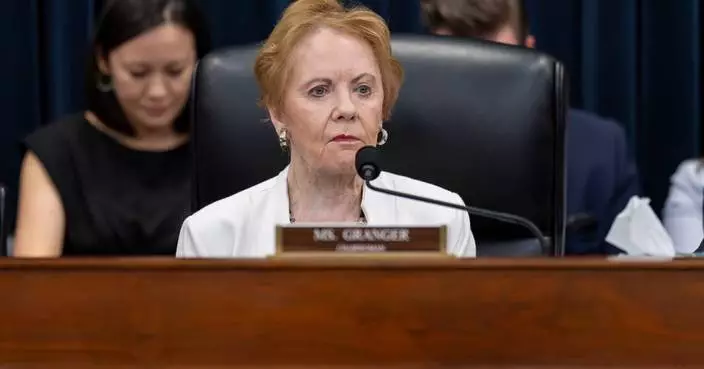
FILE - Satsuki Katayama, newly appointed finance minister, arrives at the prime minister's office in Tokyo, on Oct. 21, 2025. (AP Photo/Eugene Hoshiko, File)
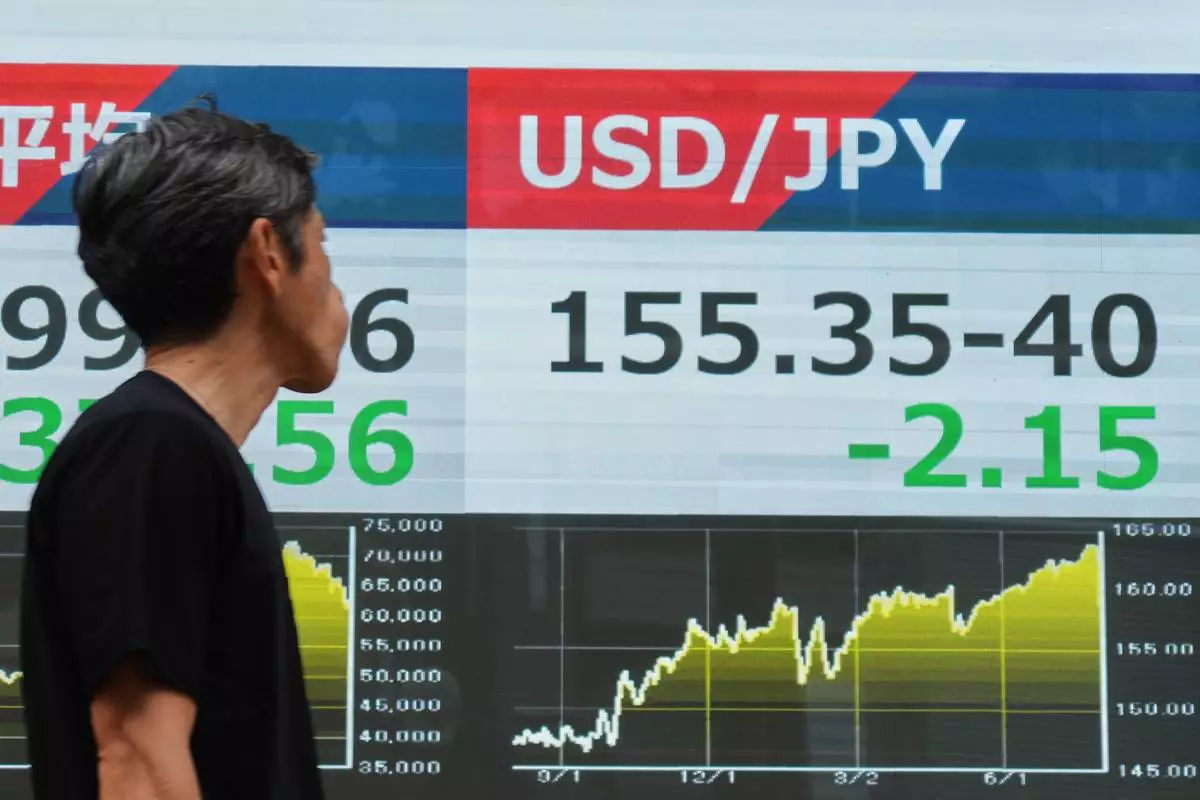
A person walks past an electronic board showing the U.S. dollar and Japanese yen exchange rate at a securities firm in Tokyo on Monday, Aug. 3, 2026. (AP Photo/Eugene Hoshiko)
SANTIAGO, Chile (AP) — Vozinha, the 40-year-old goalkeeper who made history with Cape Verde at the recently concluded World Cup, arrived in Chile on Sunday to join Colo Colo after a series of twists and turns that put his move in doubt.
“I’m very happy to be here. And I want to thank the fans for the patience they’ve shown while waiting for me,” the Cape Verde star told reporters in Chile. “See you at the Monumental Stadium.” That is Colo Colo’s home ground in Santiago.
Colo Colo, Chile’s most successful soccer club, announced the signing of Josimar Évora Dias, better known as Vozinha, on July 24. However, a series of setbacks — including documentation issues and personal matters — delayed his arrival on three separate occasions, causing concern both within and outside the club.
At last, he arrived at Santiago’s airport at 8:35 p.m. local time and was welcomed by a huge crowd of supporters who gathered at the terminal with flags, banners, drums, and chants.
Vozinha became the oldest player to appear in a national team's debut game at the World Cup and was widely celebrated for keeping eventual champion Span scoreless.
Colo Colo supporters share one dream: that Vozinha will help the runaway leaders of the Chilean league win the championship and enhance its continental ambitions for next season.
“I’m excited. And if Colo Colo wins the title, next year comes the Copa Libertadores, which makes everything even more exciting for all of Chile and South America,” Marcos Antonio Barrera, a 32-year-old club supporter, told The Associated Press.
The World Cup’s breakout goalkeeper is scheduled to undergo medical examinations on Monday before officially signing his contract with Colo Colo. The initial deal will run for six months, with an option to extend it for another 12.
Colo Colo said Vozinha is expected to join training on Tuesday. The club also plans to officially present its marquee signing for the remainder of the season that same day.
The veteran goalkeeper will be allowed to wear the nickname that brought him worldwide fame on his jersey after the Chilean Football Federation unanimously decided on Friday to amend its regulations and allow him to be identified as Vozinha — “grandma” in Portuguese. The change was necessary because, under Chilean league rules, players are required to use only their surnames on the back of their jerseys.
Vozinha arrives in Chile after ending his spell with Chaves in Portugal’s second division. He became one of the standout figures of the World Cup thanks to a string of spectacular saves against powerhouses Spain, Uruguay, and Lionel Messi’s Argentina, which ultimately eliminated Cape Verde in the Round of 32.
His performances brought him meteoric fame not only on the field. Before the World Cup, he had fewer than 50,000 followers on Instagram; he now has more than 29.5 million.
“The Colo Colo family and all of Chile are eagerly waiting,” fan Sebastián Paredes said. “Now he has to earn his place at Colo Colo through talent, dedication, hard work, commitment, and by winning over the fans. Hopefully, he’ll be a great signing and help put Chile on the map.”
AP soccer: https://apnews.com/hub/soccer

Cape Verde goalkeeper Vozinha arrives at the airport ahead of a move to Colo-Colo in Santiago, Chile, Sunday, Aug. 2, 2026. (AP Photo/Esteban Felix)

Cape Verde goalkeeper Vozinha arrives at the airport ahead of a move to Colo-Colo in Santiago, Chile, Sunday, Aug. 2, 2026. (AP Photo/Esteban Felix)