WASHINGTON (AP) — President Donald Trump has played this hand before during the 5-month-old Iran war.
It starts with a grim warning to Tehran that he's on the cusp of ordering U.S. forces to “obliterate” its power plants or seize key parts of its oil industry if its leaders don't quickly agree to U.S. terms to end the war. It ends with him edging away with a last-minute declaration, sometimes at the behest of Gulf allies, that he's going to give diplomacy more time.
The hardball strategy — one that Trump honed during his years competing in New York’s real estate scene and has employed in politics — aims to create movement in negotiation through pressure and chaos. But the tactic is facing a challenge with an Iranian theocracy that believes it holds a higher threshold for strategic pain than Washington.
While Trump has reveled in the U.S. military decimating layers of Tehran’s leadership and devastating its air force and navy, Iran is betting it can outlast Trump as he faces diminished stockpiles of munitions and the difficulty of executing a war that is unpopular with the American electorate ahead of November’s midterm election
The latest episode began on Friday when Trump, surrounded by his Cabinet, grimly declared that he was “losing faith” in negotiations with Iran and warned that the U.S. military “ will be hitting them very hard."
Hours later, the White House press secretary Karoline Leavitt heightened speculation in Washington — and around the globe — with an ominous statement asserting "Iran will continue to pay until they come to the table in, what President Trump deems, a meaningful way.”
But by late Saturday night, Trump declared on social media that there were signs of progress on reaching an agreement and he was calling off a plan to carry out new, massive strikes for the time being.
The next day Trump emphasized that requests to give diplomacy more time from unnamed Iranian officials as well as leaders from Gulf allies — Qatar, Saudi Arabia, and the United Arab Emirates — were key to his about-face.
“It would have been disastrous for them. And they didn’t want us to do it,” Trump said of Iran as he spoke to reporters on his way back to Washington from a weekend at his New Jersey golf club. “And frankly, Saudi Arabia didn’t want it either. They thought that a deal is imminent.”
Trump may still come to the conclusion that a massive escalation in the conflict with Iran is necessary.
But critics say his hesitation also might reflect an unspoken understanding inside the administration that U.S. military might alone may not be enough to compel Iran to back down and bring an end to a now months-long war that Trump had earlier downplayed as a weeks-long excursion.
“I think what we’re seeing here is a president who has an approach that’s just rather erratic,” said Sen. Mark Kelly, an Arizona Democrat on the Senate Armed Services Committee, on CBS News' “Face the Nation.” “At this point, he's trying to get us back to February. And I think if he could — if he had a big reset button he could hit — he would certainly take that option.”
There have been several moments over the course of the conflict when Trump has demonstrated his proclivity for the bellicose only to back off at the last minute, while declaring his threats spurred progress:
— In early April, the United States and Iran agreed to a two-week ceasefire in an announcement that came less than two hours before a deadline Trump had set for Tehran to capitulate or face attacks on bridges and power plants — strikes he said would mean “a whole civilization will die.”
— After days of dire threats against Iran, Trump announced on May 18 he was holding off on a major planned military strike because “serious negotiations” were underway, crediting Gulf allies for persuading him to show restraint.
— Then in June, Trump threatened to hit Iran “VERY HARD” and seize Iran’s energy base on Kharg Island to "assume total control of their Oil and Gas Markets,” he wrote on social media, only to call off the strikes in a later post after claiming that peace negotiations had progressed with high-level Iranian leaders.
Left unsaid by the president was that such an endeavor would require U.S. boots on the ground in Iran — a risky proposition politically for a president who campaigned on avoiding foreign entanglements and criticized past administrations for getting bogged down in endless wars.
With this latest episode, Trump suggested that Saudi Crown Prince Mohammed bin Salman played a particularly important role in him turning away from escalating the fight.
The U.S. president spoke by phone with the de facto leader of the kingdom on Saturday before announcing he was halting strikes that he later boasted would have one of the biggest U.S. operations since World War II.
The crown prince conveyed that an escalation in fighting could have a severe impact on the global economy if Tehran responded to a new U.S. bombardment by targeting some of the United States’ Gulf allies, according to a person briefed on the call who was not authorized to comment publicly and requested anonymity.
Saudi officials, the person added, have underscored in their engagements with the Trump administration that the kingdom is in a good position to defend itself against further potential Iranian strikes — as are fellow energy titans Qatar and the United Arab Emirates — but that Kuwait could be more vulnerable to attacks by Iranian-backed militias in Iraq.
Trump has insisted that November’s midterm elections aren't shaping his approach to the conflict that’s spurred unease across the global economy.
But it's certainly on the minds of his fellow Republicans.
About two-thirds of U.S. adults say the war with Iran, which began Feb. 28, has not been worthwhile, according to polling from The Associated Press-NORC Center for Public Affairs Research published last week. That includes the vast majority of Democrats and independents, as well as about 37% of Republicans.
One of Trump's most outspoken allies on Capitol Hill suggested on Sunday the administration needs to modulate its approach on Iran.
Louisiana Sen. John Kennedy said on NBC's “Meet the Press” that the debate in Washington has lost perspective on the devastation the U.S. military has inflicted on Iran since the start of the war.
Still, the Republican lawmaker acknowledged that further escalating the conflict could lead to a further surge in already elevated energy prices and “a lot of inflation for the American people.”
Kennedy made the case that tightening sanctions and targeting Iran's nuclear program — rather than escalating the conflict — might be the best bet for the moment.
“They’re all hellish choices,” Kennedy said. “But for the moment I’d maintain the status quo.”
AP writer Melanie Lidman in Tel Aviv, Israel, contributed reporting.
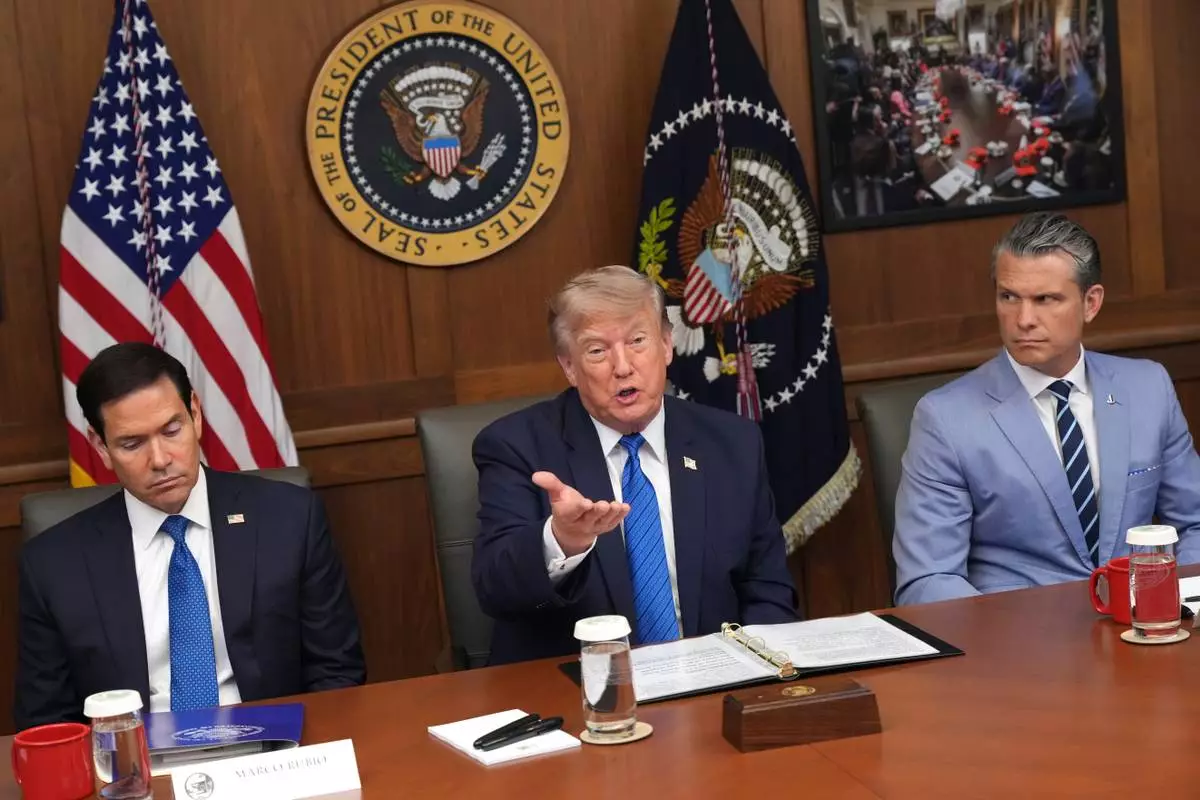
President Donald Trump speaks as Secretary of State Marco Rubio, left, and Defense Secretary Pete Hegseth listen during a cabinet meeting, Friday, July 31, 2026, at Camp David, the presidential retreat, near Thurmont, Md., Friday, July 31, 2026. (AP Photo/Jacquelyn Martin)
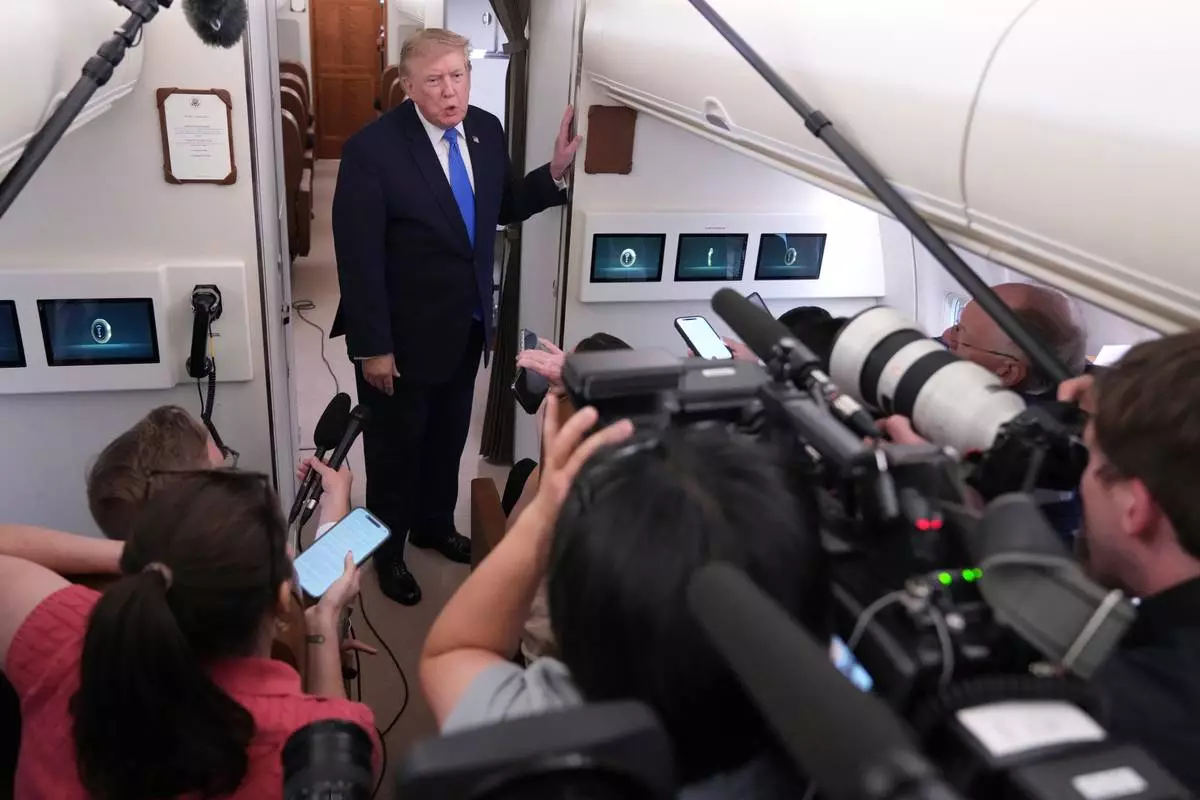
President Donald Trump speaks to reporters onboard Air Force One while returning to the White House, Sunday, Aug. 2, 2026. (AP Photo/Jacquelyn Martin)
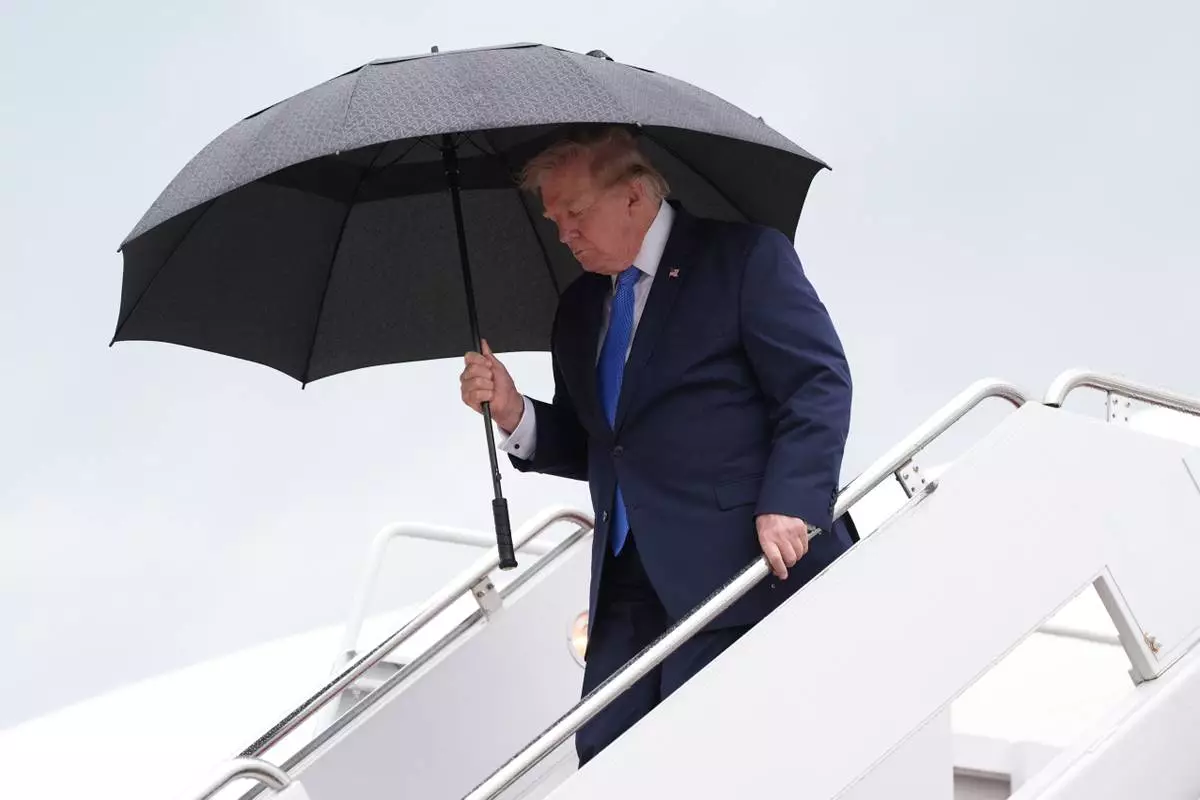
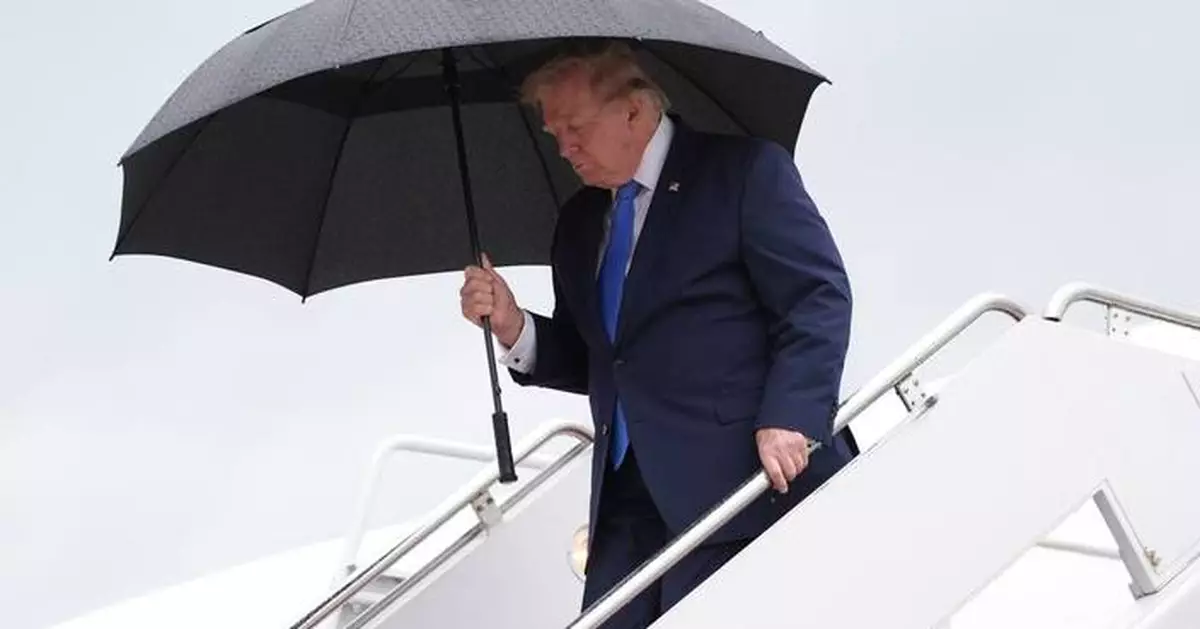
President Donald Trump carries an umbrella as he exits Air Force One at Joint Base Andrews, Md., Sunday, Aug. 2, 2026, on return to Washington. (AP Photo/Jacquelyn Martin)