Skip to Content Facebook Feature Image

Falling oil prices help calm worries about inflation, and Wall Street rallies

News

Falling oil prices help calm worries about inflation, and Wall Street rallies
News

News

Falling oil prices help calm worries about inflation, and Wall Street rallies

2026-08-03 22:27 Last Updated At:22:30

NEW YORK (AP) — Oil prices are easing on Monday and helping to calm Wall Street’s worries that inflation could potentially get even worse. That has U.S. stock indexes rallying, though sharp swings are continuing to roil underneath the surface.

The S&P 500 rose 1% following its wild July, where it swung up and down as oil prices shot higher because of the war with Iran and worries grew about whether Big Tech’s massive investments in artificial-intelligence technology will translate into profits and whether chipmaker stocks soared too high in the euphoria around AI.

More Images
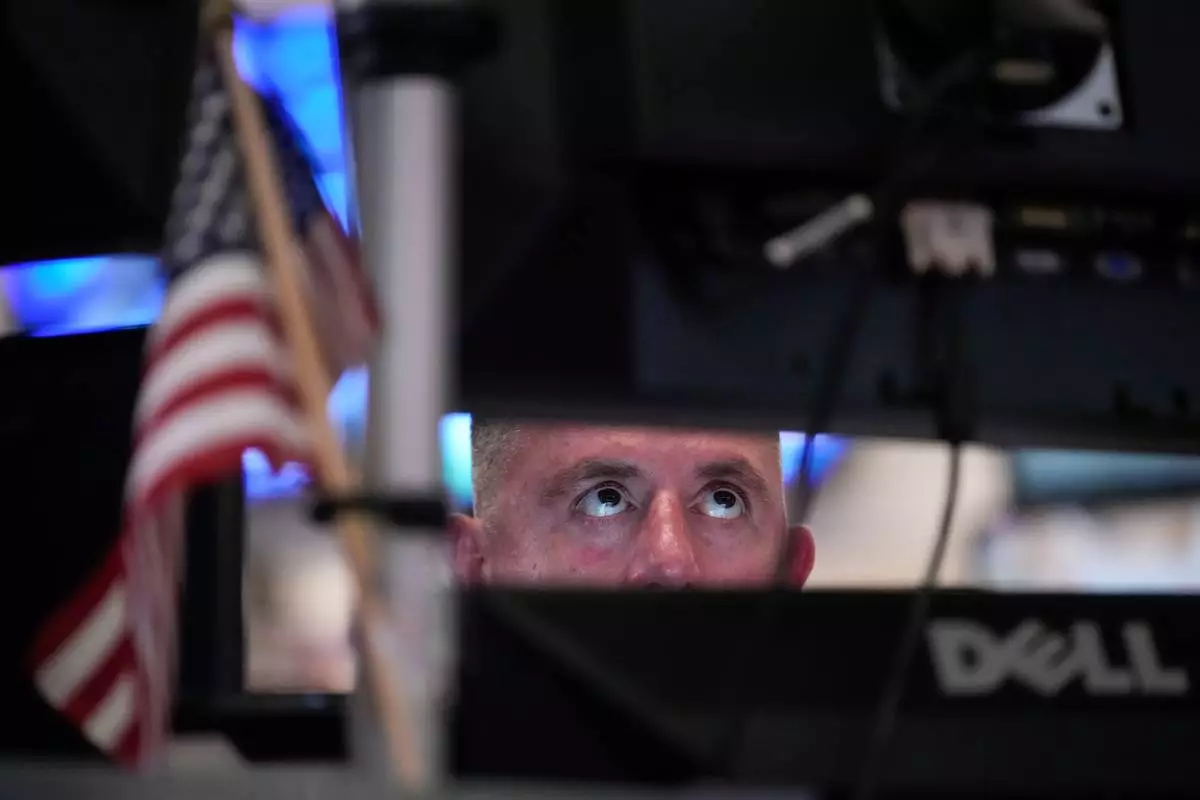
A trader works on the floor of the New York Stock Exchange, Thursday, July 30, 2026, in New York. (AP Photo/Yuki Iwamura)
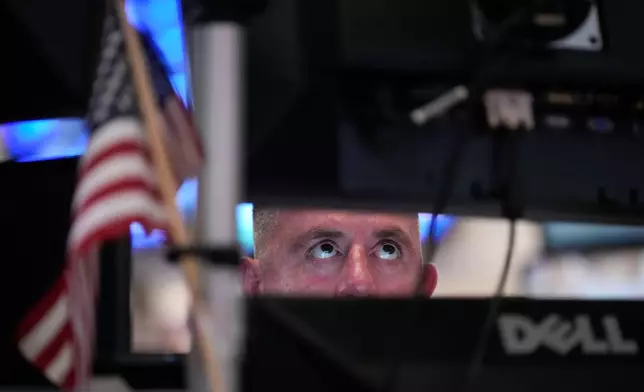
A trader works on the floor of the New York Stock Exchange, Thursday, July 30, 2026, in New York. (AP Photo/Yuki Iwamura)
A trader works on the floor of the New York Stock Exchange, Thursday, July 30, 2026, in New York. (AP Photo/Yuki Iwamura)

A trader works on the floor of the New York Stock Exchange, Thursday, July 30, 2026, in New York. (AP Photo/Yuki Iwamura)

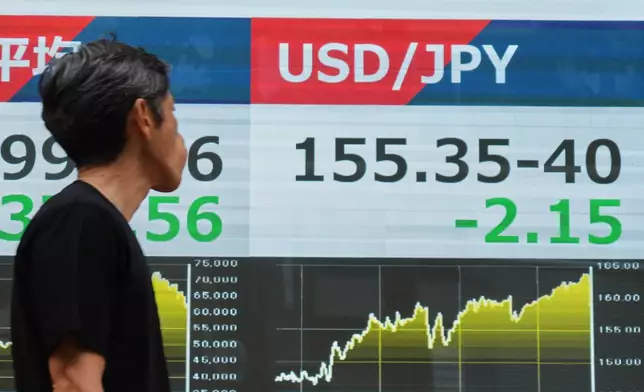
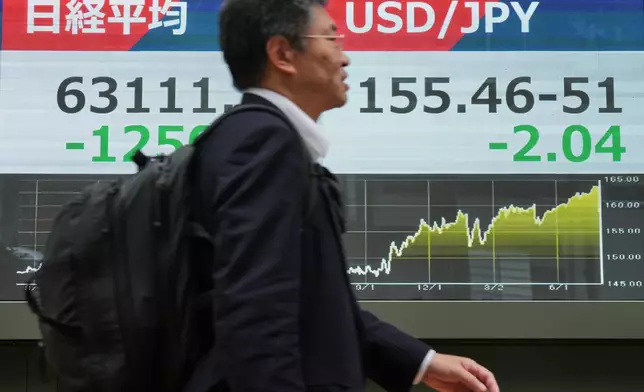
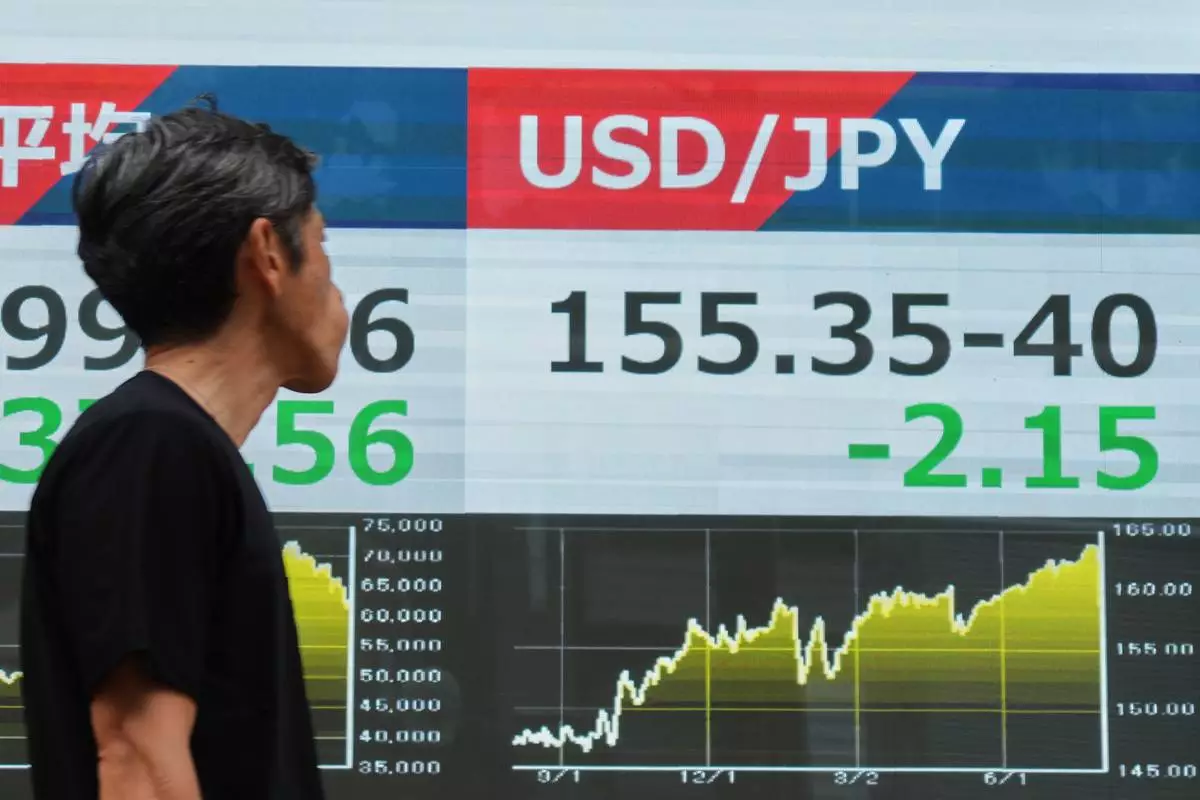
A person walks past an electronic board showing the U.S. dollar and Japanese yen exchange rate at a securities firm in Tokyo on Monday, Aug. 3, 2026. (AP Photo/Eugene Hoshiko)
A person walks past an electronic board showing the U.S. dollar and Japanese yen exchange rate at a securities firm in Tokyo on Monday, Aug. 3, 2026. (AP Photo/Eugene Hoshiko)

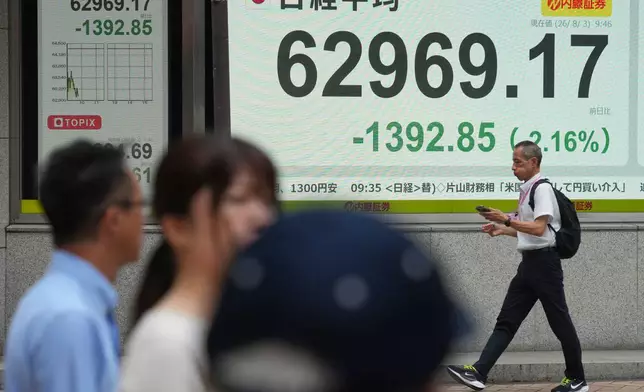
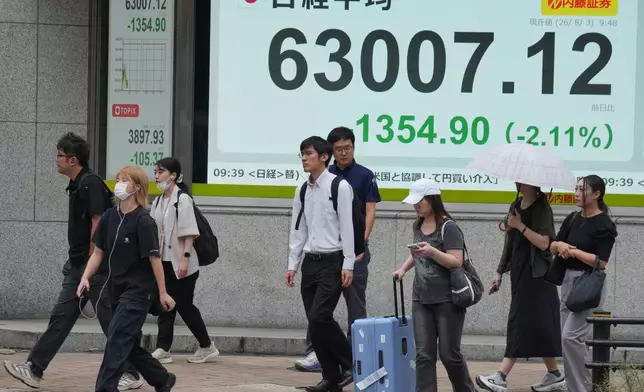
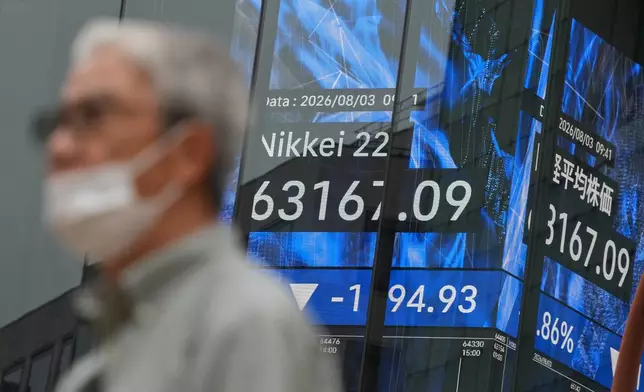
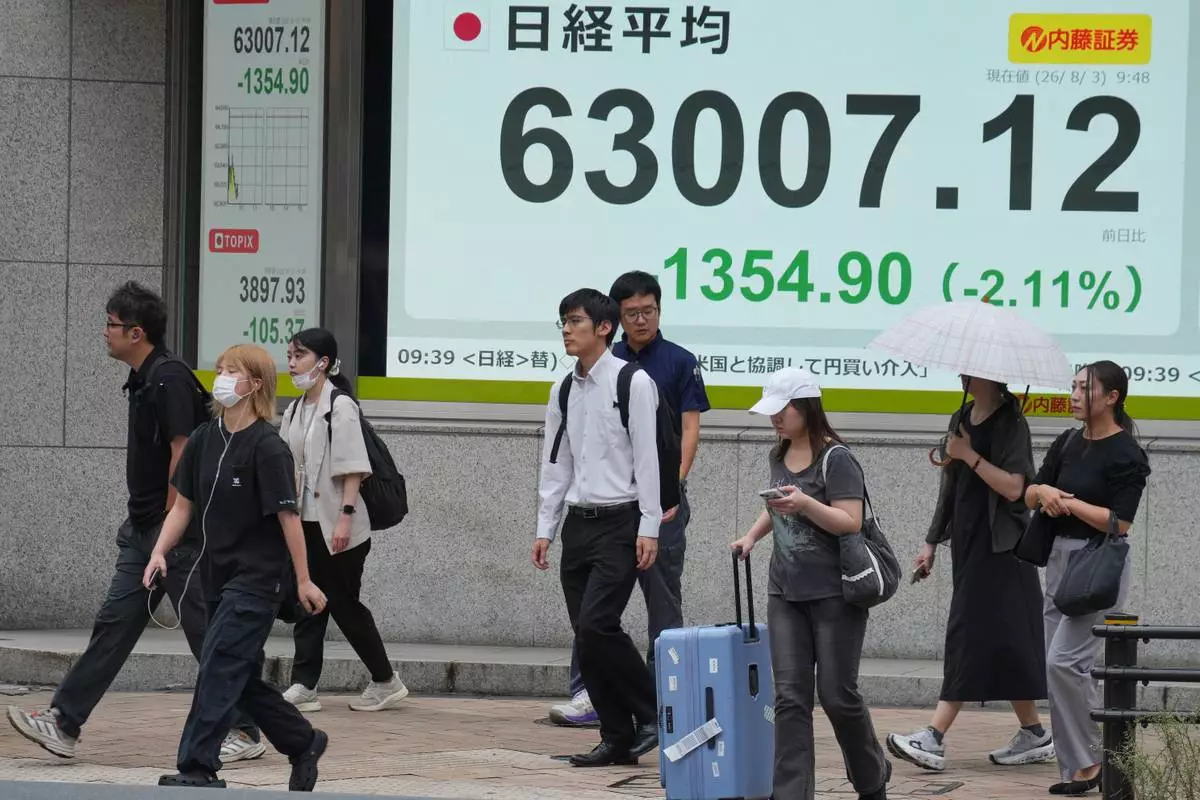
People walk past an electronic board showing Japan's Nikkei index at a securities firm in Tokyo on Monday, Aug. 3, 2026. (AP Photo/Eugene Hoshiko)
People walk past an electronic board showing Japan's Nikkei index at a securities firm in Tokyo on Monday, Aug. 3, 2026. (AP Photo/Eugene Hoshiko)

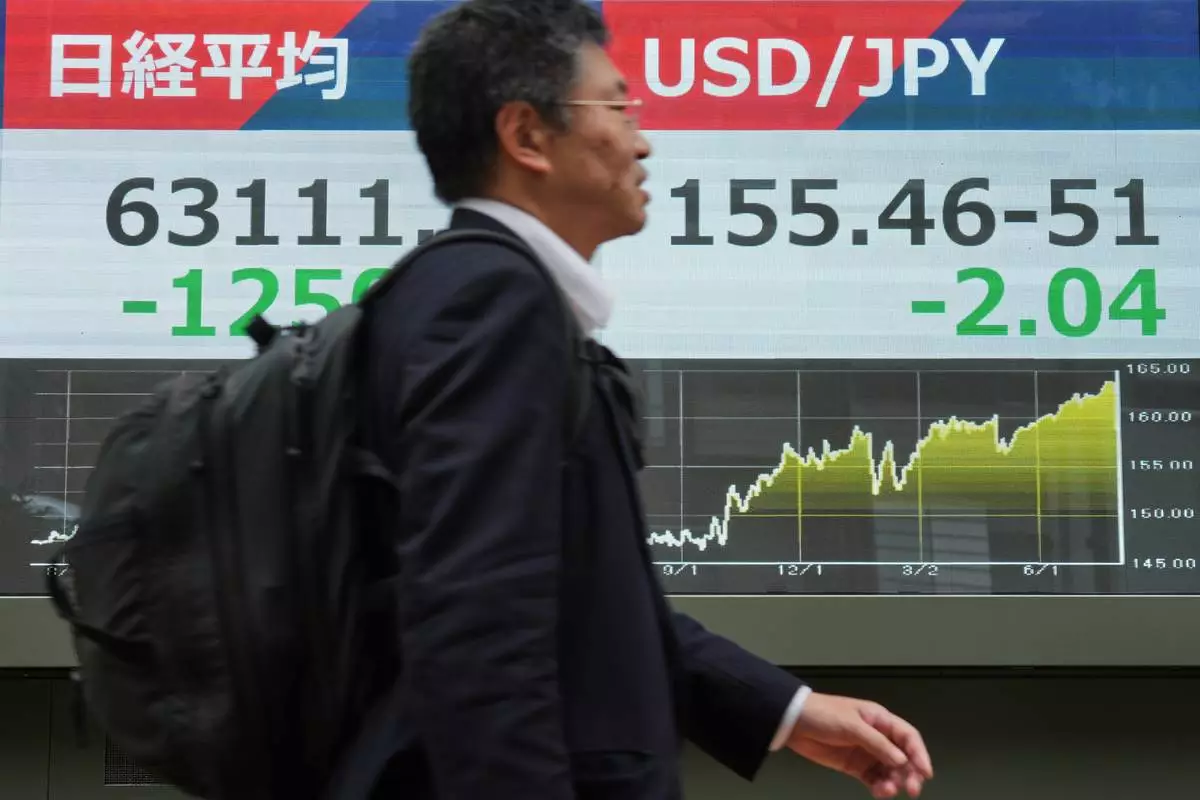
A person walks past an electronic board showing the U.S. dollar and Japanese yen exchange rate at a securities firm in Tokyo on Monday, Aug. 3, 2026. (AP Photo/Eugene Hoshiko)
A person walks past an electronic board showing the U.S. dollar and Japanese yen exchange rate at a securities firm in Tokyo on Monday, Aug. 3, 2026. (AP Photo/Eugene Hoshiko)

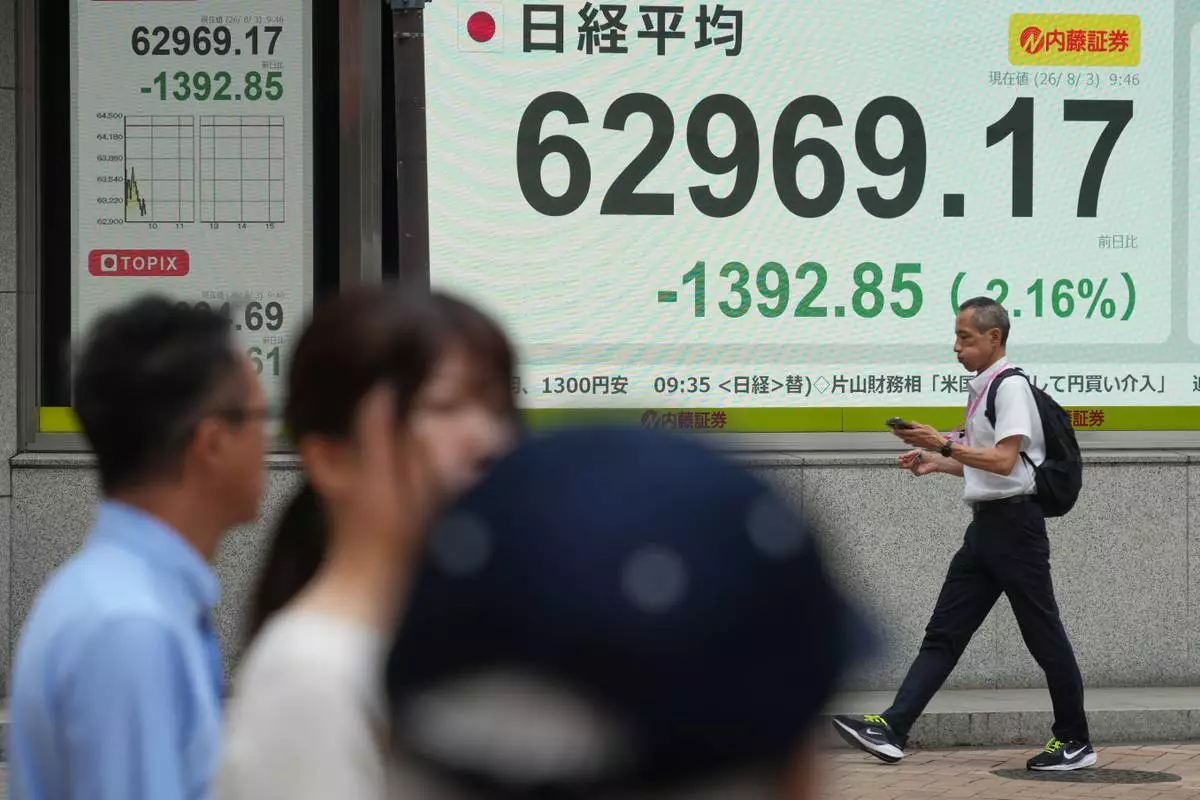
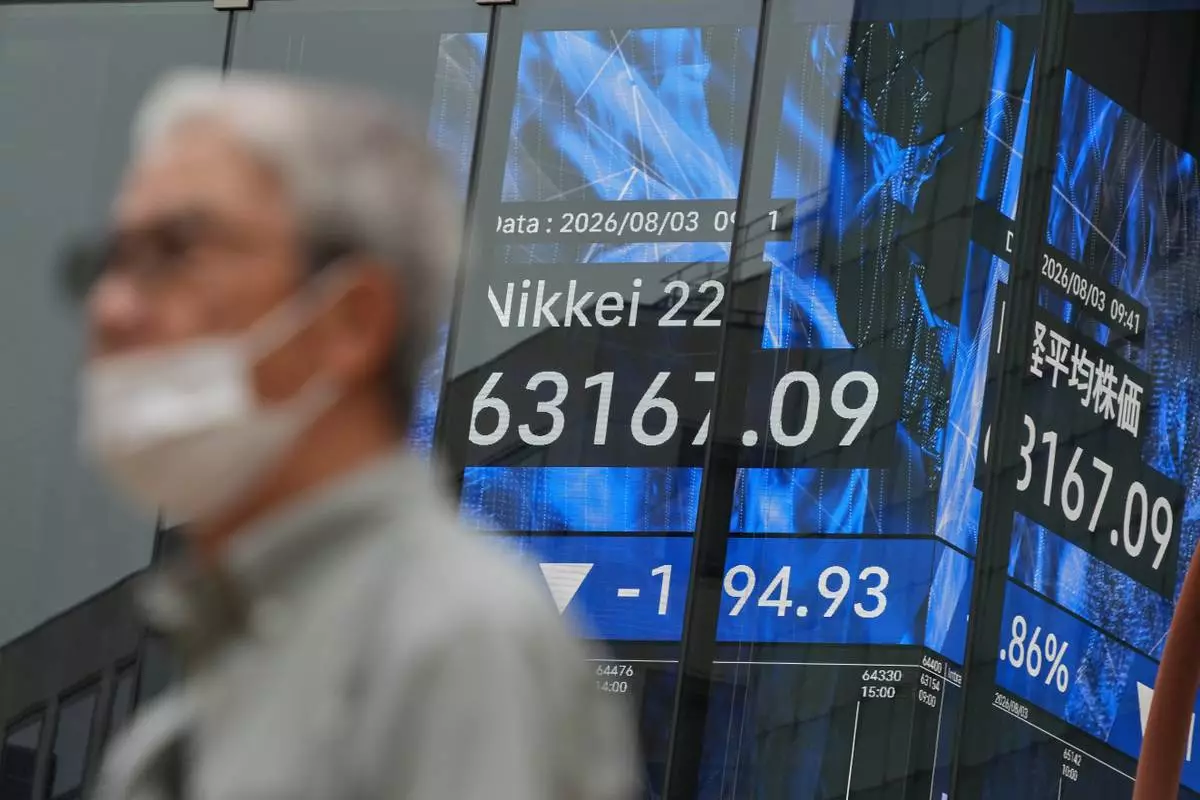
A person walks past an electronic board showing Japan's Nikkei index at a securities firm in Tokyo on Monday, Aug. 3, 2026. (AP Photo/Eugene Hoshiko)
A person walks past an electronic board showing Japan's Nikkei index at a securities firm in Tokyo on Monday, Aug. 3, 2026. (AP Photo/Eugene Hoshiko)

A person walks past an electronic board showing Japan's Nikkei index and U.S. dollar and Japanese yen exchange rate at a securities firm in Tokyo Monday, Aug. 3, 2026. (AP Photo/Eugene Hoshiko)

A person walks past an electronic board showing Japan's Nikkei index and U.S. dollar and Japanese yen exchange rate at a securities firm in Tokyo Monday, Aug. 3, 2026. (AP Photo/Eugene Hoshiko)

The Dow Jones Industrial Average was up 711 points, or 1.4%, as of 10:15 a.m. Eastern time, and the Nasdaq composite was 1.2% higher.

Some of the strongest action was in the oil market, where the price for a barrel of Brent crude fell 5.4% to $83.17. It dropped after President Donald Trump said over the weekend that he decided to hold off on new strikes against Iran at the urging of allies in the region.

Brent careened between $72 and $102 last month as worries rose and fell about when the war with Iran would allow oil tankers to freely exit the Persian Gulf again to deliver crude to customers worldwide.

The latest acquiescence by Trump on Iran helped to ease worries about inflation potentially getting worse, and Treasury yields correspondingly fell in the bond market.

The yield on the 10-year Treasury sank to 4.68% from 4.75% late Friday. It, though, remains well above its 3.97% level from before the war with Iran.

That jump is threatening to undercut prices for stocks and other investments, while slowing the economy by making borrowing more expensive for U.S. households and businesses. The average long-term U.S. mortgage rate has already leaped to its highest level in a year.

Monday's drop in oil prices helped airlines and other companies with big fuel bills lead the market. United Airlines flew 6.7% higher, while American Airlines climbed 6.4%. Norwegian Cruise Line Holdings steamed 4.3% higher.

Tyson Foods rose 1.8% and erased an early-morning loss after it reported a stronger profit for the spring than analysts expected. CEO Donnie King said strength is continuing in the company's chicken business and its prepared foods, which includes brands like Jimmy Dean and Hillshire Farm.

It joined a lengthening list of big U.S. companies to deliver stronger-than-expected profit for the spring. That's imperative for Wall Street because stock prices tend to follow the path of corporate earnings over the long term.

Companies in the S&P 500 are on track to deliver earnings per share for the spring that are 47% higher than a year before, according to FactSet, with more than half of the companies having already reported. If that ends up being the case, it would be the strongest growth since the spring of 2021, when the economy was roaring out of the COVID pandemic.

On the losing end of Wall Street Monday were stocks of companies that make computer chips, which have been swinging sharply on worries about whether their surging revenues because of the AI boom are sustainable.

If AI ends up produce less profit and productivity than hoped, Big Tech companies could curtail their spending sprees on data centers that have helped chip stocks soar to tremendous heights.

Micron Technology fell 3.2% Monday and was one of the heaviest weights on the S&P 500, but its stock is still up nearly 180% for the year so far. Advanced Micro Devices fell 1.1%, but its price is still roughly 120% higher than it was at the end of last year.

The manic swings for AI stocks have been most dramatic in South Korea, where the Kospi index is dominated by just two tech titans, Samsung Electronics and SK Hynix.

Seoul’s Kospi fell 5.1% Monday, coming off Friday's 17.9% surge that was its best day in history.

In neighboring Japan, Tokyo’s Nikkei 225 fell 0.9% after the United States and Japan confirmed they had moved together to to prop up the value of the Japanese yen against the dollar. A stronger yen would help to limit inflation in Japan, but it could also potentially hurt Japan’s exporters.

AP Writers Matt Ott, Elaine Kurtenbach, Mayuko Ono and Mari Yamaguchi contributed to this report.

A trader works on the floor of the New York Stock Exchange, Thursday, July 30, 2026, in New York. (AP Photo/Yuki Iwamura)
A trader works on the floor of the New York Stock Exchange, Thursday, July 30, 2026, in New York. (AP Photo/Yuki Iwamura)
A trader works on the floor of the New York Stock Exchange, Thursday, July 30, 2026, in New York. (AP Photo/Yuki Iwamura)

A trader works on the floor of the New York Stock Exchange, Thursday, July 30, 2026, in New York. (AP Photo/Yuki Iwamura)

A person walks past an electronic board showing the U.S. dollar and Japanese yen exchange rate at a securities firm in Tokyo on Monday, Aug. 3, 2026. (AP Photo/Eugene Hoshiko)
A person walks past an electronic board showing the U.S. dollar and Japanese yen exchange rate at a securities firm in Tokyo on Monday, Aug. 3, 2026. (AP Photo/Eugene Hoshiko)

People walk past an electronic board showing Japan's Nikkei index at a securities firm in Tokyo on Monday, Aug. 3, 2026. (AP Photo/Eugene Hoshiko)
People walk past an electronic board showing Japan's Nikkei index at a securities firm in Tokyo on Monday, Aug. 3, 2026. (AP Photo/Eugene Hoshiko)

A person walks past an electronic board showing the U.S. dollar and Japanese yen exchange rate at a securities firm in Tokyo on Monday, Aug. 3, 2026. (AP Photo/Eugene Hoshiko)
A person walks past an electronic board showing the U.S. dollar and Japanese yen exchange rate at a securities firm in Tokyo on Monday, Aug. 3, 2026. (AP Photo/Eugene Hoshiko)

A person walks past an electronic board showing Japan's Nikkei index at a securities firm in Tokyo on Monday, Aug. 3, 2026. (AP Photo/Eugene Hoshiko)
A person walks past an electronic board showing Japan's Nikkei index at a securities firm in Tokyo on Monday, Aug. 3, 2026. (AP Photo/Eugene Hoshiko)

A person walks past an electronic board showing Japan's Nikkei index and U.S. dollar and Japanese yen exchange rate at a securities firm in Tokyo Monday, Aug. 3, 2026. (AP Photo/Eugene Hoshiko)

A person walks past an electronic board showing Japan's Nikkei index and U.S. dollar and Japanese yen exchange rate at a securities firm in Tokyo Monday, Aug. 3, 2026. (AP Photo/Eugene Hoshiko)

WASHINGTON (AP) — Acting Attorney General Todd Blanche has issued a formal order terminating President Donald Trump’s $1.8 billion “anti-weaponization fund” to compensate his political allies, a move that follows weeks of negotiations with two Republican senators who were blocking his nomination to become attorney general.

A spokeswoman for Texas Sen. John Cornyn, one of the senators holding up Blanche’s nomination, confirmed the deal, which comes ahead of a Tuesday confirmation vote for Blanche’s nomination in the Senate Judiciary Committee. The other GOP senator, North Carolina Sen. Thom Tillis, did not have immediate comment.

Blanche said at a June hearing that the Justice Department would not move forward with the fund to compensate those who believe they were unfairly prosecuted, as he faced bipartisan outrage over the possibility that violent rioters who attacked police at the U.S. Capitol on Jan. 6, 2021, could be considered for payments. But Cornyn and Tillis, both members of the Judiciary panel, have said they wanted to see the promise in writing before they endorsed Blanche's nomination — especially as Trump continued to express support for the idea.

In a statement late Sunday, Blanche said the order came after “good faith discussions.”

“My team and I have met with committee members and Senators over the past several weeks and addressed any concerns or outstanding questions," Blanche said.

In a statement accompanying the order, the Justice Department said that “although the Acting Attorney General has repeatedly advised Congress through testimony, including under oath, as well as in written responses, that the Fund is not moving forward, and the Department has repeatedly represented to district courts that the Fund is not moving forward, today’s Order officially rescinds the May 18, 2026 Order.”

Since the settlement of the president's lawsuit against the IRS was announced, “No Members were appointed; no funds were transferred; no process for receiving claims was established; no claims were paid,” the order says. “This order establishes, beyond any doubt, that there is no Fund.”

The document released by Blanche on Sunday night also limits the scope of another provision of the settlement that provided broad immunity for Trump and members of his family from tax audits.

The deal clarifies that the tax audit immunity agreement “applies by its terms only retroactively” to claims open at the time of the settlement and does not protect the president from examination of future tax filings.

Cornyn, who lost reelection this year after Trump endorsed his primary opponent, and Tillis, who is retiring when his term ends in January, have blocked Blanche's nomination as many of their GOP colleagues have criticized the fund.

The Judiciary Committee postponed a vote on Blanche’s nomination that had been scheduled for Thursday morning after Tillis and Cornyn said they needed more from the administration before they could provide the necessary votes.

The two senators have repeatedly said the Justice Department seemed interested in reaching an agreement, but the White House wouldn’t budge even to aid the confirmation of Trump’s loyal former personal attorney, who has aggressively pursued the administration’s priorities as acting attorney general.

“I think as far as Blanche and the Department of Justice, we were pretty much on the same page,” Cornyn said Thursday. “But then when the president got wind of it, he wasn’t willing to go along with it.”

Blanche, who served as Trump’s defense lawyer in his criminal cases, entered the Justice Department last year as deputy attorney general. He was elevated to the top post after Pam Bondi was fired in April by Trump, who was frustrated by her failure to successfully prosecute his political enemies.

Though Blanche insisted he wasn’t auditioning for the permanent job, he has moved aggressively to pursue the Trump administration’s agenda and accelerate investigations into the president’s perceived foes.

The two sides have been negotiating for weeks, but Trump has said repeatedly during the talks that he thinks the fund should go forward and threatened to move forward with it if Blanche was not confirmed.

After the Thursday vote was delayed, Trump said in a social media post that he might pull Blanche’s nomination and resubmit it after Cornyn and Tillis leave office next year.

On Sunday evening, Trump said that people who had faced charges from the Jan. 6, 2021, attack on the Capitol and could have benefited from the fund had “their lives destroyed.”

“This would be a reimbursement for the pain that they suffered,” Trump said. “A lot of people like it.”

On Friday, Trump’s attorneys notified a court they would appeal a judge’s scathing ruling that characterized the settlement of the president’s lawsuit against the IRS as an improper exercise in self-dealing. The judge in her order last month referred one of Trump’s attorneys for potential disciplinary action and criticized Blanche’s involvement in the settlement, given his prior representation of Trump.

Blanche has said he disagrees “with the judge’s insinuations” about him. Justice Department lawyers had previously written in court papers that the fund was not moving forward but they refused a judge’s request to have Blanche and other administration officials file a declaration under penalty of perjury that the administration would not take any further action to create the fund.

The Justice Department said the court’s demands were “unnecessary.”

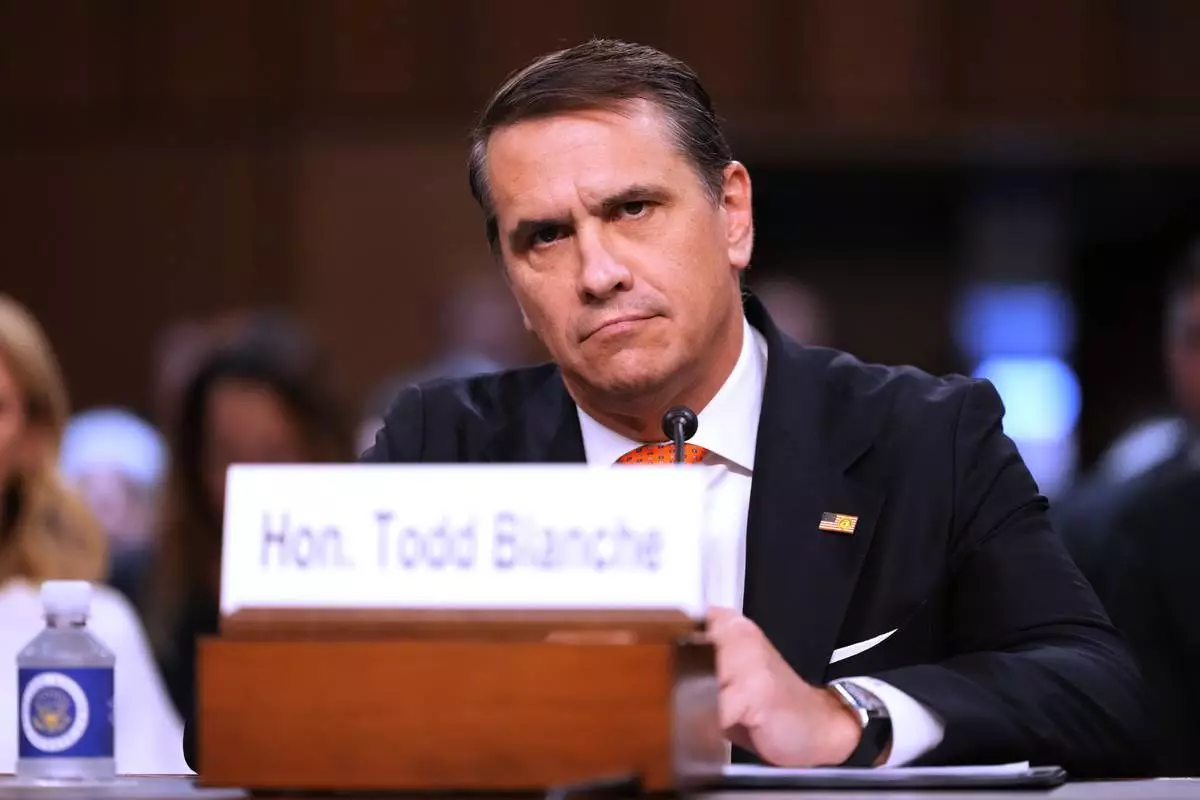
FILE - Acting Attorney General Todd Blanche appears before the Senate Judiciary Committee on Capitol Hill in Washington, July 15, 2026. (AP Photo/Mark Schiefelbein, File)

FILE - Acting Attorney General Todd Blanche appears before the Senate Judiciary Committee on Capitol Hill in Washington, July 15, 2026. (AP Photo/Mark Schiefelbein, File)

Recommended Articles