LONDON & SYDNEY--(BUSINESS WIRE)--Aug 3, 2026--
Reimagine Robotics, an AI robotics company founded by former leaders of Google DeepMind’s Applied Robotics team, today emerged from stealth with new technology that allows robots to learn on the job.
This press release features multimedia. View the full release here: https://www.businesswire.com/news/home/20260803688779/en/
The company is developing intelligent robots that anyone can train and use. Instead of requiring specialist programmers whenever a task or production process changes, workers can show the robot what to do, watch it attempt the task and correct it on the spot.
“A useful robot should be able to learn from the person doing the work,” says Jonathan Scholz, co-founder and CEO of Reimagine Robotics. “They should be able to show it a task, put it right when it makes a mistake and move on to the next problem. That is what it means for a robot to learn on the job. It’s a process we call ‘monkey-see, monkey-do’.”
“A robot should arrive with the attitude of a new colleague: ‘How can I help? What do you want me to do?’ The people who understand the process should be able to answer those questions by showing the robot directly.”
Scholz founded Google DeepMind’s Applied Robotics team in London and led it for seven years. He later co-founded Reimagine Robotics in April 2025 alongside former colleagues Oleg Sushkov, Akhil Raju and Misha Denil, with headquarters in London and Sydney. That first phase was funded by pre-seed financing from venture capital firms Fly Ventures and firstminute capital and a number of angel investors.
The next phase
“We’re excited to come out of stealth,” Scholz says. “This last year was about building a core product and a team, and working with customers to test the platform. After working with several partners, we’re absolutely convinced it’s not only viable, but that there is a need for this technology, and that it has massive potential across an array of industrial and manufacturing settings.”
“This next stage is about a new round of fundraising, expanding our team for more deployment muscle, putting robots into more workplaces, and showing that each deployment can make the next one faster, more reliable, and more efficient.”
Robots already on the factory floor
The company is already deploying its robots in advanced manufacturing and electronics disassembly facilities.
At a made-to-order plastics business, Reimagine Robotics trained its robots to tend 3D printers overnight by removing print beds, operating latches and pressing controls. The customer’s own team used the platform to automate additional stages, including washing, curing and drying.
In a separate deployment involving the recovery of valuable critical materials from used hard drives, Reimagine Robotics worked with process engineers to develop a three-robot disassembly cell. The resulting workflow combines robots and people working together to evolve and optimise the workflow in real-time.
During the project, Reimagine Robotics reduced the time required to prototype and test a new robot behaviour from approximately one day to around ten minutes. That allowed the robots to become part of the process-design conversation: teams could propose a new use for a robot and test the idea almost immediately.
Humans at the heart of robotics
Throughout all Reimagine Robotics deployments, people remain central to the model.
“For us, this is not about taking people out of the process,” Scholz says. “A robot that learns on the job depends on people. The worker identifies the bottleneck, shows the robot how to help and corrects it until it is useful.”
“The robot turns that person’s knowledge into leverage. Instead of someone having to repeat a tedious physical task thousands of times, they can teach the robot, and apply that ability wherever it is needed.”
“I think of it more as a tool to amplify human labour.”
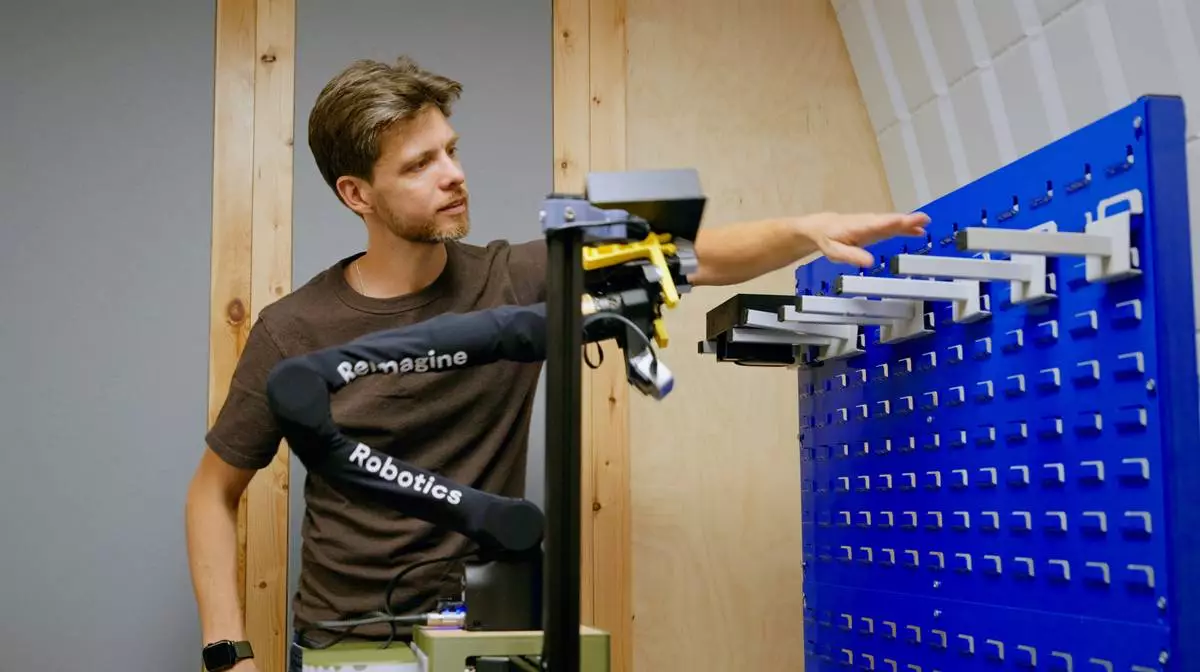
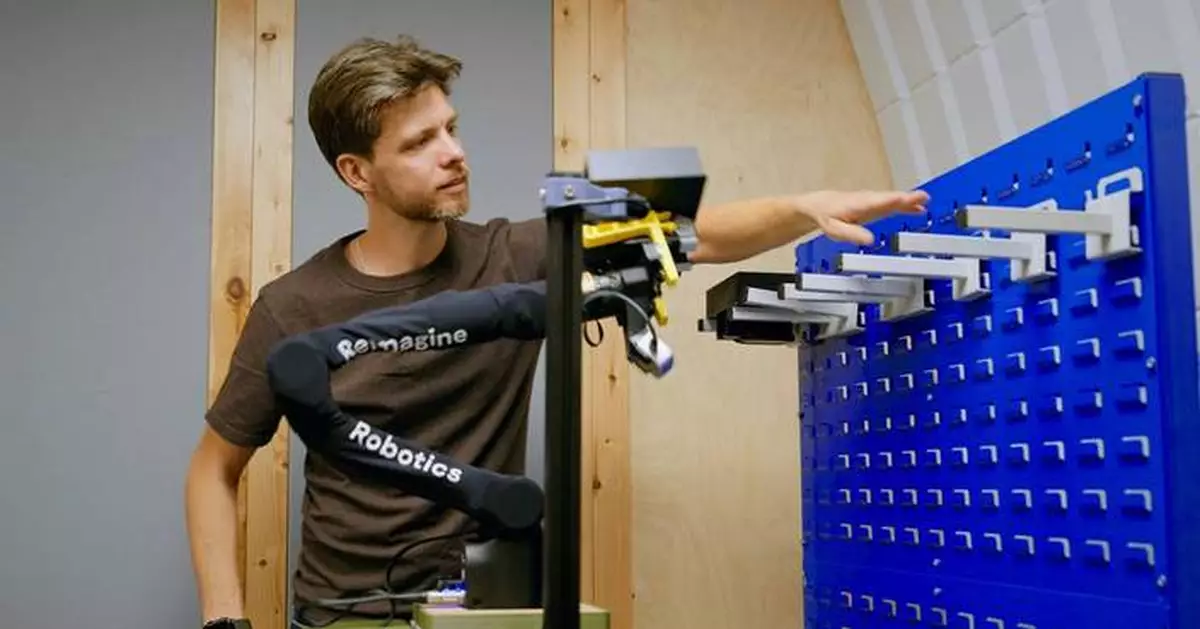
Reimagine Robotics CEO Jonathan Scholz with the company's AI-powered robot learning on the job. Credit: Reimagine Robotics
As the clock ticks down to Monday's trade deadline, the biggest deal so far came courtesy of the Detroit Tigers, who sent left-handed ace Tarik Skubal to the Los Angeles Dodgers.
Skubal is a free agent after this season, and Detroit is under .500. But even considering all that, trading away the 2024 and 2025 Cy Young Award winner couldn't have been easy. The Tigers will be judged on how the three prospects they acquired — Zyhir Hope, River Ryan and Brady Smith — perform. History shows that it's possible to come out OK when trading a pitcher of Skubal's caliber, but there are plenty of teams who got little in return.
Here are eight other instances when a reigning Cy Young winner was traded before the end of the following season (hat tip to Baseball Reference for the transaction recaps):
— Frank Viola, Minnesota to New York Mets, 1989: Among the players Minnesota received for Viola were Rick Aguilera and Kevin Tapani. The former would save 42 games and the latter would win 16 in 1991, when the Twins won the World Series. Viola wasn't a rental — after finishing the 1989 season in New York, he went 20-8 in 1990 for the Mets. But New York never made the postseason with him.
— David Cone, Kansas City to Toronto to New York Yankees, 1995: Cone was actually traded twice the year after his Cy Young season in Kansas City. Toronto acquired him for Chris Stynes and two players who never made the majors. When the Blue Jays floundered, they dealt Cone — in the final year of his contract — to the Yankees for Marty Janzen and two players who never made the majors.
— Pedro Martinez, Montreal to Boston, 1997: Ouch. Montreal knew what it had in Martinez, but he was entering his walk year so the Expos traded him shortly after the '97 season for Carl Pavano and Tony Armas. Boston was able to keep him long term, and in 1999 and 2000, he turned in one of the best two-year pitching stretches in the live ball era: 23-4 with a 2.07 ERA, followed by 18-6 with a 1.74 ERA.
— Roger Clemens, Toronto to New York Yankees, 1999: New York was coming off a 114-win season and a World Series title when it sent fan favorite David Wells to Toronto along with reliever Graeme Lloyd and infielder Homer Bush. In return, the Yankees landed Clemens, who like Skubal was fresh of two straight Cy Youngs. He added another with New York in 2001 and kept pitching until 2007.
— CC Sabathia, Cleveland to Milwaukee, 2008: Another good comp for Skubal, in that the Brewers got Sabathia as a partial-season rental right before he hit free agency. It was worth it when he went 11-2 with a 1.65 ERA down the stretch to help Milwaukee reach the playoffs for the first time in 26 years. Outfielder Michael Brantley was a player to be named later in the package that went back to Cleveland, and he would become a five-time All-Star.
— Cliff Lee, Cleveland to Philadelphia, 2009: Yes, that's two straight seasons Cleveland traded away the previous year's Cy Young winner — and Lee wasn't even a pending free agent. He helped the Phillies reach the World Series before being re-traded to Seattle. As part of the deal for Lee, Cleveland got Carlos Carrasco, who would pitch there for over a decade.
— R.A. Dickey, New York Mets to Toronto, 2012: The Mets picked the right time to deal Dickey, who won 20 games in 2012 before New York sent him to the Blue Jays in December. Right-hander Noah Syndergaard and catcher Travis d'Arnaud were part of the return, and both were still with New York when the Mets won the pennant in 2015.
— Justin Verlander, New York Mets to Houston, 2023: Verlander is a tricky case since he actually left the Astros as a free agent after winning the Cy Young for them in 2022. Then New York traded him back to Houston in the middle of the 2023 season.
Which 1974 Cy Young winner was able to switch teams for 1975 after an arbitrator declared him a free agent?
Kyle Freeland threw Colorado's first complete game since 2002 on Sunday in an 8-1 victory over Kansas City. It was Freeland's 251st start and first complete game. Eduardo Rodriguez is now the lone pitcher in major league history with at least 250 starts and no complete games.
Two of the craziest comebacks of the season came this week, courtesy of teams trying to stay in the American League wild card race.
Baltimore trailed Detroit 7-0 in the top of the seventh with Skubal on the mound. The Tigers had a 99.4% win probability according to Baseball Savant. The Orioles finally chased Skubal with Leody Taveras' two-out RBI single, and by the time Detroit's bullpen got out of the inning it was 7-5. Baltimore tied it in the eighth, both teams scored twice in the 11th and then the Orioles won 10-9 in 12.
On Thursday, Kansas City led Minnesota 3-0 with two outs and nobody on in the bottom of the ninth. (Win probability: 99.5%.) A hit batter, a single and a walk loaded the bases. Then Kody Clemens hit a grand slam to give the Twins a 4-3 victory.
Catfish Hunter was freed when arbitrator Peter Seitz concluded Oakland owner Charlie Finley failed to make a payment into a long-term annuity fund as specified in Hunter's contract. Hunter then signed with the Yankees.
AP MLB: https://apnews.com/hub/MLB
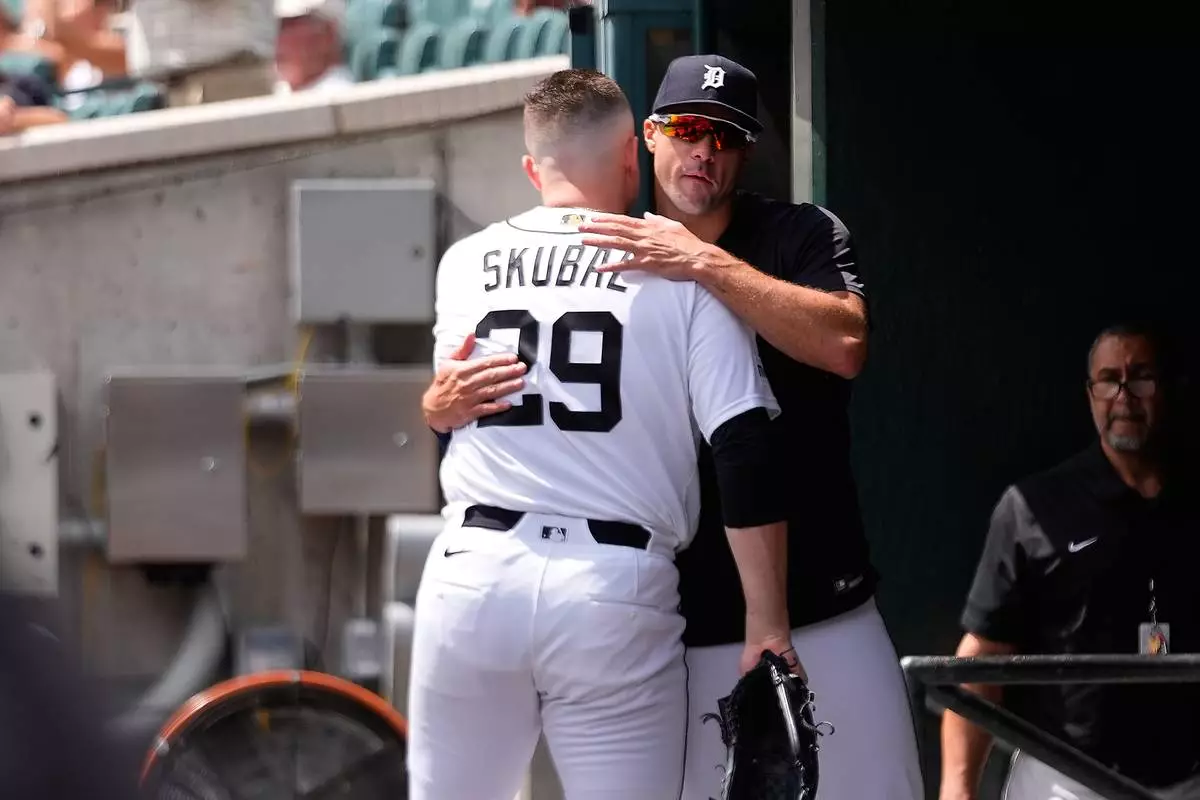
Detroit Tigers pitcher Tarik Skubal (29) hugs Jack Flaherty in the dugout during the seventh inning of a baseball game against the Baltimore Orioles Wednesday, July 29, 2026, in Detroit. (AP Photo/Paul Sancya)