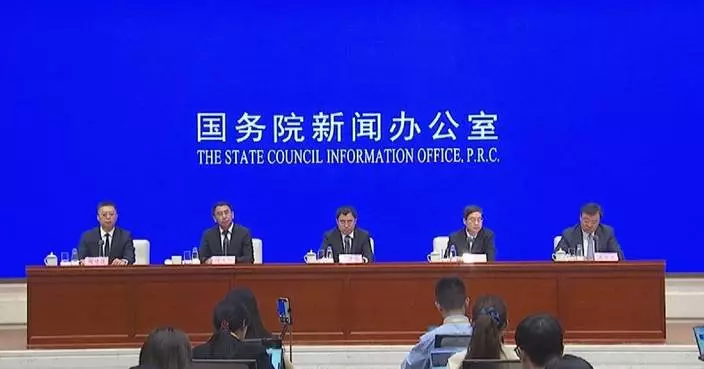
China's central bank said Sunday that it will continue to implement a moderately loose monetary policy in the second half (H2) of 2026, strengthen counter-cyclical adjustment, and take solid steps to promote sustained and improved economic development.
In a statement released after its work conference for the second half of the year, the People's Bank of China (PBOC) said it will make comprehensive use of monetary policy tools and adjust them in a timely manner.
The PBOC will maintain ample liquidity, guide financial institutions to enhance the balance of credit supply, and align the growth of social financing and money supply with expected targets for economic growth and overall price levels.
It vows to promote the high-quality development of a "technology board" in the bond market, steadily implement risk-sharing instruments for technological innovation and private-enterprise bonds, and explore the sharing of information and integrated application of data in the sci-tech finance sector.
The bank also said it will improve the credit enhancement system for private enterprises and small and medium-sized enterprises (SMEs), and strengthen financial service capabilities for the SMEs in the second half of this year.

China's central bank to implement moderately loose monetary policy in H2
American businesses are shifting their China strategies to embrace equal-footing partnerships, looking to learn from Chinese technological innovation as the economy moves from "Made in China" assembly to "Created in China" leadership, said U.S.-China Business Council President Sean Stein.
Rather than viewing China merely as a production base, U.S. enterprises are increasingly forming strategic alliances with Chinese firms to jointly commercialize technologies and expand into third-party global markets, Stein told China Media Group in a recent interview in Shanghai.
He emphasized that the biggest shift in recent years is the emergence of new opportunities rooted in mutual learning, a direct result of China's maturing, innovation-driven economy.
"I can only speak through the eyes of American business and through my own experience. So the trend, I think, is very much for American companies here finding Chinese partners and then going out and doing stuff in the world together. Chinese technologies and companies have progressed rapidly. And now, they've got a lot of things that American companies don't, and vice versa. So, the opportunities globally are limitless," he said.
Highlighting the rapid pace of innovation in China, Stein noted that Chinese companies are taking on leadership roles not by offering low costs, but by advancing technology, prompting American firms to learn from their success.
"We didn't have Chinese companies that are dominating markets not because of their low cost, but because of their technologies. In some cases, they are the technology leader, or they are the production leader. And American companies see this. And they say 'Okay, there are things that Chinese companies do really, really well. How do we learn from them? How do we work with them? How do we not say we are afraid of high-speed rapid innovation? How do we learn how to do that, or if we don't learn how to do that, how do we find a Chinese partner who can?'" he said.
Stein believes that China's rich talent pool, complete industrial chain, mature supply chain, and strong innovation capacity have brought about enormous opportunities for more equal-footing partnerships between the two sides in recent years.
"They come to China because China's got some extraordinary workers, China's got extraordinary supply chains, and China's got some very innovative, efficient companies that they want to do business with, they want to partner with. And so, that's the biggest change, [which] is as the Chinese economy has matured, as its industrial ecosystem has matured often exactly along the lines outlined in Five-Year Plans going back many years, then that creates opportunities for partnership that didn't really exist, because you can't really have a partnership if both partners can't contribute. And that's where we are now. So we think that there are a lot of opportunities that just didn't exist years before," he said.
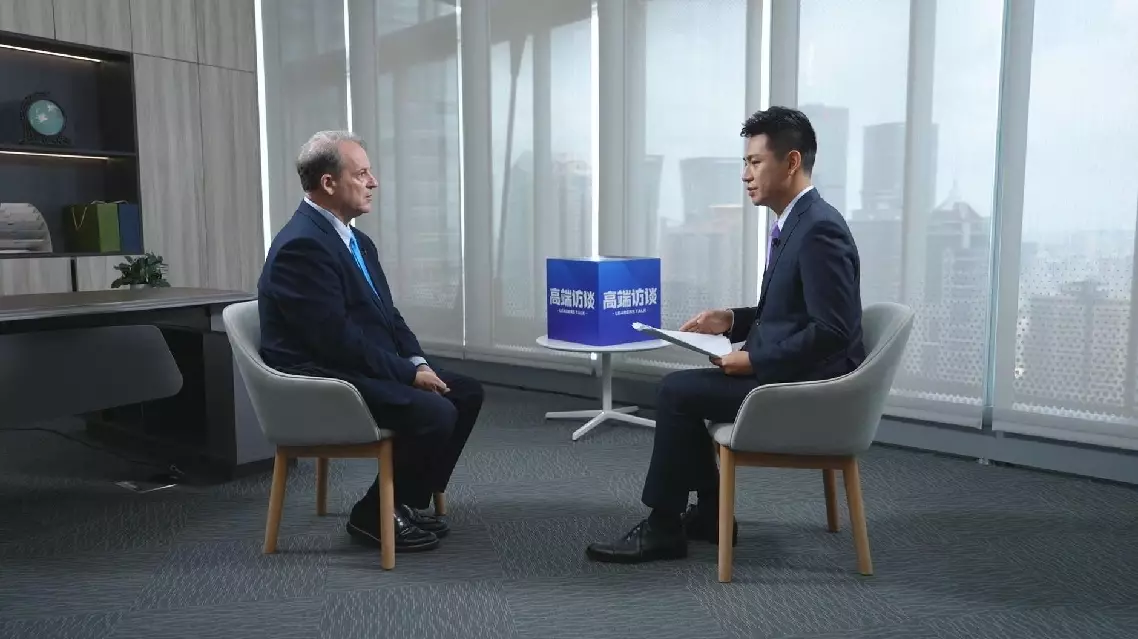
US companies seek equal-footing alliances with Chinese tech innovators: business leader