NYON, Switzerland (AP) — UEFA punished Maccabi Tel-Aviv on Monday by ordering the Israeli club to play a Europa League home game in an empty stadium after fans lit fireworks at a game last week.
Maccabi hosts CSKA Sofia on Thursday at the same stadium in Batumi, Georgia, where the team beat Sheriff Tiraspol 1-0 last week.
Israeli national and club teams have had to choose neutral countries to host games in UEFA competitions for security reasons since October 2023, when conflict with Hamas started.
Maccabi must pay a fine of 40,000 euros ($46,000) and play its next home game “behind closed doors,” UEFA said Monday in an urgent ruling by its appeal panel.
The attendance was 1,012 when Maccabi hosted Moldova’s Sheriff last Thursday in the second qualifying round of the Europa League.
In Monday's draw at UEFA headquarters for the qualifying playoffs round, the winner between Maccabi and CSKA was paired with OFI Crete, which hosts the first leg on Aug. 20.
AP soccer: https://apnews.com/hub/soccer

FILE - The trophy is displayed before before the Europa League final soccer match between Freiburg and Aston Villa in Istanbul, Turkey, Wednesday, May 20, 2026. (AP Photo/Emrah Gurel, File)
Ukrainian forces fired more than 1,000 drones at Russia overnight, including hundreds that were launched toward Moscow, officials said Sunday as the Kremlin was wrapping up the third and last day of its parliamentary elections.
Moscow’s mayor described the wave of drones as the “largest ever” attack on the Russian capital and said there had been damage to a Moscow oil refinery and a residential building.
Across the wider Moscow region, the attack killed two people and wounded 20, local Gov. Andrei Vorobyov said. The dead were a 74-year-old man and a 44-year-old woman, he said.
Writing on social media, Ukrainian President Volodymyr Zelenskyy said that Kyiv had used a range of missiles and drones in the attack — including Ukraine's domestically made Flamingo and Pelican missiles — to hit oil and logistics facilities.
"These are billions of dollars that sustain the war machine," Zelenskyy said, referring to the financial pressure that Kyiv hopes to put on Russia's economy.
The voting underway in Russia is the country's first wartime parliamentary election — balloting that has been virtually devoid of opposition to President Vladimir Putin’s policies and is all but certain to cement the Kremlin’s dominance.
Russia was also holding the vote in the four Ukrainian regions that Moscow illegally annexed after the war began but still doesn’t fully control, and in Crimea, the Black Sea peninsula that was illegally annexed by Russia in 2014. Kyiv has denounced the action as illegal.
Russia’s Ministry of Defense said that its forces shot down 1,100 Ukrainian drones across the country, as well as over the annexed Ukrainian peninsula of Crimea and the waters of the Black Sea.
Moscow Mayor Sergei Sobyanin said that 450 drones had been destroyed en route to the Russian capital, and that the attack had damaged the Moscow Oil Refinery and a residential building.
He said the “unprecedented attack” on Moscow was an attempt to disrupt the elections. "The enemy failed in this regard," he said.
Since Russia’s invasion more than four years ago, Ukraine has become a global leader in military drone technology, deploying domestically produced long-range drones alongside missiles for strikes deep inside Russia. Its drone technology has impressed governments and defense manufacturers around the world.
Kyiv is aiming to make the Russian public feel the war’s consequences and pressure Russian President Vladimir Putin into negotiating a peace settlement. Putin has so far shown no signs he intends to stop the invasion.
Instead, Moscow and Kyiv have been drawn into an escalating duel of long-range aerial strikes as fighting along the roughly 1,250-kilometer (780-mile) front line in eastern and southern Ukraine has slowed, restricted by large numbers of drones and ground robots threatening troop movements.
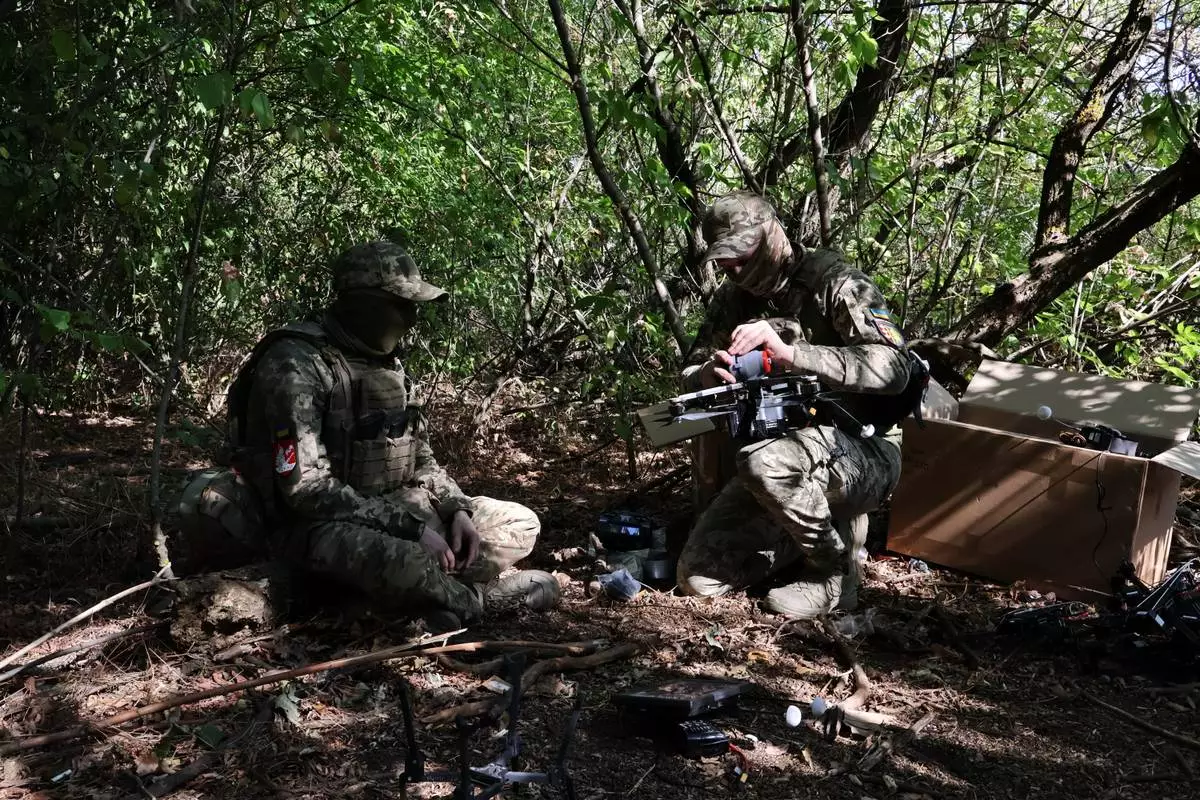
In this photo provided by Ukraine's 65th Mechanized Brigade press service, Ukrainian soldiers prepare an FPV drone to fire towards Russian positions in Zaporizhzhia region, Ukraine, Saturday, Sept. 19, 2026. (Andriy Andriyenko/Ukraine's 65th Mechanized Brigade via AP)
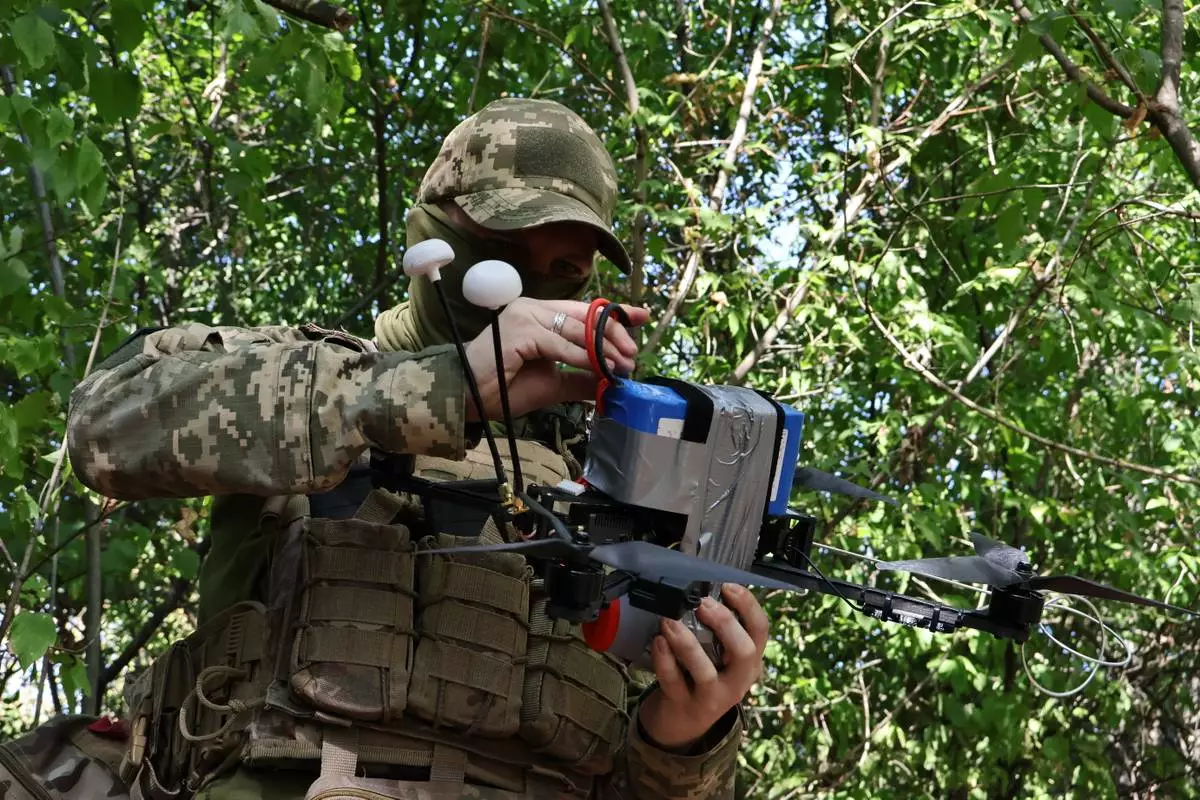
In this photo provided by Ukraine's 65th Mechanized Brigade press service, a Ukrainian soldier prepares an FPV drone to fire towards Russian positions in Zaporizhzhia region, Ukraine, Saturday, Sept. 19, 2026. (Andriy Andriyenko/Ukraine's 65th Mechanized Brigade via AP)
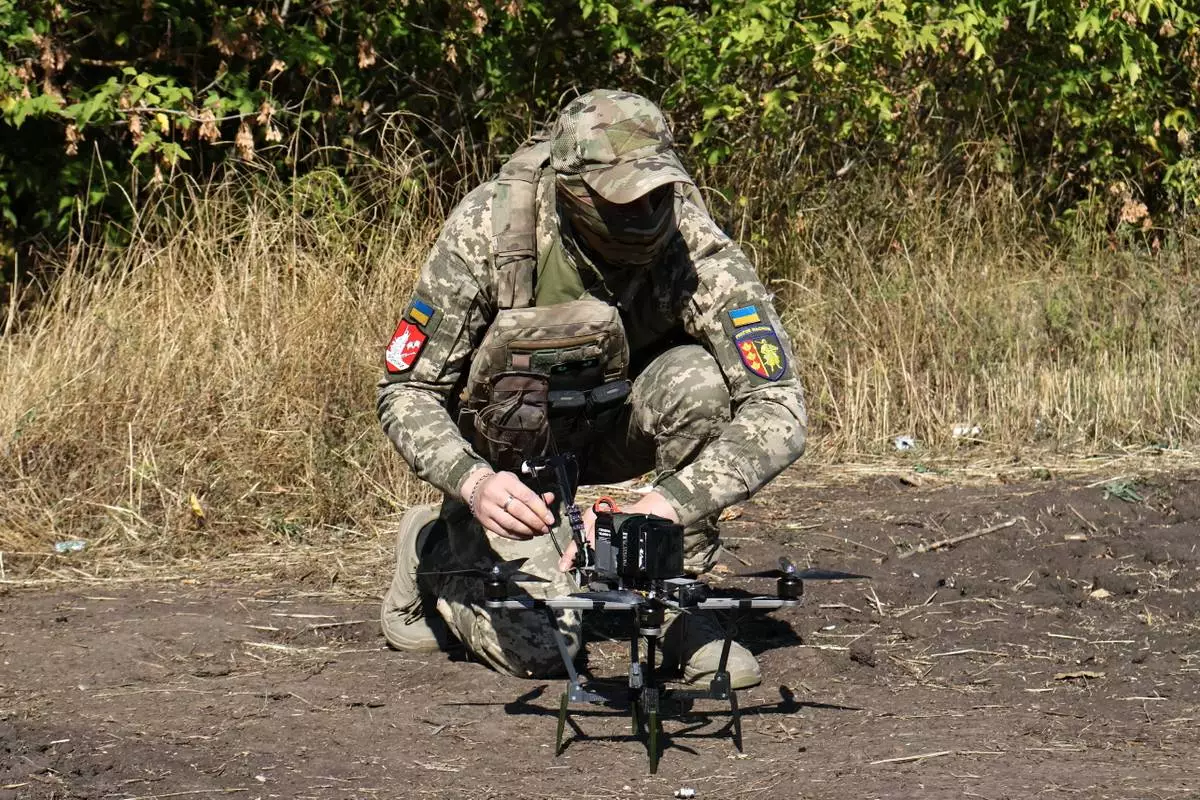
In this photo provided by Ukraine's 65th Mechanized Brigade press service, a Ukrainian soldier prepares an FPV drone to fire towards Russian positions in Zaporizhzhia region, Ukraine, Saturday, Sept. 19, 2026. (Andriy Andriyenko/Ukraine's 65th Mechanized Brigade via AP)
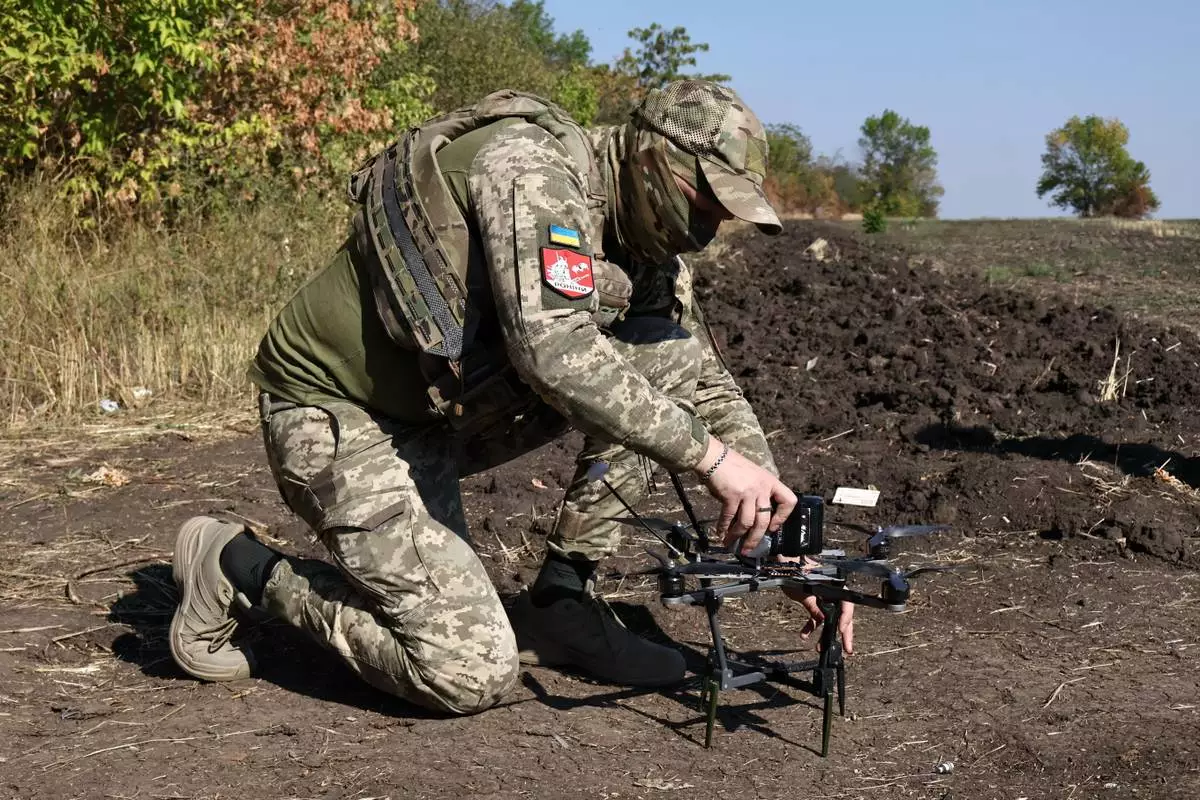
In this photo provided by Ukraine's 65th Mechanized Brigade press service, a Ukrainian soldier prepares an FPV drone to fire towards Russian positions in Zaporizhzhia region, Ukraine, Saturday, Sept. 19, 2026. (Andriy Andriyenko/Ukraine's 65th Mechanized Brigade via AP)