Skip to Content Facebook Feature Image

Kioxia Announces KIOXIA GP1 Series Super High IOPS SSDs for AI Applications

Business

Kioxia Announces KIOXIA GP1 Series Super High IOPS SSDs for AI Applications
Business

Business

Kioxia Announces KIOXIA GP1 Series Super High IOPS SSDs for AI Applications

2026-08-04 12:52 Last Updated At:13:00

TOKYO--(BUSINESS WIRE)--Aug 4, 2026--

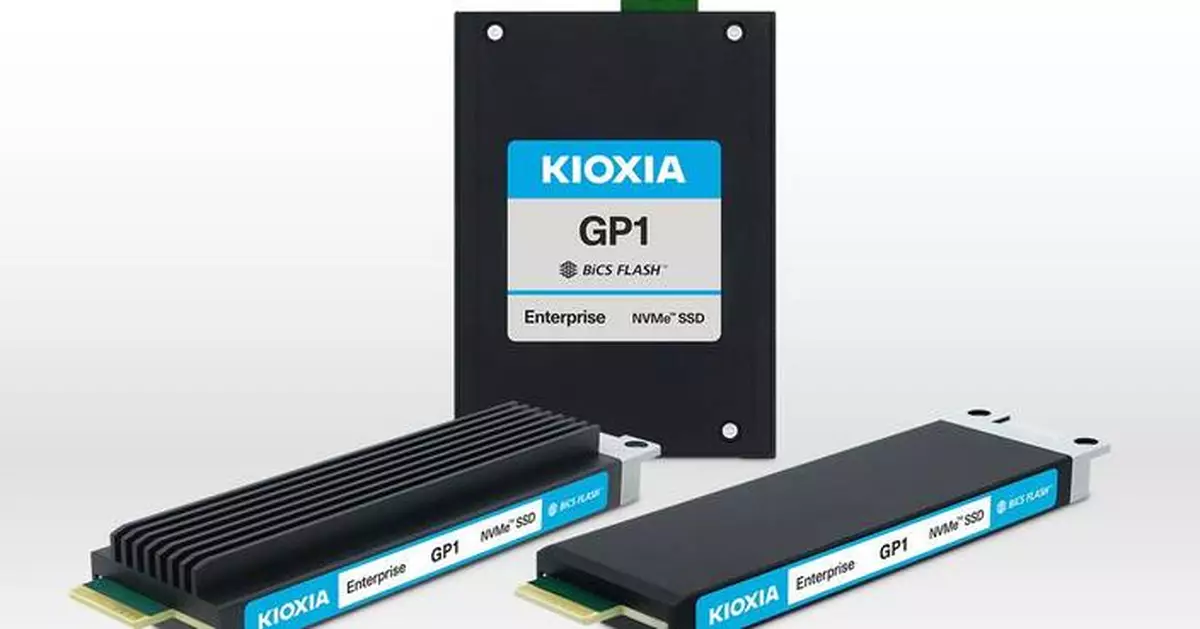
Kioxia Corporation today announced the KIOXIA GP1 Series PCIe ® 6.0 NVMe™ SSDs, the first product in its KIOXIA GP Series of Super High IOPS SSDs optimized for GPU direct access. Building on the KIOXIA GP Series technology introduced earlier this year 1, the KIOXIA GP1 Series delivers up to 10 million random read IOPS 2 using KIOXIA XL-FLASH™ generation 2 flash memory, enabling flash-based memory extension to help address the growing performance and memory demands of AI infrastructure. Evaluation samples will be available to select customers by the end of 2026 3. The KIOXIA GP1 Series will be showcased at FMS: the Future of Memory and Storage, taking place August 4 – 6 in Santa Clara, California.

This press release features multimedia. View the full release here: https://www.businesswire.com/news/home/20260803241004/en/

The KIOXIA GP1 Series is designed to support emerging AI storage architectures, which extend High Bandwidth Memory (HBM) as a fast flash memory media-based tier. This approach lets AI systems access larger datasets at a significantly lower cost than adding more HBM 4, while improving GPU utilization.

KIOXIA GP1 Series SSDs leverage KIOXIA XL-FLASH generation 2 low-latency, high-performance flash memory to deliver significantly higher IOPS 4, finer-grained 512-byte data access, and lower power consumption per I/O compared to conventional TLC-based SSDs. The architecture is designed to scale from today's 10 million random read IOPS to future generations targeting up to 100 million IOPS.

Key features of the KIOXIA GP1 Series include:

Notes:

1: Kioxia Announces New SSD Model Optimized for AI GPU-Initiated Workloads
( https://www.kioxia.com/en-jp/business/news/2026/20260317-1.html )

2: Read and write speed may vary depending on various factors such as host devices, software (drivers, OS etc.), and read/write conditions.

3: These samples are for the functional check purpose only and the specifications of the samples may differ in mass production.

4: As of July 28, 2026, based on Kioxia survey.

5: DWPD: Drive Writes Per Day. One full drive write per day means the drive can be written and re-written to full capacity once a day every day under the specified workload for the specified lifetime. Actual results may vary due to system configuration, usage and other factors.

Definition of capacity: Kioxia Corporation defines a megabyte (MB) as 1,000,000 bytes, a gigabyte (GB) as 1,000,000,000 bytes and a terabyte (TB) as 1,000,000,000,000 bytes. A computer operating system, however, reports storage capacity using powers of 2 for the definition of 1GB = 2^30 bytes = 1,073,741,824 bytes and 1TB = 2^40 bytes = 1,099,511,627,776 bytes and therefore shows less storage capacity. Available storage capacity (including examples of various media files) will vary based on file size, formatting, settings, software and operating system, and/or pre-installed software applications, or media content. Actual formatted capacity may vary.

NVMe is a registered or unregistered mark of NVM Express, Inc. in the United States and other countries.

PCIe is a registered trademark of PCI-SIG.

Other company names, product names and service names may be trademarks of third-party companies.

About Kioxia
Kioxia is a world leader in memory solutions, dedicated to the development, production and sale of flash memory and solid-state drives (SSDs). In April 2017, its predecessor Toshiba Memory was spun off from Toshiba Corporation, the company that invented NAND flash memory in 1987. Kioxia is committed to uplifting the world with “memory” by offering products, services and systems that create choice for customers and memory-based value for society. Kioxia's innovative 3D flash memory technology, BiCS FLASH™, is shaping the future of storage in high-density applications, including advanced smartphones, PCs, automotive systems, data centers and generative AI systems.

*Information in this document, including product prices and specifications, content of services and contact information, is correct on the date of the announcement but is subject to change without prior notice.
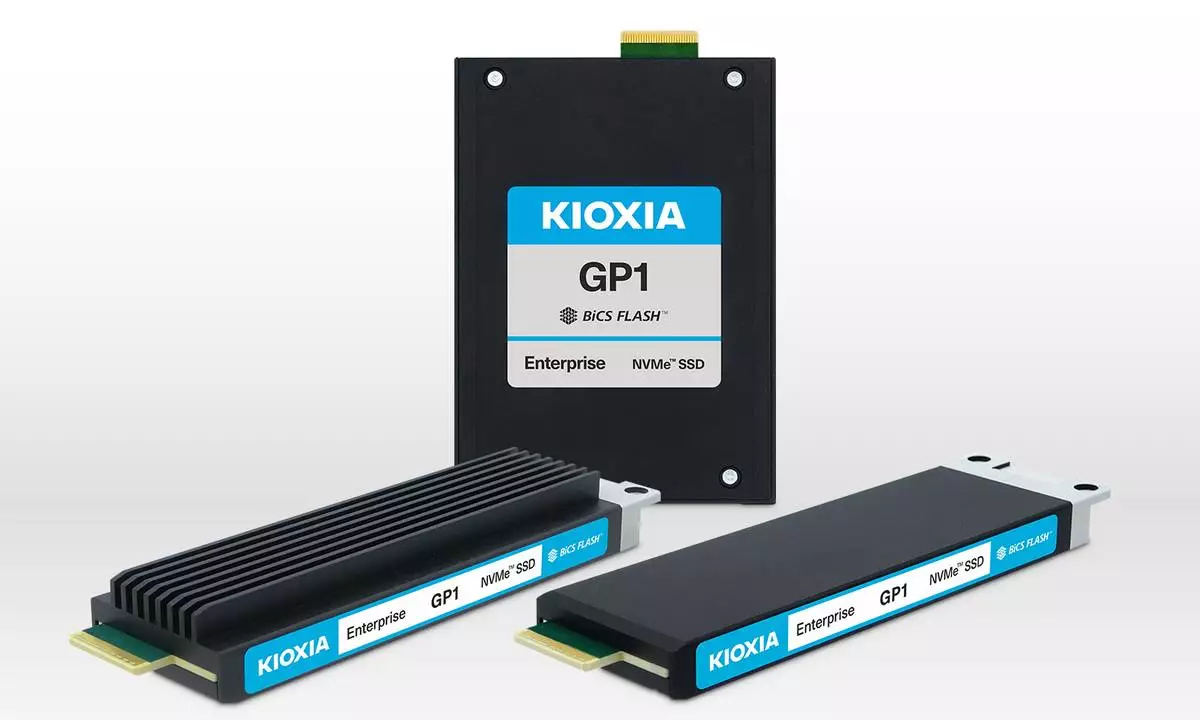
KIOXIA GP1 Series Super High IOPS SSDs

KIOXIA GP1 Series Super High IOPS SSDs
TOKYO (AP) — Asian shares were mixed on Tuesday following a rally on Wall Street that was helped by easing oil prices.

Regional investors were still weighing the impact from last week's joint U.S.-Japan currency intervention, analysts said.

Japan's benchmark Nikkei 225 slipped 0.3% to 63,585.58, as the U.S. dollar inched up to 157.51 Japanese yen from 157.18 yen. The euro cost $1.1511, little changed from $1.1514. The dollar was trading at 160-yen levels before regulators stepped in to boost the yen's value after it fell to nearly 40-year lows.

Some analysts said the effectiveness of such an intervention remains uncertain as it doesn't address the fundamental economic reasons behind the currency fluctuations, including inflation, interest rates and the relative strengths of the economies.

“A U.S.-backed operation carries far more signaling weight than Tokyo acting alone, and the pledge of further action will give speculators pause. But any U.S. contribution will probably be constrained by size,” a report by BMI, a unit of Fitch Solutions, said.

Matthew Ryan, head of market strategy at global financial services firm Ebury, noted the latest effort could have some impact because it appears to signal a real change in monetary policy rather than just a one-time defensive move.

“This is an historic and meaningful development for the yen, which materially improves confidence in our mildly bullish call for the currency,” he said.

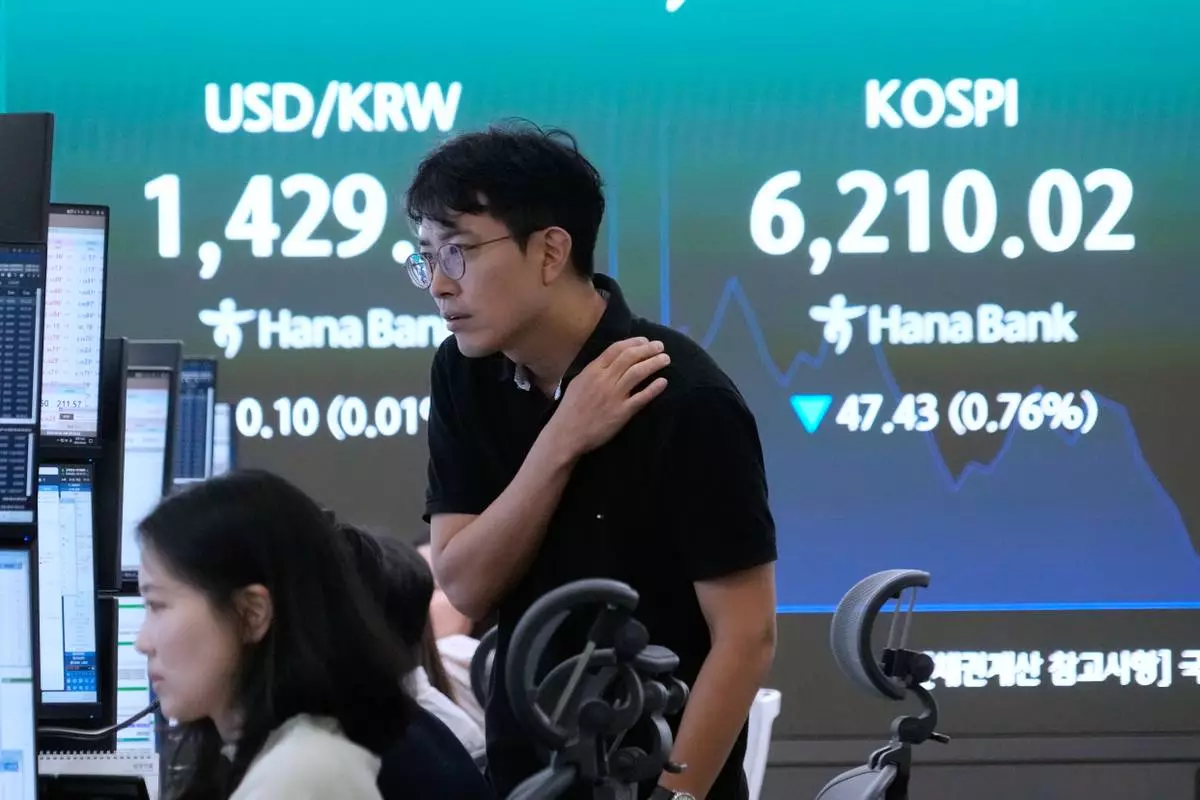
South Korea's Kospi sank 1.3% to 6,174.72. Australia's S&P/ASX 200 added 1.2% to 9,129.00. Hong Kong's Hang Seng fell 0.5% to 25,881.99, while the Shanghai Composite gained 0.2% to 3,802.61.

Markets remain unsettled by swings for stocks of companies that make computer chips. They’ve been veering up and down for weeks on worries about whether their surging revenues because of the artificial-intelligence boom are sustainable.

On Wall Street, share prices rallied Monday after easing oil prices helped calm worries over inflation. The S&P 500 jumped 1.5% and is just 0.1% below its record set earlier this summer.

The Dow Jones Industrial Average, which measures a narrower slice of the U.S. stock market, climbed 693 points or 1.3% to an all-time high, while the Nasdaq composite leaped 2.1%.

In energy trading in Asia early Tuesday, benchmark U.S. crude gained 84 cents to $81.18 a barrel. Brent crude, the international standard, jumped $1.15 to $84.92 a barrel.

A day earlier, oil prices dropped more than 5% after U.S. President Donald Trump said over the weekend that he had decided to hold off on new strikes against Iran at the urging of allies in the region.

Brent’s price careened between $72 and $102 last month as worries rose and fell over the war in Iran and when oil tankers would be allowed to freely exit the Persian Gulf again to deliver crude to customers worldwide.

The yield on the 10-year Treasury sank to 4.68% from 4.75% late Friday. It remains well above its 3.97% level from before the war with Iran.

AP Business Writer Stan Choe contributed to this report.

Yuri Kageyama is on Threads: https://www.threads.com/@yurikageyama

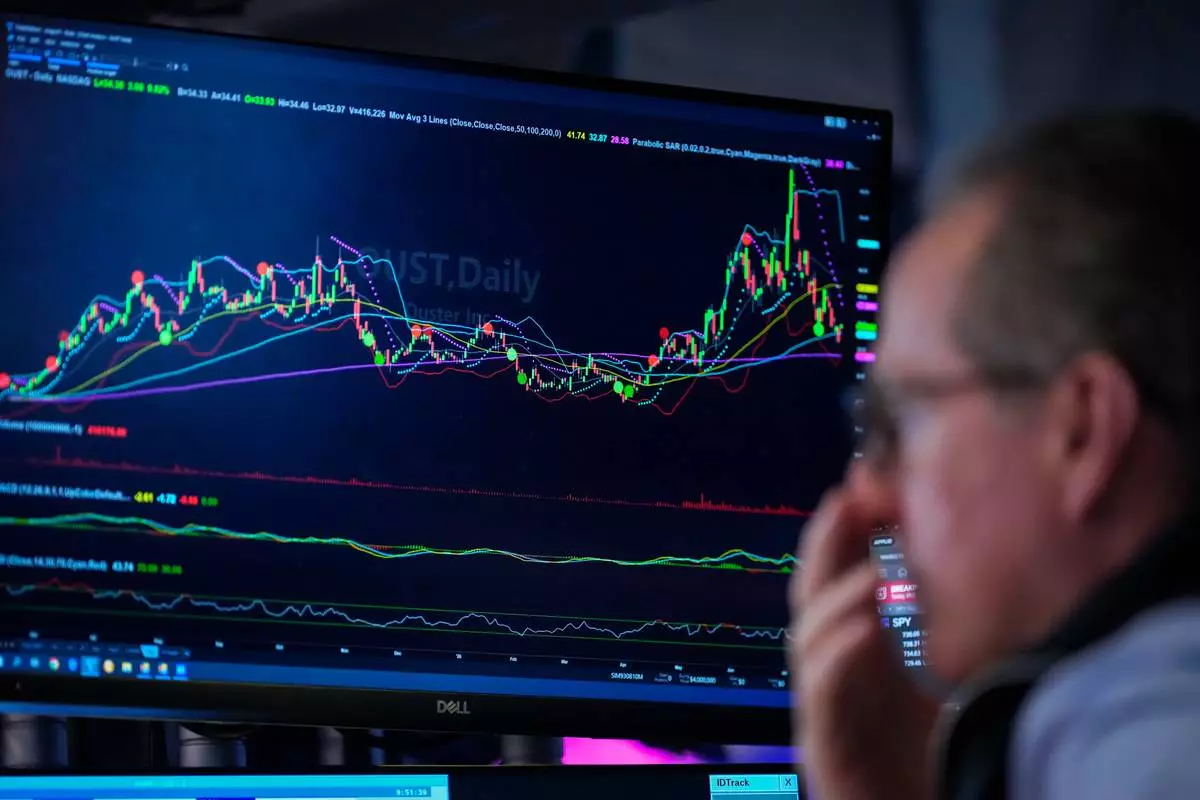
A trader works on the floor of the New York Stock Exchange, Thursday, July 30, 2026, in New York. (AP Photo/Yuki Iwamura)

A trader works on the floor of the New York Stock Exchange, Thursday, July 30, 2026, in New York. (AP Photo/Yuki Iwamura)

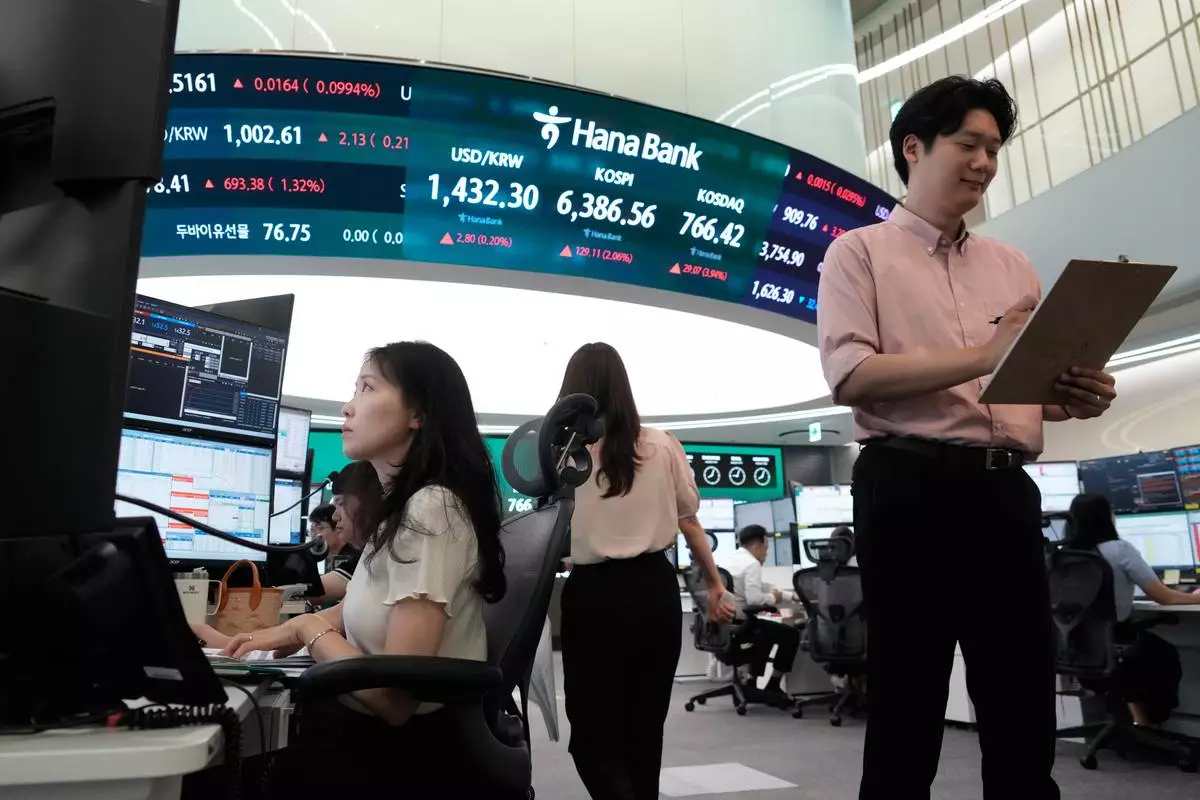
Currency traders watch monitors near a screen showing the Korea Composite Stock Price Index (KOSPI) and the foreign exchange rate between U.S. dollar and South Korean won at the foreign exchange dealing room of the Hana Bank headquarters in Seoul, South Korea, Tuesday, Aug. 4, 2026. (AP Photo/Ahn Young-joon)

Currency traders watch monitors near a screen showing the Korea Composite Stock Price Index (KOSPI) and the foreign exchange rate between U.S. dollar and South Korean won at the foreign exchange dealing room of the Hana Bank headquarters in Seoul, South Korea, Tuesday, Aug. 4, 2026. (AP Photo/Ahn Young-joon)

Currency traders work at the foreign exchange dealing room of the Hana Bank headquarters in Seoul, South Korea, Tuesday, Aug. 4, 2026. (AP Photo/Ahn Young-joon)

Currency traders work at the foreign exchange dealing room of the Hana Bank headquarters in Seoul, South Korea, Tuesday, Aug. 4, 2026. (AP Photo/Ahn Young-joon)

Recommended Articles