Skip to Content Facebook Feature Image

Pakistan teams search on foot for remains of climbers as weather grounds helicopters

News

Pakistan teams search on foot for remains of climbers as weather grounds helicopters
News

News

Pakistan teams search on foot for remains of climbers as weather grounds helicopters

2026-08-04 17:29 Last Updated At:17:40

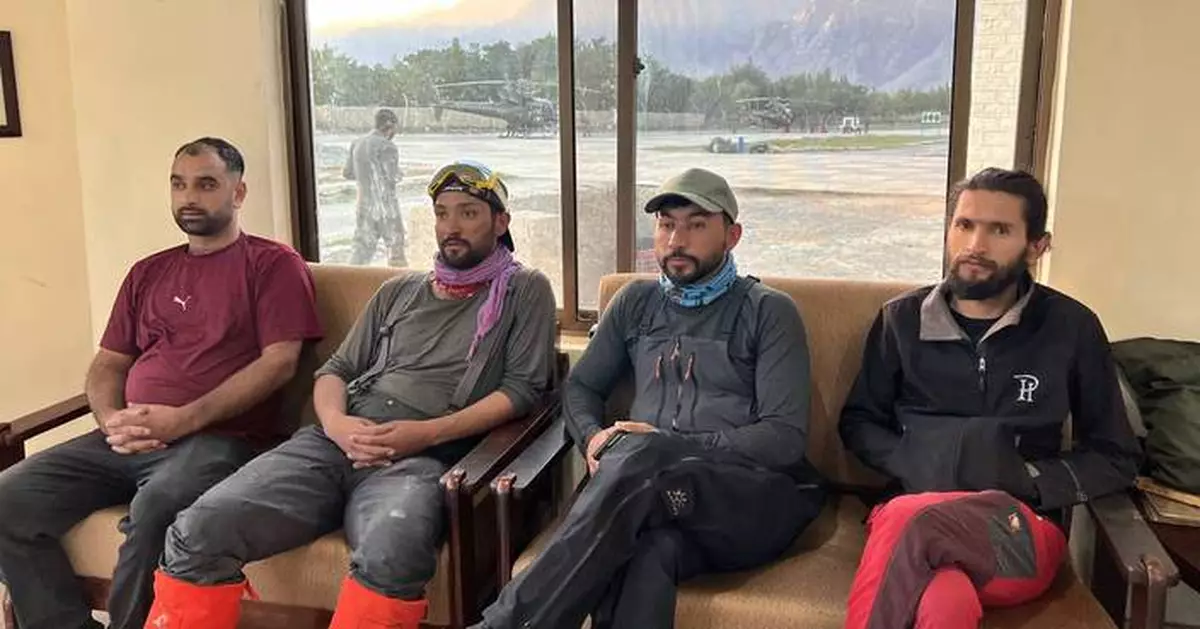
ISLAMABAD (AP) — Teams in Pakistan searched on foot for the remains of 10 climbers killed in an avalanche on the world’s 12th-highest mountain as poor weather kept helicopters out of the air Tuesday, authorities said.

Helicopters were on standby but unable to fly by noon for the ongoing search and recovery operation on Broad Peak, the regional government said in a statement Tuesday.

The climbers from Nepal, Oman, Pakistan, China, Britain and the United States were swept away by the avalanche Thursday in the Gilgit-Baltistan region, which the Alpine Club of Pakistan called one of the country's deadliest mountaineering disasters.

Ground teams located the remains of eight climbers and at least three bodies were brought down the mountain on Saturday, officials said.

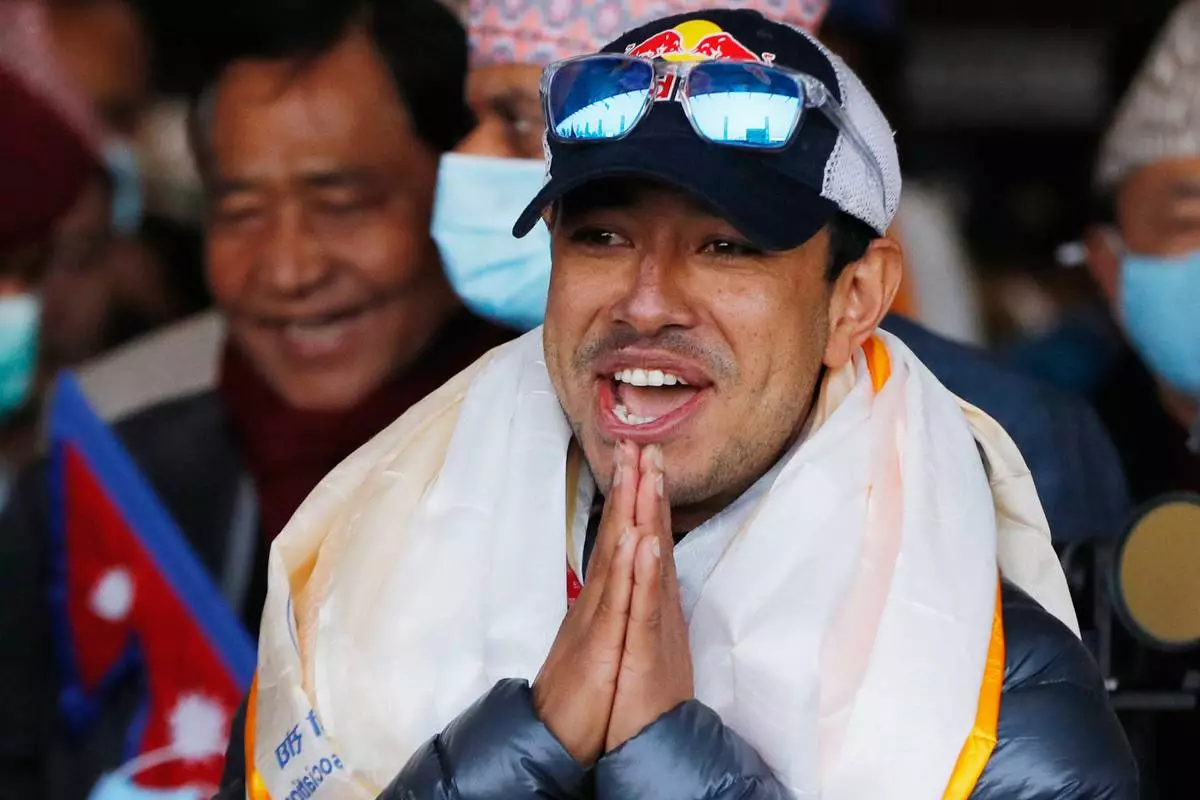
Nirmal Purja, a Nepal-born former British Army soldier widely known as Nims Dai, was among the climbers killed in the avalanche while attempting to scale the peak. His expedition company said Saturday that the world had lost one of mountaineering’s greats.

Pakistan Foreign Minister Ishaq Dar on Tuesday expressed condolences to the families of those killed, saying he was deeply saddened by the tragedy.

“My heartfelt condolences go to the bereaved families and to the governments and people of China, Nepal, Oman, the United Kingdom and the United States,” Dar said in a post on X.

Dar also offered condolences to the family of Pakistani mountaineer Sohail Sakhi, saying his courage and passion for the mountains would be remembered with pride.

“The determination and pursuit of excellence shown by all those who perished embodied the true spirit of mountaineering and will continue to inspire generations,” Dar said.

Dar praised the “tireless efforts of our rescue and recovery teams” and said Pakistan remained committed to the ongoing search and recovery operation in close coordination with the Nepal, Oman, U.K. and U.S. embassies.

Mountaineering accidents are common in northern Pakistan because of avalanches, falling ice and rock, extreme altitude and rapidly changing weather. A Chinese mountaineer died last year after being struck by falling rocks while descending K2, the world’s second-highest mountain, in northern Pakistan.

Bodies of foreign climbers who die attempting to summit mountains in Pakistan are typically recovered at the request of their families and governments. If the family declines a rescue, the remains are left at the spot where the climber died.

Khan reported from Peshawar, Pakistan.
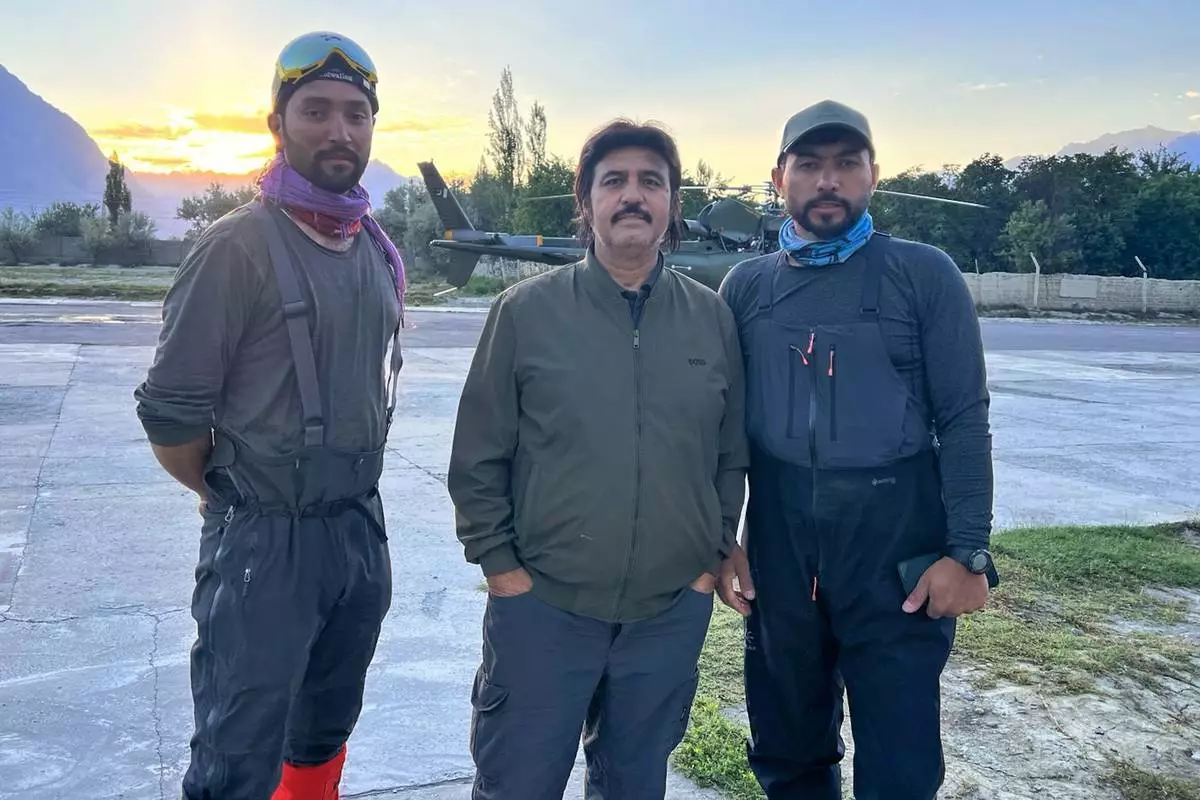
In this photo released by the Alpine Club of Pakistan on Friday, July 31, 2026, members of a mountaineers rescue team pose for photo with honorary general secretary of Alpine Club of Pakistan Ayaz Ahmed Shigri, center, before departing from an airbase on a search operation for climbers missing after an avalanche on Pakistan's Broad Peak, in Skardu, in Gilgit-Baltistan's region, in northern Pakistan. (Alpine Club of Pakistan via AP)
In this photo released by the Alpine Club of Pakistan on Friday, July 31, 2026, members of a mountaineers rescue team pose for photo with honorary general secretary of Alpine Club of Pakistan Ayaz Ahmed Shigri, center, before departing from an airbase on a search operation for climbers missing after an avalanche on Pakistan's Broad Peak, in Skardu, in Gilgit-Baltistan's region, in northern Pakistan. (Alpine Club of Pakistan via AP)

FILE - Nirmal Purja gestures at Tribhuwan International airport in Kathmandu, Nepal, Jan. 26, 2021. (AP Photo/Niranjan Shrestha, File)
FILE - Nirmal Purja gestures at Tribhuwan International airport in Kathmandu, Nepal, Jan. 26, 2021. (AP Photo/Niranjan Shrestha, File)

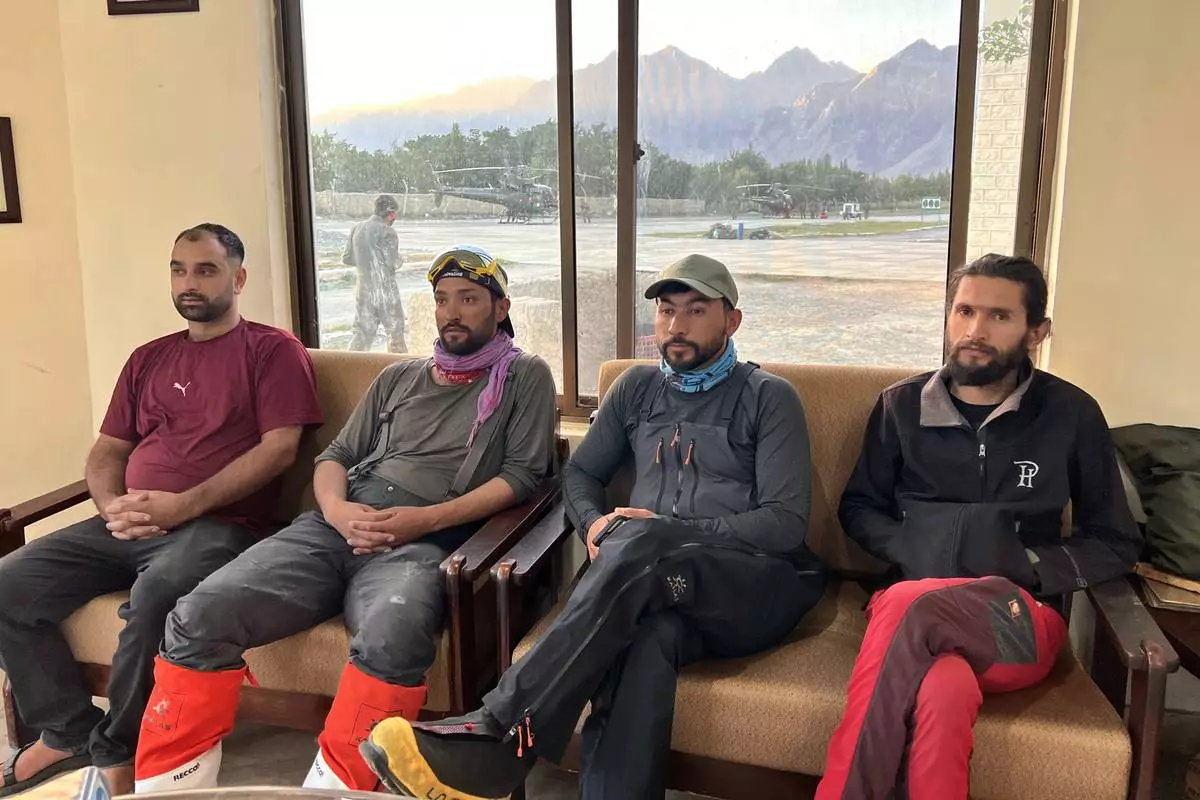
In this photo released by the Alpine Club of Pakistan on Friday, July 31, 2026, members of a mountaineers rescue team prepare to depart from an airbase on a search operation for climbers missing after an avalanche on Pakistan's Broad Peak, in Skardu, in Gilgit-Baltistan's region, in northern Pakistan. (Alpine Club of Pakistan via AP)

In this photo released by the Alpine Club of Pakistan on Friday, July 31, 2026, members of a mountaineers rescue team prepare to depart from an airbase on a search operation for climbers missing after an avalanche on Pakistan's Broad Peak, in Skardu, in Gilgit-Baltistan's region, in northern Pakistan. (Alpine Club of Pakistan via AP)
BUNIA, Congo (AP) — Ebola has killed more than 1,700 people in eastern Congo in the fastest-growing outbreak of the disease, data showed.

As of Tuesday, 3,802 cases had been recorded, with 1,707 deaths, according to the latest government update.

It is not clear when the outbreak will reach its peak, Africa CDC Director-General Jean Kaseya said during his second visit to the town of Bunia near the outbreak's epicenter on Tuesday. Kaseya cautioned that nearly 80% of new cases are not coming from contact tracing but instead from community spread.

The Director-General of the World Health Organization, Tedros Adhanom Ghebreyesus, will arrive in the Congolese capital, Kinshasa, today and is expected to visit Bunia later this week.

The outbreak, declared on May 15, has been linked to the Bundibugyo virus for which there are no approved vaccines or treatments. Delays in contact tracing, difficulties accessing affected areas, mistrust from communities, and violence by armed groups and some residents have hampered the response, the Africa CDC has said.

Two clinical trials for post-exposure prophylaxis drugs are ongoing in Ituri province as well as two separate vaccine trials in the U.K. and Canada.

The outbreak is mostly concentrated in eastern Congo’s remote Ituri province, which accounts for nearly 90% of cases, but cases have also been confirmed in five other provinces, including in one of the country’s largest cities, Kisangani.

Neighboring Uganda declared itself free of Ebola following the discharge of the country’s last patient in mid-June.

A key challenge is that patient zero has yet to be identified in the outbreak while displacement from armed conflict and illegal mining in the region have made it difficult to trace thousands who have come in contact with infected individuals. The WHO said Tuesday that it was monitoring over 17,000 potential contacts with nearly 80% of them being seen daily.

On Monday, healthcare workers in the hard hit town of Mongbwalu issued an ultimatum over unpaid wages saying that “if nothing is done within 24 hours, we will escalate our action.”

Previously, healthcare workers in Bunia went on strike over a lack of pay and dangerous working conditions. The World Health Organization says more than 100 healthcare workers have been infected since the beginning of the outbreak.

The latest outbreak has killed people at a quicker rate than any previous outbreak, including in 2014-2016 when 28,000 cases were reported, of which over 11,000 people died. That outbreak took about eight months to reach 1,000 deaths.

The response is also hampered by a funding gap, attacks on health centers, an ongoing conflict in eastern Congo and mistrust among local communities.

Enrollment in a highly anticipated study of two possible Ebola treatments recently started in Ituri.

Elodie, right, a mother of one who is eight months pregnant, stands outside her house in Bunia, northeastern, Congo, Tuesday, June 16, 2026. (AP Photo/Moses Sawasawa)

Elodie, right, a mother of one who is eight months pregnant, stands outside her house in Bunia, northeastern, Congo, Tuesday, June 16, 2026. (AP Photo/Moses Sawasawa)

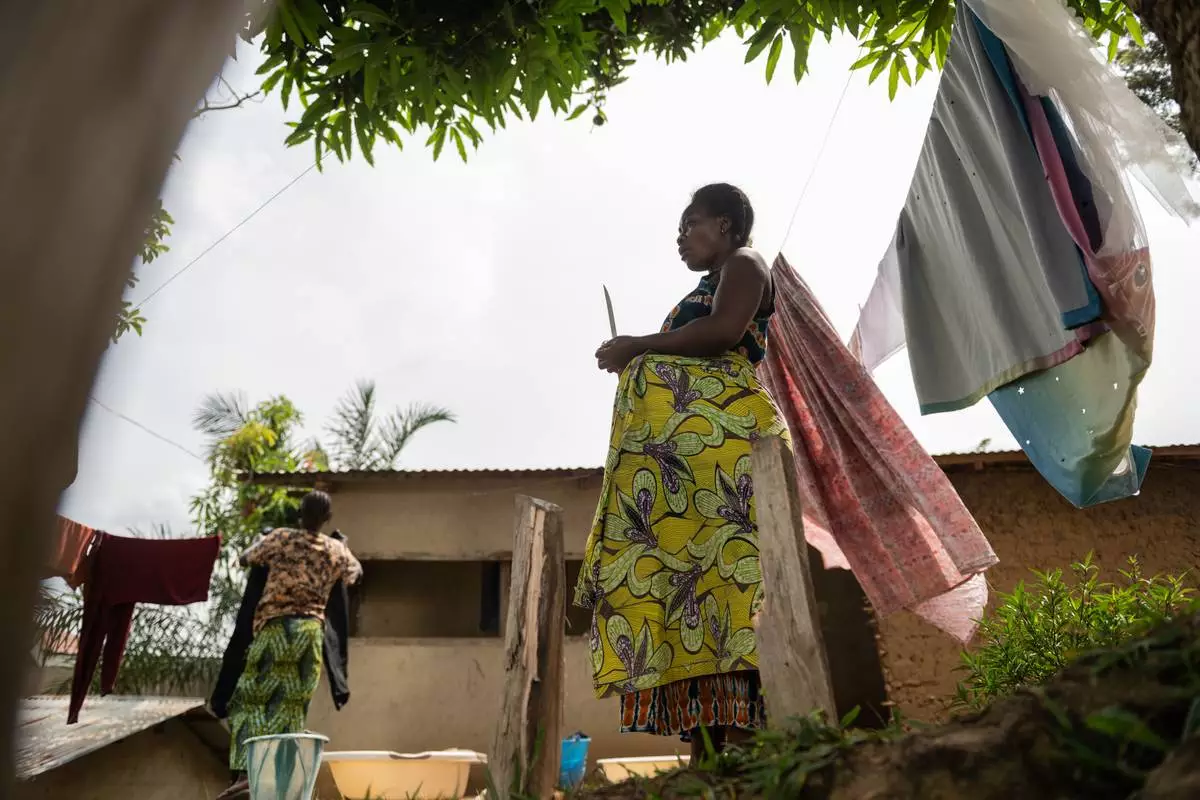
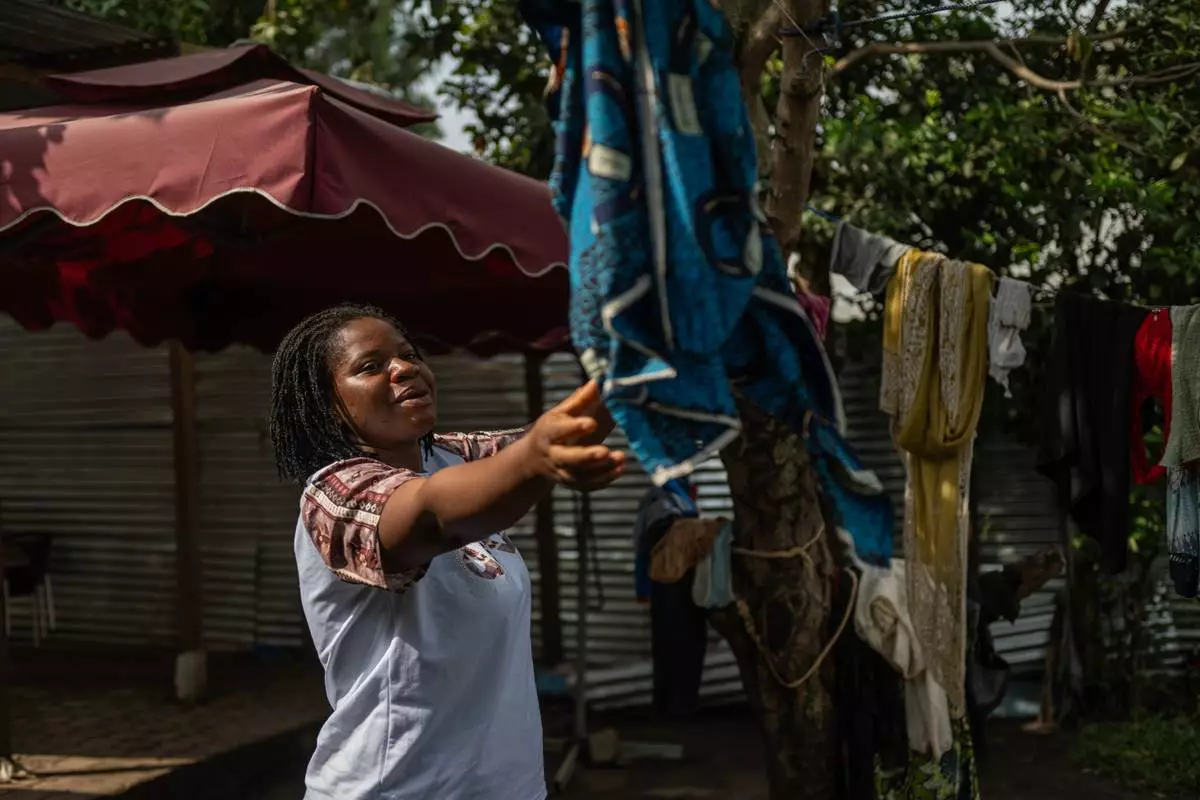
Esther Lutula, a 26 year-old woman who is four months pregnant and a mother of four who stopped going for prenatal checkups shortly after the current Ebola outbreak, does the laundry outside her house in Bunia, northeastern, Congo, Tuesday, June 16, 2026. (AP Photo/Moses Sawasawa)

Esther Lutula, a 26 year-old woman who is four months pregnant and a mother of four who stopped going for prenatal checkups shortly after the current Ebola outbreak, does the laundry outside her house in Bunia, northeastern, Congo, Tuesday, June 16, 2026. (AP Photo/Moses Sawasawa)

Recommended Articles