CHICAGO--(BUSINESS WIRE)--Aug 4, 2026--
Quincy Wells Group, LLC today named Matt DenBleyker chief investment officer of Quincy Wells Advisors. DenBleyker joins from Lee Financial, where he served as director of private markets. In his new role, DenBleyker will lead the development of scalable investment solutions, oversee multi-asset class portfolio construction designed to enhance client outcomes, and contribute to the firm’s broader business development initiatives.
This press release features multimedia. View the full release here: https://www.businesswire.com/news/home/20260804603396/en/
Quincy Wells Advisors is the registered investment adviser subsidiary of Quincy Wells Group, LLC, a wealth management platform that equips independent advisors with institutional-quality alternative investments backed by integrated infrastructure.
"Matt has spent his career building institutional investment programs and translating them into something advisors can actually put in front of clients," said John Neppel, managing partner of Quincy Wells Group. "That is exactly the capability our advisors need as demand for alternatives keeps growing."
DenBleyker brings more than two decades of investment management experience across RIAs, investment consulting firms, and public pension plans. Prior to his tenure at Lee Financial, DenBleyker was managing director and co-chief investment officer at Commerce Street, where he played a central role in building the firm’s outsourced OCIO discretionary investment platform. His responsibilities included establishing manager due diligence frameworks, implementing risk management procedures, designing asset allocation plans, and developing governance structures to support institutional-quality investment oversight.
His asset-class experience spans private equity, private credit, hedge funds, and real assets, including the construction of multi-strategy portfolios for RIAs and institutional investors.
DenBleyker received both his BBA and MBA in finance from the University of Texas at Arlington and completed post-graduate studies at the LBJ School of Public Affairs at the University of Texas at Austin. He earned the Chartered Alternative Investment Analyst (CAIA) designation in 2007 and is a founding member of CAIA Texas, where he currently serves as a Dallas chapter executive.
“I’m energized by the team, the culture, and the strategic direction of Quincy Wells Advisors, and I’m looking forward to contributing to the next stage of growth,” DenBleyker said. “The CIO role at Quincy Wells allows me to build on what I’m most passionate about: creating scalable investment platforms, expanding advisor capabilities, and driving thoughtful innovation across the wealth management ecosystem.”
About Quincy Wells Group
Quincy Wells Group, LLC is a Chicago-based wealth management platform specializing in alternative investments. Through its broker-dealer, registered investment adviser and capital markets subsidiaries, the firm provides independent representatives and advisors with investment access, due diligence and operational infrastructure.

Matt DenBleyker, chief investment officer of Quincy Wells Advisors.
Russia and Ukraine traded accusations Tuesday that each side’s attacks caused civilian deaths, with officials in the Moscow region saying five people were killed there while authorities in Ukraine said a similar number, including two children, died at various sites across the country.
Russia has relentlessly pounded civilian areas of Ukraine, even though Moscow insists its forces target only military facilities.
Since the Kremlin launched its full-scale invasion over four years ago, Ukraine has developed long-range drones that can strike deep inside Russia. In the past year, its forces have battered oil facilities, major storage depots and other key infrastructure.
More than 16,000 civilians have been killed in Ukraine since the war began, the United Nations said last month in its most recent casualty report, with the vast majority occurring in areas under the Ukrainian government’s control. Casualties have risen steadily each year.
Meanwhile, escalating attacks on shipping in the Black Sea by both sides has reawakened fears that global food security could be put at risk.
Ukrainian President Volodymyr Zelenskyy posted a video on social media that he said showed a Russian drone hunting a man selling vegetables from a street stall in the southern city of Kherson.
The video shows the man trying to flee the drone as it circles his vehicle, follows him and ultimately strikes the car where he was trying to hide. He suffered wounds to his back, legs and arms, according to an interview he gave to the Kherson regional military administration.
Russia's Defense Ministry did not immediately reply to an Associated Press request for comment.
Drone attacks on civilians have surged since the war began, with 967 people killed, including 10 children, and nearly 7,000 people injured, Ukraine’s Prosecutor General’s Office said Tuesday.
Russian drone operators track and strike civilians going about daily activities, according to previous AP reporting. A U.N. commission concluded in October 2025 that such attacks amounted to crimes against humanity.
“The world must see this,” Zelenskyy said. “It must see every piece of evidence that Russia has gone mad and that its soldiers take pleasure in killing and abusing civilians.”
The death toll from a drone strike Monday in the Russian Black Sea resort of Arkhipo-Osipovka rose to seven, including four children, regional authorities said.
On Tuesday, Krasnodar regional authorities updated the number of wounded to 58, with 21 hospitalized.
Video circulating online showed a drone slamming into a crowded beach with what sounded like gunfire in the background. Ukraine has not commented on the strike.
A Ukrainian drone attack Tuesday in the region around Moscow killed five people and wounded 10 others, said Gov. Andrei Vorobyov. Most of the damage occurred in the Chekhov municipal district, where several fires erupted at the Novoselki industrial zone, he said.
In the latest in a series of attacks attack on Russia’s biggest online retailer Wildberries, the company said its warehouse in the Leningrad region, adjacent to St. Petersburg, was on fire.
In the village of Emmaus, located between Moscow and St. Petersburg, drone debris partially damaged a wall of a Wildberries warehouse, regional Gov. Vitaly Korolyov said.
In the past 18 days, Ukrainian drones have targeted 15 Wildberries warehouses, 13 of which caught fire, said Robert Brovdi, commander of Ukraine’s Unmanned Systems Forces. Ukrainian officials say the company provides goods that can be used by the military. Kyiv is also keen to unsettle the Russian public with high-profile attacks.
The Russian Defense Ministry said its forces on Monday night struck “Ukrainian ports, vessels and port infrastructure” used by Kyiv’s army.
In the port of Chornomorsk, in Ukraine’s southern Odesa region, Russia said it hit an automobile components plant and a port terminal, where the military vehicles were being repaired and ammunition and fuel were being stored.
In the southern port of Mykolaiv, a bulk carrier with military cargo was damaged, while in Pivdennyi, another Ukrainian port, a vessel unloading military cargo was hit, according to the Russian statement.
The ministry also said two bulk carriers hauling weapons and military equipment were damaged at sea, south of Odesa.
Turkey on Tuesday repeated its appeal for both countries to ensure safe passage in the Black Sea after two Turkish-owned ships were attacked by drones after leaving the Russian port of Novorossiysk.
A Turkish Foreign Ministry statement expressed concerns that the war is increasingly spreading across the Black Sea, threatening merchant shipping, and warned such incidents could have broader consequences, including for the global food supply, as important shipments of grain, fertilizer and other key products move through those waters.
Russian attacks on Mykolaiv, including its port, killed an 89-year-old woman and wounded seven other people aged between 2 and 83, Ukrainian regional officials said.
The Russian strike on civilian infrastructure in southern Odesa region destroyed a private home and wounded two people, according to Oleh Kiper, head of the regional military administration.
In Ukraine’s northern Sumy region, six Russian glide bombs killed two girls aged 5 and 10 and an elderly woman, said Oleh Hryhorov, head of the Sumy regional military administration.
Russian forces also struck Kharkiv and 18 towns and villages across the northern region in the previous 24 hours, killing one person and injuring seven, including an 8-year-old, said Oleh Syniehubov, head of the Kharkiv regional military administration.
Strikes in Balakliia, also in the Kharkiv region, damaged an apartment building, a library, three stores and more than 10 houses, wounding two women, local authorities said.
Two glide bombs struck Kramatorsk in the eastern Donetsk region of Ukraine, injuring 24 people, local officials said. Kramatorsk sits at the northern end of Ukraine’s Fortress Belt, where Western analysts say Russia is making a renewed effort to break through after four years of attrition.
Vadym Filashkin, head of the regional military administration, urged people still living near the front to evacuate, saying authorities would help with transportation, housing and other support.
Follow the AP’s coverage of the war in Ukraine at https://apnews.com/hub/russia-ukraine
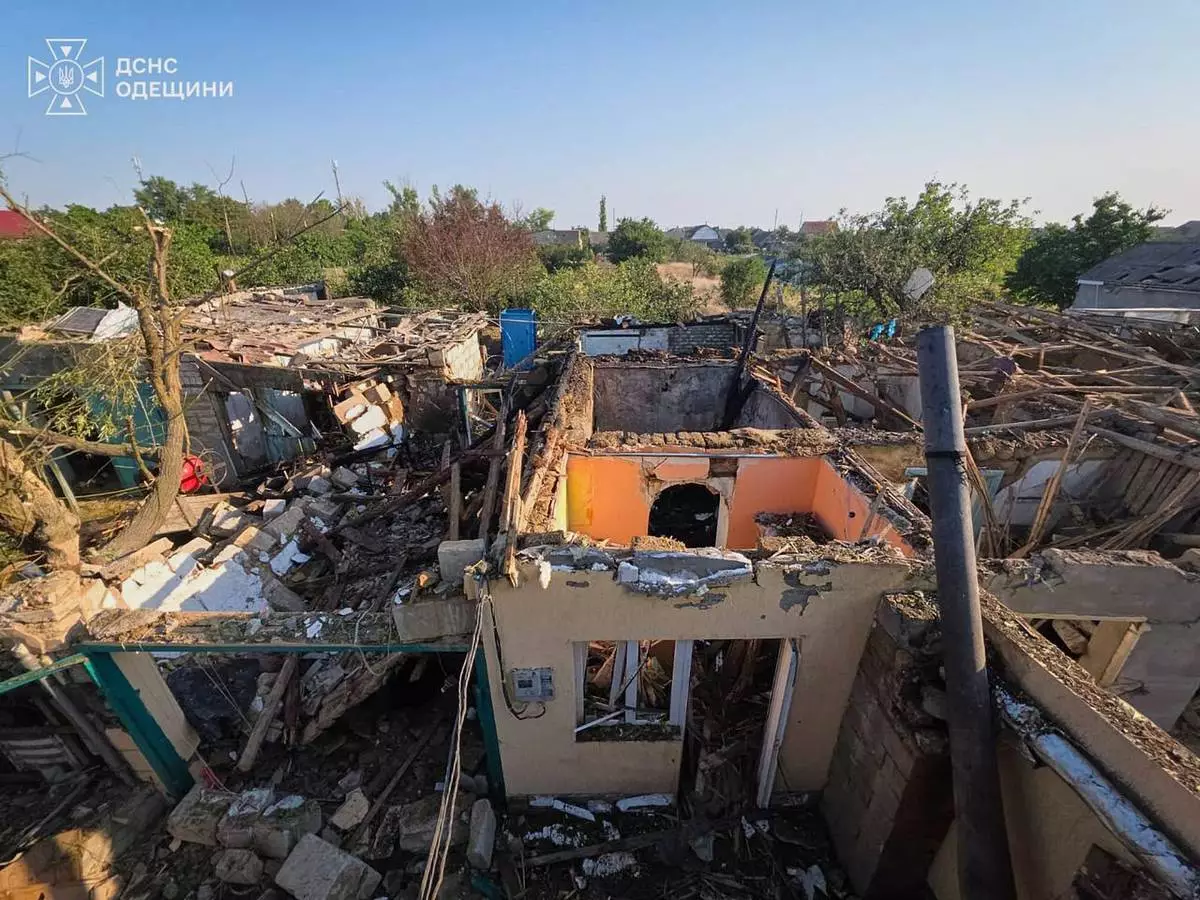
In this photo provided by the Ukrainian Emergency Service, private houses destroyed following a night Russian missile attack are seen in Odesa region, Ukraine, Tuesday, Aug. 4, 2026. (Ukrainian Emergency Service via AP)
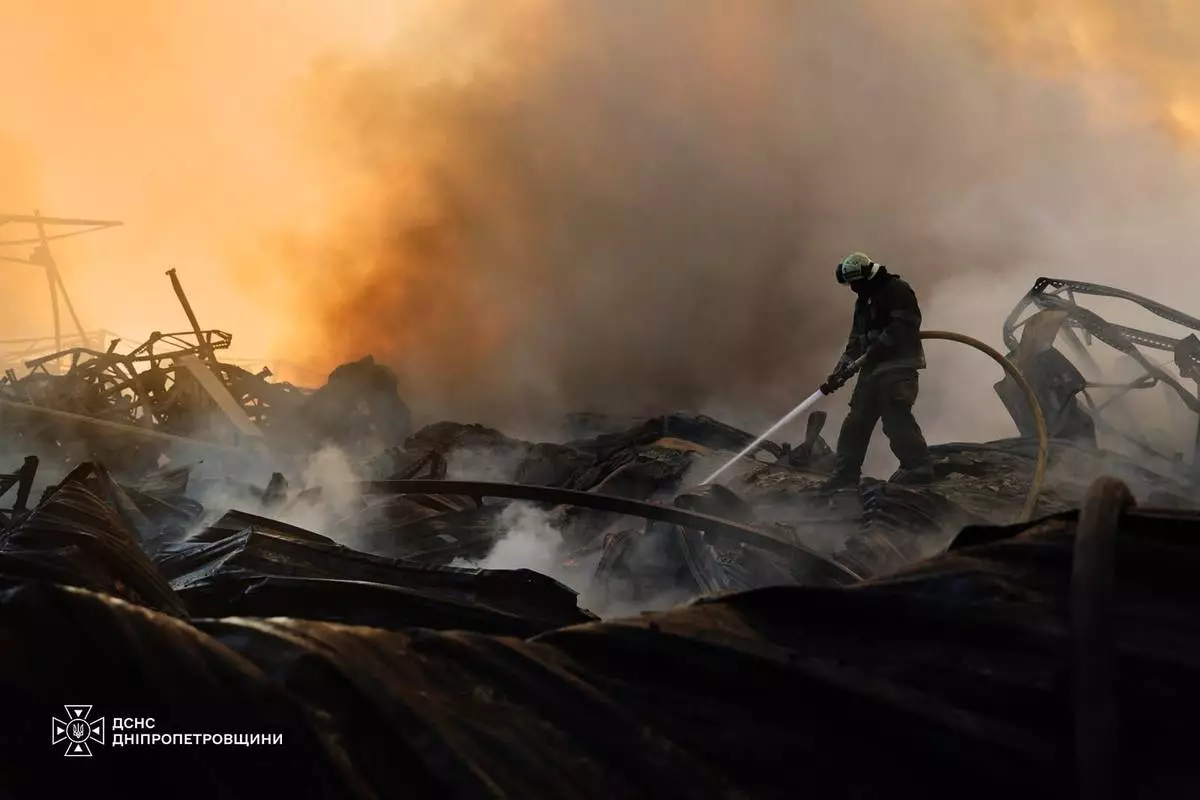
In this photo provided by the Ukrainian Emergency Service, a firefighter puts out a fire following a Russian missile attack in Dnipropetrovsk region, Ukraine, Tuesday, Aug. 4, 2026. (Ukrainian Emergency Service via AP)