EDISON, N.J.--(BUSINESS WIRE)--Aug 4, 2026--
ColdTrack, the leading provider of pick-and-pack, logistics, and purpose-built software for cold and frozen eCommerce brands, today announced the opening of a new temperature-controlled fulfillment facility in Jacksonville, FL, the second site launched in the last year, significantly increasing reach and improving time-in-transit for perishable brands shipping to the Southeast, especially Miami and southern Florida.
This press release features multimedia. View the full release here: https://www.businesswire.com/news/home/20260804978158/en/
The expansion accommodates the demand created by rapid customer growth and reflects ColdTrack’s broader strategy to strengthen its national fulfillment network in response to evolving direct-to-consumer shipping patterns across the United States.
ColdTrack launched a Midwest location in Indianapolis, IN during summer 2025, and this recent expansion to Florida enhances the company’s ability to support perishable food, beverage, pet food, and other temperature-sensitive brands seeking faster, more efficient parcel delivery to consumers’ doorsteps throughout the Southeast. Strategically positioned within one of the country’s fastest-growing population regions, the Jacksonville operation unlocks improved shipping performance and cost-saving strategies.
"As the direct-to-consumer perishable market matures, brands require a network that places their products closer to their end customers—not just for speed, but for reliability and cost efficiency,” said Warner Siebert, Chief Revenue Officer at ColdTrack. “Our new Jacksonville site expands our one-day ground coverage across the Southeast, which means higher on-time delivery rates and lower transportation and material costs for the brands we serve."
By positioning inventory closer to dense population centers in the Southeast, brands can reduce parcel out-of-temperature exposure, improve delivery consistency, and utilize less coolant during transit.
The facility is outfitted with an advanced technology stack to support ColdTrack’s integrated operational environment, combining temperature-controlled fulfillment infrastructure with the company’s proprietary ColdTrack Live™ Order Management System (OMS), custom-developed warehouse execution workflows in Deposco’s Warehouse Management System (WMS), and an expansive network of reliable national and regional final-mile carriers.
“Jacksonville is our fifth fulfillment campus, and two new facilities in twelve months isn't a coincidence; it's a signal of our growth trajectory, how fast this market is moving, and how committed we are to remaining on the cutting edge of our industry,” said Guy Ironi, Chief Executive Officer at ColdTrack. “Each site we add is a deliberate step toward the nation’s optimal cold chain network. One where perishable brands can reach any customer in the country quickly and reliably, no matter where that customer lives. Jacksonville won't be the last stop in this expansion."
ColdTrack Jacksonville is a newly constructed, purpose-built temperature-controlled fulfillment campus designed specifically for high-velocity direct-to-consumer operations. The facility combines ambient (60 to 68 degrees Fahrenheit), refrigerated (34 to 36 degrees), and frozen (-10 to 0 degrees) storage with modern warehouse infrastructure, such as high-density mobile racking and a temperature-controlled dock, engineered to support rapid fulfillment, industry-leading inventory and pick accuracy, and future growth as consumer demand continues to push the perishable DTC industry forward.
Like all other ColdTrack facilities, the new Florida site is operated directly by ColdTrack's Operations team and employees, extending the company's proven operating model across its national network. With facilities strategically positioned throughout the United States and additional site expansions planned, ColdTrack continues to invest in the infrastructure, technology, and expertise needed to help perishable brands scale in a profitable manner.
About ColdTrack
ColdTrack is the leader in cold chain logistics and software, providing direct-to-consumer and direct-to-business brands with reliable and accurate fulfillment services for perishable products. ColdTrack guarantees 100% pick-and-pack performance from its facilities in New Jersey, Indiana, California, and now Florida, and provides discounted shipping rates with one-day ground shipping to over 80% of the U.S. population. The company’s proprietary ColdTrack Live™ order management system (OMS) gives perishable brands access to cartonization and coolant logic, automatic claims handling, and real-time tools to monitor shipping exceptions and carrier on-time delivery performance.
For more information, visit: www.coldtrack.com

ColdTrack's new temperature-controlled fulfillment campus in Jacksonville is designed for high-velocity direct-to-consumer operations.
Russia and Ukraine traded accusations Tuesday that each side’s attacks caused civilian deaths, with officials in the Moscow region saying five people were killed there while authorities in Ukraine said a similar number, including two children, died at various sites across the country.
Russia has relentlessly pounded civilian areas of Ukraine, even though Moscow insists its forces target only military facilities.
Since the Kremlin launched its full-scale invasion over four years ago, Ukraine has developed long-range drones that can strike deep inside Russia. In the past year, its forces have battered oil facilities, major storage depots and other key infrastructure.
More than 16,000 civilians have been killed in Ukraine since the war began, the United Nations said last month in its most recent casualty report, with the vast majority occurring in areas under the Ukrainian government’s control. Casualties have risen steadily each year.
The U.N. children’s agency on Tuesday urged both countries to uphold international humanitarian law requiring the protection of children, citing recent deaths in Russia's Belgorod and Krasnodar regions, as well as in Ukraine's Dnipropetrovsk and Sumy regions.
“Attacks that kill and injure children must stop,” UNICEF said in a statement.
Meanwhile, escalating attacks on shipping in the Black Sea by both sides has reawakened fears that global food security could be put at risk.
Ukrainian President Volodymyr Zelenskyy posted a video on social media that he said showed a Russian drone hunting a man selling vegetables from a street stall in the southern city of Kherson.
The video shows the man trying to flee the drone as it circles his vehicle, follows him and ultimately strikes the car where he was trying to hide. He suffered wounds to his back, legs and arms, according to an interview he gave to the Kherson regional military administration.
Russia's Defense Ministry did not immediately reply to an Associated Press request for comment.
Drone attacks on civilians have surged since the war began, with 967 people killed, including 10 children, and nearly 7,000 people injured, Ukraine’s Prosecutor General’s Office said Tuesday.
Russian drone operators track and strike civilians going about daily activities, according to previous AP reporting. A U.N. commission concluded in October 2025 that such attacks amounted to crimes against humanity.
“The world must see this,” Zelenskyy said. “It must see every piece of evidence that Russia has gone mad and that its soldiers take pleasure in killing and abusing civilians.”
The death toll from a drone strike Monday in the Russian Black Sea resort of Arkhipo-Osipovka rose to seven, including four children, regional authorities said.
On Tuesday, Krasnodar regional authorities updated the number of wounded to 58, with 21 hospitalized.
Video circulating online showed a drone slamming into a crowded beach with what sounded like gunfire in the background. Ukraine has not commented on the strike.
A Ukrainian drone attack Tuesday in the region around Moscow killed five people and wounded 10 others, said Gov. Andrei Vorobyov. Most of the damage occurred in the Chekhov municipal district, where several fires erupted at the Novoselki industrial zone, he said.
In the latest in a series of attacks on Russia’s biggest online retailer Wildberries, the company said its warehouse in the Leningrad region, adjacent to St. Petersburg, was on fire.
In the village of Emmaus, located between Moscow and St. Petersburg, drone debris partially damaged a wall of a Wildberries warehouse, regional Gov. Vitaly Korolyov said.
In the past 18 days, Ukrainian drones have targeted 15 Wildberries warehouses, 13 of which caught fire, said Robert Brovdi, commander of Ukraine’s Unmanned Systems Forces. Ukrainian officials say the company provides goods that can be used by the military. Kyiv is also keen to unsettle the Russian public with high-profile attacks.
The Russian Defense Ministry said its forces on Monday night struck “Ukrainian ports, vessels and port infrastructure” used by Kyiv’s army.
In the port of Chornomorsk, in Ukraine’s southern Odesa region, Russia said it hit an automobile components plant and a port terminal, where the military vehicles were being repaired and ammunition and fuel were being stored.
In the southern port of Mykolaiv, a bulk carrier with military cargo was damaged, while in Pivdennyi, another Ukrainian port, a vessel unloading military cargo was hit, according to the Russian statement.
The ministry also said two bulk carriers hauling weapons and military equipment were damaged at sea, south of Odesa.
Turkey on Tuesday repeated its appeal for both countries to ensure safe passage in the Black Sea after two Turkish-owned ships were attacked by drones after leaving the Russian port of Novorossiysk.
A Turkish Foreign Ministry statement expressed concerns that the war is increasingly spreading across the Black Sea, threatening merchant shipping, and warned such incidents could have broader consequences, including for the global food supply, as important shipments of grain, fertilizer and other key products move through those waters.
Russian attacks on Mykolaiv, including its port, killed an 89-year-old woman and wounded seven other people aged between 2 and 83, Ukrainian regional officials said.
The Russian strike on civilian infrastructure in southern Odesa region destroyed a private home and wounded two people, according to Oleh Kiper, head of the regional military administration.
In Ukraine’s northern Sumy region, six Russian glide bombs killed two girls aged 5 and 10 and an elderly woman, said Oleh Hryhorov, head of the Sumy regional military administration.
Russian forces also struck Kharkiv and 18 towns and villages across the northern region in the previous 24 hours, killing one person and injuring seven, including an 8-year-old, said Oleh Syniehubov, head of the Kharkiv regional military administration.
Strikes in Balakliia, also in the Kharkiv region, damaged an apartment building, a library, three stores and more than 10 houses, wounding two women, local authorities said.
Two glide bombs struck Kramatorsk in the eastern Donetsk region of Ukraine, injuring 24 people, local officials said. Kramatorsk sits at the northern end of Ukraine’s Fortress Belt, where Western analysts say Russia is making a renewed effort to break through after four years of attrition.
Vadym Filashkin, head of the regional military administration, urged people still living near the front to evacuate, saying authorities would help with transportation, housing and other support.
——
Edith M. Lederer at the United Nations contributed.
Follow the AP’s coverage of the war in Ukraine at https://apnews.com/hub/russia-ukraine
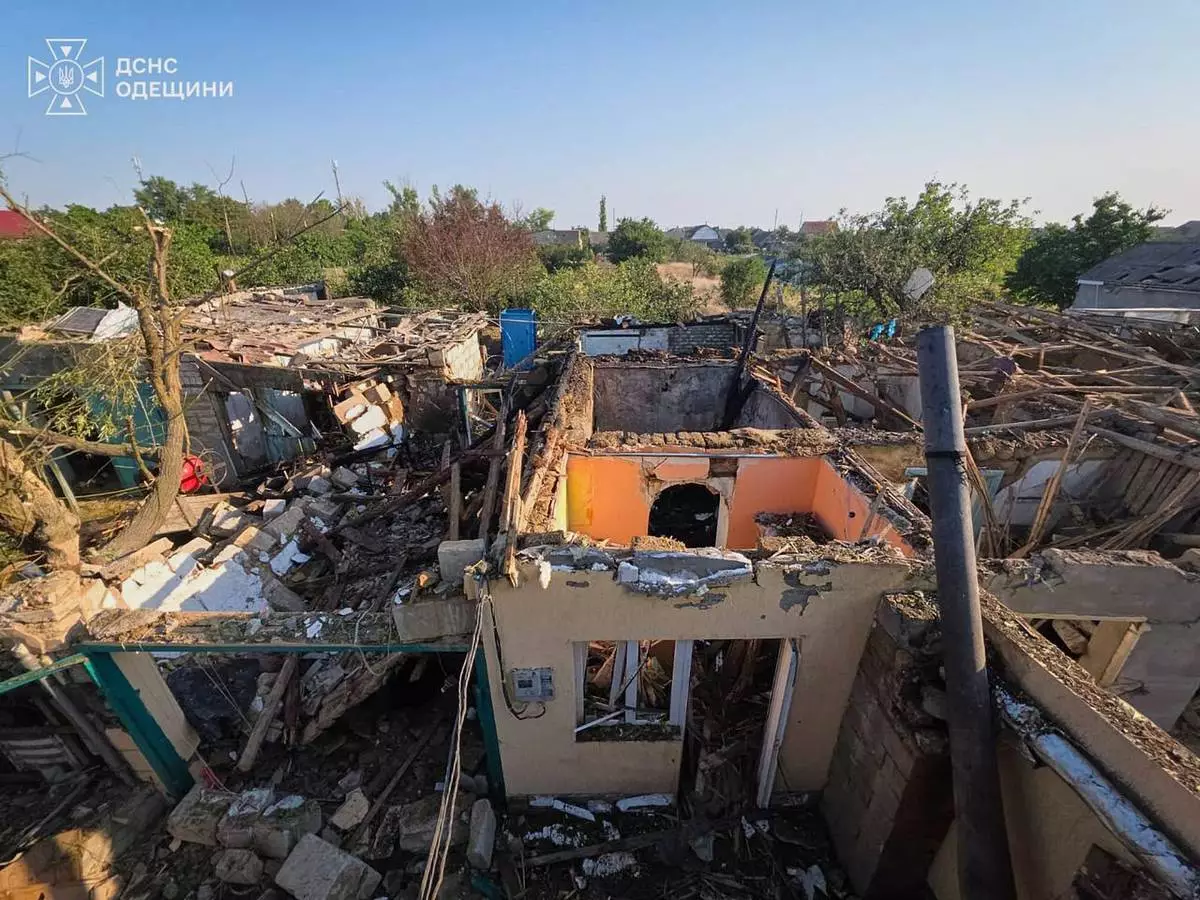
In this photo provided by the Ukrainian Emergency Service, private houses destroyed following a night Russian missile attack are seen in Odesa region, Ukraine, Tuesday, Aug. 4, 2026. (Ukrainian Emergency Service via AP)
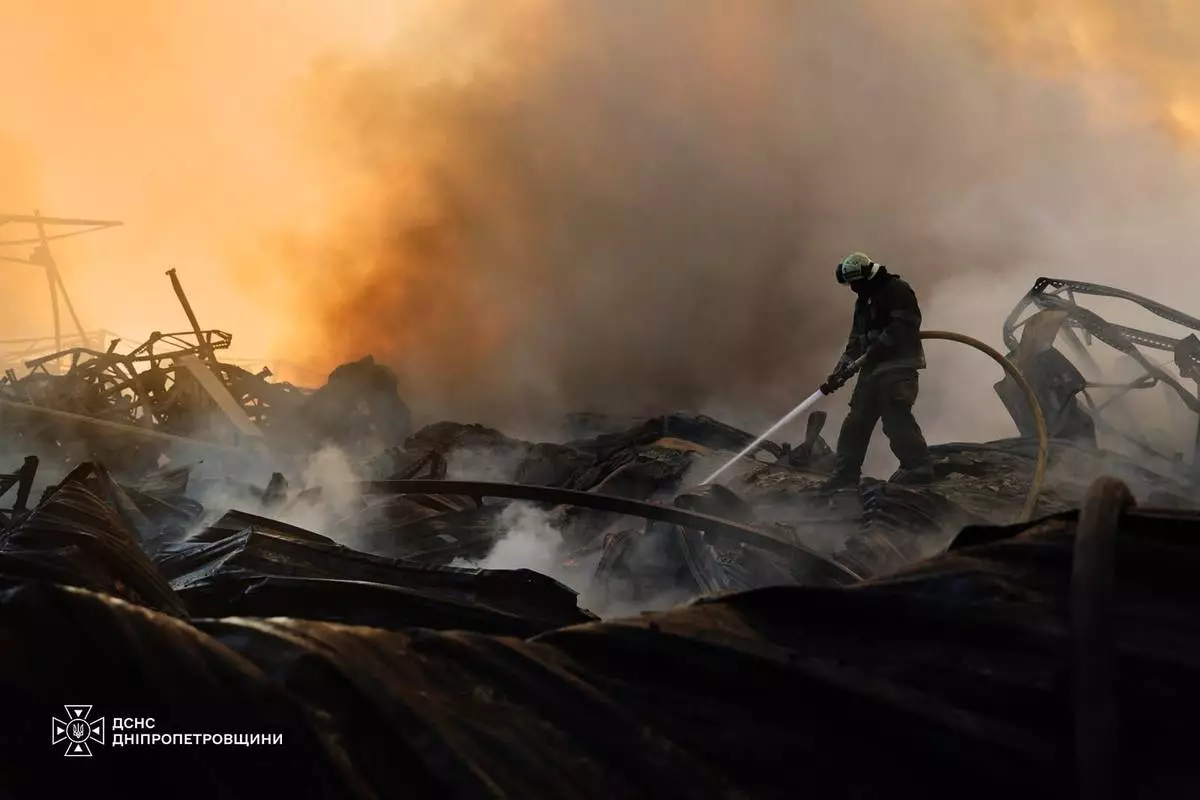
In this photo provided by the Ukrainian Emergency Service, a firefighter puts out a fire following a Russian missile attack in Dnipropetrovsk region, Ukraine, Tuesday, Aug. 4, 2026. (Ukrainian Emergency Service via AP)