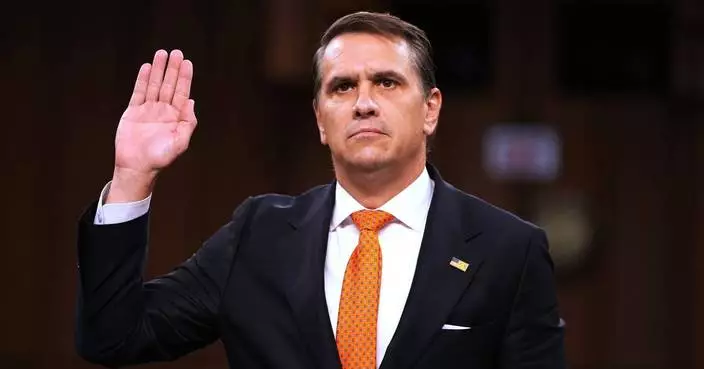
WASHINGTON (AP) — The Trump administration has revoked the visa of Brazil’s ambassador to the United States in retaliation for Brazil’s denial of visas last month for two American diplomats who sought to visit ahead of upcoming elections as well as Brazil’s stalling on approving President Donald Trump’s nominee to be ambassador in Brasilia.
The State Department said the decision was a reciprocal response to Brazil’s actions and officials said the step had been delayed several times to give Brazilian President Luiz Inácio Lula da Silva room to back down, something he did not do. Officials said, however, that it could be quickly reversed if Brazil takes appropriate action and accepts Trump’s ambassadorial choice.
Trump has had a fractious relationship for some time with Lula's administration, which has opposed him on numerous policies, particularly in the Western Hemisphere regarding Venezuela and Cuba. Their relationship also has been strained by Trump’s fondness for Lula’s first term successor and then predecessor, Jair Bolsonaro, who is currently under house arrest, and his son Flávio, who is Lula’s main opponent in October election.
Lula has spared Trump himself from criticism and claims they liked each other when they first met at the United Nations Assembly General in September of last year. The Brazilian leader has blamed Secretary of State Marco Rubio for some of the actions against his country.
Despite the revocation of her visa, Brazil’s ambassador Maria Luiza Ribeiro Viotti is not being expelled from the United States, said one State Department official, who like several others spoke on condition of anonymity to discuss the sensitive diplomatic matter. The ambassador was previously a senior United Nations official.
She could be allowed to resume her official duties if the Brazilian government accepts Trump’s choice of former Florida House speaker Danny Perez to be U.S. ambassador to Brazil. Perez was nominated to the post in June and the official said Brazil had signaled it would not act on the appointment until after the first round of Brazil's election on Oct. 4.
In addition to stalling on Perez, Brazil denied visas last month for Riley Barnes, the assistant secretary of state for democracy, human rights and labor, and one of his top aides after reports emerged that the pair were going to criticize Lula or the election process.
The State Department denied the allegations and said the two had planned to visit Brasilia on July 27-30 to meet government officials, religious leaders and others about “election integrity,” religious freedom and freedom of expression.
It said the visit was routine and that “any insinuation of a ‘ploy’ to undermine a democratic nation’s election is a baseless lie.”
Brazil’s government did not immediately respond to a request for comment from The Associated Press about the revocation of the ambassador’s visa, but last week a top Brazilian diplomat told journalists the government was expecting a response from the U.S.
The diplomat also mentioned the U.S. government had triggered the proceedings to send Perez to Brasilia before seeking Brazil’s approval, which is not standard diplomatic procedure. The diplomat spoke on condition of anonymity due to lack of authorization to discuss the matter publicly.
The same Brazilian diplomat told the AP on Tuesday, also under condition of anonymity, that the Lula administration is trying to figure out why the U.S. government is rushing to have an ambassador in Brasilia only months before October's election. The post in the Brazilian capital has been vacant since Trump returned to the White House in January 2025.
Lula, who is 80 and seeking his fourth term as Brazil's president, will face Sen. Flávio Bolsonaro, whose father once served as Brazil's president and whose family has many ties with the Trump administration.
Sen. Bolsonaro and his brother, Eduardo, visited U.S. officials in Washington, including Trump, in late May. Shortly afterward, the Trump administration classified Brazil’s biggest drug-trafficking groups — First Command Capital and Red Command — as foreign terrorist organizations, a move Lula opposes.
The Trump administration also imposed an up to 37.5% tariff hike on thousands of Brazilian exports, which came into force Friday. The U.S. government claims the South American nation has unfair competition practices and fails to stop forced labor practices — both accusations rejected by the Lula administration as an attempt to sway the election to Sen. Bolsonaro.
Jair Bolsonaro has for years fed concerns about the country’s electronic voting system, without providing any evidence for his claims. He is now serving a 27-year prison sentence at home for an attempted coup. He has long insisted that the machines, used for a quarter-century, are prone to fraud.
Sen. Bolsonaro has recently repeated some of these claims, although he steered clear of those on Saturday when his Liberal Party confirmed him as a presidential candidate in Sao Paulo.
Savarese reported from Sao Paulo, Brazil.

Brazilian President Luiz Inacio Lula da Silva speaks to supporters during the Workers' Party convention, where he was confirmed as the party's presidential candidate for the next election in Sao Paulo, Brazil, Sunday, Aug. 2, 2026. (AP Photo/Andre Penner)
Russia and Ukraine traded accusations on Tuesday that each side’s attacks caused civilian deaths, with officials in the Moscow region saying five people were killed there while authorities in Ukraine said a similar number, including two children, died at various sites across the country.
Russia has relentlessly pounded civilian areas of Ukraine, even though Moscow insists its forces target only military facilities.
Since the Kremlin launched its full-scale invasion over four years ago, Ukraine has developed long-range drones that can strike deep inside Russia. In the past year, its forces have battered oil facilities, major storage depots and other key infrastructure.
More than 16,000 civilians have been killed in Ukraine since the war began, the United Nations said last month in its most recent casualty report, with the vast majority occurring in areas under the Ukrainian government’s control. Casualties have risen steadily each year.
The U.N. children’s agency on Tuesday urged both countries to uphold international humanitarian law requiring the protection of children, citing recent deaths in Russia's Belgorod and Krasnodar regions, as well as in Ukraine's Dnipropetrovsk and Sumy regions.
“Attacks that kill and injure children must stop,” UNICEF said in a statement.
Meanwhile, escalating attacks on shipping in the Black Sea by both sides have reawakened fears that global food security could be put at risk.
Ukrainian President Volodymyr Zelenskyy posted a video on social media that he said showed a Russian drone hunting a man selling vegetables from a street stall in the southern city of Kherson.
The video shows the man trying to flee the drone as it circles his vehicle, follows him and ultimately strikes the car where he was trying to hide. He suffered wounds to his back, legs and arms, according to an interview he gave to the Kherson regional military administration.
Russia's Defense Ministry did not immediately reply to an Associated Press request for comment.
Drone attacks on civilians have surged since the war began, with 967 people killed, including 10 children, and nearly 7,000 people injured, Ukraine’s Prosecutor General’s Office said Tuesday.
Russian drone operators track and strike civilians going about daily activities, according to previous AP reporting. A U.N. commission concluded in October 2025 that such attacks amounted to crimes against humanity.
“The world must see this,” Zelenskyy said. “It must see every piece of evidence that Russia has gone mad and that its soldiers take pleasure in killing and abusing civilians.”
The death toll from a drone strike Monday in the Russian Black Sea resort of Arkhipo-Osipovka rose to seven, including four children, regional authorities said.
On Tuesday, Krasnodar regional authorities updated the number of wounded to 58, with 21 hospitalized.
Video circulating online showed a drone slamming into a crowded beach with what sounded like gunfire in the background. Ukraine has not commented on the strike.
A Ukrainian drone attack Tuesday in the region around Moscow killed five people and wounded 10 others, said Gov. Andrei Vorobyov. Most of the damage occurred in the Chekhov municipal district, where several fires erupted at the Novoselki industrial zone, he said.
In the latest in a series of attacks on Russia’s biggest online retailer Wildberries, the company said its warehouse in the Leningrad region, adjacent to St. Petersburg, was on fire.
In the village of Emmaus, located between Moscow and St. Petersburg, drone debris partially damaged a wall of a Wildberries warehouse, regional Gov. Vitaly Korolyov said.
In the past 18 days, Ukrainian drones have targeted 15 Wildberries warehouses, 13 of which caught fire, said Robert Brovdi, commander of Ukraine’s Unmanned Systems Forces. Ukrainian officials say the company provides goods that can be used by the military. Kyiv is also keen to unsettle the Russian public with high-profile attacks.
The Russian Defense Ministry said its forces on Monday night struck “Ukrainian ports, vessels and port infrastructure” used by Kyiv’s army.
In the port of Chornomorsk, in Ukraine’s southern Odesa region, Russia said it hit an automobile components plant and a port terminal, where the military vehicles were being repaired and ammunition and fuel were being stored.
In the southern port of Mykolaiv, a bulk carrier with military cargo was damaged, while in Pivdennyi, another Ukrainian port, a vessel unloading military cargo was hit, according to the Russian statement.
The ministry also said two bulk carriers hauling weapons and military equipment were damaged at sea, south of Odesa.
Turkey on Tuesday repeated its appeal for both countries to ensure safe passage in the Black Sea after two Turkish-owned ships were attacked by drones after leaving the Russian port of Novorossiysk.
A Turkish Foreign Ministry statement expressed concerns that the war is increasingly spreading across the Black Sea, threatening merchant shipping, and warned such incidents could have broader consequences, including for the global food supply, as important shipments of grain, fertilizer and other key products move through those waters.
Russian attacks on Mykolaiv, including its port, killed an 89-year-old woman and wounded seven other people aged between 2 and 83, Ukrainian regional officials said.
The Russian strike on civilian infrastructure in southern Odesa region destroyed a private home and wounded two people, according to Oleh Kiper, head of the regional military administration.
In Ukraine’s northern Sumy region, six Russian glide bombs killed two girls aged 5 and 10 and an elderly woman, said Oleh Hryhorov, head of the Sumy regional military administration.
Russian forces also struck Kharkiv and 18 towns and villages across the northern region in the previous 24 hours, killing one person and injuring seven, including an 8-year-old, said Oleh Syniehubov, head of the Kharkiv regional military administration.
Strikes in Balakliia, also in the Kharkiv region, damaged an apartment building, a library, three stores and more than 10 houses, wounding two women, local authorities said.
Two glide bombs struck Kramatorsk in the eastern Donetsk region of Ukraine, injuring 24 people, local officials said. Kramatorsk sits at the northern end of Ukraine’s Fortress Belt, where Western analysts say Russia is making a renewed effort to break through after four years of attrition.
Vadym Filashkin, head of the regional military administration, urged people still living near the front to evacuate, saying authorities would help with transportation, housing and other support.
Associated Press writer Edith M. Lederer at the United Nations contributed to this report.
Follow the AP’s coverage of the war in Ukraine at https://apnews.com/hub/russia-ukraine
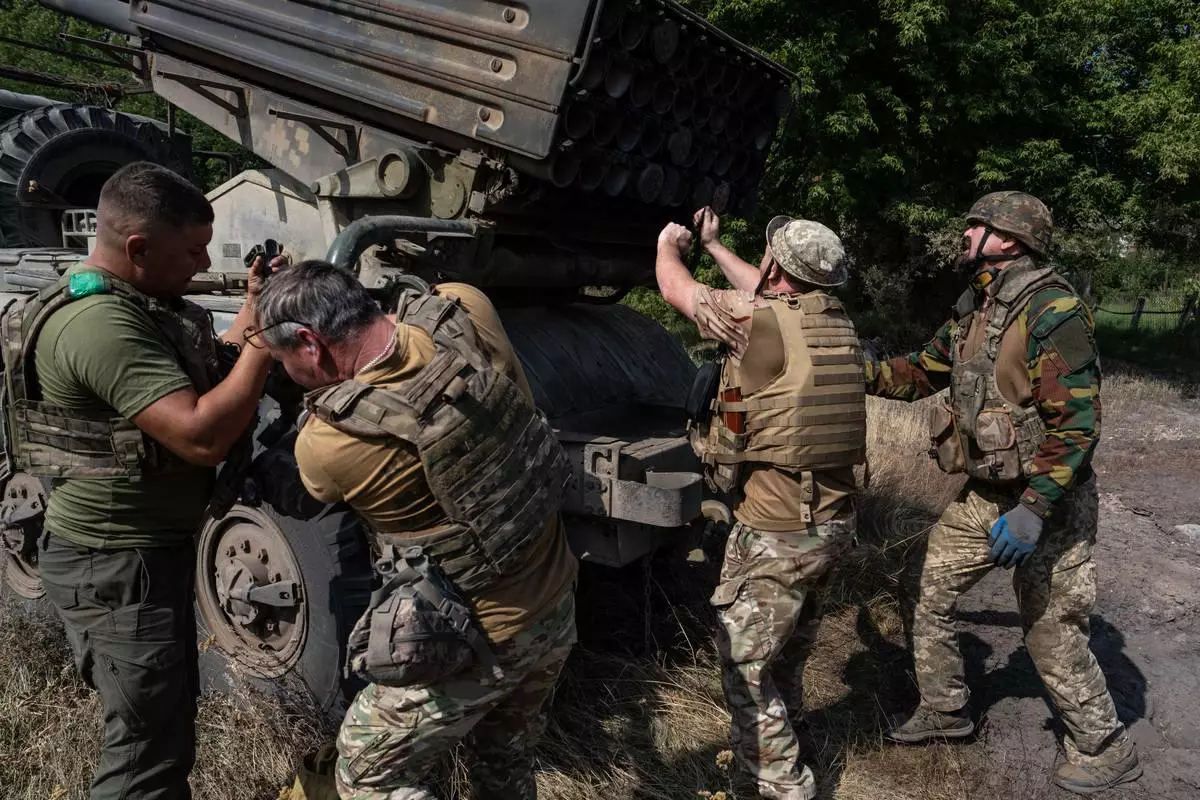
In this photo provided by Ukraine's 93rd Kholodnyi Yar Separate Mechanized Brigade press service, soldiers prepare an MRLS BM-21 "Grad" to fire at Russian positions near the frontline city of Kramatorsk, Donetsk region, Ukraine, Tuesday, Aug. 4, 2026. (Iryna Rybakova/Ukraine's 93rd Mechanized Brigade via AP)
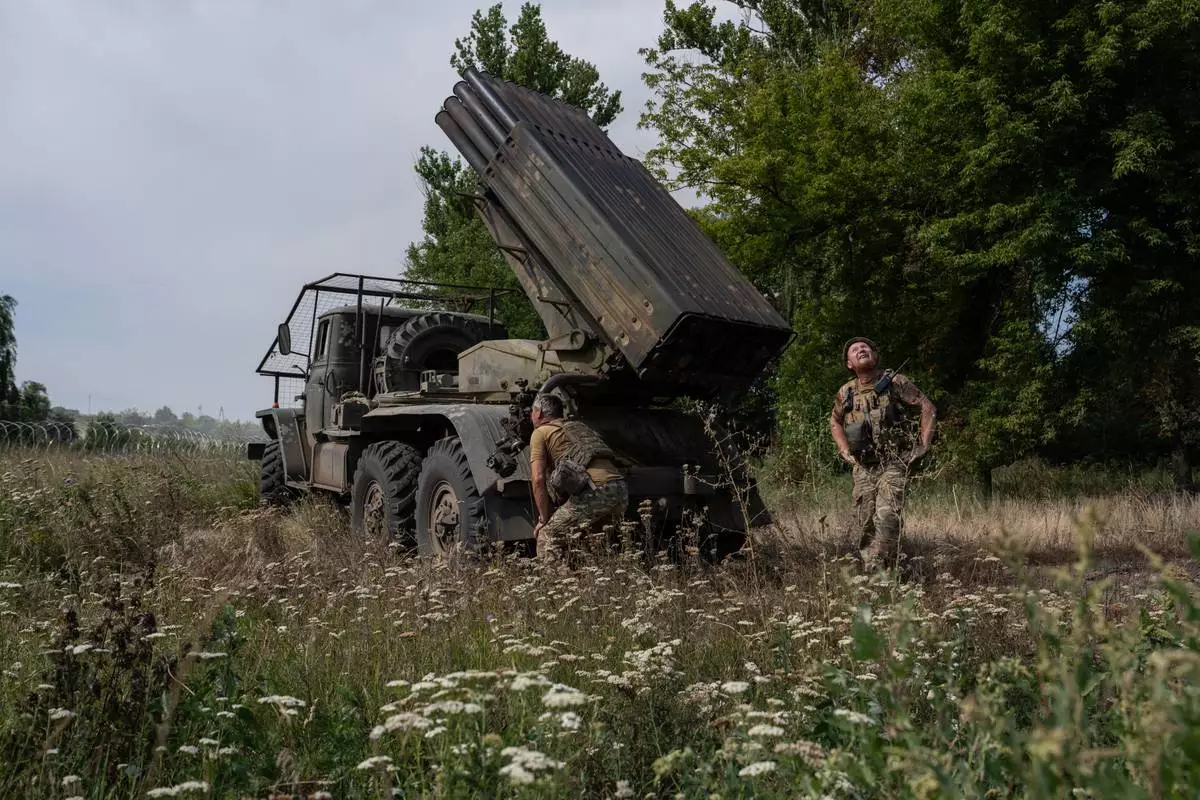
In this photo provided by Ukraine's 93rd Kholodnyi Yar Separate Mechanized Brigade press service, soldiers prepare an MRLS BM-21 "Grad" to fire at Russian positions near the frontline city of Kramatorsk, Donetsk region, Ukraine, Tuesday, Aug. 4, 2026. (Iryna Rybakova/Ukraine's 93rd Mechanized Brigade via AP)
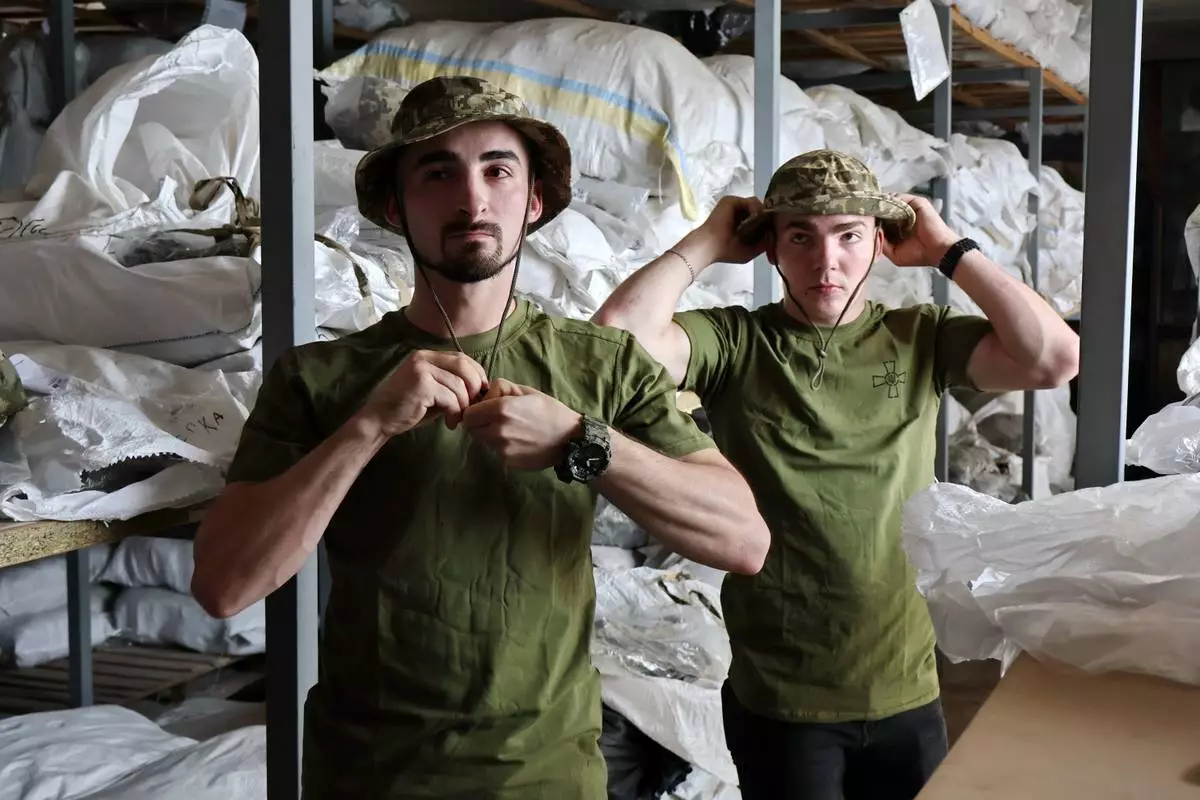
In this photo provided by Ukraine's 65th Mechanized Brigade press service, recruits get new uniforms at the supply depot on the frontline in the Zaporizhzhia region, Ukraine, Tuesday, Aug. 4, 2026. (Andriy Andriyenko/Ukraine's 65th Mechanized Brigade via AP)
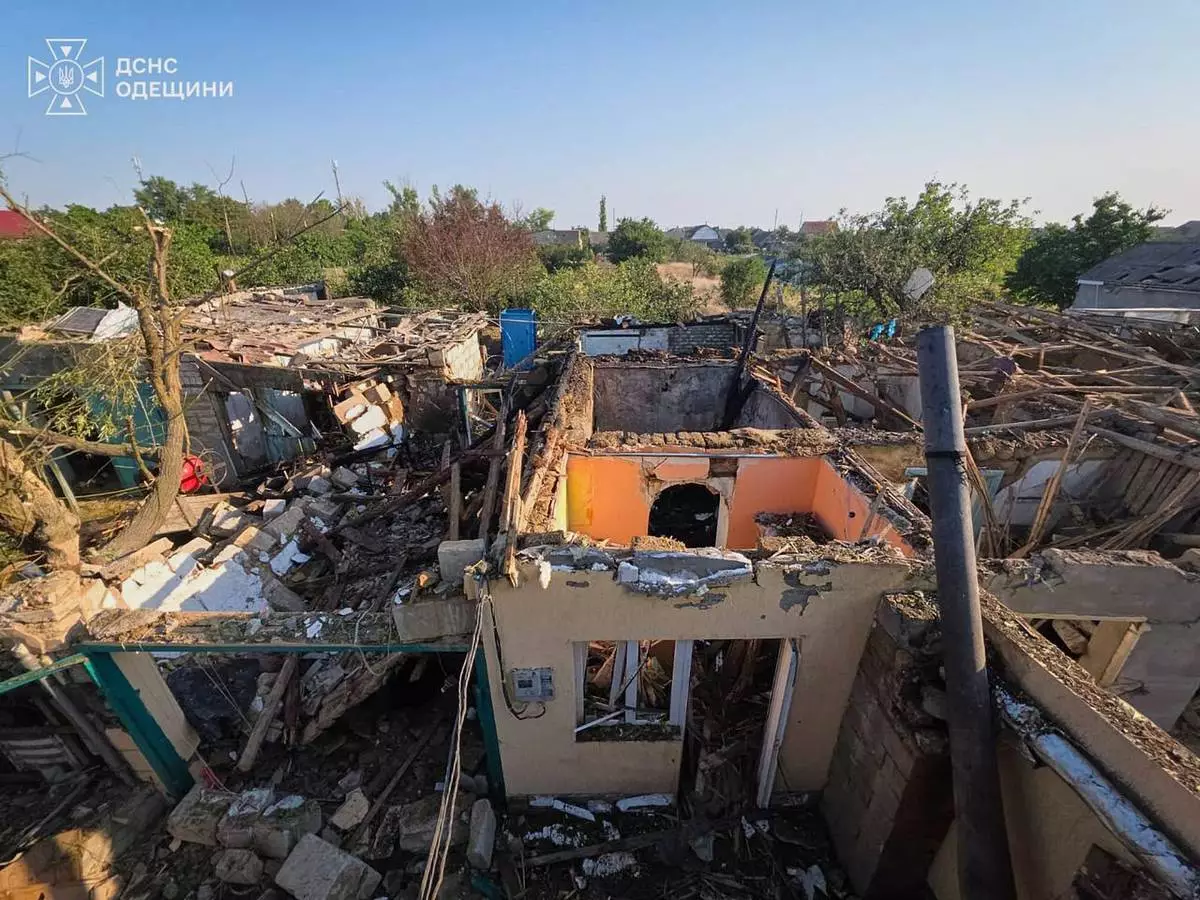
In this photo provided by the Ukrainian Emergency Service, private houses destroyed following a night Russian missile attack are seen in Odesa region, Ukraine, Tuesday, Aug. 4, 2026. (Ukrainian Emergency Service via AP)
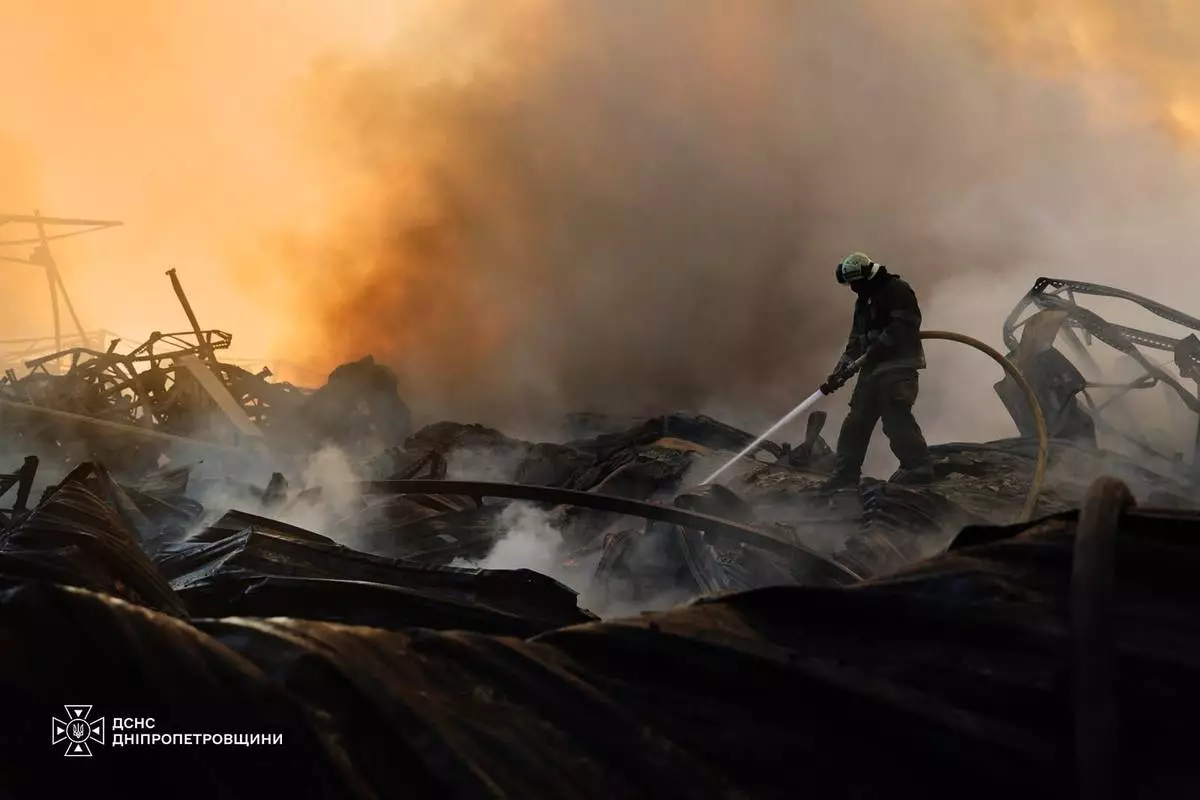
In this photo provided by the Ukrainian Emergency Service, a firefighter puts out a fire following a Russian missile attack in Dnipropetrovsk region, Ukraine, Tuesday, Aug. 4, 2026. (Ukrainian Emergency Service via AP)