Skip to Content Facebook Feature Image

D-Wave Demonstrates Major Hardware Breakthrough for Quantum Error Correction, Advancing the Path to Practical, Fault-Tolerant Gate-Model Quantum Computing

Business

D-Wave Demonstrates Major Hardware Breakthrough for Quantum Error Correction, Advancing the Path to Practical, Fault-Tolerant Gate-Model Quantum Computing
Business

Business

D-Wave Demonstrates Major Hardware Breakthrough for Quantum Error Correction, Advancing the Path to Practical, Fault-Tolerant Gate-Model Quantum Computing

2026-08-05 23:05 Last Updated At:23:20

PALO ALTO, Calif.--(BUSINESS WIRE)--Aug 5, 2026--

D-Wave Quantum Inc. (Nasdaq: QBTS), (“D-Wave” or the “Company”), the only dual-platform quantum computing company providing both annealing and gate-model systems, software, and services, today announced a major research breakthrough advancing the path to practical, fault-tolerant gate-model quantum computing. Published in the peer-reviewed scientific journal Nature, the research demonstrates a fast, high-fidelity, two-qubit entangling gate that preserves the error-correction advantages of D-Wave’s superconducting dual-rail qubit architecture. The results address one of the industry’s most consequential challenges by reducing the immense quantum and classical hardware overhead typically required to detect and correct quantum errors as systems scale.

This press release features multimedia. View the full release here: https://www.businesswire.com/news/home/20260804574206/en/

The paper, “An entangling gate for dual-rail erasure qubits,” details a new two-qubit entangling gate, a fundamental building block of quantum computation, designed to support efficient quantum error correction. The research demonstrates approximately 99.9% fidelity during two-qubit operations, with fast gate times of about 500 nanoseconds, enabled by native hardware-level error detection. Leveraging these results, D-Wave simulations indicate its dual-rail architecture could reduce the logical error rate by as much as a factor of 10 for each increment in error correction, significantly reducing the physical qubit overhead required for fault-tolerant quantum computing.

“Gate-model quantum computing’s greatest remaining challenge is not simply building more qubits. It is building systems that can correct errors efficiently as they scale,” said Dr. Alan Baratz, CEO of D-Wave. “Superconducting quantum computers are known for speed, but achieving the high fidelity needed for scalable, fault-tolerant systems has remained a challenge. This research demonstrates that our dual-rail architecture combines fast superconducting operations with high-fidelity performance while preserving native hardware-level error detection. We believe that this work confirms our path to commercial fault-tolerant quantum computing is practical and achievable.”

Removing a Major Barrier to Fault-Tolerant Quantum Computing

Quantum information is inherently fragile and highly susceptible to errors, making efficient quantum error correction essential for the development of reliable, fault-tolerant gate-model quantum computers. In many gate-model architectures, correcting those errors requires large numbers of additional physical qubits and operations, creating substantial engineering complexity, cost, and performance constraints. D-Wave’s dual-rail architecture is designed to create a favorable error hierarchy in which the most common quantum errors are also the easiest to correct. The newly published research demonstrates that this favorable error hierarchy is preserved during two-qubit operations, with the technology maintaining both speed and high fidelity. The results establish an important foundation for scalable quantum error correction with substantially lower hardware overhead.

“The entangling gate demonstrated through this research is already integrated into our gate-model systems, where it is delivering comparable performance,” said Dr. Robert Schoelkopf, chief scientist at D-Wave. “We believe these results provide strong evidence that the core architectural principles underpinning our gate-model development roadmap can deliver the speed, fidelity and error-correction efficiency required for practical, fault-tolerant quantum computing.”

The research supports D-Wave’s recently announced gate-model development roadmap, which targets a 2032 completion of a 100-logical-qubit system capable of successfully performing more than 1 million operations. The roadmap brings together D-Wave’s superconducting dual-rail architecture and integrated cryogenic control technology to enable more efficient error detection and awareness as systems scale. D-Wave’s roadmap is targeting an error reduction rate, or Lambda, of 10. Lambda is a measure of how rapidly a quantum computer’s errors are reduced as more error-correction capability is added. A Lambda of 10 means the system becomes 10 times more reliable with each increment in error correction, making it possible to achieve low logical error rates required for fault-tolerant quantum computing with far fewer physical qubits.

“Building a fault-tolerant quantum computer requires systematically solving a series of difficult scientific and engineering challenges, with each success bringing us closer to a scalable system,” said Dr. Trevor Lanting, chief development officer at D-Wave. “This research demonstrates one of the foundational capabilities of our dual-rail architecture and brings us an important step closer to fault-tolerant gate-model quantum computing.”

The research further advances D-Wave’s dual-platform strategy of developing complementary annealing and gate-model quantum computing technologies to address the full range of computationally complex problems.

Read the paper, “An entangling gate for dual-rail erasure qubits,” in Nature here.

Learn more about D-Wave’s gate-model quantum computing here.

About D-Wave Quantum Inc.

D-Wave is a leader in the development and delivery of quantum computing systems, software, and services. It is the world’s first commercial supplier of quantum computers, and the first and only to offer dual-platform quantum computing products and services, spanning both annealing and gate-model quantum computing technologies. D-Wave’s mission is to help customers realize the value of quantum today through enterprise-grade systems available on-premises and via its Leap™ quantum cloud service, which offers 99.9% availability and uptime. More than 100 organizations across commercial, government and research sectors trust D-Wave to address complex computational challenges using quantum computing. Learn more about realizing the value of quantum computing today and how D-Wave is shaping the quantum-driven industrial and societal advancements of tomorrow: www.dwavequantum.com.

Forward-Looking Statements

Certain statements in this press release are forward-looking, as defined in the Private Securities Litigation Reform Act of 1995. In some cases, you can identify forward-looking statements by the following words: “believe,” “may,” “will,” “could,” “would,” “should,” “expect,” “intend,” “plan,” “anticipate,” “trend,” “estimate,” “predict,” “project,” “potential,” “seem,” “seek,” “future,” “outlook,” “forecast,” “projection,” “continue,” “ongoing,” or the negative of these terms or other comparable terminology, although not all forward-looking statements contain these words. These statements involve risks, uncertainties, and other factors that may cause actual results to differ materially from the information expressed or implied by these forward-looking statements and may not be indicative of future results. These forward-looking statements are subject to a number of risks and uncertainties, including, among others, various factors beyond management’s control, including the risks discussed under the caption “Item 1A. Risk Factors” in Part I of our most recent Annual Report on Form 10-K or any updates discussed under the caption “Item 1A. Risk Factors” in Part II of our Quarterly Reports on Form 10-Q and in our other filings with the SEC. Undue reliance should not be placed on the forward-looking statements in this press release in making an investment decision, which are based on information available to us on the date hereof. We undertake no duty to update this information unless required by law.
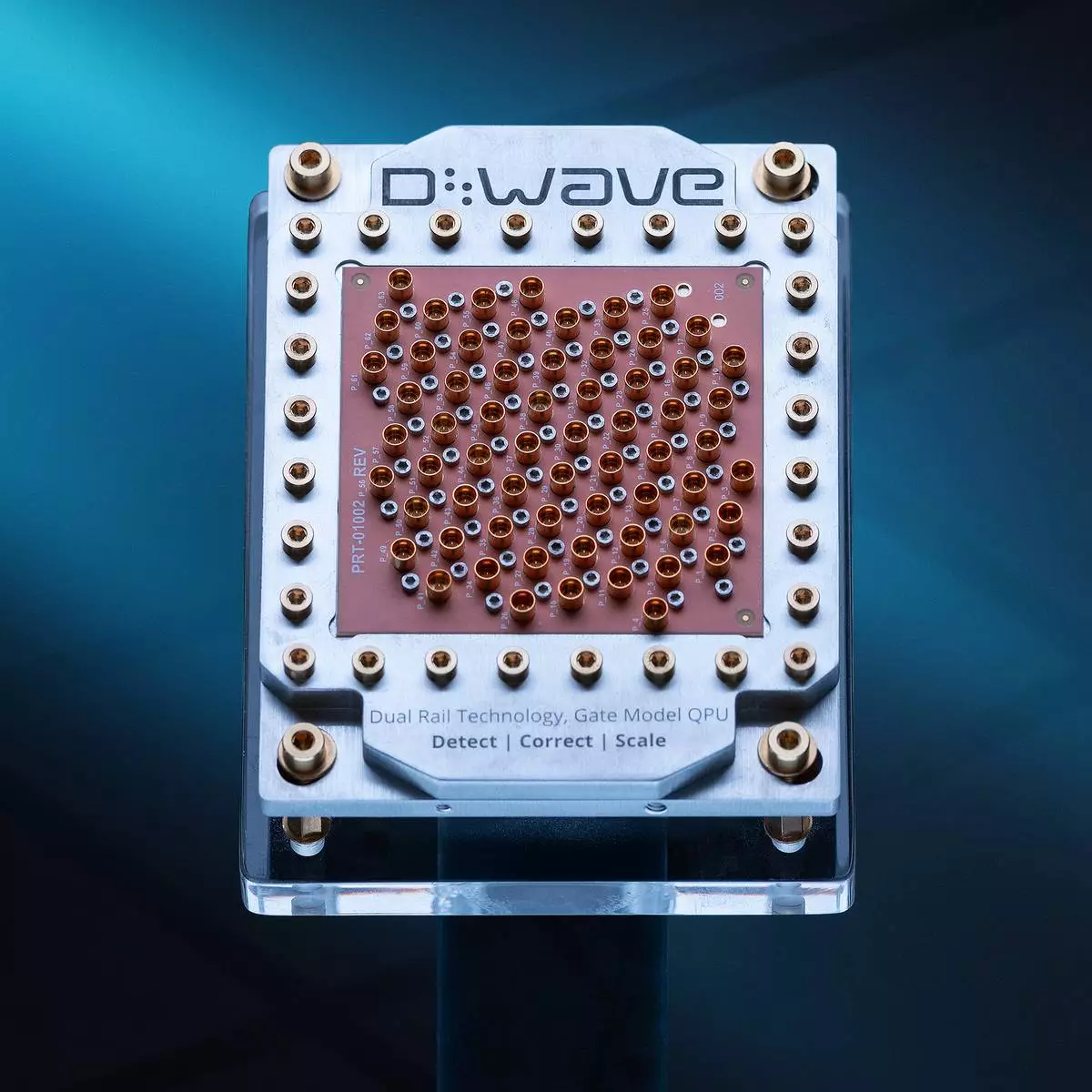
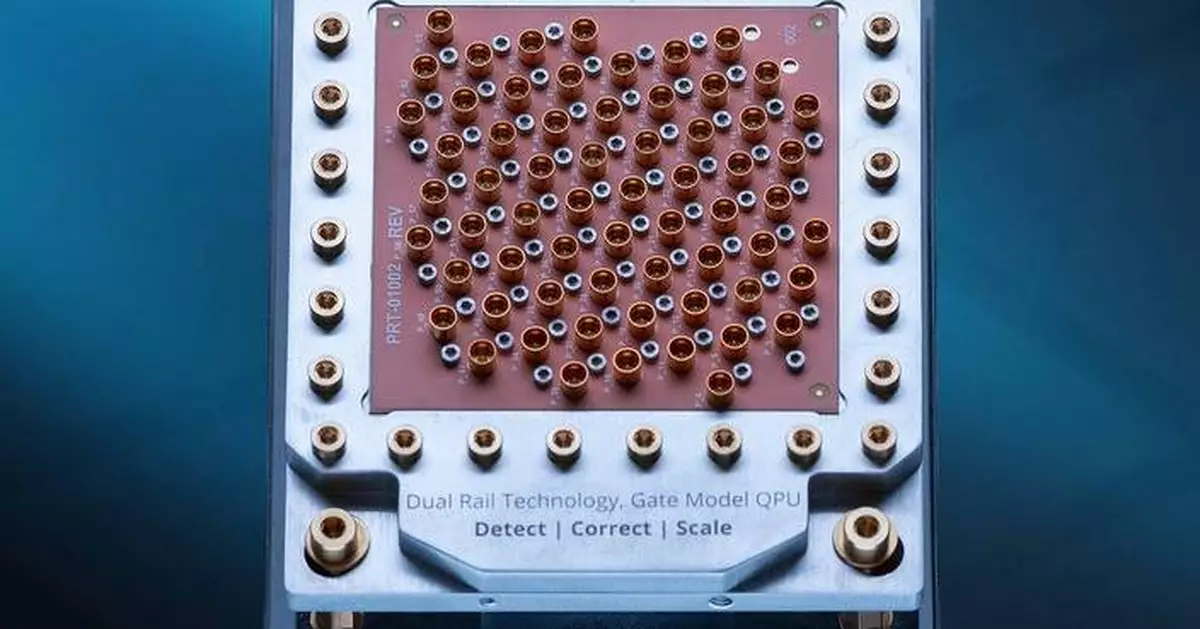
D-Wave's dual-rail gate-model quantum processor. A close-up look at D-Wave's superconducting gate-model quantum processor, built on a dual-rail architecture designed to detect quantum errors at the hardware level. This built-in error detection makes quantum error correction more efficient, supporting a practical path to scalable, fault-tolerant quantum computing.


D-Wave's dual-rail gate-model quantum processor. A close-up look at D-Wave's superconducting gate-model quantum processor, built on a dual-rail architecture designed to detect quantum errors at the hardware level. This built-in error detection makes quantum error correction more efficient, supporting a practical path to scalable, fault-tolerant quantum computing.
DETROIT (AP) — Abdul El-Sayed has won Michigan’s Democratic nomination for U.S. Senate, narrowly defeating U.S. Rep. Haley Stevens in a victory for the party’s progressive wing in a battleground state.

“In the words of Muhammad Ali, we shook up the world,” El-Sayed told supporters Wednesday morning.

The real test of El-Sayed’s and progressives’ strength will now come in a November matchup against Mike Rogers, a former congressman who ran unopposed for the Republican nomination. The seat is pivotal to Democrats’ chances of flipping the Senate and El-Sayed will face the challenge of uniting a divided Democratic base after a bruising primary.

Stevens called El-Sayed to concede Wednesday, and she issued a statement saying she would back El-Sayed’s candidacy.

“I am proud to offer my support as he takes on Mike Rogers in the general election,” she said.

Stevens added, “This was a thorough and rigorous campaign that brought out the full span of views within the Democratic Party — and that is why we have primaries.”

Curtis Hertel, the chair of Michigan Democratic Party, urged unity ahead of November.

“We have got to work together to take this country back,” Hertel said.

“I can tell you what we need is a fighter,” he added. “Abdul El-Sayed has been a fighter for the people over and over again.”

The Associated Press declared El-Sayed the winner after confirming that after Wednesday morning updates in election returns in Wayne and Oakland counties, two of the state’s largest in the Detroit area in southeastern Michigan, that there were simply not enough votes left to count that would allow Stevens to catch up and overtake him as the leader.

After confidently predicting a win, El-Sayed’s victory was ultimately so narrow that it wasn’t assured until almost all ballots cast statewide were counted. At the time AP declared him the winner, El-Sayed led Stevens by 14,893 votes — a margin of just under 1 percentage point — out of more than 1.5 million ballots counted.

El-Sayed’s win, however slim, represents a significant shift for the Democratic Party; in 2018 he lost the gubernatorial primary to now-Gov. Gretchen Whitmer by 21 percentage points.

The former health official campaigned on “Medicare for All,” halting military aid to Israel and campaign finance reform. He had support from progressive leaders including Sen. Bernie Sanders and U.S. Rep. Alexandria Ocasio-Cortez, who framed the race as a grassroots-focused movement and a broader fight against the establishment and big-money spending.

Sen. Chris Van Hollen, another progressive leader, said El-Sayed's victory “should be a wake-up call to the Washington Democratic establishment.”

Sen. Gary Peters, the Michigan Democrat whose retirement spurred the contentious primary to replace him, said, “Congratulations to him.” Peters had endorsed Stevens.

Now comes the more difficult challenge for Democrats: uniting the party to defeat Rogers, for whom Republicans have already reserved large sums of money ahead of the general election.

Tuesday evening, El-Sayed’s supporters in Detroit’s Majestic Theatre cheered as the first few batches of results came in, before mellowing. Hours later Stevens’ previously subdued partygoers roared as she narrowed the margin.

“Whatever happens tonight,” El-Sayed told a thinned but still energetic crowd, “we have a responsibility to ensure that we unite, unite to make sure that Mike Rogers never sees the inside of the U.S. Senate.”

Stevens, a four-term congresswoman, focused on manufacturing and the economy. She stressed her past victories in tough races, saying she would be best positioned to beat Rogers.

Stevens benefited from tens of millions of dollars in outside spending, including the largest investment in a race ever from the American Israel Public Affairs Committee, which supports pro-Israel candidates.

The race will help decide which party controls the chamber in the last two years of President Donald Trump’s term. Those stakes have added heat to the rivalry, with moderates arguing that El-Sayed would have a harder time than Stevens against a Republican in the general election.

Stevens won election to Congress in 2018 after serving as chief of staff to President Barack Obama’s auto task force, which helped oversee the federal rescue of General Motors and Chrysler. Her campaign and allied groups have repeatedly highlighted that experience.

El-Sayed cast himself as the anti-establishment candidate and argued that Democrats need to reject corporate influence and embrace a more progressive agenda.

While the candidate has said he is not a democratic socialist, he found support from some of the group’s members. That included Melat Kiros, who recently beat a longtime incumbent in a Democratic primary for a Denver-based House seat and was at El-Sayed’s watch party. Also there was Hasan Piker, a progressive and controversial influencer online.

The candidates’ differences were clear to some voters.

Kenneth Woodside, 87, of West Bloomfield, said he voted for El-Sayed over Stevens because “the nation is ready for someone who wants to take some more action rather than on the road we are now, which is on the road to an oligarchy and authoritarianism.”

Nessa Fuller, 51, of Birmingham, said she voted for Stevens because she will “fight to get the right things done, and she’ll work with other people, which is really important to me.”

National groups poured unprecedented sums into the race, making it one of the country’s biggest tests of outside spending.

Groups backing Stevens spent more than $50 million, led by more than $30 million from AIPAC and its affiliates.

“We took on a machine,” El-Sayed said.

AIPAC issued a statement on Wednesday saying they would oppose El-Sayed and “his radical anti-Israel agenda” in November’s election.

The organizations' spending ensured Israel remained at the center of the race. While El-Sayed called for ending military aid to Israel, Stevens maintained strong support for the relationship.

Support for Israel is contentious within the Democratic Party. Israel has killed more than 73,000 Palestinians in Gaza since the militant group Hamas killed about 1,200 people and took 251 hostages in southern Israel in October 2023.

In a heavily Democratic district representing Detroit, the 13th, state Rep. Donavan McKinney defeated Rep. Shri Thanedar. McKinney argued that the city should once again have a Black representative in Congress.

After Thanedar won election in 2022, Detroit had no Black representation in Congress for the first time since the early 1950s.

Associated Press reporters Nathan Ellgren in Washington and Jesse Bedayn in Detroit contributed.

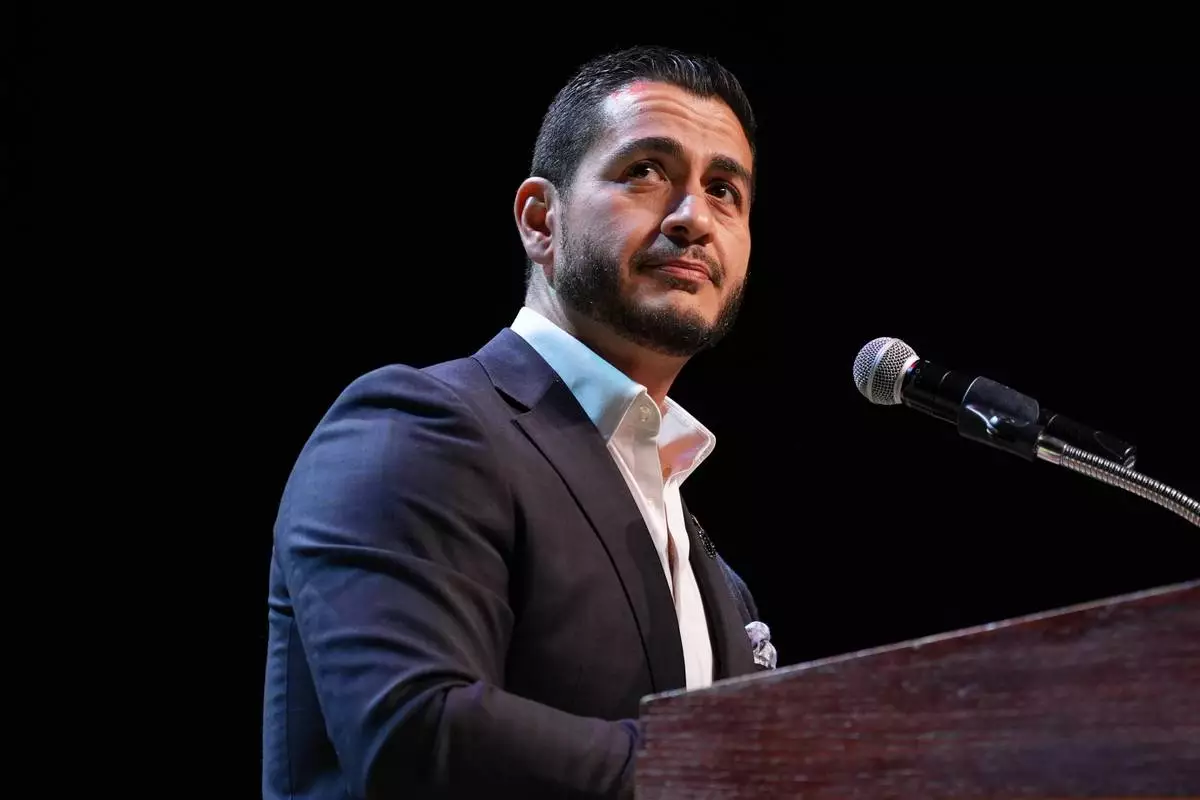
Abdul El-Sayed, a progressive candidate in the Democratic primary for U.S. Senate in Michigan, speaks during a primary election night event Wednesday, Aug. 5, 2026, at the Majestic Theatre in Detroit. (AP Photo/Julia Demaree Nikhinson)

Abdul El-Sayed, a progressive candidate in the Democratic primary for U.S. Senate in Michigan, speaks during a primary election night event Wednesday, Aug. 5, 2026, at the Majestic Theatre in Detroit. (AP Photo/Julia Demaree Nikhinson)

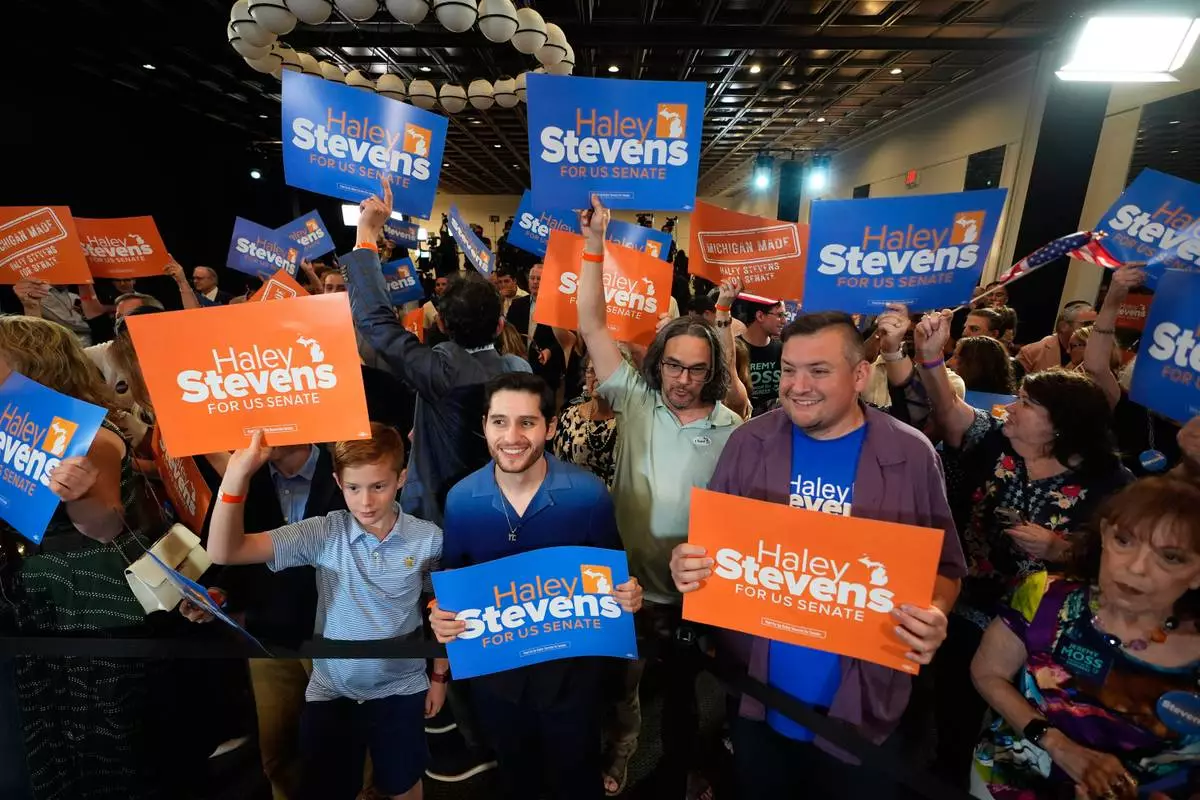
Attendees hold signs for Rep. Haley Stevens, D-Mich., a candidate in the Democratic primary for U.S. Senate in Michigan, during a primary election night event Wednesday, Aug. 5, 2026, in Detroit. (AP Photo/Paul Sancya)

Attendees hold signs for Rep. Haley Stevens, D-Mich., a candidate in the Democratic primary for U.S. Senate in Michigan, during a primary election night event Wednesday, Aug. 5, 2026, in Detroit. (AP Photo/Paul Sancya)

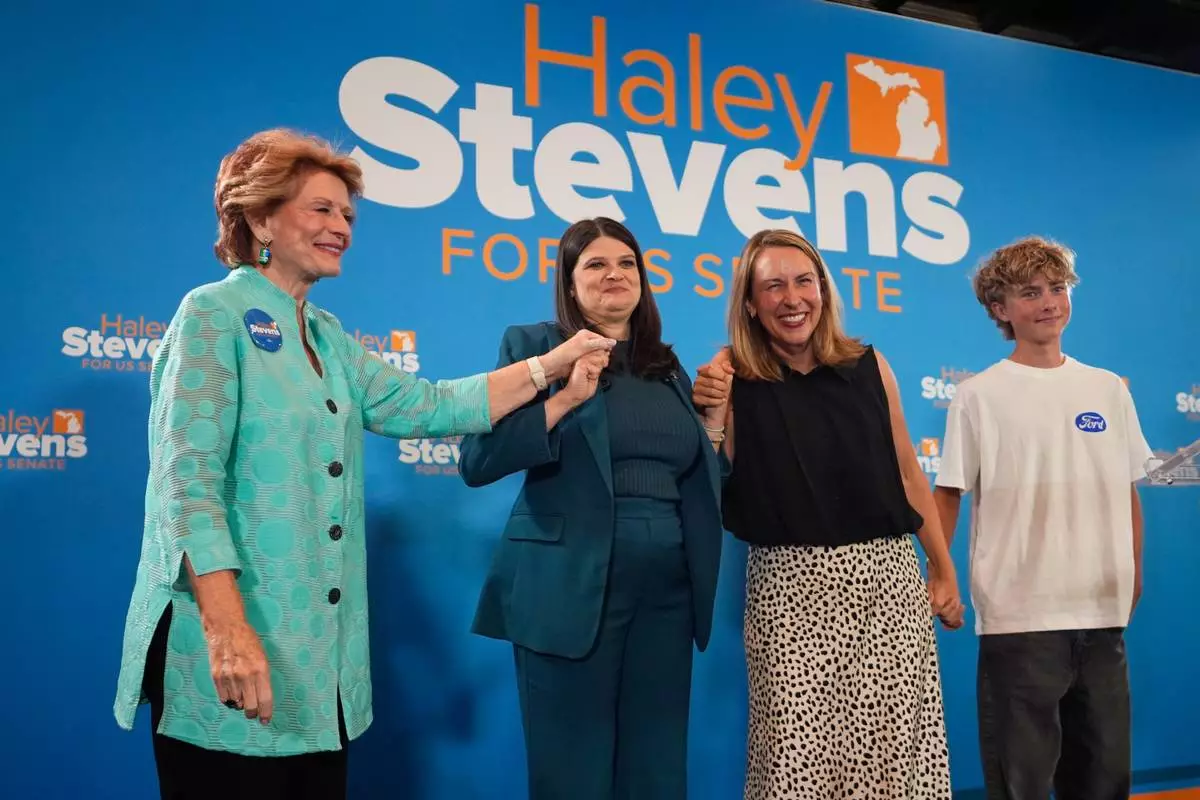
Former Sen. Debbie Stabenow, left, Rep. Haley Stevens, D-Mich., a candidate in the Democratic primary for U.S. Senate in Michigan, center left, and Rep. Hillary Scholten, D-Mich., hold hands on stage during a primary election night event Wednesday, Aug. 5, 2026, in Detroit. (AP Photo/Paul Sancya)

Former Sen. Debbie Stabenow, left, Rep. Haley Stevens, D-Mich., a candidate in the Democratic primary for U.S. Senate in Michigan, center left, and Rep. Hillary Scholten, D-Mich., hold hands on stage during a primary election night event Wednesday, Aug. 5, 2026, in Detroit. (AP Photo/Paul Sancya)

Rep. Haley Stevens, D-Mich., a candidate in the Democratic primary for U.S. Senate in Michigan, right, hugs an attendee during a primary election night event Wednesday, Aug. 5, 2026, in Detroit. (AP Photo/Paul Sancya)

Rep. Haley Stevens, D-Mich., a candidate in the Democratic primary for U.S. Senate in Michigan, right, hugs an attendee during a primary election night event Wednesday, Aug. 5, 2026, in Detroit. (AP Photo/Paul Sancya)

Abdul El-Sayed, a progressive candidate in the Democratic primary for U.S. Senate in Michigan, speaks during a primary election night event Wednesday, Aug. 5, 2026, at the Majestic Theatre in Detroit. (AP Photo/Julia Demaree Nikhinson)

Abdul El-Sayed, a progressive candidate in the Democratic primary for U.S. Senate in Michigan, speaks during a primary election night event Wednesday, Aug. 5, 2026, at the Majestic Theatre in Detroit. (AP Photo/Julia Demaree Nikhinson)

Recommended Articles