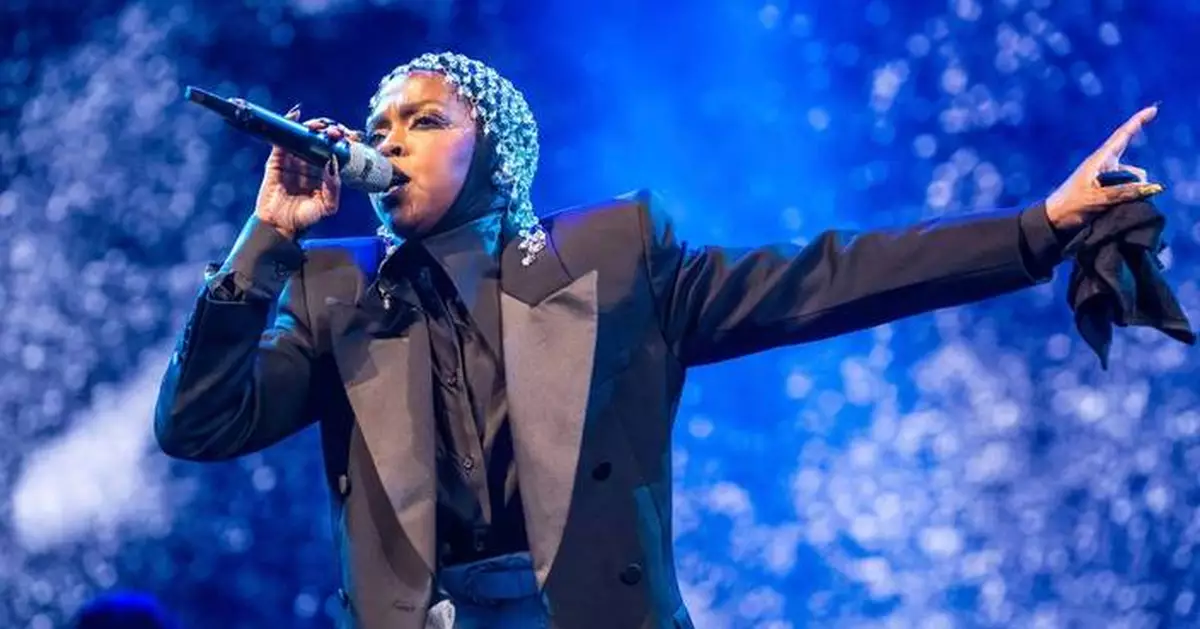
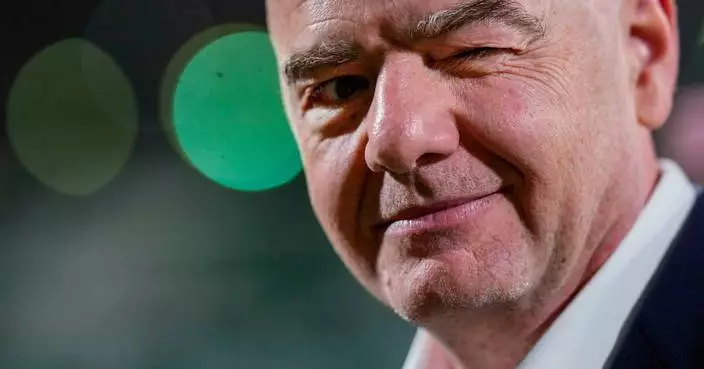
Moments before Ms. Lauryn Hill hopped on a call with The Associated Press, she and Fugees' bandmate Wyclef Jean stood in the center of London's Piccadilly Circus, surrounded by fans. Broadcast above them, on the bright LED screen of Piccadilly Lights, was a short film curated by Hill and created by Los Angeles artist Lauren Halsey: an animated, colorful collage depicting the heroes and symbols of the global African diaspora.
The message was clear: This is a a celebration of community, culture, music and art.
“The crowd was captivated,” Hill said.
“It was surreal,” Jean jumped in. “The love was felt. It was amazing.”
It was a tease of what's to come. On Friday, Hill will bring her Diaspora Calling! festival to the U.K. for the first time, marking 10 years since its inaugural edition in Brooklyn.
The event, hosted by Dave Chappelle and featuring performances by Erykah Badu, YG Marley, Zion Marley, Giggs, Fireboy DML and other artists, will be held at The National Bowl in nearby Milton Keynes. And its center: Hill and Jean, two-thirds of the Fugees, will perform their landmark album “The Score” in its entirety.
Below, Hill — joined briefly by Jean — discuss their festival, the 30th anniversary of “The Score” and the legacy of the late D'Angelo. This interview has been edited for clarity and brevity.
HILL: We were given an opportunity by the promoters — the same promoters that do Reggae Land.
He gave me the venue. And I said, ‘This is what I want to do.’ We’re basically blessed to have the opportunity. And, you know, 'tis the season to bring people together in the name of growth, healing and pushing forward.
HILL: Absolutely, absolutely, absolutely.
HILL: First of all, it started when I did a show in Ghana. There was a gentleman who brought me out to Ghana. And as I was talking to him, I realized that our conversation was not just about the immediate subject matter. I knew that we made a connection for a reason. And I know myself and Wyclef have community over the years — even when we weren’t necessarily doing the Fugees thing anymore, we built community all over the diaspora. And now it’s the time to bring them together.
HILL: We put a call out to the people that we know, love and respect. And I’ve gotten so much positivity — an abundance of responses, in terms of the creative community out here wanting to participate. So that’s huge.
HILL: Absolutely. Absolutely. That’s a timeless piece of work for us as well. Timeless. How do you feel about it, Wyclef?
JEAN: You hit it on the dot. You know, I remember when I was coming up, listening to like Bob Marley's “Exodus”; a lot of the early Dylan, Bob Dylan records; Pink Floyd's “The Wall”; The Police's “Synchronicity” and we got “The Score.” So that’s forever.
HILL: I think what is powerful about the album was that, you know, I’m a big fan of what Wyclef does. And I think he’s appreciative of what I do. So, we engage with each other’s art. And every time we perform it, even though (it's) singing older lyrics, there’s a new energy, a new spirit. There's a timelessness. I almost feel like we’re reclaiming timelines, healing timelines, so to speak, every time we’re performing.
JEAN: A hundred percent. Every time I perform “The Score” now, I feel like it's the first time.
HILL: Yeah. It doesn't feel old.
HILL: It's kind of the pinnacle of what the Fugees were all about. Our makeup is diaspora calls. I think we were a call to a particular unity, a particular kind of reflection and a particular kind of resistance to certain ideas that we knew better than. And we wanted to channel that outside and have other people feel what we were certain about, which is that there was being and resourcefulness and incredible brilliance throughout diaspora. And that division was not really an option.
HILL: We lost another timeless soul who made timeless music. We obviously want to protect his family and just keep holding up that brilliance.
He was good — without question.
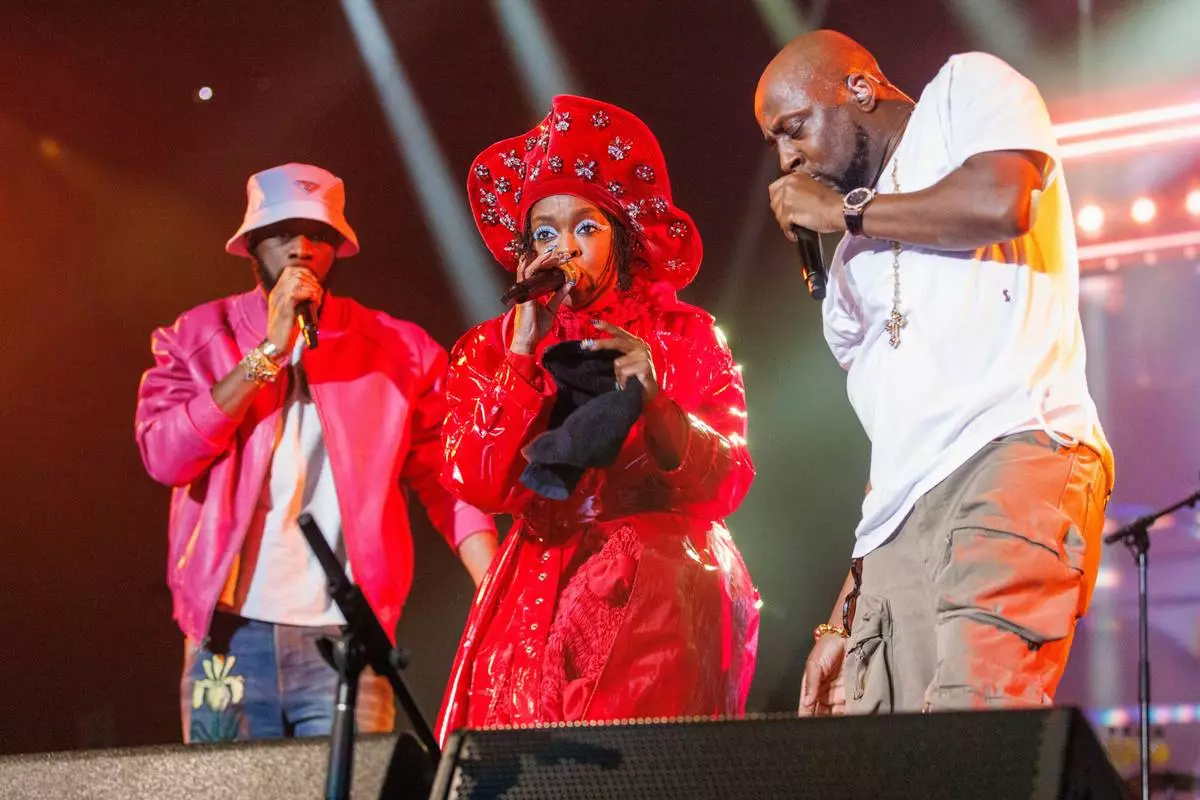
FILE - Prakazrel "Pras" Michel, from left, Lauryn Hill and Wyclef Jean, of the Fugees, perform during "The Miseducation of Lauryn Hill" 25th anniversary tour in Inglewood, Calif., on Nov. 5, 2023. (Photo by Willy Sanjuan/Invision/AP, File)
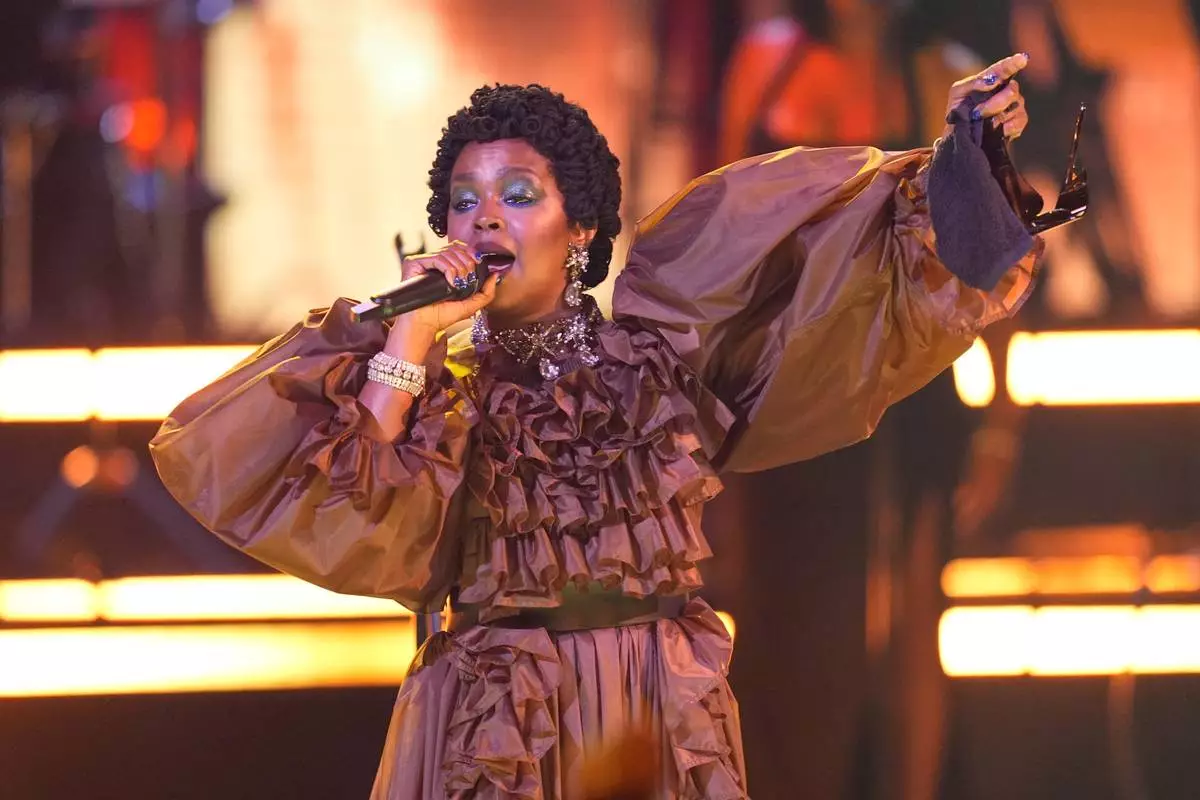
Lauryn Hill accepts the living legend icon award during the BET Awards on Sunday, June 28, 2026, at the Peacock Theater in Los Angeles. (AP Photo/John Locher)
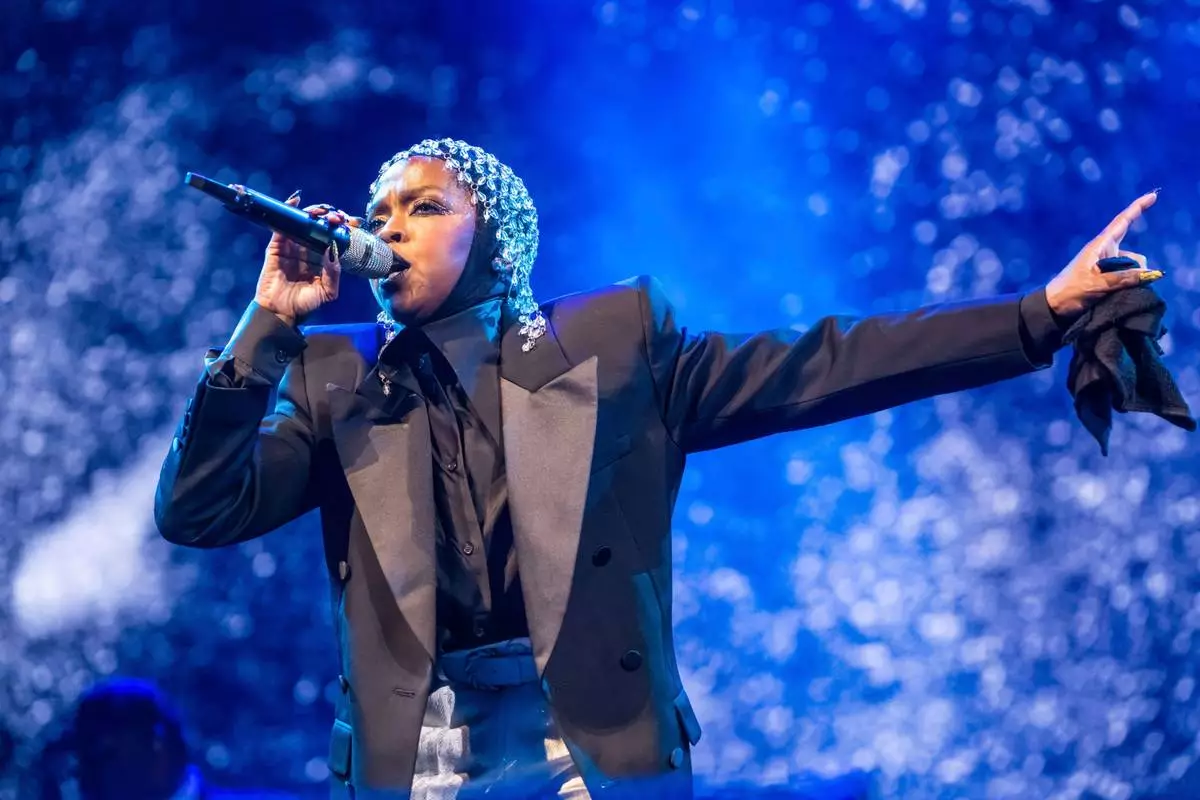
FILE - Lauryn Hill performs during "The Miseducation of Lauryn Hill" 25th anniversary tour on Oct. 19, 2023, in New York. (Photo by Charles Sykes/Invision/AP, File)
DETROIT (AP) — Abdul El-Sayed, a former public health official who harnessed Democratic frustration with the party establishment, narrowly defeated Rep. Haley Stevens in Michigan’s U.S. Senate primary, setting up a crucial test for progressives in a key battleground state.
El-Sayed will face Republican Mike Rogers, a former congressman, in November in a race that will help determine control of the Senate. His first challenge will be unifying Democratic factions after a bitter primary that offered divergent visions for a party desperate for a path back to power.
The margin was extraordinarily close. El-Sayed walked off the stage at his Tuesday night election party without declaring victory, and the race was not called until early Wednesday, after nearly all ballots statewide had been counted. At the time The Associated Press declared him the winner, El-Sayed led Stevens by 14,893 votes — just under 1 percentage point — out of more than 1.5 million ballots counted, the most in recent state history.
The political significance of the result, however, extends well beyond the slim margin.
“Abdul’s victory was, in my opinion, the most extraordinary victory that I can think of in modern American politics,” said Sen. Bernie Sanders Wednesday, a leader of the progressive movement who was an early supporter of El-Sayed’s candidacy.
El-Sayed, 41, has never held elected office and entered the race seven years after losing Michigan’s Democratic gubernatorial primary by more than 20 percentage points. This time, running on an unapologetically progressive agenda, he overcame more than $60 million in outside spending and an opponent backed by many of Michigan’s top Democrats, including Gov. Gretchen Whitmer and outgoing Sen. Gary Peters, and Senate Democratic Leader Chuck Schumer.
“In the words of Muhammad Ali, we shook up the world,” El-Sayed said early Wednesday, standing before The Spirit of Detroit, a landmark bronze statue in the city’s downtown.
El-Sayed was joined on Wednesday by state Sen. Mallory McMorrow, a former opponent in the Senate primary, and Curtis Hertel, chair of the Michigan Democratic Party. It was an initial step toward a unified front after a bitter primary, and it reflected El-Sayed’s extraordinary political trajectory in less than a decade.
After losing the 2018 Democratic primary for governor to Whitmer, El-Sayed retreated into the political wilderness. He started a podcast, wrote a book and became a regular presence on YouTube and television, slowly building a following while waiting for a political opening he did not know would come.
It arrived when Peters made the surprise announcement that he would not seek reelection, creating an open Senate seat in one of the country’s most competitive states.
El-Sayed launched his campaign in April 2025 with a staff of four. In his victory speech Wednesday, he recalled the small rooms that defined its early months.
“Back in April, I remember talking to a room of five people,” he said. “It was an opportunity for us to share a honest conversation about pain and about purpose. And I’ve been able to have 500 more of those discussions over the past 15 months.”
El-Sayed said he visited 110 cities and hosted more than 500 events. His volunteer network grew alongside the campaign, eventually reaching 12,000 people, according to his campaign.
Julie Brink, a 29-year-old volunteer from the Detroit area, said the campaign still felt like an “underdog” when she joined in February. From there, she said, it was “gaining momentum really consistently.”
“It was a lot of little things along the way,” Brink said.
The campaign also embraced a media strategy that reflected El-Sayed’s years outside elected office, aggressively pursuing attention across traditional outlets, podcasts and online platforms. Some appearances, including multiple interviews with controversial streamer Hasan Piker, drew swift backlash.
On July 5, McMorrow ended her campaign, leaving a two-person race between El-Sayed and Stevens. Soon after, El-Sayed stood before door-knocking volunteers in a Grand Rapids park and declared that “we have a chance of winning this election.”
“More importantly, we have a chance at winning our politics,” El-Sayed said. “What we’re doing is building a movement of the many against the money.”
In the final days, El-Sayed leaned even further into the strategy that had helped build his campaign. He marched through downtown Detroit alongside social media influencers, then attended a private pool party with content creators, including Piker.
On Election Day, El-Sayed did three interviews with content creators at Detroit’s Eastern Market before doing three more with traditional news organizations, including The Associated Press and MS NOW.
Hours later, the campaign that had once struggled to fill small rooms packed Detroit’s Majestic Theatre for an election night party.
El-Sayed’s victory gave progressives something they have been seeking — evidence that their politics could prevail not just in deep-blue cities and congressional districts, but in a Democratic primary in one of the nation’s premier swing states.
“Abdul El-Sayed is now the tip of the spear for the theory that shake-up-the-system economic fighters can win in swing states,” said Adam Green, co-founder of the Progressive Change Campaign Committee, who campaigned alongside El-Sayed in the final days.
The November race against Rogers, Green added, is “put up or shut up time” for the movement.
El-Sayed campaigned on “Medicare for All,” ending military aid to Israel and campaign finance reform. He had support from progressive leaders including Sanders and U.S. Rep. Alexandria Ocasio-Cortez, who framed the race as both a grassroots movement and a broader fight against the establishment and big-money spending.
Outside groups backing Stevens ultimately spent more than $60 million, including more than $30 million from the American Israel Public Affairs Committee and its affiliates.
“We took on a machine,” El-Sayed said Wednesday.
Sen. Chris Van Hollen, another progressive leader who endorsed El-Sayed, said the victory “should be a wake-up call to the Washington Democratic establishment.”
El-Sayed now has three months to prove the movement that carried him through the primary can win a general election. Failure could be a dramatic setback for progressives, who have insisted for years that their approach could be more successful in a political era defined by President Donald Trump.
The Senate Republican campaign arm has already reserved $45 million in Michigan advertising to support Rogers, a number likely to grow as Republicans make clear they prefer their chances against El-Sayed.
AIPAC, which spent more money on Michigan's primary than any other race, also signaled Wednesday that its involvement would not end, saying it would oppose El-Sayed and “his radical anti-Israel agenda” in November.
The narrowness of El-Sayed’s victory also complicates any sweeping conclusions about what the result says about the Democratic Party. Nearly half of Tuesday’s primary voters backed Stevens, who argued throughout the campaign that her more moderate approach and history of winning competitive races made her better positioned to defeat Rogers.
Stevens called El-Sayed early Wednesday to concede the race, with El-Sayed describing it as a “great conversation.” She pledged her support for him, and Michigan Democrats are expected to gather for a unity breakfast Thursday before a public rally Friday.
Hertel, the state Democratic chair, said the primary’s ideological fight was not itself a problem, arguing that voters — rather than party leaders — should determine their direction.
“I don’t think that having a robust discussion is a bad thing,” Hertel said Wednesday. “What I think is important is that we are united afterwards.”
“We will unite together, and we will win this race,” Hertel added, “because we have to.”
—
Associated Press reporter Jacqueline GaNun contributed to this report in Detroit.
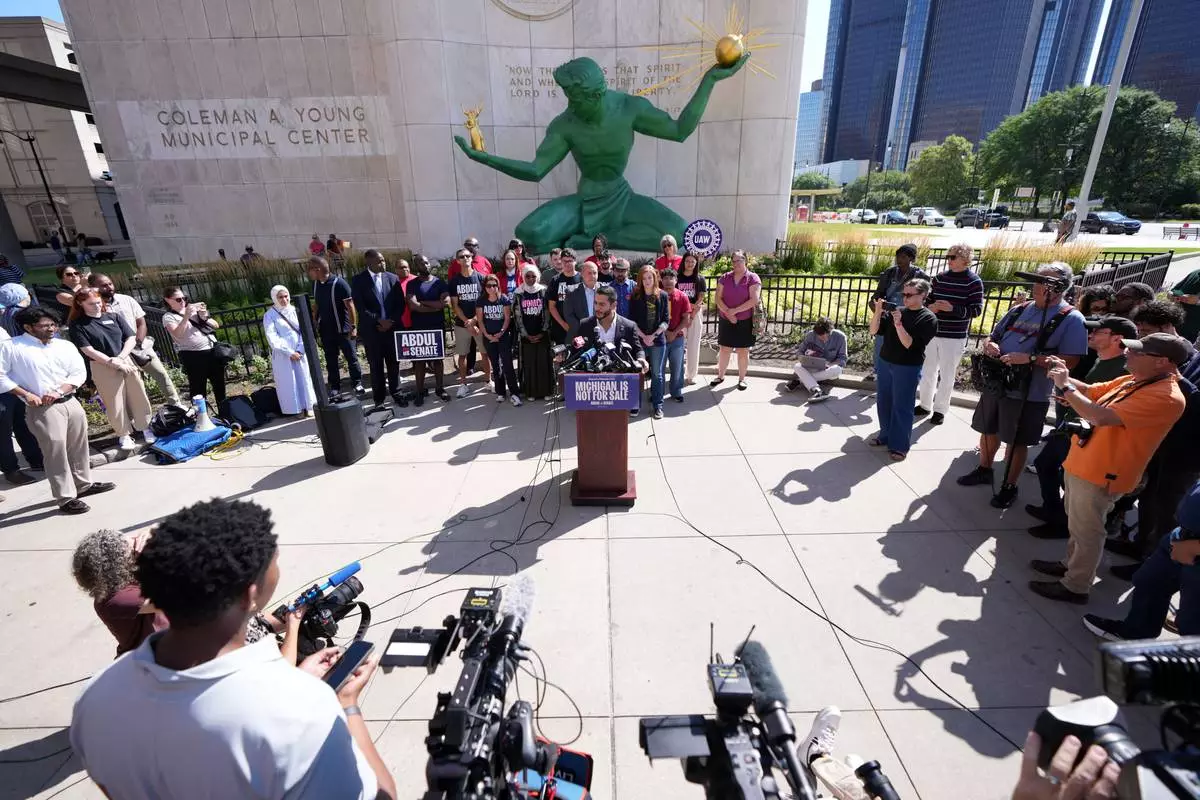
Abdul El-Sayed speaks during a news conference at the Spirit of Detroit shortly after winning the Democratic nomination for U.S. Senate in Michigan, Wednesday, Aug. 5, 2026, in Detroit. (AP Photo/Julia Demaree Nikhinson)
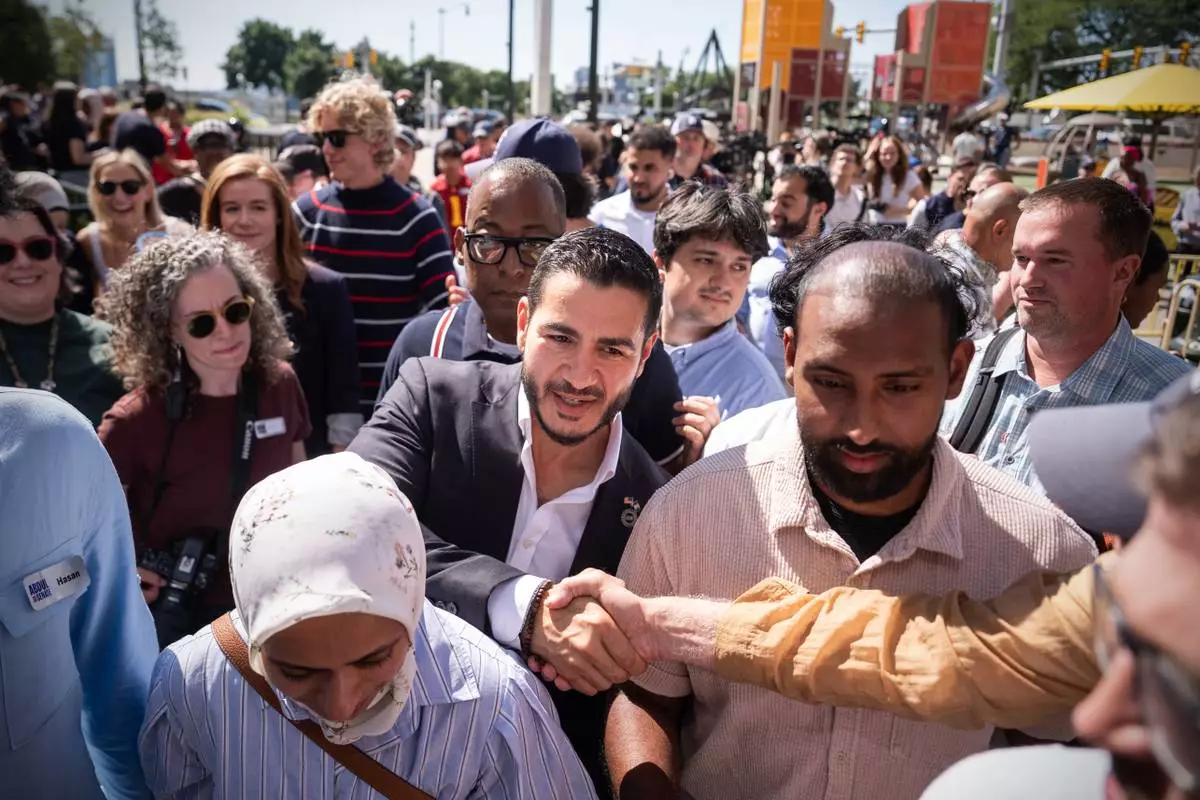
Abdul El-Sayed departs following a news conference at the Spirit of Detroit shortly after winning the Democratic nomination for U.S. Senate in Michigan, Wednesday, Aug. 5, 2026, in Detroit. (AP Photo/Julia Demaree Nikhinson)
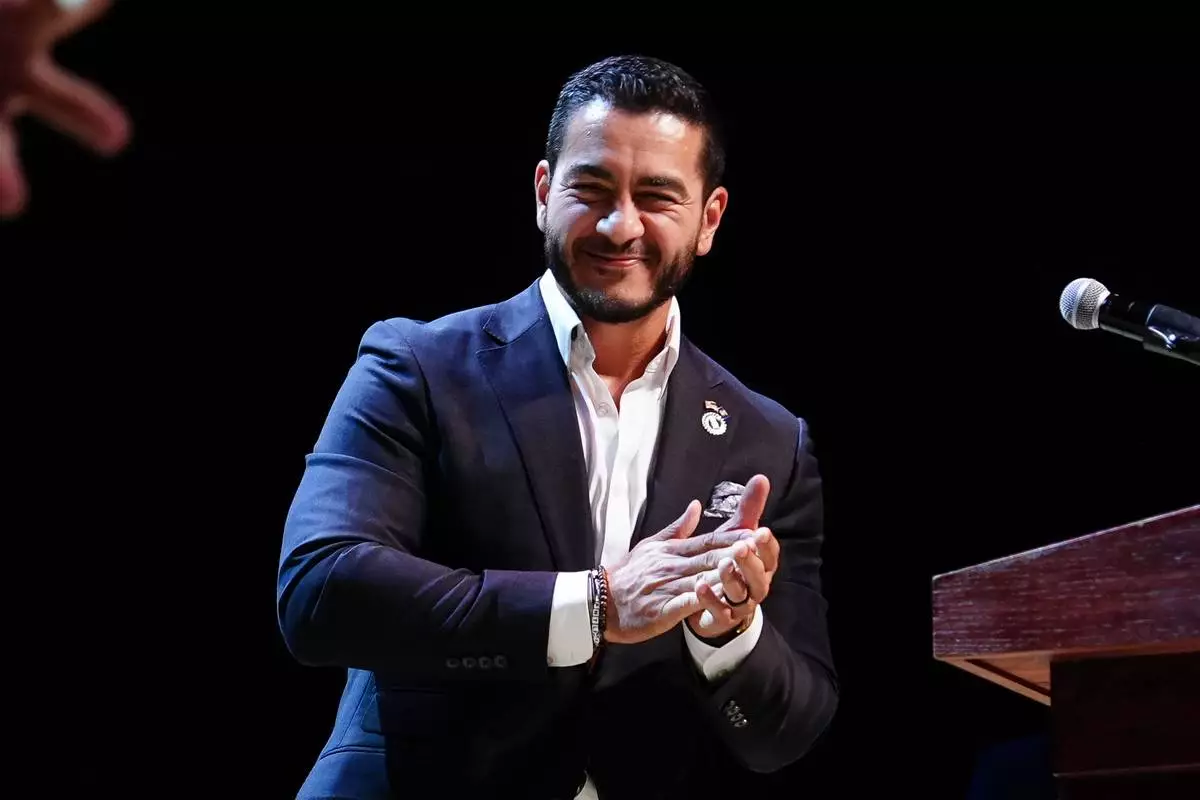
Abdul El-Sayed, a progressive candidate in the Democratic primary for U.S. Senate in Michigan, speaks during a primary election night event Wednesday, Aug. 5, 2026, at the Majestic Theatre in Detroit. (AP Photo/Julia Demaree Nikhinson)
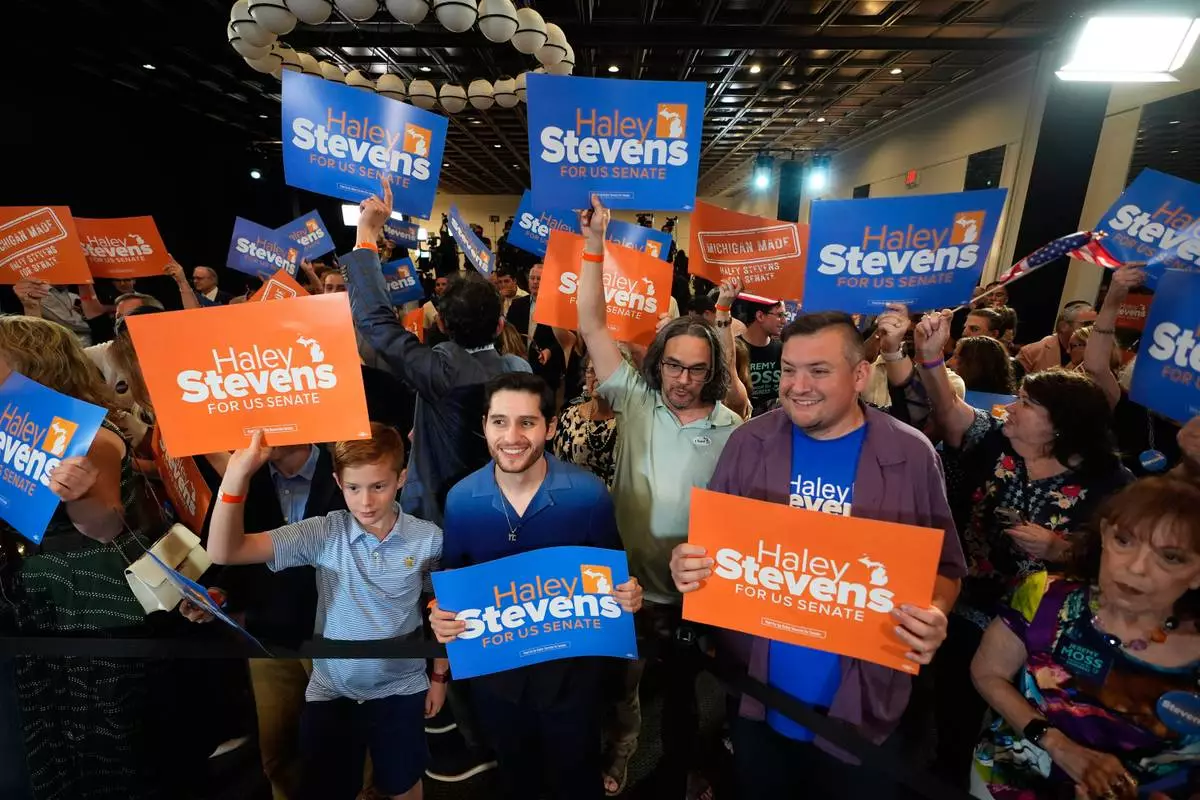
Attendees hold signs for Rep. Haley Stevens, D-Mich., a candidate in the Democratic primary for U.S. Senate in Michigan, during a primary election night event Wednesday, Aug. 5, 2026, in Detroit. (AP Photo/Paul Sancya)
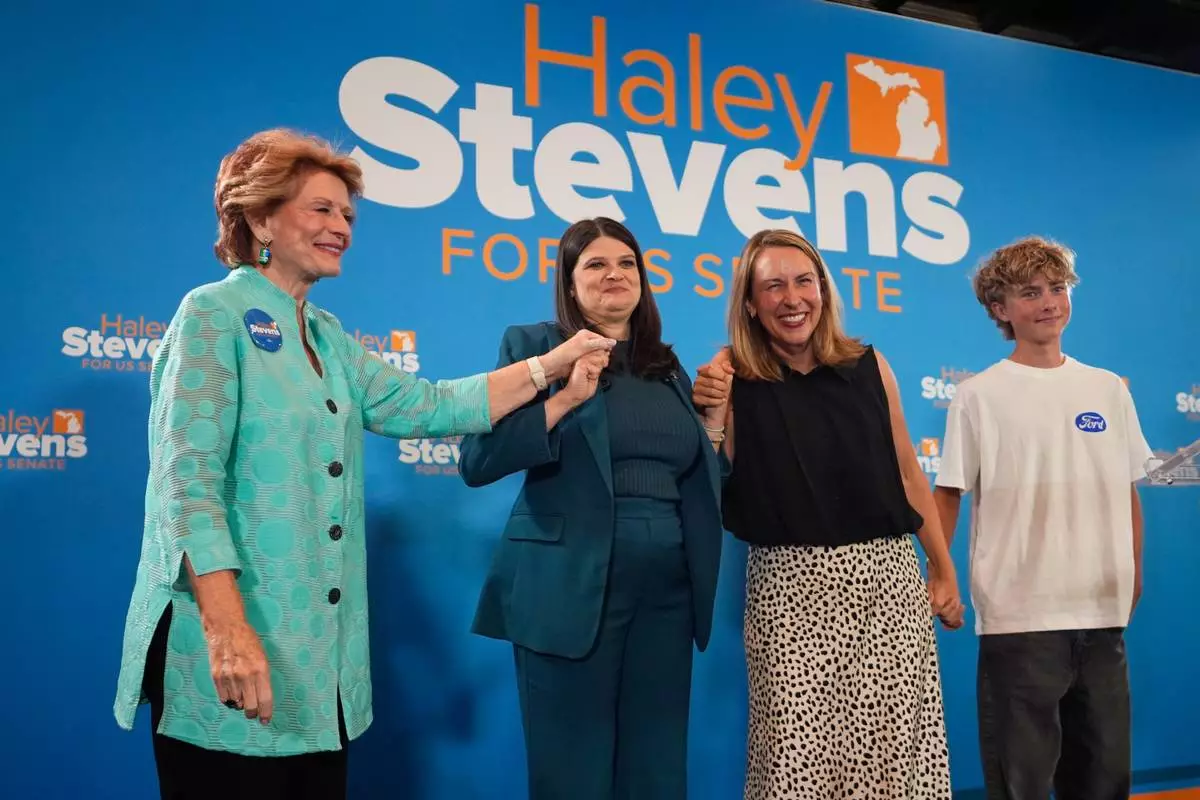
Former Sen. Debbie Stabenow, left, Rep. Haley Stevens, D-Mich., a candidate in the Democratic primary for U.S. Senate in Michigan, center left, and Rep. Hillary Scholten, D-Mich., hold hands on stage during a primary election night event Wednesday, Aug. 5, 2026, in Detroit. (AP Photo/Paul Sancya)
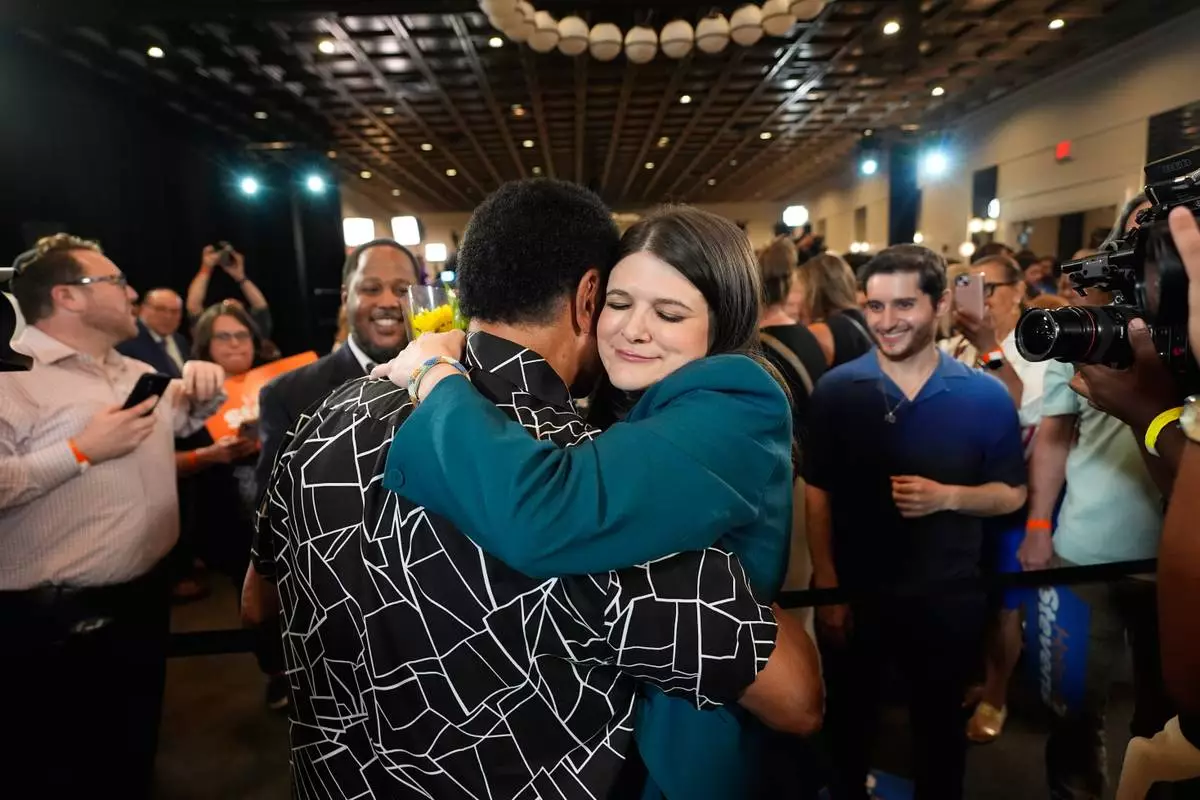
Rep. Haley Stevens, D-Mich., a candidate in the Democratic primary for U.S. Senate in Michigan, right, hugs an attendee during a primary election night event Wednesday, Aug. 5, 2026, in Detroit. (AP Photo/Paul Sancya)
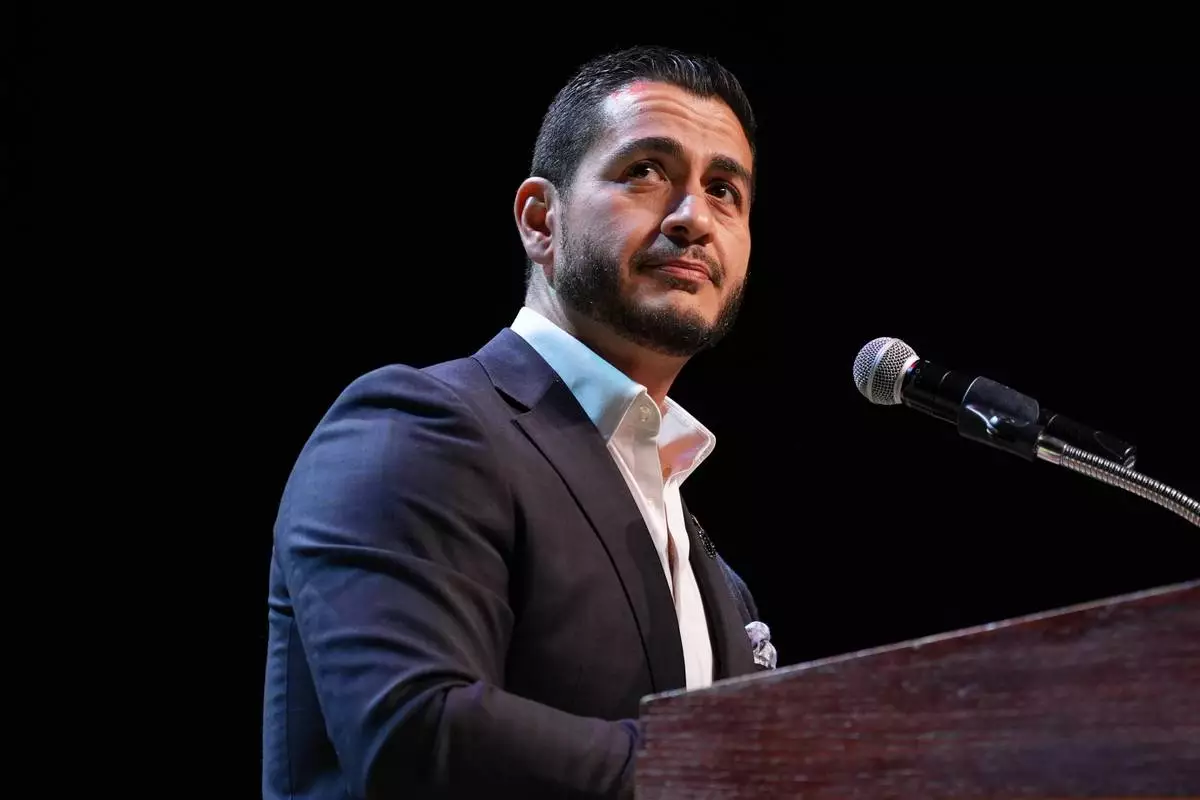
Abdul El-Sayed, a progressive candidate in the Democratic primary for U.S. Senate in Michigan, speaks during a primary election night event Wednesday, Aug. 5, 2026, at the Majestic Theatre in Detroit. (AP Photo/Julia Demaree Nikhinson)