A strengthening El Nino weather event is expected to significantly worsen food insecurity in some of the world's most vulnerable countries into 2027, a U.N. spokesman warned on Wednesday, citing a World Food Programme (WFP) report.
Speaking at a press conference at the U.N. headquarters in New York, Farhan Haq, deputy spokesman for U.N. Secretary-General Antonio Guterres, cited the WFP report as saying that El Nino poses a significant threat to food security for millions of people who are already in a vulnerable situation.
Based on an analysis of 45 countries already considered food insecure, the WFP estimates that the number of acutely food insecure people would rise from approximately 225 million to 274 million people, an increase of approximately 22 percent.
The El Nino phenomenon is expected to peak between September and December 2026. However, its effects on food security are likely to extend well into 2027 in many regions due to impacts on future harvest cycles, according to the WFP report.
"An analysis released today by the World Food Programme shows that the strengthening El Nino weather pattern is set to significantly worsen food insecurity in some of the world's most vulnerable countries. WFP warns that drought, flooding and extreme temperatures are already putting communities at risk, and El Nino could push at least 49 million more people into acute food insecurity by the end of 2027," Haq said.
Central America and southern Africa are expected to be among the hardest-hit regions, with the number of food-insecure people set to increase by 83 percent in Central America and nearly 75 percent in Southern Africa, the WFP report said.
Southern Africa as well as South America and the Caribbean could each see more than 12 million additional people fall into acute food insecurity.
"The World Food Programme expects that countries already grappling with poverty, conflict, economic instability and repeated weather extremes will likely bear the brunt of El Nino. The largest impacts are expected in parts of Central America and southern Africa, with significant effects also anticipated in eastern Africa and south and southeast Asia," Haq said.
El Nino is a global climate "amplifier" that alters the probability of regional extreme weather events such as heatwaves, droughts and heavy rainfall. It is characterized by the warming of sea surface temperatures in the central and eastern equatorial Pacific Ocean.
The climate pattern typically occurs every two to seven years and lasts about nine to 12 months. It influences temperature and rainfall patterns across different regions of the world and generally has a warming effect on global climate.
Currently, there is no evidence that climate change increases the frequency or intensity of El Nino events. However, warming oceans and atmosphere can exacerbate the impacts of extreme weather events such as heatwaves and torrential rains, according to climate experts.
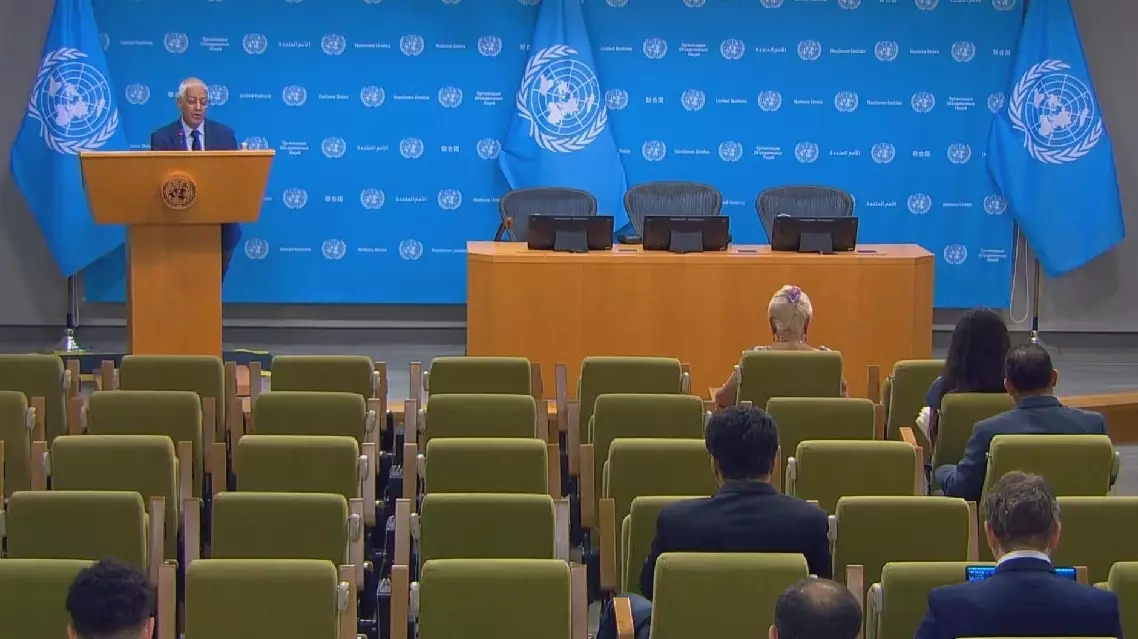
WFP warns El Nino to worsen food insecurity in vulnerable countries
A number of university students in the U.S. capital have shared their views on China's initiative to invite 100,000 young Americans to visit the country for exchanges and study over the next five years.
The program was announced by Chinese President Xi Jinping when addressing a welcome ceremony at the White House during his visit to the United States from Wednesday to Friday.
Many of the students interviewed expressed their hope to visit some well-known places in China like Beijing, Shanghai and Guangdong.
"My dad's been to China for work, and he really loves it, so I'd love to go sometime. Maybe Shanghai. That's where my dad went, and he really liked it there," said a student.
"I've heard of Guangdong. I've heard of the basketball team," another student said.
Many of the students agreed that allowing more young Americans to experience Chinese culture in person would be beneficial for both countries.
"I think that's really cool to have the opportunity to connect with those cultures. And I really do like that idea. I think it's a great idea to invite us to China. It's great," said a student.
"I feel like the culture. I feel like getting the opportunity to immerse yourself in different cultures is really important," said another student.
"There's definitely value in traveling to other places and learning other cultures. So I think that it can be beneficial," said another one.
Even beyond cultural exchange, the students expressed their beliefs that American youth could learn a lot from Chinese society.
"I think, for me personally, it's the scale, with how many people live in China. I would definitely be interested in seeing how that functions, especially in those larger cities," said a student.
"I think I would like to know what their people are like. What are their thoughts on the world? On what the world should be like?" one student said.
"I think China's amazing. They're so far ahead. We're supposed to be the Western world, but I feel like they're so much more advanced than us in so many ways. I know AI and medicine are big things right now, and I think China has made huge advancements in that. So probably that," said a student.
The students also hope that the program will help strengthen China-U.S. relationship, promote educational exchanges, and broaden the horizons of those who take part.
"It's better for both countries to be connected and to build a better relationship over the coming years. And I think that's important to global peace and prosperity," said a student.
"I think it's really a great thing. I think different cultures, combining different cultures, and education is such a global thing, and having different students come all over the place and take classes here and there," said another student.
"There's a lot more to this world than what's right in front of us. And there's a lot to learn from different ways of seeing things around the world. So I think it could be valuable from that standpoint," a student said.

US students share views on China's plan to invite 100,000 young people for study, exchange