Skip to Content Facebook Feature Image

Centrica Energy and Zelestra Sign Tolling Agreement in Germany to Enable 297 MWh Standalone BESS

Business

Centrica Energy and Zelestra Sign Tolling Agreement in Germany to Enable 297 MWh Standalone BESS
Business

Business

Centrica Energy and Zelestra Sign Tolling Agreement in Germany to Enable 297 MWh Standalone BESS

2026-08-06 15:01 Last Updated At:15:20

BERLIN--(BUSINESS WIRE)--Aug 6, 2026--

Centrica Energy and Zelestra have signed a physical tolling agreement for 99 MW / 297 MWh of battery storage capacity at Zelestra’s Hilgermissen BESS project, located in Lower Saxony, Germany.

This press release features multimedia. View the full release here: https://www.businesswire.com/news/home/20260806994323/en/

Under the agreement, Zelestra will develop, construct and own the battery storage project, building on their experience in delivering major projects in other markets and their extensive pipeline across Europe. Engineering and procurement activities will be completed this year leading to start of construction in 2027 and operations in 2028.

Under the tolling agreement, the battery will be optimised through Centrica Energy’s multi-market trading and optimisation services, enabling participation across Day-Ahead, Intradayand Ancillary Services in Germany.

Lower Saxony has a strong industrial base, from the automotive industry to agriculture and food production, as well as being a strong wind power and biomass energy producer. With a growing need for flexible capacity to support the stability and resilience of the power system, the BESS project will help accelerate renewable integration, strengthen grid flexibility and support Germany’s wider decarbonization objectives.

Cassim Mangerah, Managing Director of Centrica Energy, said: “This agreement with Zelestra is an important milestone for Centrica Energy in Germany and another step forward in delivering on our strategy. The continued growth in our German flexibility portfolio demonstrates the demand for our optimisation capabilities and further strengthens our position in one of Europe’s most dynamic flexibility markets.”

Mathias Kuenicke, CEO of Zelestra in Germany, said: "Hilgermissen adds 300 MWh of flexible capacity to one of Europe's most connected grids and largest energy storage markets. This tolling agreement with Centrica Energy is a vote of confidence in our BESS platform, and it builds directly on the pipeline we're growing across Germany, with more than 2 GW of solar, wind and storage projects in development."

About Centrica Energy

Centrica Energy is the energy trading and optimisation arm of Centrica plc, responsible for managing commodity risk and sourcing energy on behalf of Centrica Group’s energy supply activities.

Centrica Energy is a global energy trading company which helps move energy from source to use powering businesses, homes, and societies. Across 8 offices on three continents, and with 800+ passionate and highly skilled energy experts, they trade power, gas, liquified natural gas and green certificates, connecting energy producers, suppliers and offtakers in wholesale energy markets.

Centrica Energy is one of the largest renewable asset managers in Europe, with over 18.8 GW of capacity under contract, of which more than 85% is renewable assets.

About Zelestra

Zelestra is a vertically integrated company specializing in the development, commercialization, construction and operation of large-scale renewable energy projects. The company was recently ranked by BloombergNEF among the top 10 sellers of clean energy to corporate customers — both globally and in the US. Zelestra is backed by EQT, a leading global investment organization with more than €291 billion in assets under management.
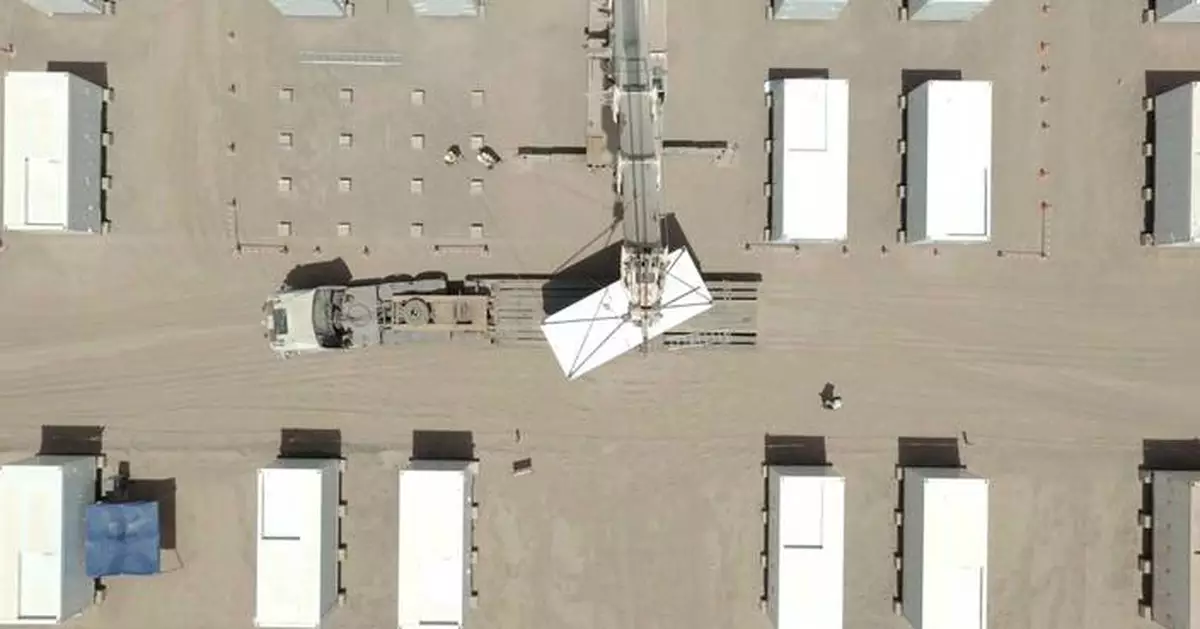
BESS units being installed

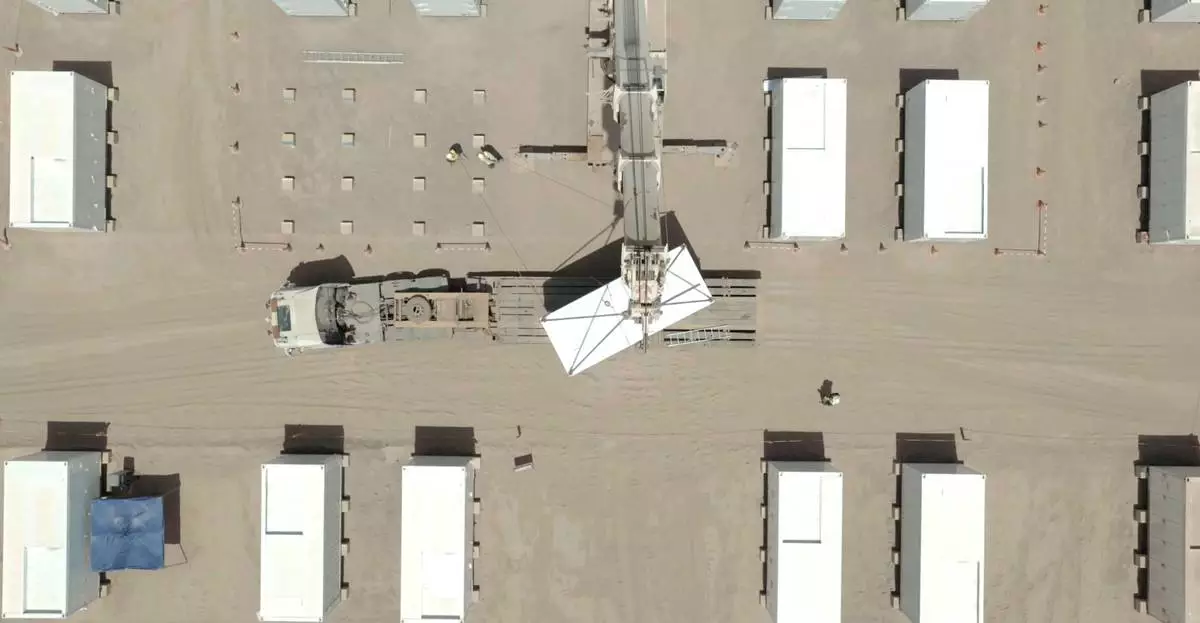
BESS units being installed

SEOUL, South Korea (AP) — North Korea launched a short-range ballistic missile toward the sea on Thursday, South Korea's military said, resuming weapons tests days before its rivals the U.S. and South Korea begin annual military drills that North Korea views as an invasion rehearsal.

The launch from North Korea's eastern coastal Wonsan area was detected around 5 p.m., South Korea’s Joint Chiefs of Staff said, explaining that South Korea's military has bolstered its surveillance posture and is closely coordinating with the U.S. and Japan.

Japan’s Defense Ministry also said North Korea fired a possible ballistic missile but there was no impact in or around Japan, where the coast guard urged ships around the coast to use caution and notify authorities if any fallen objects were found.

The ballistic missile launch was North Korea’s first since late June, when it tested a tactical ballistic missile with a “special mission” warhead and other weapons. After watching the testing activities, leader Kim Jong Un underscored the need to bolster the military’s “deadly and destructive offensive posture.”

Thursday's launch also came ahead of large-scale, annual exercises to be conducted by the U.S. and South Korean militaries later this month. U.S. and South Korean officials say the training is defensive in nature, but North Korea says the maneuvers are a practice invasion and often responds with its own missile tests and warlike rhetoric.

South Korean and U.S. officials haven't formally released details about this year's joint exercise, but the drills are typically held in the latter half of August.

Kim has been focusing on enlarging its nuclear and missile arsenals since his high-stakes diplomacy with U.S. President Donald Trump collapsed in 2019. Experts say Kim wants international recognition as a nuclear state so that he can demand the lifting of international economic sanctions on North Korea.

U.N. Security Council resolutions ban North Korea from launches involving its huge stockpile of ballistic missiles. Tests of other weapons including cruise missiles and artillery systems are not banned, but experts say they still pose a threat to South Korea and the U.S.

In early July, Kim supervised tests of a nuclear-capable cruise missile aboard a new 5,000-ton destroyer. After years of prioritizing ballistic missile development, Kim has increasingly turned his focus to naval capabilities, including the construction of a nuclear-powered submarine.

In recent years, Kim has boosted his diplomatic credentials by expanding ties with Russia. North Korea has supplied conventional weapons and troops to Russia to support its war against Ukraine.

Kim also has pushed to deepen cooperation with China, the North's economic pipeline. Chinese President Xi Jinping visited the North Korean capital Pyongyang in June for the first time in seven years.

In response to Trump’s repeated outreach to restart diplomacy, Kim has suggested talks can resume if the U.S. drops its demand for North Korean denuclearization as a precondition.

Associated Press writer Mari Yamaguchi in Tokyo contributed to this report.

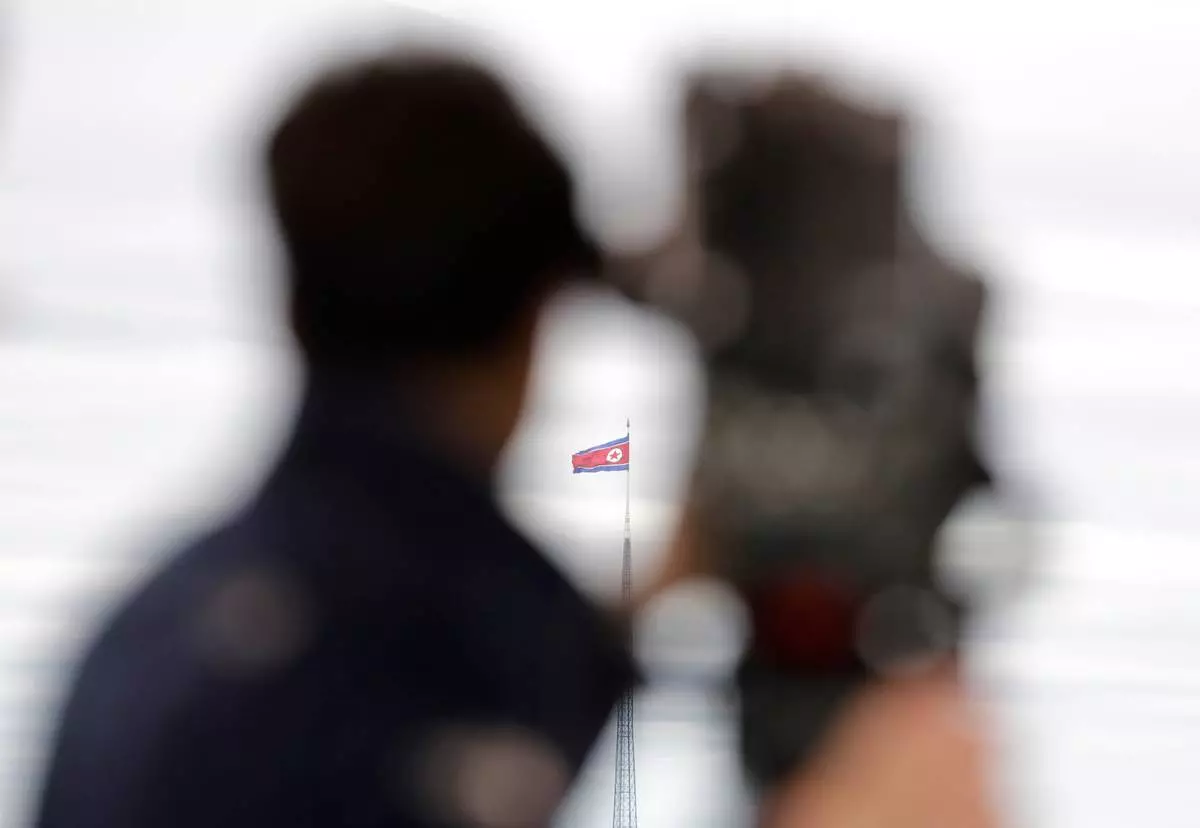
FILE - A North Korean flag flutters in the wind atop a 160-meter tower in North Korea's village Gijungdong as seen from the Taesungdong freedom village inside the demilitarized zone in Paju, South Korea on April 24, 2018. (AP Photo/Lee Jin-man, File)

FILE - A North Korean flag flutters in the wind atop a 160-meter tower in North Korea's village Gijungdong as seen from the Taesungdong freedom village inside the demilitarized zone in Paju, South Korea on April 24, 2018. (AP Photo/Lee Jin-man, File)

Recommended Articles