Elisa Bracamonte has lived in Arizona her whole life, so she's used to adjusting her schedule and outdoor activities around high temperatures, especially during the summer months.
But the 74-year-old retired nurse from Tucson said she feels the heat has been impacting more of her day-to-day: summer plans with family members across the region, meetups with friends, road trips and her daily morning walk routine.
"I’ve noticed at least a 10 degree difference in the weather," Bracamonte said. “Every summer, it seems to be getting hotter and hotter.”
Like Bracamonte, Americans are increasingly feeling a personal impact from extreme heat, according to a new poll from The Associated Press-NORC Center for Public Affairs Research.
According to the survey, U.S. adults are more likely to say extreme heat has had either a “major impact” or “minor impact” on their travel or vacation plans, electricity bills, their sleep, their family’s outdoor activities and more parts of their day-to-day life than in July 2024.
Much of that shift was among people who live in the West or Midwest.
Democrats are also more likely than Republicans to say that extreme heat has had a “major” impact on each item asked about.
Warming has endangered the globe especially in recent years; scientists calculated that Earth’s average temperature in 2025 hovered among one of the three hottest on record, along with 2024 and 2023. The U.S. has sweltered under dangerous heat domes over the past few years, and unusually high temperatures even early in the year.
The recent scorching weather has played a role in thousands of heat-related deaths — killing more people every year than all other weather-related events. It impacts wildfire risk, strains public infrastructure, devastates agriculture and wreaks havoc on gatherings such as sporting events.
Now, the poll shows how extreme heat is reshaping Americans' daily lives.
“I have to get up at 5 in the morning to walk before 6, because by 7 it’s already in the 80s ... I lose a couple hours of sleep because I’m having to wake up earlier,” added Bracamonte, who said she identifies as a very liberal Democrat. “You can’t stay outside without being sick unless you’re guzzling water the whole time — it’s just so, so hot.”
About 8 in 10 Americans say their electricity bills have seen a “major” or “minor” impact from extreme heat over the last year, compared with 69% in July 2024, according to the survey.
Just under half of Americans living in the Midwest, 44%, say extreme heat has had a “major” impact on their electricity bills, up from 29% two years ago.
Rising household electricity prices have turned into an increasingly prominent political issue over the past few years. Extreme weather is just one factor that affects electricity bills, but it means that people are using more energy for air conditioning — or in the colder months, heat.
“I feel like my utility costs probably doubled in the last three or four years,” said Daemien Williams, a 50-year-old bridge inspector living in Cahokia Heights, Illinois, who identifies as a Democrat. “I do look at my bills pretty in detail and see that the kilowatts and the usage is actually up, not just the price that they’re charging for it."
Extreme heat is affecting Americans' lives in other ways, the survey found.
Around 4 in 10 Americans say extreme heat has had either a major impact or a minor impact on their travel or vacation plans, up from about one-quarter in 2024.
“It has affected my entire family because we usually get together a lot during the summer," Bracamonte said. "We have family in Texas and we have family in upper Arizona. And we’ve seen that there’s been a lot more fires, a lot of more flooding, all that. So that kind of inhibits our plans to travel.”
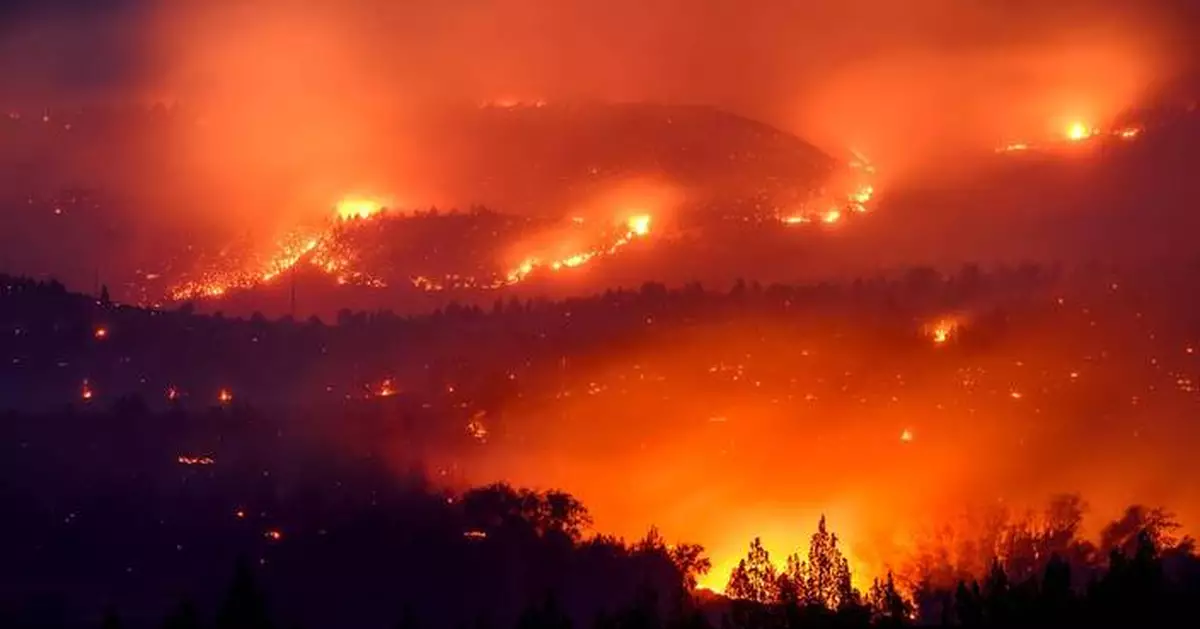
Extreme heat waves increase wildfire risk, and a warmer world supercharges storms that could ultimately send more rainfall.
Around 7 in 10 Americans say extreme heat has had either a major impact or a minor impact on their family's outdoor activities, compared with about 6 in 10 in 2024.
Sean Conway, a 41-year-old direct marketer in North Shore, Massachusetts, said his kids' soccer practice might either be postponed or canceled due to extreme temperatures, for example.
But to Conway, who considers himself a moderate independent, leaning Republican, this is minor. “Sometimes, you’ve got to just be out in the bad weather.”
It’s not surprising many Americans say they are feeling the impacts, said Jennifer Francis, a climate scientist at the Woodwell Climate Research Center who was not involved with the polling.
“Brutal, life-threatening heat waves have become more frequent, more intense, and more persistent in many parts of the globe, including our western and midwestern states," Francis said. "Extreme heat compounded with long dry spells have affected our health directly, along with indirect effects on our wallets.”
Even as more Americans say they feel a personal impact from extreme heat, that does not mean an increasing number believe in climate change.
About two-thirds, 66%, of Americans believe climate change is happening, a slight decline from 73% in September 2025. About 17% say they are not sure if climate change is happening, and about 15% say it is not happening.
Williams, the Illinois resident, attributes his belief in climate change in part to extreme shifts in weather including very high and very cold temperatures.
“My biggest indicator of the change in the climate is just the flooding is a lot more often," Williams said, noting that he believes in both natural and human causes.
John Hazel, a 33-year-old in Waco, Texas, says he’s noticed changes from when he was younger.
“When I was a kid, that seemed like a very rare thing when it did hit 100, everybody was like, whoa. And now it’s just every day,” said Hazel, a crime scene investigator. “Seasons felt a little more balanced. Now it feels like summer’s a bit lingering, it starts earlier and lasts longer.”
Hazel, who identifies as a conservative Republican and believes in climate change, said he plans around the heat.
“As soon as you walk outside, you’re already sweating even if you’re not doing much of anything. I’ve definitely noticed you’re having to take breaks from being outside, you have to bathe, shower more often,” Hazel said. “It’s definitely a bigger consideration.”
The poll of 1,165 adults was conducted July 23-27, 2026, using a sample drawn from NORC’s probability-based AmeriSpeak Panel, which is designed to be representative of the U.S. population. The margin of sampling error for adults overall is plus or minus 3.7 percentage points.
Alexa St. John is an Associated Press climate reporter. Follow her on X: @alexa_stjohn. Reach her at ast.john@ap.org.
Read more of AP’s climate coverage.
The Associated Press’ climate and environmental coverage receives financial support from multiple private foundations. AP is solely responsible for all content. Find AP’s standards for working with philanthropies, a list of supporters and funded coverage areas at AP.org.
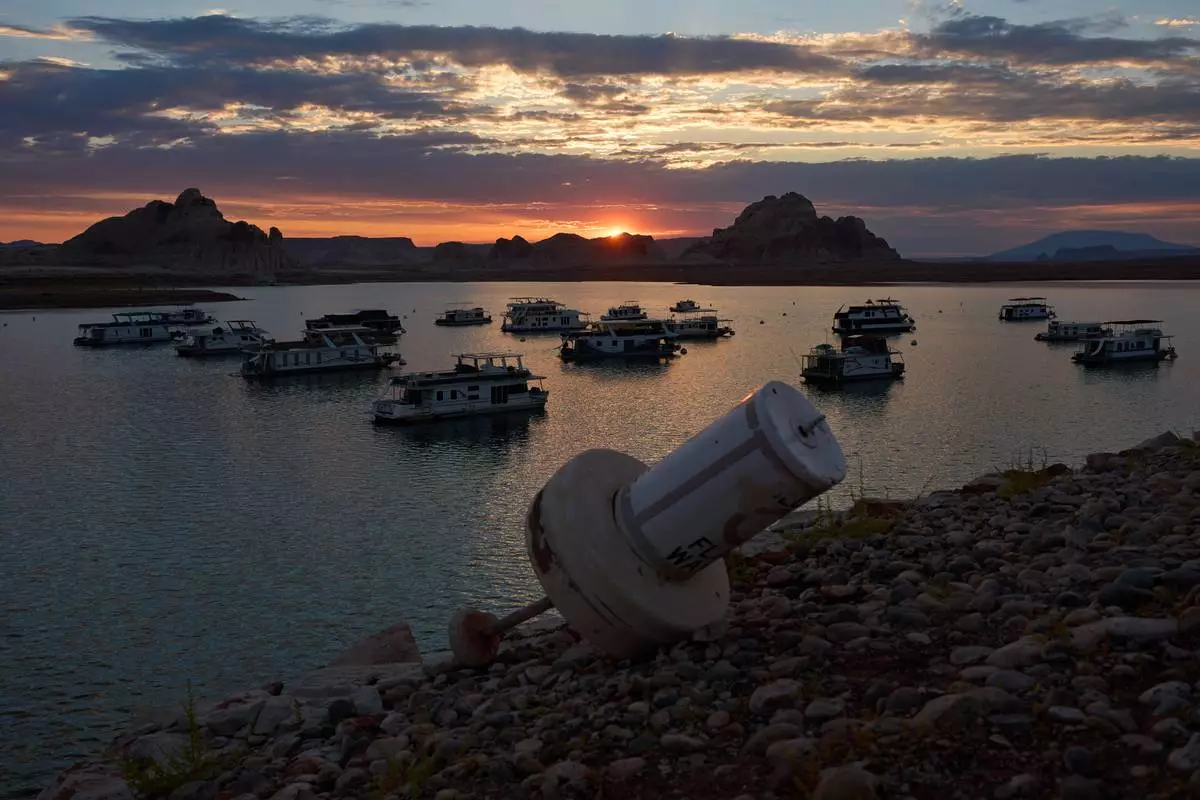
FILE - A formerly floating buoy now sits high and dry above Lake Powell at the Glen Canyon National Recreation Area, July 15, 2026, near Page, Nev. (AP Photo/John Locher, File)
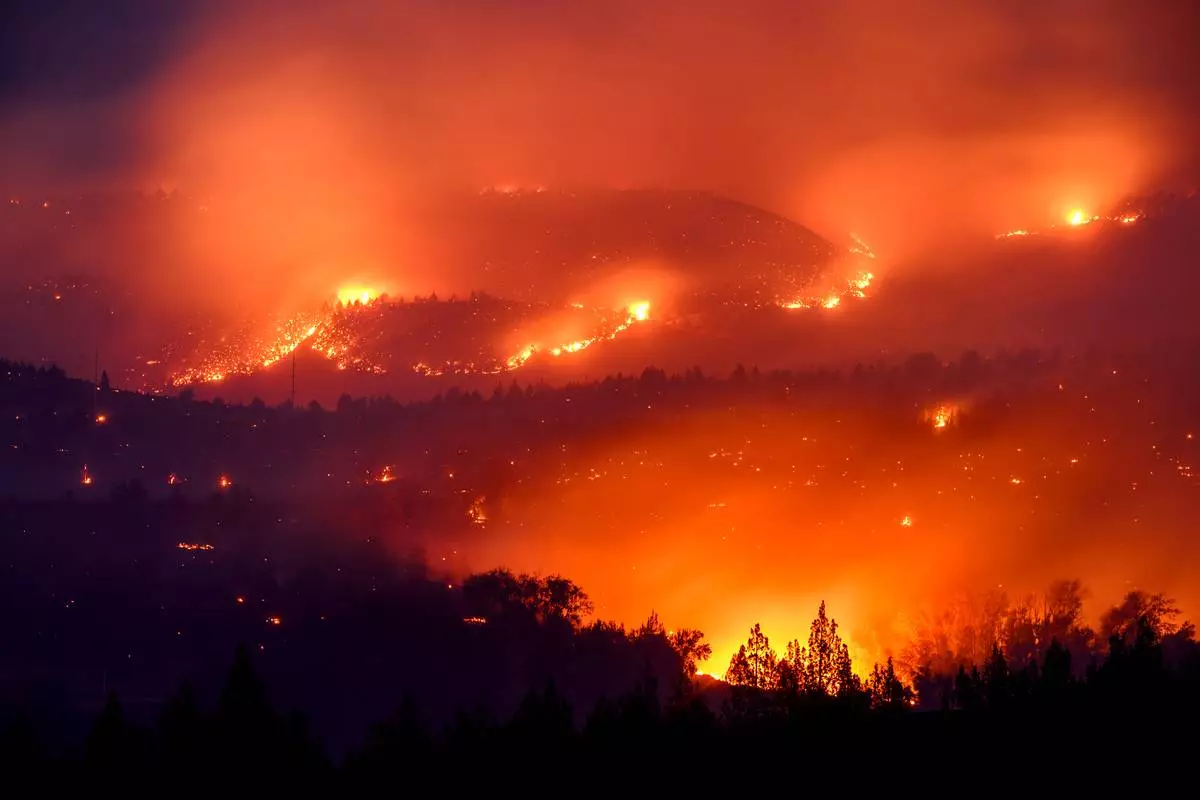
FILE - In this photo made with a long exposure, Bench Fire burns above the Pelton Reservoir in Jefferson County, Ore., July 25, 2026. (AP Photo/Noah Berger, File)