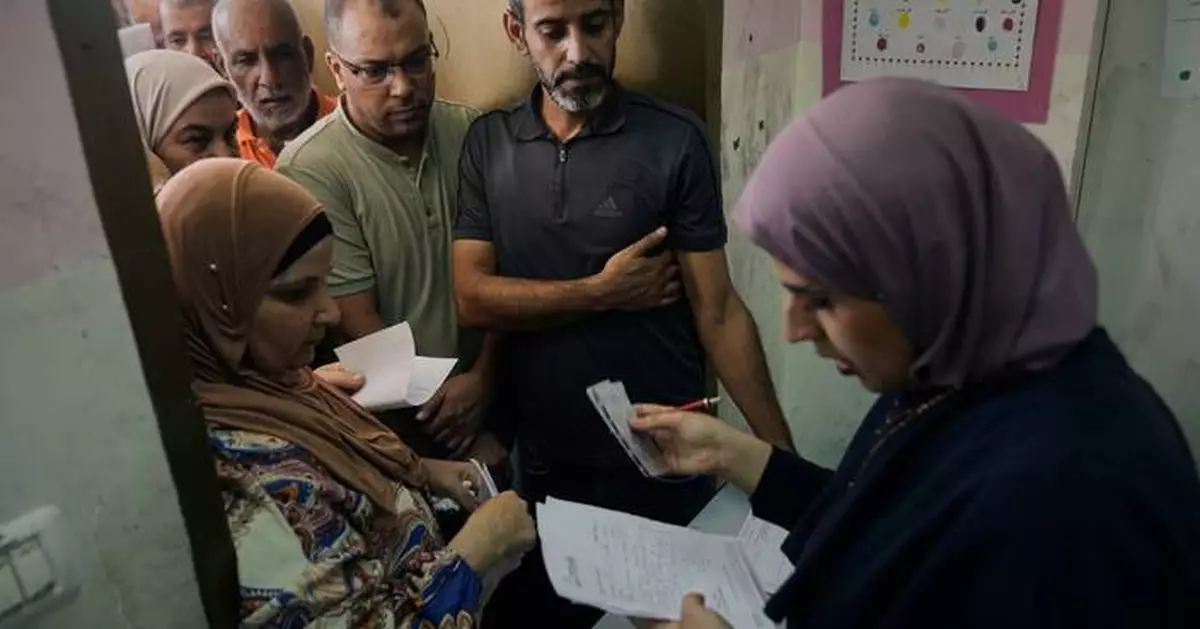
IKTABA, West Bank (AP) — For six months, 70-year-old Bassam Musleh searched desperately for a pharmacy or clinic that could fill his prescription for blood pressure and other heart medications. Public dispensaries were out of stock, he said, and he couldn't afford the private ones.
But when he arrived Tuesday at a mobile clinic in the West Bank village of Iktaba, pulling the tattered prescription from his pocket, a local aid group finally gave him the medication he needs.
Click to Gallery
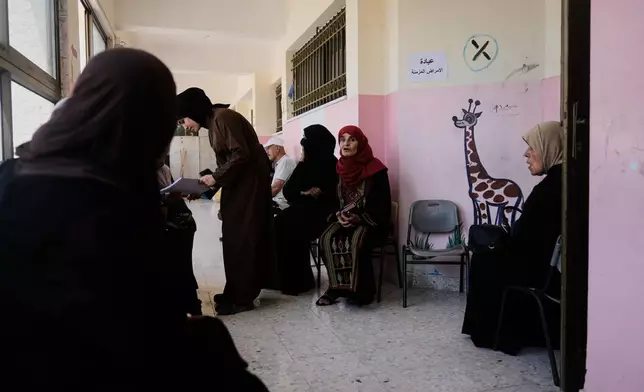
Palestinian patients wait for treatment at a mobile clinic operated by Physicians for Human Rights Israel (PHRI) in the West Bank town of Iktaba, Tuesday, Aug. 4, 2026. (AP Photo/Majdi Mohammed)
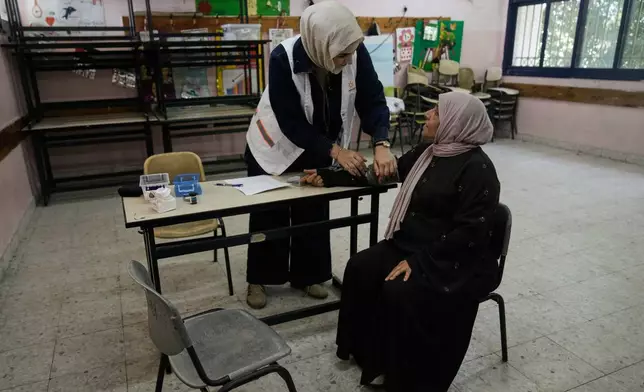
A Palestinian patient receives treatment from medical staff with Physicians for Human Rights Israel (PHRI) at a mobile health clinic in the West Bank town of Iktaba, Tuesday, Aug. 4, 2026. (AP Photo/Majdi Mohammed)
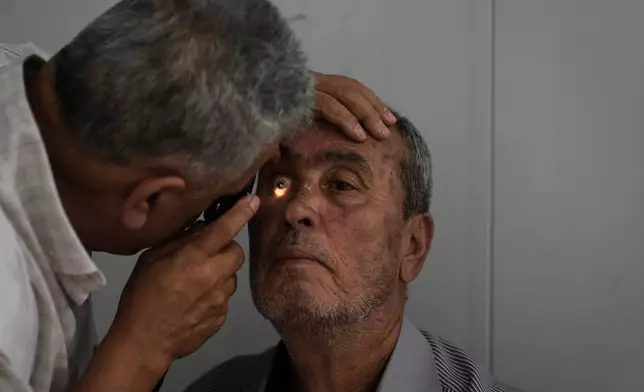
Bassam Musleh, a Palestinian patient gets his eyes checked at a mobile health clinic operated by Physicians for Human Rights Israel (PHRI) in the West Bank town of Iktaba, Tuesday, Aug. 4, 2026. (AP Photo/Majdi Mohammed)
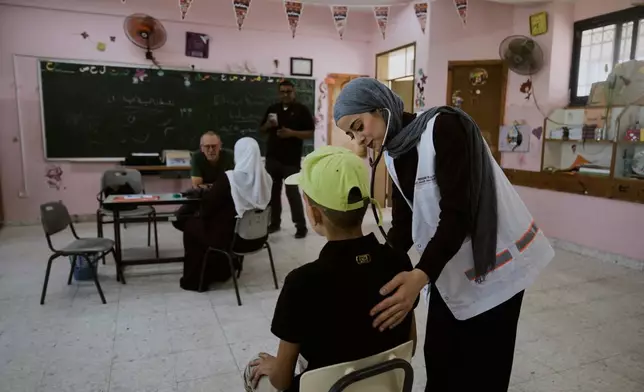
Palestinian patients receive treatment from medical staff with Physicians for Human Rights Israel (PHRI) at a mobile health clinic in the West Bank town of Iktaba, Tuesday, Aug. 4, 2026. (AP Photo/Majdi Mohammed)
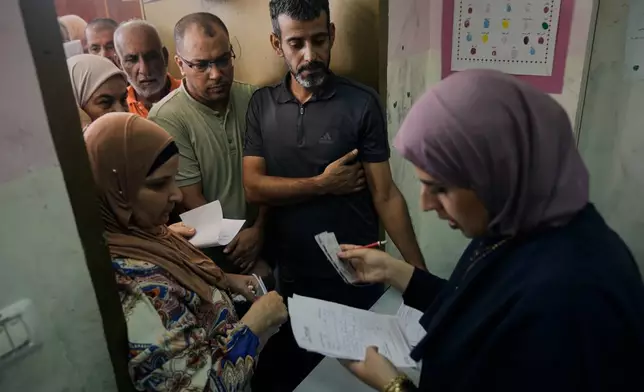
Palestinian patients line up for treatment at a mobile health clinic operated by Physicians for Human Rights Israel (PHRI) in the West Bank town of Iktaba, Tuesday, Aug. 4, 2026. (AP Photo/Majdi Mohammed)
Musleh, who has a pacemaker, is one of hundreds of thousands of Palestinians struggling to get healthcare in the West Bank, where a report released Thursday by Physicians for Human Rights Israel warns that Israeli policies have pushed the territory's health system to the brink of collapse.
Since the war between Israel and Hamas in Gaza began nearly three years ago, Israel has withheld billions of dollars of tax and customs revenues collected on behalf of the Palestinian Authority, the government body that administers parts of the Israeli-occupied West Bank. Without those funds, the PA has struggled to pay health workers, buy medications and support public hospitals, pharmacies and clinics, 75% of which have reduced operations and are functioning just once or twice a week.
At the same time, Israeli military raids and a surge in new checkpoints are also impeding the ability of Palestinians to get adequate medical care, with life-threatening consequences.
“If this continues, it is patients — not institutions — who will pay the price,” said Milena Ansari, PHRI's director of the Occupied Palestinian Territory Department, who wrote the report.
Because Palestinians don't control their own borders, the PA relies on Israel to collect taxes on goods that enter the West Bank through Israeli ports. But rights groups for decades have accused Israel of weaponizing the funds as a means of political pressure.
Israeli Finance Minister Bezalel Smotrich stopped sending monthly clearance revenues to the PA last year and, as of June, Israel had cumulatively withheld at least $2.5 billion from the PA since 2023, according to the International Crisis Group.
Smotrich's office and the office of Israeli Prime Minister Benjamin Netanyahu did not respond to repeated requests for comment from The Associated Press.
In an interview with the AP, Palestinian Health Minister Majed Abu Ramadan said that unpaid staff aren't showing up to work, creating a backlog of cases and delaying routine surgeries. Earlier this year, Palestinian doctors went on strike and some primary healthcare centers closed.
Some of the most impacted are those with cancer, kidney and heart problems, older people and those who have been displaced, health officials said.
At PHRI's mobile clinic in Iktaba, hundreds of people streamed in seeking treatment.
Mohammed Sarris said it's been weeks since he's been able to get the eye drops he needs for irritation caused by his diabetes.
The 64-year-old has been relying on the mobile clinic since he was forced from his home last year in the Nur Shams refugee camp, where he had easier access to healthcare provided by UNRWA, the U.N. Relief and Works Agency for Palestinian refugees.
A retired government worker, he earns a meager pension, often rationing medicine so he can afford food.
"It's degrading. ... All of this has affected us a lot,” he said.
Physicians for Human Rights Israel said the number of patients at its mobile clinics has doubled in the last two years, from about 250 a day to around 500.
Roland Friedrich, UNRWA's West Bank director, said there's been a marked increase in patients at its health centers across the territory. The agency is trying to bridge the gap, but lacks funds to scale up health services and faces Israeli restrictions on imports of medications, he said.
Earlier this year, Israel revoked the licenses of more than three dozen humanitarian organizations, among them Doctors Without Borders, known by its French acronym MSF.
Last year, MSF had 12 mobile clinics operating in the South Hebron Hills. But because they could no longer coordinate their movements with the Israeli military, the group reduced the number of clinics it runs by half, impacting more than 40,000 people, said Joan Tubau, head of mission for Doctors Without Borders in Gaza and the occupied West Bank.
The lack of medicine, staff shortages and reduced services are being compounded by harsher Israeli restrictions on freedom of movement in the West Bank.
In recent years, the military has erected new barriers, checkpoints and roadblocks, closing off towns and cities, sometimes with little warning.
In July, at least two women gave birth in ambulances because checkpoints were closed, said Aseel Baidoun, deputy director of advocacy and campaigns for Medical Aid for Palestinians, or MAP, an international organization. One of the babies was stillborn.
She said three others also died trying to get to hospitals this year, including two more infants and a 30-year-old woman who died of a heart attack after an ambulance was stopped at a checkpoint near Sinjil, outside Ramallah.
The Israeli military has denied that it prevents medical treatment for civilians and said there is no intention to delay treatment or medical evacuations.
In response to questions about the stillborn infant, who was delivered in an ambulance near Nablus, the army said the emergency vehicle hadn’t completed “required coordination” prior to arriving at the checkpoint. It said the military conducted a security check, which only lasted a few minutes.
Dr. Leen Ibrahim, who works with MAP, said one of the consequences of this crisis is the impact on mental health.
“People here feel suffocated by everything they’re going through," she said.
At the clinic Tuesday, some Palestinians broke down waiting for hours to be seen.
“The line is so long,” said Asala Wawi, 65, wiping tears from her face as she got her eyes checked. “I'm tired."
———-
Associated Press journalists Jalal Bwaitel in Ramallah, West Bank, and Koral Saeed in Herzliya, Israel, contributed.
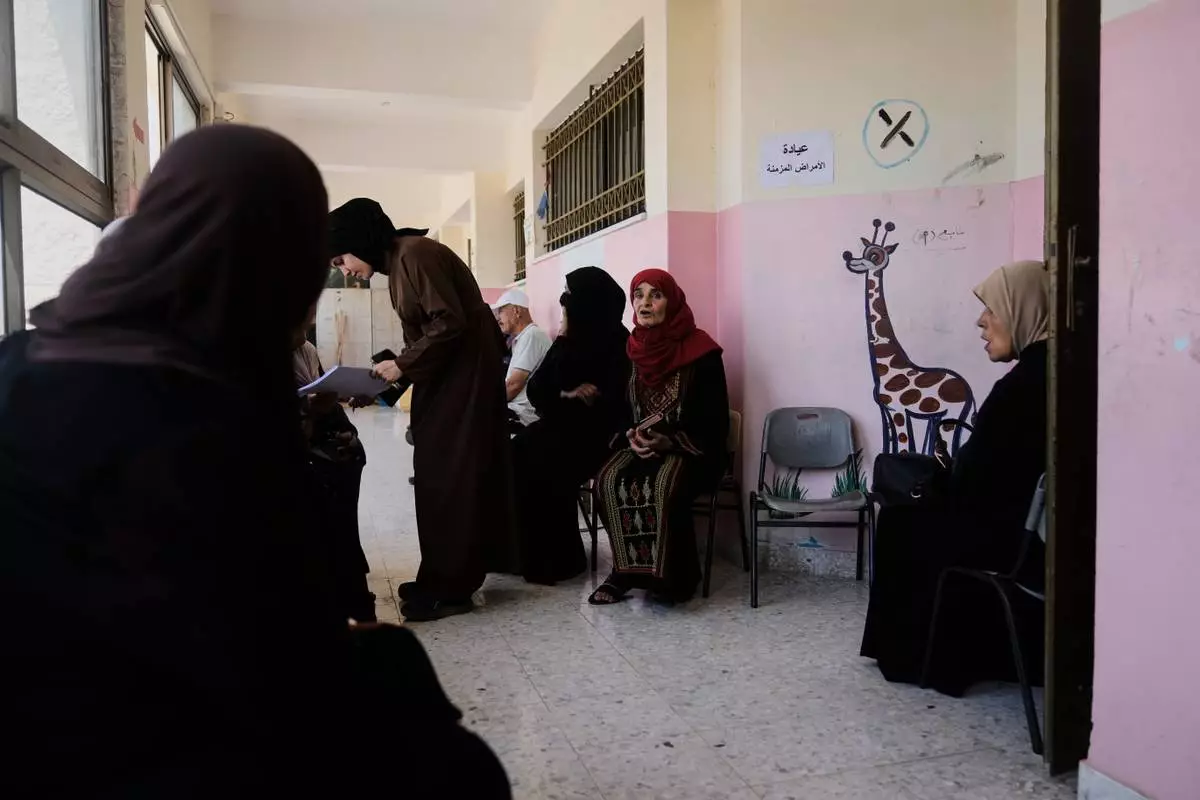
Palestinian patients wait for treatment at a mobile clinic operated by Physicians for Human Rights Israel (PHRI) in the West Bank town of Iktaba, Tuesday, Aug. 4, 2026. (AP Photo/Majdi Mohammed)
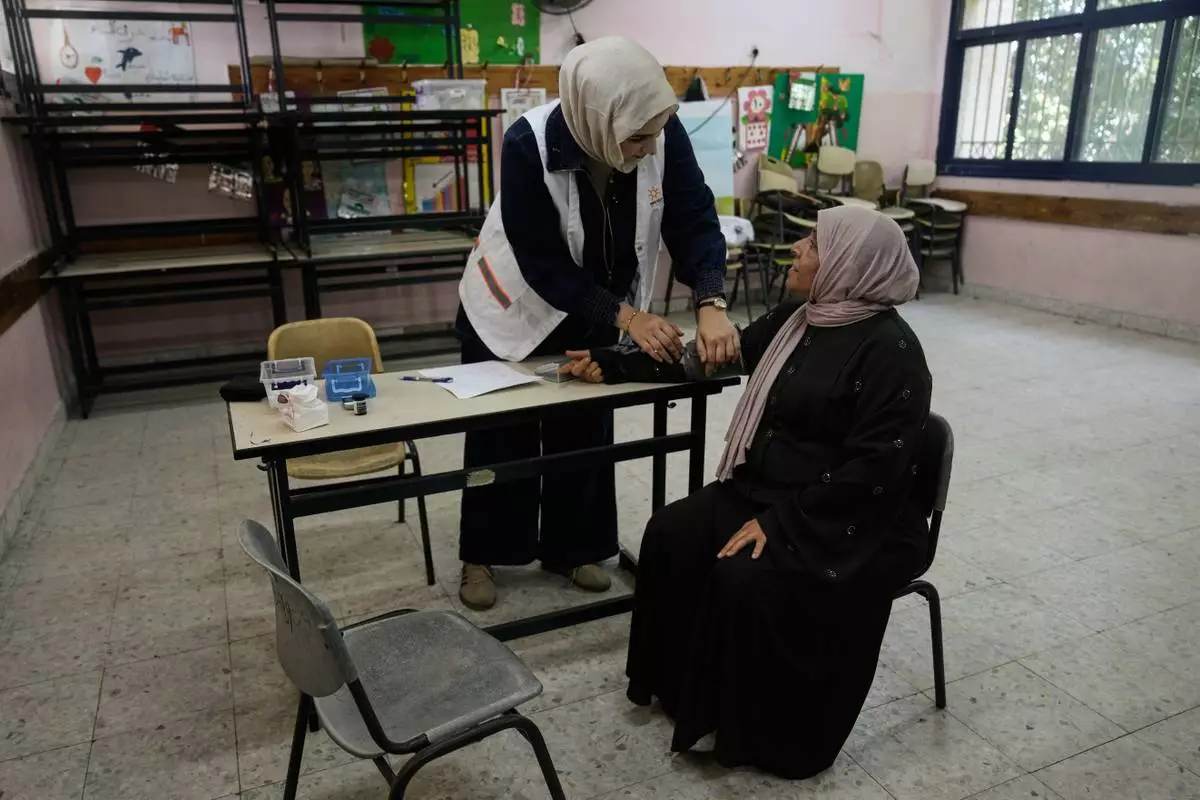
A Palestinian patient receives treatment from medical staff with Physicians for Human Rights Israel (PHRI) at a mobile health clinic in the West Bank town of Iktaba, Tuesday, Aug. 4, 2026. (AP Photo/Majdi Mohammed)
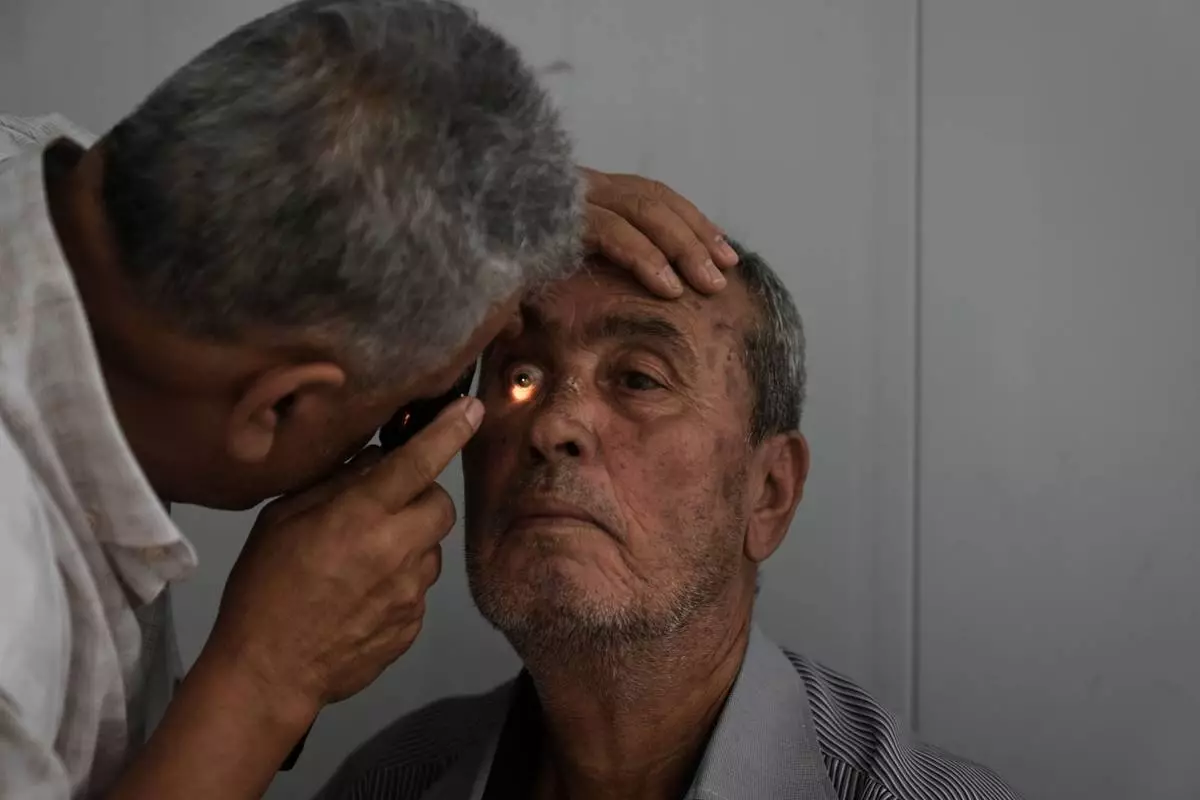
Bassam Musleh, a Palestinian patient gets his eyes checked at a mobile health clinic operated by Physicians for Human Rights Israel (PHRI) in the West Bank town of Iktaba, Tuesday, Aug. 4, 2026. (AP Photo/Majdi Mohammed)
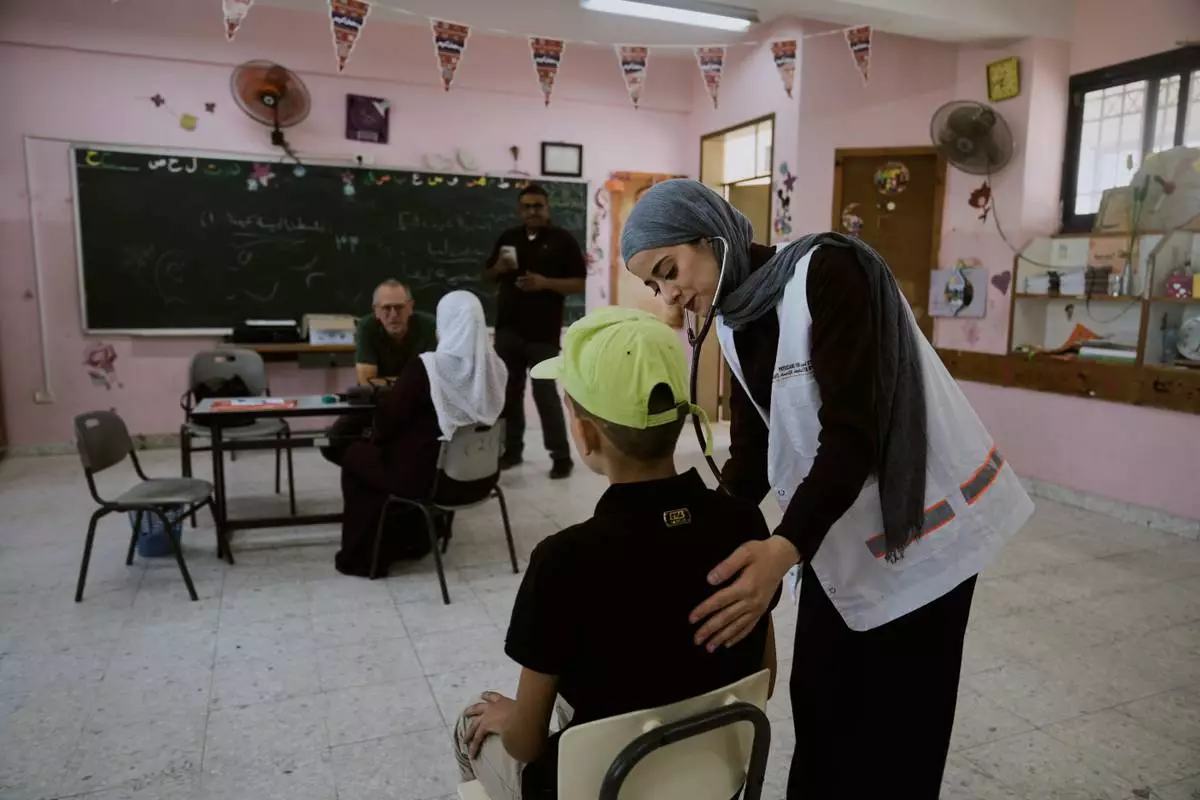
Palestinian patients receive treatment from medical staff with Physicians for Human Rights Israel (PHRI) at a mobile health clinic in the West Bank town of Iktaba, Tuesday, Aug. 4, 2026. (AP Photo/Majdi Mohammed)
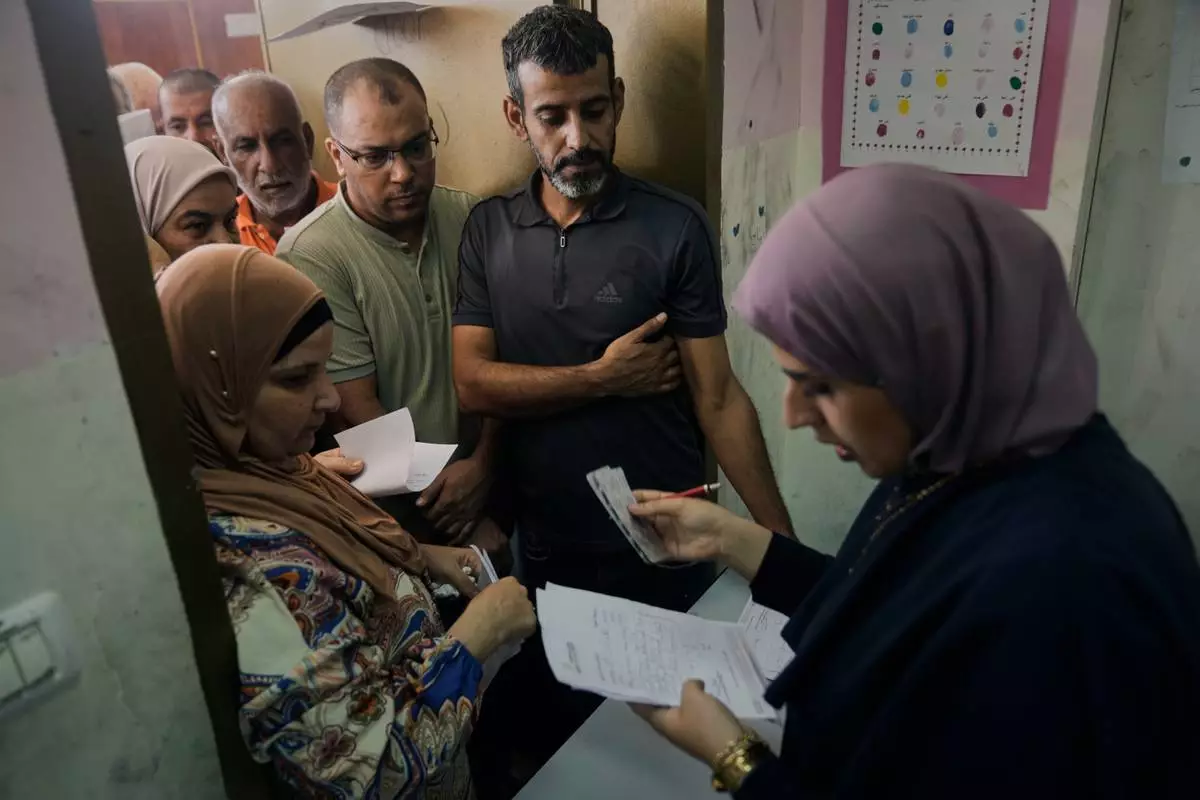
Palestinian patients line up for treatment at a mobile health clinic operated by Physicians for Human Rights Israel (PHRI) in the West Bank town of Iktaba, Tuesday, Aug. 4, 2026. (AP Photo/Majdi Mohammed)