Skip to Content Facebook Feature Image

Hiroshima residents voice support for 3 nonnuclear principles

HotTV

HotTV

HotTV

Hiroshima residents voice support for 3 nonnuclear principles

2026-08-06 16:59 Last Updated At:18:38

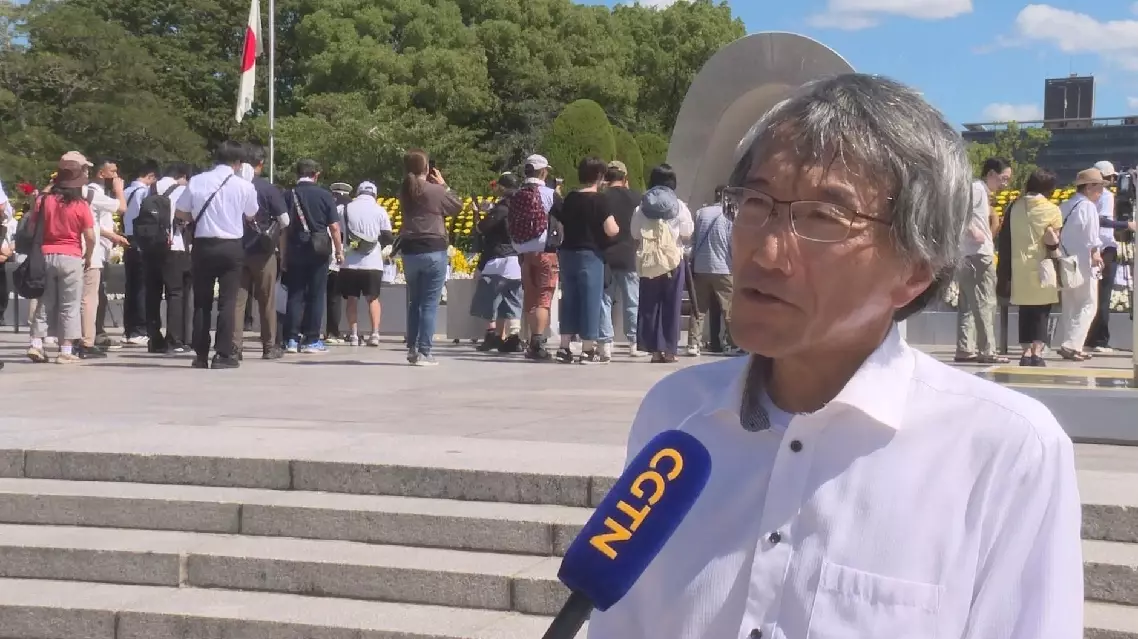
As Japan's Hiroshima on Thursday marked the 81st anniversary of the U.S. atomic bombing of the city, local residents expressed strong support for the country's Three Non-Nuclear Principles amid rising concern that government policies are moving in the wrong direction.

During an annual memorial ceremony held at the Peace Memorial Park in the western Japanese city, a moment of silence was observed at 08:15 local time, the exact moment when an atomic bomb dropped by a U.S. bomber detonated over the city on Aug 6, 1945, killing around 140,000 people by the end of that year.

Three days after the world's first-ever nuclear attack decimated Hiroshima, a second atomic bomb was dropped on Nagasaki in southwestern Japan.

As the only country in the world to have suffered atomic bombings, Japan has long upheld the Three Non-Nuclear Principles of not possessing, not producing, and not permitting the introduction of nuclear weapons into its territory. The principles were formally adopted by the Japanese parliament in 1971 and have since become the cornerstone of the country's nuclear policy.

In recent years, however, calls to revise the principles have grown in the country, especially within the ruling bloc. Local media previously reported that the government of Prime Minister Sanae Takaichi was considering revising the principle prohibiting the introduction of nuclear weapons into Japan. The reported move has sparked widespread concern among various sectors of Japanese society.

In a nationwide opinion poll, conducted in June and July, 76 percent of people in Japan support upholding the country's Three Non-Nuclear Principles.

"In my opinion, 76 percent is a surprisingly low figure. It should be above 80 or even 90 percent. Japan is the only victim of nuclear weapons in the world, in Hiroshima and Nagasaki, and we should never allow a third incident to happen," said a male resident of Hiroshima.

"I heard that 76 percent of Japanese people support upholding the Three Non-Nuclear Principles, and I think that poll is very important. I firmly believe that the three principles of not possessing, not manufacturing and not allowing nuclear weapons on Japanese soil are in line with the Japanese constitution and should be protected," a female resident said.

The male resident also warned of broader signs that Japan's leadership is failing to uphold the principle of anti-militarism.

"In old times, there were leaders who asserted that Japan does not go to war or any related activities, but current leaders are starting to export and manufacture weapons, and they want to make an industry out of it. I think that true global leaders would stop such things," he added.

The Japanese government officially revised "the three principles on transfer of defense equipment and technology" and their implementation guidelines in April to enable overseas sales of weapons, including those with lethal capabilities.
Hiroshima residents voice support for 3 nonnuclear principles

Hiroshima residents voice support for 3 nonnuclear principles
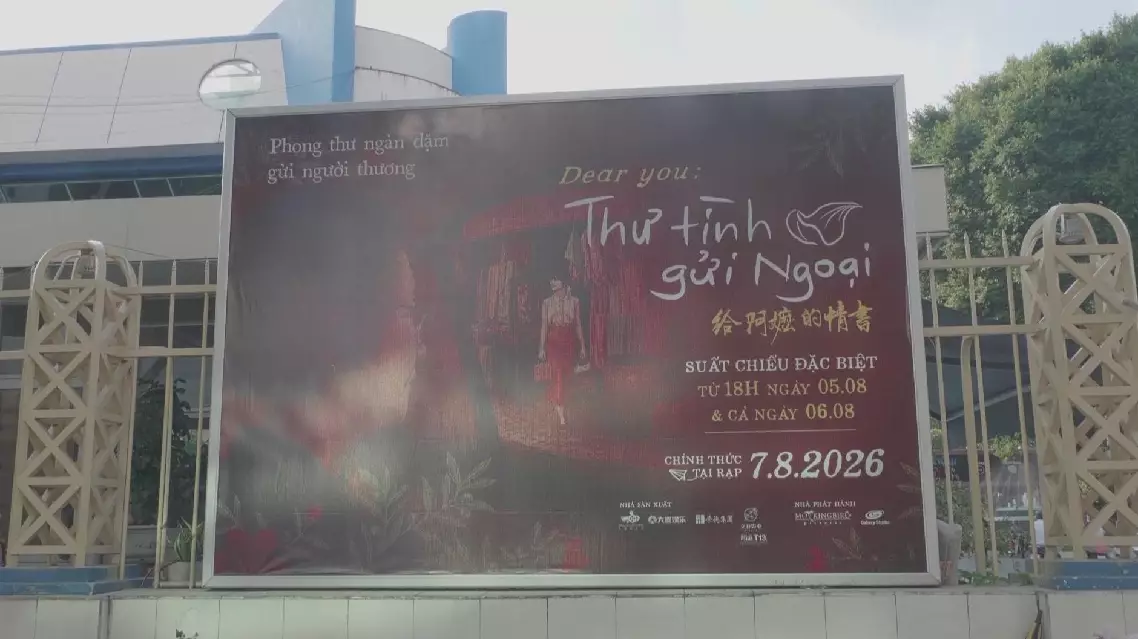
⁠⁠⁠⁠⁠⁠⁠Chinese box-office hit "Dear You" premiered in Vietnam's Ho Chi Minh City on Tuesday ahead of its nationwide theatrical release, warming the hearts of numerous local viewers.

The premiere was jointly organized by Vietnamese distributors Mockingbird Pictures and Galaxy Studio, with the support of the China Cultural Center in Hanoi.

Nearly 1,000 guests, including representatives of Vietnam's film industry, cultural scholars, members of the overseas Chinese community, representatives of Chinese enterprises in Vietnam and media organizations, attended the event.

Shot entirely in the Chaoshan (Teochew) dialect, the low-budget film became a massive box-office phenomenon in China this summer, with its global box office revenues surpassing 2.1 billion yuan (about 310 million U.S. dollars) since its April 30 release.

Known in Chinese as "Love Letters to Grandma," the movie centers on remittance letters used by overseas Chinese to stay connected with their families back home from the 1940s to 1970s. Through these letters, the characters uncover memories, love and interconnected family bonds in a simple yet deeply genuine narrative.

Even before its premiere, "Dear You" had generated significant buzz across Vietnamese social media platforms.

Doan Thi Trang Anh, deputy CEO of Mockingbird Pictures, said securing the distribution rights for "Dear You" in Vietnam was a special opportunity for the company, hoping that it could bring more Chinese films to Vietnamese audiences in the future.

"We consider it a remarkable piece of work full of new and creative touches. We can see that it is more than just a movie -- it carries deep cultural and historical significance for China, while also offering a moving portrayal of the true emotional connection between a husband and wife," Doan Thi Trang Anh told China Media Group (CMG).

After the premiere, the audience responded with great enthusiasm and offered glowing reviews.

"I feel that this movie speaks to the hearts and minds of Vietnamese audiences as well," said Nguyen Tuan, an audience member.

"There are many scenes in the film that remind me of my own grandparents. it really struck a chord with me," said Thu Thuy, a Vietnamese singer who also attended the premiere.

The film is set to hit cinemas nationwide in Vietnam beginning Wednesday. It will be available in three language versions: Mandarin Chinese, Chaochan dialect, and Vietnamese to cater to different viewing preferences.

The movie has also hit the screens in several other Southeast Asian countries, including Malaysia, Singapore, Brunei, Thailand and Indonesia.

Chinese film 'Dear You' resonates with Vietnamese audience at premiere

Chinese film 'Dear You' resonates with Vietnamese audience at premiere

Recommended Articles